
Journal of Shanghai Jiao Tong University (Medical Science) ›› 2026, Vol. 46 ›› Issue (4): 545-554.doi: 10.3969/j.issn.1674-8115.2026.04.015
• Review • Previous Articles Next Articles
Zhou Xinyu, Qiu Jianyin( )
)
Received:2025-07-24
Accepted:2025-11-10
Online:2026-04-28
Published:2026-04-28
Contact:
Qiu Jianyin
E-mail:jianyin_qiu@163.com
CLC Number:
Zhou Xinyu, Qiu Jianyin. Advances in empathy research from the perspective of the integration of neurobiology and computer science[J]. Journal of Shanghai Jiao Tong University (Medical Science), 2026,(4): 545-554.
Add to citation manager EndNote|Ris|BibTeX
URL: https://xuebao.shsmu.edu.cn/EN/10.3969/j.issn.1674-8115.2026.04.015
| Measurement method | Key metric | Advantage | Limitation | Scenario/target population |
|---|---|---|---|---|
| Psychometric scale | Subjective reports/manual coding scores | Extensive theoretical foundation and ease of administration | Susceptibility to reporting bias/manual coding is labor-intensive | Psychotherapy research; clinical and non-clinical assessment |
| Behavioral paradigm | Scores from experimental tasks | Convenient and standardized | Lacking ecological validity | Clinical and non-clinical populations |
| Neuroscience technique | EEG components, frequency band power, MEG patterns, fMRI BOLD signals, and functional connectivity | High temporal or spatial resolution, enabling analysis of temporal dynamics or spatial localization | Highly susceptible to environmental noise and requires strict experimental conditions | Research on neural mechanism; clinical and non-clinical assessment |
| Physiological measure | EMG, EDA, HRV, and physiological synchrony | Objective and non-invasive; reflects dyadic interaction | Some sensors may interfere with natural interaction | Psychotherapy research; clinical and non-clinical assessment |
| Empathy computing | Model prediction accuracy benchmarked against human coding | Automated processing of large-scale data with objective metrics | Issues with model interpretability; high reliance on large-scale and high-quality labeled data | Automated objective evaluation of large-scale datasets |
Tab1 Comparison of empathy assessment and measurement methods
| Measurement method | Key metric | Advantage | Limitation | Scenario/target population |
|---|---|---|---|---|
| Psychometric scale | Subjective reports/manual coding scores | Extensive theoretical foundation and ease of administration | Susceptibility to reporting bias/manual coding is labor-intensive | Psychotherapy research; clinical and non-clinical assessment |
| Behavioral paradigm | Scores from experimental tasks | Convenient and standardized | Lacking ecological validity | Clinical and non-clinical populations |
| Neuroscience technique | EEG components, frequency band power, MEG patterns, fMRI BOLD signals, and functional connectivity | High temporal or spatial resolution, enabling analysis of temporal dynamics or spatial localization | Highly susceptible to environmental noise and requires strict experimental conditions | Research on neural mechanism; clinical and non-clinical assessment |
| Physiological measure | EMG, EDA, HRV, and physiological synchrony | Objective and non-invasive; reflects dyadic interaction | Some sensors may interfere with natural interaction | Psychotherapy research; clinical and non-clinical assessment |
| Empathy computing | Model prediction accuracy benchmarked against human coding | Automated processing of large-scale data with objective metrics | Issues with model interpretability; high reliance on large-scale and high-quality labeled data | Automated objective evaluation of large-scale datasets |
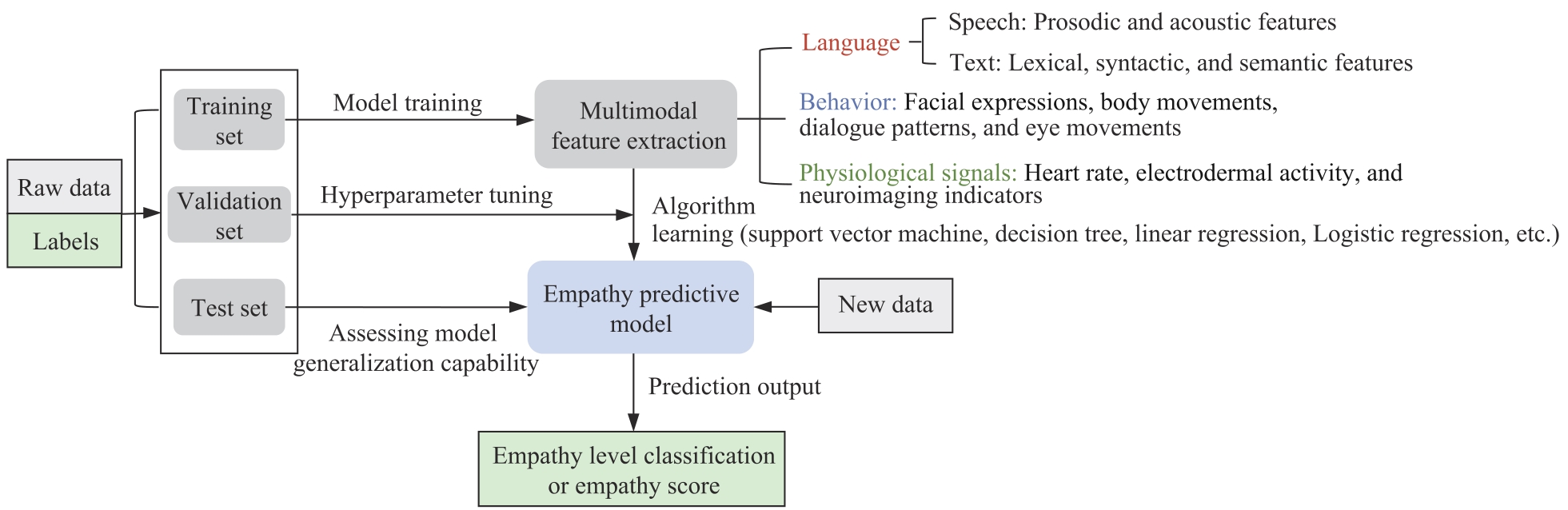
Fig 1 Technical roadmap for empathy computing
| [1] | de Waal F B. Putting the altruism back into altruism: the evolution of empathy[J]. Annu Rev Psychol, 2008, 59: 279-300. |
| [2] | Balconi M, Canavesio Y. Is empathy necessary to comprehend the emotional faces The empathic effect on attentional mechanisms (eye movements), cortical correlates (N200 event-related potentials) and facial behaviour (electromyography) in face processing?[J]. Cogn Emot, 2016, 30(2): 210-224. |
| [3] | Arioli M, Cattaneo Z, Ricciardi E, et al. Overlapping and specific neural correlates for empathizing, affective mentalizing, and cognitive mentalizing: a coordinate-based meta-analytic study[J]. Hum Brain Mapp, 2021, 42(14): 4777-4804. |
| [4] | Carrizales A, Carlo G, Lannegrand L. A parallel-process analysis of the longitudinal associations between adolescents' empathy and prosocial behaviors[J]. Dev Psychol, 2025, 61(9): 1669-1683. |
| [5] | Christov-Moore L, Simpson E A, Coudé G, et al. Empathy: gender effects in brain and behavior[J]. Neurosci Biobehav Rev, 2014, 46(Pt 4): 604-627. |
| [6] | McClintock A S, Anderson T, Patterson C L, et al. Early psychotherapeutic empathy, alliance, and client outcome: preliminary evidence of indirect effects[J]. J Clin Psychol, 2018, 74(6): 839-848. |
| [7] | MacFarlane P, Anderson T, McClintock A S. Empathy from the client's perspective: a grounded theory analysis[J]. Psychother Res, 2017, 27(2): 227-238. |
| [8] | Elliott R, Bohart A C, Watson J C, et al. Empathy[J]. Psychotherapy (Chic), 2011, 48(1): 43-49. |
| [9] | Elliott R, Bohart A C, Watson J C, et al. Therapist empathy and client outcome: an updated meta-analysis[J]. Psychotherapy (Chic), 2018, 55(4): 399-410. |
| [10] | Rogers C R. The necessary and sufficient conditions of therapeutic personality change[J]. J Consult Clin Psychol, 1957, 21(2): 95-103. |
| [11] | Cuff B M P, Brown S J, Taylor L, et al. Empathy: a review of the concept[J]. Emot Rev, 2016, 8(2): 144-153. |
| [12] | de Waal F B M, Preston S D. Mammalian empathy: behavioural manifestations and neural basis[J]. Nat Rev Neurosci, 2017, 18(8): 498-509. |
| [13] | Decety J. The neural pathways, development and functions of empathy[J]. Curr Opin Behav Sci, 2015, 3: 1-6. |
| [14] | Paradiso E, Gazzola V, Keysers C. Neural mechanisms necessary for empathy-related phenomena across species[J]. Curr Opin Neurobiol, 2021, 68: 107-115. |
| [15] | Decety J. The neuroevolution of empathy[J]. Ann N Y Acad Sci, 2011, 1231: 35-45. |
| [16] | Franklin-Gillette S, Shamay-Tsoory S G. An interbrain approach for understanding empathy: the contribution of empathy to interpersonal emotion regulation[M]//Gilead M, Ochsner K N. The Neural Basis of Mentalizing. Cham: Springer International Publishing, 2021: 567-578. |
| [17] | Schurz M, Radua J, Tholen M G, et al. Toward a hierarchical model of social cognition: a neuroimaging meta-analysis and integrative review of empathy and theory of mind[J]. Psychol Bull, 2021, 147(3): 293-327. |
| [18] | Fan Y, Han S H. Temporal dynamic of neural mechanisms involved in empathy for pain: an event-related brain potential study[J]. Neuropsychologia, 2008, 46(1): 160-173. |
| [19] | Zebarjadi N, Adler E, Kluge A, et al. Rhythmic neural patterns during empathy to vicarious pain: beyond the affective-cognitive empathy dichotomy[J]. Front Hum Neurosci, 2021, 15: 708107. |
| [20] | Jankowiak-Siuda K, Rymarczyk K, Grabowska A. How we empathize with others: a neurobiological perspective[J]. Med Sci Monit, 2011, 17(1): RA18-RA24. |
| [21] | Rizzolatti G, Craighero L. The mirror-neuron system[J]. Annu Rev Neurosci, 2004, 27: 169-192. |
| [22] | Nummenmaa L, Hirvonen J, Parkkola R, et al. Is emotional contagion special? An fMRI study on neural systems for affective and cognitive empathy[J]. NeuroImage, 2008, 43(3): 571-580. |
| [23] | Oliver L D, Vieira J B, Neufeld R W J, et al. Greater involvement of action simulation mechanisms in emotional vs cognitive empathy[J]. Soc Cogn Affect Neurosci, 2018, 13(4): 367-380. |
| [24] | Preston S D, de Waal F B. Empathy: its ultimate and proximate bases[J]. Behav Brain Sci, 2002, 25(1): 1-20. |
| [25] | Plata-Bello J, Privato N, Modroño C, et al. Empathy modulates the activity of the sensorimotor mirror neuron system during pain observation[J]. Behav Sci, 2023, 13(11): 947. |
| [26] | Penagos-Corzo J C, Cosio van-Hasselt M, Escobar D, et al. Mirror neurons and empathy-related regions in psychopathy: systematic review, meta-analysis, and a working model[J]. Soc Neurosci, 2022, 17(5): 462-479. |
| [27] | Choi J, Lee Y B, So D, et al. Cortical representations of affective pain shape empathic fear in male mice[J]. Nat Commun, 2025, 16(1): 1937. |
| [28] | Kim S W, Kim M, Baek J, et al. Hemispherically lateralized rhythmic oscillations in the cingulate-amygdala circuit drive affective empathy in mice[J]. Neuron, 2023, 111(3): 418-429.e4. |
| [29] | Li Y, Zhang T T, Li W J, et al. Linking brain structure and activation in anteriorinsula cortex to explain the trait empathy for pain[J]. Hum Brain Mapp, 2020, 41(4): 1030-1042. |
| [30] | Zhao D F, Ding R, Zhang H J, et al. Individualized prediction of females' empathic concern from intrinsic brain activity within general network of state empathy[J]. Cogn Affect Behav Neurosci, 2022, 22(2): 403-413. |
| [31] | Tan H X, Zeng X Y, Ni J, et al. Intracranial EEG signals disentangle multi-areal neural dynamics of vicarious pain perception[J]. Nat Commun, 2024, 15(1): 5203. |
| [32] | Taruffi L, Skouras S, Pehrs C, et al. Trait empathy shapes neural responses toward sad music[J]. Cogn Affect Behav Neurosci, 2021, 21(1): 231-241. |
| [33] | Avnor Y, Atias D, Markus A, et al. It takes two to empathize: interbrain coupling contributes to distress regulation[J]. Emotion, 2025, 25(3): 736-754. |
| [34] | Vaidya A R, Fellows L K. Ventromedial frontal lobe damage affects interpretation, not exploration, of emotional facial expressions[J]. Cortex, 2019, 113: 312-328. |
| [35] | Taiwo Z, Bezdek M, Mirabito G, et al. Empathy for joy recruits a broader prefrontal network than empathy for sadness and is predicted by executive functioning[J]. Neuropsychology, 2021, 35(1): 90-102. |
| [36] | Walter H. Social cognitive neuroscience of empathy: concepts, circuits, and genes[J]. Emot Rev, 2012, 4(1): 9-17. |
| [37] | Ng X, Ng L Y, Gabrieli G, et al. An fNIRS investigation of masculinity, femininity, and sex on nonparents' empathic response to infant cries[J]. Brain Sci, 2021, 11(5): 635. |
| [38] | Domínguez-Arriola M E, Olalde-Mathieu V E, Garza-Villarreal E A, et al. The dorsolateral prefrontal cortex presents structural variations associated with empathy and emotion regulation in psychotherapists[J]. Brain Topogr, 2022, 35(5): 613-626. |
| [39] | Olalde-Mathieu V E, Sassi F, Reyes-Aguilar A, et al. Greater empathic abilities and resting state brain connectivity differences in psychotherapists compared to non-psychotherapists[J]. Neuroscience, 2022, 492: 82-91. |
| [40] | Schwartz L, Levy J, Shapira Y, et al. Empathy aligns brains in synchrony[J]. iScience, 2025, 28(6): 112642. |
| [41] | Coutinho J F, Silva P O, Decety J. Neurosciences, empathy, and healthy interpersonal relationships: recent findings and implications for counseling psychology[J]. J Couns Psychol, 2014, 61(4): 541-548. |
| [42] | Qaiser J, Leonhardt N D, Le B M, et al. Shared hearts and minds: physiological synchrony during empathy[J]. Affect Sci, 2023, 4(4): 711-721. |
| [43] | Palix J, Abu-Akel A, Moulin V, et al. The utility of physiological measures in assessing the empathic skills of incarcerated violent offenders[J]. Int J Offender Ther Comp Criminol, 2022, 66(1): 98-122. |
| [44] | Cho A, Park S, Lee H, et al. The physiological measurement and evaluation of empathy of video content[J]. Sci Rep, 2023, 13: 20190. |
| [45] | Chen K H, Brown C L, Wells J L, et al. Physiological linkage during shared positive and shared negative emotion[J]. J Pers Soc Psychol, 2021, 121(5): 1029-1056. |
| [46] | Engert V, Plessow F, Miller R, et al. Cortisol increase in empathic stress is modulated by emotional closeness and observation modality[J]. Psychoneuroendocrinology, 2014, 45: 192-201. |
| [47] | Meyer-Lindenberg A, Domes G, Kirsch P, et al. Oxytocin and vasopressin in the human brain: social neuropeptides for translational medicine[J]. Nat Rev Neurosci, 2011, 12(9): 524-538. |
| [48] | Barchi-Ferreira A M, Osório F L. Associations between oxytocin and empathy in humans: a systematic literature review[J]. Psychoneuroendocrinology, 2021, 129: 105268. |
| [49] | Domes G, Ower N, von Dawans B, et al. Effects of intranasal oxytocin administration on empathy and approach motivation in women with borderline personality disorder: a randomized controlled trial[J]. Transl Psychiatry, 2019, 9: 328. |
| [50] | Davis M C, Green M F, Lee J, et al. Oxytocin-augmented social cognitive skills training in schizophrenia[J]. Neuropsychopharmacology, 2014, 39(9): 2070-2077. |
| [51] | Feeser M, Fan Y, Weigand A, et al. Oxytocin improves mentalizing-pronounced effects for individuals with attenuated ability to empathize[J]. Psychoneuroendocrinology, 2015, 53: 223-232. |
| [52] | Yamagishi A, Lee J, Sato N. Oxytocin in the anterior cingulate cortex is involved in helping behaviour[J]. Behav Brain Res, 2020, 393: 112790. |
| [53] | Geng Y Y, Zhao W H, Zhou F, et al. Oxytocin enhancement of emotional empathy: generalization across cultures and effects on amygdala activity[J]. Front Neurosci, 2018, 12: 512. |
| [54] | Baron-Cohen S, Wheelwright S, Hill J, et al. The "reading the mind in the eyes" test revised version: a study with normal adults, and adults with asperger syndrome or high-functioning autism[J]. Child Psychology Psychiatry, 2001, 42(2): 241-251. |
| [55] | Golan O, Baron-Cohen S, Hill J. The Cambridge Mindreading (CAM) Face-Voice Battery: testing complex emotion recognition in adults with and without Asperger syndrome[J]. J Autism Dev Disord, 2006, 36(2): 169-183. |
| [56] | Decety J, Michalska K J, Kinzler K D. The contribution of emotion and cognition to moral sensitivity: a neurodevelopmental study[J]. Cereb Cortex, 2012, 22(1): 209-220. |
| [57] | Shamay-Tsoory S G, Harari H, Aharon-Peretz J, et al. The role of the orbitofrontal cortex in affective theory of mind deficits in criminal offenders with psychopathic tendencies[J]. Cortex, 2010, 46(5): 668-677. |
| [58] | Klimecki O M, Leiberg S, Ricard M, et al. Differential pattern of functional brain plasticity after compassion and empathy training[J]. Soc Cogn Affect Neurosci, 2014, 9(6): 873-879. |
| [59] | Kanske P, Böckler A, Trautwein F M, et al. Dissecting the social brain: introducing the EmpaToM to reveal distinct neural networks and brain-behavior relations for empathy and Theory of Mind[J]. Neuroimage, 2015, 122: 6-19. |
| [60] | Pan Z Q, Zhang C, Su W J, et al. Relationship between individual differences in pain empathy and task- and resting-state EEG[J]. NeuroImage, 2023, 284: 120452. |
| [61] | Tullett A M, Harmon-Jones E, Inzlicht M. Right frontal cortical asymmetry predicts empathic reactions: support for a link between withdrawal motivation and empathy[J]. Psychophysiology, 2012, 49(8): 1145-1153. |
| [62] | Zebarjadi N, Levy J. Neural shifts in alpha rhythm's dual functioning during empathy maturation[J]. Brain Behav, 2023, 13(9): e3110. |
| [63] | Kleinbub J R, Mannarini S, Palmieri A. Interpersonal biofeedback in psychodynamic psychotherapy[J]. Front Psychol, 2020, 11: 1655. |
| [64] | Golbabaei S, Sammaknejad N, Borhani K. Physiological indicators of the relation between autistic traits and empathy: evidence from electrocardiogram and skin conductance signals[C]//2022 29th National and 7th International Iranian Conference on Biomedical Engineering (ICBME), 2023: 177-183. |
| [65] | Bray K O, Pozzi E, Vijayakumar N, et al. Individual differences in brain structure and self-reported empathy in children[J]. Cogn Affect Behav Neurosci, 2022, 22(5): 1078-1089. |
| [66] | Messina I, Palmieri A, Sambin M, et al. Somatic underpinnings of perceived empathy: the importance of psychotherapy training[J]. Psychother Res, 2013, 23(2): 169-177. |
| [67] | Imel Z E, Barco J S, Brown H J, et al. The association of therapist empathy and synchrony in vocally encoded arousal[J]. J Couns Psychol, 2014, 61(1): 146-153. |
| [68] | Gaume J, Hallgren K A, Clair C, et al. Modeling empathy as synchrony in clinician and patient vocally encoded emotional arousal: a failure to replicate[J]. J Couns Psychol, 2019, 66(3): 341-350. |
| [69] | Wiltshire T J, Philipsen J S, Trasmundi S B, et al. Interpersonal coordination dynamics in psychotherapy: a systematic review[J]. Cogn Ther Res, 2020, 44(4): 752-773. |
| [70] | Dwyer D B, Falkai P, Koutsouleris N. Machine learning approaches for clinical psychology and psychiatry[J]. Annu Rev Clin Psychol, 2018, 14: 91-118. |
| [71] | Christov-Moore L, Reggente N, Douglas P K, et al. Predicting empathy from resting state brain connectivity: a multivariate approach[J]. Front Integr Neurosci, 2020, 14: 3. |
| [72] | Lee J H N, Chui H, Lee T, et al. Formality in psychotherapy: how are therapists' and clients' use of discourse particles related to therapist empathy [J]. Front Psychiatry, 2022, 13: 1018170. |
| [73] | 侯悍超, 倪士光, 林书亚, 等. 当AI学习共情:心理学视角下共情计算的主题、场景与优化[J]. 心理科学进展, 2024, 32(5): 845-858. |
| Hou H C, Ni S G, Lin S Y, et al. When AI learns to empathize: Topics, scenarios, and optimization of empathy computing from a psychological perspective[J]. Advances in Psychological Science, 2024, 32(5):845-858. | |
| [74] | Xiao B, Imel Z E, Georgiou P G, et al. "Rate my therapist": automated detection of empathy in drug and alcohol counseling via speech and language processing[J]. PloS One, 2015, 10(12): e0143055. |
| [75] | Xiao B, Imel Z E, Georgiou P, et al. Computational analysis and simulation of empathic behaviors: a survey of empathy modeling with behavioral signal processing framework[J]. Curr Psychiatry Rep, 2016, 18(5): 49. |
| [76] | Chakravarthula S N, Xiao B, Imel Z E, et al. Assessing empathy using static and dynamic behavior models based on therapist's language in addiction counseling[C]//INTERSPEECH 2015, 2015: 668-672. |
| [77] | Lord S P, Sheng E, Imel Z E, et al. More than reflections: empathy in motivational interviewing includes language style synchrony between therapist and client[J]. Behav Ther, 2015, 46(3): 296-303. |
| [78] | 李婷婷, 朱旭, 江光荣. 语言风格匹配能反映咨询师的共情水平吗[J]. 中国临床心理学杂志, 2018, 26(2): 410-413, 400. |
| Li T T, Zhu X, Jiang G R. Can language style matching reflect the empathy of counselor[J]. Chin J Clin Psychol, 2018, 26(2): 410-413, 400. | |
| [79] | Xiao B, Bone D, Van Segbroeck M, et al. Modeling therapist empathy through prosody in drug addiction counseling[C]//INTERSPEECH 2014, 2014: 213-217. |
| [80] | Tao D H, Lee T, Chui H, et al. Characterizing therapist's speaking style in relation to empathy in psychotherapy[C]//INTERSPEECH 2022, 2022: 2003-2007. |
| [81] | Chen R, Chen H, Kulkarni A, et al. Detecting empathy in speech[C]//INTERSPEECH 2024, 2024: 1080-1084. |
| [82] | Tran T, Yin Y F, Tavabi L, et al. Multimodal analysis and assessment of therapist empathy in motivational interviews[C]//Proceedings of the 25th International Conference on Multimodal Interaction. New York: ACM, 2023: 406-415. |
| [83] | Ishii R, Otsuka K, Kumano S, et al. Analyzing gaze behavior and dialogue act during turn-taking for estimating empathy skill level[C]//Proceedings of the 20th ACM International Conference on Multimodal Interaction. New York: ACM, 2018: 31-39. |
| [84] | Zhu Z A, Li C G, Pan J C, et al. MEDIC: a multimodal empathy dataset in counseling[C]//Proceedings of the 31st ACM International Conference on Multimedia. New York: ACM, 2023: 6054-6062. |
| [85] | Qian Y S, Zhang W N, Liu T. Harnessing the power of large language models for empathetic response generation: empirical investigations and improvements[C]//Findings of the Association for Computational Linguistics: EMNLP 2023. Stroudsburg: ACL, 2023: 6516-6528. |
| [86] | Sharma A, Lin I W, Miner A S, et al. Human-AI collaboration enables more empathic conversations in text-based peer-to-peer mental health support[J]. Nat Mach Intell, 2023, 5(1): 46-57. |
| [87] | Jabeen J, Saji J G. Evaluating AI-generated patient education guides: a comparative study of ChatGPT and DeepSeek[J]. Cureus, 2025, 17(6): e85277. |
| [88] | Wang Y N, Zhang H P, Shang J Y. EmpLLM: enhancing empathy in LLMs through psychologist simulation[C]//Intelligent Multilingual Information Processing. Singapore: Springer, 2025: 205-218. |
| [89] | Quan J Y, Miyake Y, Nozawa T. Incorporating multimodal directional interpersonal synchrony into empathetic response generation[J]. Sensors (Basel), 2025, 25(2): 434. |
| [90] | Roshdy A, Al Kork S, Karar A, et al. Machine empathy: digitizing human emotions[C]//2021 International Symposium on Electrical, Electronics and Information Engineering. New York: ACM, 2021: 307-311. |
| [91] | Shih M T, Hsu M Y, Lee S C. Empathy-GPT: leveraging large language models to enhance emotional empathy and user engagement in embodied conversational agents[C]//Adjunct Proceedings of the 37th Annual ACM Symposium on User Interface Software and Technology. New York: ACM, 2024: 1-3. |
| [92] | Feng H, Zeng Y, Lu E M. Brain-inspired affective empathy computational model and its application on altruistic rescue task[J]. Front Comput Neurosci, 2022, 16: 784967. |
| [93] | Sorin V, Brin D, Barash Y, et al. Large language models and empathy: systematic review[J]. J Med Internet Res, 2024, 26: e52597. |
| [94] | Yu T F, Pan S Y, Fan C Y, et al. Can large language models exhibit cognitive and affective empathy as humans [J]. Comput Hum Behav Artif Hum, 2025, 6: 100233. |
| [95] | Cheng S W, Chang C W, Chang W J, et al. The now and future of ChatGPT and GPT in psychiatry[J]. Psychiatry Clin Neurosci, 2023, 77(11): 592-596. |
| [96] | Shteynberg G, Halpern J, Sadovnik A, et al. Does it matter if empathic AI has no empathy [J]. Nat Mach Intell, 2024, 6(5): 496-497. |
| [1] | LU Lu, ZHANG Tian-ran, FAN Qing#, ZHANG Hai-yin#. Psychotherapy relationship in group mindfulness-based cognitive therapy for obsessive-compulsive disorder [J]. , 2018, 38(1): 57-. |
| [2] | WANG Yu, YUAN Cheng-mei. New progresses of group psychotherapy for treatment of depression [J]. , 2015, 35(8): 1217-. |
| [3] | WANG Dao-zhen, LI Xing-wei, ZOU Yang, et al. Empathy survey of clinical interns and residents: an empirical study based on Jefferson scale of physician empathy [J]. , 2015, 35(6): 881-. |
| [4] | SUN Xia, YUAN Cheng-mei. Group psychotherapy for bipolar disorder [J]. , 2015, 35(10): 1575-. |
| [5] | CAI Yi-ting, WANG Li-hua, LIU Wei. Group psychotherapy for diabetes education [J]. , 2011, 31(2): 234-. |
| Viewed | ||||||
|
Full text |
|
|||||
|
Abstract |
|
|||||
