
Journal of Shanghai Jiao Tong University (Medical Science) ›› 2025, Vol. 45 ›› Issue (7): 883-891.doi: 10.3969/j.issn.1674-8115.2025.07.010
• Clinical research • Previous Articles Next Articles
CHENG Fei1, CHEN Tianzhen1, YOU Xu2, XUE Baoshuang2, YANG Yunbin2, DU Jiang1( )
)
Received:2024-12-30
Accepted:2025-03-17
Online:2025-07-28
Published:2025-07-28
Contact:
DU Jiang
E-mail:dujiangdongfang@163.com
Supported by:CLC Number:
CHENG Fei, CHEN Tianzhen, YOU Xu, XUE Baoshuang, YANG Yunbin, DU Jiang. Effects of emotion regulation ability on inhibitory control in patients with alcohol use disorder[J]. Journal of Shanghai Jiao Tong University (Medical Science), 2025, 45(7): 883-891.
Add to citation manager EndNote|Ris|BibTeX
URL: https://xuebao.shsmu.edu.cn/EN/10.3969/j.issn.1674-8115.2025.07.010
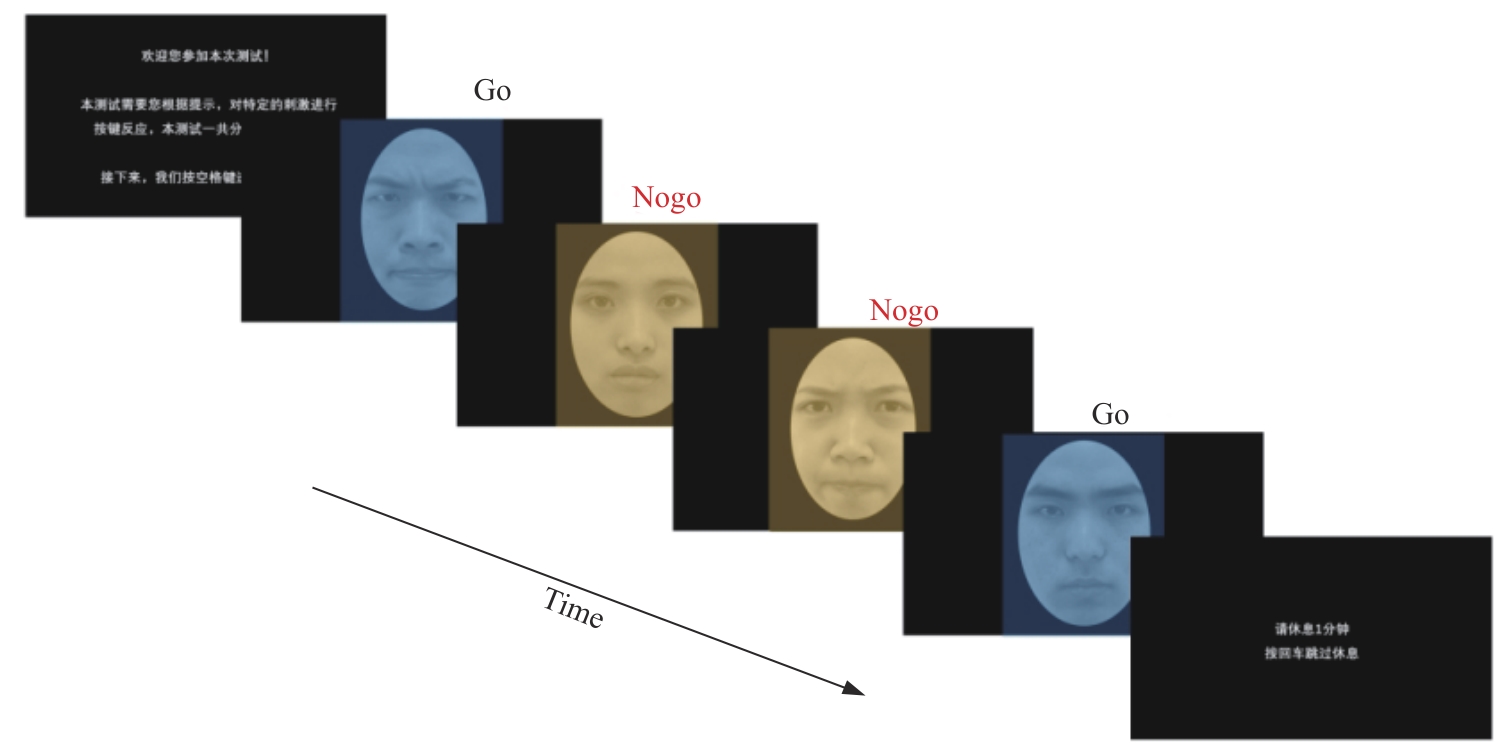
Fig 1 Schematic illustration of the emotional Go/Nogo task protocol
| Item | AUD (n=28) | HC (n=28) | t/U value | P value |
|---|---|---|---|---|
| Age/year | 46.82±4.94 | 50.18±8.01 | -1.89 | 0.065 |
| Education/year | 6.30±4.88 | 7.96±3.20 | -1.50 | 0.138 |
| Monthly income/yuan | 1 000 (0, 5 250) | 2 700 (2 000, 3 250) | 300.00 | 0.132 |
| AUDIT/score | 29.61±6.14 | 1.21±2.30 | 1.00 | <0.001 |
| DERS/score | 43.64±12.60 | 23.89±8.27 | 1.85 | <0.001 |
| Goal | 9.75±3.40 | 5.61±2.77 | 1.34 | <0.001 |
| Impulse | 9.00 (7.00, 11.00) | 3.00 (3.00, 4.00) | 684.00 | <0.001 |
| Strategy | 12.21±3.81 | 6.57±2.47 | 0.78 | <0.001 |
| Clarity | 5.25±2.72 | 3.61±1.87 | 0.34 | 0.011 |
Tab 1 Comparison of demographic characteristics and clinical assessment results between AUD patients and healthy controls
| Item | AUD (n=28) | HC (n=28) | t/U value | P value |
|---|---|---|---|---|
| Age/year | 46.82±4.94 | 50.18±8.01 | -1.89 | 0.065 |
| Education/year | 6.30±4.88 | 7.96±3.20 | -1.50 | 0.138 |
| Monthly income/yuan | 1 000 (0, 5 250) | 2 700 (2 000, 3 250) | 300.00 | 0.132 |
| AUDIT/score | 29.61±6.14 | 1.21±2.30 | 1.00 | <0.001 |
| DERS/score | 43.64±12.60 | 23.89±8.27 | 1.85 | <0.001 |
| Goal | 9.75±3.40 | 5.61±2.77 | 1.34 | <0.001 |
| Impulse | 9.00 (7.00, 11.00) | 3.00 (3.00, 4.00) | 684.00 | <0.001 |
| Strategy | 12.21±3.81 | 6.57±2.47 | 0.78 | <0.001 |
| Clarity | 5.25±2.72 | 3.61±1.87 | 0.34 | 0.011 |
| Item | Emotion type | AUD (n=28) | HC (n=28) | Statistical test result |
|---|---|---|---|---|
| Reaction time/ms | Angry | 545.80±106.08 | 492.67±87.66 | Group: F(1,54)=3.75, P=0.058, Emotion: F(1,54)=12.26, P=0.001, Interaction: F(1,54)=2.84, P=0.098, |
| Neutral | 530.13±96.12 | 487.18±82.39 | ||
| Comission error rate/% | Angry | 6.25 (0, 12.50) | 0 (0, 6.25) | Group: F(1,54)=8.62, P=0.005, Emotion: F(1,54)=1.12, P=0.295, Interaction: F(1,54)=0.14, P=0.712, |
| Neutral | 7.50 (0, 15.00) | 0 (0, 5.00) | ||
| Omission error rate/% | Angry | 0 (0, 2.23) | 0 (0, 1.79) | Group: F(1,54)=4.28, P=0.043, Emotion: F(1,54)=1.90, P=0.173, Interaction: F(1,54)=2.61, P=0.111, |
| Neutral | 1.92 (0, 3.85) | 0 (0, 1.92) |
Tab 2 Comparison of Go/Nogo task performance under different emotional conditions between the two groups
| Item | Emotion type | AUD (n=28) | HC (n=28) | Statistical test result |
|---|---|---|---|---|
| Reaction time/ms | Angry | 545.80±106.08 | 492.67±87.66 | Group: F(1,54)=3.75, P=0.058, Emotion: F(1,54)=12.26, P=0.001, Interaction: F(1,54)=2.84, P=0.098, |
| Neutral | 530.13±96.12 | 487.18±82.39 | ||
| Comission error rate/% | Angry | 6.25 (0, 12.50) | 0 (0, 6.25) | Group: F(1,54)=8.62, P=0.005, Emotion: F(1,54)=1.12, P=0.295, Interaction: F(1,54)=0.14, P=0.712, |
| Neutral | 7.50 (0, 15.00) | 0 (0, 5.00) | ||
| Omission error rate/% | Angry | 0 (0, 2.23) | 0 (0, 1.79) | Group: F(1,54)=4.28, P=0.043, Emotion: F(1,54)=1.90, P=0.173, Interaction: F(1,54)=2.61, P=0.111, |
| Neutral | 1.92 (0, 3.85) | 0 (0, 1.92) |
| Parameter | Emotion type | AUD (n=28) | HC (n=28) | Statistical test result |
|---|---|---|---|---|
| Decision threshold | Angry | 2.28±0.82 | 2.23±0.94 | Group: F(1,54)=0.31, P=0.582, Emotion: F(1,54)=1.61, P=0.210, Interaction: F(1,54)=1.11, P=0.298, |
| Neutral | 1.96±0.69 | 2.20±0.86 | ||
| Drift rate | Angry | 3.13±2.00 | 4.39±1.61 | Group: F(1,54)=15.56, P<0.001, η Emotion: F(1,54)=2.66, P=0.108, Interaction: F(1,54)=2.85, P=0.097, |
| Neutral | 3.12±1.32 | 5.12±1.98 | ||
| Non-decision time/s | Angry | 0.26±0.07 | 0.28±0.07 | Group: F(1,54)=0.47, P=0.494, Emotion: F(1,54)=1.29, P=0.261, Interaction: F(1,54)=0.02, P=0.880, |
| Neutral | 0.25±0.10 | 0.27±0.09 |
Tab 3 Between-group comparison of cognitive parameters across emotional conditions
| Parameter | Emotion type | AUD (n=28) | HC (n=28) | Statistical test result |
|---|---|---|---|---|
| Decision threshold | Angry | 2.28±0.82 | 2.23±0.94 | Group: F(1,54)=0.31, P=0.582, Emotion: F(1,54)=1.61, P=0.210, Interaction: F(1,54)=1.11, P=0.298, |
| Neutral | 1.96±0.69 | 2.20±0.86 | ||
| Drift rate | Angry | 3.13±2.00 | 4.39±1.61 | Group: F(1,54)=15.56, P<0.001, η Emotion: F(1,54)=2.66, P=0.108, Interaction: F(1,54)=2.85, P=0.097, |
| Neutral | 3.12±1.32 | 5.12±1.98 | ||
| Non-decision time/s | Angry | 0.26±0.07 | 0.28±0.07 | Group: F(1,54)=0.47, P=0.494, Emotion: F(1,54)=1.29, P=0.261, Interaction: F(1,54)=0.02, P=0.880, |
| Neutral | 0.25±0.10 | 0.27±0.09 |
| Variable | Drift rate | Commission error rate | ||||
|---|---|---|---|---|---|---|
| B | z value | P value | B | z value | P value | |
| Group | -2.443 | -3.159 | 0.002 | -2.624 | -1.005 | 0.315 |
| DERS | 0.045 | 0.691 | 0.490 | ‒ | ‒ | ‒ |
| Group×DERS | -0.264 | -0.750 | 0.453 | ‒ | ‒ | ‒ |
| Drift rate | ‒ | ‒ | ‒ | -3.914 | -4.167 | <0.001 |
| Drift rate×DERS | ‒ | ‒ | ‒ | -0.148 | -1.998 | 0.046 |
| R2 value | 0.298 | 0.847 | ||||
| F value | 7.220 | 16.040 | ||||
Tab 4 Moderated mediation analysis of inhibitory control under the angry emotional condition
| Variable | Drift rate | Commission error rate | ||||
|---|---|---|---|---|---|---|
| B | z value | P value | B | z value | P value | |
| Group | -2.443 | -3.159 | 0.002 | -2.624 | -1.005 | 0.315 |
| DERS | 0.045 | 0.691 | 0.490 | ‒ | ‒ | ‒ |
| Group×DERS | -0.264 | -0.750 | 0.453 | ‒ | ‒ | ‒ |
| Drift rate | ‒ | ‒ | ‒ | -3.914 | -4.167 | <0.001 |
| Drift rate×DERS | ‒ | ‒ | ‒ | -0.148 | -1.998 | 0.046 |
| R2 value | 0.298 | 0.847 | ||||
| F value | 7.220 | 16.040 | ||||
| Effect type | Effect value | SE | 95%CI | β | P value | |
|---|---|---|---|---|---|---|
| Total effect | 6.940 | 3.829 | 0.564‒14.021 | 0.202 | 0.018 | |
| Direct effect | -2.624 | 2.610 | -7.232‒3.202 | -0.077 | 0.315 | |
| Total indirect effect | 9.564 | 3.177 | 3.874‒16.387 | 0.279 | 0.003 | |
| Conditional indirect effect | ||||||
| Low DERS | 9.011 | 2.847 | 3.778‒14.921 | -0.031 | 0.002 | |
| High DERS | 10.133 | 3.555 | 3.963‒17.927 | 0.868 | 0.004 | |
Tab 5 Total effect, direct effect, and moderated mediation analysis under the angry emotional condition
| Effect type | Effect value | SE | 95%CI | β | P value | |
|---|---|---|---|---|---|---|
| Total effect | 6.940 | 3.829 | 0.564‒14.021 | 0.202 | 0.018 | |
| Direct effect | -2.624 | 2.610 | -7.232‒3.202 | -0.077 | 0.315 | |
| Total indirect effect | 9.564 | 3.177 | 3.874‒16.387 | 0.279 | 0.003 | |
| Conditional indirect effect | ||||||
| Low DERS | 9.011 | 2.847 | 3.778‒14.921 | -0.031 | 0.002 | |
| High DERS | 10.133 | 3.555 | 3.963‒17.927 | 0.868 | 0.004 | |
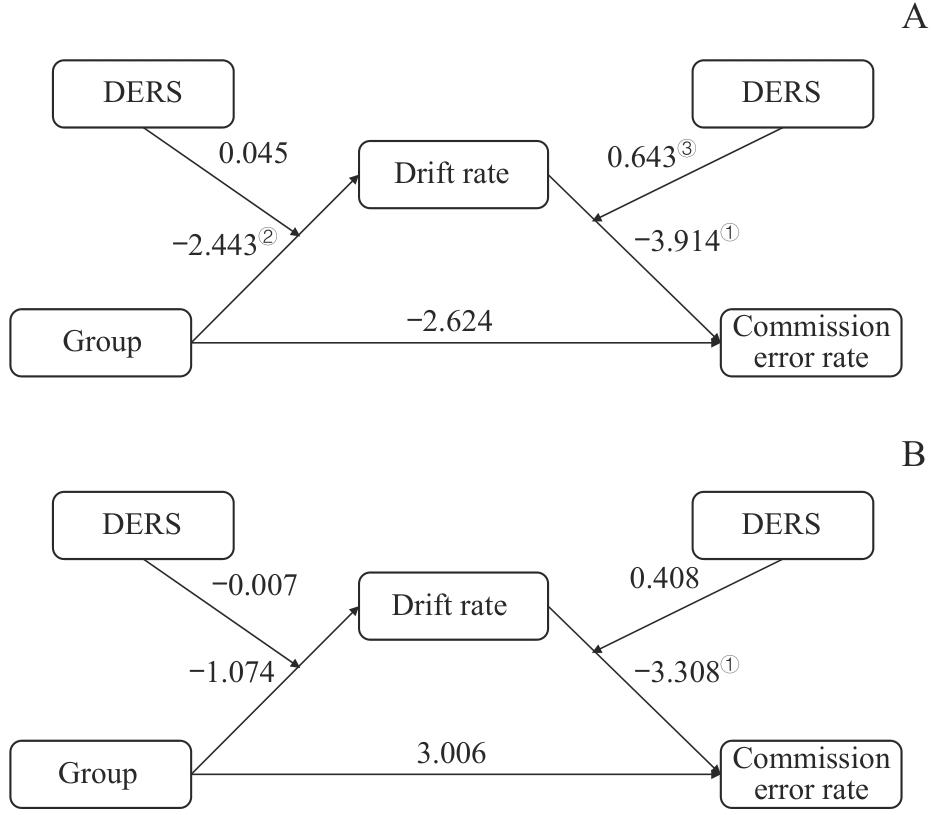
Fig 2 Path analysis of the moderated mediation model under different emotional conditions
| Variable | Drift rate | Commission error rate | ||||
|---|---|---|---|---|---|---|
| B | z value | P value | B | z value | P value | |
| Group | -1.074 | -1.380 | 0.168 | 3.006 | 1.027 | 0.304 |
| DERS | -0.007 | -0.169 | 0.866 | ‒ | ‒ | ‒ |
| Group×DERS | -0.018 | -0.344 | 0.731 | ‒ | ‒ | ‒ |
| Drift rate | ‒ | ‒ | ‒ | -3.308 | -3.623 | <0.001 |
| Drift rate×DERS | ‒ | ‒ | ‒ | -0.430 | -1.475 | 0.140 |
| R2 value | 0.161 | 0.739 | ||||
| F value | 3.260 | 11.010 | ||||
Tab 6 Moderated mediation analysis of inhibitory control under the neutral emotional condition
| Variable | Drift rate | Commission error rate | ||||
|---|---|---|---|---|---|---|
| B | z value | P value | B | z value | P value | |
| Group | -1.074 | -1.380 | 0.168 | 3.006 | 1.027 | 0.304 |
| DERS | -0.007 | -0.169 | 0.866 | ‒ | ‒ | ‒ |
| Group×DERS | -0.018 | -0.344 | 0.731 | ‒ | ‒ | ‒ |
| Drift rate | ‒ | ‒ | ‒ | -3.308 | -3.623 | <0.001 |
| Drift rate×DERS | ‒ | ‒ | ‒ | -0.430 | -1.475 | 0.140 |
| R2 value | 0.161 | 0.739 | ||||
| F value | 3.260 | 11.010 | ||||
| Effect type | Effect value | SE | 95%CI | β | P value |
|---|---|---|---|---|---|
| Total effect | 6.558 | 4.221 | -1.856‒14.972 | 0.224 | 0.123 |
| Direct effect | 3.006 | 2.926 | -2.949‒8.704 | 0.103 | 0.304 |
| Total indirect effect | 3.552 | 3.066 | -0.907‒11.000 | 0.121 | 0.247 |
| Conditional indirect effect | |||||
| Low DERS | 3.372 | 2.936 | -1.023‒10.458 | -0.003 | 0.251 |
| High DERS | 3.737 | 3.214 | -0.736‒11.654 | 0.332 | 0.245 |
Tab 7 Total effect, direct effect, and moderated mediation analysis under the neutral emotional condition
| Effect type | Effect value | SE | 95%CI | β | P value |
|---|---|---|---|---|---|
| Total effect | 6.558 | 4.221 | -1.856‒14.972 | 0.224 | 0.123 |
| Direct effect | 3.006 | 2.926 | -2.949‒8.704 | 0.103 | 0.304 |
| Total indirect effect | 3.552 | 3.066 | -0.907‒11.000 | 0.121 | 0.247 |
| Conditional indirect effect | |||||
| Low DERS | 3.372 | 2.936 | -1.023‒10.458 | -0.003 | 0.251 |
| High DERS | 3.737 | 3.214 | -0.736‒11.654 | 0.332 | 0.245 |
| [1] | World Health Organization. Global status report on alcohol and health and treatment of substance use disorders[R/OL]. (2024-11-25) [2024-12-20]. https://www.who.int/publications/i/item/9789240096745. |
| [2] | HUANG Y Q, WANG Y, WANG H, et al. Prevalence of mental disorders in China: a cross-sectional epidemiological study[J]. Lancet Psychiatry, 2019, 6(3): 211-224. |
| [3] | YU Z, HE L P, WICHAIDIT W, et al. Prevalence of alcohol-related harms in Yi and Han ethnic groups in a prefecture in Yunnan Province, China[J]. Int J Environ Res Public Health, 2022, 19(23): 16081. |
| [4] | Substance Abuse and Mental Health Services Administration. SAMHSA releases annual national survey on drug use and health[R/OL]. (2024-08-02) [2024-12-20]. https://sdaho.org/2024/08/02/samhsa-releases-annual-national-survey-on-drug-use-and-health/. |
| [5] | MIYAKE A, FRIEDMAN N P, EMERSON M J, et al. The unity and diversity of executive functions and their contributions to complex "frontal lobe" tasks: a latent variable analysis[J]. Cogn Psychol, 2000, 41(1): 49-100. |
| [6] | DIAMOND A. Executive functions[J]. Annu Rev Psychol, 2013, 64: 135-168. |
| [7] | RUBIO G, JIMÉNEZ M, RODRÍGUEZ-JIMÉNEZ R, et al. The role of behavioral impulsivity in the development of alcohol dependence: a 4-year follow-up study[J]. Alcohol Clin Exp Res, 2008, 32(9): 1681-1687. |
| [8] | SMITH J L, MATTICK R P, JAMADAR S D, et al. Deficits in behavioural inhibition in substance abuse and addiction: a meta-analysis[J]. Drug Alcohol Depend, 2014, 145: 1-33. |
| [9] | CHEN Y Z, YU H L, GAO X M. Influences of emotional information on response inhibition in gaming disorder: behavioral and ERP evidence from Go/Nogo task[J]. Int J Environ Res Public Health, 2022, 19(23): 16264. |
| [10] | ZHU S Y, LIU Q, ZHANG X L, et al. Transcutaneous auricular vagus nerve stimulation enhanced emotional inhibitory control via increasing intrinsic prefrontal couplings[J]. Int J Clin Health Psychol, 2024, 24(2): 100462. |
| [11] | HERMAN A M, DUKA T. Facets of impulsivity and alcohol use: what role do emotions play?[J]. Neurosci Biobehav Rev, 2019, 106: 202-216. |
| [12] | DVORAK R D, SARGENT E M, KILWEIN T M, et al. Alcohol use and alcohol-related consequences: associations with emotion regulation difficulties[J]. Am J Drug Alcohol Abuse, 2014, 40(2): 125-130. |
| [13] | TOWNSHEND J M, DUKA T. Mixed emotions: alcoholics' impairments in the recognition of specific emotional facial expressions[J]. Neuropsychologia, 2003, 41(7): 773-782. |
| [14] | KORNREICH C, FOISY M L, PHILIPPOT P, et al. Impaired emotional facial expression recognition in alcoholics, opiate dependence subjects, methadone maintained subjects and mixed alcohol-opiate antecedents subjects compared with normal controls[J]. Psychiatry Res, 2003, 119(3): 251-260. |
| [15] | EUSER A S, FRANKEN I H A. Alcohol affects the emotional modulation of cognitive control: an event-related brain potential study[J]. Psychopharmacology (Berl), 2012, 222(3): 459-476. |
| [16] | CAMPOS-MELADY M, SMITH J E. Memory associations between negative emotions and alcohol on the lexical decision task predict alcohol use in women[J]. Addict Behav, 2012, 37(1): 60-66. |
| [17] | BAKER T B, PIPER M E, MCCARTHY D E, et al. Addiction motivation reformulated: an affective processing model of negative reinforcement[J]. Psychol Rev, 2004, 111(1): 33-51. |
| [18] | DVORAK R D, PEARSON M R, SARGENT E M, et al. Daily associations between emotional functioning and alcohol involvement: moderating effects of response inhibition and gender[J]. Drug Alcohol Depend, 2016, 163: S46-S53. |
| [19] | LI Q, BABOR T F, HAO W, et al. The Chinese translations of Alcohol Use Disorders Identification Test (AUDIT) in China: a systematic review[J]. Alcohol Alcohol, 2011, 46(4): 416-423. |
| [20] | KAUFMAN E A, XIA M Y, FOSCO G, et al. The Difficulties in Emotion Regulation Scale Short Form (DERS-SF): validation and replication in adolescent and adult samples[J]. J Psychopathol Behav Assess, 2016, 38(3): 443-455. |
| [21] | WIECKI T V, SOFER I, FRANK M J. HDDM: hierarchical Bayesian estimation of the drift-diffusion model in Python[J]. Front Neuroinform, 2013, 7: 14. |
| [22] | GOLD J I, SHADLEN M N. The neural basis of decision making[J]. Annu Rev Neurosci, 2007, 30: 535-574. |
| [23] | FORSTMANN B U, ANWANDER A, SCHÄFER A, et al. Cortico-striatal connections predict control over speed and accuracy in perceptual decision making[J]. Proc Natl Acad Sci USA, 2010, 107(36): 15916-15920. |
| [24] | SMITH P L, RATCLIFF R. Psychology and neurobiology of simple decisions[J]. Trends Neurosci, 2004, 27(3): 161-168. |
| [25] | ROSSEEL Y. lavaan: An R package for structural equation modeling[J]. J Stat Soft, 2012, 48(2): 1-36. |
| [26] | 温忠麟, 张雷, 侯杰泰, 等. 中介效应检验程序及其应用[J]. 心理学报, 2004, 36(5): 614-620. |
| WEN Z L, ZHANG L, HOU J T, et al. Testing and application of the mediating effects[J]. Acta Psychologica Sinica, 2004, 36(5): 614-620. | |
| [27] | MATHEWS A, MACLEOD C. Cognitive approaches to emotion and emotional disorders[J]. Annu Rev Psychol, 1994(45): 25-50. |
| [28] | ÖHMAN A, FLYKT A, ESTEVES F. Emotion drives attention: detecting the snake in the grass[J]. J Exp Psychol Gen, 2001, 130(3): 466-478. |
| [29] | BAR-HAIM Y, LAMY D, PERGAMIN L, et al. Threat-related attentional bias in anxious and nonanxious individuals: a meta-analytic study[J]. Psychol Bull, 2007, 133(1): 1-24. |
| [30] | ZELAZO P D, MORRIS I F, QU L, et al. Hot executive function: emotion and the development of cognitive control[M]//Child development at the intersection of emotion and cognition. 2nd ed. Washington: American Psychological Association, 2024: 51-73. |
| [31] | MENNELLA R, VILAREM E, GRÈZES J. Rapid approach-avoidance responses to emotional displays reflect value-based decisions: neural evidence from an EEG study[J]. Neuroimage, 2020, 222: 117253. |
| [32] | GIVON E, ITZHAK-RAZ A, KARMON-PRESSER A, et al. How does the emotional experience evolve? Feeling generation as evidence accumulation[J]. Emotion, 2020, 20(2): 271-285. |
| [33] | PICHON S, BEDIOU B, ANTICO L, et al. Emotion perception in habitual players of action video games[J]. Emotion, 2021, 21(6): 1324-1339. |
| [34] | BARI A, XU S Y, PIGNATELLI M, et al. Differential attentional control mechanisms by two distinct noradrenergic coeruleo-frontal cortical pathways[J]. Proc Natl Acad Sci USA, 2020, 117(46): 29080-29089. |
| [35] | EYSENCK M W, DERAKSHAN N, SANTOS R, et al. Anxiety and cognitive performance: attentional control theory[J]. Emotion, 2007, 7(2): 336-353. |
| [36] | ANGELOPOULOU E, DRIGAS A. Working memory, attention and their relationship: a theoretical overview[J]. Res Soc Dev, 2021, 10(5): e46410515288. |
| [37] | HERD T, KIM-SPOON J. A systematic review of associations between adverse peer experiences and emotion regulation in adolescence[J]. Clin Child Fam Psychol Rev, 2021, 24(1): 141-163. |
| [38] | MCRAE K. Cognitive emotion regulation: a review of theory and scientific findings[J]. Curr Opin Behav Sci, 2016, 10: 119-124. |
| [39] | HARE B D, DUMAN R S. Prefrontal cortex circuits in depression and anxiety: contribution of discrete neuronal populations and target regions[J]. Mol Psychiatry, 2020, 25(11): 2742-2758. |
| [40] | LAI T T, GERICKE B, FEJA M, et al. Anxiety in synucleinopathies: neuronal circuitry, underlying pathomechanisms and current therapeutic strategies[J]. NPJ Parkinsons Dis, 2023, 9(1): 97. |
| [1] | HU Yan-ran1, 2, CHEN Han1#, YUE Ling1, XU Yi-xiang1, LIU Qiang1, KANG Qing1, GUO Lei1, RUAN Lie-min3, CHEN Jue 1#. Response inhibition function in patients with drug-naive bulimia nervosa [J]. JOURNAL OF SHANGHAI JIAOTONG UNIVERSITY (MEDICAL SCIENCE), 2020, 40(6): 809-813. |
| Viewed | ||||||
|
Full text |
|
|||||
|
Abstract |
|
|||||
