
Journal of Shanghai Jiao Tong University (Medical Science) ›› 2025, Vol. 45 ›› Issue (8): 1001-1008.doi: 10.3969/j.issn.1674-8115.2025.08.007
• Clinical research • Previous Articles Next Articles
ZHAO Keke, LI Hui, ZHANG Chong( )
)
Received:2025-04-05
Accepted:2025-05-28
Online:2025-08-28
Published:2025-08-28
Contact:
ZHANG Chong
E-mail:zhangchong@xinhuamed.com.cn
Supported by:CLC Number:
ZHAO Keke, LI Hui, ZHANG Chong. A single-center retrospective cohort study of rituximab combined with glucocorticoids in the treatment of high-risk primary membranous nephropathy[J]. Journal of Shanghai Jiao Tong University (Medical Science), 2025, 45(8): 1001-1008.
Add to citation manager EndNote|Ris|BibTeX
URL: https://xuebao.shsmu.edu.cn/EN/10.3969/j.issn.1674-8115.2025.08.007
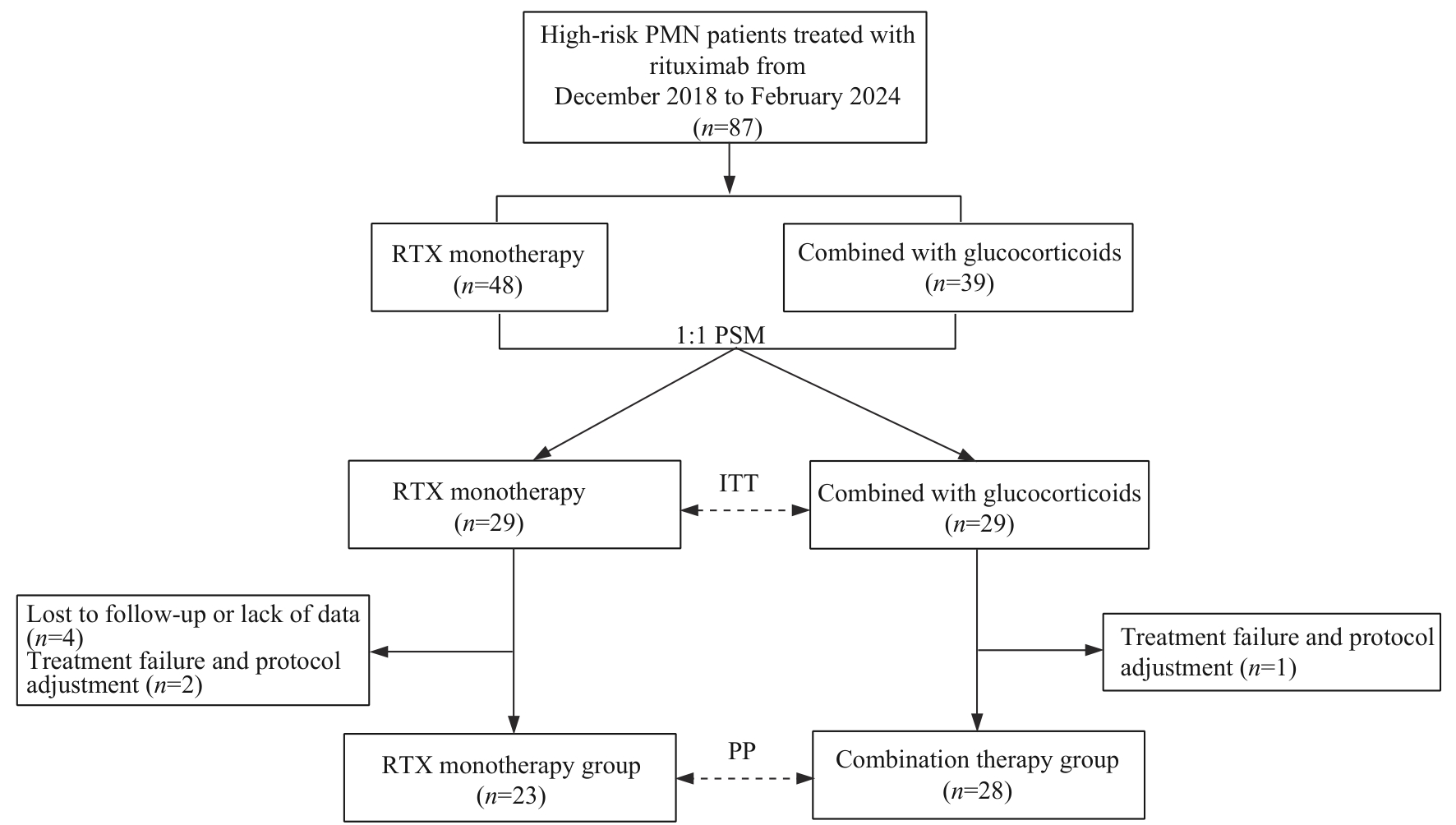
Fig 1 Flowchart of patient enrollment, treatment allocation, and ITT/PP analyses
| Characteristic | Before PSM | After PSM | |||||||
|---|---|---|---|---|---|---|---|---|---|
| RTX monotherapy group (n=48) | Combination therapy group (n=39) | χ2/Z/t value | P value | RTX monotherapy group (n=29) | Combination therapy group (n=29) | χ2/Z/t value | P value | ||
| Age/year | 65.50 (54.75, 73.00) | 66.00 (50.50, 71.00) | -0.76 | 0.445 | 65.00 (54.00, 72.00) | 59.00 (41.00, 72.00) | -0.83 | 0.405 | |
| Gender (male)/n(%) | 32 (66.67) | 29 (74.36) | 0.61 | 0.436 | 20 (68.97) | 22 (75.86) | 0.35 | 0.557 | |
| Diabetes/n(%) | 14 (29.17) | 6 (15.38) | 2.31 | 0.129 | 5 (17.24) | 5 (17.24) | 0.00 | >0.999 | |
| Hypertension/n(%) | 32 (66.67) | 26 (66.67) | 0.00 | >0.999 | 18 (62.07) | 18 (62.07) | 0.00 | >0.999 | |
| BMI/(kg·m-2) | 24.25 (23.02, 26.17) | 24.22 (22.65, 25.31) | -1.05 | 0.296 | 24.28 (23.14, 26.45) | 24.22 (22.47, 25.16) | -1.09 | 0.276 | |
| White blood cell/(×109·L-1) | 6.19 (4.92, 7.15) | 7.07 (5.71, 9.44) | -2.10 | 0.036 | 6.99±2.32 | 6.93±2.05 | 0.10 | 0.922 | |
| Hemoglobin/(g·L-1) | 124.92±20.57 | 118.23±21.64 | 1.47 | 0.145 | 124.34±22.83 | 120.72±21.73 | 0.62 | 0.539 | |
| Platelet/(×1012·L-1) | 232.60±66.38 | 248.62±66.18 | -1.12 | 0.266 | 240.00 (200.00, 253.00) | 247.00 (196.00, 284.00) | -0.27 | 0.785 | |
| Urinary protein/[mg·(24 h)-1] | 5 550.50 (4 560.69, 7 459.99) | 6 349.98 (5 072.83, 9 487.98) | -1.82 | 0.068 | 5 973.11 (4 840.58, 8 465.80) | 6 312.40 (4 928.22, 9 036.11) | -0.51 | 0.610 | |
| Albumin/(g·L-1) | 25.26±5.16 | 22.84±5.44 | 2.12 | 0.037 | 24.92±5.33 | 22.61±6.08 | 1.54 | 0.129 | |
| Blood urea nitrogen/(mg·dL-1) | 7.21 (5.43, 8.35) | 8.00 (7.00, 11.34) | -2.52 | 0.012 | 7.51 (5.62, 8.39) | 8.00 (7.00, 10.74) | -1.29 | 0.197 | |
| Serum creatinine/(μmol·L-1) | 74.00 (60.00, 100.75) | 100.00 (67.50, 120.60) | 2.03 | 0.043 | 85.00 (66.00, 118.00) | 96.00 (65.00, 111.00) | -0.05 | 0.963 | |
| eGFR/[mL·(min·1.73 m2)-1] | 81.97±28.49 | 71.42±28.97 | 1.70 | 0.092 | 76.14±27.98 | 78.53±26.94 | -0.33 | 0.742 | |
| eGFR<60 mL·(min·1.73 m2)-1/n(%) | 13 (27.08) | 14 (35.90) | 0.78 | 0.377 | 10 (34.48) | 7 (24.14) | 0.75 | 0.387 | |
| Fasting blood glucose/(mmol·L-1) | 5.15 (4.64, 5.56) | 4.80 (4.66, 5.20) | -1.35 | 0.177 | 4.91 (4.59, 5.40) | 4.81 (4.71, 5.21) | -0.07 | 0.943 | |
| HbA1c/% | 5.90 (5.38, 6.30) | 6.00 (5.40, 6.10) | -0.23 | 0.816 | 5.89±0.75 | 5.84±0.69 | 0.24 | 0.809 | |
PLA2R antibody-associated PMN/n(%) | 35 (72.92) | 30 (76.92) | 0.18 | 0.669 | 21 (72.41) | 23 (79.31) | 0.38 | 0.539 | |
| PLA2R antibody/(RU·mL-1) | 65.41 (6.81, 175.96) | 45.41 (9.21, 191.62) | -0.06 | 0.949 | 73.23 (6.45, 183.00) | 43.93 (9.27, 167.93) | -0.04 | 0.969 | |
| CD19+ B cell/μL-1 | 223.78 (114.60, 379.77) | 160.38 (106.22, 312.25) | -0.85 | 0.394 | 209.28 (90.51, 378.50) | 149.78 (113.01, 266.82) | -0.57 | 0.569 | |
| CD20+ B cell/μL-1 | 210.54 (111.68, 376.24) | 158.24 (98.82, 284.31) | -0.90 | 0.368 | 201.45 (88.99, 372.83) | 146.13 (108.59, 245.85) | -0.70 | 0.482 | |
| Initial therapy/n(%) | 22 (45.83) | 23 (58.97) | 1.49 | 0.223 | 15 (51.72) | 14 (48.28) | 0.07 | 0.793 | |
| RTX initial treatment regimen/n(%) | 36 (75.00) | 19 (48.72) | 6.39 | 0.011 | 22 (75.86) | 16 (55.17) | 2.75 | 0.097 | |
| RTX total dose/g | 2.00 (2.00, 2.40) | 2.40 (2.00, 3.00) | -2.33 | 0.020 | 2.00 (2.00, 2.30) | 2.00 (2.00, 3.00) | -1.71 | 0.088 | |
| Re-RTX/n(%) | 12 (25.00) | 13 (33.33) | 0.73 | 0.393 | 5 (17.24) | 8 (27.59) | 0.89 | 0.345 | |
| RASi/n(%) | 21 (43.75) | 19 (48.72) | 0.21 | 0.644 | 11 (37.93) | 13 (44.83) | 0.28 | 0.594 | |
| SGLT2i/n(%) | 21 (43.75) | 20 (51.28) | 0.49 | 0.484 | 12 (41.38) | 16 (55.17) | 1.10 | 0.293 | |
| Anticoagulant/n(%) | 26 (54.17) | 29 (74.36) | 3.77 | 0.052 | 17 (58.62) | 22 (75.86) | 1.96 | 0.162 | |
Tab 1 General condition and baseline laboratory indicators of the patients
| Characteristic | Before PSM | After PSM | |||||||
|---|---|---|---|---|---|---|---|---|---|
| RTX monotherapy group (n=48) | Combination therapy group (n=39) | χ2/Z/t value | P value | RTX monotherapy group (n=29) | Combination therapy group (n=29) | χ2/Z/t value | P value | ||
| Age/year | 65.50 (54.75, 73.00) | 66.00 (50.50, 71.00) | -0.76 | 0.445 | 65.00 (54.00, 72.00) | 59.00 (41.00, 72.00) | -0.83 | 0.405 | |
| Gender (male)/n(%) | 32 (66.67) | 29 (74.36) | 0.61 | 0.436 | 20 (68.97) | 22 (75.86) | 0.35 | 0.557 | |
| Diabetes/n(%) | 14 (29.17) | 6 (15.38) | 2.31 | 0.129 | 5 (17.24) | 5 (17.24) | 0.00 | >0.999 | |
| Hypertension/n(%) | 32 (66.67) | 26 (66.67) | 0.00 | >0.999 | 18 (62.07) | 18 (62.07) | 0.00 | >0.999 | |
| BMI/(kg·m-2) | 24.25 (23.02, 26.17) | 24.22 (22.65, 25.31) | -1.05 | 0.296 | 24.28 (23.14, 26.45) | 24.22 (22.47, 25.16) | -1.09 | 0.276 | |
| White blood cell/(×109·L-1) | 6.19 (4.92, 7.15) | 7.07 (5.71, 9.44) | -2.10 | 0.036 | 6.99±2.32 | 6.93±2.05 | 0.10 | 0.922 | |
| Hemoglobin/(g·L-1) | 124.92±20.57 | 118.23±21.64 | 1.47 | 0.145 | 124.34±22.83 | 120.72±21.73 | 0.62 | 0.539 | |
| Platelet/(×1012·L-1) | 232.60±66.38 | 248.62±66.18 | -1.12 | 0.266 | 240.00 (200.00, 253.00) | 247.00 (196.00, 284.00) | -0.27 | 0.785 | |
| Urinary protein/[mg·(24 h)-1] | 5 550.50 (4 560.69, 7 459.99) | 6 349.98 (5 072.83, 9 487.98) | -1.82 | 0.068 | 5 973.11 (4 840.58, 8 465.80) | 6 312.40 (4 928.22, 9 036.11) | -0.51 | 0.610 | |
| Albumin/(g·L-1) | 25.26±5.16 | 22.84±5.44 | 2.12 | 0.037 | 24.92±5.33 | 22.61±6.08 | 1.54 | 0.129 | |
| Blood urea nitrogen/(mg·dL-1) | 7.21 (5.43, 8.35) | 8.00 (7.00, 11.34) | -2.52 | 0.012 | 7.51 (5.62, 8.39) | 8.00 (7.00, 10.74) | -1.29 | 0.197 | |
| Serum creatinine/(μmol·L-1) | 74.00 (60.00, 100.75) | 100.00 (67.50, 120.60) | 2.03 | 0.043 | 85.00 (66.00, 118.00) | 96.00 (65.00, 111.00) | -0.05 | 0.963 | |
| eGFR/[mL·(min·1.73 m2)-1] | 81.97±28.49 | 71.42±28.97 | 1.70 | 0.092 | 76.14±27.98 | 78.53±26.94 | -0.33 | 0.742 | |
| eGFR<60 mL·(min·1.73 m2)-1/n(%) | 13 (27.08) | 14 (35.90) | 0.78 | 0.377 | 10 (34.48) | 7 (24.14) | 0.75 | 0.387 | |
| Fasting blood glucose/(mmol·L-1) | 5.15 (4.64, 5.56) | 4.80 (4.66, 5.20) | -1.35 | 0.177 | 4.91 (4.59, 5.40) | 4.81 (4.71, 5.21) | -0.07 | 0.943 | |
| HbA1c/% | 5.90 (5.38, 6.30) | 6.00 (5.40, 6.10) | -0.23 | 0.816 | 5.89±0.75 | 5.84±0.69 | 0.24 | 0.809 | |
PLA2R antibody-associated PMN/n(%) | 35 (72.92) | 30 (76.92) | 0.18 | 0.669 | 21 (72.41) | 23 (79.31) | 0.38 | 0.539 | |
| PLA2R antibody/(RU·mL-1) | 65.41 (6.81, 175.96) | 45.41 (9.21, 191.62) | -0.06 | 0.949 | 73.23 (6.45, 183.00) | 43.93 (9.27, 167.93) | -0.04 | 0.969 | |
| CD19+ B cell/μL-1 | 223.78 (114.60, 379.77) | 160.38 (106.22, 312.25) | -0.85 | 0.394 | 209.28 (90.51, 378.50) | 149.78 (113.01, 266.82) | -0.57 | 0.569 | |
| CD20+ B cell/μL-1 | 210.54 (111.68, 376.24) | 158.24 (98.82, 284.31) | -0.90 | 0.368 | 201.45 (88.99, 372.83) | 146.13 (108.59, 245.85) | -0.70 | 0.482 | |
| Initial therapy/n(%) | 22 (45.83) | 23 (58.97) | 1.49 | 0.223 | 15 (51.72) | 14 (48.28) | 0.07 | 0.793 | |
| RTX initial treatment regimen/n(%) | 36 (75.00) | 19 (48.72) | 6.39 | 0.011 | 22 (75.86) | 16 (55.17) | 2.75 | 0.097 | |
| RTX total dose/g | 2.00 (2.00, 2.40) | 2.40 (2.00, 3.00) | -2.33 | 0.020 | 2.00 (2.00, 2.30) | 2.00 (2.00, 3.00) | -1.71 | 0.088 | |
| Re-RTX/n(%) | 12 (25.00) | 13 (33.33) | 0.73 | 0.393 | 5 (17.24) | 8 (27.59) | 0.89 | 0.345 | |
| RASi/n(%) | 21 (43.75) | 19 (48.72) | 0.21 | 0.644 | 11 (37.93) | 13 (44.83) | 0.28 | 0.594 | |
| SGLT2i/n(%) | 21 (43.75) | 20 (51.28) | 0.49 | 0.484 | 12 (41.38) | 16 (55.17) | 1.10 | 0.293 | |
| Anticoagulant/n(%) | 26 (54.17) | 29 (74.36) | 3.77 | 0.052 | 17 (58.62) | 22 (75.86) | 1.96 | 0.162 | |
| Characteristic | ITT | PP | ||||||
|---|---|---|---|---|---|---|---|---|
| RTX monotherapy group (n=29) | Combination therapy group (n=29) | X2/Z/t value | P value | RTX monotherapy group (n=23) | Combination therapy group (n=28) | X2/Z/t value | P value | |
| Overall remission/n(%) | ||||||||
| 6 months | 14 (48.28) | 20 (68.97) | 2.56 | 0.110 | 13 (56.52) | 20 (71.43) | 1.23 | 0.268 |
| 12 months | 21 (72.41) | 23 (79.31) | 0.38 | 0.539 | 18 (78.26) | 23 (82.14) | 0.12 | 0.728 |
| CR/n(%) | ||||||||
| 6 months | 5 (17.24) | 14 (48.28) | 6.34 | 0.012 | 5 (21.74) | 14 (50.00) | 4.31 | 0.038 |
| 12 months | 6 (20.69) | 16 (55.17) | 7.32 | 0.007 | 6 (26.09) | 16 (57.14) | 4.97 | 0.026 |
| CR time/month | 6.50 (6.00, 7.75) | 5.50 (5.00, 8.25) | -1.27 | 0.204 | 6.50 (6.00, 7.75) | 5.50 (5.00, 8.25) | -1.27 | 0.204 |
Tab 2 Clinical remission at 6 and 12 months follow-up
| Characteristic | ITT | PP | ||||||
|---|---|---|---|---|---|---|---|---|
| RTX monotherapy group (n=29) | Combination therapy group (n=29) | X2/Z/t value | P value | RTX monotherapy group (n=23) | Combination therapy group (n=28) | X2/Z/t value | P value | |
| Overall remission/n(%) | ||||||||
| 6 months | 14 (48.28) | 20 (68.97) | 2.56 | 0.110 | 13 (56.52) | 20 (71.43) | 1.23 | 0.268 |
| 12 months | 21 (72.41) | 23 (79.31) | 0.38 | 0.539 | 18 (78.26) | 23 (82.14) | 0.12 | 0.728 |
| CR/n(%) | ||||||||
| 6 months | 5 (17.24) | 14 (48.28) | 6.34 | 0.012 | 5 (21.74) | 14 (50.00) | 4.31 | 0.038 |
| 12 months | 6 (20.69) | 16 (55.17) | 7.32 | 0.007 | 6 (26.09) | 16 (57.14) | 4.97 | 0.026 |
| CR time/month | 6.50 (6.00, 7.75) | 5.50 (5.00, 8.25) | -1.27 | 0.204 | 6.50 (6.00, 7.75) | 5.50 (5.00, 8.25) | -1.27 | 0.204 |
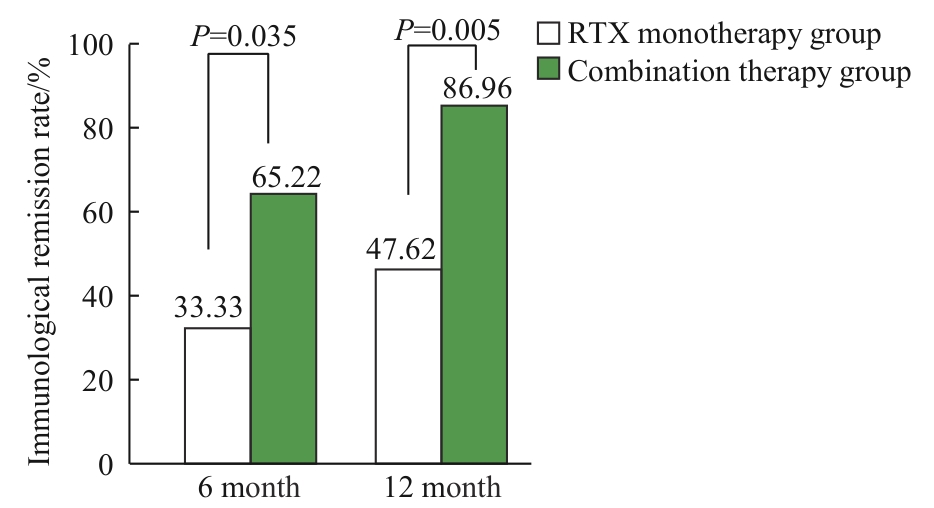
Fig 2 Immunological remission in PLA2R-associated PMN
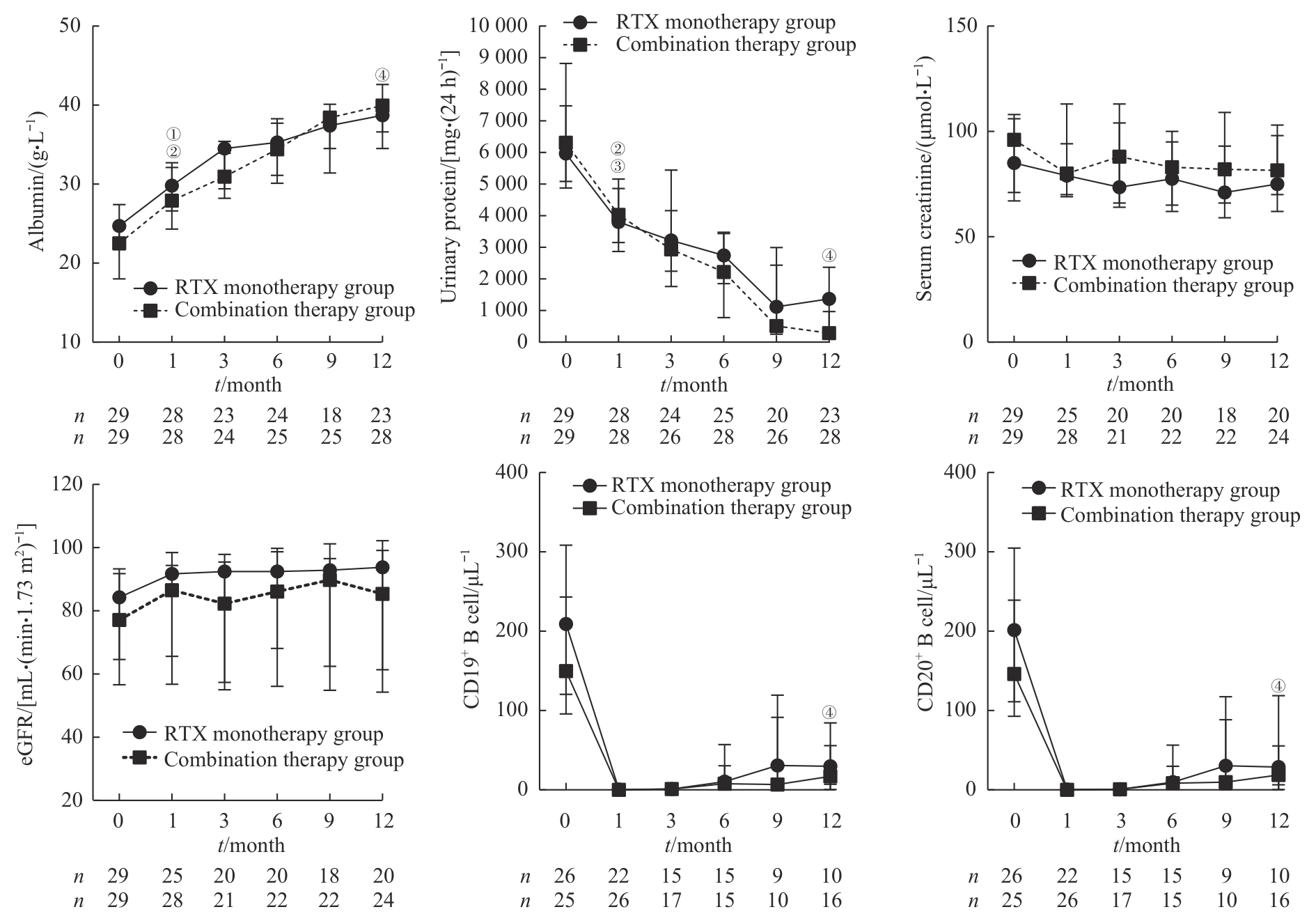
Fig 3 The trend of main indicators over time
| Characteristic | ITT | PP | ||||||
|---|---|---|---|---|---|---|---|---|
| RTX monotherapy group (n=29) | Combination therapy group (n=29) | χ2/Z/t value | P value | RTX monotherapy group (n=23) | Combination therapy group (n=28) | χ2/Z/t value | P value | |
| Urinary protein/[mg·(24 h)-1] | 1 855.68 (514.38, 3 042.58)① | 290.57 (114.44, 1 614.40)① | -2.26 | 0.024 | 1 509.86 (221.80, 2 631.64)① | 296.50 (69.60, 1 398.60)① | -1.80 | 0.072 |
| Albumin/(g·L-1) | 37.80 (33.22, 40.40)① | 39.95 (33.08, 42.88)① | -1.11 | 0.266 | 38.70 (35.00, 40.50)① | 40.20 (32.80, 42.75)① | -0.42 | 0.677 |
| Blood urea nitrogen/(mg·dL-1) | 6.94 (5.49, 8.36) | 7.00 (6.33, 9.99) | -1.45 | 0.148 | 6.94 (5.81, 8.22) | 6.66 (6.10, 10.40) | -1.22 | 0.221 |
| Serum creatinine/(μmol·L-1) | 78.00 (62.50, 104.00) | 80.50 (64.50, 80.50) | -0.65 | 0.514 | 75.00 (62.00, 98.00) | 81.00 (70.00, 99.00) | -1.04 | 0.299 |
| eGFR/[mL·(min·1.73 m2)-1] | 95.02 (54.67, 100.99) | 89.25 (64.03, 105.30) | -0.10 | 0.919 | 93.77 (54.31, 99.14) | 85.36 (66.73, 105.54) | -0.05 | 0.961 |
| Fasting blood glucose/(mmol·L-1) | 5.02 (4.73, 5.64) | 4.75 (4.52, 5.17) | -1.60 | 0.109 | 5.12 (4.79, 5.68) | 4.75 (4.52, 5.17) | -1.92 | 0.055 |
| HbA1c/% | 5.59±0.41 | 5.50±0.40 | 0.67 | 0.507 | 5.70±0.48 | 5.50±0.40 | 1.45 | 0.156 |
| PLA2R antibody/(RU·mL-1) | 0 (0, 3.63)① | 0 (0, 0)① | -0.70 | 0.484 | 0 (0, 3.16)① | 0 (0, 0)① | -0.22 | 0.830 |
Tab 3 Laboratory indicators at 12-month follow-up
| Characteristic | ITT | PP | ||||||
|---|---|---|---|---|---|---|---|---|
| RTX monotherapy group (n=29) | Combination therapy group (n=29) | χ2/Z/t value | P value | RTX monotherapy group (n=23) | Combination therapy group (n=28) | χ2/Z/t value | P value | |
| Urinary protein/[mg·(24 h)-1] | 1 855.68 (514.38, 3 042.58)① | 290.57 (114.44, 1 614.40)① | -2.26 | 0.024 | 1 509.86 (221.80, 2 631.64)① | 296.50 (69.60, 1 398.60)① | -1.80 | 0.072 |
| Albumin/(g·L-1) | 37.80 (33.22, 40.40)① | 39.95 (33.08, 42.88)① | -1.11 | 0.266 | 38.70 (35.00, 40.50)① | 40.20 (32.80, 42.75)① | -0.42 | 0.677 |
| Blood urea nitrogen/(mg·dL-1) | 6.94 (5.49, 8.36) | 7.00 (6.33, 9.99) | -1.45 | 0.148 | 6.94 (5.81, 8.22) | 6.66 (6.10, 10.40) | -1.22 | 0.221 |
| Serum creatinine/(μmol·L-1) | 78.00 (62.50, 104.00) | 80.50 (64.50, 80.50) | -0.65 | 0.514 | 75.00 (62.00, 98.00) | 81.00 (70.00, 99.00) | -1.04 | 0.299 |
| eGFR/[mL·(min·1.73 m2)-1] | 95.02 (54.67, 100.99) | 89.25 (64.03, 105.30) | -0.10 | 0.919 | 93.77 (54.31, 99.14) | 85.36 (66.73, 105.54) | -0.05 | 0.961 |
| Fasting blood glucose/(mmol·L-1) | 5.02 (4.73, 5.64) | 4.75 (4.52, 5.17) | -1.60 | 0.109 | 5.12 (4.79, 5.68) | 4.75 (4.52, 5.17) | -1.92 | 0.055 |
| HbA1c/% | 5.59±0.41 | 5.50±0.40 | 0.67 | 0.507 | 5.70±0.48 | 5.50±0.40 | 1.45 | 0.156 |
| PLA2R antibody/(RU·mL-1) | 0 (0, 3.63)① | 0 (0, 0)① | -0.70 | 0.484 | 0 (0, 3.16)① | 0 (0, 0)① | -0.22 | 0.830 |
| Adverse event | RTX monotherapy group | Combination therapy group |
|---|---|---|
| Respiratory infection/n | 5 | 4 |
| Skin infection/n | 0 | 2 |
| Gastrointestinal hemorrhage/n | 0 | 1 |
| Cerebrovascular accident/n | 1 | 1 |
| Acute coronary syndrome/n | 1 | 0 |
| Pulmonary embolism/n | 1 | 0 |
Tab 4 Adverse events during follow-up
| Adverse event | RTX monotherapy group | Combination therapy group |
|---|---|---|
| Respiratory infection/n | 5 | 4 |
| Skin infection/n | 0 | 2 |
| Gastrointestinal hemorrhage/n | 0 | 1 |
| Cerebrovascular accident/n | 1 | 1 |
| Acute coronary syndrome/n | 1 | 0 |
| Pulmonary embolism/n | 1 | 0 |
| [1] | RONCO P, BECK L, DEBIEC H, et al. Membranous nephropathy[J]. Nat Rev Dis Primers, 2021, 7(1): 69. |
| [2] | GAUCKLER P, SHIN J I, ALBERICI F, et al. Rituximab in membranous nephropathy[J]. Kidney Int Rep, 2021, 6(4): 881-893. |
| [3] | KANIGICHERLA D A K, KEHAGIA A A, JAMSHIDI B, et al. Prospective study of the effect of rituximab on kidney function in membranous nephropathy[J]. Clin Kidney J, 2024, 17(8): sfae179. |
| [4] | Kidney Disease: Improving Global Outcomes (KDIGO) Glomerular Diseases Work Group. KDIGO 2021 clinical practice guideline for the management of glomerular diseases[J]. Kidney Int, 2021, 100(4S): S1-S276. |
| [5] | FERVENZA F C, APPEL G B, BARBOUR S J, et al. Rituximab or cyclosporine in the treatment of membranous nephropathy[J]. N Engl J Med, 2019, 381(1): 36-46. |
| [6] | FERNÁNDEZ-JUÁREZ G, ROJAS-RIVERA J, VAN DE LOGT A E, et al. The STARMEN trial indicates that alternating treatment with corticosteroids and cyclophosphamide is superior to sequential treatment with tacrolimus and rituximab in primary membranous nephropathy[J]. Kidney Int, 2021, 99(4): 986-998. |
| [7] | WALDMAN M, BECK L H, BRAUN M, et al. Membranous nephropathy: pilot study of a novel regimen combining cyclosporine and rituximab[J]. Kidney Int Rep, 2016, 1(2): 73-84. |
| [8] | CHEN X, JIAO S M, LI S M, et al. Combination of rituximab and low-dose tacrolimus in the treatment of refractory membranous nephropathy: a retrospective cohort study[J]. Balkan Med J, 2023, 40(4): 287-293. |
| [9] | DONG L J, YAN L, LI Y, et al. The monitoring of B lymphocytes in non-lymphoma patients following rituximab treatment[J]. Front Immunol, 2024, 15: 1513303. |
| [10] | HOGAN S L, MULLER K E, JENNETTE J C, et al. A review of therapeutic studies of idiopathic membranous glomerulopathy[J]. Am J Kidney Dis, 1995, 25(6): 862-875. |
| [11] | FLAMMER J R, ROGATSKY I. Minireview: glucocorticoids in autoimmunity: unexpected targets and mechanisms[J]. Mol Endocrinol, 2011, 25(7): 1075-1086. |
| [12] | SHIMBA A, IKUTA K. Control of immunity by glucocorticoids in health and disease[J]. Semin Immunopathol, 2020, 42(6): 669-680. |
| [13] | KAMBUROVA E G, KOENEN H J P M, BORGMAN K J E, et al. A single dose of rituximab does not deplete B cells in secondary lymphoid organs but alters phenotype and function[J]. Am J Transplant, 2013, 13(6): 1503-1511. |
| [14] | ROCAMORA-REVERTE L, VILLUNGER A, JAN WIEGERS G. Cell-specific immune regulation by glucocorticoids in murine models of infection and inflammation[J]. Cells, 2022, 11(14): 2126. |
| [15] | LI Y H, GAO Z Q, ZHU J H, et al. Comparison of dosage of glucocorticoid in idiopathic membranous nephropathy: a systematic review and network meta-analysis[J]. Cureus, 2024, 16(1): e51936. |
| [16] | MA Q Q, LI M N, XU G S. Combination of rituximab and short-term glucocorticoids in the treatment of anti-phospholipase A2 receptor antibody positive idiopathic membranous nephropathy[J]. Clin Exp Med, 2023, 23(8): 5337-5343. |
| [17] | ZONOZI R, LALIBERTE K, HUIZENGA N R, et al. Combination of rituximab, low-dose cyclophosphamide, and prednisone for primary membranous nephropathy: a case series with extended follow up[J]. Am J Kidney Dis, 2021, 78(6): 793-803. |
| [18] | VINK C H, WETZELS J F M, LOGT A V. Combination therapy with rituximab and low-dose cyclophosphamide and prednisone in membranous nephropathy[J]. Kidney Int Rep, 2024, 9(12): 3439-3445. |
| [1] | HUANG Zhouxuan, SHAO Jingbo. Research progress in the treatment of chronic primary immune thrombocytopenia [J]. Journal of Shanghai Jiao Tong University (Medical Science), 2025, 45(4): 508-516. |
| [2] | FENG Linhong, WANG Yakun, WU Qianqian, ZHU Yingchun, BAI Shoujun. Clinical analysis of rituximab for adult refractory primary membranous nephropathy [J]. Journal of Shanghai Jiao Tong University (Medical Science), 2023, 43(3): 301-307. |
| [3] | HU Ningning, ZHANG Dan, ZOU Jun, ZHANG Chong, LIN Fujun, JIANG Gengru. Efficacy and safety evaluation of tacrolimus monotherapy in the treatment of idiopathic membranous nephropathy [J]. Journal of Shanghai Jiao Tong University (Medical Science), 2022, 42(12): 1685-1692. |
| [4] | Ya-jie ZHU, Hui LIN, Xi CHEN, Yi-ran ZHAO, Xin-mei LIU, He-feng HUANG. Change of cortisol level in umbilical cord blood of neonates delivered by gestational diabetes mellitus mothers and its influence on offspring health [J]. JOURNAL OF SHANGHAI JIAOTONG UNIVERSITY (MEDICAL SCIENCE), 2021, 41(1): 49-54. |
| [5] | JI Yin-hong, REN Hong. Research progress of the mechanism of rituximab in the treatment of focal segmental glomerulosclerosis [J]. JOURNAL OF SHANGHAI JIAOTONG UNIVERSITY (MEDICAL SCIENCE), 2020, 40(5): 693-697. |
| [6] | YANG Xiao-qian1,XIE Jing-yuan1, 2, MOU Shan2, 3. Advances in application of rituximab in treatment of primary glomerulonephritis [J]. , 2018, 38(3): 333-. |
| [7] | ZHAO Chu-xian, GAO Feng, RONG Shu, SHANG Ming-hua. Lupus nephritis accompanied with Castleman’s disease: a case report and literature review [J]. , 2017, 37(12): 1710-. |
| [8] | CHEN Yong, YANG Xiao-yu, CAI Ze-jun. Correlation of changes of GR expression in Leydig tumor cells and cell apoptosis induced by corticosterone [J]. , 2011, 31(7): 884-. |
| [9] | JIANG Yin-ling, ZHAO Heng, NIU Yan-jie, et al. Analysis of clinical characteristics and treatment of intrathoracic sarcoidosis [J]. , 2011, 31(3): 353-. |
| Viewed | ||||||
|
Full text |
|
|||||
|
Abstract |
|
|||||
