
Journal of Shanghai Jiao Tong University (Medical Science) ›› 2024, Vol. 44 ›› Issue (9): 1094-1103.doi: 10.3969/j.issn.1674-8115.2024.09.004
• Basic research • Previous Articles Next Articles
LIANG Mengchen( ), LI Jiaqi(), WU Xinyi, MO Xiaohui, JU Qiang()
Received:2024-05-03
Accepted:2024-07-18
Online:2024-09-28
Published:2024-09-28
Contact:
JU Qiang
E-mail:2894791478@qq.com;jqedison@163.com;qiangju401@sina.com
Supported by:CLC Number:
LIANG Mengchen, LI Jiaqi, WU Xinyi, MO Xiaohui, JU Qiang. Analysis of hair follicle microbiota in non-lesional areas of patients with moderate-to-severe acne vulgaris: a single-center cross-sectional study[J]. Journal of Shanghai Jiao Tong University (Medical Science), 2024,(9): 1094-1103.
Add to citation manager EndNote|Ris|BibTeX
URL: https://xuebao.shsmu.edu.cn/EN/10.3969/j.issn.1674-8115.2024.09.004
| Primer name | Primer sequence (5′→3′) | Amplified region |
|---|---|---|
| 341F | CCTACGGGNGGCWGCAG | V3‒4[ |
| 805R | GACTACHVGGGTATCTAATCC |
Tab 1 Primer sequences
| Primer name | Primer sequence (5′→3′) | Amplified region |
|---|---|---|
| 341F | CCTACGGGNGGCWGCAG | V3‒4[ |
| 805R | GACTACHVGGGTATCTAATCC |
| Step | Program |
|---|---|
| Step 1 | 95 ℃ 30 s |
| Step 2 (40 cycles) | 95 ℃ 5 s; 55 ℃ 30 s; 72 ℃ 30 s |
| Step 3 (dissociation stage) | 94 ℃ 30 s; 70 ℃ 1.5 min; 94 ℃ 10 s |
Tab 2 qPCR absolute quantification program
| Step | Program |
|---|---|
| Step 1 | 95 ℃ 30 s |
| Step 2 (40 cycles) | 95 ℃ 5 s; 55 ℃ 30 s; 72 ℃ 30 s |
| Step 3 (dissociation stage) | 94 ℃ 30 s; 70 ℃ 1.5 min; 94 ℃ 10 s |
| Characteristic | C group (n=11) | M group (n=10) | S group (n=11) | H/χ² value | P value |
|---|---|---|---|---|---|
| Gender/n(%) | 0.182 | 0.913 | |||
| Male | 5 (45.5) | 5 (50.0) | 6 (54.5) | ||
| Female | 6 (54.5) | 5 (50.0) | 5 (45.5) | ||
| Age/year | 24.64±1.63 | 21.90±2.88 | 23.18±5.42 | 3.827 | 0.252 |
| Ethnic group/n(%) | 1.971 | 0.373 | |||
| Han | 10 (90.9) | 10 (100.0) | 11 (100.0) | ||
| Bai | 1 (9.1) | 0 (0) | 0 (0) | ||
| Education/n(%) | 2.676 | 0.262 | |||
| Senior high school/technical secondary school | 4 (36.4) | 2 (20.0) | 6 (54.5) | ||
| Junior college and above | 7 (63.6) | 8 (80.0) | 5 (45.5) | ||
| Work/n(%) | 1.703 | 0.427 | |||
| In service | 3 (27.3) | 2 (20.0) | 5 (45.5) | ||
| Not in service | 8 (72.7) | 8 (80.0) | 6 (54.5) | ||
| Habitual residence/n(%) | 2.147 | 0.342 | |||
| Shanghai | 11 (100.0) | 9 (90.0) | 9 (81.8) | ||
| Others | 0 (0) | 1 (10.0) | 2 (18.2) |
Tab 3 General characteristics of the three groups
| Characteristic | C group (n=11) | M group (n=10) | S group (n=11) | H/χ² value | P value |
|---|---|---|---|---|---|
| Gender/n(%) | 0.182 | 0.913 | |||
| Male | 5 (45.5) | 5 (50.0) | 6 (54.5) | ||
| Female | 6 (54.5) | 5 (50.0) | 5 (45.5) | ||
| Age/year | 24.64±1.63 | 21.90±2.88 | 23.18±5.42 | 3.827 | 0.252 |
| Ethnic group/n(%) | 1.971 | 0.373 | |||
| Han | 10 (90.9) | 10 (100.0) | 11 (100.0) | ||
| Bai | 1 (9.1) | 0 (0) | 0 (0) | ||
| Education/n(%) | 2.676 | 0.262 | |||
| Senior high school/technical secondary school | 4 (36.4) | 2 (20.0) | 6 (54.5) | ||
| Junior college and above | 7 (63.6) | 8 (80.0) | 5 (45.5) | ||
| Work/n(%) | 1.703 | 0.427 | |||
| In service | 3 (27.3) | 2 (20.0) | 5 (45.5) | ||
| Not in service | 8 (72.7) | 8 (80.0) | 6 (54.5) | ||
| Habitual residence/n(%) | 2.147 | 0.342 | |||
| Shanghai | 11 (100.0) | 9 (90.0) | 9 (81.8) | ||
| Others | 0 (0) | 1 (10.0) | 2 (18.2) |
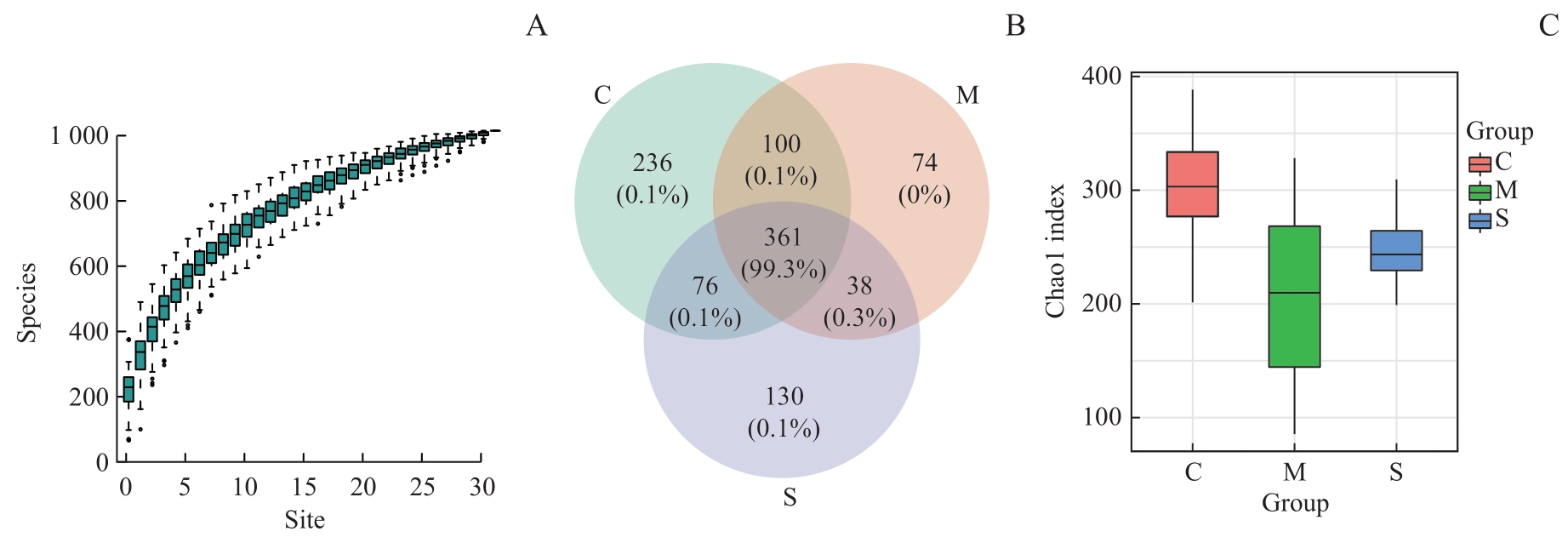
Fig 1 α diversity analysis of follicular microbiome of the three groups
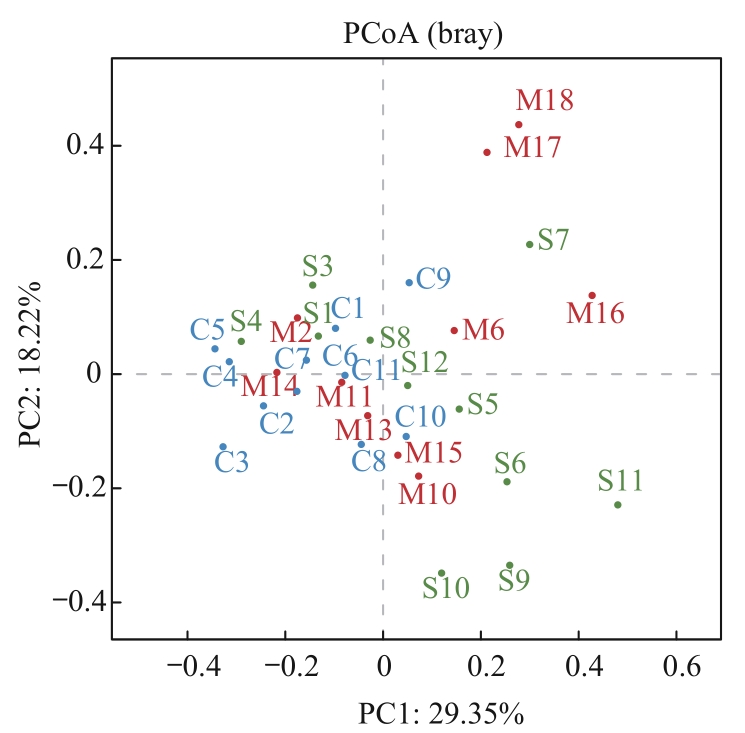
Fig 2 β-diversity analysis of hair follicle microbiome of the three groups
| Phylum | Abundance/% | ||
|---|---|---|---|
| C group (n=11) | M group (n=10) | S group (n=11) | |
| Actinobacteria | 61.48±19.39 | 58.48±17.59 | 49.64±28.26 |
| Firmicutes | 21.94±16.10 | 35.42±18.37 | 43.90±26.42 |
| Proteobacteria | 14.84±15.23 | 5.27±5.79 | 5.51±5.41 |
| Bacteroidetes | 0.86±0.88 | 0.27±0.29 | 0.59±1.13 |
| Others | 0.88±0.55 | 0.56±0.57 | 0.36±0.49 |
Tab 4 Abundance of bacterial flora at the phylum level in three sample groups (%)
| Phylum | Abundance/% | ||
|---|---|---|---|
| C group (n=11) | M group (n=10) | S group (n=11) | |
| Actinobacteria | 61.48±19.39 | 58.48±17.59 | 49.64±28.26 |
| Firmicutes | 21.94±16.10 | 35.42±18.37 | 43.90±26.42 |
| Proteobacteria | 14.84±15.23 | 5.27±5.79 | 5.51±5.41 |
| Bacteroidetes | 0.86±0.88 | 0.27±0.29 | 0.59±1.13 |
| Others | 0.88±0.55 | 0.56±0.57 | 0.36±0.49 |
| Genus | Abundance/% | ||
|---|---|---|---|
C group (n=11) | M group (n=10) | S group (n=11) | |
| Staphylococcus | 13.05±11.54 | 31.54±17.84 | 37.30±27.09 |
| Propionibacterium | 36.99±17.67 | 25.94±19.63 | 23.78±16.30 |
| Unclassified Actinomycetales | 18.78±19.20 | 23.38±15.96 | 19.58±17.88 |
| Corynebacterium | 2.09±2.77 | 8.28±11.28 | 5.47±4.74 |
| Unclassified Neisseriaceae | 4.36±8.64 | 0.06±0.08 | 0.86±2.48 |
| Others | 24.73±22.90 | 10.80±9.32 | 13.01±22.05 |
Tab 5 Abundance of bacterial flora at the genus level in three sample groups (%)
| Genus | Abundance/% | ||
|---|---|---|---|
C group (n=11) | M group (n=10) | S group (n=11) | |
| Staphylococcus | 13.05±11.54 | 31.54±17.84 | 37.30±27.09 |
| Propionibacterium | 36.99±17.67 | 25.94±19.63 | 23.78±16.30 |
| Unclassified Actinomycetales | 18.78±19.20 | 23.38±15.96 | 19.58±17.88 |
| Corynebacterium | 2.09±2.77 | 8.28±11.28 | 5.47±4.74 |
| Unclassified Neisseriaceae | 4.36±8.64 | 0.06±0.08 | 0.86±2.48 |
| Others | 24.73±22.90 | 10.80±9.32 | 13.01±22.05 |
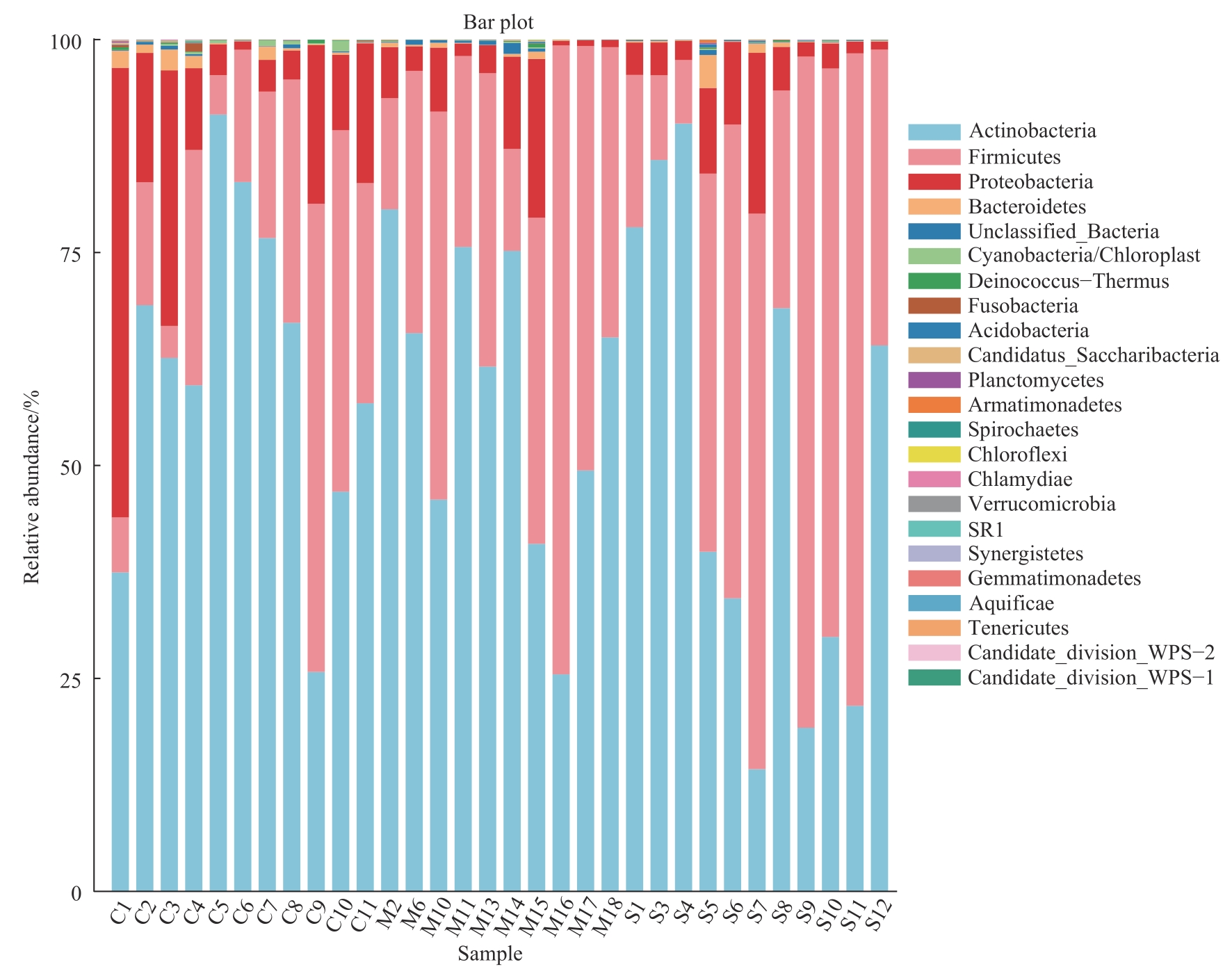
Fig 3 Column diagram of relative abundance of hair follicle microbiome at the phylum level in the three groups

Fig 4 Column diagram of relative abundance of hair follicle microbiome at the genus level in the three groups
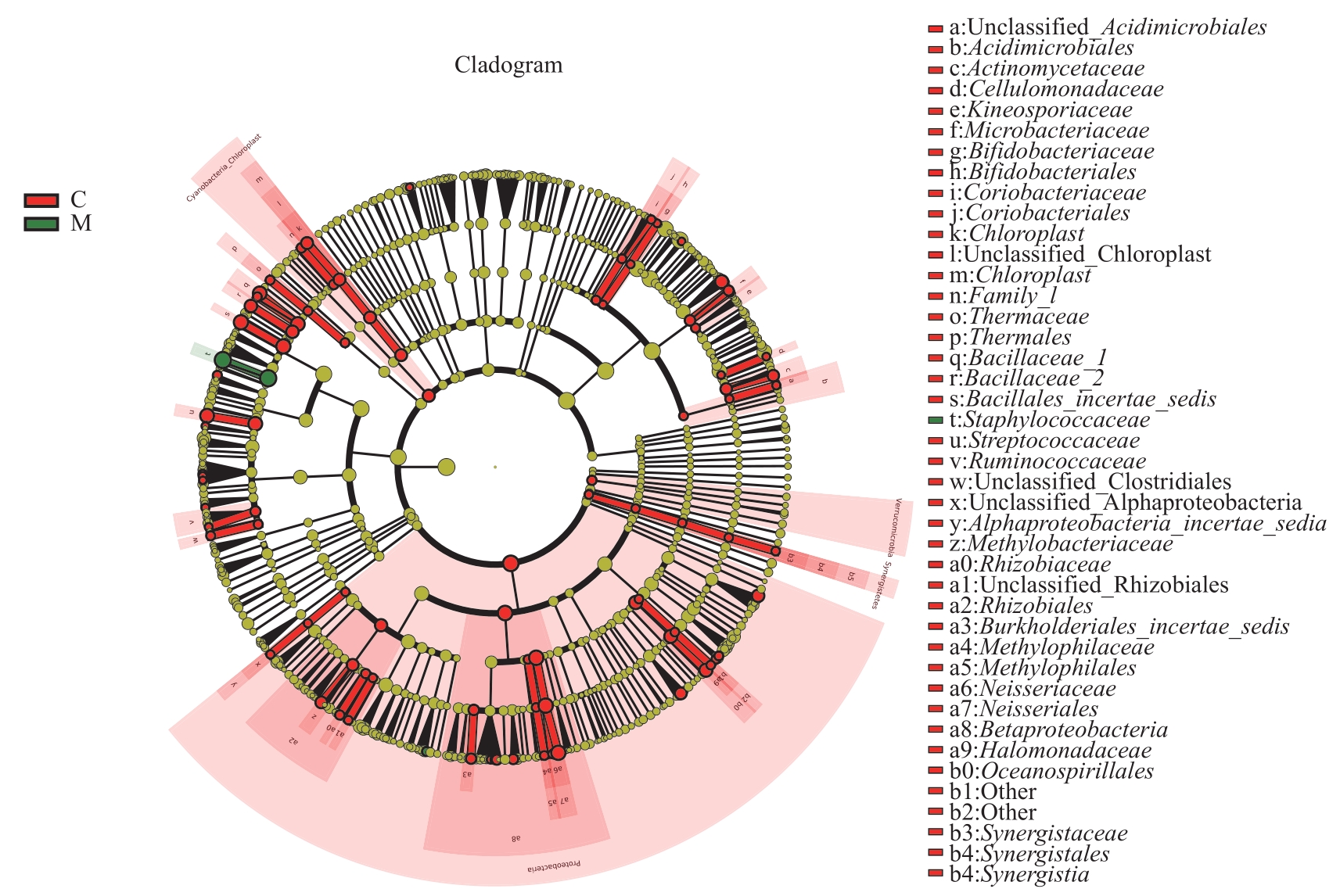
Fig 5 LEfSe cladogram of analysis of follicular microbiome in C group and M group
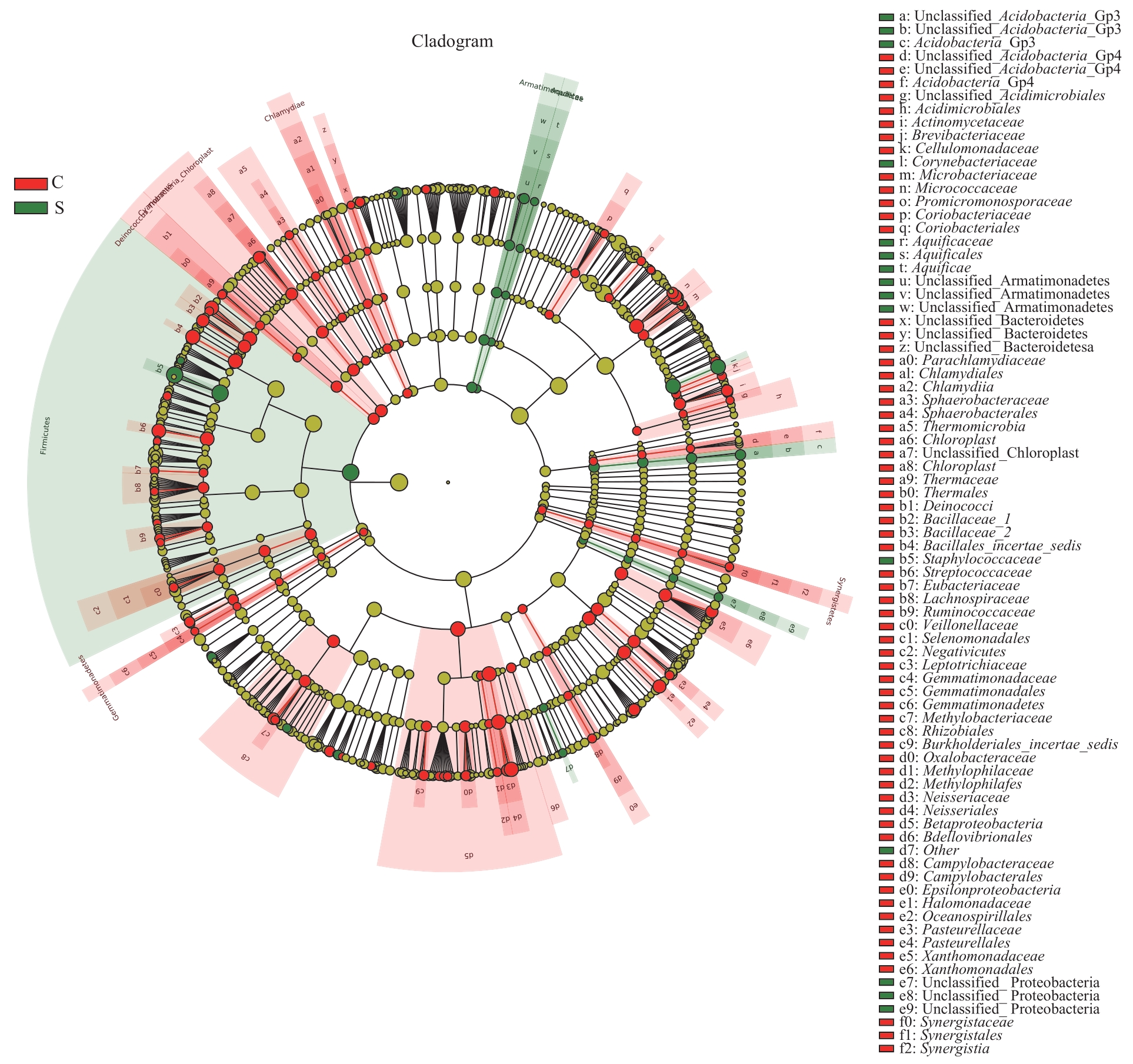
Fig 6 LEfSe cladogram of analysis of hair follicle microbiome in Group C and Group S
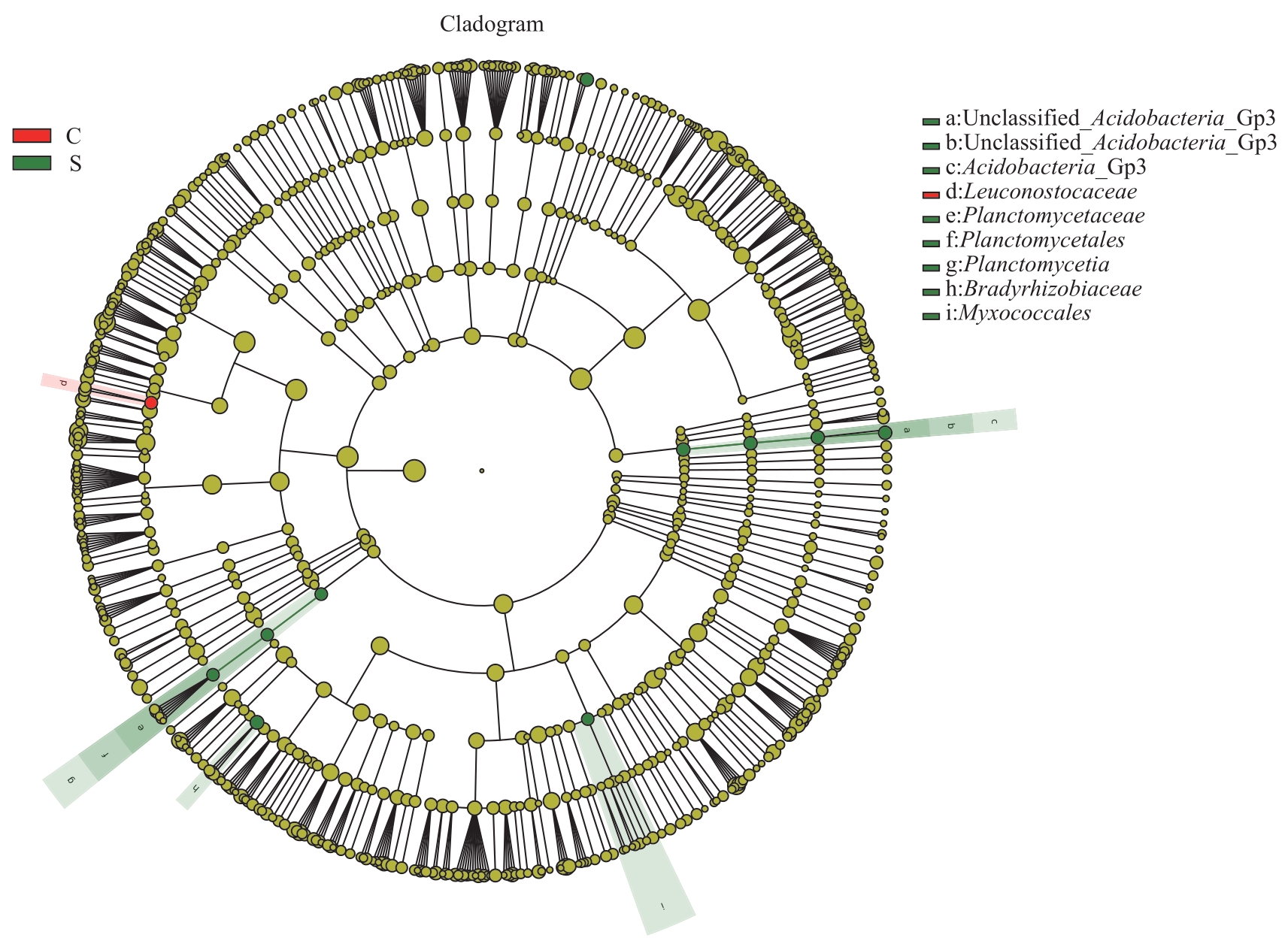
Fig 7 LEfSe cladogram of analysis of hair follicle microbiome in Group M and Group S
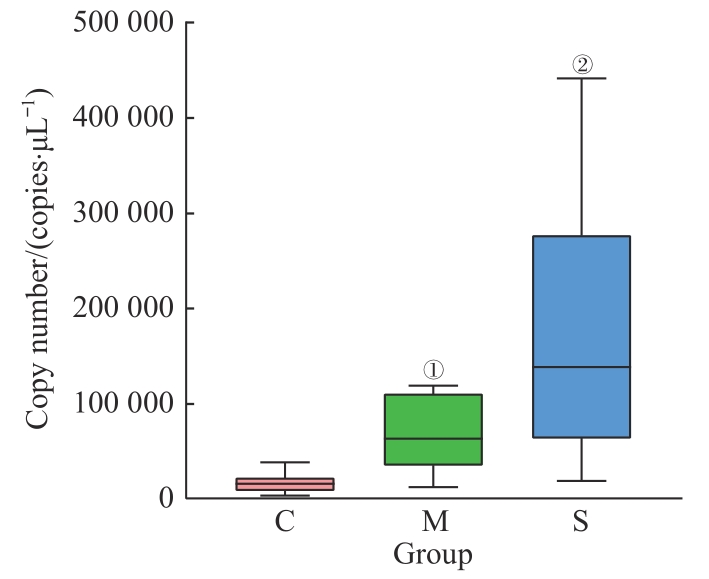
Fig 8 Box plots of total number of follicular bacterial copies of the three groups
| 1 | CHEN Y, KNIGHT R, GALLO R L. Evolving approaches to profiling the microbiome in skin disease[J]. Front Immunol, 2023, 14: 1151527. |
| 2 | LAYTON A M, RAVENSCROFT J. Adolescent acne Vulgaris: current and emerging treatments[J]. Lancet Child Adolesc Health, 2023, 7(2): 136-144. |
| 3 | BERRY K, LIM J, ZAENGLEIN A L. Acne Vulgaris: treatment made easy for the primary care physician[J]. Pediatr Ann, 2020, 49(3): e109-e115. |
| 4 | CHUA W, POH S E, LI H. Secretory proteases of the human skin microbiome[J]. Infect Immun, 2022, 90(1): e0039721. |
| 5 | SHI J, CHENG J W, ZHANG Q, et al. Comparison of the skin microbiota of patients with acne Vulgaris and healthy controls[J]. Ann Palliat Med, 2021, 10(7): 7933-7941. |
| 6 | NUMATA S, AKAMATSU H, AKAZA N, et al. Analysis of facial skin-resident microbiota in Japanese acne patients[J]. Dermatology, 2014, 228(1): 86-92. |
| 7 | XU X X, RAN X, TANG J Q, et al. Skin microbiota in non-inflammatory and inflammatory lesions of acne Vulgaris: the underlying changes within the pilosebaceous unit[J]. Mycopathologia, 2021, 186(6): 863-869. |
| 8 | WITKOWSKI J A, PARISH L C. The assessment of acne: an evaluation of grading and lesion counting in the measurement of acne[J]. Clin Dermatol, 2004, 22(5): 394-397. |
| 9 | SPESHOCK J L, BRADY J A, EASTMAN J, et al. Impact of manure storage time and temperature on microbial composition and stable fly (Diptera: Muscidae) development[J]. AiM, 2019, 9(3): 248-265. |
| 10 | LEE Y B, BYUN E J, KIM H S. Potential role of the microbiome in acne: a comprehensive review[J]. J Clin Med, 2019, 8(7): 987. |
| 11 | BYRD A L, BELKAID Y, SEGRE J A. The human skin microbiome[J]. Nat Rev Microbiol, 2018, 16(3): 143-155. |
| 12 | KOH L F, ONG R Y, COMMON J E. Skin microbiome of atopic dermatitis[J]. Allergol Int, 2022, 71(1): 31-39. |
| 13 | SUNG K H. Microbiota in Rosacea[J]. Am J Clin Dermatol, 2020, 21(Suppl 1): 1-11. |
| 14 | SKOWRON K, BAUZA-KASZEWSKA J, KRASZEWSKA Z, et al. Human skin microbiome: impact of intrinsic and extrinsic factors on skin microbiota[J]. Microorganisms, 2021, 9(3): 543. |
| 15 | ISARD O, KNOL A C, ARIÈS M F, et al. Propionibacterium acnes activates the IGF-1/IGF-1R system in the epidermis and induces keratinocyte proliferation[J]. J Invest Dermatol, 2011, 131(1): 59-66. |
| 16 | AKAZA N, AKAMATSU H, KISHI M, et al. Effects of Propionibacterium acnes on various mRNA expression levels in normal human epidermal keratinocytes in vitro[J]. J Dermatol, 2009, 36(4): 213-223. |
| 17 | FITZ-GIBBON S, TOMIDA S, CHIU B H, et al. Propionibacterium acnes strain populations in the human skin microbiome associated with acne[J]. J Invest Dermatol, 2013, 133(9): 2152-2160. |
| 18 | DRENO B, MARTIN R, MOYAL D, et al. Skin microbiome and acne Vulgaris: Staphylococcus, a new actor in acne[J]. Exp Dermatol, 2017, 26(9): 798-803. |
| 19 | O'NEILL A M, NAKATSUJI T, HAYACHI A, et al. Identification of a human skin commensal bacterium that selectively kills cutibacteriumacnes[J]. J Invest Dermatol, 2020, 140(8): 1619-1628.e2. |
| 20 | XIA X L, LI Z H, LIU K W, et al. Staphylococcal LTA-induced miR-143 inhibits Propionibacterium acnes-mediated inflammatory response in skin[J]. J Invest Dermatol, 2016, 136(3): 621-630. |
| 21 | COTTER P D, HILL C, ROSS R P. Bacterial lantibiotics: strategies to improve therapeutic potential[J]. Curr Protein Pept Sci, 2005, 6(1): 61-75. |
| 22 | MARITO S, KESHARI S, TRAISAENG S, et al. Electricity-producing Staphylococcus epidermidis counteracts Cutibacterium acnes[J]. Sci Rep, 2021, 11(1): 12001. |
| 23 | DAGNELIE M A, CORVEC S, TIMON-DAVID E, et al. Cutibacterium acnes and Staphylococcus epidermidis: the unmissable modulators of skin inflammatory response[J]. Exp Dermatol, 2022, 31(3): 406-412. |
| 24 | LI D H, CHEN Q, LIU Y, et al. The prevalence of acne in Mainland China: a systematic review and meta-analysis[J]. BMJ Open, 2017, 7(4): e015354. |
| 25 | LI C X, YOU Z X, LIN Y X, et al. Skin microbiome differences relate to the grade of acne Vulgaris[J]. J Dermatol, 2019, 46(9): 787-790. |
| 26 | KÕLJALG U, NILSSON R H, ABARENKOV K, et al. Towards a unified paradigm for sequence-based identification of fungi[J]. Mol Ecol, 2013, 22(21): 5271-5277. |
| 27 | SU T T, LAI S C, LEE A, et al. Meta-analysis: proton pump inhibitors moderately increase the risk of small intestinal bacterial overgrowth[J]. J Gastroenterol, 2018, 53(1): 27-36. |
| 28 | PIMENTEL M, SAAD R J, LONG M D, et al. ACG clinical guideline: small intestinal bacterial overgrowth[J]. Am J Gastroenterol, 2020, 115(2): 165-178. |
| 29 | EFREMOVA I, MASLENNIKOV R, POLUEKTOVA E, et al. Epidemiology of small intestinal bacterial overgrowth[J]. World J Gastroenterol, 2023, 29(22): 3400-3421. |
| [1] | . Practice for multidisciplinary diagnosis and treatment of dermatofibrosarcoma protuberans: expert consensus of Shanghai Ninth People's Hospital, Shanghai Jiao Tong University School of Medicine (2020 edition) [J]. JOURNAL OF SHANGHAI JIAOTONG UNIVERSITY (MEDICAL SCIENCE), 2021, 41(12): 1669-1675. |
| [2] | Hao-jun ZHUANG, Mei-liang GUO, Wan-wen LIU, Hui DENG. Clinical research progress of Janus kinase inhibitors in the treatment of atopic dermatitis [J]. JOURNAL OF SHANGHAI JIAOTONG UNIVERSITY (MEDICAL SCIENCE), 2021, 41(7): 963-966. |
| Viewed | ||||||
|
Full text |
|
|||||
|
Abstract |
|
|||||
