
Journal of Shanghai Jiao Tong University (Medical Science) ›› 2024, Vol. 44 ›› Issue (9): 1205-1212.doi: 10.3969/j.issn.1674-8115.2024.09.016
• Forum • Previous Articles
CHEN Lihong1( ), WANG Yan1, ZHOU Xiangtian1, ZHENG Junke2, YAN Xiaoxiang1()
Received:2024-07-25
Accepted:2024-08-06
Online:2024-09-28
Published:2024-09-28
Contact:
YAN Xiaoxiang
E-mail:chenlihong@shsmu.edu.cn;cardexyanxx@hotmail.com
CLC Number:
CHEN Lihong, WANG Yan, ZHOU Xiangtian, ZHENG Junke, YAN Xiaoxiang. Influencing factors of the approval of the Young Scientists Fund of National Natural Science Foundation of China: a case study of Shanghai Jiao Tong University School of Medicine[J]. Journal of Shanghai Jiao Tong University (Medical Science), 2024,(9): 1205-1212.
Add to citation manager EndNote|Ris|BibTeX
URL: https://xuebao.shsmu.edu.cn/EN/10.3969/j.issn.1674-8115.2024.09.016
| Variable | Approved group (n=582) | Unapproved group (n=339) | χ2/Z value | P value |
|---|---|---|---|---|
| Gender/n(%) | 2.69 | 0.101 | ||
| Male | 213 (36.60) | 106 (31.27) | ||
| Female | 369 (63.40) | 233 (68.73) | ||
| Age/year | 31.00 (29.00, 33.00) | 32.00 (30.00, 34.00) | 170 944 | 0.000 |
| Educational background/n(%) | 125.09 | 0.000 | ||
| Bachelor | 0 (0) | 4 (1.18) | ||
| Master | 65 (11.17) | 142 (41.89) | ||
| Doctor | 517 (88.83) | 193 (56.93) | ||
| Graduate university/n(%) | 20.50 | 0.000 | ||
| 985 project university | 470 (80.76) | 237 (69.91) | ||
| Non-985 project university | 76 (13.06) | 84 (24.78) | ||
| Overseas university | 36 (6.19) | 18 (5.31) | ||
| Years of graduation/year | 1.00 (0, 3.00) | 2.00 (1.00, 6.00) | 182 530 | 0.000 |
| Postdoctoral experience/n(%) | 178 (30.58) | 50 (14.75) | 28.84 | 0.000 |
| Institution/n(%) | 2.22 | 0.136 | ||
| Affiliated hospital | 534 (91.75) | 320 (94.40) | ||
| College | 48 (8.25) | 19 (5.60) | ||
| Title of a professional post/n(%) | 12.74 | 0.002 | ||
| Junior and below | 381 (65.46) | 183 (53.98) | ||
| Intermediate | 180 (30.93) | 144 (42.48) | ||
| Senior | 21 (3.61) | 12 (3.54) | ||
| Job category/n(%) | 35.13 | 0.000 | ||
| Doctor | 361 (62.03) | 209 (61.65) | ||
| Full-time scientific researcher | 172 (29.55) | 61 (17.99) | ||
| Others | 49 (8.42) | 69 (20.35) | ||
| Number of applications/n(%) | 29.29 | 0.000 | ||
| 1 time | 319 (54.81) | 138 (40.83) | ||
| 2 times | 123 (21.13) | 116 (34.32) | ||
| 3 times | 98 (16.84) | 52 (15.38) | ||
| 4 or more times | 42 (7.22) | 33 (9.73) | ||
| Application department/n(%) | 4.12 | 0.127 | ||
| Department of Health Sciences | 504 (86.60) | 296 (87.32) | ||
| Department of Life Sciences | 44 (7.56) | 16 (4.72) | ||
| Other departments | 34 (5.84) | 27 (7.96) | ||
| Attributes of scientific questions/n(%) | 1.87 | 0.599 | ||
| Exploration and highlight originality | 63 (10.82) | 37 (10.91) | ||
| Cutting-edge area with the development of new methodology | 315 (54.12) | 171 (50.44) | ||
| Demand-driven bottleneck | 174 (29.90) | 116 (34.22) | ||
| Universal orientation and transdisciplinary convergence | 30 (5.15) | 15 (4.42) | ||
| Consistency of the application with the doctoral research/n(%) | 430 (73.88) | 143 (42.18) | 72.75 | 0.000 |
| Consistency between the application and supporting laboratory/n(%) | 521 (89.52) | 244 (71.98) | 42.68 | 0.000 |
| Medical-engineering science cross research/n(%) | 79 (13.57) | 42 (12.39) | 0.21 | 0.646 |
| Having participated in national projects such as the National Natural Science Foundation of China/n(%) | 485 (83.33) | 216 (63.72) | 43.95 | 0.000 |
| Other approved scientific research or talent projects before applying for Young Scientists Fund/n(%) | 289 (49.66) | 136 (40.12) | 6.99 | 0.008 |
| Previous experience in writing National Natural Science Foundation of China/n(%) | 326 (56.01) | 178 (52.51) | 0.65 | 0.421 |
| Sufficient foundation of previous work/n(%) | 551 (94.67) | 204 (60.18) | 168.27 | 0.000 |
| Number of representative papers | 2.00 (1.00, 3.00) | 2.00 (1.00, 3.00) | 142 365 | 0.000 |
| Average impact factor of representative papers | 6.15 (4.28, 9.53) | 3.88 (2.06, 5.90) | 89 105 | 0.000 |
| Highest impact factor of representative papers | 10.20 (6.60, 15.90) | 6.00 (4.00, 10.20) | 108 042 | 0.000 |
| Total self-evaluated score of the application/score | 86.00 (81.00, 90.00) | 75.00 (65.00, 81.00) | 82 262 | 0.000 |
Tab 1 Single factor analysis of the approval of the Young Scientists Fund (n=921)
| Variable | Approved group (n=582) | Unapproved group (n=339) | χ2/Z value | P value |
|---|---|---|---|---|
| Gender/n(%) | 2.69 | 0.101 | ||
| Male | 213 (36.60) | 106 (31.27) | ||
| Female | 369 (63.40) | 233 (68.73) | ||
| Age/year | 31.00 (29.00, 33.00) | 32.00 (30.00, 34.00) | 170 944 | 0.000 |
| Educational background/n(%) | 125.09 | 0.000 | ||
| Bachelor | 0 (0) | 4 (1.18) | ||
| Master | 65 (11.17) | 142 (41.89) | ||
| Doctor | 517 (88.83) | 193 (56.93) | ||
| Graduate university/n(%) | 20.50 | 0.000 | ||
| 985 project university | 470 (80.76) | 237 (69.91) | ||
| Non-985 project university | 76 (13.06) | 84 (24.78) | ||
| Overseas university | 36 (6.19) | 18 (5.31) | ||
| Years of graduation/year | 1.00 (0, 3.00) | 2.00 (1.00, 6.00) | 182 530 | 0.000 |
| Postdoctoral experience/n(%) | 178 (30.58) | 50 (14.75) | 28.84 | 0.000 |
| Institution/n(%) | 2.22 | 0.136 | ||
| Affiliated hospital | 534 (91.75) | 320 (94.40) | ||
| College | 48 (8.25) | 19 (5.60) | ||
| Title of a professional post/n(%) | 12.74 | 0.002 | ||
| Junior and below | 381 (65.46) | 183 (53.98) | ||
| Intermediate | 180 (30.93) | 144 (42.48) | ||
| Senior | 21 (3.61) | 12 (3.54) | ||
| Job category/n(%) | 35.13 | 0.000 | ||
| Doctor | 361 (62.03) | 209 (61.65) | ||
| Full-time scientific researcher | 172 (29.55) | 61 (17.99) | ||
| Others | 49 (8.42) | 69 (20.35) | ||
| Number of applications/n(%) | 29.29 | 0.000 | ||
| 1 time | 319 (54.81) | 138 (40.83) | ||
| 2 times | 123 (21.13) | 116 (34.32) | ||
| 3 times | 98 (16.84) | 52 (15.38) | ||
| 4 or more times | 42 (7.22) | 33 (9.73) | ||
| Application department/n(%) | 4.12 | 0.127 | ||
| Department of Health Sciences | 504 (86.60) | 296 (87.32) | ||
| Department of Life Sciences | 44 (7.56) | 16 (4.72) | ||
| Other departments | 34 (5.84) | 27 (7.96) | ||
| Attributes of scientific questions/n(%) | 1.87 | 0.599 | ||
| Exploration and highlight originality | 63 (10.82) | 37 (10.91) | ||
| Cutting-edge area with the development of new methodology | 315 (54.12) | 171 (50.44) | ||
| Demand-driven bottleneck | 174 (29.90) | 116 (34.22) | ||
| Universal orientation and transdisciplinary convergence | 30 (5.15) | 15 (4.42) | ||
| Consistency of the application with the doctoral research/n(%) | 430 (73.88) | 143 (42.18) | 72.75 | 0.000 |
| Consistency between the application and supporting laboratory/n(%) | 521 (89.52) | 244 (71.98) | 42.68 | 0.000 |
| Medical-engineering science cross research/n(%) | 79 (13.57) | 42 (12.39) | 0.21 | 0.646 |
| Having participated in national projects such as the National Natural Science Foundation of China/n(%) | 485 (83.33) | 216 (63.72) | 43.95 | 0.000 |
| Other approved scientific research or talent projects before applying for Young Scientists Fund/n(%) | 289 (49.66) | 136 (40.12) | 6.99 | 0.008 |
| Previous experience in writing National Natural Science Foundation of China/n(%) | 326 (56.01) | 178 (52.51) | 0.65 | 0.421 |
| Sufficient foundation of previous work/n(%) | 551 (94.67) | 204 (60.18) | 168.27 | 0.000 |
| Number of representative papers | 2.00 (1.00, 3.00) | 2.00 (1.00, 3.00) | 142 365 | 0.000 |
| Average impact factor of representative papers | 6.15 (4.28, 9.53) | 3.88 (2.06, 5.90) | 89 105 | 0.000 |
| Highest impact factor of representative papers | 10.20 (6.60, 15.90) | 6.00 (4.00, 10.20) | 108 042 | 0.000 |
| Total self-evaluated score of the application/score | 86.00 (81.00, 90.00) | 75.00 (65.00, 81.00) | 82 262 | 0.000 |
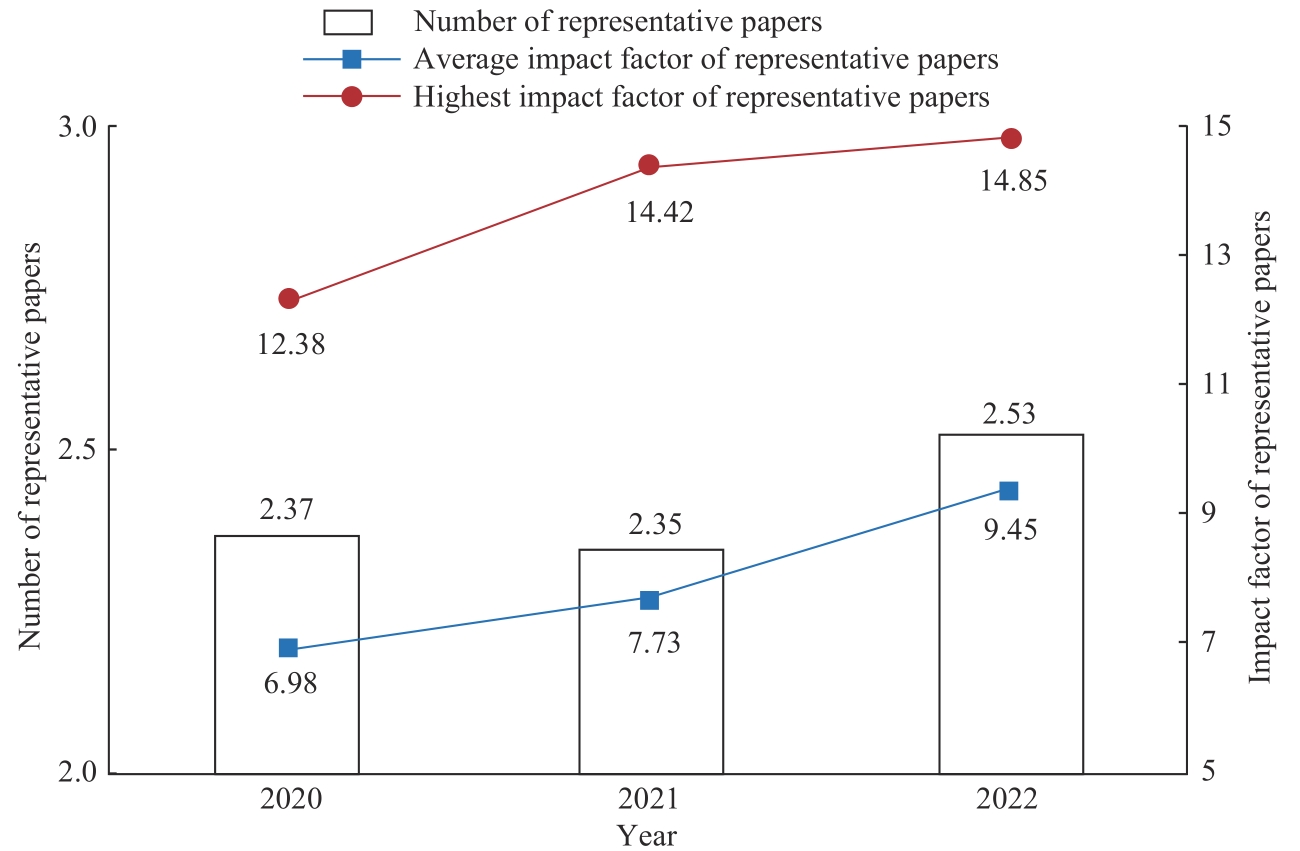
Fig 1 Qualitative and quantitative change of the representative papers by approved Young Scientists Fund
| Variable | Assignment of value |
|---|---|
| Educational background | Bachelor=1, master=2, doctor=3 |
| Graduate university | 985 project university=1, non-985 project university=2, overseas university=3 |
| Postdoctoral experience | Yes=1, No=0 |
| Title of a professional post | Junior and below=1, intermediate=2, senior=3 |
| Job category | Doctor=1, full-time scientific researcher=2, others=3 |
| Number of applications | 1 time=1, 2 times=2, 3 times=3, 4 or more times=4 |
| Consistency of the application with the doctoral research | Yes=1, no=0 |
| Consistency between the application and supporting laboratory | Yes=1, no=0 |
| Medical-engineering science cross research | Yes=1, no=0 |
| Having participated in national projects such as the National Natural Science Foundation of China | Yes=1, no=0 |
| Other approved scientific research or talent projects before applying for Young Scientists Fund | Yes=1, no=0 |
| Sufficient foundation of previous work | Yes=1, no=0 |
Tab 2 Categorical variable assignment for Logistic regression model
| Variable | Assignment of value |
|---|---|
| Educational background | Bachelor=1, master=2, doctor=3 |
| Graduate university | 985 project university=1, non-985 project university=2, overseas university=3 |
| Postdoctoral experience | Yes=1, No=0 |
| Title of a professional post | Junior and below=1, intermediate=2, senior=3 |
| Job category | Doctor=1, full-time scientific researcher=2, others=3 |
| Number of applications | 1 time=1, 2 times=2, 3 times=3, 4 or more times=4 |
| Consistency of the application with the doctoral research | Yes=1, no=0 |
| Consistency between the application and supporting laboratory | Yes=1, no=0 |
| Medical-engineering science cross research | Yes=1, no=0 |
| Having participated in national projects such as the National Natural Science Foundation of China | Yes=1, no=0 |
| Other approved scientific research or talent projects before applying for Young Scientists Fund | Yes=1, no=0 |
| Sufficient foundation of previous work | Yes=1, no=0 |
| Variable | Total number of surveyed applicants (n=921) | Doctor (n=570) | Full-time scientific researcher (n=233) | |||||
|---|---|---|---|---|---|---|---|---|
| OR (95%CI) | P value | OR (95%CI) | P value | OR (95%CI) | P value | |||
| Educational background | 1.86 (1.14‒3.04) | 0.014 | ||||||
Graduate university (985 project university vs non-985 project university) | 2.45 (1.47‒4.08) | 0.021 | ||||||
| Years of graduation | 0.89 (0.81‒0.97) | 0.008 | ||||||
| Having participated in national projects such as the National Natural Science Foundation of China | 2.03 (1.11‒3.71) | 0.022 | ||||||
| Sufficient foundation of previous work | 4.22 (2.44‒7.29) | 0.000 | 5.28 (2.56‒10.87) | 0.000 | 3.28 (1.05‒10.22) | 0.041 | ||
| Average impact factor of representative papers | 1.10 (1.04‒1.17) | 0.002 | 1.20 (1.10‒1.31) | 0.000 | 1.04 (1.00‒1.08) | 0.037 | ||
| Total self-evaluated score of the application | 1.06 (1.04‒1.08) | 0.000 | 1.06 (1.03‒1.08) | 0.000 | 1.09 (1.04‒1.14) | 0.000 | ||
Tab 3 Multivariate Logistic regression analysis of the approved Young Scientists Fund
| Variable | Total number of surveyed applicants (n=921) | Doctor (n=570) | Full-time scientific researcher (n=233) | |||||
|---|---|---|---|---|---|---|---|---|
| OR (95%CI) | P value | OR (95%CI) | P value | OR (95%CI) | P value | |||
| Educational background | 1.86 (1.14‒3.04) | 0.014 | ||||||
Graduate university (985 project university vs non-985 project university) | 2.45 (1.47‒4.08) | 0.021 | ||||||
| Years of graduation | 0.89 (0.81‒0.97) | 0.008 | ||||||
| Having participated in national projects such as the National Natural Science Foundation of China | 2.03 (1.11‒3.71) | 0.022 | ||||||
| Sufficient foundation of previous work | 4.22 (2.44‒7.29) | 0.000 | 5.28 (2.56‒10.87) | 0.000 | 3.28 (1.05‒10.22) | 0.041 | ||
| Average impact factor of representative papers | 1.10 (1.04‒1.17) | 0.002 | 1.20 (1.10‒1.31) | 0.000 | 1.04 (1.00‒1.08) | 0.037 | ||
| Total self-evaluated score of the application | 1.06 (1.04‒1.08) | 0.000 | 1.06 (1.03‒1.08) | 0.000 | 1.09 (1.04‒1.14) | 0.000 | ||
| 1 | 中华人民共和国中央人民政府. 中共中央办公厅 国务院办公厅印发《关于进一步加强青年科技人才培养和使用的若干措施》[EB/OL]. [2024-02-05]. https://www.gov.cn/zhengce/202308/content_ 6900456.htm. |
| The State Council of the People's Republic of China. The General Office of the Communist Party of China Central Committee and the General Office of the State Council “Several Measures to Further Strengthen the Training and Use of Young Scientific and Technological Talents” [EB/OL]. [2024-02-05]. https://www.gov.cn/zhengce/202308/content_6900456.htm. | |
| 2 | 国家自然科学基金委员会.资助格局[EB/OL]. [2024-02-05]. https://www.nsfc.gov.cn/publish/portal0/jgsz/08/. |
| National Natural Science Foundation of China. Funding pattern[EB/OL]. [2024-02-05]. https://www.nsfc.gov.cn/publish/portal0/jgsz/08/. | |
| 3 | 唐靖, 张藜, 王新. 基础研究人才成长的沃土: 对国家自然科学基金人才类项目的历史回顾[J]. 中国科学基金, 2016, 30(5): 395-402. |
| TANG J, ZHANG L, WANG X. Fostering talents for basic research: a historical review of talent programs of NSFC[J]. Bulletin of National Natural Science Foundation of China, 2016, 30(5): 395-402. | |
| 4 | 乌云其其格. 加强支持与引导促进青年研究人员成长[J]. 中国科技奖励, 2012(11): 68-70. |
| WU Y Q Q G. Strengthening support and guidance to promote the growth of young researchers[J]. China Awards for Science and Technology, 2012(11): 68-70. | |
| 5 | 于璇, 游超, 黄锐, 等. 关于提升国家自然科学基金青年科学基金项目资助效益的探讨[J]. 中国科学基金, 2020, 34(3): 324-331. |
| YU X, YOU C, HUANG R, et al. Discussion on improvement of funding effectiveness on Young Scientists Fund of the NSFC[J].Bulletin of National Natural Science Foundation of China, 2020, 34(3): 324-331. | |
| 6 | 国家自然科学基金委员会. 年度报告[EB/OL]. [2024-02-05]. https://www.nsfc.gov.cn/publish/portal0/tab535/. |
| National Natural Science Foundation of China. Annual report[EB/OL]. [2024-02-05]. https://www.nsfc.gov.cn/publish/portal0/tab535/. | |
| 7 | 郭美荣, 彭洁, 赵伟, 等. 中国高层次科技人才成长过程及特征分析: 以“国家杰出青年科学基金” 获得者为例[J]. 科技管理研究, 2011, 31(1): 135-138. |
| GUO M R, PENG J, ZHAO W, et al. Analysis on the high-level sci-tech talents′ characteristics and growth experience in China: taking the winners of NSFDYS for example[J]. Science and Technology Management Research, 2011, 31(1): 135-138. | |
| 8 | 刘超, 李东, 鲍锦涛, 等. “优青” 对青年科技人才成长的促进作用及相关管理举措探讨[J]. 中国科学基金, 2018, 32(4): 387-392. |
| LIU C, LI D, BAO J T, et al. Analysis of the role of “Outstanding Young Scientists Foundation” in promoting the growth of young scientists and related administrative initiatives[J]. Bulletin of National Natural Science Foundation of China, 2018, 32(4): 387-392. | |
| 9 | 张楠楠, 于璇, 肖瑜, 等. 医学领域优秀青年科学基金项目资助情况及项目负责人成长特征分析[J]. 中国科学基金, 2019, 33(6): 623-627. |
| ZHANG N N, YU X, XIAO Y, et al. Analysis on the situation and characteristics of Excellent Young Scientists Fund in medical science[J]. Bulletin of National Natural Science Foundation of China, 2019, 33(6): 623-627. | |
| 10 | 王剑斌, 安维东, 何彦, 等. 青年科研人才成长特征与资助策略优化研究[J]. 中国科学基金, 2023, 37(3): 488-495. |
| WANG J B, AN W D, HE Y, et al. Research on the growth characteristics of Young Scientific Research Talents and the optimization of funding strategy[J]. Bulletin of National Natural Science Foundation of China, 2023, 37(3): 488-495. | |
| 11 | EBADI A, SCHIFFAUEROVA A. How to boost scientific production? A statistical analysis of research funding and other influencing factors[J]. Scientometrics, 2016, 106(3): 1093-1116. |
| 12 | BOL T, DE VAAN M, VAN DE RIJT A. The Matthew effect in science funding[J]. Proc Natl Acad Sci USA, 2018, 115(19): 4887-4890. |
| 13 | WANG Y, JONES B F, WANG D S. Early-career setback and future career impact[J]. Nat Commun, 2019, 10(1): 4331. |
| 14 | LI D, AGHA L. Research funding. Big names or big ideas: do peer-review panels select the best science proposals?[J]. Science, 2015, 348(6233): 434-438. |
| 15 | 乌云其其格. 发达国家如何培养卓越研究人才[J]. 中国人才(上半月), 2015(1): 58-59. |
| WU Y Q Q G. How developed countries can cultivate outstanding research talents [J]. Chinese Talents, 2015(1): 58-59. | |
| 16 | 闫小响. 新时代卓越青年医学人才培养的思考[J]. 中国科学基金, 2024, 38(3): 557-558. |
| YAN X X. Thoughts on the cultivation of outstanding young medical talents in the new era[J]. Bulletin of National Natural Science Foundation of China, 2024, 38(3): 557-558. | |
| 17 | 王震坤, 陈刚, 王子伟. 某大型医院申请国家自然科学基金医学部项目获批情况定量分析[J]. 中国医院, 2022, 26(8): 58-61. |
| WANG Z K, CHEN G, WANG Z W. Quantitative analysis on influencing factors on project approval of Medical Science Department of National Natural Science Foundation of China in a large general hospital[J]. Chinese Hospitals, 2022, 26(8): 58-61. | |
| 18 | 吴凡, 汪玲. 深化临床医学教育改革培养造就服务健康中国需求的卓越医师[J]. 中国卫生资源, 2023, 26(6): 625-627. |
| WU F, WANG L. Deepening the reform of clinical medical education and cultivating outstanding physicians who serve the needs of a healthy China[J]. China Health Resources, 2023, 26(6): 625-627. | |
| 19 | 吴凡, 汪玲. 构建新时代 “MD+PhD” 医学教育新模式[J]. 中国卫生资源, 2021, 24(2): 111-115. |
| WU F, WANG L. Constructing a new “MD+PhD” model of medical education in the new era[J]. China Health Resources, 2021, 24(2): 111-115. | |
| 20 | 马麟, 孔菲, 程方骁, 等. 学科交叉融合发展的探索与实践——以生命科学领域为例[J]. 大学与学科, 2021(4): 100-107. |
| MA L, KONG F, CHENG F X, et al. Exploration and practice of interdisciplinary integration development: taking the field of life sciences as an example[J]. Universities and Disciplines, 2021(4): 100-107. | |
| 21 | 张皓, 杨玉辉, 王凯, 等. 高等医学院校青年科研培训体制探索与实践: 以国家自然科学基金申报为例[J]. 中国高等医学教育, 2012(6): 20-21. |
| ZHANG H, YANG Y H, WANG K, et al. Exploration and practice of youth research training system in higher medical colleges: taking the application for National Natural Science Foundation of China as an example[J]. China Higher Medical Education, 2012(6): 20-21. | |
| 22 | 辜承慰, 罗惠文, 董涵琼, 等. 基于间隔时间系数的独立医科大学青年人才成长路径分析: 以国家自然科学基金项目为例[J]. 中国科学基金, 2022, 36(2): 301-308. |
| GU C W, LUO H W, DONG H Q, et al. Analysis on the growth path of young talents in independent medical university based on interval time coefficient: a case study of National Natural Science Foundation of China[J]. Bulletin of National Natural Science Foundation of China, 2022, 36(2): 301-308. |
| Viewed | ||||||
|
Full text |
|
|||||
|
Abstract |
|
|||||
