
Journal of Shanghai Jiao Tong University (Medical Science) ›› 2026, Vol. 46 ›› Issue (1): 75-81.doi: 10.3969/j.issn.1674-8115.2026.01.009
• Public health • Previous Articles Next Articles
Aikeremu Aierken1, Chen Xingjuan2, Niu Yueyue2( )
)
Received:2025-05-16
Accepted:2025-10-20
Online:2026-01-28
Published:2026-01-30
Contact:
Niu Yueyue
E-mail:952830794@qq.com
About author:First author contact:Aierken Aikeremu was responsible for the research design and the statistical analysis, and drafted the initial manuscript. Chen Xingjuan was responsible for data collection. Niu Yueyue reviewed and revised the manuscript. All authors have read the final version of manuscript and consented to its submission.
Supported by:CLC Number:
Aikeremu Aierken, Chen Xingjuan, Niu Yueyue. Mendelian randomization study of loneliness, subjective well-being, and frailty index[J]. Journal of Shanghai Jiao Tong University (Medical Science), 2026,(1): 75-81.
Add to citation manager EndNote|Ris|BibTeX
URL: https://xuebao.shsmu.edu.cn/EN/10.3969/j.issn.1674-8115.2026.01.009
| Phenotype | Sample size/n | Case/n | Control/n | Year | PubMed ID | Population |
|---|---|---|---|---|---|---|
| Exposure phenotype | ||||||
| Loneliness | 445 024 | 80 134 | 364 890 | 2018 | 29970889 | European |
| Subjective well-being | 298 420 | 2016 | 27089181 | European | ||
| Outcome phenotype (frailty index) | 175 226 | 2021 | 34431594 | European | ||
Tab 1 Details of GWAS consortia used for each phenotype
| Phenotype | Sample size/n | Case/n | Control/n | Year | PubMed ID | Population |
|---|---|---|---|---|---|---|
| Exposure phenotype | ||||||
| Loneliness | 445 024 | 80 134 | 364 890 | 2018 | 29970889 | European |
| Subjective well-being | 298 420 | 2016 | 27089181 | European | ||
| Outcome phenotype (frailty index) | 175 226 | 2021 | 34431594 | European | ||
| SNP | EA | NEA | EAF | β | SE | P value | F statistics |
|---|---|---|---|---|---|---|---|
| rs6430286 | G | A | 0.58 | 0.005 | 0.001 | 1.44×10⁻⁸ | 32.14 |
| rs74338595 | T | C | 0.71 | 0.005 | 0.001 | 4.82×10⁻⁹ | 34.26 |
| rs4465966 | A | G | 0.43 | 0.005 | 0.001 | 1.44×10⁻⁸ | 32.13 |
| rs171697 | C | G | 0.67 | -0.005 | 0.001 | 6.81×10⁻⁹ | 33.59 |
| rs2069117 | A | C | 0.37 | -0.005 | 0.001 | 8.97×10⁻¹⁰ | 37.54 |
| rs10456089 | G | A | 0.92 | 0.009 | 0.002 | 2.55×10⁻⁹ | 35.50 |
| rs7770860 | T | C | 0.63 | -0.005 | 0.001 | 1.45×10⁻⁸ | 32.12 |
| rs773020 | G | A | 0.10 | -0.009 | 0.001 | 5.32×10⁻⁹ | 34.07 |
| rs13291079 | T | C | 0.58 | 0.005 | 0.001 | 9.21×10⁻¹¹ | 41.99 |
| rs62085660 | C | G | 0.26 | 0.005 | 0.001 | 4.86×10⁻⁹ | 34.24 |
| rs613872 | G | T | 0.17 | -0.008 | 0.001 | 5.77×10⁻¹⁴ | 56.45 |
Tab 2 Instrumental variables for genetically predicted loneliness
| SNP | EA | NEA | EAF | β | SE | P value | F statistics |
|---|---|---|---|---|---|---|---|
| rs6430286 | G | A | 0.58 | 0.005 | 0.001 | 1.44×10⁻⁸ | 32.14 |
| rs74338595 | T | C | 0.71 | 0.005 | 0.001 | 4.82×10⁻⁹ | 34.26 |
| rs4465966 | A | G | 0.43 | 0.005 | 0.001 | 1.44×10⁻⁸ | 32.13 |
| rs171697 | C | G | 0.67 | -0.005 | 0.001 | 6.81×10⁻⁹ | 33.59 |
| rs2069117 | A | C | 0.37 | -0.005 | 0.001 | 8.97×10⁻¹⁰ | 37.54 |
| rs10456089 | G | A | 0.92 | 0.009 | 0.002 | 2.55×10⁻⁹ | 35.50 |
| rs7770860 | T | C | 0.63 | -0.005 | 0.001 | 1.45×10⁻⁸ | 32.12 |
| rs773020 | G | A | 0.10 | -0.009 | 0.001 | 5.32×10⁻⁹ | 34.07 |
| rs13291079 | T | C | 0.58 | 0.005 | 0.001 | 9.21×10⁻¹¹ | 41.99 |
| rs62085660 | C | G | 0.26 | 0.005 | 0.001 | 4.86×10⁻⁹ | 34.24 |
| rs613872 | G | T | 0.17 | -0.008 | 0.001 | 5.77×10⁻¹⁴ | 56.45 |
| SNP | EA | NEA | EAF | β | SE | P value | F statistics |
|---|---|---|---|---|---|---|---|
| rs10484399 | A | G | 0.916 04 | -0.026 | 0.005 | 1.99×10⁻⁷ | 27.04 |
| rs10769190 | T | C | 0.197 80 | 0.018 | 0.004 | 6.80×10⁻⁶ | 20.25 |
| rs11073619 | T | C | 0.104 50 | 0.025 | 0.005 | 5.73×10⁻⁷ | 25.00 |
| rs11610143 | C | G | 0.802 20 | 0.019 | 0.004 | 2.03×10⁻⁶ | 22.56 |
| rs12143280 | T | C | 0.944 03 | 0.038 | 0.008 | 2.03×10⁻⁶ | 22.56 |
| rs12298541 | A | C | 0.356 30 | 0.016 | 0.003 | 9.64×10⁻⁸ | 28.44 |
| rs13235506 | T | G | 0.955 22 | -0.034 | 0.007 | 1.19×10⁻⁶ | 23.59 |
| rs17005492 | T | C | 0.785 40 | 0.018 | 0.004 | 6.80×10⁻⁶ | 20.25 |
| rs2017279 | A | G | 0.679 10 | 0.016 | 0.003 | 9.64×10⁻⁸ | 28.44 |
| rs258668 | T | C | 0.595 10 | -0.017 | 0.003 | 1.46×10⁻⁸ | 32.11 |
| rs4589952 | T | C | 0.154 90 | -0.021 | 0.004 | 1.52×10⁻⁷ | 27.56 |
| rs6587766 | T | C | 0.041 04 | 0.047 | 0.009 | 1.77×10⁻⁷ | 27.27 |
| rs707533 | A | G | 0.666 00 | 0.019 | 0.003 | 2.40×10⁻¹⁰ | 40.11 |
| rs7149000 | A | G | 0.459 00 | -0.014 | 0.003 | 3.06×10⁻⁶ | 21.78 |
| rs7239568 | A | C | 0.688 40 | -0.016 | 0.003 | 9.64×10⁻⁸ | 28.44 |
| rs7969982 | T | C | 0.925 37 | -0.031 | 0.006 | 2.38×10⁻⁷ | 26.69 |
Tab 3 Instrumental variables for genetically predicted subjective well-being
| SNP | EA | NEA | EAF | β | SE | P value | F statistics |
|---|---|---|---|---|---|---|---|
| rs10484399 | A | G | 0.916 04 | -0.026 | 0.005 | 1.99×10⁻⁷ | 27.04 |
| rs10769190 | T | C | 0.197 80 | 0.018 | 0.004 | 6.80×10⁻⁶ | 20.25 |
| rs11073619 | T | C | 0.104 50 | 0.025 | 0.005 | 5.73×10⁻⁷ | 25.00 |
| rs11610143 | C | G | 0.802 20 | 0.019 | 0.004 | 2.03×10⁻⁶ | 22.56 |
| rs12143280 | T | C | 0.944 03 | 0.038 | 0.008 | 2.03×10⁻⁶ | 22.56 |
| rs12298541 | A | C | 0.356 30 | 0.016 | 0.003 | 9.64×10⁻⁸ | 28.44 |
| rs13235506 | T | G | 0.955 22 | -0.034 | 0.007 | 1.19×10⁻⁶ | 23.59 |
| rs17005492 | T | C | 0.785 40 | 0.018 | 0.004 | 6.80×10⁻⁶ | 20.25 |
| rs2017279 | A | G | 0.679 10 | 0.016 | 0.003 | 9.64×10⁻⁸ | 28.44 |
| rs258668 | T | C | 0.595 10 | -0.017 | 0.003 | 1.46×10⁻⁸ | 32.11 |
| rs4589952 | T | C | 0.154 90 | -0.021 | 0.004 | 1.52×10⁻⁷ | 27.56 |
| rs6587766 | T | C | 0.041 04 | 0.047 | 0.009 | 1.77×10⁻⁷ | 27.27 |
| rs707533 | A | G | 0.666 00 | 0.019 | 0.003 | 2.40×10⁻¹⁰ | 40.11 |
| rs7149000 | A | G | 0.459 00 | -0.014 | 0.003 | 3.06×10⁻⁶ | 21.78 |
| rs7239568 | A | C | 0.688 40 | -0.016 | 0.003 | 9.64×10⁻⁸ | 28.44 |
| rs7969982 | T | C | 0.925 37 | -0.031 | 0.006 | 2.38×10⁻⁷ | 26.69 |
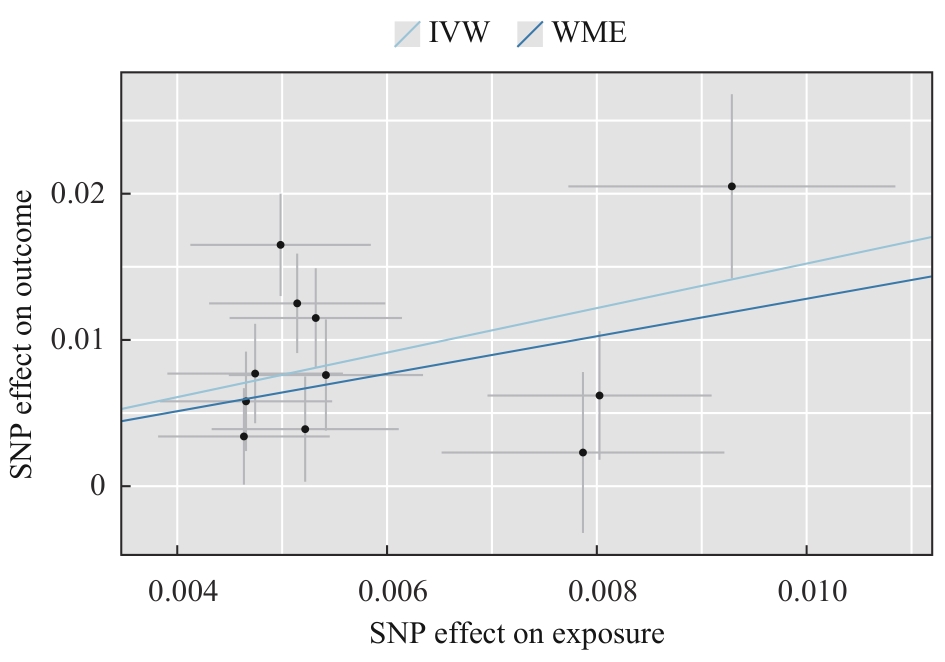
Fig 1 Scatter plot of effects of SNP on loneliness and the frailty index
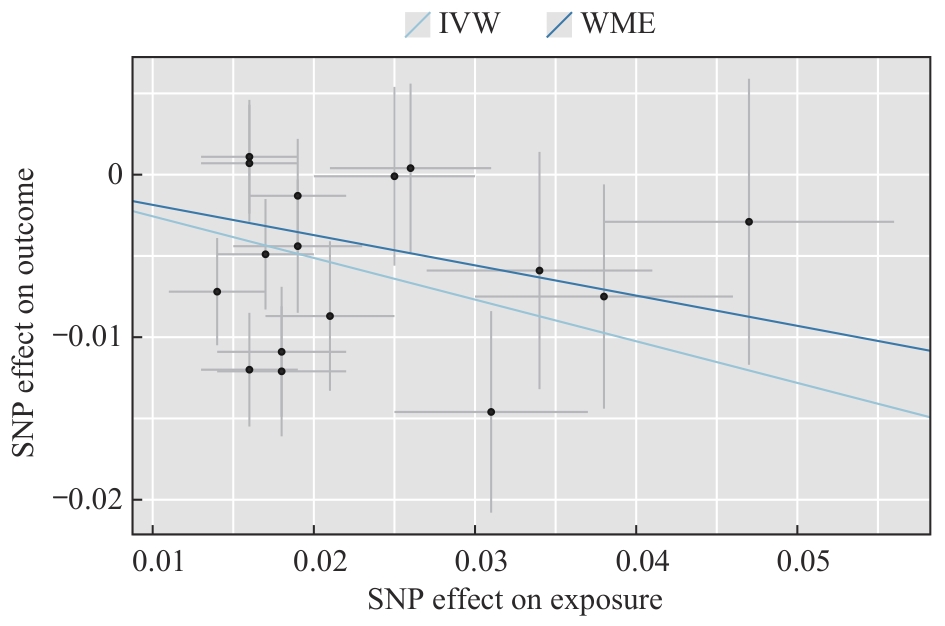
Fig 2 Scatter plot of effects of SNP on subjective well-being and the frailty index
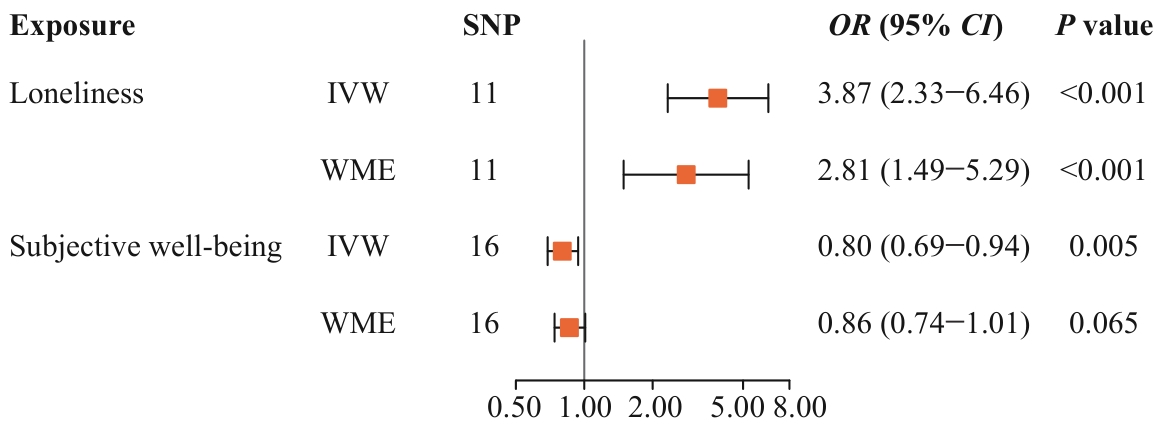
Fig 3 Forest plot of MR estimates for the causal effects of loneliness and subjective well-being on the frailty index (IVW as the primary analysis)
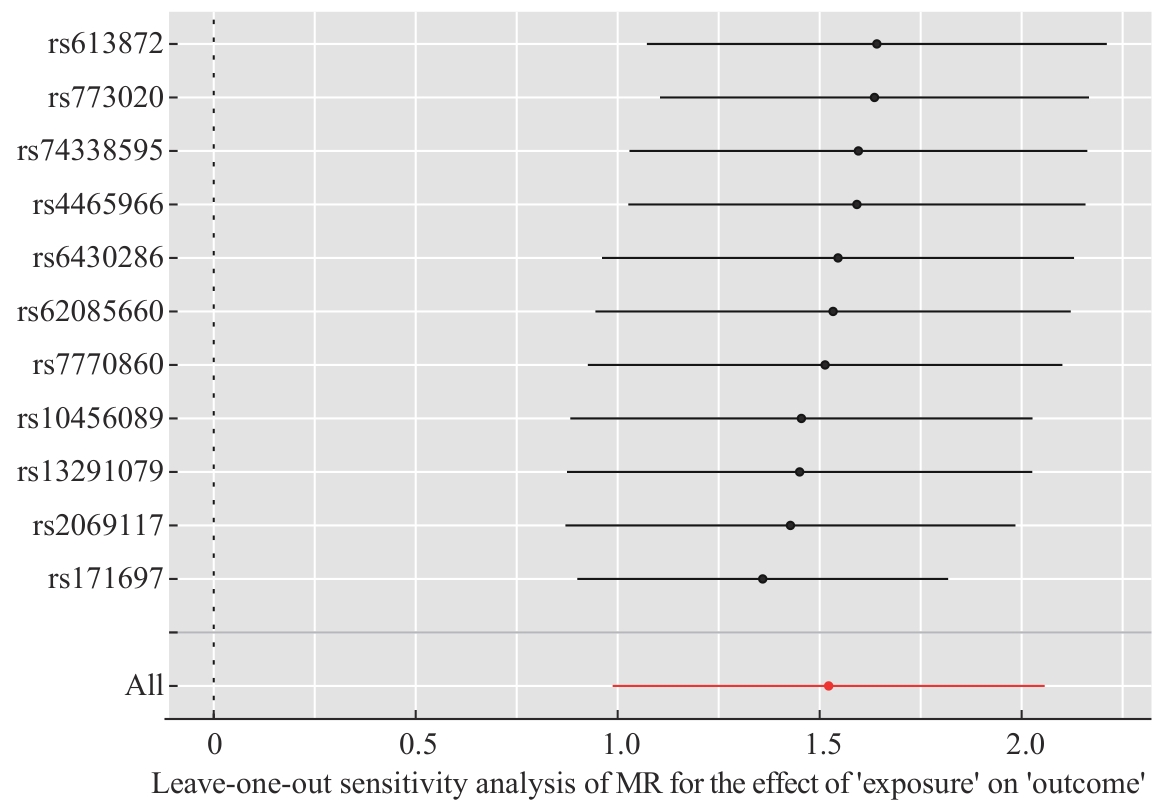
Fig 4 Leave-one-out sensitivity analysis of effects of loneliness-associated SNP on the frailty index
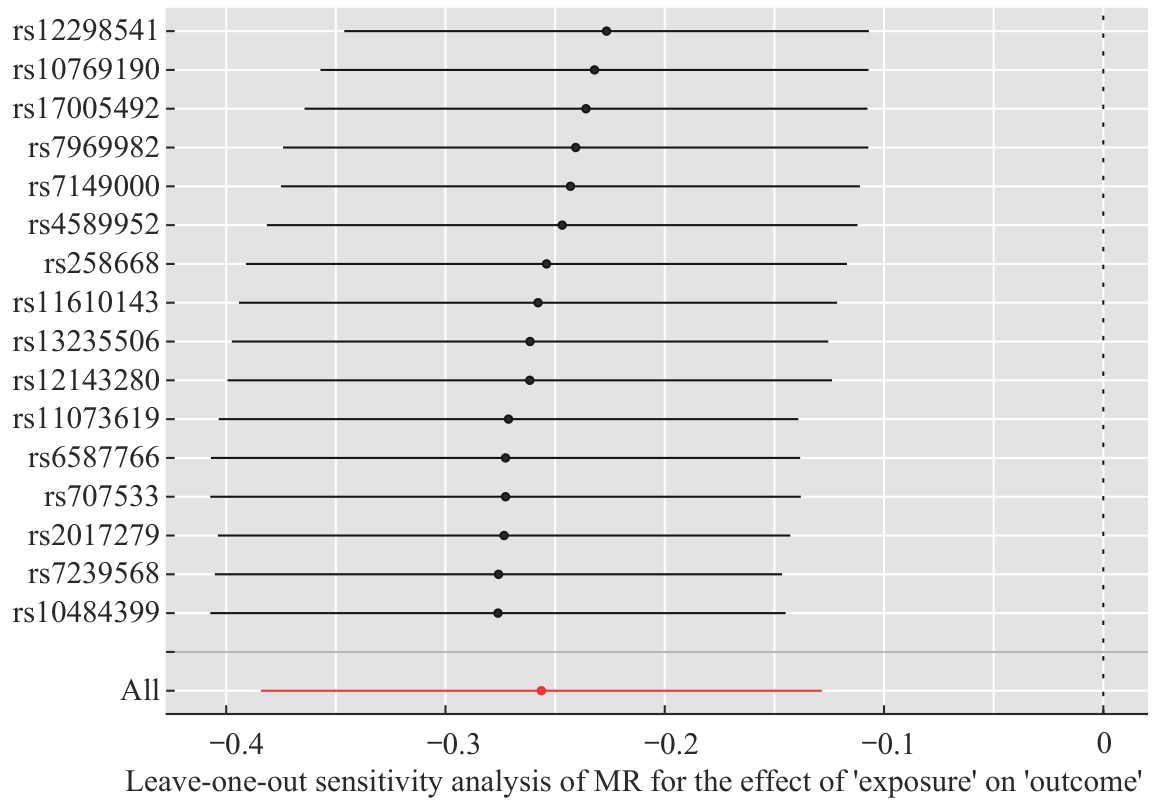
Fig 5 Leave-one-out sensitivity analysis of effects of subjective well-being-associated SNP on the frailty index
| [1] | Clegg A, Young J, Iliffe S, et al. Frailty in elderly people[J]. Lancet, 2013, 381(9868): 752-762. |
| [2] | Cacioppo J T, Cacioppo S. The growing problem of loneliness[J]. Lancet, 2018, 391(10119): 426. |
| [3] | Patel R S, Wardle K, Parikh R J. Loneliness: the present and the future[J]. Age Ageing, 2019, 48(4): 476-477. |
| [4] | Diener E, Oishi S, Tay L. Advances in subjective well-being research[J]. Nat Hum Behav, 2018, 2(4): 253-260. |
| [5] | Sekula P, del Greco M F, Pattaro C, et al. Mendelian randomization as an approach to assess causality using observational data [J]. J Am Soc Nephrol, 2016, 27(11): 3253-3265. |
| [6] | Smith G D, Lawlor D A, Harbord R, et al. Clustered environments and randomized genes: a fundamental distinction between conventional and genetic epidemiology[J]. PLoS Med, 2007, 4(12): e352. |
| [7] | Gupta V, Walia G K, Sachdeva M P. ‘Mendelian randomization’: an approach for exploring causal relations in epidemiology[J]. Public Health, 2017, 145: 113-119. |
| [8] | Day F R, Ong K K, Perry J R B. Elucidating the genetic basis of social interaction and isolation[J]. Nat Commun, 2018, 9: 2457. |
| [9] | Okbay A, Baselmans B M, De Neve J E, et al. Genetic variants associated with subjective well-being, depressive symptoms, and neuroticism identified through genome-wide analyses [J]. Nat Genet, 2016, 48(6): 624-633. |
| [10] | Kaskirbayeva D, West R, Jaafari H, et al. Progression of frailty as measured by a cumulative deficit index: a systematic review[J]. Ageing Res Rev, 2023, 84: 101789. |
| [11] | Atkins J L, JylhäVä J, Pedersen N L, et al. A genome-wide association study of the frailty index highlights brain pathways in ageing[J]. Aging Cell, 2021, 20(9): e13459. |
| [12] | Burgess S, Thompson S G, Collaboration C C G. Avoiding bias from weak instruments in Mendelian randomization studies[J]. Int J Epidemiol, 2011, 40(3): 755-764. |
| [13] | Hartwig F P, Davey Smith G, Bowden J. Robust inference in summary data Mendelian randomization via the zero modal pleiotropy assumption[J]. Int J Epidemiol, 2017, 46(6): 1985-1998. |
| [14] | Bowden J, Davey Smith G, Haycock P C, et al. Consistent estimation in mendelian randomization with some invalid instruments using a weighted Median estimator[J]. Genet Epidemiol, 2016, 40(4): 304-314. |
| [15] | Hemani G, Zheng J, Elsworth B, et al. The MR-Base platform supports systematic causal inference across the human phenome[J]. eLife, 2018, 7: e34408. |
| [16] | Burgess S, Thompson S G. Interpreting findings from Mendelian randomization using the MR-Egger method[J]. Eur J Epidemiol, 2017, 32(5): 377-389. |
| [17] | Verbanck M, Chen C Y, Neale B, et al. Detection of widespread horizontal pleiotropy in causal relationships inferred from Mendelian randomization between complex traits and diseases[J]. Nat Genet, 2018, 50(5): 693-698. |
| [18] | Altintas H K, Coban S A, Cantekin I. Relationship between frailty and loneliness among community-dwelling Turkish older people[J]. Psychogeriatrics, 2023, 23(2): 243-251. |
| [19] | Gale C R, Westbury L, Cooper C. Social isolation and loneliness as risk factors for the progression of frailty: the English Longitudinal Study of Ageing[J]. Age Ageing, 2018, 47(3): 392-397. |
| [20] | Sha S, Pan Y, Xu Y B, et al. Associations between loneliness and frailty among older adults: evidence from the China Health and Retirement Longitudinal Study[J]. BMC Geriatr, 2022, 22(1): 537. |
| [21] | Kojima G, Taniguchi Y, Aoyama R, et al. Associations between loneliness and physical frailty in community-dwelling older adults: a systematic review and meta-analysis[J]. Ageing Res Rev, 2022, 81: 101705. |
| [22] | Tay L, Tan K, Diener E, et al. Social relations, health behaviors, and health outcomes: a survey and synthesis[J]. Applied Psych Health Well, 2013, 5(1): 28-78. |
| [23] | Kandola A, Solmi F, Ajnakina O, et al. The role of loneliness in the association between chronic physical illness and depressive symptoms among older adults: a prospective cohort study[J]. J Affect Disord, 2023, 334: 220-226. |
| [24] | Cole S W. Social regulation of leukocyte homeostasis: the role of glucocorticoid sensitivity[J]. Brain Behav Immun, 2008, 22(7): 1049-1055. |
| [25] | Cole S W, Hawkley L C, Arevalo J M, et al. Social regulation of gene expression in human leukocytes[J]. Genome Biol, 2007, 8(9): R189. |
| [26] | Luo Y, Hawkley L C, Waite L J, et al. Loneliness, health, and mortality in old age: a national longitudinal study[J]. Soc Sci Med, 2012, 74(6): 907-914. |
| [27] | Koivumaa-Honkanen H, Honkanen R, Viinamäki H, et al. Life satisfaction and suicide: a 20-year follow-up study[J]. Am J Psychiatry, 2001, 158(3): 433-439. |
| [28] | Qazi S L, Koivumaa-Honkanen H, Rikkonen T, et al. Physical capacity, subjective health, and life satisfaction in older women: a 10-year follow-up study[J]. BMC Geriatr, 2021, 21(1): 658. |
| [29] | Stenlund S, Koivumaa-Honkanen H, Sillanmäki L, et al. Changed health behavior improves subjective well-being and vice versa in a follow-up of 9 years[J]. Health Qual Life Outcomes, 2022, 20(1): 66. |
| [30] | Koivumaa-Honkanen H, Kaprio J, Honkanen R J, et al. The stability of life satisfaction in a 15-year follow-up of adult Finns healthy at baseline[J]. BMC Psychiatry, 2005, 5(1): 4. |
| [31] | Song C F, Tay P K C, Gwee X, et al. Happy people live longer because they are healthy people[J]. BMC Geriatr, 2023, 23(1): 440. |
| [32] | Steptoe A, Deaton A, Stone A A. Subjective wellbeing, health, and ageing[J]. Lancet, 2015, 385(9968): 640-648. |
| [33] | Khazaee-Pool M, Sadeghi R, Majlessi F, et al. Effects of physical exercise programme on happiness among older people[J]. Psychiatric Ment Health Nurs, 2015, 22(1): 47-57. |
| [34] | Li C, Ning G J, Xia Y X. Does exercise participation promote happiness: mediations and heterogeneities[J]. Front Public Health, 2023, 11: 1033157. |
| [35] | Wang D, Gao H X, Xu X, et al. Analysis of influence of physical health factors on subjective wellbeing of middle-aged and elderly women in China[J]. BMC Public Health, 2022, 22(1): 1127. |
| [36] | Gheorghe A C, BăLăȘEscu E, Hulea I, et al. Frailty and loneliness in older adults: a narrative review[J]. Geriatrics, 2024, 9(5): 119. |
| [37] | Zheng G H, Qiu P T, Xia R, et al. Effect of aerobic exercise on inflammatory markers in healthy middle-aged and older adults: a systematic review and meta-analysis of randomized controlled trials[J]. Front Aging Neurosci, 2019, 11: 98. |
| [38] | HernáNdez-Lepe M A, Ortiz-Ortiz M, HernáNdez-Ontiveros D A, et al. Inflammatory profile of older adults in response to physical activity and diet supplementation: a systematic review[J]. Int J Environ Res Public Health, 2023, 20(5): 4111. |
| [39] | Koelman L, Egea Rodrigues C, Aleksandrova K. Effects of dietary patterns on biomarkers of inflammation and immune responses: a systematic review and meta-analysis of randomized controlled trials[J]. Adv Nutr, 2022, 13(1): 101-115. |
| [40] | Boucham M, Salhi A, El Hajji N, et al. Factors associated with frailty in older people: an umbrella review[J]. BMC Geriatr, 2024, 24(1): 737. |
| Viewed | ||||||
|
Full text |
|
|||||
|
Abstract |
|
|||||
