
Journal of Shanghai Jiao Tong University (Medical Science) ›› 2026, Vol. 46 ›› Issue (8): 1101-1108.doi: 10.3969/j.issn.1674-8115.2026.08.010
• Clinical research • Previous Articles
Wan Ruiming1, He Chunjie2, Zhou Di2, Shi Sufan2, Xie Limei2, Zhang Yu1( )
)
Received:2026-01-12
Accepted:2026-04-27
Online:2026-08-10
Published:2026-08-10
Contact:
Zhang Yu
E-mail:yuzhang320@sina.com
About author:First author contact:Zhang Yu contributed to the study design. He Chunjie, Zhou Di, Shi Sufan, and Xie Limei were involved in data collection. Wan Ruiming and He Chunjie performed data analysis. Wan Ruiming and Zhang Yu participated in manuscript writing and revision. All authors have read and approved the final manuscript for its submission.
Supported by:CLC Number:
Wan Ruiming, He Chunjie, Zhou Di, Shi Sufan, Xie Limei, Zhang Yu. Clinical value of serum gastrin and pepsinogen in the auxiliary diagnosis of autoimmune gastritis[J]. Journal of Shanghai Jiao Tong University (Medical Science), 2026,(8): 1101-1108.
Add to citation manager EndNote|Ris|BibTeX
URL: https://xuebao.shsmu.edu.cn/EN/10.3969/j.issn.1674-8115.2026.08.010
| Parameter | Total (n=100) | Confirmed AIG group (n=82) | Suspected AIG group (n=18) | P value (confirmed AIG vs suspected AIG) |
|---|---|---|---|---|
| Gender/n(%) | 0.617 | |||
| Male | 24 (24.00) | 21 (25.61) | 3 (16.67) | |
| Female | 76 (76.00) | 61 (74.39) | 15 (83.33) | |
| Age/year | 54.77±10.84 | 55.00±10.28 | 53.72±13.40 | 0.653 |
| Serologic features | ||||
| G-17/(pmol·L-1) | 33.13 (12.95, 53.75) | 38.75 (22.17, 59.94) | 6.37 (3.44, 16.16) | <0.001 |
| PG Ⅰ/Ⅱ ratio | 1.16 (0.68, 3.07) | 1.05 (0.61, 1.99) | 3.64 (1.21, 4.91) | <0.001 |
| PG Ⅰ/(ng·mL-1) | 9.72 (5.11, 25.37) | 8.02 (4.73, 20.01) | 27.53 (13.55, 65.94) | <0.001 |
| PG Ⅱ/(ng·mL-1) | 7.91 (6.09, 11.58) | 7.83 (6.07, 10.64) | 11.08 (6.26, 15.73) | 0.118 |
| Hemoglobin/(g·L-1) | 141.00 (132.00, 153.00) | 143.00 (132.75, 153.25) | 135.00 (129.00, 141.25) | 0.041 |
| Vitamin B12/(pmol·L-1) | 248.00 (148.50, 380.25) | 214.00 (133.50, 361.75) | 401.00 (303.50, 615.00) | <0.001 |
| Ferritin/(ng·mL-1) | 110.82 (47.90, 202.22) | 99.34 (37.04, 205.35) | 117.93 (57.60, 192.80) | 0.634 |
| IgG4/(g·L-1) | 0.50 (0.15, 1.02) | 0.51 (0.20, 1.07) | 0.48 (0.11, 0.95) | 0.311 |
| AITD antibody/n(%) | 0.684 | |||
| Negative | 54 (54.00) | 43 (52.44) | 11 (61.11) | |
| Positive | 46 (46.00) | 39 (47.56) | 7 (38.89) | |
| ALD antibody/n(%) | 1.000 | |||
| Negative | 92 (92.00) | 75 (91.46) | 17 (94.44) | |
| Positive | 8 (8.00) | 7 (8.54) | 1 (5.56) | |
| Anti-nuclear antibody/n(%) | 0.425 | |||
| Negative | 73 (73.00) | 58 (70.73) | 15 (83.33) | |
| Positive | 27 (27.00) | 24 (29.27) | 3 (16.67) |
Tab 1 Baseline characteristics of participants
| Parameter | Total (n=100) | Confirmed AIG group (n=82) | Suspected AIG group (n=18) | P value (confirmed AIG vs suspected AIG) |
|---|---|---|---|---|
| Gender/n(%) | 0.617 | |||
| Male | 24 (24.00) | 21 (25.61) | 3 (16.67) | |
| Female | 76 (76.00) | 61 (74.39) | 15 (83.33) | |
| Age/year | 54.77±10.84 | 55.00±10.28 | 53.72±13.40 | 0.653 |
| Serologic features | ||||
| G-17/(pmol·L-1) | 33.13 (12.95, 53.75) | 38.75 (22.17, 59.94) | 6.37 (3.44, 16.16) | <0.001 |
| PG Ⅰ/Ⅱ ratio | 1.16 (0.68, 3.07) | 1.05 (0.61, 1.99) | 3.64 (1.21, 4.91) | <0.001 |
| PG Ⅰ/(ng·mL-1) | 9.72 (5.11, 25.37) | 8.02 (4.73, 20.01) | 27.53 (13.55, 65.94) | <0.001 |
| PG Ⅱ/(ng·mL-1) | 7.91 (6.09, 11.58) | 7.83 (6.07, 10.64) | 11.08 (6.26, 15.73) | 0.118 |
| Hemoglobin/(g·L-1) | 141.00 (132.00, 153.00) | 143.00 (132.75, 153.25) | 135.00 (129.00, 141.25) | 0.041 |
| Vitamin B12/(pmol·L-1) | 248.00 (148.50, 380.25) | 214.00 (133.50, 361.75) | 401.00 (303.50, 615.00) | <0.001 |
| Ferritin/(ng·mL-1) | 110.82 (47.90, 202.22) | 99.34 (37.04, 205.35) | 117.93 (57.60, 192.80) | 0.634 |
| IgG4/(g·L-1) | 0.50 (0.15, 1.02) | 0.51 (0.20, 1.07) | 0.48 (0.11, 0.95) | 0.311 |
| AITD antibody/n(%) | 0.684 | |||
| Negative | 54 (54.00) | 43 (52.44) | 11 (61.11) | |
| Positive | 46 (46.00) | 39 (47.56) | 7 (38.89) | |
| ALD antibody/n(%) | 1.000 | |||
| Negative | 92 (92.00) | 75 (91.46) | 17 (94.44) | |
| Positive | 8 (8.00) | 7 (8.54) | 1 (5.56) | |
| Anti-nuclear antibody/n(%) | 0.425 | |||
| Negative | 73 (73.00) | 58 (70.73) | 15 (83.33) | |
| Positive | 27 (27.00) | 24 (29.27) | 3 (16.67) |
| Parameter | OR (95% CI) | P value |
|---|---|---|
| Gender | 0.58 (0.15‒2.21) | 0.425 |
| Age | 1.01 (0.96‒1.06) | 0.649 |
| G-17 | 1.10 (1.05‒1.16) | <0.001 |
| PG Ⅰ/Ⅱ ratio | 0.62 (0.47‒0.82) | 0.001 |
| PG Ⅰ | 0.96 (0.93‒0.98) | 0.001 |
| PG Ⅱ | 0.92 (0.86‒0.99) | 0.044 |
| Hemoglobin | 1.02 (0.99‒1.05) | 0.164 |
| Vitamin B12 | 1.00 (0.99‒1.00) | 0.011 |
| Ferritin | 1.00 (0.99‒1.01) | 0.979 |
| IgG4 | 1.37 (0.57‒3.29) | 0.480 |
| AITD antibody | 1.43 (0.50‒4.04) | 0.505 |
| ALD antibody | 1.59 (0.18‒13.76) | 0.675 |
| Anti-nuclear antibody | 2.07 (0.55‒7.81) | 0.283 |
Tab 2 Univariate regression analysis of factors associated with AIG diagnosis
| Parameter | OR (95% CI) | P value |
|---|---|---|
| Gender | 0.58 (0.15‒2.21) | 0.425 |
| Age | 1.01 (0.96‒1.06) | 0.649 |
| G-17 | 1.10 (1.05‒1.16) | <0.001 |
| PG Ⅰ/Ⅱ ratio | 0.62 (0.47‒0.82) | 0.001 |
| PG Ⅰ | 0.96 (0.93‒0.98) | 0.001 |
| PG Ⅱ | 0.92 (0.86‒0.99) | 0.044 |
| Hemoglobin | 1.02 (0.99‒1.05) | 0.164 |
| Vitamin B12 | 1.00 (0.99‒1.00) | 0.011 |
| Ferritin | 1.00 (0.99‒1.01) | 0.979 |
| IgG4 | 1.37 (0.57‒3.29) | 0.480 |
| AITD antibody | 1.43 (0.50‒4.04) | 0.505 |
| ALD antibody | 1.59 (0.18‒13.76) | 0.675 |
| Anti-nuclear antibody | 2.07 (0.55‒7.81) | 0.283 |
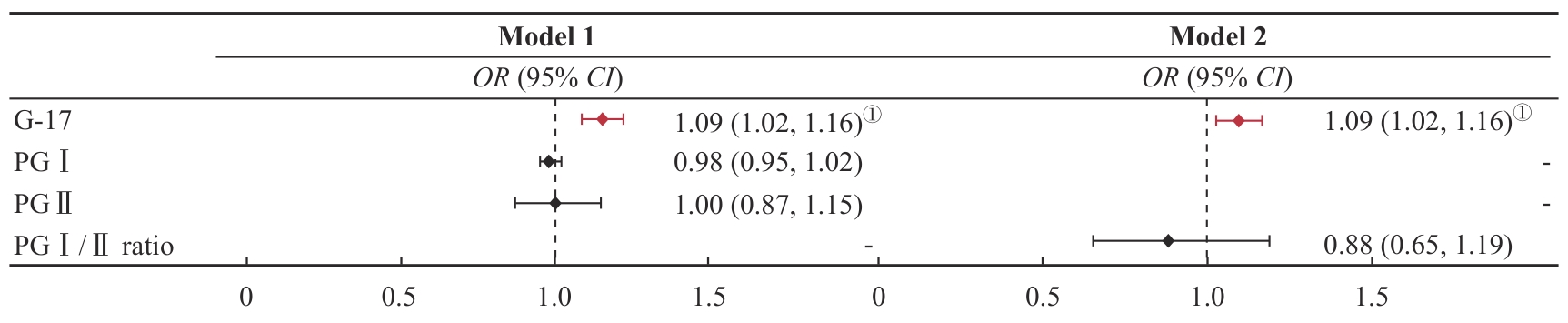
Fig 1 Forest plot of multivariable analysis for factors associated with AIG diagnosis
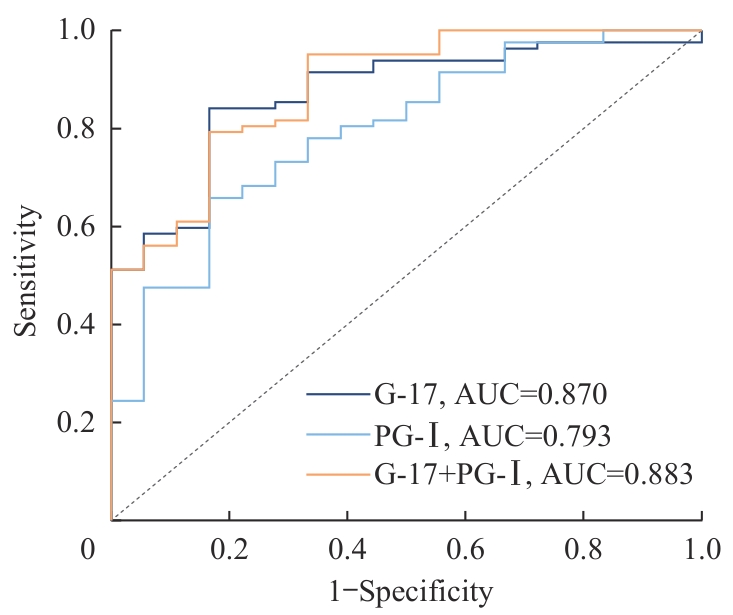
Fig 2 Predictive efficacy of individual and combined biomarkers for AIG
| Parameter | Confirmed AIG group (n=82) | IFA-positive (n=28) | IFA-negative (n=54) | P value (IFA-positive vs IFA-negative) |
|---|---|---|---|---|
| Gender/n(%) | ||||
| Male | 21 (25.61) | 6 (21.43) | 15 (27.78) | 0.720 |
| Female | 61 (74.39) | 22 (78.57) | 39 (72.22) | |
| Age/year | 55.00±10.28 | 58.68±9.21 | 53.09±10.37 | 0.019 |
| Serologic features | ||||
| G-17/ (pmol·L-1) | 38.75 (22.17, 59.94) | 39.95 (25.03, 79.09) | 35.16 (19.42, 58.05) | 0.003 |
| PG Ⅰ/Ⅱ ratio | 1.05 (0.61, 1.99) | 0.75 (0.52, 1.19) | 1.17 (0.72, 2.27) | <0.001 |
| PG Ⅰ/ (ng·mL-1) | 8.02 (4.73, 20.01) | 5.08 (3.41, 12.59) | 8.93 (5.90, 24.94) | <0.001 |
| PG Ⅱ /(ng·mL-1) | 7.83 (6.07, 10.64) | 7.61 (5.52, 10.29) | 7.91 (6.30, 11.20) | 0.214 |
| Hemoglobin/(g·L-1) | 143.00 (132.75, 153.25) | 141.00 (126.75, 153.75) | 143.00 (134.00, 153.25) | 0.863 |
| Vitamin B12/(pmol·L-1) | 214.00 (133.50, 361.75) | 189.00 (130.00, 278.75) | 241.00 (138.50, 366.50) | 0.017 |
| Ferritin/(ng·mL-1) | 99.34 (37.04, 205.35) | 121.71 (57.71, 199.38) | 86.96 (35.17, 212.53) | 0.504 |
| IgG4/ (g·L-1) | 0.51 (0.23, 1.05) | 0.49 (0.16, 0.99) | 0.63 (0.25, 1.12) | 0.653 |
| AITD antibody/n(%) | 0.309 | |||
| Negative | 43 (52.44) | 12 (42.86) | 31 (57.41) | |
| Positive | 39 (47.56) | 16 (57.14) | 23 (42.59) | |
| ALD antibody/n(%) | 0.458 | |||
| Negative | 75 (91.46) | 27 (96.43) | 48 (88.89) | |
| Positive | 7 (8.54) | 1 (3.57) | 6 (11.11) | |
| Anti-nuclear antibody/n(%) | ||||
| Negative | 58 (70.73) | 20 (71.43) | 38 (70.37) | 1.000 |
| Positive | 24 (29.27) | 8 (28.57) | 16 (29.63) |
Tab 3 Comparison of clinical characteristics and serological parameters between the IFA-positive and IFA-negative subgroups in patients with confirmed AIG
| Parameter | Confirmed AIG group (n=82) | IFA-positive (n=28) | IFA-negative (n=54) | P value (IFA-positive vs IFA-negative) |
|---|---|---|---|---|
| Gender/n(%) | ||||
| Male | 21 (25.61) | 6 (21.43) | 15 (27.78) | 0.720 |
| Female | 61 (74.39) | 22 (78.57) | 39 (72.22) | |
| Age/year | 55.00±10.28 | 58.68±9.21 | 53.09±10.37 | 0.019 |
| Serologic features | ||||
| G-17/ (pmol·L-1) | 38.75 (22.17, 59.94) | 39.95 (25.03, 79.09) | 35.16 (19.42, 58.05) | 0.003 |
| PG Ⅰ/Ⅱ ratio | 1.05 (0.61, 1.99) | 0.75 (0.52, 1.19) | 1.17 (0.72, 2.27) | <0.001 |
| PG Ⅰ/ (ng·mL-1) | 8.02 (4.73, 20.01) | 5.08 (3.41, 12.59) | 8.93 (5.90, 24.94) | <0.001 |
| PG Ⅱ /(ng·mL-1) | 7.83 (6.07, 10.64) | 7.61 (5.52, 10.29) | 7.91 (6.30, 11.20) | 0.214 |
| Hemoglobin/(g·L-1) | 143.00 (132.75, 153.25) | 141.00 (126.75, 153.75) | 143.00 (134.00, 153.25) | 0.863 |
| Vitamin B12/(pmol·L-1) | 214.00 (133.50, 361.75) | 189.00 (130.00, 278.75) | 241.00 (138.50, 366.50) | 0.017 |
| Ferritin/(ng·mL-1) | 99.34 (37.04, 205.35) | 121.71 (57.71, 199.38) | 86.96 (35.17, 212.53) | 0.504 |
| IgG4/ (g·L-1) | 0.51 (0.23, 1.05) | 0.49 (0.16, 0.99) | 0.63 (0.25, 1.12) | 0.653 |
| AITD antibody/n(%) | 0.309 | |||
| Negative | 43 (52.44) | 12 (42.86) | 31 (57.41) | |
| Positive | 39 (47.56) | 16 (57.14) | 23 (42.59) | |
| ALD antibody/n(%) | 0.458 | |||
| Negative | 75 (91.46) | 27 (96.43) | 48 (88.89) | |
| Positive | 7 (8.54) | 1 (3.57) | 6 (11.11) | |
| Anti-nuclear antibody/n(%) | ||||
| Negative | 58 (70.73) | 20 (71.43) | 38 (70.37) | 1.000 |
| Positive | 24 (29.27) | 8 (28.57) | 16 (29.63) |
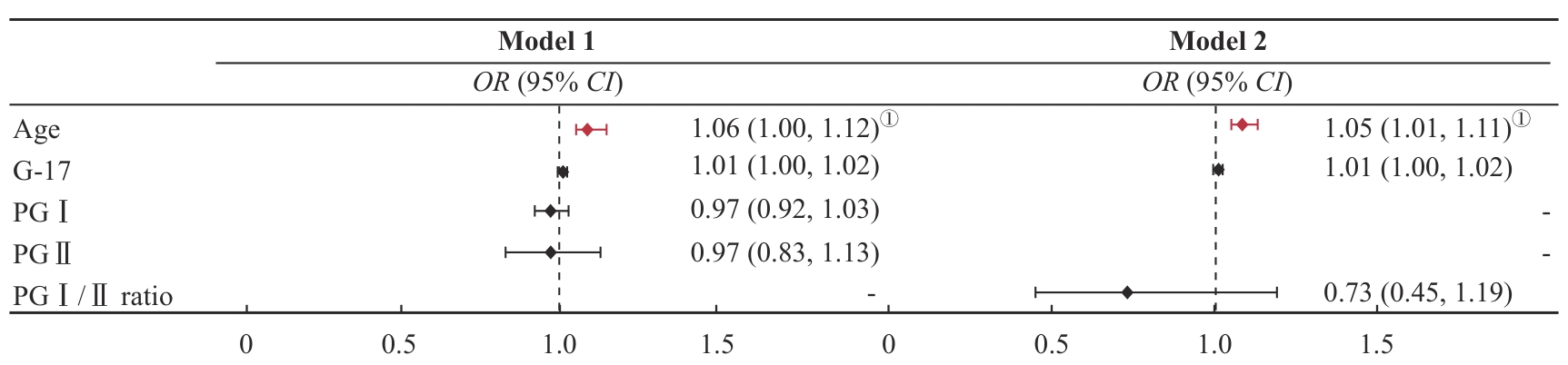
Fig 3 Forest plot of multivariable Logistic regression analysis for predicting serum IFA positivity
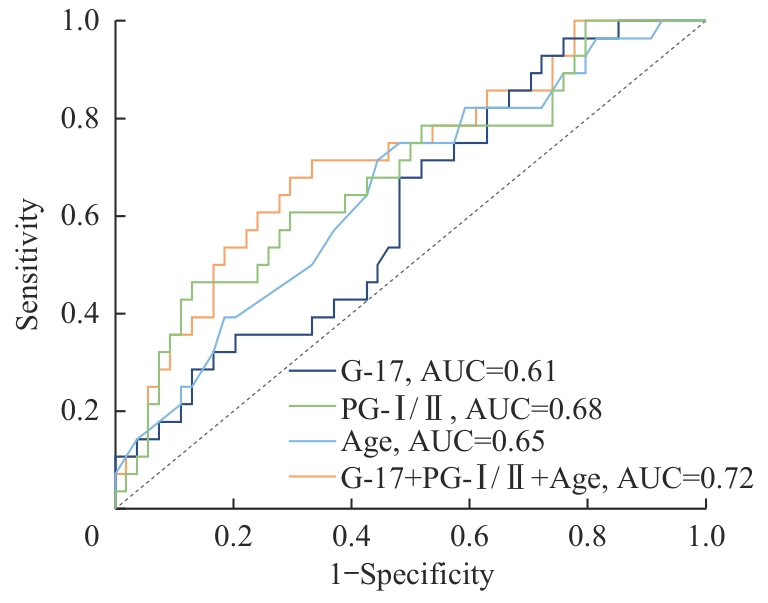
Fig 4 Predictive performance of individual and combined biomarkers for serum IFA positivity
| [1] | Wang X, Lu C J, Li H, et al. Clinicopathological characteristics of autoimmune gastritis: a single-center retrospective study[J]. Clin Res Hepatol Gastroenterol, 2023, 47(7): 102154. |
| [2] | Khalaf K, Fujiyoshi Y, Bechara R. Endoscopic and clinical characteristics of autoimmune atrophic gastritis: retrospective study[J]. Endosc Int Open, 2025, 13: a24774666. |
| [3] | Lenti M V, Miceli E, Cococcia S, et al. Determinants of diagnostic delay in autoimmune atrophic gastritis[J]. Aliment Pharmacol Ther, 2019, 50(2): 167-175. |
| [4] | 宗晔. 自身免疫性胃炎的诊治新进展[J]. 中华预防医学杂志, 2024,58(11): 1752-1757. |
| ZONG Y. New advances in the diagnosis and treatment of autoimmune gastritis[J]. Chinese Journal of Preventive Medicine, 2024, 58(11): 1752-1757. | |
| [5] | Kamada T, Maruyama Y, Monobe Y, et al. Endoscopic features and clinical importance of autoimmune gastritis[J]. Dig Endosc, 2022, 34(4): 700-713. |
| [6] | Kotera T, Ayaki M, Sumi N, et al. Characteristic endoscopic findings in early-stage autoimmune gastritis[J]. Endosc Int Open, 2024, 12(3): 332-338. |
| [7] | Liu Z J, Hong J Y, He F. Letter to the editor: autoimmune gastritis may be less susceptible to cancer development than Helicobacter pylori-related gastritis based on histological analysis[J]. Gut, 2025, 74(3): 511-512. |
| [8] | Dottori L, Pivetta G, Annibale B, et al. Update on serum biomarkers in autoimmune atrophic gastritis[J]. Clin Chem, 2023, 69(10): 1114-1131. |
| [9] | Ahn Y H, Kim Y S. Autoimmune gastritis: unveiling the mystery[J]. Korean J Helicobacter Up Gastrointest Res, 2025, 25(2): 134-145. |
| [10] | Lenti M V, Rugge M, Lahner E, et al. Autoimmune gastritis[J]. Nat Rev Dis Primers, 2020, 6: 56. |
| [11] | Kamada T, Watanabe H, Furuta T, et al. Diagnostic criteria and endoscopic and histological findings of autoimmune gastritis in Japan[J]. J Gastroenterol, 2023, 58(3): 185-195. |
| [12] | Shi J H, Zhang Y, Wang Y R, et al. Altered serum metabolic profile in patients with autoimmune gastritis compared to other chronic gastritis[J]. J Pharm Anal, 2025, 15(5): 101104. |
| [13] | Lenti M V, Vanoli A, Miceli E, et al. Increase of deep intraepithelial lymphocytes in the oxyntic mucosa of patients with potential and overt autoimmune gastritis[J]. Front Immunol, 2022, 13: 866167. |
| [14] | Lahner E, Lenti M V, Massironi S, et al. Autoimmune gastritis: diagnosis, clinical management and natural history. A position paper by the Autoimmune gastRitis Italian netwOrk Study grOup (ARIOSO)[J]. Dig Liver Dis, 2026, 58(1): 38-50. |
| [15] | 胡海一, 张倩, 邵琳琳, 等. 胃蛋白酶原Ⅰ及胃蛋白酶原Ⅰ/Ⅱ比值在自身免疫性胃炎诊断中的预测价值[J]. 临床和实验医学杂志, 2025, 24(12): 1257-1261. |
| Hu H Y, Zhang Q, Shao L L, et al. Predictive value of pepsinogen Ⅰ and pepsinogen Ⅰ/Ⅱ ratio in the diagnosis of autoimmune gastritis[J]. Journal of Clinical and Experimental Medicine, 2025, 24(12): 1257-1261. | |
| [16] | 关琳, 张鑫赫, 冯岩, 等. 自身免疫性胃炎59例临床特征分析[J]. 中华内科杂志, 2025, 64(5): 417-423. |
| Guan L, Zhang X H, Feng Y, et al. Clinical characteristics of 59 patients with autoimmune gastritis[J]. Chinese Journal of Internal Medicine, 2025, 64(5): 417-423. | |
| [17] | 刘恺, 苗丽文, 折艺桐, 等. 血清胃蛋白酶原鉴别自身免疫性胃炎的价值初探[J]. 中华内科杂志, 2025, 64(3): 200-205. |
| Liu K, Miao L W, She Y T, et al. Preliminary study on the value of serum pepsinogen in differentiating autoimmune gastritis[J]. Chinese Journal of Internal Medicine, 2025, 64(3): 200-205. | |
| [18] | Kriķe P, Shums Z, Poļaka I, et al. The diagnostic value of anti-parietal cell and intrinsic factor antibodies, pepsinogens, and gastrin-17 in corpus-restricted atrophic gastritis[J]. Diagnostics (Basel), 2022, 12(11): 2784. |
| [19] | Kishikawa H, Nakamura K, Ojiro K, et al. Relevance of pepsinogen, gastrin, and endoscopic atrophy in the diagnosis of autoimmune gastritis[J]. Sci Rep, 2022, 12(1): 4202. |
| [20] | Magris R, De Re V, Maiero S, et al. Low pepsinogen Ⅰ/Ⅱ ratio and high gastrin-17 levels typify chronic atrophic autoimmune gastritis patients with gastric neuroendocrine tumors[J]. Clin Transl Gastroenterol, 2020, 11(9): e00238. |
| [21] | 雷姗, 刘晓岗, 潘燕, 等. 自身免疫性胃炎患者合并胃肿瘤性病变的临床及内镜特征[J]. 中华内科杂志, 2025, 64(7): 652-659. |
| Lei S, Liu X G, Pan Y, et al. Clinical and endoscopic features of gastric neoplastic lesions in patients with autoimmune gastritis[J]. Chinese Journal of Internal Medicine, 2025, 64(7): 652-659. | |
| [22] | Lahner E, Norman G L, Severi C, et al. Reassessment of intrinsic factor and parietal cell autoantibodies in atrophic gastritis with respect to cobalamin deficiency[J]. Am J Gastroenterol, 2009, 104(8): 2071-2079. |
| [23] | Terao S C, Suzuki S, Yaita H, et al. Multicenter study of autoimmune gastritis in Japan: clinical and endoscopic characteristics[J]. Dig Endosc, 2020, 32(3): 364-372. |
| [24] | Bizzaro N, Antico A. Diagnosis and classification of pernicious anemia[J]. Autoimmun Rev, 2014, 13(4/5): 565-568. |
| [25] | Wang X, Lu C J, Ding Y, et al. A retrospective study on clinical features of autoimmune gastritis: impact of age, sex, and autoimmune thyroid disease in China[J]. Gut Liver, 2025, 19(4): 528-535. |
| [26] | Rodriguez-Castro K I, Franceschi M, Miraglia C, et al. Autoimmune diseases in autoimmune atrophic gastritis[J]. Acta Biomed, 2018, 89(8-S): 100-103. |
| [27] | Lahner E, Conti L, Cicone F, et al. Thyro-entero-gastric autoimmunity: pathophysiology and implications for patient management[J]. Best Pract Res Clin Endocrinol Metab, 2020, 34(1): 101373. |
| [28] | Lenti M V, Miceli E, Vanoli A, et al. Time course and risk factors of evolution from potential to overt autoimmune gastritis[J]. Dig Liver Dis, 2022, 54(5): 642-644. |
| [29] | Li B, Jiang H G, Cai C B, et al. TPOAb indicates neuroendocrine tumor in autoimmune gastritis: a retrospective study of 91 patients[J]. Am J Med Sci, 2025, 369(2): 183-188. |
| [1] | LI Ying-ying1, LUO Ya-ping2, FU Guo-hui1, 2, CHEN Shi-hui1. Inhibition of gastrin on catabolism of rat chondrocytes inducedinterleukin-1β [J]. , 2019, 39(8): 861-. |
| [2] | LUO Ya-ping1,LI Ying-ying2,HU Chun-ting2,WANG Jing-long2,FU Guo-hui1, 2, CHEN Shi-hui2. Therapeutic effect of gastrin on steroid-associated osteonecrosis in rats [J]. , 2018, 38(3): 276-. |
| Viewed | ||||||
|
Full text |
|
|||||
|
Abstract |
|
|||||
