
Journal of Shanghai Jiao Tong University (Medical Science) ›› 2023, Vol. 43 ›› Issue (9): 1186-1193.doi: 10.3969/j.issn.1674-8115.2023.09.013
• Clinical nursing • Previous Articles Next Articles
ZHU Hanjing1( ), YIN Hongfan2, YOU Sijie1, YANG Yan1,2()
Received:2023-05-24
Accepted:2023-06-19
Online:2023-09-28
Published:2023-09-28
Contact:
YANG Yan
E-mail:zhu_hanjing@163.com;yang2021@sjtu.edu.cn
Supported by:CLC Number:
ZHU Hanjing, YIN Hongfan, YOU Sijie, YANG Yan. Latent profile analysis of adverse effects associated with endocrine therapy in prostate cancer patients based on the theory of unpleasant symptoms[J]. Journal of Shanghai Jiao Tong University (Medical Science), 2023,(9): 1186-1193.
Add to citation manager EndNote|Ris|BibTeX
URL: https://xuebao.shsmu.edu.cn/EN/10.3969/j.issn.1674-8115.2023.09.013
| Item | Category of potential profile | χ2/F | P value | ||
|---|---|---|---|---|---|
Mild symptom (n=96) | Moderate symptom (n=111) | Severe symptom (n=67) | |||
| Age/n (%) | 10.475 | 0.033 | |||
| ≤65 year | 29 (30.2) | 32 (28.8) | 22 (32.8) | ||
| >65 year and≤75 year | 39 (40.6) | 63 (56.8) | 36 (53.7) | ||
| >75 year | 28 (29.2) | 16 (14.4) | 9 (13.6) | ||
Annual treatment cost as a percentage of monthly per capita household income/n (%) | 10.175 | 0.038 | |||
| ≤30% | 51 (53.1) | 65 (58.6) | 27 (40.3) | ||
| >30% and ≤60% | 24 (25.0) | 25 (22.5) | 14 (20.9) | ||
| >60% | 21 (21.9) | 21 (18.9) | 26 (38.8) | ||
| T stage/n (%) | 12.175 | 0.016 | |||
| T2 | 22 (22.9) | 32 (28.8) | 6 (8.9) | ||
| T3 | 45 (46.8) | 38 (34.2) | 32 (47.8) | ||
| T4 | 29 (30.3) | 41 (37.0) | 29 (43.3) | ||
| N stage/n (%) | 9.104 | 0.011 | |||
| N0 | 56 (58.3) | 54 (48.6) | 23 (34.3) | ||
| N1 | 40 (41.7) | 57 (51.4) | 44 (65.7) | ||
| M stage/n (%) | 13.923 | 0.001 | |||
| M0 | 58 (60.4) | 59 (53.2) | 21 (31.3) | ||
| M1 | 38 (39.6) | 52 (46.8) | 46 (68.7) | ||
| PSA value/n (%) | 30.292 | 0.000 | |||
| ≤0.01 ng·mL-1 | 34 (35.4) | 37 (33.3) | 21 (31.3) | ||
| >0.01 ng·mL-1 and ≤ 0.2 ng·mL-1 | 30 (31.2) | 41 (36.9) | 7 (10.4) | ||
| >0.2 ng·mL-1 and ≤ 2 ng·mL-1 | 19 (19.8) | 11 (9.9) | 10 (14.9) | ||
| >2 ng·mL-1 | 13 (13.6) | 22 (19.9) | 29 (43.4) | ||
| Gene detection/n (%) | 9.719 | 0.045 | |||
| Not done | 45 (46.9) | 59 (53.2) | 30 (44.8) | ||
| Not mutated | 26 (27.1) | 14 (12.6) | 10 (14.9) | ||
| Mutated | 25 (26.0) | 38 (34.2) | 27 (40.3) | ||
| Psychosocial adjustment score/score | 49.94±27.046 | 64.5±12.803 | 65.93±14.506 | 50.100 | 0.000 |
| Perceived social support score/score | 59.86±21.848 | 51.00±22.623 | 46.67±24.319 | 14.233 | 0.001 |
| Uncertainty in illness score/score | 88.16±31.145 | 99.67±22.576 | 110.49±21.970 | 47.881 | 0.000 |
Tab 1 General information of patients with endocrine therapy in prostate cancer and characterization of potential categories of adverse reactions associated with different endocrine therapies for prostate cancer (N=274)
| Item | Category of potential profile | χ2/F | P value | ||
|---|---|---|---|---|---|
Mild symptom (n=96) | Moderate symptom (n=111) | Severe symptom (n=67) | |||
| Age/n (%) | 10.475 | 0.033 | |||
| ≤65 year | 29 (30.2) | 32 (28.8) | 22 (32.8) | ||
| >65 year and≤75 year | 39 (40.6) | 63 (56.8) | 36 (53.7) | ||
| >75 year | 28 (29.2) | 16 (14.4) | 9 (13.6) | ||
Annual treatment cost as a percentage of monthly per capita household income/n (%) | 10.175 | 0.038 | |||
| ≤30% | 51 (53.1) | 65 (58.6) | 27 (40.3) | ||
| >30% and ≤60% | 24 (25.0) | 25 (22.5) | 14 (20.9) | ||
| >60% | 21 (21.9) | 21 (18.9) | 26 (38.8) | ||
| T stage/n (%) | 12.175 | 0.016 | |||
| T2 | 22 (22.9) | 32 (28.8) | 6 (8.9) | ||
| T3 | 45 (46.8) | 38 (34.2) | 32 (47.8) | ||
| T4 | 29 (30.3) | 41 (37.0) | 29 (43.3) | ||
| N stage/n (%) | 9.104 | 0.011 | |||
| N0 | 56 (58.3) | 54 (48.6) | 23 (34.3) | ||
| N1 | 40 (41.7) | 57 (51.4) | 44 (65.7) | ||
| M stage/n (%) | 13.923 | 0.001 | |||
| M0 | 58 (60.4) | 59 (53.2) | 21 (31.3) | ||
| M1 | 38 (39.6) | 52 (46.8) | 46 (68.7) | ||
| PSA value/n (%) | 30.292 | 0.000 | |||
| ≤0.01 ng·mL-1 | 34 (35.4) | 37 (33.3) | 21 (31.3) | ||
| >0.01 ng·mL-1 and ≤ 0.2 ng·mL-1 | 30 (31.2) | 41 (36.9) | 7 (10.4) | ||
| >0.2 ng·mL-1 and ≤ 2 ng·mL-1 | 19 (19.8) | 11 (9.9) | 10 (14.9) | ||
| >2 ng·mL-1 | 13 (13.6) | 22 (19.9) | 29 (43.4) | ||
| Gene detection/n (%) | 9.719 | 0.045 | |||
| Not done | 45 (46.9) | 59 (53.2) | 30 (44.8) | ||
| Not mutated | 26 (27.1) | 14 (12.6) | 10 (14.9) | ||
| Mutated | 25 (26.0) | 38 (34.2) | 27 (40.3) | ||
| Psychosocial adjustment score/score | 49.94±27.046 | 64.5±12.803 | 65.93±14.506 | 50.100 | 0.000 |
| Perceived social support score/score | 59.86±21.848 | 51.00±22.623 | 46.67±24.319 | 14.233 | 0.001 |
| Uncertainty in illness score/score | 88.16±31.145 | 99.67±22.576 | 110.49±21.970 | 47.881 | 0.000 |
| Number of profiles | AIC | BIC | aBIC | IE | P value (LMRT) |
|---|---|---|---|---|---|
| 1 | 5 012.070 | 5 033.749 | 5 014.724 | — | — |
| 2 | 4 738.516 | 4 774.648 | 4 742.940 | 0.861 | 0.003 4 |
| 3 | 4 601.870 | 4 652.454 | 4 608.063 | 0.867 | 0.002 4 |
| 4 | 4 534.848 | 4 599.884 | 4 542.810 | 0.877 | 0.167 4 |
| 5 | 4 489.916 | 4 569.404 | 4 499.647 | 0.886 | 0.199 3 |
Tab 2 Fitting indices of potential profile models for different categories
| Number of profiles | AIC | BIC | aBIC | IE | P value (LMRT) |
|---|---|---|---|---|---|
| 1 | 5 012.070 | 5 033.749 | 5 014.724 | — | — |
| 2 | 4 738.516 | 4 774.648 | 4 742.940 | 0.861 | 0.003 4 |
| 3 | 4 601.870 | 4 652.454 | 4 608.063 | 0.867 | 0.002 4 |
| 4 | 4 534.848 | 4 599.884 | 4 542.810 | 0.877 | 0.167 4 |
| 5 | 4 489.916 | 4 569.404 | 4 499.647 | 0.886 | 0.199 3 |
| Category of potential profiles | Probability of belonging to category | ||
|---|---|---|---|
| Category 1 | Category 2 | Category 3 | |
| Category 1 | 92.7 | 3.5 | 3.8 |
| Category 2 | 4.5 | 95.2 | 3.0 |
| Category 3 | 5.4 | 3.0 | 94.3 |
Tab 3 Probability of belonging to the 3 potential profiles (%)
| Category of potential profiles | Probability of belonging to category | ||
|---|---|---|---|
| Category 1 | Category 2 | Category 3 | |
| Category 1 | 92.7 | 3.5 | 3.8 |
| Category 2 | 4.5 | 95.2 | 3.0 |
| Category 3 | 5.4 | 3.0 | 94.3 |
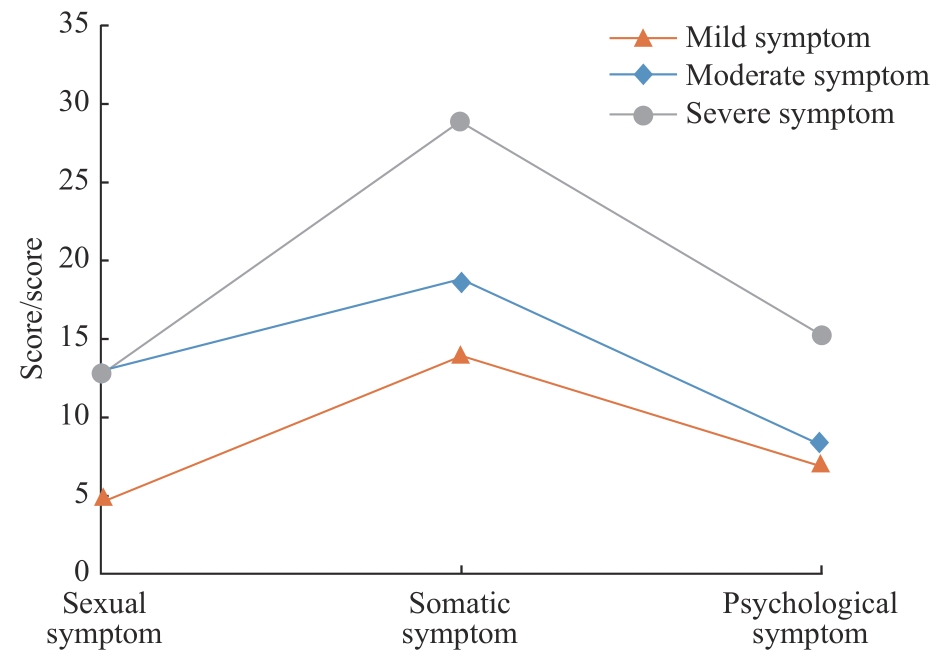
Fig 1 Mean score of adverse effects associated with endocrine therapy for prostate cancer
| Item | Assignment | Original value |
|---|---|---|
| Age | 1 | ≤65 year |
| 2 | >65 year and ≤ 75 year | |
| 3 | >75 year | |
| Annual treatment cost as a percentage of monthly per capita household income | 1 | ≤30% |
| 2 | >30% and ≤60% | |
| 3 | >60% | |
| T stage | 2 | T2 |
| 3 | T3 | |
| 4 | T4 | |
| N stage | 0 | N0 |
| 1 | N1 | |
| M stage | 0 | M0 |
| 1 | M1 | |
| PSA value | 1 | ≤0.01 ng·mL-1 |
| 2 | >0.01 ng·mL-1 and ≤0.2 ng·mL-1 | |
| 3 | >0.2 ng·mL-1 and ≤ 2 ng·mL-1 | |
| 4 | >2 ng·mL-1 | |
| Gene detection | 0 | Not mutated |
| 1 | Not done | |
| 2 | Mutated | |
| Psychosocial adjustment score | Actual value | ‒ |
| Perceived social support score | Actual value | ‒ |
| Uncertainty in illncss score | Actual value | ‒ |
Tab 4 Variable assignment for the multi-variable Logistic analysis (n=274)
| Item | Assignment | Original value |
|---|---|---|
| Age | 1 | ≤65 year |
| 2 | >65 year and ≤ 75 year | |
| 3 | >75 year | |
| Annual treatment cost as a percentage of monthly per capita household income | 1 | ≤30% |
| 2 | >30% and ≤60% | |
| 3 | >60% | |
| T stage | 2 | T2 |
| 3 | T3 | |
| 4 | T4 | |
| N stage | 0 | N0 |
| 1 | N1 | |
| M stage | 0 | M0 |
| 1 | M1 | |
| PSA value | 1 | ≤0.01 ng·mL-1 |
| 2 | >0.01 ng·mL-1 and ≤0.2 ng·mL-1 | |
| 3 | >0.2 ng·mL-1 and ≤ 2 ng·mL-1 | |
| 4 | >2 ng·mL-1 | |
| Gene detection | 0 | Not mutated |
| 1 | Not done | |
| 2 | Mutated | |
| Psychosocial adjustment score | Actual value | ‒ |
| Perceived social support score | Actual value | ‒ |
| Uncertainty in illncss score | Actual value | ‒ |
| Item | Moderate symptom | Severe symptom | ||||||||
|---|---|---|---|---|---|---|---|---|---|---|
| β | SE | Wald | P value | OR (95%CI) | β | SE | Wald | P value | OR (95%CI) | |
| Constant | -3.597 | 1.248 | 8.302 | 0.004 | - | -2.660 | 1.341 | 3.937 | 0.047 | |
| Psychosocial adjustment score | 0.038 | 0.010 | 13.279 | 0.000 | 1.038 (1.018‒1.060) | 0.026 | 0.012 | 5.065 | 0.024 | 1.027 (1.003‒1.051) |
| Perceived social support score | -0.002 | 0.008 | 0.047 | 0.827 | 0.998 (0.983‒1.014) | -0.008 | 0.009 | 0.773 | 0.379 | 0.992 (0.975‒1.010) |
| Uncertainty in illncss score | 0.009 | 0.008 | 1.400 | 0.237 | 1.009 (0.994‒1.024) | 0.021 | 0.008 | 6.532 | 0.011 | 1.021 (1.005‒1.038) |
| M Stage | ||||||||||
| M0 | -0.588 | 0.425 | 1.912 | 0.167 | 0.555 (0.241‒1.278) | -1.037 | 0.489 | 4.499 | 0.034 | 0.354 (0.136‒0.924) |
| M1 | 0 | - | - | - | - | 0 | - | - | - | - |
| PSA value | ||||||||||
| ≤0.01 ng·mL-1 | -0.062 | 0.520 | 0.014 | 0.905 | 0.940 (0.339‒2.605) | -0.770 | 0.528 | 2.128 | 0.145 | 0.463 (0.164‒1.303) |
| >0.01 ng·mL-1 and ≤0.2 ng·mL-1 | -0.126 | 0.525 | 0.057 | 0.811 | 0.882 (0.315‒2.467) | -1.953 | 0.622 | 9.859 | 0.002 | 0.142 (0.042‒0.480) |
| >0.2 ng·mL-1 and ≤ 2 ng·mL-1 | -1.238 | 0.611 | 4.110 | 0.043 | 0.290 (0.088‒0.960) | -1.292 | 0.613 | 4.442 | 0.035 | 0.275 (0.083‒0.914) |
| >2 ng·mL-1 | 0 | - | - | - | - | 0 | - | - | - | - |
| Gene detection | ||||||||||
| Not done | -1.090 | 0.490 | 4.945 | 0.026 | 0.336 (0.129‒0.879) | -0.569 | 0.575 | 0.980 | 0.322 | 0.566 (0.183‒1.746) |
| Not mutated | -0.555 | 0.407 | 1.859 | 0.173 | 0.574 (0.259‒1.275) | -0.323 | 0.470 | 0.473 | 0.492 | 0.724 (0.288‒1.819) |
| Mutated | 0 | - | - | - | - | 0 | - | - | - | - |
Tab 5 Multi-variable logistic regression analysis of potential categorical influencing factors
| Item | Moderate symptom | Severe symptom | ||||||||
|---|---|---|---|---|---|---|---|---|---|---|
| β | SE | Wald | P value | OR (95%CI) | β | SE | Wald | P value | OR (95%CI) | |
| Constant | -3.597 | 1.248 | 8.302 | 0.004 | - | -2.660 | 1.341 | 3.937 | 0.047 | |
| Psychosocial adjustment score | 0.038 | 0.010 | 13.279 | 0.000 | 1.038 (1.018‒1.060) | 0.026 | 0.012 | 5.065 | 0.024 | 1.027 (1.003‒1.051) |
| Perceived social support score | -0.002 | 0.008 | 0.047 | 0.827 | 0.998 (0.983‒1.014) | -0.008 | 0.009 | 0.773 | 0.379 | 0.992 (0.975‒1.010) |
| Uncertainty in illncss score | 0.009 | 0.008 | 1.400 | 0.237 | 1.009 (0.994‒1.024) | 0.021 | 0.008 | 6.532 | 0.011 | 1.021 (1.005‒1.038) |
| M Stage | ||||||||||
| M0 | -0.588 | 0.425 | 1.912 | 0.167 | 0.555 (0.241‒1.278) | -1.037 | 0.489 | 4.499 | 0.034 | 0.354 (0.136‒0.924) |
| M1 | 0 | - | - | - | - | 0 | - | - | - | - |
| PSA value | ||||||||||
| ≤0.01 ng·mL-1 | -0.062 | 0.520 | 0.014 | 0.905 | 0.940 (0.339‒2.605) | -0.770 | 0.528 | 2.128 | 0.145 | 0.463 (0.164‒1.303) |
| >0.01 ng·mL-1 and ≤0.2 ng·mL-1 | -0.126 | 0.525 | 0.057 | 0.811 | 0.882 (0.315‒2.467) | -1.953 | 0.622 | 9.859 | 0.002 | 0.142 (0.042‒0.480) |
| >0.2 ng·mL-1 and ≤ 2 ng·mL-1 | -1.238 | 0.611 | 4.110 | 0.043 | 0.290 (0.088‒0.960) | -1.292 | 0.613 | 4.442 | 0.035 | 0.275 (0.083‒0.914) |
| >2 ng·mL-1 | 0 | - | - | - | - | 0 | - | - | - | - |
| Gene detection | ||||||||||
| Not done | -1.090 | 0.490 | 4.945 | 0.026 | 0.336 (0.129‒0.879) | -0.569 | 0.575 | 0.980 | 0.322 | 0.566 (0.183‒1.746) |
| Not mutated | -0.555 | 0.407 | 1.859 | 0.173 | 0.574 (0.259‒1.275) | -0.323 | 0.470 | 0.473 | 0.492 | 0.724 (0.288‒1.819) |
| Mutated | 0 | - | - | - | - | 0 | - | - | - | - |
| 1 | SIEGEL R L, MILLER K D, JEMAL A. Cancer statistics, 2020[J]. CA A Cancer J Clin, 2020, 70(1): 7-30. |
| 2 | LIU X, YU C, BI Y, et al. Trends and age-period-cohort effect on incidence and mortality of prostate cancer from 1990 to 2017 in China[J]. Public Health, 2019, 172: 70-80. |
| 3 | 赵劲歌, 曾浩. 2020年欧洲泌尿外科学会(EAU)前列腺癌指南更新荟萃与解读[J]. 现代泌尿外科杂志, 2020, 25(9): 832-836, 841. |
| ZHAO J G, ZENG H. Update of the European Association of Urology (EAU) guidelines for prostate cancer in 2020[J]. J Mod Urol, 2020, 25(9):832-836,841. | |
| 4 | GAVIN A T, DRUMMOND F J, DONNELLY C, et al. Patient-reported ‘ever had’ and ‘current’ long-term physical symptoms after prostate cancer treatments[J]. BJU Int, 2015, 116(3): 397-406. |
| 5 | OCCHIPINTI S, ZAJDLEWICZ L, COUGHLIN G D, et al. A prospective study of psychological distress after prostate cancer surgery[J]. Psycho-oncology, 2019, 28(12): 2389-2395. |
| 6 | SHARPLEY C F, CHRISTIE D R H, BITSIKA V. Depression and prostate cancer: implications for urologists and oncologists[J]. Nat Rev Urol, 2020, 17(10): 571-585. |
| 7 | ZHAO X X, SUN M, YANG Y. Effects of social support, hope and resilience on depressive symptoms within 18 months after diagnosis of prostate cancer[J]. Health Qual Life Outcomes, 2021, 19(1): 1-10. |
| 8 | LENZ E R, PUGH L C, MILLIGAN R A, et al. The middle-range theory of unpleasant symptoms: an update[J]. ANS Adv Nurs Sci, 1997, 19(3): 14-27. |
| 9 | 邵聪聪. 基于不悦症状理论肺癌患者的癌因性疲乏现状及相关因素[D]. 济南: 山东大学, 2021. |
| SHAO C C. Current status of cancer-caused fatigue and related factors in lung cancer patients based on unpleasant symptom theory[D]. Jinan: Shandong University, 2021. | |
| 10 | 朱涵菁, 袁秀群, 杨艳. 生理-心理-社会模式下前列腺癌患者护理的研究进展[J]. 上海护理, 2022, 22(2): 46-49. |
| ZHU H J, YUAN X Q, YANG Y. Research progress of prostate cancer patient care under physiological-psychological-social model[J]. Shanghai Nursing Journal, 2022, 22(2): 46-49. | |
| 11 | 仲艳. 前列腺癌内分泌治疗患者生活质量现状及影响因素研究[D]. 沈阳: 中国医科大学, 2021. |
| ZHONG Y. Quality of life and its influencing factors in prostate cancer patients undergoing endocrine therapy[D]. Shenyang: China Medical University, 2021. | |
| 12 | 尹奎, 彭坚, 张君. 潜在剖面分析在组织行为领域中的应用[J]. 心理科学进展, 2020, 28(7): 1056-1070. |
| YIN K, PENG J, ZHANG J. The application of latent profile analysis in the field of organizational behavior[J]. Adv Psychol Sci,2020, 28(7): 1056-1070. | |
| 13 | 李峥, 刘宇. 护理学研究方法[M]. 2版. 北京: 人民卫生出版社, 2018. |
| LI Z, LIU Y. Research methods in nursing[M]. 2nd edition. Beijing: People′s Medical Publishing House, 2018. | |
| 14 | HEINEMANN L A J, SAAD F, ZIMMERMANN T, et al. The Aging Males′ Symptoms (AMS) scale: update and compilation of international versions[J]. Health Qual Life Outcomes, 2003, 1: 15. |
| 15 | 杨锐, 陆箴琦, 顾晓锋. 简体中文版老年男性症状量表的信效度检验[J]. 护理学杂志, 2020, 35(5): 31-34. |
| YANG R, LU Z Q, GU X F. Reliability testing of the Simplified Chinese version of the Geriatric Male Symptom Scale [J]. Journal of Nursing Science, 2020, 35(5): 31-34. | |
| 16 | HILTON B A. The Uncertainty Stress Scale: its development and psychometric properties[J]. Can J Nurs Res, 1994, 26(3): 15-30. |
| 17 | 汪向东, 王希林, 马弘. 心理卫生评定量表手册[M]. 增订版. 北京: 中国心理卫生杂志社, 1999. |
| WANG X D, WANG X L, MA H. Rating scales for mental health (updated edition) [M]. Beijing: Chinese Mental Health Journal, 1999. | |
| 18 | 姚静静. 癌症患者适应水平的横断面调查及其预测因素分析[D]. 上海: 第二军医大学, 2013. |
| YAO J J. A cross-sectional survey of cancer patients′ adjustment levels and analysis of their predictors [D]. Shanghai: Second Military Medical University, 2013. | |
| 19 | NORIEGA ESQUIVES B, LEE T K, MORENO P I, et al. Symptom burden profiles in men with advanced prostate cancer undergoing androgen deprivation therapy[J]. J Behav Med, 2022, 45(3): 366-377. |
| 20 | 朱晓丹, 陆箴琦, 顾晓锋. 前列腺癌患者症状负担及影响因素分析[J]. 中国实用护理杂志, 2019, 35(15): 1168-1172. |
| ZHU X D, LU Z Q, GU X F. Analysis of symptom burden and influencing factors in patients with prostate cancer[J]. Chin J Prac Nurs, 2019, 35(15): 1168-1172. | |
| 21 | HIGANO C S. Sexuality and intimacy after definitive treatment and subsequent androgen deprivation therapy for prostate cancer[J]. J Clin Oncol, 2012, 30(30): 3720-3725. |
| 22 | ARAP W. Quality of life and satisfaction with outcome among prostate-cancer survivors[J]. N Engl J Med, 2008, 359(2): 200-201. |
| 23 | WEI Y, WU J L, GU W J, et al. Prognostic value of germline DNA repair gene mutations in de novo metastatic and castration-sensitive prostate cancer[J]. Oncologist, 2020, 25(7): e1042-e1050. |
| 24 | LI J, XU C L, LEE H J, et al. A genomic and epigenomic atlas of prostate cancer in Asian populations[J]. Nature, 2020, 580(7801): 93-99. |
| 25 | PITUSKIN E, FAIRCHILD A. Prostate cancer with bone metastases: addressing chronic pain from the perspective of the radiation oncology nurse practitioner[J]. Semin Oncol Nurs, 2021, 37(4): 151175. |
| 26 | FERNANDEZ-ARAQUE A, GOMEZ-CASTRO J, GIAQUINTA-ARANDA A, et al. Mishel′s model of uncertainty describing categories and subcategories in fibromyalgia patients, a scoping review[J]. Int J Environ Res Public Health, 2020, 17(11): 3756. |
| 27 | ZHANG Y Z. Uncertainty in illness: theory review, application, and extension[J]. Oncol Nurs Forum, 2017, 44(6): 645-649. |
| 28 | LILJA H, ULMERT D, VICKERS A J. Prostate-specific antigen and prostate cancer: prediction, detection and monitoring[J]. Nat Rev Cancer, 2008, 8(4): 268-278. |
| 29 | HAN S, WOO S, KIM Y I, et al. Concordance between response assessment using prostate-specific membrane antigen PET and serum prostate-specific antigen levels after systemic treatment in patients with metastatic castration resistant prostate cancer: a systematic review and meta-analysis[J]. Diagnostics (Basel), 2021, 11(4): 663. |
| 30 | DAVID M K, LESLIE S W. Prostate Specific Antigen [M]. Treasure Island (FL): StatPearls Publishing LLC, 2022. |
| 31 | CHAMBERS S K, NG S K, BAADE P, et al. Trajectories of quality of life, life satisfaction, and psychological adjustment after prostate cancer[J]. Psycho-oncology, 2017, 26(10): 1576-1585. |
| 32 | 刘莹莹, 李惠艳, 苑冬鹤. 老年前列腺癌病人支持性照顾需求与生活质量的纵向研究 [J]. 安徽医药, 2019, 23(10): 1987-1990. |
| LIU Y Y, LI H Y, YUAN D H. A longitudinal study of supportive care needs and quality of life in elderly prostate cancer patients[J]. Anhui Med Pharm J, 2019, 23(10): 1987-1990. | |
| 33 | WALSH E A, ANTONI M H, POPOK P J, et al. Effects of a randomized-controlled trial of cognitive behavioral stress management: psychosocial adaptation and immune status in men with early-stage prostate cancer[J]. Gen Hosp Psychiatry, 2022, 79: 128-134. |
| [1] | Li Jian, Wang Suping. Latent profile analysis of comorbidity of depression and anxiety symptoms in college students and its correlation with social networking service addiction [J]. Journal of Shanghai Jiao Tong University (Medical Science), 2026, 46(2): 213-219. |
| [2] | WU Shiyi, CHEN Si, LIU Bohan, LIU Yuting, LIU Yiwen, HE Yiqing, DU Yan, ZHANG Guoliang, GUO Qian, GAO Feng, YANG Cuixia. Role of "HA coat" in modulating stemness and endocrine resistance in ER+ breast cancer [J]. Journal of Shanghai Jiao Tong University (Medical Science), 2025, 45(10): 1298-1307. |
| [3] | XI Huiqin, TIAN Meimei, XIE Lei, XU Yurui, HUANG Xin, XU Ying, ZHANG Yaqing. Heterogeneity and related factors of dyadic coping in infertility couples [J]. Journal of Shanghai Jiao Tong University (Medical Science), 2024, 44(6): 746-754. |
| [4] | CHEN Yan, ZHANG Chen. Research progress of role of Pi3k/Akt pathway in mechanism of atypical antipsychotic drugs [J]. , 2018, 38(8): 948-. |
| [5] | ZHANG Lin-yuan, ZHANG Ming, DA Jun. Application of mTOR inhibitor everolimus for the treatment of renal cell carcinoma [J]. , 2016, 36(12): 1812-. |
| [6] | ZHOU Lan-lan, DING Yu. Clinical analysis of adverse reactions of ankylosing spondylitis patients treated by different TNF-inhibitors [J]. , 2013, 33(12): 1620-. |
| Viewed | ||||||
|
Full text |
|
|||||
|
Abstract |
|
|||||
