
Journal of Shanghai Jiao Tong University (Medical Science) ›› 2026, Vol. 46 ›› Issue (7): 981-989.doi: 10.3969/j.issn.1674-8115.2026.07.017
• Review • Previous Articles Next Articles
Lu Tingwei1, Yuan Hao1, Liu Yingli2( ), Jiang Lingyong1()
Received:2025-12-26
Accepted:2026-02-24
Online:2026-07-28
Published:2026-07-28
Contact:
Liu Yingli, Jiang Lingyong
E-mail:18616375719@163.com;jianglingyong@sjtu.edu.cn
Supported by:CLC Number:
Lu Tingwei, Yuan Hao, Liu Yingli, Jiang Lingyong. Advances in alveolar bone changes and risks of alveolar surgery in patients with chronic kidney disease[J]. Journal of Shanghai Jiao Tong University (Medical Science), 2026,(7): 981-989.
Add to citation manager EndNote|Ris|BibTeX
URL: https://xuebao.shsmu.edu.cn/EN/10.3969/j.issn.1674-8115.2026.07.017
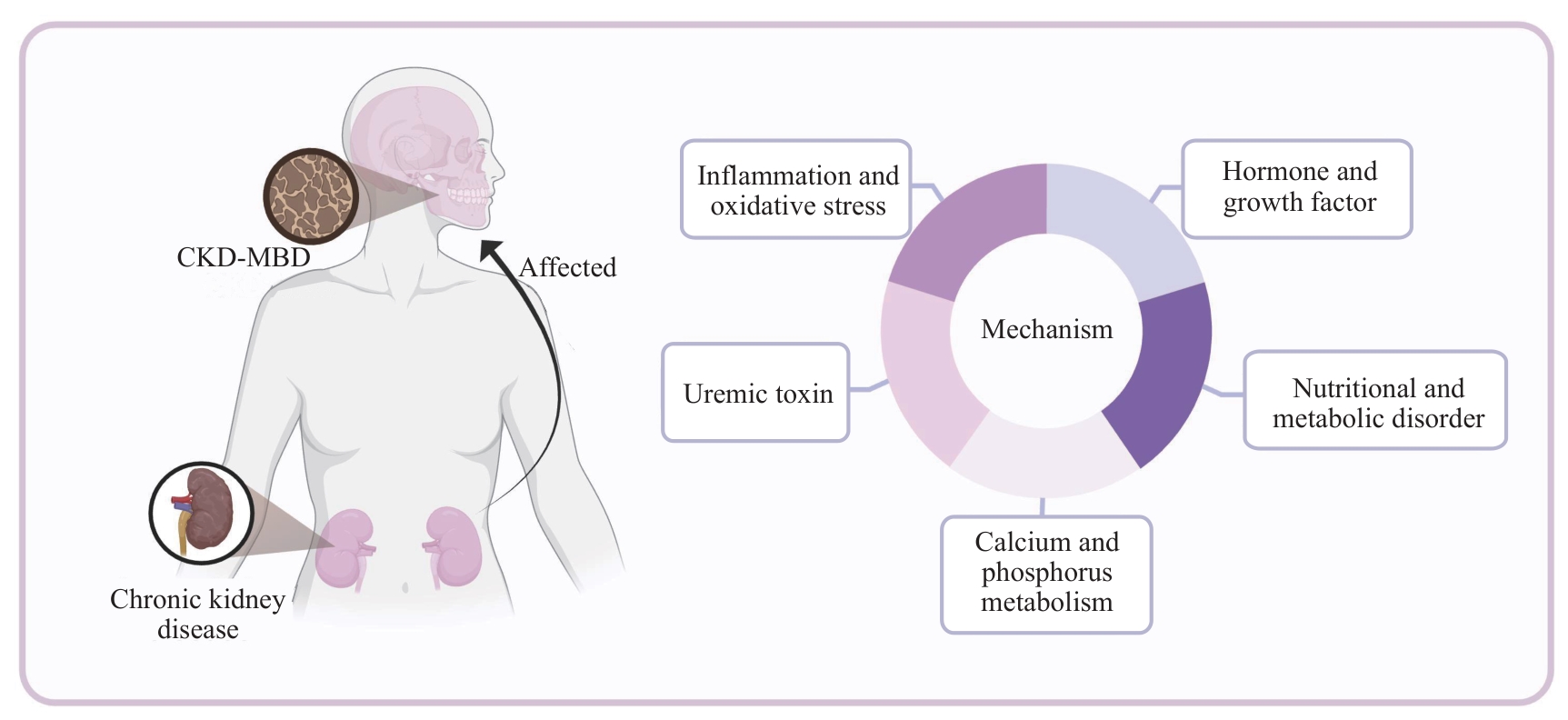
Fig 1 Potential mechanisms underlying CKD-related alveolar bone changesNote: CKD-MBD—chronic kidney disease-mineral and bone disorder.
| Potential mechanism | Key factor | Pathway and effect | Reference |
|---|---|---|---|
| Calcium-phosphate metabolism imbalance | PTH, FGF-23, Klotho, 1, 25(OH)₂D, calcium, phosphate | Declining renal function triggers hyperphosphatemia and hypocalcemia, inducing secondary hyperparathyroidism | [ |
| Dysregulation of the FGF-23/Klotho pathway exacerbates mineral metabolism imbalance | |||
| Vitamin D deficiency impairs calcium absorption and disrupts PTH regulation | |||
| IS accumulation induces oxidative stress, disrupting the balance between osteoblasts and osteoclasts | |||
| Uremic toxin-induced damage | IS, AhR, Wnt/β-catenin, SOST, DKK1 | IS activates the AhR pathway, thereby impairing bone formation and mineralization | [ |
| IS-induced PTH resistance contributes to impaired bone formation | |||
| IS induces osteocyte dysfunction, leading to bone loss | |||
| Inflammation promotes osteoclast activation and osteoblast inhibition through the RANKL/OPG and NF-κB pathways | |||
| Inflammation and oxidative stress | IL-6, TNF-α, IL-17, NF-κB, RAGE | Oxidative stress induces ROS-mediated osteoblast damage and aggravates PTH resistance | [ |
| AGEs promote apoptosis and oxidative stress, thereby aggravating bone fragility | |||
| Severely impaired calcium absorption and utilization | |||
| Nutritional and metabolic disorder | Calcium, phosphate, vitamin D, FGF-23, PTH | High phosphorus intake disrupts bone remodeling | [ |
| Protein intake exerts complex effects on bone metabolism | |||
| Vitamin D deficiency and muscle loss synergistically suppress bone formation | |||
| Estrogen loss accelerates bone loss and fragility | |||
| Hormonal and growth factor disorder | Estrogen, activin A, SMAD2, TGF-β, TβRI | Activation of the TGF-β pathway promotes fibrosis and disrupts bone homeostasis | [ |
| Activin A promotes osteoclastogenesis and inhibits bone formation | |||
| Inflammatory and hormonal signals interact to exacerbate bone damage |
Tab 1 Potential mechanisms underlying alveolar bone changes in patients with CKD
| Potential mechanism | Key factor | Pathway and effect | Reference |
|---|---|---|---|
| Calcium-phosphate metabolism imbalance | PTH, FGF-23, Klotho, 1, 25(OH)₂D, calcium, phosphate | Declining renal function triggers hyperphosphatemia and hypocalcemia, inducing secondary hyperparathyroidism | [ |
| Dysregulation of the FGF-23/Klotho pathway exacerbates mineral metabolism imbalance | |||
| Vitamin D deficiency impairs calcium absorption and disrupts PTH regulation | |||
| IS accumulation induces oxidative stress, disrupting the balance between osteoblasts and osteoclasts | |||
| Uremic toxin-induced damage | IS, AhR, Wnt/β-catenin, SOST, DKK1 | IS activates the AhR pathway, thereby impairing bone formation and mineralization | [ |
| IS-induced PTH resistance contributes to impaired bone formation | |||
| IS induces osteocyte dysfunction, leading to bone loss | |||
| Inflammation promotes osteoclast activation and osteoblast inhibition through the RANKL/OPG and NF-κB pathways | |||
| Inflammation and oxidative stress | IL-6, TNF-α, IL-17, NF-κB, RAGE | Oxidative stress induces ROS-mediated osteoblast damage and aggravates PTH resistance | [ |
| AGEs promote apoptosis and oxidative stress, thereby aggravating bone fragility | |||
| Severely impaired calcium absorption and utilization | |||
| Nutritional and metabolic disorder | Calcium, phosphate, vitamin D, FGF-23, PTH | High phosphorus intake disrupts bone remodeling | [ |
| Protein intake exerts complex effects on bone metabolism | |||
| Vitamin D deficiency and muscle loss synergistically suppress bone formation | |||
| Estrogen loss accelerates bone loss and fragility | |||
| Hormonal and growth factor disorder | Estrogen, activin A, SMAD2, TGF-β, TβRI | Activation of the TGF-β pathway promotes fibrosis and disrupts bone homeostasis | [ |
| Activin A promotes osteoclastogenesis and inhibits bone formation | |||
| Inflammatory and hormonal signals interact to exacerbate bone damage |
| [1] | GBD Chronic Kidney Disease Collaboration. Global, regional, and national burden of chronic kidney disease, 1990-2017: a systematic analysis for the Global Burden of Disease Study 2017[J]. Lancet, 2020, 395(10225): 709-733. |
| [2] | Najar M S, Mir M M, Muzamil M. Prevalence of osteoporosis in patients with chronic kidney disease (stages 3-5) in comparison with age- and sex-matched controls: a study from Kashmir Valley Tertiary Care Center[J]. Saudi J Kidney Dis Transpl, 2017, 28(3): 538-544. |
| [3] | Aggarwal H K, Jain D, Yadav S, et al. Bone mineral density in patients with predialysis chronic kidney disease[J]. Ren Fail, 2013, 35(8): 1105-1111. |
| [4] | Kanjevac T, Bijelic B, Brajkovic D, et al. Impact of chronic kidney disease mineral and bone disorder on jaw and alveolar bone metabolism: a narrative review[J]. Oral Health Prev Dent, 2018, 16(1): 79-85. |
| [5] | You M, Tang B, Wang Z J, et al. Radiological manifestations of renal osteodystrophy in the orofacial region: a case report and literature review[J]. Oral Radiol, 2018, 34(3): 262-266. |
| [6] | Raubenheimer E J, Noffke C E, Hendrik H D. Chronic kidney disease-mineral bone disorder: an update on the pathology and cranial manifestations[J]. J Oral Pathol Med, 2015, 44(4): 239-243. |
| [7] | Patil S, Sinha N. Pulp stone, haemodialysis, end-stage renal disease, carotid atherosclerosis[J]. J Clin Diagn Res, 2013, 7(6): 1228-1231. |
| [8] | Imirzalioglu P, Onay E O, Agca E, et al. Dental erosion in chronic renal failure[J]. Clin Oral Investig, 2007, 11(2): 175-180. |
| [9] | Davidovich E, Schwarz Z, Davidovitch M, et al. Oral findings and periodontal status in children, adolescents and young adults suffering from renal failure[J]. J Clinic Periodontology, 2005, 32(10): 1076-1082. |
| [10] | Sezer B, Kaya R, Kodaman Dokumacıgil N, et al. Assessment of the oral health status of children with chronic kidney disease[J]. Pediatr Nephrol, 2023, 38(1): 269-277. |
| [11] | Caldiroli L, Molinari P, D′Alessandro C, et al. Osteosarcopenia in chronic kidney disease: an overlooked syndrome?[J]. J Cachexia Sarcopenia Muscle, 2025, 16(2): e13787. |
| [12] | Yuan Q J, Wang J W, Peng Z Z, et al. Neutrophil-to-lymphocyte ratio and incident end-stage renal disease in Chinese patients with chronic kidney disease: results from the Chinese Cohort Study of Chronic Kidney Disease (C-STRIDE)[J]. J Transl Med, 2019, 17(1): 86. |
| [13] | Tanaka H, Komaba H, Koizumi M, et al. Role of uremic toxins and oxidative stress in the development of chronic kidney disease-mineral and bone disorder[J]. J Ren Nutr, 2012, 22(1): 98-101. |
| [14] | de Waal D, Heaslip E, Callas P. Medical nutrition therapy for chronic kidney disease improves biomarkers and slows time to dialysis[J]. J Ren Nutr, 2016, 26(1): 1-9. |
| [15] | Davenport A. Frailty, appendicular lean mass, osteoporosis and osteosarcopenia in peritoneal dialysis patients[J]. J Nephrol, 2022, 35(9): 2333-2340. |
| [16] | Messier M D, Emde K, Stern L, et al. Radiographic periodontal bone loss in chronic kidney disease[J]. J Periodontol, 2012, 83(5): 602-611. |
| [17] | Zhao D, Chen X L, Yue L, et al. Assessment of residual alveolar bone volume in hemodialysis patients using CBCT[J]. Clin Oral Investig, 2015, 19(7): 1619-1624. |
| [18] | Scutellari P N, Orzincolo C, Bedani P L, et al. Radiographic manifestations in teeth and jaws in chronic kidney insufficiency[J]. Radiol Med, 1996, 92(4): 415-420. |
| [19] | Guimarães L M, Valeriano A T, Rebelo Pontes H A, et al. Manifestations of hyperparathyroidism in the jaws: concepts, mechanisms, and clinical aspects[J]. Oral Surg Oral Med Oral Pathol Oral Radiol, 2022, 133(5): 547-555. |
| [20] | Chapple I L C, Hirschfeld J, Cockwell P, et al. Interplay between periodontitis and chronic kidney disease[J]. Nat Rev Nephrol, 2025, 21(4): 226-240. |
| [21] | Mohamed F F, Amadeu de Oliveira F, Kinoshita Y, et al. Dentoalveolar alterations in an adenine-induced chronic kidney disease mouse model[J]. J Bone Miner Res, 2023, 38(8): 1192-1207. |
| [22] | Zhao D, Zhang S W, Chen X L, et al. Evaluation of periodontitis and bone loss in patients undergoing hemodialysis[J]. J Periodontol, 2014, 85(11): 1515-1520. |
| [23] | Sun K, Shen H, Liu Y L, et al. Assessment of alveolar bone and periodontal status in peritoneal dialysis patients[J]. Front Physiol, 2021, 12: 759056. |
| [24] | Yang F, Shu C J, Wang C J, et al. Meta-analysis of the association between chronic periodontitis and chronic kidney disease[J]. World J Clin Cases, 2024, 12(22): 5094-5107. |
| [25] | Reiss A B, Miyawaki N, Moon J, et al. CKD, arterial calcification, atherosclerosis and bone health: inter-relationships and controversies[J]. Atherosclerosis, 2018, 278: 49-59. |
| [26] | Kates D M, Sherrard D J, Andress D L. Evidence that serum phosphate is independently associated with serum PTH in patients with chronic renal failure[J]. Am J Kidney Dis, 1997, 30(6): 809-813. |
| [27] | Pazianas M, Miller P D. Osteoporosis and chronic kidney disease-mineral and bone disorder (CKD-MBD): back to basics[J]. Am J Kidney Dis, 2021, 78(4): 582-589. |
| [28] | Miller P D. Chronic kidney disease and the skeleton[J]. Bone Res, 2014, 2: 14044. |
| [29] | Neven E, Vervaet B, Brand K, et al. Metformin prevents the development of severe chronic kidney disease and its associated mineral and bone disorder[J]. Kidney Int, 2018, 94(1): 102-113. |
| [30] | Chen H W, Zhou Y N, Liu Y L, et al. Indoxyl sulfate exacerbates alveolar bone loss in chronic kidney disease through ferroptosis[J]. Oral Dis, 2025, 31(1): 264-277. |
| [31] | Liu W C, Wu C C, Lim P S, et al. Effect of uremic toxin-indoxyl sulfate on the skeletal system[J]. Clin Chim Acta, 2018, 484: 197-206. |
| [32] | Nii-Kono T, Iwasaki Y, Uchida M, et al. Indoxyl sulfate induces skeletal resistance to parathyroid hormone in cultured osteoblastic cells[J]. Kidney Int, 2007, 71(8): 738-743. |
| [33] | Hruska K. New concepts in renal osteodystrophy[J]. Nephrol Dial Transplant, 1998, 13(11): 2755-2760. |
| [34] | Gonnelli S, Montagnani A, Caffarelli C, et al. Osteoprotegerin (OPG) and receptor activator of NF-kB ligand (RANK-L) serum levels in patients on chronic hemodialysis[J]. J Endocrinol Investig, 2005, 28(8): 534-539. |
| [35] | Hsu S N, Stephen L A, Phadwal K, et al. Mitochondrial dysfunction and mitophagy blockade contribute to renal osteodystrophy in chronic kidney disease-mineral bone disorder[J]. Kidney Int, 2025, 107(6): 1017-1036. |
| [36] | Mazzaferro S, Bagordo D, de Martini N, et al. Inflammation, oxidative stress, and bone in chronic kidney disease in the osteoimmunology era[J]. Calcif Tissue Int, 2021, 108(4): 452-460. |
| [37] | Evenepoel P, Stenvinkel P, Shanahan C, et al. Inflammation and gut dysbiosis as drivers of CKD-MBD[J]. Nat Rev Nephrol, 2023, 19(10): 646-657. |
| [38] | Chen N X, Srinivasan S, O'Neill K, et al. Effect of advanced glycation end-products (AGE) lowering drug ALT-711 on biochemical, vascular, and bone parameters in a rat model of CKD-MBD[J]. J Bone Miner Res, 2020, 35(3): 608-617. |
| [39] | Hibbard L M, Liu S, Marambio Y G, et al. Multi-tissue spatial transcriptomics identified simultaneous responses to oxidative stress and apoptosis in parallel with tissue-specific reprogramming in modeled chronic kidney disease-mineral and bone disorder[J]. JBMR Plus, 2025, 9(12): ziaf161. |
| [40] | Evenepoel P, Jørgensen H S, Bover J, et al. Recommended calcium intake in adults and children with chronic kidney disease: a European consensus statement[J]. Nephrol Dial Transplant, 2024, 39(2): 341-366. |
| [41] | Gutiérrez O M. Recent advances in the role of diet in bone and mineral disorders in chronic kidney disease[J]. Curr Osteoporos Rep, 2021, 19(6): 574-579. |
| [42] | Stremke E R, Biruete A, Hill Gallant K M. Dietary protein intake and bone across stages of chronic kidney disease[J]. Curr Osteoporos Rep, 2020, 18(3): 247-253. |
| [43] | Bacchetta J, Harambat J, Cochat P, et al. The consequences of chronic kidney disease on bone metabolism and growth in children[J]. Nephrol Dial Transplant, 2012, 27(8): 3063-3071. |
| [44] | Cevik E C, Erel C T, Ozcivit Erkan I B, et al. Chronic kidney disease and menopausal health: an EMAS clinical guide[J]. Maturitas, 2025, 192: 108145. |
| [45] | Suzuki H, Kondo K. Chronic kidney disease in postmenopausal women[J]. Hypertens Res, 2012, 35(2): 142-147. |
| [46] | Vorland C J, Lachcik P J, Swallow E A, et al. Effect of ovariectomy on the progression of chronic kidney disease-mineral bone disorder (CKD-MBD) in female Cy/+ rats[J]. Sci Rep, 2019, 9(1): 7936. |
| [47] | Toejing P, Myint O, Leelahavanichkul A, et al. Nephrectomy induces severe bone loss in mice expressing constitutively active TGFβ receptor type Ⅰ[J]. Int J Mol Sci, 2025, 26(6): 2704. |
| [48] | Sugatani T. Systemic activation of activin a signaling causes chronic kidney disease-mineral bone disorder[J]. Int J Mol Sci, 2018, 19(9): 2490. |
| [49] | Xie T, Yang Z L, Dai G Y, et al. Evaluation of the oral health status in Chinese hemodialysis patients[J]. Hemodial Int, 2014, 18(3): 668-673. |
| [50] | Palmeira E, de Liz Pérez-Losada F, Díaz-Flores-García V, et al. Prevalence of oral infections in chronic kidney disease patients: a cross-sectional study[J]. Oral Dis, 2024, 30(4): 2708-2715. |
| [51] | Lins P J B, Andrade N S, Caliento R, et al. Alveolar bone healing patterns in chronic kidney failure and kidney transplant recipients: a pixel intensity and fractal analyses[J]. Spec Care Dentist, 2025, 45(1): e13065. |
| [52] | 常雪梅, 任小华, 杨晓民. 尿毒症血液透析患者拔牙对策[J]. 口腔医学, 2004, 24(2): 82-83. |
| Chang X M, Ren X H, Yang X M. Countermeasures of tooth-extraction for patients with uremia on dialysis[J]. Journal of Stomatology, 2004, 24(2): 82-83. | |
| [53] | Figueiredo M A, Andrade N S, Blanco Carrión A, et al. Bleeding during tooth extraction in patients with chronic kidney disease: a cross-sectional pilot study[J]. Oral Dis, 2024, 30(4): 2617-2624. |
| [54] | 喻瑶, 李巧文, 刘志明, 等. 慢性肾脏病导致全身多系统疾病患者拔牙1例[J]. 口腔医学研究, 2023, 39(7): 652-653. |
| Yu Y, Li Q W, Liu Z M, et al. Tooth extraction for patient with multisystem disease caused by chronic kidney disease: a case report[J]. Journal of Oral Science Research, 2023, 39(7): 652-653. | |
| [55] | Ishimaru M, Ono S, Iwagami M, et al. Risk of surgical site infections after tooth extraction in CKD: a retrospective real-world study in Japan[J]. Clin J Am Soc Nephrol, 2025, 20(4): 582-584. |
| [56] | Yuan Q, Xiong Q C, Gupta M, et al. Dental implant treatment for renal failure patients on dialysis: a clinical guideline[J]. Int J Oral Sci, 2017, 9(3): 125-132. |
| [57] | Scarano A, Mortellaro C, Alla I, et al. Oral surgery and dental implants in patients with chronic kidney disease: scoping review for oral health status[J]. Discov Med, 2024, 36(184): 874-881. |
| [58] | 杨震, 汤兵, 孟昭业, 等. 肾衰患者血透期间接受拔牙手术的临床观察[J]. 实用口腔医学杂志, 1998, 14(2): 150. |
| Yang Z, Tang B, Meng Z Y, et al. Clinical observation on patients with renal failure undergoing tooth extraction during hemodialysis[J]. Journal of Practical Stomatology, 1998, 14(2): 150. | |
| [59] | Zou H W, Zhao X F, Sun N Y, et al. Effect of chronic kidney disease on the healing of titanium implants[J]. Bone, 2013, 56(2): 410-415. |
| [60] | Sun N Y, Guo Y C, Liu W Q, et al. FGF23 neutralization improves bone quality and osseointegration of titanium implants in chronic kidney disease mice[J]. Sci Rep, 2015, 5: 8304. |
| [61] | 杨震, 寿柏泉, 朱文, 等. 肾衰透析患者拔牙的临床研究[J]. 医学研究生学报, 2001, 14(4): 338-340. |
| Yang Z, Shou B Q, Zhu W, et al. Clinical studies of extracting tooth in dialysis patients[J]. Journal of Medical Postgraduates, 2001, 14(4): 338-340. |
| [1] | Feng Haoran, Liu Junjun, Wang Kaichun, Wang Niansong, Gu Sijie, Fan Ying. Mechanism of WNT5A in aggravating the ischemia-reperfusion injury-induced acute kidney injury to chronic kidney disease transition by promoting FOXP1 [J]. Journal of Shanghai Jiao Tong University (Medical Science), 2026, 46(7): 875-885. |
| [2] | Shang Dihua, Chen Huiwen, Li Ruolin, Liu Yingli, Song Zhongchen. Analysis of salivary metabolite characteristics in periodontitis patients with chronic renal failure based on metabolomics [J]. Journal of Shanghai Jiao Tong University (Medical Science), 2026, 46(5): 576-584. |
| [3] | LI Yu, ZHANG Yu. Analysis of risk factors of adverse pregnancy outcomes in patients with chronic kidney disease [J]. Journal of Shanghai Jiao Tong University (Medical Science), 2024, 44(5): 560-566. |
| [4] | ZHAO Meng, JIANG Liting, GAO Yiming. Age-related changes of alveolar bone in maxillary posterior based on cone-beam CT [J]. Journal of Shanghai Jiao Tong University (Medical Science), 2024, 44(10): 1273-1278. |
| [5] | XIE Lin, CHENG Ye, ZHENG Qimin, ZHANG Xi, FU Lili, CHEN Min, WANG Yi, MEI Changlin, XIE Jingyuan, GU Xiangchen. Preventive effect of icariin on transition from acute kidney injury to chronic kidney disease in mouse model [J]. Journal of Shanghai Jiao Tong University (Medical Science), 2023, 43(1): 8-19. |
| [6] | LAI Xiuxiu, ZHU Qingyan, TAN Jiaqi, YANG Ling, ZHU Yan, ZHOU Gongmin. Clinical study of low dose febuxostat on improving renal function in elderly patients with asymptomatic hyperuricemia [J]. Journal of Shanghai Jiao Tong University (Medical Science), 2022, 42(7): 885-892. |
| [7] | WANG Yakun, XU Jiarui, WU Qianqian, ZHANG Xiaohua, ZHU Yingchun, BAI Shoujun. Effect of combination of medical care and nursing on the quality of life and mental state of elderly patients with chronic kidney disease in Shanghai suburbs [J]. Journal of Shanghai Jiao Tong University (Medical Science), 2022, 42(7): 904-910. |
| [8] | WU Jing, ZHAO Zhengyi, ZOU Duohong, YANG Chi, ZHANG Zhiyuan. Application of a tent-pole screw technology in reconstruction of severe alveolar bone defect: a retrospective study of 30 patients [J]. Journal of Shanghai Jiao Tong University (Medical Science), 2022, 42(6): 768-777. |
| [9] | WEI Shan, JI Ouyang, CHEN Zhihao, HUANG Zehui, LI Pu, FANG Junyan, LIU Yingli. Development and validation of a knowledge, attitude, belief and practice scale for safe medication in patients with chronic kidney disease [J]. Journal of Shanghai Jiao Tong University (Medical Science), 2022, 42(12): 1729-1738. |
| [10] | Jian-ming YUAN, Bin WEI, Wei-xing XU, Lei ZHANG. CBCT effects of different abutment angles on alveolar bone changes in maxillary anterior teeth [J]. JOURNAL OF SHANGHAI JIAOTONG UNIVERSITY (MEDICAL SCIENCE), 2021, 41(3): 339-343. |
| [11] | Si-si ZHOU, Ge-yan GONG, Jia-li MA, Wen-ying GAO, Ying ZHANG. Analysis of the interdependence between chronic kidney disease child-parent transition readiness and the quality of life of both parties [J]. JOURNAL OF SHANGHAI JIAOTONG UNIVERSITY (MEDICAL SCIENCE), 2021, 41(12): 1588-1595. |
| [12] | CHEN Sheng-nan, SHEN Yan. Effect of asymmetric dimethylarginine on development of atherosclerosis in patients with chronic kidney disease [J]. JOURNAL OF SHANGHAI JIAOTONG UNIVERSITY (MEDICAL SCIENCE), 2020, 40(8): 1131-1136. |
| [13] | ZHU Min-xia, ZHANG Wei-ming, NI Zhao-hui, CAI Hong, LU Jia-yue, LIU Shang, ZHAN Ya-ping. Analysis of the correlation between blood pressure fluctuation and hemodialysis-related complications in patients with maintenance hemodialysis [J]. , 2020, 40(4): 484-. |
| [14] | LI Yuan, SHI Jun-yu, ZHANG Xiao, LAI Hong-chang. Correlation between the morphology of alveolar bone defect in the maxillary anterior region and the outcome of guided bone regeneration [J]. JOURNAL OF SHANGHAI JIAOTONG UNIVERSITY (MEDICAL SCIENCE), 2020, 40(10): 1414-1419. |
| [15] | YU Jin-feng, HU Yun, HUANG Ming-na, CHEN Jun, MING Ye, ZHENG Lei-lei. Three-dimensional study on symmetry of the first molar and its peripheric alveolar bone in skeletal class Ⅲ patients with mandibular deviation [J]. , 2018, 38(3): 288-. |
| Viewed | ||||||
|
Full text |
|
|||||
|
Abstract |
|
|||||
