
Journal of Shanghai Jiao Tong University (Medical Science) ›› 2025, Vol. 45 ›› Issue (11): 1527-1535.doi: 10.3969/j.issn.1674-8115.2025.11.012
• Review • Previous Articles
HOU Senlin1,2, DENG Xiangtian1,2, ZHENG Tingjia2, HAN Yifei2, LIU Shen1,2( )
)
Received:2025-02-24
Accepted:2025-07-06
Online:2025-11-28
Published:2025-12-03
Contact:
LIU Shen
E-mail:liushensjtu@126.com
Supported by:CLC Number:
HOU Senlin, DENG Xiangtian, ZHENG Tingjia, HAN Yifei, LIU Shen. Progress in applications of anti-senescence materials for tissue repair[J]. Journal of Shanghai Jiao Tong University (Medical Science), 2025, 45(11): 1527-1535.
Add to citation manager EndNote|Ris|BibTeX
URL: https://xuebao.shsmu.edu.cn/EN/10.3969/j.issn.1674-8115.2025.11.012
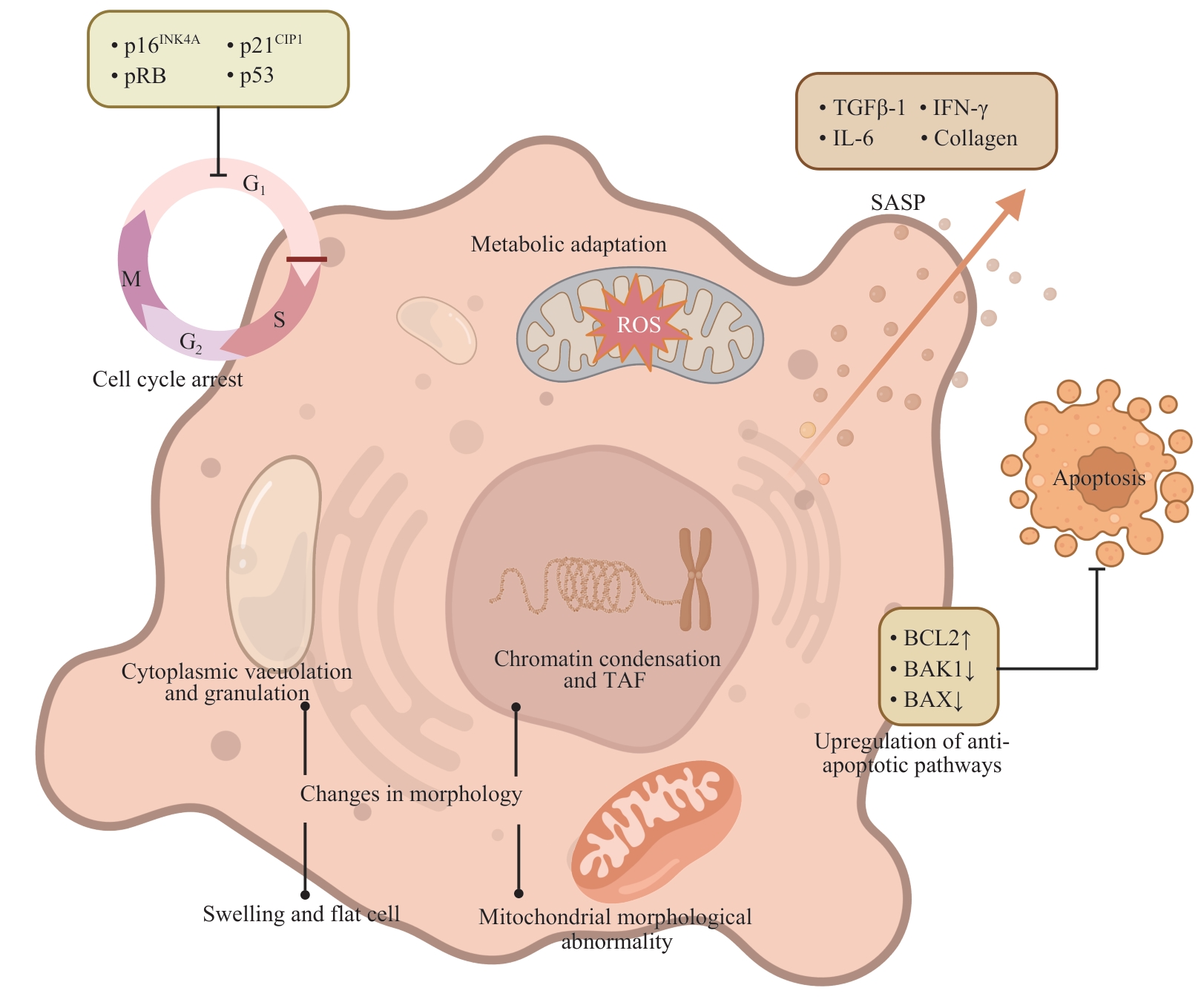
Fig 1 Phenotypes of senescent cells
| Feature | Acute wound | Chronic wound |
|---|---|---|
| SASP secretory pattern | Short-term, mainly promoting repair | Long-term, mainly promoting inflammation |
| SASP secretory substances | Growth factors such as TGF-β, ECM remodeling enzymes such as MMPs, anti-inflammatory cytokines such as IL-10, etc | Proinflammatory factors such as IL-1β and TNF-α, and growth inhibitors such as sFRP |
| Oxidative stress level | Controllable, with a transient rise in ROS | Persistent high-level, causing accumulation of DNA damage |
| Microenvironment remediation ability | Dynamic balance (orderly ECM remodeling) | Imbalance (excessive ECM degradation or fibrosis) |
Tab 1 Comparison of the roles of cellular senescence is acute and chronic wounds
| Feature | Acute wound | Chronic wound |
|---|---|---|
| SASP secretory pattern | Short-term, mainly promoting repair | Long-term, mainly promoting inflammation |
| SASP secretory substances | Growth factors such as TGF-β, ECM remodeling enzymes such as MMPs, anti-inflammatory cytokines such as IL-10, etc | Proinflammatory factors such as IL-1β and TNF-α, and growth inhibitors such as sFRP |
| Oxidative stress level | Controllable, with a transient rise in ROS | Persistent high-level, causing accumulation of DNA damage |
| Microenvironment remediation ability | Dynamic balance (orderly ECM remodeling) | Imbalance (excessive ECM degradation or fibrosis) |
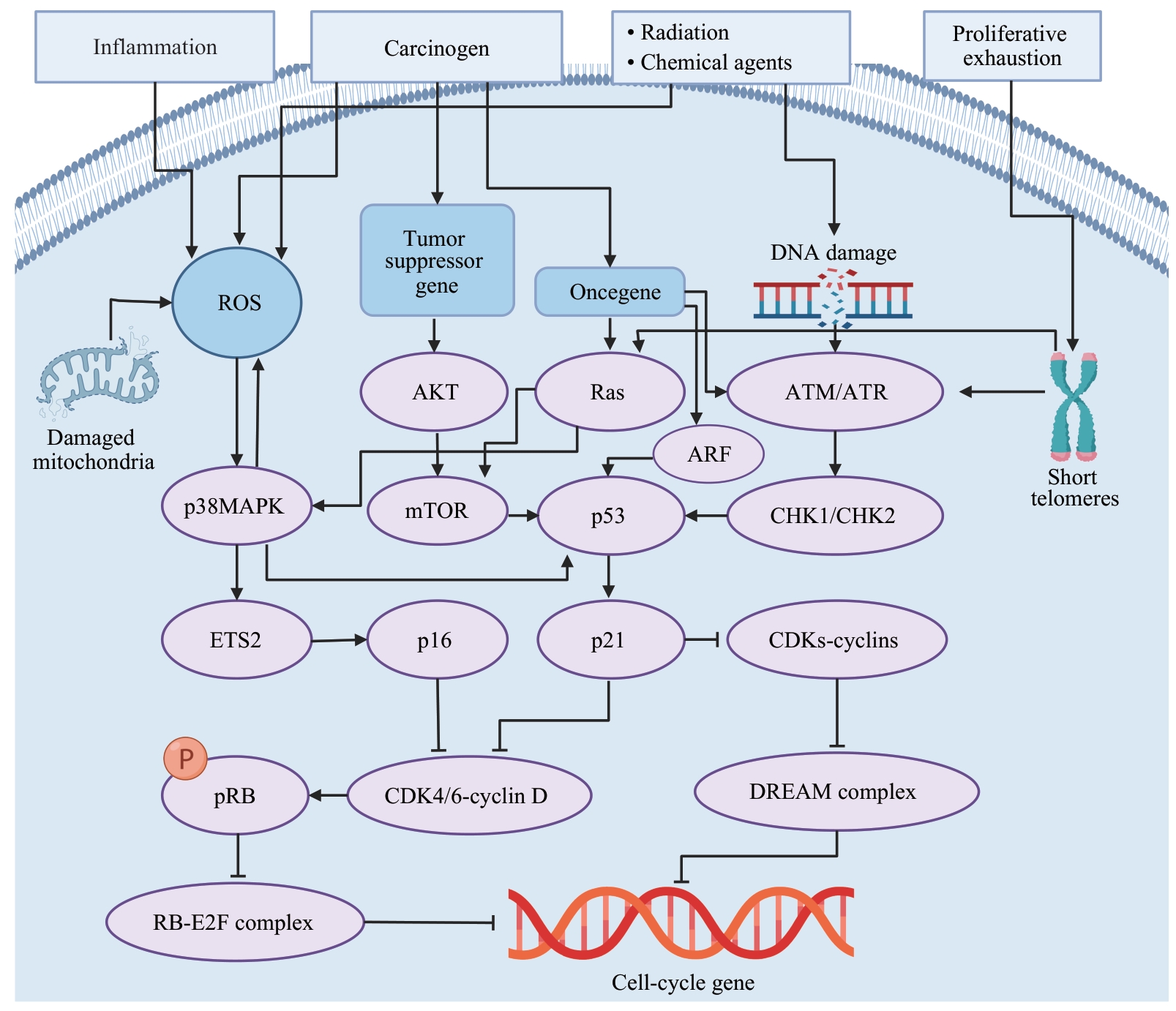
Fig 2 Schematic diagram of the causes and signaling pathways of cellular senescence
| Anti-senescence material | Injury type | Mechanism of action | Biocompatibility | Experimental stage and evaluation | Reference |
|---|---|---|---|---|---|
| Dasatinib + quercetin environment-responsive hydrogel | Myocardial injury | Senolytic | High biocompatibility, low toxicity, and no obvious side effects | Clinical randomized controlled trial | [ |
| Metformin + zinc ion hydrogel | Traumatic skin defects, burns | Activating autophagy | High biocompatibility, low toxicity, and easy metabolism | Mouse experiment | [ |
| Resveratrol + angiopoietin 2 hydrogel | Bone tissue injury | Activating autophagy | High biocompatibility, low toxicity, and no obvious side effects | Rat experiment | [ |
| Yap1 protein exosome hydrogel | Tendon injury | Inhibiting SASP | High biocompatibility, low toxicity, and no obvious side effects | Rat experiment | [ |
| Microneedle patches loaded with taurine | Soft tissue injury | Inhibiting SASP | High biocompatibility, low toxicity, and no obvious side effects | Rat experiment | [ |
| Dynamic self-healing hydrogel loaded with melatonin | Intervertebral disc annulus fibrosus injury | Enhancing energy supply | High biocompatibility, low toxicity, and no obvious side effects | Rat experiment | [ |
| Hydrogel loaded with myelinated mesenchymal stem cells | Bone tissue injury | Enhancing energy supply | High biocompatibility, low toxicity, and no obvious side effects | Mouse experiment | [ |
| Nano-thylakoid membrane system | Cartilage injury | Enhancing energy supply | High biocompatibility, low toxicity, and no obvious side effects | Animal experiment (without specifying species) | [ |
| PLGA-PEG nanodelivery system loaded with ginsentriol | Osteoarthritis | Reversing senescent cells | Lower side effects than systemic administration, reduced risk of infection from intra-articular injection | Mouse and human tissue in vitro experiment | [ |
| Pha-encapsulated CaSi₂ nanoparticles releasing H₂ | Bone defect | Inhibiting oxygenated stress | High biocompatibility, low toxicity, and easy metabolism | Mouse experiment | [ |
| Hydrogel loaded with synovial mesenchymal stem cells | Cartilage injury | Reversing senescent cells | High biocompatibility, low toxicity, and easy metabolism | Rat experiment | [ |
| Biological heterojunctions releasing gaseous H₂Se | Stalled healing of infectious wounds | Inhibiting oxygenated stress | High biocompatibility, low toxicity, and easy metabolism | Rat experiment | [ |
| PEG liposomes targeting CD9 | Skin injury | Reversing senescent cells | High targeting, efficient drug utilization, and low toxicity | Cell in vitro experiment | [ |
| Honokiol | Silicosis | Inhibiting oxygenated stress | High biocompatibility, low toxicity, and easy metabolism | Mouse experiment | [ |
Tab 2 Information summary of various anti-senescence materials
| Anti-senescence material | Injury type | Mechanism of action | Biocompatibility | Experimental stage and evaluation | Reference |
|---|---|---|---|---|---|
| Dasatinib + quercetin environment-responsive hydrogel | Myocardial injury | Senolytic | High biocompatibility, low toxicity, and no obvious side effects | Clinical randomized controlled trial | [ |
| Metformin + zinc ion hydrogel | Traumatic skin defects, burns | Activating autophagy | High biocompatibility, low toxicity, and easy metabolism | Mouse experiment | [ |
| Resveratrol + angiopoietin 2 hydrogel | Bone tissue injury | Activating autophagy | High biocompatibility, low toxicity, and no obvious side effects | Rat experiment | [ |
| Yap1 protein exosome hydrogel | Tendon injury | Inhibiting SASP | High biocompatibility, low toxicity, and no obvious side effects | Rat experiment | [ |
| Microneedle patches loaded with taurine | Soft tissue injury | Inhibiting SASP | High biocompatibility, low toxicity, and no obvious side effects | Rat experiment | [ |
| Dynamic self-healing hydrogel loaded with melatonin | Intervertebral disc annulus fibrosus injury | Enhancing energy supply | High biocompatibility, low toxicity, and no obvious side effects | Rat experiment | [ |
| Hydrogel loaded with myelinated mesenchymal stem cells | Bone tissue injury | Enhancing energy supply | High biocompatibility, low toxicity, and no obvious side effects | Mouse experiment | [ |
| Nano-thylakoid membrane system | Cartilage injury | Enhancing energy supply | High biocompatibility, low toxicity, and no obvious side effects | Animal experiment (without specifying species) | [ |
| PLGA-PEG nanodelivery system loaded with ginsentriol | Osteoarthritis | Reversing senescent cells | Lower side effects than systemic administration, reduced risk of infection from intra-articular injection | Mouse and human tissue in vitro experiment | [ |
| Pha-encapsulated CaSi₂ nanoparticles releasing H₂ | Bone defect | Inhibiting oxygenated stress | High biocompatibility, low toxicity, and easy metabolism | Mouse experiment | [ |
| Hydrogel loaded with synovial mesenchymal stem cells | Cartilage injury | Reversing senescent cells | High biocompatibility, low toxicity, and easy metabolism | Rat experiment | [ |
| Biological heterojunctions releasing gaseous H₂Se | Stalled healing of infectious wounds | Inhibiting oxygenated stress | High biocompatibility, low toxicity, and easy metabolism | Rat experiment | [ |
| PEG liposomes targeting CD9 | Skin injury | Reversing senescent cells | High targeting, efficient drug utilization, and low toxicity | Cell in vitro experiment | [ |
| Honokiol | Silicosis | Inhibiting oxygenated stress | High biocompatibility, low toxicity, and easy metabolism | Mouse experiment | [ |
| [1] | PEÑA O A, MARTIN P. Cellular and molecular mechanisms of skin wound healing[J]. Nat Rev Mol Cell Biol, 2024, 25(8): 599-616. |
| [2] | XIONG Y, MI B B, LIN Z, et al. The role of the immune microenvironment in bone, cartilage, and soft tissue regeneration: from mechanism to therapeutic opportunity[J]. Mil Med Res, 2022, 9(1): 65. |
| [3] | 方邵一涵,刘德伍. 细胞衰老在慢性创面愈合中的作用研究进展[J]. 中华烧伤与创面修复杂志, 2023, 39(8): 795-800. |
| FANG S Y H, LIU D W. Research advances on the role of cell senescence in chronic wound healing[J]. Chinese Journal of Burns and Wounds, 2023, 39(8): 795-800. | |
| [4] | HUANG W, HICKSON L J, EIRIN A, et al. Cellular senescence: the good, the bad and the unknown[J]. Nat Rev Nephrol, 2022, 18(10): 611-627. |
| [5] | 刘晓南,张培林,刘勇敢. 细胞衰老相关分子机制及鉴定的研究进展[J]. 中华实验外科杂志, 2024, 41(2): 420-424. |
| LIU X N, ZHANG P L, LIU Y G. Research progress in the molecular mechanisms and identification of cellular senescence[J]. Chinese Journal of Experimental Surgery, 2024, 41(2): 420-424. | |
| [6] | LIU X N, GU Y R, KUMAR S, et al. Oxylipin-PPARγ-initiated adipocyte senescence propagates secondary senescence in the bone marrow[J]. Cell Metab, 2023, 35(4): 667-684.e6. |
| [7] | ZHU J, WU C Y, YANG L D. Cellular senescence in Alzheimer′s disease: from physiology to pathology[J]. Transl Neurodegener, 2024, 13(1): 55. |
| [8] | SURYADEVARA V, HUDGINS A D, RAJESH A, et al. SenNet recommendations for detecting senescent cells in different tissues[J]. Nat Rev Mol Cell Biol, 2024, 25(12): 1001-1023. |
| [9] | FRANCO A C, AVELEIRA C, CAVADAS C. Skin senescence: mechanisms and impact on whole-body aging[J]. Trends Mol Med, 2022, 28(2): 97-109. |
| [10] | LI X, LUO X, HE Y, et al. Micronano titanium accelerates mesenchymal stem cells aging through the activation of senescence-associated secretory phenotype[J]. ACS Nano, 2023, 17(22): 22885-22900. |
| [11] | WANG C, TANIZAWA H, HILL C, et al. METTL3-mediated chromatin contacts promote stress granule phase separation through metabolic reprogramming during senescence[J]. Nat Commun, 2024, 15(1): 5410. |
| [12] | CORADDUZZA D, CONGIARGIU A, CHEN Z, et al. Ferroptosis and senescence: a systematic review[J]. Int J Mol Sci, 2023, 24(4): 3658. |
| [13] | MAUS M, LÓPEZ-POLO V, MATEO L, et al. Iron accumulation drives fibrosis, senescence and the senescence-associated secretory phenotype[J]. Nat Metab, 2023, 5(12): 2111-2130. |
| [14] | YU B, MA J, LI J, et al. Mitochondrial phosphatase PGAM5 modulates cellular senescence by regulating mitochondrial dynamics[J]. Nat Commun, 2020, 11(1): 2549. |
| [15] | CARUSILLO A, MUSSOLINO C. DNA damage: from threat to treatment[J]. Cells, 2020, 9(7): E1665. |
| [16] | WANG Y, ZHANG Z, MI X, et al. Elevation of effective p53 expression sensitizes wild-type p53 breast cancer cells to CDK7 inhibitor THZ1[J]. Cell Commun Signal, 2022, 20(1): 96. |
| [17] | ZHU Y K, LIU X W, DING X L, et al. Telomere and its role in the aging pathways: telomere shortening, cell senescence and mitochondria dysfunction[J]. Biogerontology, 2019, 20(1): 1-16. |
| [18] | MUÑOZ-ESPÍN D, SERRANO M. Cellular senescence: from physiology to pathology[J]. Nat Rev Mol Cell Biol, 2014, 15(7): 482-496. |
| [19] | ZHU H, BLAKE S, KUSUMA F K, et al. Oncogene-induced senescence: from biology to therapy[J]. Mech Ageing Dev, 2020, 187: 111229. |
| [20] | CHAPPLE I L C, HIRSCHFELD J, KANTARCI A, et al. The role of the host: neutrophil biology[J]. Periodontol 2000, 2023: prd.12490. |
| [21] | MATIAS I, DINIZ L P, DAMICO I V, et al. Loss of lamin-B1 and defective nuclear morphology are hallmarks of astrocyte senescence in vitro and in the aging human hippocampus[J]. Aging Cell, 2022, 21(1): e13521. |
| [22] | DE MAGALHÃES J P. Cellular senescence in normal physiology[J]. Science, 2024, 384(6702): 1300-1301. |
| [23] | YUN M H. Cellular senescence in tissue repair: every cloud has a silver lining[J]. Int J Dev Biol, 2018, 62(6/7/8): 591-604. |
| [24] | LIU X, CHAI Y, LIU G, et al. Osteoclasts protect bone blood vessels against senescence through the angiogenin/plexin-B2 axis[J]. Nat Commun, 2021, 12(1): 1832. |
| [25] | LI X S, CHEN M H, CHEN X, et al. TRAP1 drives smooth muscle cell senescence and promotes atherosclerosis via HDAC3-primed histone H4 lysine 12 lactylationFree[J]. Eur Heart J, 2024, 45(39): 4219-4235. |
| [26] | RITSCHKA B, KNAUER-MEYER T, GONÇALVES D S, et al. The senotherapeutic drug ABT-737 disrupts aberrant p21 expression to restore liver regeneration in adult mice[J]. Genes Dev, 2020, 34(7/8): 489-494. |
| [27] | WILKINSON H N, HARDMAN M J. Cellular senescence in acute and chronic wound repair[J]. Cold Spring Harb Perspect Biol, 2022, 14(11): a041221. |
| [28] | LEWIS-MCDOUGALL F C, RUCHAYA P J, DOMENJO-VILA E, et al. Aged-senescent cells contribute to impaired heart regeneration[J]. Aging Cell, 2019, 18(3): e12931. |
| [29] | GATHER L, NATH N, FALCKENHAYN C, et al. Macrophages are polarized toward an inflammatory phenotype by their aged microenvironment in the human skin[J]. J Invest Dermatol, 2022, 142(12): 3136-3145.e11. |
| [30] | LI C, SHEN Y, HUANG L, et al. Senolytic therapy ameliorates renal fibrosis postacute kidney injury by alleviating renal senescence[J]. FASEB J, 2021, 35(1): e21229. |
| [31] | KISSELEVA T, BRENNER D. Molecular and cellular mechanisms of liver fibrosis and its regression[J]. Nat Rev Gastroenterol Hepatol, 2021, 18(3): 151-166. |
| [32] | PARAMOS-DE-CARVALHO D, MARTINS I, CRISTÓVÃO A M, et al. Targeting senescent cells improves functional recovery after spinal cord injury[J]. Cell Rep, 2021, 36(1): 109334. |
| [33] | WILKINSON H N, HARDMAN M J. Senescence in wound repair: emerging strategies to target chronic healing wounds[J]. Front Cell Dev Biol, 2020, 8: 773. |
| [34] | HEJAZIAN S M, HEJAZIAN S S, MOSTAFAVI S M, et al. Targeting cellular senescence in kidney diseases and aging: a focus on mesenchymal stem cells and their paracrine factors[J]. Cell Commun Signal, 2024, 22(1): 609. |
| [35] | MARINO F, SCALISE M, SALERNO N, et al. Diabetes-induced cellular senescence and senescence-associated secretory phenotype impair cardiac regeneration and function independently of age[J]. Diabetes, 2022, 71(5): 1081-1098. |
| [36] | LIU Z W, TANG W Z, LIU J Y, et al. A novel sprayable thermosensitive hydrogel coupled with zinc modified metformin promotes the healing of skin wound[J]. Bioact Mater, 2023, 20: 610-626. |
| [37] | FAN D, LIU H, ZHANG Z, et al. Resveratrol and angiogenin-2 combined with PEGDA/TCS hydrogel for the targeted therapy of hypoxic bone defects via activation of the autophagy pathway[J]. Front Pharmacol, 2021, 12: 618724. |
| [38] | LU J W, YANG X H, HE C F, et al. Rejuvenation of tendon stem/progenitor cells for functional tendon regeneration through platelet-derived exosomes loaded with recombinant Yap1[J]. Acta Biomater, 2023, 161: 80-99. |
| [39] | ZHU W B, LIU Q, ZHANG Z H, et al. Photothermal microneedle hydrogel patch for refractory soft tissue injuries through thermosensitized anti-inflammaging modulation[J]. Small Struct, 2024, 5(5): 2470023. |
| [40] | HU X Y, TIAN X, YANG C J, et al. Melatonin-loaded self-healing hydrogel targets mitochondrial energy metabolism and promotes annulus fibrosus regeneration[J]. Mater Today Bio, 2023, 23: 100811. |
| [41] | QU X, XIE Z, ZHANG J, et al. Regulating mitochondrial aging via targeting the gut-bone axis in BMSCs with oral hydrogel microspheres to inhibit bone loss[J]. Small, 2025, 21(4): e2409936. |
| [42] | CHEN P, LIU X, GU C, et al. A plant-derived natural photosynthetic system for improving cell anabolism[J]. Nature, 2022, 612(7940): 546-554. |
| [43] | KUANG B, GENG N N, YI M, et al. Panaxatriol exerts anti-senescence effects and alleviates osteoarthritis and cartilage repair fibrosis by targeting UFL1[J]. J Adv Res, 2025, 74: 493-511. |
| [44] | CHEN S, YU Y, XIE S, et al. Local H2 release remodels senescence microenvironment for improved repair of injured bone[J]. Nat Commun, 2023, 14(1): 7783. |
| [45] | SUN Y, YOU Y Q, WU Q, et al. Senescence-targeted microRNA/Organoid composite hydrogel repair cartilage defect and prevention joint degeneration via improved chondrocyte homeostasis[J]. Bioact Mater, 2024, 39: 427-442. |
| [46] | YANG F, SHU R, DAI W Y, et al. H2Se-evolving bio-heterojunctions promote cutaneous regeneration in infected wounds by inhibiting excessive cellular senescence[J]. Biomaterials, 2024, 311: 122659. |
| [47] | NGUYEN H T, THAPA R K, SHIN B S, et al. CD9 monoclonal antibody-conjugated PEGylated liposomes for targeted delivery of rapamycin in the treatment of cellular senescence[J]. Nanotechnology, 2017, 28(9): 095101. |
| [48] | ZHOU Q, YI G, CHANG M Y, et al. Activation of Sirtuin3 by honokiol ameliorates alveolar epithelial cell senescence in experimental silicosis via the cGAS-STING pathway[J]. Redox Biol, 2024, 74: 103224. |
| [49] | WEI X, LI M, ZHENG Z, et al. Senescence in chronic wounds and potential targeted therapies[J]. Burns Trauma, 2022, 10: tkab045. |
| [50] | XING X, HUANG H, GAO X, et al. Local elimination of senescent cells promotes bone defect repair during aging[J]. ACS Appl Mater Interfaces, 2022, 14(3): 3885-3899. |
| [51] | TOMBULTURK F K, SOYDAS T, KANIGUR-SULTUYBEK G. Metformin as a modulator of autophagy and hypoxia responses in the enhancement of wound healing in diabetic rats[J]. Inflammation, 2025, 48(3): 1391-1402. |
| [52] | PARSAMANESH N, ASGHARI A, SARDARI S, et al. Resveratrol and endothelial function: a literature review[J]. Pharmacol Res, 2021, 170: 105725. |
| [53] | LAGOUMTZI S M, CHONDROGIANNI N. Senolytics and senomorphics: natural and synthetic therapeutics in the treatment of aging and chronic diseases[J]. Free Radic Biol Med, 2021, 171: 169-190. |
| [54] | COVARRUBIAS A J, PERRONE R, GROZIO A, et al. NAD+ metabolism and its roles in cellular processes during ageing[J]. Nat Rev Mol Cell Biol, 2021, 22(2): 119-141. |
| [55] | LEI J X, WANG L, YANG C, et al. Dasatinib and erianin co-loaded ion-responsive in situ hydrogel for effective treatment of corneal neovascularization[J]. J Control Release, 2024, 376: 94-107. |
| [56] | DENG J Y, COHEN D J, SABALEWSKI E L, et al. Semaphorin 3A delivered by a rapidly polymerizing click hydrogel overcomes impaired implant osseointegration in a rat type 2 diabetes model[J]. Acta Biomater, 2023, 157: 236-251. |
| [57] | FREEDMAN B R, HWANG C, TALBOT S, et al. Breakthrough treatments for accelerated wound healing[J]. Sci Adv, 2023, 9(20): eade7007. |
| [58] | WANG X F, LU W Z, XIA X Y, et al. Selenomethionine mitigate PM2.5-induced cellular senescence in the lung via attenuating inflammatory response mediated by cGAS/STING/NF-κB pathway[J]. Ecotoxicol Environ Saf, 2022, 247: 114266. |
| [1] | YANG Shu, CUI Wenguo, WEI Jie, CAI Zhengwei. Fabrication of self-healing injectable hyaluronic acid hydrogel for promoting angiogenesis [J]. Journal of Shanghai Jiao Tong University (Medical Science), 2023, 43(12): 1480-1492. |
| [2] | YAO Min, WANG Ying. Photochemical tissue bonding in tissue repair [J]. , 2009, 29(12): 1407-. |
| Viewed | ||||||
|
Full text |
|
|||||
|
Abstract |
|
|||||
