
Journal of Shanghai Jiao Tong University (Medical Science) ›› 2025, Vol. 45 ›› Issue (12): 1644-1653.doi: 10.3969/j.issn.1674-8115.2025.12.010
• Review • Previous Articles
JIANG Kai, XU Yue, YANG Xingbo, WANG Dandan, XIANG Yaozu( )
)
Received:2025-08-04
Accepted:2025-09-22
Online:2025-12-12
Published:2025-12-12
Contact:
XIANG Yaozu
E-mail:yaozu.xiang@tongji.edu.cn
Supported by:CLC Number:
JIANG Kai, XU Yue, YANG Xingbo, WANG Dandan, XIANG Yaozu. Hematopoietic imbalance-mediated ventricular remodeling after myocardial infarction: roles of immune cell subsets and emerging therapeutic strategies[J]. Journal of Shanghai Jiao Tong University (Medical Science), 2025, 45(12): 1644-1653.
Add to citation manager EndNote|Ris|BibTeX
URL: https://xuebao.shsmu.edu.cn/EN/10.3969/j.issn.1674-8115.2025.12.010
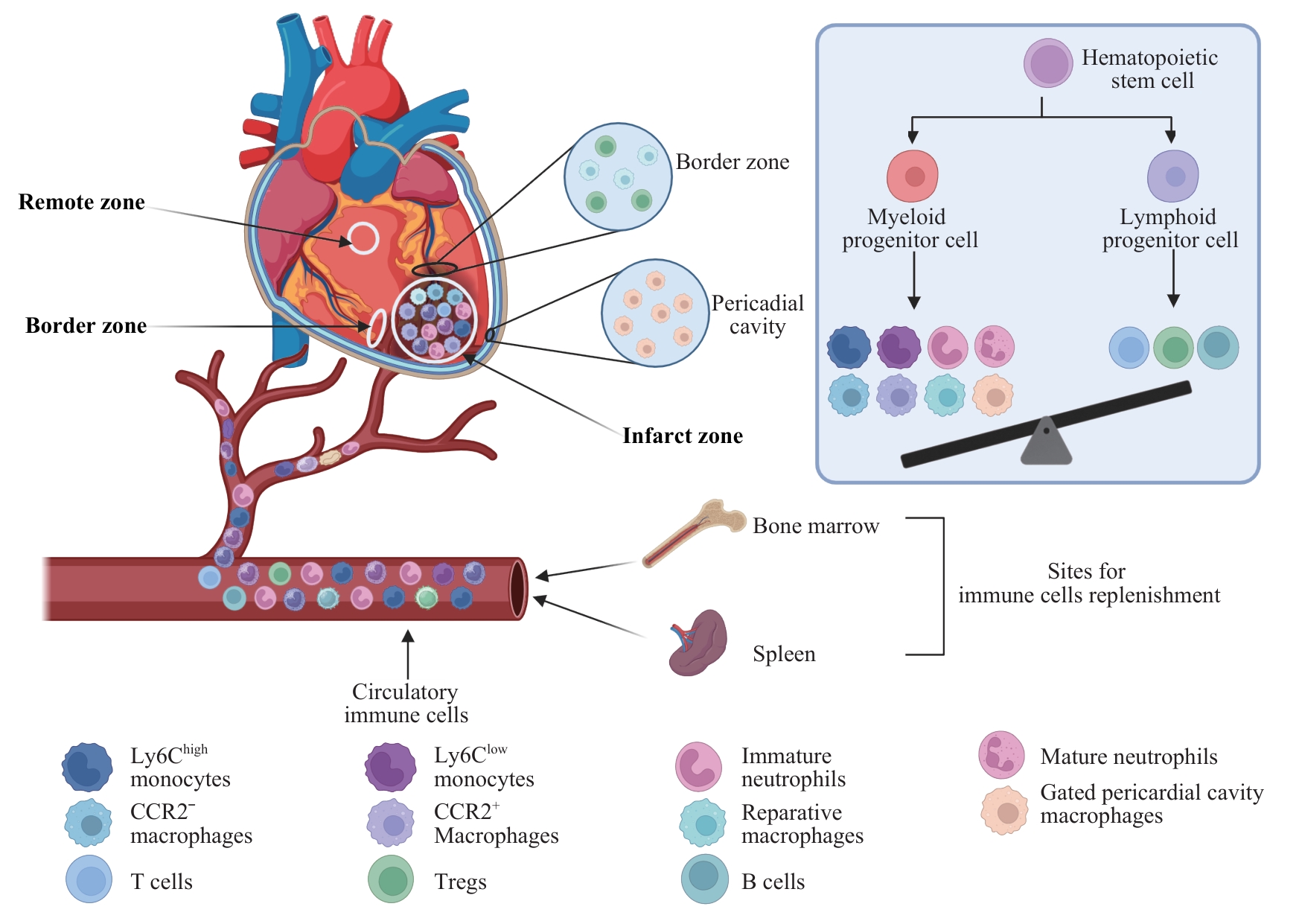
Fig 1 Origins and spatial distribution of immune cells in different cardiac regions after MI
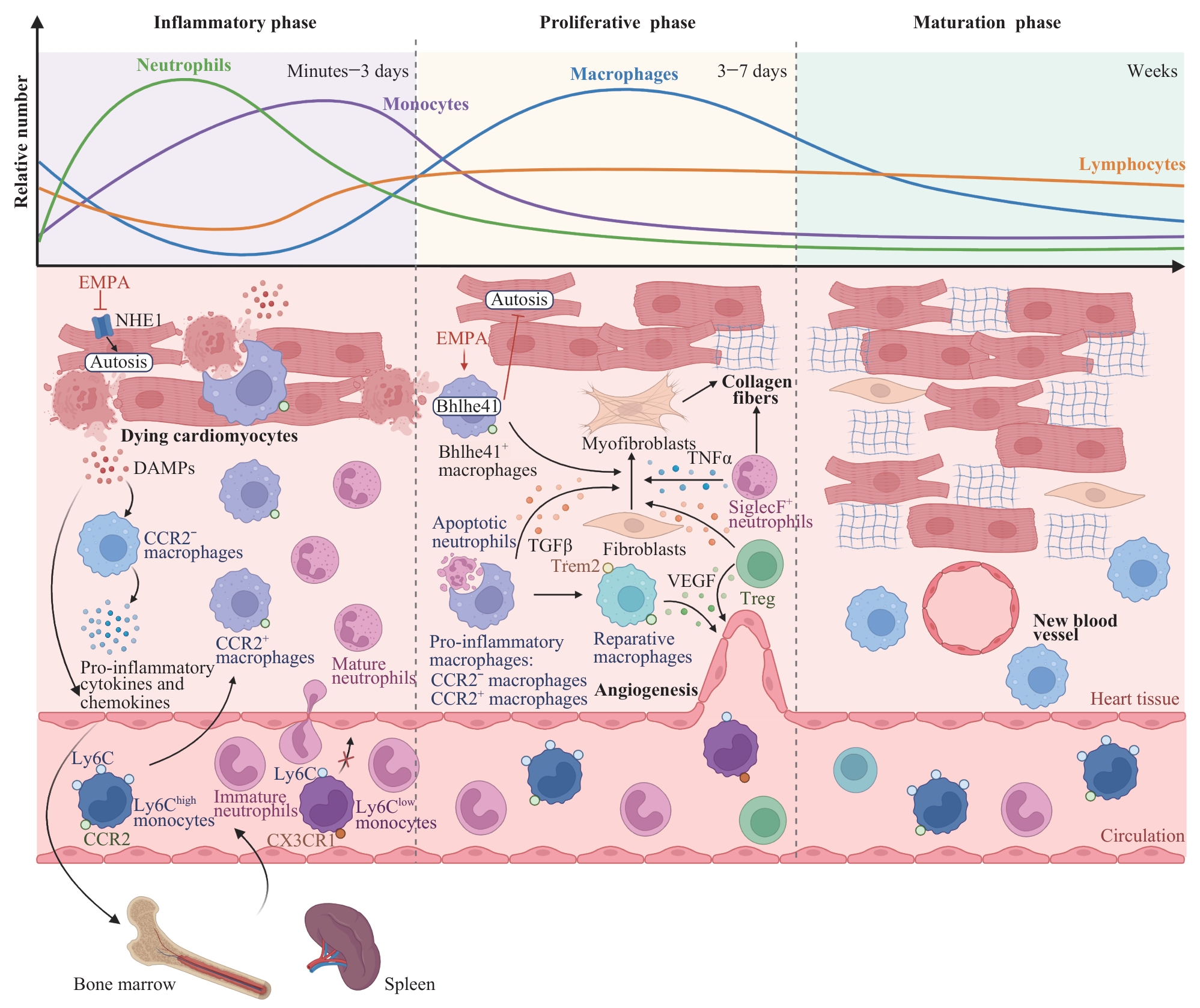
Fig 2 Dynamic changes and roles of immune cells during inflammatory, reparative, and maturation phases after MI
| [1] | ANDERSON J L, MORROW D A. Acute myocardial infarction[J]. N Engl J Med, 2017, 376(21): 2053-2064. |
| [2] | KRITTANAWONG C, KHAWAJA M, TAMIS-HOLLAND J E, et al. Acute myocardial infarction: etiologies and mimickers in young patients[J]. J Am Heart Assoc, 2023, 12(18): e029971. |
| [3] | SQUIRE I B, SZE S. Prognosis following acute myocardial infarction[J]. Eur Heart J, 2025, 46(16): 1551-1553. |
| [4] | FRANGOGIANNIS N G. The inflammatory response in myocardial injury, repair, and remodelling[J]. Nat Rev Cardiol, 2014, 11(5): 255-265. |
| [5] | JIANG K, HWA J, XIANG Y Z. Novel strategies for targeting neutrophil against myocardial infarction[J]. Pharmacol Res, 2024, 205: 107256. |
| [6] | KING K R, AGUIRRE A D, YE Y X, et al. IRF3 and type Ⅰ interferons fuel a fatal response to myocardial infarction[J]. Nat Med, 2017, 23(12): 1481-1487. |
| [7] | PEET C, IVETIC A, BROMAGE D I, et al. Cardiac monocytes and macrophages after myocardial infarction[J]. Cardiovasc Res, 2020, 116(6): 1101-1112. |
| [8] | SWIRSKI F K, NAHRENDORF M. Cardioimmunology: the immune system in cardiac homeostasis and disease[J]. Nat Rev Immunol, 2018, 18(12): 733-744. |
| [9] | XU Y, JIANG K, CHEN F, et al. Bone marrow-derived naïve B lymphocytes improve heart function after myocardial infarction: a novel cardioprotective mechanism for empagliflozin[J]. Basic Res Cardiol, 2022, 117(1): 47. |
| [10] | FRANGOGIANNIS N G. Chemokines in the ischemic myocardium: from inflammation to fibrosis[J]. Inflamm Res, 2004, 53(11): 585-595. |
| [11] | YANG S, PENNA V, LAVINE K J. Functional diversity of cardiac macrophages in health and disease[J]. Nat Rev Cardiol, 2025, 22(6): 431-442. |
| [12] | HOFMANN U, FRANTZ S. Role of lymphocytes in myocardial injury, healing, and remodeling after myocardial infarction[J]. Circ Res, 2015, 116(2): 354-367. |
| [13] | ZOUGGARI Y, AIT-OUFELLA H, BONNIN P, et al. B lymphocytes trigger monocyte mobilization and impair heart function after acute myocardial infarction[J]. Nat Med, 2013, 19(10): 1273-1280. |
| [14] | NESTOROWA S, HAMEY F K, PIJUAN SALA B, et al. A single-cell resolution map of mouse hematopoietic stem and progenitor cell differentiation[J]. Blood, 2016, 128(8): e20-31. |
| [15] | HEUSCH G, KLEINBONGARD P. The spleen in ischaemic heart disease[J]. Nat Rev Cardiol, 2025, 22(7): 497-509. |
| [16] | LV H Z, WANG C C, LIU Z N, et al. Suppression of the prostaglandin I2-type 1 interferon axis induces extramedullary hematopoiesis to promote cardiac repair after myocardial infarction[J]. Circulation, 2025, 151(24): 1730-1747. |
| [17] | NINH V K, CALCAGNO D M, YU J D, et al. Spatially clustered type Ⅰ interferon responses at injury borderzones[J]. Nature, 2024, 633(8028): 174-181. |
| [18] | CHEN R K, ZHANG H R, TANG B T, et al. Macrophages in cardiovascular diseases: molecular mechanisms and therapeutic targets[J]. Signal Transduct Target Ther, 2024, 9(1): 130. |
| [19] | JIANG K, TU Z Z, CHEN K, et al. Gasdermin D inhibition confers antineutrophil-mediated cardioprotection in acute myocardial infarction[J]. J Clin Invest, 2022, 132(1): e151268. |
| [20] | SHI J J, ZHAO Y, WANG K, et al. Cleavage of GSDMD by inflammatory caspases determines pyroptotic cell death[J]. Nature, 2015, 526(7575): 660-665. |
| [21] | CALCAGNO D M, ZHANG C, TOOMU A, et al. SiglecFHI marks late-stage neutrophils of the infarcted heart: a single-cell transcriptomic analysis of neutrophil diversification[J]. J Am Heart Assoc, 2021, 10(4): e019019. |
| [22] | PFIRSCHKE C, ENGBLOM C, GUNGABEESOON J, et al. Tumor-promoting ly-6G+ SiglecFhigh cells are mature and long-lived neutrophils[J]. Cell Rep, 2020, 32(12): 108164. |
| [23] | ENGBLOM C, PFIRSCHKE C, ZILIONIS R, et al. Osteoblasts remotely supply lung tumors with cancer-promoting SiglecFhigh neutrophils[J]. Science, 2017, 358(6367): eaal5081. |
| [24] | RYU S, SHIN J W, KWON S, et al. Siglec-F-expressing neutrophils are essential for creating a profibrotic microenvironment in renal fibrosis[J]. J Clin Invest, 2022, 132(12): e156876. |
| [25] | CALCAGNO D M, TAGHDIRI N, NINH V K, et al. Single-cell and spatial transcriptomics of the infarcted heart define the dynamic onset of the border zone in response to mechanical destabilization[J]. Nat Cardiovasc Res, 2022, 1(11): 1039-1055. |
| [26] | WANG X K, XU Y, YU C Q, et al. Periodontitis-related myocardial fibrosis by expansion of collagen-producing SiglecF+ neutrophils[J]. Eur Heart J, 2025, 46(23): 2223-2238. |
| [27] | THORP E B. Cardiac macrophages and emerging roles for their metabolism after myocardial infarction[J]. J Clin Invest, 2023, 133(18): e171953. |
| [28] | WANG W F, LI X, DING X N, et al. Lymphatic endothelial transcription factor Tbx1 promotes an immunosuppressive microenvironment to facilitate post-myocardial infarction repair[J]. Immunity, 2023, 56(10): 2342-2357.e10. |
| [29] | WANG Q X, ISMAHIL M A, ZHU Y J, et al. CD206+ IL-4Rα+ macrophages are drivers of adverse cardiac remodeling in ischemic cardiomyopathy[J]. Circulation, 2025, 152(4): 257-273. |
| [30] | ISMAHIL M A, ZHOU G H, RAJASEKAR S, et al. Splenic CD169+ Tim4+ marginal metallophilic macrophages are essential for wound healing after myocardial infarction[J]. Circulation, 2025, 151(24): 1712-1729. |
| [31] | XU Y, JIANG K, SU F H, et al. A transient wave of Bhlhe41+ resident macrophages enables remodeling of the developing infarcted myocardium[J]. Cell Rep, 2023, 42(10): 113174. |
| [32] | PORSCH F, MALLAT Z, BINDER C J. Humoral immunity in atherosclerosis and myocardial infarction: from B cells to antibodies[J]. Cardiovasc Res, 2021, 117(13): 2544-2562. |
| [33] | HORCKMANS M, BIANCHINI M, SANTOVITO D, et al. Pericardial adipose tissue regulates granulopoiesis, fibrosis, and cardiac function after myocardial infarction[J]. Circulation, 2018, 137(9): 948-960. |
| [34] | MARTÍN P, SÁNCHEZ-MADRID F. T cells in cardiac health and disease[J]. J Clin Invest, 2025, 135(2): e185218. |
| [35] | ZHUANG R L, MENG Q S, MA X X, et al. CD4+ FoxP3+ CD73+ regulatory T cell promotes cardiac healing post-myocardial infarction[J]. Theranostics, 2022, 12(6): 2707-2721. |
| [36] | WEIRATHER J, HOFMANN U D W, BEYERSDORF N, et al. Foxp3+ CD4+ T cells improve healing after myocardial infarction by modulating monocyte/macrophage differentiation[J]. Circ Res, 2014, 115(1): 55-67. |
| [37] | XIA N, LU Y Z, GU M Y, et al. A unique population of regulatory T cells in heart potentiates cardiac protection from myocardial infarction[J]. Circulation, 2020, 142(20): 1956-1973. |
| [38] | BLANCO-DOMÍNGUEZ R, DE LA FUENTE H, RODRÍGUEZ C, et al. CD69 expression on regulatory T cells protects from immune damage after myocardial infarction[J]. J Clin Invest, 2022, 132(21): e152418. |
| [39] | YAN X X, SHICHITA T, KATSUMATA Y, et al. Deleterious effect of the IL-23/IL-17A axis and γδT cells on left ventricular remodeling after myocardial infarction[J]. J Am Heart Assoc, 2012, 1(5): e004408. |
| [40] | JAISWAL S, FONTANILLAS P, FLANNICK J, et al. Age-related clonal hematopoiesis associated with adverse outcomes[J]. N Engl J Med, 2014, 371(26): 2488-2498. |
| [41] | RETTKOWSKI J, ROMERO-MULERO M C, SINGH I, et al. Modulation of bone marrow haematopoietic stem cell activity as a therapeutic strategy after myocardial infarction: a preclinical study[J]. Nat Cell Biol, 2025, 27(4): 591-604. |
| [42] | ANZAI A, CHOI J L, HE S, et al. The infarcted myocardium solicits GM-CSF for the detrimental oversupply of inflammatory leukocytes[J]. J Exp Med, 2017, 214(11): 3293-3310. |
| [43] | HAMILTON J A. GM-CSF in inflammation[J]. J Exp Med, 2020, 217(1): e20190945. |
| [44] | RIDKER P M, EVERETT B M, THUREN T, et al. Antiinflammatory therapy with canakinumab for atherosclerotic disease[J]. N Engl J Med, 2017, 377(12): 1119-1131. |
| [45] | TOLDO S, ABBATE A. The role of the NLRP3 inflammasome and pyroptosis in cardiovascular diseases[J]. Nat Rev Cardiol, 2024, 21(4): 219-237. |
| [46] | TOLDO S, ABBATE A. The NLRP3 inflammasome in acute myocardial infarction[J]. Nat Rev Cardiol, 2018, 15(4): 203-214. |
| [47] | SAGER H B, HEIDT T, HULSMANS M, et al. Targeting interleukin-1β reduces leukocyte production after acute myocardial infarction[J]. Circulation, 2015, 132(20): 1880-1890. |
| [48] | LI Y J, TU Z Z, CHEN F, et al. Anti-inflammatory effect of Danhong injection through inhibition of GSDMD-mediated pyroptosis[J]. Phytomedicine, 2023, 113: 154743. |
| [49] | LI J, LI S H, WU J, et al. Young bone marrow Sca-1 cells rejuvenate the aged heart by promoting epithelial-to-mesenchymal transition[J]. Theranostics, 2018, 8(7): 1766-1781. |
| [50] | KIM C, KIM H, SIM W S, et al. Spatiotemporal control of neutrophil fate to tune inflammation and repair for myocardial infarction therapy[J]. Nat Commun, 2024, 15(1): 8481. |
| [51] | WANG L, YU C J, YOU T, et al. Injection of ROS-responsive hydrogel Loaded with IL-1β-targeted nanobody for ameliorating myocardial infarction[J]. Bioact Mater, 2025, 46: 273-284. |
| [52] | JIANG K, XU Y, WANG D D, et al. Cardioprotective mechanism of SGLT2 inhibitor against myocardial infarction is through reduction of autosis[J]. Protein Cell, 2022, 13(5): 336-359. |
| [53] | LYTVYN Y, BJORNSTAD P, UDELL J A, et al. Sodium glucose cotransporter-2 inhibition in heart failure: potential mechanisms, clinical applications, and summary of clinical trials[J]. Circulation, 2017, 136(17): 1643-1658. |
| [1] | YANG Chendie, HU Changqing, YUAN He, TAY Guan Poh, AMUTI Abulikemu, ZHANG Ruiyan, WANG Xiaoqun. Association between insulin resistance and left ventricular remodeling after STEMI in patients without a history of diabetes mellitus [J]. Journal of Shanghai Jiao Tong University (Medical Science), 2025, 45(3): 292-300. |
| [2] | LI Wenli, JIN Lixing, ZHAO Yichao, ZHONG Fangyuan, SHI Yao, LEI Jie, PU Jun, GE Heng. Impact of left ventricular myocardial strain injury on secondary tricuspid regurgitation in acute STEMI assessed by cardiac magnetic resonance [J]. Journal of Shanghai Jiao Tong University (Medical Science), 2025, 45(12): 1578-1588. |
| [3] | RUAN Qingqing, SU Shuzhi, LI Yanting, REN Yuan, DAI Yong, QIAO Zengyong. Intraoperative complications in percutaneous coronary intervention for acute myocardial infarction: development of a risk prediction model [J]. Journal of Shanghai Jiao Tong University (Medical Science), 2025, 45(12): 1589-1597. |
| [4] | LIU Yuting, YU Wanqi, HONG Wen, KANG Sang, LI Xinni, DANZENG Quyang, XIAO Huoyuan, PAN Jingwei. Predictive value of Clinical Frailty Scale in long term prognosis of patients with acute myocardial infarction after in-hospital cardiac rehabilitation [J]. Journal of Shanghai Jiao Tong University (Medical Science), 2024, 44(5): 599-605. |
| [5] | ZHENG Mengyi, MAO Jialiang, ZOU Zhiguo, ZHANG Ruilei, ZHANG Hou, LI Shiguang. Predictive value of systemic immune inflammation index and somatic symptom scale-China in the occurrence of in-hospital major adverse cardiovascular events after first-episode of acute myocardial infarction undergoing PCI [J]. Journal of Shanghai Jiao Tong University (Medical Science), 2024, 44(3): 334-341. |
| [6] | HU Xiao, ZHANG Xin, GU Yang. Study on the interaction between body weight and C1q tumour necrosis factor-related protein 1 in patients with myocardial infarction [J]. Journal of Shanghai Jiao Tong University (Medical Science), 2022, 42(6): 786-791. |
| [7] | XU Li, YANG Yan, CHEN Hanfen, JIANG Meng, PU Jun. Study on influencing factors and effect evaluation of patients with acute myocardial infarction in the cardiac rehabilitation center [J]. Journal of Shanghai Jiao Tong University (Medical Science), 2022, 42(5): 646-652. |
| [8] | Pei-kun HU, Jie HE, Lian-ming WU, Heng GE, Jian-rong XU, Jun PU. Effect of microvascular obstruction on left ventricle function and prognosis in patients with ST-segment elevation myocardial infarction [J]. JOURNAL OF SHANGHAI JIAOTONG UNIVERSITY (MEDICAL SCIENCE), 2021, 41(2): 173-179. |
| [9] | Jian-xun DONG, Lai WEI, Jie HE, Ling-cong KONG, Heng GE, Jun PU. Progress of cardiac magnetic resonance in assessment of left ventricular mechanical dyssynchrony [J]. JOURNAL OF SHANGHAI JIAOTONG UNIVERSITY (MEDICAL SCIENCE), 2021, 41(12): 1698-1702. |
| [10] | Ya-jie GAO, Wen-kun MA, Cheng-jie GAO, Yi ZHOU, Jing-wei PAN. Exploration of the predictive value of myocardial strain on ventricular remodeling after acute ST-segment elevation myocardial infarction [J]. JOURNAL OF SHANGHAI JIAOTONG UNIVERSITY (MEDICAL SCIENCE), 2021, 41(11): 1478-1484. |
| [11] | FENG Ze-hao1*, ZHANG Qing1*, CHAI Ye-zi1, SU Xuan1, SUN Bao-hang-xing1, LIU Qi-ming1, YAN Fu-hua2, JIANG Meng1#, PU Jun1#. Evaluation of effect of smoking on myocardial injury and prognosis in patients with acute ST-segment elevation myocardial infarction [J]. JOURNAL OF SHANGHAI JIAOTONG UNIVERSITY (MEDICAL SCIENCE), 2020, 40(5): 573-582. |
| [12] | TANG Dong-juan, XUE Xiao-mei, HE Bin. Early diagnosis and prognostic evaluation value of miR-133a in patients with acute myocardial infarction [J]. , 2020, 40(3): 339-. |
| [13] | MIAO Yu-tong1, SHEN Lan1, 2, HE Ben1. Imaging evaluation of post-myocardial infarction injury [J]. , 2019, 39(4): 436-. |
| [14] | XIA Zhi-li1, GAO Cheng-jie2, GAO Ya-jie1, TAO Yi-jing1, WAN Qing1, WU Hao1, WEI Jun-bo1, ZHOU Yi1, PAN Jing-wei1. Value of stress hyperglycemia ratio in predicting the prognosis of patients with acute myocardial infarction [J]. , 2019, 39(3): 309-. |
| [15] | SU Hai-xia, ZHU Ya-qin, ZHANG Tian-kuang, ZHANG Hui-li, GU Jun. Distribution characteristics of fragmented QRS in patients with coronary atherosclerotic heart disease and its relationship with left ventricular remodeling [J]. , 2019, 39(10): 1162-. |
| Viewed | ||||||
|
Full text |
|
|||||
|
Abstract |
|
|||||
