
Journal of Shanghai Jiao Tong University (Medical Science) ›› 2026, Vol. 46 ›› Issue (3): 332-339.doi: 10.3969/j.issn.1674-8115.2026.03.007
• Clinical research • Previous Articles
Mei Zixian1, Meng Xuchen1, Su Wenjing1, Zhong Weijie1, Tang Dingzhong2, Li Yi1( )
)
Received:2025-07-07
Accepted:2025-12-10
Online:2026-03-28
Published:2026-03-30
Contact:
Li Yi
E-mail:snailliyi@163.com
Supported by:CLC Number:
Mei Zixian, Meng Xuchen, Su Wenjing, Zhong Weijie, Tang Dingzhong, Li Yi. Clinical-inflammatory combined model for predicting poor prognosis in male patients with anterior circulation acute ischemic stroke with large vessel occlusion after mechanical thrombectomy[J]. Journal of Shanghai Jiao Tong University (Medical Science), 2026, 46(3): 332-339.
Add to citation manager EndNote|Ris|BibTeX
URL: https://xuebao.shsmu.edu.cn/EN/10.3969/j.issn.1674-8115.2026.03.007
| Variable | Good prognosis group (n=50) | Poor prognosis group (n=76) | P value |
|---|---|---|---|
| Age/year | 66±12 | 67±12 | 0.893 |
| MAP/mmHg | 99±14 | 107±15 | 0.017 |
| Blood glucose/(mmol·L-1) | 6.05 (5.80, 8.23) | 7.95 (6.00, 10.13) | 0.042 |
| NIHSS score/score | 9 (4, 14) | 16 (10, 22) | 0.001 |
| GCS score/score | 15 (12, 15) | 11 (9, 15) | 0.003 |
| OTP/h | 6.05 (4.31, 7.98) | 7.22 (4.84, 9.90) | 0.141 |
| mTICI grade (≥2b)/n(%) | 43 (86.00) | 64 (84.21) | 1.000 |
| Vascular risk factors/n(%) | |||
| Hypertension | 25 (50.00) | 58 (76.32) | 0.017 |
| Atrial fibrillation | 10 (20.00) | 21 (27.63) | 0.560 |
| Atherosclerosis | 5 (10.00) | 6 (7.89) | 0.868 |
| Diabetes | 8 (16.00) | 21 (27.63) | 0.342 |
| Coronary heart disease | 4 (8.00) | 9 (11.84) | 0.563 |
| Previous history of stroke or TIA | 3 (6.00) | 19 (25.00) | 0.007 |
| Smoking history | 9 (18.00) | 29 (38.16) | 0.042 |
| Alcoholism history | 4 (8.00) | 19 (25.00) | 0.042 |
| TOAST subtypes/n(%) | 0.560 | ||
| Cardioembolism | 21 (42.00) | 24 (31.58) | |
| Large-artery atherosclerosis | 8 (16.00) | 18 (23.68) | |
| Undetermined etiology | 21 (42.00) | 34 (44.74) | |
| Laboratory indicators | |||
| White blood cell count/(×109/L) | 8.55 (7.15, 10.23) | 10.60 (7.35, 13.50) | 0.020 |
| Neutrophil count/(×109/L) | 7.15 (5.80, 8.07) | 8.58 (6.40, 10.95) | 0.015 |
| Lymphocyte count/(×109/L) | 1.16 (0.90, 1.40) | 1.16 (0.71, 1.51) | 0.712 |
| Platelet count/(×109/L) | 191 (156, 242) | 207 (164, 230) | 0.893 |
| Hemoglobin/(g·L-1) | 134 (127, 145) | 142 (128, 150) | 0.554 |
| Albumin/(g·L-1) | 39 (37, 42) | 39 (36, 42) | 0.141 |
| Total cholesterol/(mmol·L-1) | 4.38 (3.80, 4.87) | 4.32 (3.73, 4.87) | 0.712 |
| Triglycerides/(mmol·L-1) | 1.07 (0.77, 1.48) | 1.21 (0.81, 1.87) | 0.554 |
| High density lipoprotein/(mmol·L-1) | 1.06 (0.91, 1.32) | 1.08 (0.90, 1.41) | 0.888 |
| Creatinine/(μmol·L-1) | 75 (66, 89) | 80 (66, 95) | 0.560 |
| APTT/s | 26.50 (25.73, 28.63) | 26.85 (25.10, 29.60) | 0.750 |
| D-dimer/(mg·L-1) | 1.13 (0.64, 2.00) | 1.46 (0.66, 3.14) | 0.226 |
| Fibrinogen/(g·L-1) | 2.60 (2.31, 3.02) | 2.92 (2.47, 3.57) | 0.042 |
| NMF index | 0.42 (0.32, 0.57) | 0.73 (0.41, 1.14) | 0.003 |
Tab 1 Tab 1 Comparison of baseline data, perioperative clinical indicators, and admission laboratory indicators between the two groups of AIS-LVO patients
| Variable | Good prognosis group (n=50) | Poor prognosis group (n=76) | P value |
|---|---|---|---|
| Age/year | 66±12 | 67±12 | 0.893 |
| MAP/mmHg | 99±14 | 107±15 | 0.017 |
| Blood glucose/(mmol·L-1) | 6.05 (5.80, 8.23) | 7.95 (6.00, 10.13) | 0.042 |
| NIHSS score/score | 9 (4, 14) | 16 (10, 22) | 0.001 |
| GCS score/score | 15 (12, 15) | 11 (9, 15) | 0.003 |
| OTP/h | 6.05 (4.31, 7.98) | 7.22 (4.84, 9.90) | 0.141 |
| mTICI grade (≥2b)/n(%) | 43 (86.00) | 64 (84.21) | 1.000 |
| Vascular risk factors/n(%) | |||
| Hypertension | 25 (50.00) | 58 (76.32) | 0.017 |
| Atrial fibrillation | 10 (20.00) | 21 (27.63) | 0.560 |
| Atherosclerosis | 5 (10.00) | 6 (7.89) | 0.868 |
| Diabetes | 8 (16.00) | 21 (27.63) | 0.342 |
| Coronary heart disease | 4 (8.00) | 9 (11.84) | 0.563 |
| Previous history of stroke or TIA | 3 (6.00) | 19 (25.00) | 0.007 |
| Smoking history | 9 (18.00) | 29 (38.16) | 0.042 |
| Alcoholism history | 4 (8.00) | 19 (25.00) | 0.042 |
| TOAST subtypes/n(%) | 0.560 | ||
| Cardioembolism | 21 (42.00) | 24 (31.58) | |
| Large-artery atherosclerosis | 8 (16.00) | 18 (23.68) | |
| Undetermined etiology | 21 (42.00) | 34 (44.74) | |
| Laboratory indicators | |||
| White blood cell count/(×109/L) | 8.55 (7.15, 10.23) | 10.60 (7.35, 13.50) | 0.020 |
| Neutrophil count/(×109/L) | 7.15 (5.80, 8.07) | 8.58 (6.40, 10.95) | 0.015 |
| Lymphocyte count/(×109/L) | 1.16 (0.90, 1.40) | 1.16 (0.71, 1.51) | 0.712 |
| Platelet count/(×109/L) | 191 (156, 242) | 207 (164, 230) | 0.893 |
| Hemoglobin/(g·L-1) | 134 (127, 145) | 142 (128, 150) | 0.554 |
| Albumin/(g·L-1) | 39 (37, 42) | 39 (36, 42) | 0.141 |
| Total cholesterol/(mmol·L-1) | 4.38 (3.80, 4.87) | 4.32 (3.73, 4.87) | 0.712 |
| Triglycerides/(mmol·L-1) | 1.07 (0.77, 1.48) | 1.21 (0.81, 1.87) | 0.554 |
| High density lipoprotein/(mmol·L-1) | 1.06 (0.91, 1.32) | 1.08 (0.90, 1.41) | 0.888 |
| Creatinine/(μmol·L-1) | 75 (66, 89) | 80 (66, 95) | 0.560 |
| APTT/s | 26.50 (25.73, 28.63) | 26.85 (25.10, 29.60) | 0.750 |
| D-dimer/(mg·L-1) | 1.13 (0.64, 2.00) | 1.46 (0.66, 3.14) | 0.226 |
| Fibrinogen/(g·L-1) | 2.60 (2.31, 3.02) | 2.92 (2.47, 3.57) | 0.042 |
| NMF index | 0.42 (0.32, 0.57) | 0.73 (0.41, 1.14) | 0.003 |
| Variable | OR | 95% CI | P value |
|---|---|---|---|
| Age | 1.006 | 0.976‒1.038 | 0.677 |
| MAP | 1.038 | 1.012‒1.068 | 0.006 |
| Blood glucose | 1.138 | 1.018‒1.302 | 0.038 |
| NIHSS score | 1.102 | 1.051‒1.163 | <0.001 |
| GCS score | 0.793 | 0.687‒0.900 | 0.001 |
| OTP | 1.014 | 0.969‒1.077 | 0.575 |
| mTICI grade (≥2b vs. <2b) | 0.868 | 0.302‒2.338 | 0.784 |
| Hypertension | 3.222 | 1.511‒7.034 | 0.003 |
| Atrial fibrillation | 1.527 | 0.661‒3.715 | 0.332 |
| Atherosclerosis | 0.771 | 0.220‒2.818 | 0.683 |
| Diabetes | 2.005 | 0.833‒5.225 | 0.133 |
| Coronary heart disease | 1.545 | 0.472‒5.976 | 0.490 |
| Previous history of stroke or TIA | 5.222 | 1.653‒23.193 | 0.011 |
| Smoking history | 2.811 | 1.229‒6.931 | 0.018 |
| Alcoholism history | 3.833 | 1.330‒13.924 | 0.022 |
| TOAST subtypes | 1.969 | 0.726‒5.662 | 0.192 |
| White blood cell count | 1.203 | 1.072‒1.369 | 0.003 |
| Neutrophil count | 1.229 | 1.079‒1.419 | 0.003 |
| Lymphocyte count | 1.010 | 0.571‒1.830 | 0.973 |
| Platelet count | 1.001 | 0.995‒1.006 | 0.850 |
| Hemoglobin | 1.001 | 0.993‒1.025 | 0.388 |
| Albumin | 0.953 | 0.896‒1.005 | 0.091 |
| Total cholesterol | 0.948 | 0.683‒1.317 | 0.746 |
| Triglycerides | 1.440 | 0.904‒2.597 | 0.173 |
| High density lipoprotein | 1.175 | 0.373‒3.812 | 0.784 |
| Creatinine | 1.004 | 0.989‒1.020 | 0.622 |
| APTT | 1.022 | 0.966‒1.100 | 0.488 |
| D-dimer | 1.060 | 0.976‒1.191 | 0.230 |
| Fibrinogen | 1.763 | 1.175‒2.868 | 0.012 |
| NMF index | 6.944 | 2.636‒22.022 | <0.001 |
Tab 2 Univariate Logistic regression analysis of factors influencing 90 d prognosis in male patients with anterior circulation AIS-LVO after MT
| Variable | OR | 95% CI | P value |
|---|---|---|---|
| Age | 1.006 | 0.976‒1.038 | 0.677 |
| MAP | 1.038 | 1.012‒1.068 | 0.006 |
| Blood glucose | 1.138 | 1.018‒1.302 | 0.038 |
| NIHSS score | 1.102 | 1.051‒1.163 | <0.001 |
| GCS score | 0.793 | 0.687‒0.900 | 0.001 |
| OTP | 1.014 | 0.969‒1.077 | 0.575 |
| mTICI grade (≥2b vs. <2b) | 0.868 | 0.302‒2.338 | 0.784 |
| Hypertension | 3.222 | 1.511‒7.034 | 0.003 |
| Atrial fibrillation | 1.527 | 0.661‒3.715 | 0.332 |
| Atherosclerosis | 0.771 | 0.220‒2.818 | 0.683 |
| Diabetes | 2.005 | 0.833‒5.225 | 0.133 |
| Coronary heart disease | 1.545 | 0.472‒5.976 | 0.490 |
| Previous history of stroke or TIA | 5.222 | 1.653‒23.193 | 0.011 |
| Smoking history | 2.811 | 1.229‒6.931 | 0.018 |
| Alcoholism history | 3.833 | 1.330‒13.924 | 0.022 |
| TOAST subtypes | 1.969 | 0.726‒5.662 | 0.192 |
| White blood cell count | 1.203 | 1.072‒1.369 | 0.003 |
| Neutrophil count | 1.229 | 1.079‒1.419 | 0.003 |
| Lymphocyte count | 1.010 | 0.571‒1.830 | 0.973 |
| Platelet count | 1.001 | 0.995‒1.006 | 0.850 |
| Hemoglobin | 1.001 | 0.993‒1.025 | 0.388 |
| Albumin | 0.953 | 0.896‒1.005 | 0.091 |
| Total cholesterol | 0.948 | 0.683‒1.317 | 0.746 |
| Triglycerides | 1.440 | 0.904‒2.597 | 0.173 |
| High density lipoprotein | 1.175 | 0.373‒3.812 | 0.784 |
| Creatinine | 1.004 | 0.989‒1.020 | 0.622 |
| APTT | 1.022 | 0.966‒1.100 | 0.488 |
| D-dimer | 1.060 | 0.976‒1.191 | 0.230 |
| Fibrinogen | 1.763 | 1.175‒2.868 | 0.012 |
| NMF index | 6.944 | 2.636‒22.022 | <0.001 |
| Variable | OR | 95% CI | P value |
|---|---|---|---|
| Age | 1.031 | 0.984‒1.083 | 0.212 |
| MAP | 1.028 | 0.994‒1.067 | 0.117 |
| NIHSS score | 1.112 | 1.040‒1.201 | 0.003 |
| Blood glucose | 1.045 | 0.900‒1.238 | 0.582 |
| Hypertension | 1.620 | 0.520‒5.056 | 0.401 |
| Previous history of stroke or TIA | 5.823 | 1.287‒35.884 | 0.034 |
| Smoking history | 3.056 | 0.723‒14.125 | 0.136 |
| Alcoholism history | 2.373 | 0.389‒17.022 | 0.364 |
| TOAST subtypes (vs. Cardioembolism) | |||
| Large-artery atherosclerosis | 5.324 | 1.206‒26.534 | 0.032 |
| Undetermined etiology | 6.153 | 1.797‒24.563 | 0.006 |
| OTP | 0.995 | 0.943‒1.068 | 0.871 |
| White blood cell count | 1.194 | 1.025‒1.413 | 0.027 |
| NMF index | 6.153 | 1.939‒24.563 | 0.004 |
Tab 3 Multivariate Logistic regression analysis of factors associated with 90 d prognosis in male patients with anterior circulation AIS-LVO after MT
| Variable | OR | 95% CI | P value |
|---|---|---|---|
| Age | 1.031 | 0.984‒1.083 | 0.212 |
| MAP | 1.028 | 0.994‒1.067 | 0.117 |
| NIHSS score | 1.112 | 1.040‒1.201 | 0.003 |
| Blood glucose | 1.045 | 0.900‒1.238 | 0.582 |
| Hypertension | 1.620 | 0.520‒5.056 | 0.401 |
| Previous history of stroke or TIA | 5.823 | 1.287‒35.884 | 0.034 |
| Smoking history | 3.056 | 0.723‒14.125 | 0.136 |
| Alcoholism history | 2.373 | 0.389‒17.022 | 0.364 |
| TOAST subtypes (vs. Cardioembolism) | |||
| Large-artery atherosclerosis | 5.324 | 1.206‒26.534 | 0.032 |
| Undetermined etiology | 6.153 | 1.797‒24.563 | 0.006 |
| OTP | 0.995 | 0.943‒1.068 | 0.871 |
| White blood cell count | 1.194 | 1.025‒1.413 | 0.027 |
| NMF index | 6.153 | 1.939‒24.563 | 0.004 |
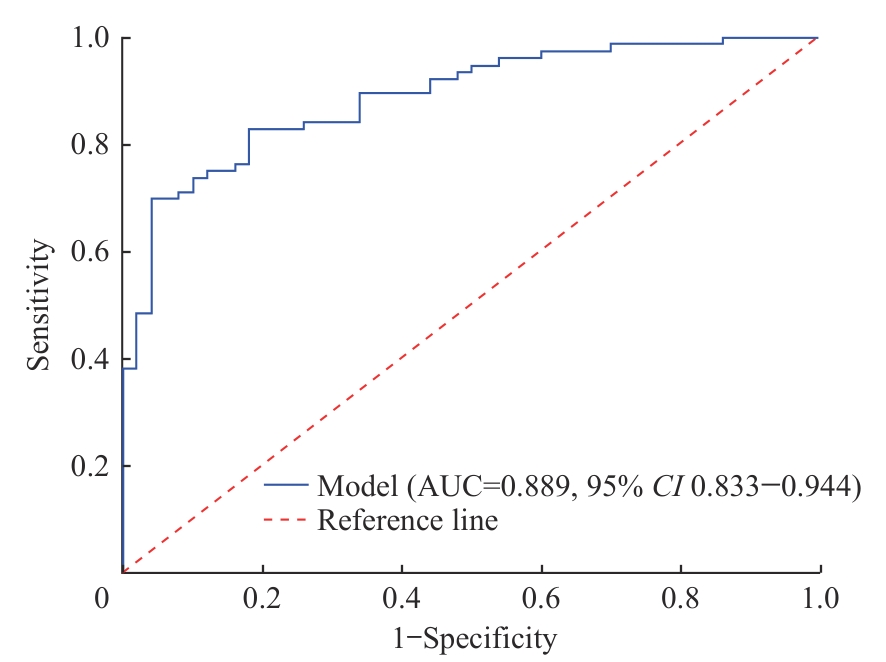
Fig 1 ROC curve analysis of the predictive model established by multivariate Logistic regression
| [1] | Saini V, Guada L, Yavagal D R. Global epidemiology of stroke and access to acute ischemic stroke interventions[J]. Neurology, 2021, 97(20 Suppl 2): S6-S16. |
| [2] | Fan J H, Li X G, Yu X Y, et al. Global burden, risk factor analysis, and prediction study of ischemic stroke, 1990-2030[J]. Neurology, 2023, 101(2): e137-e150. |
| [3] | Berkhemer O A, Fransen P S S, Beumer D, et al. A randomized trial of intraarterial treatment for acute ischemic stroke[J]. N Engl J Med, 2015, 372(1): 11-20. |
| [4] | Goyal M, Menon B K, van Zwam W H, et al. Endovascular thrombectomy after large-vessel ischaemic stroke: a meta-analysis of individual patient data from five randomised trials[J]. Lancet, 2016, 387(10029): 1723-1731. |
| [5] | Morsi R Z, Elfil M, Ghaith H S, et al. Endovascular thrombectomy for large ischemic strokes: a living systematic review and meta-analysis of randomized trials[J]. J Stroke, 2023, 25(2): 214-222. |
| [6] | Brott T, Adams H P Jr, Olinger C P, et al. Measurements of acute cerebral infarction: a clinical examination scale[J]. Stroke, 1989, 20(7): 864-870. |
| [7] | Warner J J, Harrington R A, Sacco R L, et al. Guidelines for the early management of patients with acute ischemic stroke: 2019 update to the 2018 guidelines for the early management of acute ischemic stroke[J]. Stroke, 2019, 50(12): 3331-3332. |
| [8] | Wang Y J, Zhang S M, Zhang L Q, et al. Chinese guidelines for the secondary prevention of ischemic stroke and transient ischemic attack 2010[J]. CNS Neurosci Ther, 2012, 18(2): 93-101. |
| [9] | Farrell B, Godwin J, Richards S, et al. The United Kingdom transient ischaemic attack (UK-TIA) aspirin trial: final results[J]. J Neurol Neurosurg Psychiatry, 1991, 54(12): 1044-1054. |
| [10] | Banks J L, Marotta C A. Outcomes validity and reliability of the modified Rankin scale: implications for stroke clinical trials: a literature review and synthesis[J]. Stroke, 2007, 38(3): 1091-1096. |
| [11] | Qu D, Wang L, Huo M Y, et al. Focal TLR4 activation mediates disturbed flow-induced endothelial inflammation[J]. Cardiovasc Res, 2020, 116(1): 226-236. |
| [12] | Weinstein J R, Schulze J, Lee R V, et al. Functional polymorphisms in toll-like receptor 4 are associated with worse outcome in acute ischemic stroke patients[J]. Neuroreport, 2014, 25(8): 580-584. |
| [13] | Marriott I, Bost K L, Huet-Hudson Y M. Sexual dimorphism in expression of receptors for bacterial lipopolysaccharides in murine macrophages: a possible mechanism for gender-based differences in endotoxic shock susceptibility[J]. J Reprod Immunol, 2006, 71(1): 12-27. |
| [14] | Villa A, Gelosa P, Castiglioni L, et al. Sex-specific features of microglia from adult mice[J]. Cell Rep, 2018, 23(12): 3501-3511. |
| [15] | Ahnstedt H, McCullough L D. The impact of sex and age on T cell immunity and ischemic stroke outcomes[J]. Cell Immunol, 2019, 345: 103960. |
| [16] | Ahnstedt H, Patrizz A, Chauhan A, et al. Sex differences in T cell immune responses, gut permeability and outcome after ischemic stroke in aged mice[J]. Brain Behav Immun, 2020, 87: 556-567. |
| [17] | DeLong J H, Ohashi S N, O′Connor K C, et al. Inflammatory responses after ischemic stroke[J]. Semin Immunopathol, 2022, 44(5): 625-648. |
| [18] | Wang Y, Mulder I A, Westendorp W F, et al. Immunothrombosis in acute ischemic stroke[J]. Stroke, 2025, 56(2): 553-563. |
| [19] | Sharma D, Spring K J, Bhaskar S M M. Neutrophil-lymphocyte ratio in acute ischemic stroke: immunopathology, management, and prognosis[J]. Acta Neurol Scand, 2021, 144(5): 486-499. |
| [20] | Duan Z H, Wang H M, Wang Z, et al. Neutrophil-lymphocyte ratio predicts functional and safety outcomes after endovascular treatment for acute ischemic stroke[J]. Cerebrovasc Dis, 2018, 45(5/6): 221-227. |
| [21] | Wang Y F, Bai L, Li X H, et al. Fibrinogen-to-albumin ratio and clinical outcomes in patients with large artery atherosclerosis stroke[J]. J Am Heart Assoc, 2023, 12(24): e030837. |
| [22] | Sun S F, Cheng Y Q, Li L, et al. A high fibrinogen-to-albumin ratio on admission is associated with early neurological deterioration following intravenous thrombolysis in patients with acute ischemic stroke[J]. J Inflamm Res, 2024, 17: 4151-4161. |
| [23] | Tariq M B, Lee J, McCullough L D. Sex differences in the inflammatory response to stroke[J]. Semin Immunopathol, 2023, 45(3): 295-313. |
| [24] | Diener H C, Hankey G J. Primary and secondary prevention of ischemic stroke and cerebral hemorrhage JACC focus seminar[J]. J Am Coll Cardiol, 2020, 75(15): 1804-1818. |
| [25] | Zaidat O O, Yoo A J, Khatri P, et al. Recommendations on angiographic revascularization grading standards for acute ischemic stroke: a consensus statement[J]. Stroke, 2013, 44(9): 2650-2663. |
| [26] | LeCouffe N E, Kappelhof M, Treurniet K M, et al. 2B, 2C, or 3: what should be the angiographic target for endovascular treatment in ischemic stroke [J]. Stroke, 2020, 51(6): 1790-1796. |
| [27] | Kwah L K, Diong J. National institutes of health stroke scale (NIHSS)[J]. J Physiother, 2014, 60(1): 61. |
| [28] | Mohan K M, Wolfe C D, Rudd A G, et al. Risk and cumulative risk of stroke recurrence: a systematic review and meta-analysis[J]. Stroke, 2011, 42(5): 1489-1494. |
| [29] | Touzé E, Varenne O, Chatellier G, et al. Risk of myocardial infarction and vascular death after transient ischemic attack and ischemic stroke: a systematic review and meta-analysis[J]. Stroke, 2005, 36(12): 2748-2755. |
| [30] | Cao J Y, Roth S, Zhang S J, et al. DNA-sensing inflammasomes cause recurrent atherosclerotic stroke[J]. Nature, 2024, 633(8029): 433-441. |
| [31] | Kang L J, Yu H L, Yang X, et al. Neutrophil extracellular traps released by neutrophils impair revascularization and vascular remodeling after stroke[J]. Nat Commun, 2020, 11(1): 2488. |
| [32] | Huo X C, Sun D P, Raynald, et al. Endovascular treatment in acute ischemic stroke with large vessel occlusion according to different stroke subtypes: data from ANGEL-ACT registry[J]. Neurol Ther, 2022, 11(1): 151-165. |
| [33] | Grau A J, Weimar C, Buggle F, et al. Risk factors, outcome, and treatment in subtypes of ischemic stroke: the German stroke data bank[J]. Stroke, 2001, 32(11): 2559-2566. |
| [34] | Dawson S L, Manktelow B N, Robinson T G, et al. Which parameters of beat-to-beat blood pressure and variability best predict early outcome after acute ischemic stroke [J]. Stroke, 2000, 31(2): 463-468. |
| [35] | Tikhonoff V, Zhang H F, Richart T, et al. Blood pressure as a prognostic factor after acute stroke[J]. Lancet Neurol, 2009, 8(10): 938-948. |
| [36] | Willmot M, Leonardi-Bee J, Bath P M. High blood pressure in acute stroke and subsequent outcome: a systematic review[J]. Hypertension, 2004, 43(1): 18-24. |
| [37] | Ferrari F, Villa R F. Brain bioenergetics in chronic hypertension: risk factor for acute ischemic stroke[J]. Biochem Pharmacol, 2022, 205: 115260. |
| [38] | Martin S S, Aday A W, Almarzooq Z I, et al. 2024 Heart Disease And Stroke Statistics: a report of US and global data from the American Heart Association[J]. Circulation, 2024, 149(8): e347-e913. |
| [39] | Henderson E, Rodriguez Guerrero L A, Continente X, et al. Measurement of airborne nicotine, as a marker of secondhand smoke exposure, in homes with residents who smoke in 9 European countries[J]. Environ Res, 2023, 219: 115118. |
| [40] | Larsson S C, Wallin A, Wolk A, et al. Differing association of alcohol consumption with different stroke types: a systematic review and meta-analysis[J]. BMC Med, 2016, 14(1): 178. |
| [1] | XU Tongtong, RUAN Huitong. Effects of hydrogel microspheres loaded with interleukin-4 on neural functional recovery by modulating the immune microenvironment after stroke [J]. Journal of Shanghai Jiao Tong University (Medical Science), 2025, 45(9): 1161-1170. |
| [2] | CHEN Siyuan, SHI Qing, FU Di, WANG Li, CHENG Shu, XU Pengpeng, ZHAO Weili. Clinicopathologic characteristics, gene mutation profile, and prognostic analysis of diffuse large B-cell lymphoma with lung involvement [J]. Journal of Shanghai Jiao Tong University (Medical Science), 2025, 45(9): 1214-1220. |
| [3] | YAN Zhi, WU Xingyue, YAO Weiqin, YAN Lingzhi, JIN Song, SHANG Jingjing, SHI Xiaolan, WU Depei, FU Chengcheng. Dynamic changes and prognostic significance of immunoparesis in newly diagnosed multiple myeloma patients [J]. Journal of Shanghai Jiao Tong University (Medical Science), 2025, 45(7): 807-814. |
| [4] | XU Tianyun, SHEN Yiming, JIANG Meng. Clinical management of heart failure with improved ejection fraction: treatment and maintenance [J]. Journal of Shanghai Jiao Tong University (Medical Science), 2025, 45(4): 493-499. |
| [5] | WANG Boen, CHEN Siyuan, SHI Qing, ZHANG Muchen, YI Hongmei, DONG Lei, WANG Li, CHENG Shu, XU Pengpeng, ZHAO Weili. Clinicopathologic characteristics of patients with kidney-involved diffuse large B-cell lymphoma [J]. Journal of Shanghai Jiao Tong University (Medical Science), 2024, 44(9): 1162-1168. |
| [6] | ZHONG Jiaqi, CAO Wenfei, ZHOU Huizhong, YANG Jiajun. Research progress in systemic complications induced by autonomic dysfunction after acute ischemic stroke [J]. Journal of Shanghai Jiao Tong University (Medical Science), 2024, 44(7): 928-934. |
| [7] | SONG Chenlu, XIANG Jun, YANG Huizhong. Early alarming effect of serum heparin-binding protein on prognosis and occurrence of sepsis in severely burned patients [J]. Journal of Shanghai Jiao Tong University (Medical Science), 2024, 44(4): 474-481. |
| [8] | WANG Guijie, DU Chuanchong, LU Ye, ZHAO Jian, SHEN Xie, JIN Donglin, GENG Jiacai. Changes of serum high mobility group box 1 and soluble triggering receptor expressed on myeloid cells-1 in patients with multiple injuries and their prognostic significance [J]. Journal of Shanghai Jiao Tong University (Medical Science), 2024, 44(3): 350-357. |
| [9] | LUO Mengxing, ZOU Xin, GAO Yaxian, WU Xiaocui, YU Fangyou, HU Yang, ZENG Qibing, LIU Zhonghua. Analysis of the effect of anti-tuberculosis treatment and lung injury in patients with tuberculosis combined with underlying disease [J]. Journal of Shanghai Jiao Tong University (Medical Science), 2023, 43(8): 1017-1023. |
| [10] | DONG Haiping, XIE Haiyi, MA Xiaoxiao, WANG Zhenhong. Mechanism of blood-brain barrier damage caused by the inhibition of Wnt7/β-catenin pathway induced by endoplasmic reticulum stress in cerebrovascular endothelial cells after stroke [J]. Journal of Shanghai Jiao Tong University (Medical Science), 2023, 43(7): 829-838. |
| [11] | LI Ying, TAN Yangxia, YIN Hongxin, JIANG Yanling, CHEN Li, MENG Guoyu. Research progress in the pathogenesis and prognosis of ZNF384 fusion subtype acute leukemia [J]. Journal of Shanghai Jiao Tong University (Medical Science), 2023, 43(5): 631-640. |
| [12] | MEN Ru, ZHU Minxia, ZHANG Weiming. Serum potassium level in maintenance hemodialysis patients and its effect on outcome [J]. Journal of Shanghai Jiao Tong University (Medical Science), 2023, 43(4): 507-513. |
| [13] | WANG Anjun, LIU Ningning. Efficacy of radiotherapy in patients with rectal cancer undergoing chemotherapy and surgery: a retrospective study based on the SEER database [J]. Journal of Shanghai Jiao Tong University (Medical Science), 2023, 43(3): 320-332. |
| [14] | LI Fang, LI Kaiyang, WANG Jue, YAN Ruiyang, SHEN Hui, LIU Min. Expression and clinical significance of PLA2G2A in kidney renal papillary cell carcinoma [J]. Journal of Shanghai Jiao Tong University (Medical Science), 2023, 43(2): 152-161. |
| [15] | NI Ruilong, ZHAO Fei, CAO Li, DENG Jiangshan. Analysis of early efficacy and safety of endovascular therapy for acute mild ischemic stroke with large vessel occlusion [J]. Journal of Shanghai Jiao Tong University (Medical Science), 2023, 43(10): 1268-1273. |
| Viewed | ||||||
|
Full text |
|
|||||
|
Abstract |
|
|||||
