
Journal of Shanghai Jiao Tong University (Medical Science) ›› 2026, Vol. 46 ›› Issue (6): 705-712.doi: 10.3969/j.issn.1674-8115.2026.06.002
• Frontier review • Previous Articles Next Articles
Jin Dawei1,2, Zhang Xinxin1,2, Wan Zilin1,2, Guo Jinzheng1, Ren Lili1( )
)
Received:2026-03-19
Accepted:2026-04-18
Online:2026-06-28
Published:2026-06-29
Contact:
Ren Lili
E-mail:renliliipb@163.com
Supported by:CLC Number:
Jin Dawei, Zhang Xinxin, Wan Zilin, Guo Jinzheng, Ren Lili. Research progress in the evolutionary characteristics and prevention and control of Nipah virus[J]. Journal of Shanghai Jiao Tong University (Medical Science), 2026,(6): 705-712.
Add to citation manager EndNote|Ris|BibTeX
URL: https://xuebao.shsmu.edu.cn/EN/10.3969/j.issn.1674-8115.2026.06.002
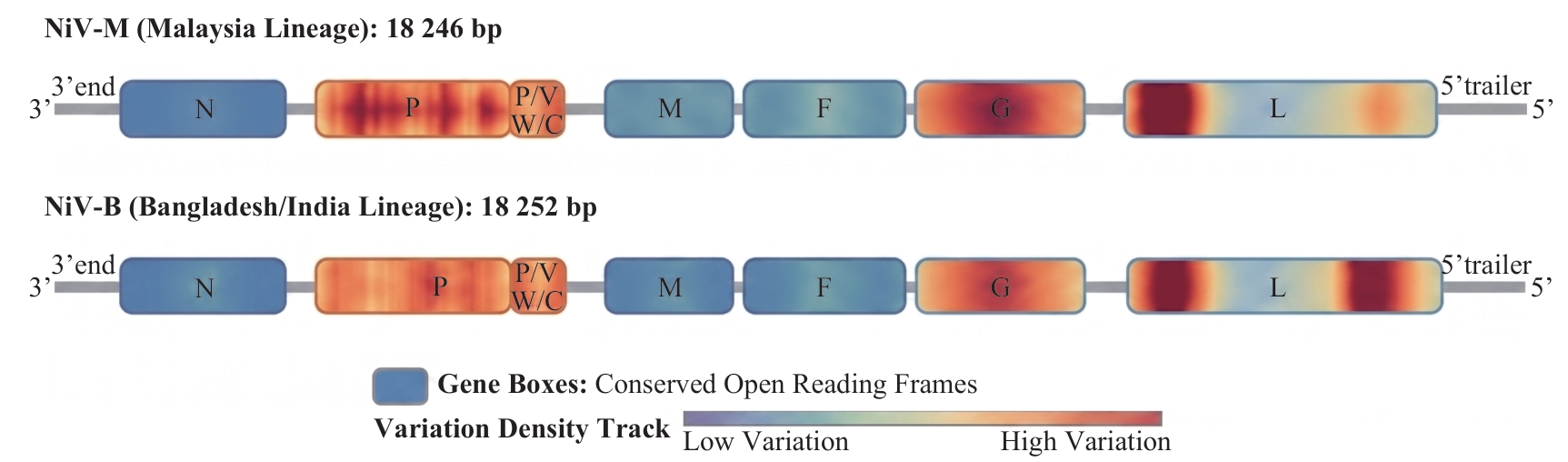
Fig 1 Genomic structure of Nipah virus and its major lineages
| Country | Year | Case/n | Case fatality rate/% | Lineage | Primary transmission route | Main clinical feature |
|---|---|---|---|---|---|---|
| Malaysia | 1998—1999 | 283 | 40 | NiV-M | Pig→Human | Fever, acute encephalitis, impaired consciousness |
| Singapore | 1999 | 11 | 9 | NiV-M | Pig→Human | Acute encephalitis, mild respiratory involvement |
| Bangladesh | 2001—present | ≥348 | 77 (adjusted) | NiV-B (BD1/BD2)[ | Consumption of raw date palm sap, person-to-person transmission, nosocomial transmission | ARDS-predominant disease |
| India | 2001—present | ≈140 | 78 (adjusted) | NiV-B | Consumption of raw date palm sap, person-to-person transmission, nosocomial transmission | ARDS combined with encephalitis |
| Philippines | 2014 | 17 | 53 | NiV-M | Horse→Human | Encephalitis with respiratory symptoms |
Tab 1 Global overview of Nipah virus outbreaks (as of February 2026)
| Country | Year | Case/n | Case fatality rate/% | Lineage | Primary transmission route | Main clinical feature |
|---|---|---|---|---|---|---|
| Malaysia | 1998—1999 | 283 | 40 | NiV-M | Pig→Human | Fever, acute encephalitis, impaired consciousness |
| Singapore | 1999 | 11 | 9 | NiV-M | Pig→Human | Acute encephalitis, mild respiratory involvement |
| Bangladesh | 2001—present | ≥348 | 77 (adjusted) | NiV-B (BD1/BD2)[ | Consumption of raw date palm sap, person-to-person transmission, nosocomial transmission | ARDS-predominant disease |
| India | 2001—present | ≈140 | 78 (adjusted) | NiV-B | Consumption of raw date palm sap, person-to-person transmission, nosocomial transmission | ARDS combined with encephalitis |
| Philippines | 2014 | 17 | 53 | NiV-M | Horse→Human | Encephalitis with respiratory symptoms |
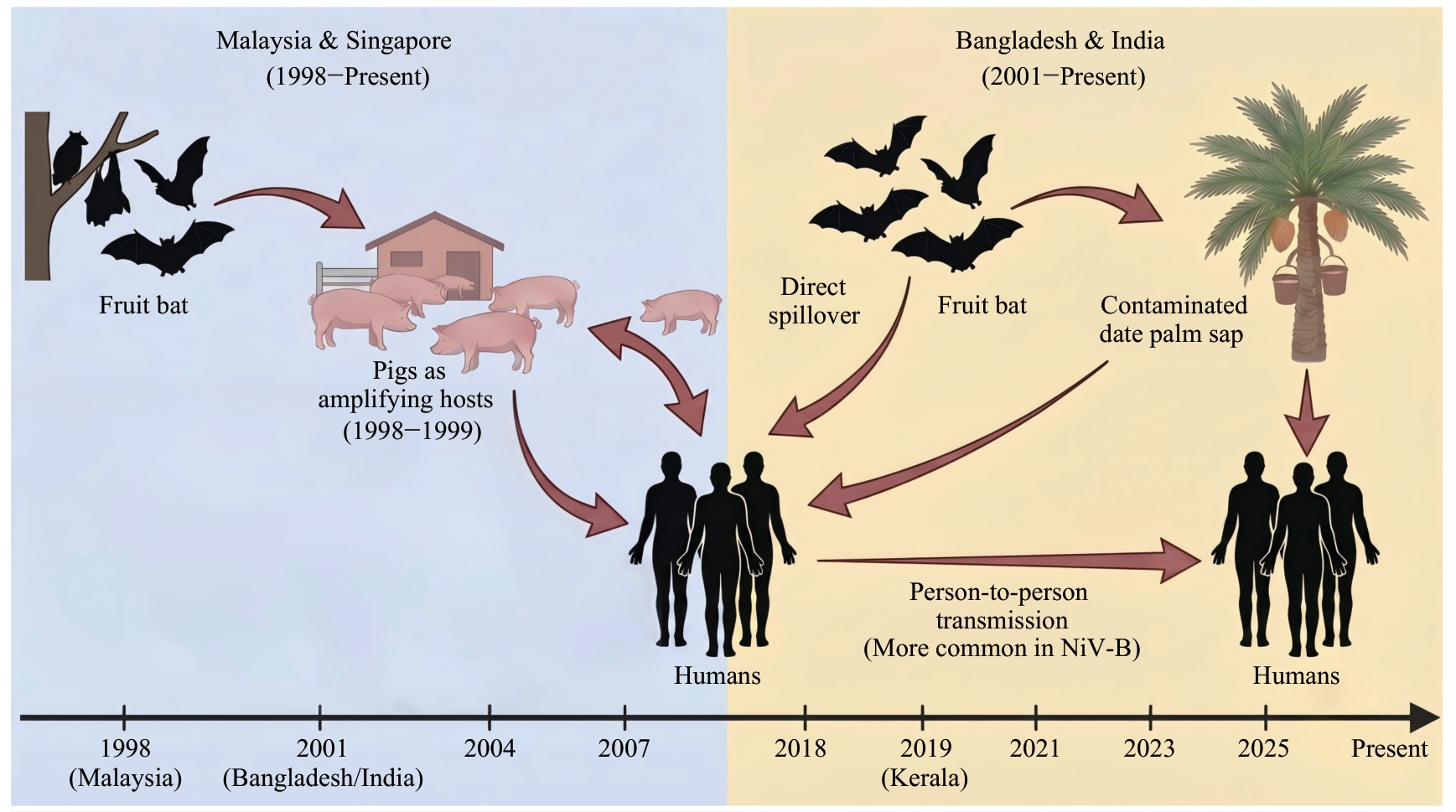
Fig 2 Schematic diagram of cross-species transmission of different Nipah virus lineages
| Vaccine vector | Candidate vaccine | Target antigen | Animal model | Immunization schedule (dose, route, frequency) | Clinical trial stage | Reference |
|---|---|---|---|---|---|---|
| rVSV viral vector | rVSV-∆G-EBOV GP/NiV G | NiV G | African green monkey | 107 PFU, IM, single dose | Phase Ⅰ completed | [ |
| rVSV expressing NiV G | NiV G | Hamster | 105 PFU, IM, single dose | Not yet initiated | [ | |
| rVSV-ΔG-NiVB/G | NiV G, F | Ferret | 107 PFU, IM, single dose | Not yet initiated | [ | |
| Replication-deficient VSV | NiV G | Syrian golden hamster | 106 PFU, IM, single dose | Not yet initiated | [ | |
| Adenoviral vector | ChAdOx1 Nipah B | NiV G | Syrian golden hamster | 108 PFU, IM, single dose | Phase Ⅱ ongoing | [ |
| Nucleic acid vaccine | mRNA-1215 | NiV M, F, G | Mouse | IM, two doses | Phase Ⅰ completed | [ |
| Subunit vaccine | HeV-sG-V | HeV sG | African green monkey | 50‒100 μg, IM, two doses | Phase Ⅰ ongoing | [ |
| Other | NiV-VLPs | NiV M, F, G | Syrian golden hamster | 20 μg, IM, three doses | Not yet initiated | [ |
| Canarypox virus vector | NiV G, F | Pig | 108 PFU, IM, two doses | Not yet initiated | [ | |
| Measles virus vector | NiV G | African green monkey/Hamster | 105 TCID50, SC/IP, two doses | Not yet initiated | [ | |
| Newcastle disease virus vector | NiV G, F | Mouse/Pig | 108‒109 EID50, IM, single dose | Not yet initiated | [ |
Tab 2 Progress in Nipah virus vaccine development (as of February 2026)
| Vaccine vector | Candidate vaccine | Target antigen | Animal model | Immunization schedule (dose, route, frequency) | Clinical trial stage | Reference |
|---|---|---|---|---|---|---|
| rVSV viral vector | rVSV-∆G-EBOV GP/NiV G | NiV G | African green monkey | 107 PFU, IM, single dose | Phase Ⅰ completed | [ |
| rVSV expressing NiV G | NiV G | Hamster | 105 PFU, IM, single dose | Not yet initiated | [ | |
| rVSV-ΔG-NiVB/G | NiV G, F | Ferret | 107 PFU, IM, single dose | Not yet initiated | [ | |
| Replication-deficient VSV | NiV G | Syrian golden hamster | 106 PFU, IM, single dose | Not yet initiated | [ | |
| Adenoviral vector | ChAdOx1 Nipah B | NiV G | Syrian golden hamster | 108 PFU, IM, single dose | Phase Ⅱ ongoing | [ |
| Nucleic acid vaccine | mRNA-1215 | NiV M, F, G | Mouse | IM, two doses | Phase Ⅰ completed | [ |
| Subunit vaccine | HeV-sG-V | HeV sG | African green monkey | 50‒100 μg, IM, two doses | Phase Ⅰ ongoing | [ |
| Other | NiV-VLPs | NiV M, F, G | Syrian golden hamster | 20 μg, IM, three doses | Not yet initiated | [ |
| Canarypox virus vector | NiV G, F | Pig | 108 PFU, IM, two doses | Not yet initiated | [ | |
| Measles virus vector | NiV G | African green monkey/Hamster | 105 TCID50, SC/IP, two doses | Not yet initiated | [ | |
| Newcastle disease virus vector | NiV G, F | Mouse/Pig | 108‒109 EID50, IM, single dose | Not yet initiated | [ |
| Category | Drug | Mechanism of action | Animal model | Clinical trial stage | Reference |
|---|---|---|---|---|---|
| Monoclonal antibodies | m102.4 | Targets the binding site of viral G glycoprotein with Ephrin B2/B3 receptor on host epithelial cells | Non-human primates | Phase Ⅰ completed | [ |
| h5B3.1 | Inhibits conformational change of NiV-F | Ferret | Not yet initiated | [ | |
| Nucleotides and nucleoside analogues | Remdesivir | Competitively binds viral RNA-dependent RNA polymerase (RdRp), inhibits RdRp activity | African green monkey | Not yet initiated | [ |
| Favipiravir | Competitively binds RdRp site, blocks viral genome replication | Hamster | Not yet initiated | [ | |
| Ribavirin | Broad-spectrum inhibitior of viral RNA synthesis | African green monkey | Not yet initiated | [ | |
| VV116 | Targets RdRp | Syrian golden hamster | Not yet initiated | [ | |
| 4'-fluorouridine | Broad-spectrum anti-RNA virus, inhibits RdRp and terminates viral RNA chain synthesis | Syrian golden hamster | Not yet initiated | [ | |
| Fusion inhibitory peptides | Cholesterol-tagged fusion inhibitory peptide | Alters F protein conformation, inhibits viral entry into host cells | African green monkey/hamster | Not yet initiated | [ |
Tab 3 Progress in the development of therapeutics for Nipah virus infection
| Category | Drug | Mechanism of action | Animal model | Clinical trial stage | Reference |
|---|---|---|---|---|---|
| Monoclonal antibodies | m102.4 | Targets the binding site of viral G glycoprotein with Ephrin B2/B3 receptor on host epithelial cells | Non-human primates | Phase Ⅰ completed | [ |
| h5B3.1 | Inhibits conformational change of NiV-F | Ferret | Not yet initiated | [ | |
| Nucleotides and nucleoside analogues | Remdesivir | Competitively binds viral RNA-dependent RNA polymerase (RdRp), inhibits RdRp activity | African green monkey | Not yet initiated | [ |
| Favipiravir | Competitively binds RdRp site, blocks viral genome replication | Hamster | Not yet initiated | [ | |
| Ribavirin | Broad-spectrum inhibitior of viral RNA synthesis | African green monkey | Not yet initiated | [ | |
| VV116 | Targets RdRp | Syrian golden hamster | Not yet initiated | [ | |
| 4'-fluorouridine | Broad-spectrum anti-RNA virus, inhibits RdRp and terminates viral RNA chain synthesis | Syrian golden hamster | Not yet initiated | [ | |
| Fusion inhibitory peptides | Cholesterol-tagged fusion inhibitory peptide | Alters F protein conformation, inhibits viral entry into host cells | African green monkey/hamster | Not yet initiated | [ |
| [1] | Moore K A, Mehr A J, Ostrowsky J T, et al. Measures to prevent and treat Nipah virus disease: research priorities for 2024-29[J]. Lancet Infect Dis, 2024, 24(11): e707-e717. |
| [2] | Nikolay B, Salje H, Hossain M J, et al. Transmission of Nipah virus: 14 years of investigations in Bangladesh[J]. N Engl J Med, 2019, 380(19): 1804-1814. |
| [3] | Ker D S, Jenkins H T, Greive S J, et al. CryoEM structure of the Nipah virus nucleocapsid assembly[J]. PLoS Pathog, 2021, 17(7): e1009740. |
| [4] | Amaya M, Broder C C. Vaccines to emerging viruses: Nipah and hendra[J]. Annu Rev Virol, 2020, 7(1): 447-473. |
| [5] | Dsouza N N, Chellasamy S K. A comparative genomic approach to decipher the mutations associated with Nipah viral human isolates from Southeast Asia[J]. Iran J Microbiol, 2024, 16(1): 104-113. |
| [6] | Harcourt B H, Lowe L, Tamin A, et al. Genetic characterization of Nipah virus, Bangladesh, 2004[J]. Emerg Infect Dis, 2005, 11(10): 1594-1597. |
| [7] | Sun Y Q, Zhang Y Y, Liu M C, et al. Mapping the distribution of Nipah virus infections: a geospatial modelling analysis[J]. Lancet Planet Health, 2024, 8(7): e463-e475. |
| [8] | Rahman M M, Rahman S, Rahim S, et al. Mapping the geodispersal and evolutionary dynamics of regional Nipah virus strain in Bangladesh[J]. Microbiol Spectr, 2026, 14(4): e0231925. |
| [9] | Hoque A F, Rahman M M, Lamia A S, et al. In silico prediction of interaction between Nipah virus attachment glycoprotein and host cell receptors Ephrin-B2 and Ephrin-B3 in domestic and peridomestic mammals[J]. Infect Genet Evol, 2023, 116: 105516. |
| [10] | Chua K B, Bellini W J, Rota P A, et al. Nipah virus: a recently emergent deadly paramyxovirus[J]. Science, 2000, 288(5470): 1432-1435. |
| [11] | Bhowmik A, Hasan M, Redoy M M H, et al. Nipah virus outbreak trends in Bangladesh during the period 2001 to 2024: a brief review[J]. Sci One Health, 2025, 4: 100103. |
| [12] | Khan S, Akbar S M F, Mahtab M A, et al. Twenty-five years of Nipah outbreaks in Southeast Asia: a persistent threat to global health[J]. IJID Reg, 2024, 13: 100434. |
| [13] | Satter S M, Rahman D I, Sultana S, et al. Epidemiology, clinical characteristics, and genetic diversity of Nipah virus strains from Bangladesh: 2016-2023[J]. Int J Infect Dis, 2025, 159: 108010. |
| [14] | Yan X M, Liu Y, Hu T S, et al. A compendium of 8, 176 bat RNA viral metagenomes reveals ecological drivers and circulation dynamics[J]. Nat Microbiol, 2025, 10(2): 554-568. |
| [15] | Yadav P D, Shete A M, Kumar G A, et al. Nipah virus sequences from humans and bats during Nipah outbreak, Kerala, India, 2018[J]. Emerg Infect Dis, 2019, 25(5): 1003-1006. |
| [16] | Balasubramanian R, Mohandas S, Thankappan U P, et al. Surveillance of Nipah virus in Pteropus medius of Kerala state, India, 2023[J]. Front Microbiol, 2024, 15: 1342170. |
| [17] | Sudeep A B, Yadav P D, Gokhale M D, et al. Detection of Nipah virus in Pteropus medius in 2019 outbreak from Ernakulam district, Kerala, India[J]. BMC Infect Dis, 2021, 21(1): 162. |
| [18] | Sahay R R, Yadav P D, Gupta N, et al. Experiential learnings from the Nipah virus outbreaks in Kerala towards containment of infectious public health emergencies in India[J]. Epidemiol Infect, 2020, 148: e90. |
| [19] | Shete A M, Radhakrishnan C, Pardeshi P G, et al. Antibody response in symptomatic & asymptomatic Nipah virus cases from Kerala, India[J]. Indian J Med Res, 2021, 154(3): 533-535. |
| [20] | McKee C D, Islam A, Luby S P, et al. The ecology of Nipah virus in Bangladesh: a nexus of land-use change and opportunistic feeding behavior in bats[J]. Viruses, 2021, 13(2): 169. |
| [21] | Chandni R, Renjith T P, Fazal A, et al. Clinical manifestations of Nipah virus-infected patients who presented to the emergency department during an outbreak in Kerala State in India, May 2018[J]. Clin Infect Dis, 2020, 71(1): 152-157. |
| [22] | Hossain M J, Gurley E S, Montgomery J M, et al. Clinical presentation of Nipah virus infection in Bangladesh[J]. Clin Infect Dis, 2008, 46(7): 977-984. |
| [23] | Goh K J, Tan C T, Chew N K, et al. Clinical features of Nipah virus encephalitis among pig farmers in Malaysia[J]. N Engl J Med, 2000, 342(17): 1229-1235. |
| [24] | Aquib W R, Mondal U K, Nazneen A, et al. Long-term sequelae and functional outcomes in the largest cohort of Nipah virus survivors in Bangladesh[J]. Lancet Reg Health Southeast Asia, 2026, 45: 100729. |
| [25] | Vasudevan S S, Subash A, Mehta F, et al. Global and regional mortality statistics of Nipah virus from 1994 to 2023: a comprehensive systematic review and meta-analysis[J]. Pathog Glob Health, 2024, 118(6): 471-480. |
| [26] | Satter S M, Aquib W R, Sultana S, et al. Tackling a global epidemic threat: Nipah surveillance in Bangladesh, 2006—2021[J]. PLoS Negl Trop Dis, 2023, 17(9): e0011617. |
| [27] | Aquib W R, Rahman D I, Jahan F A, et al. Post-mortem surveillance: an innovative strategy to detect and prevent spread of Nipah virus infection in humans[J]. Emerg Microbes Infect, 2026, 15(1): 2613510. |
| [28] | Pollak N M, Olsson M, Marsh G A, et al. Evaluation of three rapid low-resource molecular tests for Nipah virus[J]. Front Microbiol, 2022, 13: 1101914. |
| [29] | Mazzola L T, Kelly-Cirino C. Diagnostics for Nipah virus: a zoonotic pathogen endemic to Southeast Asia[J]. BMJ Glob Health, 2019, 4(Suppl 2): e001118. |
| [30] | Rahman M M, Miah M, Hossain M E, et al. Development of a culture-independent whole-genome sequencing of Nipah virus using the MinION Oxford Nanopore platform[J]. Microbiol Spectr, 2025, 13(6): e0249224. |
| [31] | Miao J, Zuo L L, He D M, et al. Rapid detection of Nipah virus using the one-pot RPA-CRISPR/Cas13a assay[J]. Virus Res, 2023, 332: 199130. |
| [32] | Jensen K S, Adams R, Bennett R S, et al. Development of a novel real-time polymerase chain reaction assay for the quantitative detection of Nipah virus replicative viral RNA[J]. PLoS One, 2018, 13(6): e0199534. |
| [33] | World Health Organization. Priority diagnostics for Nipah: use cases and target product profiles[EB/OL]. (2019-01-07)[2026-03-01]. https://www.who.int/publications/m/item/priority-diagnostics-for-nipah-use-cases-and-target-product-profiles. |
| [34] | Mazzola L, Fru H C, Cherkaoui D, et al. Diagnostic tests for Nipah virus: a landscape analysis[J]. Diagn Microbiol Infect Dis, 2026, 114(1): 117101. |
| [35] | Arunkumar G, Devadiga S, McElroy A K, et al. Adaptive immune responses in humans during Nipah virus acute and convalescent phases of infection[J]. Clin Infect Dis, 69(10): 1752-1756. |
| [36] | Wylezich C, Calvelage S, Schlottau K, et al. Next-generation diagnostics: virus capture facilitates a sensitive viral diagnosis for epizootic and zoonotic pathogens including SARS-CoV-2[J]. Microbiome, 2021, 9(1): 51. |
| [37] | World Health Organization. Nipah research and development (R&D) roadmap[EB/OL]. (2019-01-10)[2026-03-01]. https://www.who.int/publications/m/item/nipah-research-and-development-(r-d)-roadmap. |
| [38] | Monath T P, Nichols R, Feldmann F, et al. Immunological correlates of protection afforded by PHV02 live, attenuated recombinant vesicular stomatitis virus vector vaccine against Nipah virus disease[J]. Front Immunol, 2023, 14: 1216225. |
| [39] | DeBuysscher B L, Scott D, Thomas T, et al. Peri-exposure protection against Nipah virus disease using a single-dose recombinant vesicular stomatitis virus-based vaccine[J]. NPJ Vaccines, 2016, 1: 16002-. |
| [40] | Mire C E, Versteeg K M, Cross R W, et al. Single injection recombinant vesicular stomatitis virus vaccines protect ferrets against lethal Nipah virus disease[J]. Virol J, 2013, 10: 353. |
| [41] | Lo M K, Bird B H, Chattopadhyay A, et al. Single-dose replication-defective VSV-based Nipah virus vaccines provide protection from lethal challenge in Syrian hamsters[J]. Antiviral Res, 2014, 101: 26-29. |
| [42] | van Doremalen N, Lambe T, Sebastian S, et al. A single-dose ChAdOx1-vectored vaccine provides complete protection against Nipah Bangladesh and Malaysia in Syrian golden hamsters[J]. PLoS Negl Trop Dis, 2019, 13(6): e0007462. |
| [43] | Ploquin A, Mason R D, Holman L A, et al. A structure-based mRNA vaccine for Nipah virus in healthy adults: a phase 1 trial[J]. Nat Med, 2026, 32(4): 1401-1410. |
| [44] | Frenck R W Jr, Naficy A, Feser J, et al. Safety and immunogenicity of a Nipah virus vaccine (HeV-sG-V) in adults: a single-centre, randomised, observer-blind, placebo-controlled, phase 1 study[J]. Lancet, 2025, 406(10521): 2792-2803. |
| [45] | Walpita P, Barr J, Sherman M, et al. Vaccine potential of Nipah virus-like particles[J]. PLoS One, 2011, 6(4): e18437. |
| [46] | Mungall B A, Middleton D, Crameri G, et al. Feline model of acute Nipah virus infection and protection with a soluble glycoprotein-based subunit vaccine[J]. J Virol, 2006, 80(24): 12293-12302. |
| [47] | Daniels P, Ksiazek T, Eaton B T. Laboratory diagnosis of Nipah and Hendra virus infections[J]. Microbes Infect, 2001, 3(4): 289-295. |
| [48] | Guillaume V, Contamin H, Loth P, et al. Nipah virus: vaccination and passive protection studies in a hamster model[J]. J Virol, 2004, 78(2): 834-840. |
| [49] | Hassan M Z, Ibrahim S K, Harriss E, et al. Interpreting the natural history and pathogenesis of Nipah virus disease through clinical data, to inform clinical trial design: a systematic review[J]. Lancet Microbe, 2026, 7(4): 101295. |
| [50] | Geisbert T W, Mire C E, Geisbert J B, et al. Therapeutic treatment of Nipah virus infection in nonhuman primates with a neutralizing human monoclonal antibody[J]. Sci Transl Med, 2014, 6(242): 242ra82. |
| [51] | Dang H V, Chan Y P, Park Y J, et al. An antibody against the F glycoprotein inhibits Nipah and Hendra virus infections[J]. Nat Struct Mol Biol, 2019, 26(10): 980-987. |
| [52] | Lo M K, Feldmann F, Gary J M, et al. Remdesivir (GS-5734) protects African green monkeys from Nipah virus challenge[J]. Sci Transl Med, 2019, 11(494): eaau9242. |
| [53] | Dawes B E, Kalveram B, Ikegami T, et al. Favipiravir (T-705) protects against Nipah virus infection in the hamster model[J]. Sci Rep, 2018, 8(1): 7604. |
| [54] | Rockx B, Bossart K N, Feldmann F, et al. A novel model of lethal Hendra virus infection in African green monkeys and the effectiveness of ribavirin treatment[J]. J Virol, 2010, 84(19): 9831-9839. |
| [55] | Zhang Y M, Yao Y F, Song S F, et al. The oral nucleoside drug VV116 is a promising candidate for treating Nipah virus infection[J]. Emerg Microbes Infect, 2025, 14(1): 2587983. |
| [56] | Cross R W, Pigeaud D D, Borisevich V, et al. Oral 4'fluorouridine provides postexposure protection against lethal Nipah virus infection[J]. bioRxiv, 2026: 2026.02.21.707194. |
| [57] | Porotto M, Rockx B, Yokoyama C C, et al. Inhibition of Nipah virus infection in vivo: targeting an early stage of paramyxovirus fusion activation during viral entry[J]. PLoS Pathog, 2010, 6(10): e1001168. |
| Viewed | ||||||
|
Full text |
|
|||||
|
Abstract |
|
|||||
