
Journal of Shanghai Jiao Tong University (Medical Science) ›› 2026, Vol. 46 ›› Issue (8): 1109-1116.doi: 10.3969/j.issn.1674-8115.2026.08.011
• Clinical research • Previous Articles
Song Hongzhao1, Meng Xia1, Jiang Tao2, Li Tongtong1, Li Zhenan1, Wang Junmin1( )
)
Received:2025-12-25
Accepted:2026-02-24
Online:2026-08-04
Published:2026-08-04
Contact:
Wang Junmin
E-mail:teacher2021@hebmu.edu.cn
About author:First author contact:Song Hongzhao drafted the initial version of the manuscript. Meng Xia conducted the data analysis. Jiang Tao and Li Tongtong were responsible for data collection and organization. Li Zhenan participated in manuscript revision. Wang Junmin was responsible for revising the manuscript and conducting the final review. All authors have read the final version of the manuscript and consented to its submission.
Supported by:CLC Number:
Song Hongzhao, Meng Xia, Jiang Tao, Li Tongtong, Li Zhenan, Wang Junmin. Analysis of the effect of statins combined with glucocorticoids on esophageal stricture after large-area endoscopic submucosal dissection[J]. Journal of Shanghai Jiao Tong University (Medical Science), 2026,(8): 1109-1116.
Add to citation manager EndNote|Ris|BibTeX
URL: https://xuebao.shsmu.edu.cn/EN/10.3969/j.issn.1674-8115.2026.08.011
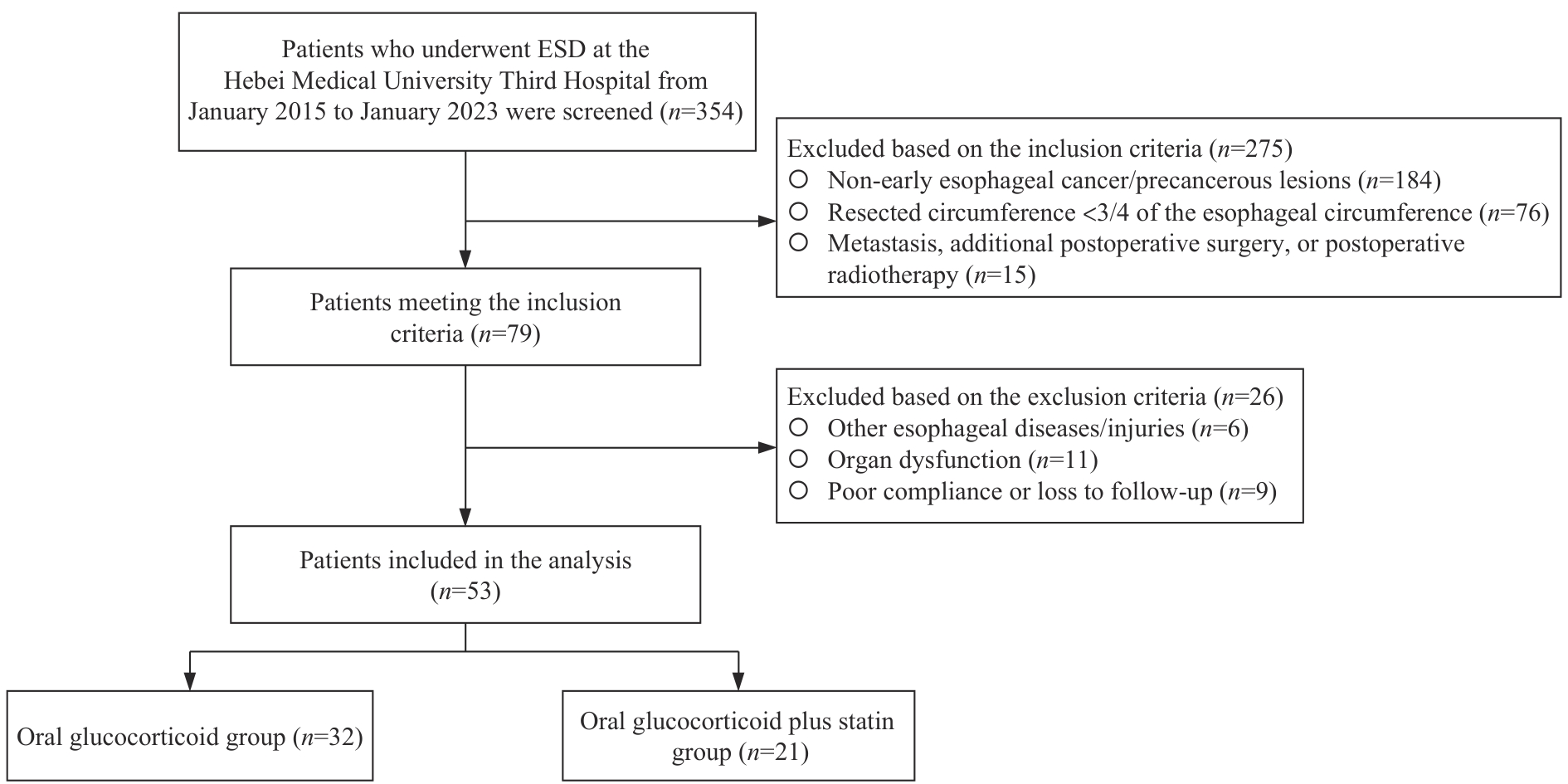
Fig 1 Flowchart of subject screening and grouping for patients undergoing large-area ESD
| Characteristic | Oral glucocorticoid group (n=32) | Oral glucocorticoid plus statin group (n=21) | t/χ2 value | P value |
|---|---|---|---|---|
| Gender/n(%) | 0.026 | 0.872 | ||
| Male | 19 (59.4) | 12 (57.1) | ||
| Female | 13 (40.6) | 9 (42.9) | ||
| Age/year | 61.88±7.53 | 64.95±9.18 | -1.333 | 0.188 |
| BMI/(kg·m-2) | 21.50±1.95 | 22.40±2.17 | -1.579 | 0.121 |
| Smoking/n(%) | 15 (46.9) | 15 (71.4) | 3.112 | 0.078 |
| Alcohol consumption/n(%) | 14 (43.8) | 14 (66.7) | 2.672 | 0.102 |
| Hypertension/n(%) | 13 (40.6) | 11 (52.4) | 0.707 | 0.400 |
| Diabetes mellitus/n(%) | 4 (12.5) | 3 (14.3) | 0.035 | 0.851 |
| Coronary disease/n(%) | 2 (6.2) | 10 (47.6) | 12.389 | <0.001 |
| Brain infarction/n(%) | 1 (3.1) | 7 (33.3) | 9.028 | 0.003 |
| Hyperlipidemias/n(%) | 3 (9.4) | 12 (57.1) | 14.257 | <0.001 |
| Lesion site/n(%) | 0.212 | 0.899 | ||
| Upper thoracic esophagus | 6 (18.8) | 4 (19.0) | ||
| Middle thoracic esophagus | 15 (46.9) | 11 (52.4) | ||
| Lower thoracic esophagus | 11 (34.4) | 6 (28.6) | ||
| Depth of invasion/n(%) | 0.034 | 0.854 | ||
| Mucosa | 19 (59.4) | 13 (61.9) | ||
| Submucosa | 13 (40.6) | 8 (38.1) | ||
| Postoperative pathology/n(%) | 1.471 | 0.479 | ||
| Low-grade intraepithelial neoplasia | 11 (34.4) | 4 (19.0) | ||
| High-grade intraepithelial neoplasia | 15 (46.9) | 12 (57.1) | ||
| Squamous cell carcinoma | 6 (18.8) | 5 (23.8) | ||
| Circumferential wound involvement/n(%) | 0.121 | 0.727 | ||
| ≥3/4 of the circumference, <circumference | 23 (71.9) | 16 (76.2) | ||
| Circumference | 9 (28.1) | 5 (23.8) | ||
| Longitudinal length of the resected mucosa/mm | 5.83±1.09 | 6.12±1.06 | -0.984 | 0.330 |
Tab 1 Analysis of clinical data of the patients
| Characteristic | Oral glucocorticoid group (n=32) | Oral glucocorticoid plus statin group (n=21) | t/χ2 value | P value |
|---|---|---|---|---|
| Gender/n(%) | 0.026 | 0.872 | ||
| Male | 19 (59.4) | 12 (57.1) | ||
| Female | 13 (40.6) | 9 (42.9) | ||
| Age/year | 61.88±7.53 | 64.95±9.18 | -1.333 | 0.188 |
| BMI/(kg·m-2) | 21.50±1.95 | 22.40±2.17 | -1.579 | 0.121 |
| Smoking/n(%) | 15 (46.9) | 15 (71.4) | 3.112 | 0.078 |
| Alcohol consumption/n(%) | 14 (43.8) | 14 (66.7) | 2.672 | 0.102 |
| Hypertension/n(%) | 13 (40.6) | 11 (52.4) | 0.707 | 0.400 |
| Diabetes mellitus/n(%) | 4 (12.5) | 3 (14.3) | 0.035 | 0.851 |
| Coronary disease/n(%) | 2 (6.2) | 10 (47.6) | 12.389 | <0.001 |
| Brain infarction/n(%) | 1 (3.1) | 7 (33.3) | 9.028 | 0.003 |
| Hyperlipidemias/n(%) | 3 (9.4) | 12 (57.1) | 14.257 | <0.001 |
| Lesion site/n(%) | 0.212 | 0.899 | ||
| Upper thoracic esophagus | 6 (18.8) | 4 (19.0) | ||
| Middle thoracic esophagus | 15 (46.9) | 11 (52.4) | ||
| Lower thoracic esophagus | 11 (34.4) | 6 (28.6) | ||
| Depth of invasion/n(%) | 0.034 | 0.854 | ||
| Mucosa | 19 (59.4) | 13 (61.9) | ||
| Submucosa | 13 (40.6) | 8 (38.1) | ||
| Postoperative pathology/n(%) | 1.471 | 0.479 | ||
| Low-grade intraepithelial neoplasia | 11 (34.4) | 4 (19.0) | ||
| High-grade intraepithelial neoplasia | 15 (46.9) | 12 (57.1) | ||
| Squamous cell carcinoma | 6 (18.8) | 5 (23.8) | ||
| Circumferential wound involvement/n(%) | 0.121 | 0.727 | ||
| ≥3/4 of the circumference, <circumference | 23 (71.9) | 16 (76.2) | ||
| Circumference | 9 (28.1) | 5 (23.8) | ||
| Longitudinal length of the resected mucosa/mm | 5.83±1.09 | 6.12±1.06 | -0.984 | 0.330 |
| Item | Oral glucocorticoid group | Oral glucocorticoid plus statin group | χ2 value | P value | ||
|---|---|---|---|---|---|---|
| Patient/n | Esophageal stricture/n(%) | Patient/n | Esophageal stricture/n(%) | |||
| Circumferential wound involvement | 32 | 12 (37.5) | 21 | 4 (19.0) | 2.048 | 0.152 |
| ≥3/4 of the circumference, <circumference | 23 | 4 (17.4) | 16 | 1 (6.2) | 1.048 | 0.306 |
| Circumference | 9 | 8 (88.9) | 5 | 3 (60.0) | 1.593 | 0.207 |
Tab 2 Incidence of postoperative esophageal stricture in the patients
| Item | Oral glucocorticoid group | Oral glucocorticoid plus statin group | χ2 value | P value | ||
|---|---|---|---|---|---|---|
| Patient/n | Esophageal stricture/n(%) | Patient/n | Esophageal stricture/n(%) | |||
| Circumferential wound involvement | 32 | 12 (37.5) | 21 | 4 (19.0) | 2.048 | 0.152 |
| ≥3/4 of the circumference, <circumference | 23 | 4 (17.4) | 16 | 1 (6.2) | 1.048 | 0.306 |
| Circumference | 9 | 8 (88.9) | 5 | 3 (60.0) | 1.593 | 0.207 |
| Characteristic | OR (95% CI) | P value |
|---|---|---|
| Male | 1.270 (0.381‒4.229) | 0.697 |
| Age | 0.977 (0.909‒1.050) | 0.524 |
| BMI | 1.009 (0.758‒1.343) | 0.951 |
| Smoking | 0.682 (0.210‒2.218) | 0.524 |
| Drinking | 0.850 (0.263‒2.750) | 0.786 |
| Hypertension | 0.915 (0.281‒2.979) | 0.883 |
| Diabetes mellitus | 1.904 (0.373‒9.705) | 0.438 |
| Coronary disease | 0.718 (0.166‒3.100) | 0.657 |
| Brain infarction | 0.729 (0.132‒4.123) | 0.729 |
| Hyperlipidemias | 0.788 (0.208‒2.989) | 0.726 |
| Lesion site | ||
| Upper thoracic esophagus | 1.000 | |
| Middle thoracic esophagus | 1.778 (0.306‒10.324) | 0.521 |
| Lower thoracic esophagus | 2.182 (0.346‒13.756) | 0.406 |
| Depth of submucosal invasion | 0.880 (0.263‒2.940) | 0.835 |
| Postoperative pathology | ||
| Low-grade intraepithelial neoplasia | 1.000 | |
| High-grade intraepithelial neoplasia | 1.375 (0.340‒5.556) | 0.655 |
| Squamous cell carcinoma | 1.031 (0.179‒5.948) | 0.973 |
| Circumferential wound involvement | 24.933 (5.112‒121.609) | <0.001 |
| Longitudinal length of the resected mucosa | 1.187 (0.687‒2.053) | 0.539 |
| Use of statins | 0.392 (0.107‒1.444) | 0.159 |
Tab 3 Univariate Logistic regression analysis for predicting esophageal stricture
| Characteristic | OR (95% CI) | P value |
|---|---|---|
| Male | 1.270 (0.381‒4.229) | 0.697 |
| Age | 0.977 (0.909‒1.050) | 0.524 |
| BMI | 1.009 (0.758‒1.343) | 0.951 |
| Smoking | 0.682 (0.210‒2.218) | 0.524 |
| Drinking | 0.850 (0.263‒2.750) | 0.786 |
| Hypertension | 0.915 (0.281‒2.979) | 0.883 |
| Diabetes mellitus | 1.904 (0.373‒9.705) | 0.438 |
| Coronary disease | 0.718 (0.166‒3.100) | 0.657 |
| Brain infarction | 0.729 (0.132‒4.123) | 0.729 |
| Hyperlipidemias | 0.788 (0.208‒2.989) | 0.726 |
| Lesion site | ||
| Upper thoracic esophagus | 1.000 | |
| Middle thoracic esophagus | 1.778 (0.306‒10.324) | 0.521 |
| Lower thoracic esophagus | 2.182 (0.346‒13.756) | 0.406 |
| Depth of submucosal invasion | 0.880 (0.263‒2.940) | 0.835 |
| Postoperative pathology | ||
| Low-grade intraepithelial neoplasia | 1.000 | |
| High-grade intraepithelial neoplasia | 1.375 (0.340‒5.556) | 0.655 |
| Squamous cell carcinoma | 1.031 (0.179‒5.948) | 0.973 |
| Circumferential wound involvement | 24.933 (5.112‒121.609) | <0.001 |
| Longitudinal length of the resected mucosa | 1.187 (0.687‒2.053) | 0.539 |
| Use of statins | 0.392 (0.107‒1.444) | 0.159 |
| [1] | 赫捷, 陈万青, 李兆申, 等. 中国食管癌筛查与早诊早治指南(2022, 北京)[J]. 中华肿瘤杂志, 2022, 44(6): 491-522. |
| He J, Chen W Q, Li Z S, et al. China guideline for the screening, early detection and early treatment of esophageal cancer (2022, Beijing)[J]. Chinese Journal of Oncology, 2022, 44(6): 491-522. | |
| [2] | Duan Y Y, Jia W X, Liang Y, et al. Progress in the treatment and prevention of esophageal stenosis after endoscopic submucosal dissection[J]. Clin Res Hepatol Gastroenterol, 2024, 48(3): 102290. |
| [3] | 中华医学会消化内镜学分会, 中国医师协会内镜医师分会, 北京医学会消化内镜学分会. 中国食管良恶性狭窄内镜下防治专家共识意见(2020, 北京)[J]. 中华胃肠内镜电子杂志, 2020, 7(4): 165-175. |
| Chinese Society of Digestive Endoscopy, Chinese Digestive Endoscopy Association, Beijing Digestive Endoscopy Society. Consensus of Chinese experts on the endoscopic prevention and treatment of esophageal benign and malignant stricture (2020, Beijing)[J]. Chinese Journal of Gastrointestinal Endoscopy (Electronic Edition), 2020, 7(4): 165-175. | |
| [4] | Zhou S H, Chen X R, Feng M Z, et al. Efficacy of different steroid therapies in preventing esophageal stricture after endoscopic submucosal dissection: a comparative meta-analysis[J]. Gastrointest Endosc, 2024, 100(6): 1020-1033.e3. |
| [5] | Kamal S, Khan M A, Seth A, et al. Beneficial effects of statins on the rates of hepatic fibrosis, hepatic decompensation, and mortality in chronic liver disease: a systematic review and meta-analysis[J]. Am J Gastroenterol, 2017, 112(10): 1495-1505. |
| [6] | Jang H J, Lee D Y, Loloci G, et al. Association between the use of statins and risk of interstitial lung disease/idiopathic pulmonary fibrosis: time-dependent analysis of population-based nationwide data[J]. Eur Respir J, 2023, 62(1): 2300291. |
| [7] | Bosch J, Gracia-Sancho J, Abraldes J G. Cirrhosis as new indication for statins[J]. Gut, 2020, 69(5): 953-962. |
| [8] | Dolivo D M, Reed C R, Gargiulo K A, et al. Anti-fibrotic effects of statin drugs: a review of evidence and mechanisms[J]. Biochem Pharmacol, 2023, 214: 115644. |
| [9] | Tang J, Kong F Y, Li J, et al. Independent risk factors for esophageal refractory stricture after extensive endoscopic submucosal dissection[J]. Surg Endosc, 2021, 35(7): 3618-3627. |
| [10] | Chen M H, Dang Y N, Ding C, et al. Lesion size and circumferential range identified as independent risk factors for esophageal stricture after endoscopic submucosal dissection[J]. Surg Endosc, 2020, 34(9): 4065-4071. |
| [11] | Bhatt A, Mehta N A. Stricture prevention after esophageal endoscopic submucosal dissection[J]. Gastrointest Endosc, 2020, 92(6): 1187-1189. |
| [12] | 徐晓雯, 陈婉珍, 王震凯. 内镜黏膜下剥离术后食管狭窄预防新进展[J]. 中国现代医学杂志, 2025, 35(17): 47-53. |
| Xu X W, Chen W Z, Wang Z K. New advances in the prevention of esophageal strictures after endoscopic submucosal dissection[J]. China Journal of Modern Medicine, 2025, 35(17): 47-53. | |
| [13] | 吴海露, 陈璐, 未明, 等. 糖皮质激素预防食管内镜黏膜下剥离术术后狭窄效果及机制研究[J]. 中华医学杂志, 2022, 102(20): 1506-1511. |
| Wu H L, Chen L, Wei M, et al. Effect and mechanism of glucocorticoids in preventing stenosis after esophageal endoscopic submucosal dissection[J]. National Medical Journal of China, 2022, 102(20): 1506-1511. | |
| [14] | Yamaguchi N, Isomoto H, Nakayama T, et al. Usefulness of oral prednisolone in the treatment of esophageal stricture after endoscopic submucosal dissection for superficial esophageal squamous cell carcinoma[J]. Gastrointest Endosc, 2011, 73(6): 1115-1121. |
| [15] | Iizuka T, Kikuchi D, Hoteya S, et al. Effectiveness of modified oral steroid administration for preventing esophageal stricture after entire circumferential endoscopic submucosal dissection[J]. Dis Esophagus, 2018, 31(7). DOI: 10.1093/dote/dox140. |
| [16] | Burke J P, Watson R W, Murphy M, et al. Simvastatin impairs smad-3 phosphorylation and modulates transforming growth factor β1-mediated activation of intestinal fibroblasts[J]. Br J Surg, 2009, 96(5): 541-551. |
| [17] | Zhai Y S, Gao X R, Wu Q M, et al. Fluvastatin decreases cardiac fibrosis possibly through regulation of TGF-β1/Smad 7 expression in the spontaneously hypertensive rats[J]. Eur J Pharmacol, 2008, 587(1/2/3): 196-203. |
| [18] | Santos D M, Pantano L, Pronzati G, et al. Screening for YAP inhibitors identifies statins as modulators of fibrosis[J]. Am J Respir Cell Mol Biol, 2020, 62(4): 479-492. |
| [19] | Akahori H, Tsujino T, Naito Y, et al. Atorvastatin ameliorates cardiac fibrosis and improves left ventricular diastolic function in hypertensive diastolic heart failure model rats[J]. J Hypertens, 2014, 32(7): 1534-1541. |
| [20] | 周鑫, 马丹, 付娟, 等. 基于TGF-β1/Smads/ACTA2信号通路探讨猪食管ESD环切术后狭窄模型人工溃疡纤维化的机制[J]. 解放军医学杂志, 2022, 47(8): 764-770. |
| Zhou X, Ma D, Fu J, et al. The mechanism of artificial ulcer fibrosis of stenosis after full circumcision of esophageal mucosal dissection based on TGF-β1/Smads/ACTA2 signaling pathway: a porcine model[J]. Medical Journal of Chinese People's Liberation Army, 2022, 47(8): 764-770. | |
| [21] | Zhu B Q, Song B Z, Wang Y J, et al. Protective effect of rosuvastatin against the formation of benign esophageal stricture[J]. Esophagus, 2022, 19(2): 343-350. |
| [22] | Wang Y J, Xia W Y, Tian L, et al. Comparison of statins with steroids and botulinum toxin A in the prevention of benign strictures after esophageal endoscopic submucosal dissection: a retrospective cohort study[J]. Surg Endosc, 2023, 37(6): 4328-4337. |
| [23] | Yebyo H G, Aschmann H E, Kaufmann M, et al. Comparative effectiveness and safety of statins as a class and of specific statins for primary prevention of cardiovascular disease: a systematic review, meta-analysis, and network meta-analysis of randomized trials with 94, 283 participants[J]. Am Heart J, 2019, 210: 18-28. |
| [24] | Ashraf J, Ali Khan M, Minhaj S, et al. Statins and abnormal liver function tests: is there a correlation?[J]. Cureus, 2020, 12(8): e10145. |
| [25] | Muñoz A E, Pollarsky F D, Marino M, et al. Addition of statins to the standard treatment in patients with cirrhosis: safety and efficacy[J]. World J Gastroenterol, 2021, 27(28): 4639-4652. |
| [26] | Gu Y, Yang X Q, Liang H, et al. Comprehensive evaluation of effects and safety of statin on the progression of liver cirrhosis: a systematic review and meta-analysis[J]. BMC Gastroenterol, 2019, 19(1): 231. |
| Viewed | ||||||
|
Full text |
|
|||||
|
Abstract |
|
|||||
