
Journal of Shanghai Jiao Tong University (Medical Science) ›› 2024, Vol. 44 ›› Issue (1): 98-107.doi: 10.3969/j.issn.1674-8115.2024.01.011
• Clinical research • Previous Articles Next Articles
WANG Mengfei1,2,3( ), YANG Shouzhi4, QIAO Yongxia1(), HUANG Lin2,3()
Received:2023-07-06
Accepted:2023-09-13
Online:2024-01-28
Published:2024-01-28
Contact:
QIAO Yongxia,HUANG Lin
E-mail:effie_wang@sjtu.edu.cn;yongxia.qiao@shsmu.edu.cn;linhuang@shusmu.edu.cn
Supported by:CLC Number:
WANG Mengfei, YANG Shouzhi, QIAO Yongxia, HUANG Lin. Establishment of discriminative models for predicting the infiltration degree of patients with lung adenocarcinoma based on clinical laboratory indicators[J]. Journal of Shanghai Jiao Tong University (Medical Science), 2024,(1): 98-107.
Add to citation manager EndNote|Ris|BibTeX
URL: https://xuebao.shsmu.edu.cn/EN/10.3969/j.issn.1674-8115.2024.01.011
| Item | Pre-invasive lesion (n=59) | Invasive lesion (n=143) | Z/χ2/ t value | P value |
|---|---|---|---|---|
| Age/year | 50 (41, 61) | 58 (48, 67) | -2.901 | 0.004 |
| Gender/[n(%)] | 1.376 | 0.241 | ||
| Male | 16 (27.1) | 51 (35.7) | N/A | N/A |
| Female | 43 (72.9) | 92 (64.3) | N/A | N/A |
| TNM stage/[n(%)] | N/A | N/A | ||
| 0 | 59 (100.0) | N/A | N/A | |
| Ⅰ | 130 (90.9) | N/A | N/A | |
| Ⅱ | 12 (8.4) | N/A | N/A | |
| Ⅲ | 1 (0.7) | N/A | N/A |
Tab 1 Comparison of clinical data between the two groups
| Item | Pre-invasive lesion (n=59) | Invasive lesion (n=143) | Z/χ2/ t value | P value |
|---|---|---|---|---|
| Age/year | 50 (41, 61) | 58 (48, 67) | -2.901 | 0.004 |
| Gender/[n(%)] | 1.376 | 0.241 | ||
| Male | 16 (27.1) | 51 (35.7) | N/A | N/A |
| Female | 43 (72.9) | 92 (64.3) | N/A | N/A |
| TNM stage/[n(%)] | N/A | N/A | ||
| 0 | 59 (100.0) | N/A | N/A | |
| Ⅰ | 130 (90.9) | N/A | N/A | |
| Ⅱ | 12 (8.4) | N/A | N/A | |
| Ⅲ | 1 (0.7) | N/A | N/A |
| Item | Pre-invasive lesion | Invasive lesion | Z/χ2/ t value | P value |
|---|---|---|---|---|
| Tumor marker | ||||
| Count/n | 59 | 143 | N/A | N/A |
| CEA/(ng·mL-1) | 1.45 (1.11, 1.86) | 2.32 (1.78, 3.34) | -3.09 | 0.002 |
| CYFRA21-1/(ng·mL-1) | 2.01 (1.56, 2.58) | 2.09 (1.62, 2.87) | -1.027 | 0.304 |
| SCC/(ng·mL-1) | 0.41 (0.29, 0.52) | 0.43 (0.32, 0.62) | -1.344 | 0.179 |
| NSE/(ng·mL-1) | 16.32±4.43 | 15.84±5.15 | 0.626 | 0.532 |
| CA125/(U·mL-1) | 10.9 (7.09, 13.07) | 10.66 (7.36, 15.4) | -0.754 | 0.451 |
| proGRP/(pg·mL-1) | 47.52 (37.93) | 47.52 (38.71, 55.85) | -0.046 | 0.963 |
| Coagulation function indicator | ||||
| Count/n | 49 | 119 | N/A | N/A |
| FBG/(g·L-1) | 2.58 (2.35, 3.14) | 2.98 (2.58, 3.53) | -2.725 | 0.006 |
| Blood routine indicator | ||||
| Count/n | 58 | 138 | N/A | N/A |
| MCV/fL | 90.05 (87, 92.38) | 91.35 (89.2, 93.83) | -2.108 | 0.035 |
| MCH/(g·L-1) | 30.55 (29.35, 31.33) | 31.1 (30, 31.8) | -2.218 | 0.027 |
| BASO%/% | 0.25 (0.1, 0.43) | 0.3 (0.2, 0.5) | -2.12 | 0.034 |
| EO%/% | 0.7 (0.1, 1.43) | 1.2 (0.48, 2.03) | -2.256 | 0.024 |
| EO#/(109·L-1) | 0 (0, 0.1) | 0.1 (0, 0.1) | -2.047 | 0.041 |
| Biochemical indicator | ||||
| Count/n | 58 | 142 | N/A | N/A |
| Urea/(mmol·L-1) | 4.6 (4.18, 5.93) | 5.2 (4.3, 6.3) | -2.242 | 0.025 |
| PAB/(g·L-1) | 0.28 (0.24, 0.31) | 0.26 (0.24, 0.29) | -2.415 | 0.016 |
| RBP/(mg·L-1) | 44.5 (39.75, 51.25) | 42 (38, 46) | -2.274 | 0.023 |
| ALB/(g·dL-1) | 4.62 (4.36, 4.82) | 4.48 (4.32, 4.68) | -2.316 | 0.021 |
| TBA/(μmol·L-1) | 3.5 (2, 5) | 4 (2, 6) | -2.061 | 0.039 |
Tab 2 Single factor analysis of test indicators between the two groups
| Item | Pre-invasive lesion | Invasive lesion | Z/χ2/ t value | P value |
|---|---|---|---|---|
| Tumor marker | ||||
| Count/n | 59 | 143 | N/A | N/A |
| CEA/(ng·mL-1) | 1.45 (1.11, 1.86) | 2.32 (1.78, 3.34) | -3.09 | 0.002 |
| CYFRA21-1/(ng·mL-1) | 2.01 (1.56, 2.58) | 2.09 (1.62, 2.87) | -1.027 | 0.304 |
| SCC/(ng·mL-1) | 0.41 (0.29, 0.52) | 0.43 (0.32, 0.62) | -1.344 | 0.179 |
| NSE/(ng·mL-1) | 16.32±4.43 | 15.84±5.15 | 0.626 | 0.532 |
| CA125/(U·mL-1) | 10.9 (7.09, 13.07) | 10.66 (7.36, 15.4) | -0.754 | 0.451 |
| proGRP/(pg·mL-1) | 47.52 (37.93) | 47.52 (38.71, 55.85) | -0.046 | 0.963 |
| Coagulation function indicator | ||||
| Count/n | 49 | 119 | N/A | N/A |
| FBG/(g·L-1) | 2.58 (2.35, 3.14) | 2.98 (2.58, 3.53) | -2.725 | 0.006 |
| Blood routine indicator | ||||
| Count/n | 58 | 138 | N/A | N/A |
| MCV/fL | 90.05 (87, 92.38) | 91.35 (89.2, 93.83) | -2.108 | 0.035 |
| MCH/(g·L-1) | 30.55 (29.35, 31.33) | 31.1 (30, 31.8) | -2.218 | 0.027 |
| BASO%/% | 0.25 (0.1, 0.43) | 0.3 (0.2, 0.5) | -2.12 | 0.034 |
| EO%/% | 0.7 (0.1, 1.43) | 1.2 (0.48, 2.03) | -2.256 | 0.024 |
| EO#/(109·L-1) | 0 (0, 0.1) | 0.1 (0, 0.1) | -2.047 | 0.041 |
| Biochemical indicator | ||||
| Count/n | 58 | 142 | N/A | N/A |
| Urea/(mmol·L-1) | 4.6 (4.18, 5.93) | 5.2 (4.3, 6.3) | -2.242 | 0.025 |
| PAB/(g·L-1) | 0.28 (0.24, 0.31) | 0.26 (0.24, 0.29) | -2.415 | 0.016 |
| RBP/(mg·L-1) | 44.5 (39.75, 51.25) | 42 (38, 46) | -2.274 | 0.023 |
| ALB/(g·dL-1) | 4.62 (4.36, 4.82) | 4.48 (4.32, 4.68) | -2.316 | 0.021 |
| TBA/(μmol·L-1) | 3.5 (2, 5) | 4 (2, 6) | -2.061 | 0.039 |
| Item | B | P | OR | 95%CI |
|---|---|---|---|---|
| BASO%/% | 1.527 | 0.045 | 4.603 | 1.033‒20.506 |
| Urea/(mmol·L-1) | 0.534 | 0.002 | 1.706 | 1.219‒2.386 |
| ALB/(g·dL-1) | -1.916 | 0.003 | 0.147 | 0.041‒0.527 |
| Constant | 6.373 | 0.032 | 585.568 | N/A |
Tab 3 Multivariate Logistic regression analysis of test indicators and clinical data predicting infiltration degree in patients with lung adenocarcinoma
| Item | B | P | OR | 95%CI |
|---|---|---|---|---|
| BASO%/% | 1.527 | 0.045 | 4.603 | 1.033‒20.506 |
| Urea/(mmol·L-1) | 0.534 | 0.002 | 1.706 | 1.219‒2.386 |
| ALB/(g·dL-1) | -1.916 | 0.003 | 0.147 | 0.041‒0.527 |
| Constant | 6.373 | 0.032 | 585.568 | N/A |
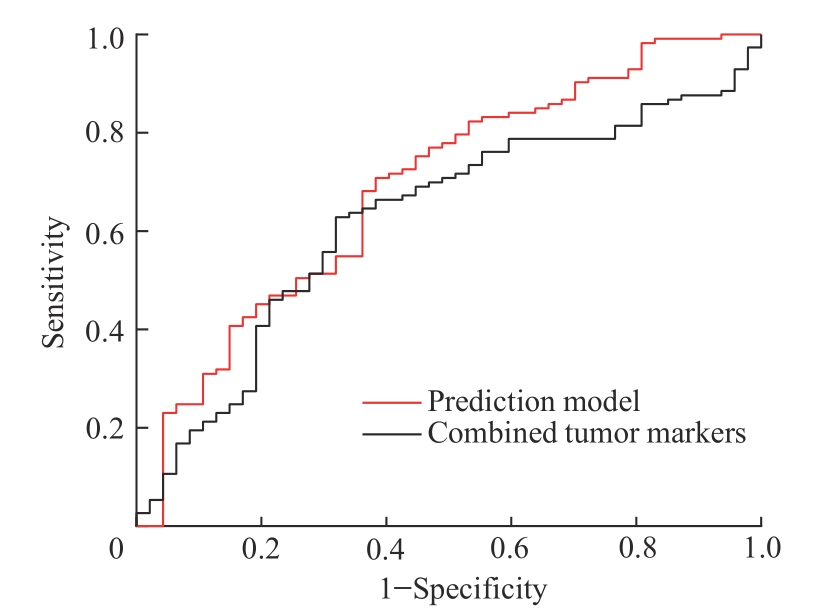
Fig 1 ROC curve of prediction model constructed by Logistic regression
| Algorithm | AUC | Sensitivity | Specificity | PDeLong test |
|---|---|---|---|---|
| RR | 0.744 | 0.708 | 0.702 | N/A |
| LASSO | 0.723 | 0.796 | 0.574 | 0.196 |
| NN | 0.679 | 0.558 | 0.830 | 0.008 |
| RF | 0.663 | 0.717 | 0.638 | 0.030 |
| kNN | 0.644 | 0.363 | 0.851 | 0.002 |
| SVM | 0.629 | 0.531 | 0.723 | 0.004 |
| Decision Tree | 0.552 | 0.664 | 0.468 | 0.000 |
| AdaBoost | 0.532 | 0.681 | 0.383 | 0.000 |
Tab 4 Classification results of diagnostic models based on different machine learning algorithms
| Algorithm | AUC | Sensitivity | Specificity | PDeLong test |
|---|---|---|---|---|
| RR | 0.744 | 0.708 | 0.702 | N/A |
| LASSO | 0.723 | 0.796 | 0.574 | 0.196 |
| NN | 0.679 | 0.558 | 0.830 | 0.008 |
| RF | 0.663 | 0.717 | 0.638 | 0.030 |
| kNN | 0.644 | 0.363 | 0.851 | 0.002 |
| SVM | 0.629 | 0.531 | 0.723 | 0.004 |
| Decision Tree | 0.552 | 0.664 | 0.468 | 0.000 |
| AdaBoost | 0.532 | 0.681 | 0.383 | 0.000 |
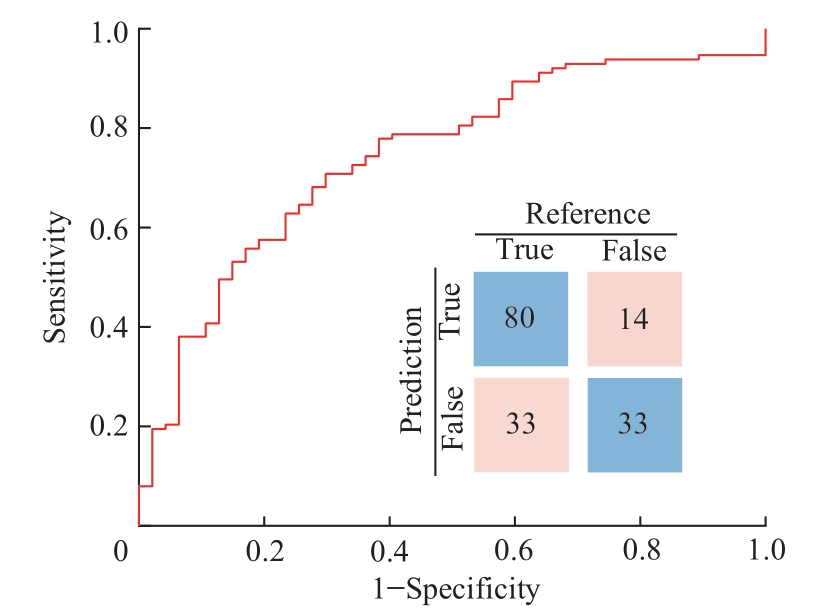
Fig 2 ROC curve of prediction model constructed by Ridge regression
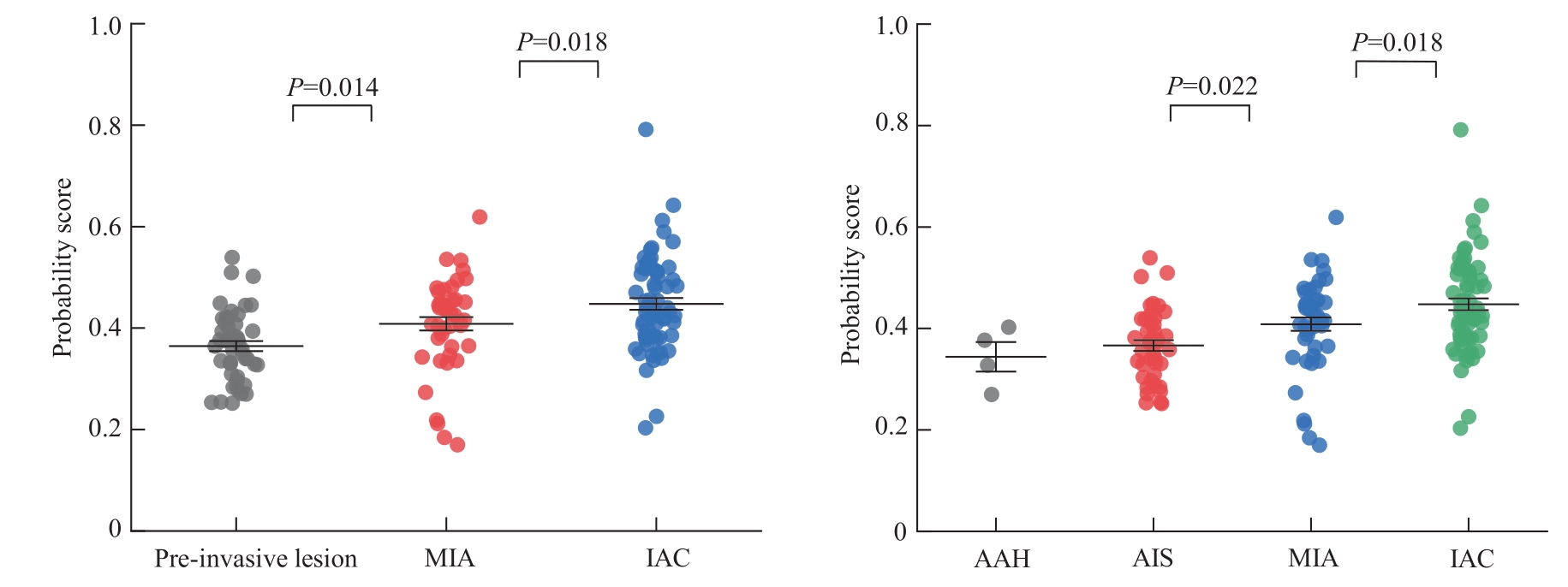
Fig 3 Progressive trends in different pathological subtypes of prediction model constructed by Ridge regression
| 1 | SUNG H, FERLAY J, SIEGEL R L, et al. Global cancer statistics 2020: globocan estimates of incidence and mortality worldwide for 36 cancers in 185 countries[J]. CA Cancer J Clin, 2021, 71(3): 209-249. |
| 2 | 《中国肿瘤临床与康复》编辑部. 2017年中国最新癌症数据[J]. 中国肿瘤临床与康复, 2017, 24(6): 760. |
| Editorial Board of Chinese Journal of Clinical Oncology and Rehabilitation. The latest cancer data in China in 2017[J]. Chinese Journal of Clinical Oncology and Rehabilitation, 2017, 24(6): 760. | |
| 3 | 李翔, 高申. 1990—2019年中国居民肺癌发病、患病和死亡趋势分析[J]. 中国慢性病预防与控制, 2021, 29(11): 821-826. |
| LI X, GAO S. Trend analysis of the incidence, morbidity and mortality of lung cancer in China from 1990 to 2019[J]. Chinese Journal of Prevention and Control of Chronic Diseases, 2021, 29(11): 821-826. | |
| 4 | LI M Y, LIU L Z, DONG M. Progress on pivotal role and application of exosome in lung cancer carcinogenesis, diagnosis, therapy and prognosis[J]. Mol Cancer, 2021, 20(1): 22. |
| 5 | SUCCONY L, RASSL D M, BARKER A P, et al. Adenocarcinoma spectrum lesions of the lung: detection, pathology and treatment strategies[J]. Cancer Treat Rev, 2021, 99: 102237. |
| 6 | 姜格宁, 陈昶, 朱余明, 等. 上海市肺科医院磨玻璃结节早期肺腺癌的诊疗共识(第一版)[J]. 中国肺癌杂志, 2018, 21(3): 147-159. |
| JIANG G N, CHEN C, ZHU Y M, et al. Shanghai pulmonary hospital experts consensus on the management of groundglass nodules suspected as lung adenocarcinoma (version 1)[J]. Chinese Journal of Lung Cancer, 2018, 21(3): 147-159. | |
| 7 | 陈思煜, 于振涛, 林俊贤, 等. 早期肺腺癌浸润性对选择微创手术的患者住院经济成本的影响[J]. 现代医院, 2023, 23(4): 607-609, 618. |
| CHEN S Y, YU Z T, LIN J X, et al. The impact of early invasive lung adenocarcinoma on the economic cost of hospitalization in patients choosing minimally invasive surgery[J]. Modern Hospitals, 2023, 23(4): 607-609, 618. | |
| 8 | 梁锌, 宋媛媛, 高婷, 等. 围手术期严重并发症和术前基础疾病对肺癌手术患者住院费用的影响分析[J]. 中国医院, 2021, 25(4): 58-61. |
| LIANG X, SONG Y Y, GAO T, et al. An analysis of influence of severe perioperative complications and preoperative basic diseases on the hospitalization expenses of surgical lung cancer patients[J]. Chinese Hospitals, 2021, 25(4): 58-61. | |
| 9 | LORTET-TIEULENT J, SOERJOMATARAM I, FERLAY J, et al. International trends in lung cancer incidence by histological subtype: adenocarcinoma stabilizing in men but still increasing in women[J]. Lung Cancer, 2014, 84(1): 13-22. |
| 10 | 潘江峰, 邝平定, 应明亮, 等. 肺部纯磨玻璃结节浸润性肺腺癌与浸润前病变的高分辨靶扫描CT鉴别诊断[J]. 浙江医学, 2016, 38(11): 826-828, 832. |
| PAN J F, KUANG P D, YING M L, et al. Differential diagnosis of pulmonary invasive adenocarcinoma and preinvasive lesions in pure ground-glass nodules on high resolution targeted CT scan[J]. Zhejiang Medical Journal, 2016, 38(11): 826-828, 832. | |
| 11 | 巴文娟, 许迪, 尹柯, 等. HRCT征象评估纯磨玻璃结节浸润性: 肺结节圆度优于长-短径比值和分叶深度[J]. 放射学实践, 2020, 35(12): 1542-1546. |
| BA W J, XU D, YIN K, et al. Application value of pulmonary nodule roundness on HRCT in predicting invasiveness of pure ground glass nodules and its correlation with long-short diameter ratio and depth of lobulation[J]. Radiologic Practice, 2020, 35(12): 1542-1546. | |
| 12 | MUROFF L R, BERLIN L. Speed versus interpretation accuracy: current thoughts and literature review[J]. AJR Am J Roentgenol, 2019, 213(3): 490-492. |
| 13 | LI Y, BAO Q, YANG S X, et al. Bionanoparticles in cancer imaging, diagnosis, and treatment[J]. VIEW, 2022, 3(4): 20200027. DOI: 10.1002/viw.20200027. |
| 14 | 魏晓玲. 四种肿瘤标记物联合检测在肺癌诊断中的价值[J]. 河北医药, 2017, 39(6): 854-856. |
| WEI X L. The value of combined detection of four tumor markers in diagnosis of lung cancer[J]. Hebei Medical Journal, 2017, 39(6): 854-856. | |
| 15 | 吴琪燕, 边革元, 程绘珺, 等. 肺腺癌预后因素及血清肿瘤标记物的诊断效能[J]. 昆明医科大学学报, 2020, 41(9): 32-37. |
| WU Q Y, BIAN G Y, CHENG H J, et al. Analysis on prognostic factors of lung adenocarcinoma and diagnostic efficacy of serum tumor markers[J]. Journal of Kunming Medical University, 2020, 41(9): 32-37. | |
| 16 | 朱婷樱, 鲍杨漪. 肺癌患者CEA、CA125、SCC及纤维蛋白原的表达水平及意义[J]. 中国医药指南, 2019, 17(6): 141-142. |
| ZHU T Y, BAO Y Y. Expression levels and significance of CEA, CA125, SCC, and fibrinogen in lung cancer patients[J]. Guide of China Medicine, 2019, 17(6): 141-142. | |
| 17 | 徐红萍, 薛冰, 徐笛. 肿瘤标志物CEA、NSE、CYFRA21-1联合检测在肺癌诊断中的应用[J]. 实用医学杂志, 2010, 26(16): 2943-2944. |
| XU H P, XUE B, XU D. Application of combined detection of tumor markers CEA, NSE, and CYFRA21-1 in the diagnosis of lung cancer[J]. The Journal of Practical Medicine, 2010, 26(16): 2943-2944. | |
| 18 | 杜军华, 乔洪源, 尹宜发. 血清CEA、CA125及Cyfra21-1水平对中晚期非小细胞肺癌患者预后的影响[J]. 肿瘤防治研究, 2016, 43(2): 137-140. |
| DU J H, QIAO H Y, YIN Y F. Prognostic value of serum CEA, CA125 and Cyfra21-1 inpatients with advanced nonsmall cell lung cancer[J]. Cancer Research on Prevention and Treatment, 2016, 43(2): 137-140. | |
| 19 | 张桐硕, 任鹤菲, 曹瑾, 等. 基于集成机器学习的卵巢癌多检验指标联合诊断模型[J]. 临床检验杂志, 2018, 36(12): 908-913. |
| ZHANG T S, REN H F, CAO J, et al. A diagnostic model combined with multiple laboratory indexes for ovarian cancer based on integrated machine learning[J]. Chinese Journal of Clinical Laboratory Science, 2018, 36(12): 908-913. | |
| 20 | 章维维, 邹红, 杨蓉, 等. 常规临床检验指标与结直肠癌临床病理参数的关联分析及诊断预测价值[J]. 临床检验杂志, 2021, 39(3): 172-177. |
| ZHANG W W, ZOU H, YANG R, et al. Predictive value of routine clinical test indicators in the diagnosis of colorectal cancer (CRC) and their correlation with clinicopathological parameters of CRC[J]. Chinese Journal of Clinical Laboratory Science, 2021, 39(3): 172-177. | |
| 21 | 王浩, 乌永嘎, 郭玉婷, 等. 基于常规临床检验指标构建子痫前期风险预测模型[J]. 临床检验杂志, 2022, 40(10): 731-736. |
| WANG H, WU Y G, GUO Y T, et al. Construction of risk prediction model for preeclampsia based on routine clinical examination indicators[J]. Chinese Journal of Clinical Laboratory Science, 2022, 40(10): 731-736. | |
| 22 | WINTER M C, POTTER V A, WOLL P J. Raised serum urea predicts for early death in small cell lung cancer[J]. Clin Oncol (R Coll Radiol), 2008, 20(10): 745-750. |
| 23 | 刘秀巧, 王淑娟, 吴振茹, 等. 恶性肿瘤与高纤维蛋白原血症[J]. 中华肿瘤杂志, 2002, 24(1): 51-52. |
| LIU X Q, WANG S J, WU Z R, ET AL. Malignant tumor and hyperfibrinogenemia[J]. Chinese Journal of Oncology, 2002, 24(1): 51-52. | |
| 24 | 左震华, 燕霞, 蔡少华. 癌胚抗原对肺腺癌的诊断价值分析[J]. 人民军医, 2015, 58(5): 553-554. |
| ZUO Z H, YAN X, CAI S H. Analysis of the diagnostic value of carcinoembryonic antigen in lung adenocarcinoma[J]. People′s Military Surgeon, 2015, 58(5): 553-554. | |
| 25 | QU T, ZHANG J W, XU N, et al. Diagnostic value analysis of combined detection of Trx, CYFRA21-1 and SCCA in lung cancer[J]. Oncol Lett, 2019, 17(5): 4293-4298. |
| 26 | 刘磊, 张薇, 刘彬, 等. 肺鳞癌患者血清肿瘤标记物Scc、CYFRA21-1的临床意义[J]. 现代生物医学进展, 2010, 10(20): 3862-3865. |
| LIU L, ZHANG W, LIU B, et al. Clinical significance of Scc and CYFRA21-1 (serum tumor markers) in diagnosis of lung squamous cell carcinoma[J]. Progress in Modern Biomedicine, 2010, 10(20): 3862-3865. | |
| 27 | 彭彦, 王燕, 李峻岭, 等. 血清NSE、ProGRP和LDH在小细胞肺癌诊断治疗中的作用[J]. 中国肺癌杂志, 2016, 19(9): 590-594. |
| PENG Y, WANG Y, LI J L, et al. Utility of NSE, ProGRP and LDH in diagnosis and treatment in patients with small cell lung cancer[J]. Chinese Journal of Lung Cancer, 2016, 19(9): 590-594. | |
| 28 | 付晓红, 陈碧君, 马萍, 等. 血清肿瘤标记物联合检测诊断肺癌的价值[J]. 广东医学, 2013, 34(3): 401-404. |
| FU X H, CHEN B J, MA P, et al. The value of combined detection of serum tumor markers in the diagnosis of lung cancer[J]. Guangdong Medical Journal, 2013, 34(3): 401-404. | |
| 29 | LIU L J, TENG J L, ZHANG L J, et al. The combination of the tumor markers suggests the histological diagnosis of lung cancer[J]. Biomed Res Int, 2017, 2017: 2013989. |
| 30 | ZHONG M H, ZHANG Y, PAN Z G, et al. Clinical utility of circulating tumor cells in the early detection of lung cancer in patients with a solitary pulmonary nodule[J]. Technol Cancer Res Treat, 2021, 20: 15330338211041465. |
| 31 | 张剑, 聂晓红, 何瀚夫. 非小细胞肺癌患者血浆D-二聚体、纤维蛋白原与癌胚抗原、细胞角蛋白19片段的相关性研究[J]. 华西医学, 2022, 37(2): 218-223. |
| ZHANG J, NIE X H, HE H F. Correlation study of plasma D-dimer, fibrinogen, carcinoembryonic antigen, and cytokeratin 19 fragment in non-small cell lung cancer patients[J]. West China Medical Journal, 2022, 37(2): 218-223. | |
| 32 | YI W W, QIAO T T, YANG Z Y, et al. The regulation role and diagnostic value of fibrinogen-like protein 1 revealed by pan-cancer analysis[J]. Mater Today Bio, 2022, 17: 100470. |
| 33 | TANG X Y, XIONG Y L, SHI A P, et al. The downregulation of fibrinogen-like protein 1 inhibits the proliferation of lung adenocarcinoma via regulating MYC-target genes[J]. Transl Lung Cancer Res, 2022, 11(3): 404-419. |
| 34 | 李亚伦, 李镭, 张立, 等. 血清白蛋白及尿素氮水平与肺癌不同临床病理特征和预后的关系[J]. 中国肺癌杂志, 2017, 20(3): 175-186. |
| LI Y L, LI L, ZHANG L, et al. Relationships between serum albumin and urea level andthe clinical pathological characteristics and survival time in patients with lung cancer[J]. Chinese Journal of Lung Cancer, 2017, 20(3): 175-186. | |
| 35 | KUIKEL S, PATHAK N, POUDEL S, et al. Neutrophil-lymphocyte ratio as a predictor of adverse outcome in patients with community-acquired pneumonia: a systematic review[J]. Health Sci Rep, 2022, 5(3): e630. |
| 36 | 刘畅, 赵晓珍, 白月琴, 等. 肺腺癌患者临床参数与血清标志物的相关性分析[J]. 同济大学学报(医学版), 2019, 40(1): 87-90, 97. |
| LIU C, ZHAO X Z, BAI Y Q, et al. Correlation of clinical parameters with serum markers in patients with lung adenocarcinoma[J]. Journal of Tongji University (Medical Science) , 2019, 40(1): 87-90, 97. | |
| 37 | 翁绳和, 孙祎繁, 徐雪, 等. 18F-FDG PET联合血清肿瘤标志物对肺腺癌分期的应用价值[J]. 临床放射学杂志, 2020, 39(4): 800-804. |
| WENG S H, SUN Y F, XU X, et al. 18F-FDG PET combined with serum tumor markers in the staging of lung adenocarcinoma[J]. Journal of Clinical Radiology, 2020, 39(4): 800-804. | |
| 38 | 黄国, 蒋蓓蓓, 解学乾, 等. CT和检验指标对浸润倾向肺腺癌的诊断模型建立[J]. CT理论与应用研究, 2021, 30(1): 81-90. |
| HUANG G, JIANG B B, XIE X Q, et al. Establishment of a diagnostic model for lung adenocarcinoma with invasive tendency by CT and laboratory indexes[J]. Computerized Tomography Theory and Applications, 2021, 30(1): 81-90. | |
| 39 | REN X L, ZHANG Y X, LYU Y, et al. Lactate dehydrogenase and serum tumor markers for predicting metastatic status in geriatric patients with lung adenocarcinoma[J]. Cancer Biomark, 2019, 26(2): 139-150. |
| 40 | 郑慧, 李建玉, 王珊, 等. 基于肺磨玻璃结节CT征象的诊断模型列线图评估肺癌浸润性[J]. 放射学实践, 2021, 36(4): 470-474. |
| ZHENG H, LI J Y, WANG S, et al. Evaluation on the invasion of lung cancer by diagnostic model nomogram based on the CT characteristics of pulmonary ground glass nodules[J]. Radiologic Practice, 2021, 36(4): 470-474. | |
| 41 | ZHANG T Q, LI X L, LIU J H. Prediction of the invasiveness of ground-glass nodules in lung adenocarcinoma by radiomics analysis using high-resolution computed tomography imaging[J]. Cancer Control, 2022, 29: 10732748221089408. |
| 42 | YANG S C, LAI W W, SU W C, et al. Estimating the lifelong health impact and financial burdens of different types of lung cancer[J]. BMC Cancer, 2013, 13: 579. |
| [1] | WU Lei, DU Fenglin, ZHAO Mingna, REN Yizhe, ZHANG Xianzhou, LOU Jiatao. Expression of PTPRN in lung adenocarcinoma and its mechanism of promoting tumor metastasis [J]. Journal of Shanghai Jiao Tong University (Medical Science), 2025, 45(7): 846-857. |
| [2] | GUO Linyan, ZHANG Hailong, ZHENG Chao, LEI Ming. Expression of long noncoding RNA LINC00467 and its mechanism in affecting lung adenocarcinoma progression [J]. Journal of Shanghai Jiao Tong University (Medical Science), 2025, 45(11): 1407-1420. |
| [3] | XU Wanxing, WANG Lin, GUO Qiaomei, WANG Xueqing, LOU Jiatao. Clinical validation and application value exploration of multi-modal pulmonary nodule diagnosis model [J]. Journal of Shanghai Jiao Tong University (Medical Science), 2024, 44(8): 1030-1036. |
| [4] | ZHU Mingyang, XU Yuanyuan, REN Jianghao, HUANG Jiazheng, LI Ruonan, TAN Qiang. Review of sublobar resection for lung adenocarcinoma with ground-glass presence [J]. Journal of Shanghai Jiao Tong University (Medical Science), 2024, 44(7): 922-927. |
| [5] | ZHAO Xue, DONG Chunyan. Correlation of WD 40 repeat 43 expression in lung adenocarcinoma and its effect on paclitaxel-resistance of cells [J]. Journal of Shanghai Jiao Tong University (Medical Science), 2022, 42(12): 1656-1665. |
| [6] | Lei XIONG, Qian YI, Ming-fang XU, Jian CHEN. Expression and prognosis analysis of MRPL12 in lung adenocarcinoma [J]. JOURNAL OF SHANGHAI JIAOTONG UNIVERSITY (MEDICAL SCIENCE), 2021, 41(8): 1033-1040. |
| [7] | CHEN Liang, WANG Zhe-xin, YAO Feng. Analysis of clinicopathological factors of spread through air spaces in stage Ⅰ A lung adenocarcinoma [J]. JOURNAL OF SHANGHAI JIAOTONG UNIVERSITY (MEDICAL SCIENCE), 2020, 40(7): 957-961. |
| [8] | ZHANG Wei-ran1, 2, LIN Xue-feng3, LI Xin2, ZHANG Hao2, WANG Meng2, SUN Wei2, HAN Xing-peng2, SUN Da-qiang1, 4. Transcriptional identification of potential biomarkers of lung adenocarcinoma [J]. JOURNAL OF SHANGHAI JIAOTONG UNIVERSITY (MEDICAL SCIENCE), 2020, 40(12): 1598-1606. |
| [9] | ZHENG Tian-yu, DU Jun, CHEN Ning, NI Pei-hua, XUE Hui-ping. Roles of exosomes in tumor diagnosis and treatment#br# [J]. , 2017, 37(7): 1046-. |
| [10] | MENG Shuang, WANG Yang*, LEI Hui-min, TANG Ya-bin, ZHU Liang . Metabolic profiling analysis associated with acquired erlotinib resistance of lung adenocarcinoma cells based on liquid chromatography–high resolution mass spectrometry [J]. , 2017, 37(5): 571-. |
| [11] | HE Feng, LI Shuai, ZHU Xia-xia, et al. Inhibition effect of expressions of ING4 and/or P53 mediated by adenovirus on growth of human lung adenocarcinoma cell [J]. , 2015, 35(7): 953-. |
| [12] | HUA Zi-chen, ZHU Zheng-lun, ZHU Zheng-gang. Application of serum tumor markers for diagnosis and treatment of gastric cancer [J]. , 2014, 34(9): 1411-. |
| [13] | SHI Hao-jun, WANG Zhi-gang. Long non-coding RNA metastasis-associated lung adenocarcinoma transcript 1 and its effect in cancer metastasis [J]. , 2014, 34(8): 1254-. |
| [14] | HAN Rui-chao, FAN Zhi-wen, ZHOU Min. Effects of blocking Notch3 pathway by siRNA under hypoxic condition on proliferation of human lung adenocarcinoma A549 cells [J]. , 2013, 33(4): 421-. |
| [15] | ZHOU Min, FAN Zhi-wen, HAN Rui-chao. Influence of blocking Notch signaling pathway by γ-secretase inhibitor on proliferation of lung adenocarcinoma A549 cells [J]. , 2012, 32(8): 1024-. |
| Viewed | ||||||
|
Full text |
|
|||||
|
Abstract |
|
|||||
