Journal of Shanghai Jiao Tong University (Medical Science) ›› 2026, Vol. 46 ›› Issue (6): 693-704.doi: 10.3969/j.issn.1674-8115.2026.06.001

• Innovative research team achievement column •     Next Articles

Adenosine monophosphate deaminase 3 regulates the bone marrow reconstitution ability of hematopoietic stem cells through the CREB/ADCY10 signaling pathway

Zhang Yue1, Xia Yiqiu1, He Xiaoxiao2, Chen Chiqi1, Zhang Yaping1, Wang Yu1, Zheng Junke1(), Xie Li1(), Yu Zhuo1()   

  1. 1.Key Laboratory of Cell Differentiation and Apoptosis of National Ministry of Education, Department of Pathophysiology, Shanghai Jiao Tong University School of Medicine, Shanghai 201318, China
    2.Department of Hematology, Xinhua Hospital, Shanghai Jiao Tong University School of Medicine, Shanghai 200092, China
  • Received:2026-02-28 Accepted:2026-03-30 Online:2026-06-28 Published:2026-06-29
  • Contact: Zheng Junke, Xie Li, Yu Zhuo E-mail:zhengjunke@shsmu.edu.cn;xieli100@126.com;yuzhuo78@aliyun.com
  • Supported by:
    National Natural Science Foundation of China(82570151;82430007;82470121;82370180;32571298;32371160);National Key Research and Development Program of China(2024YFA1803500)

Abstract:

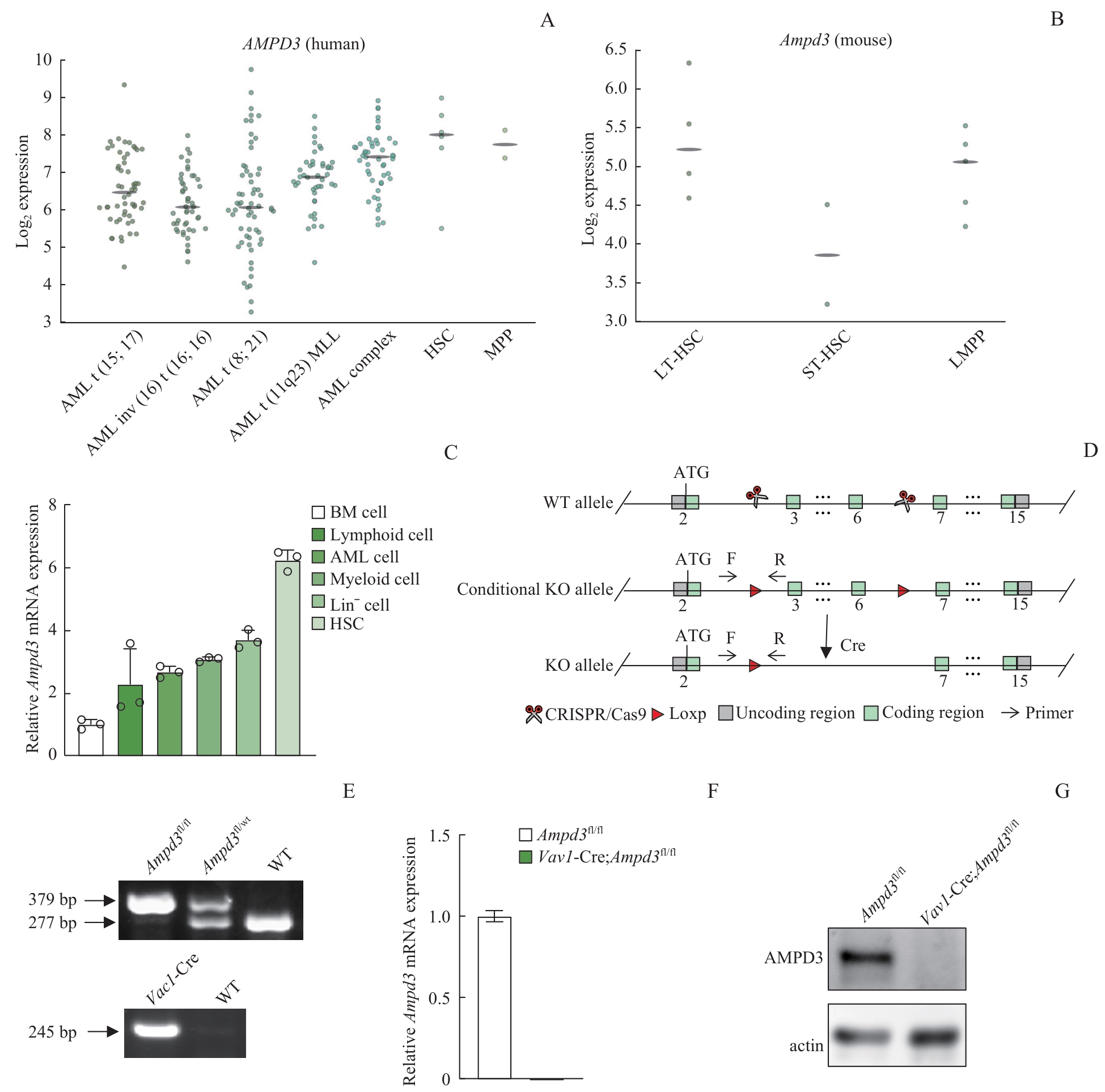
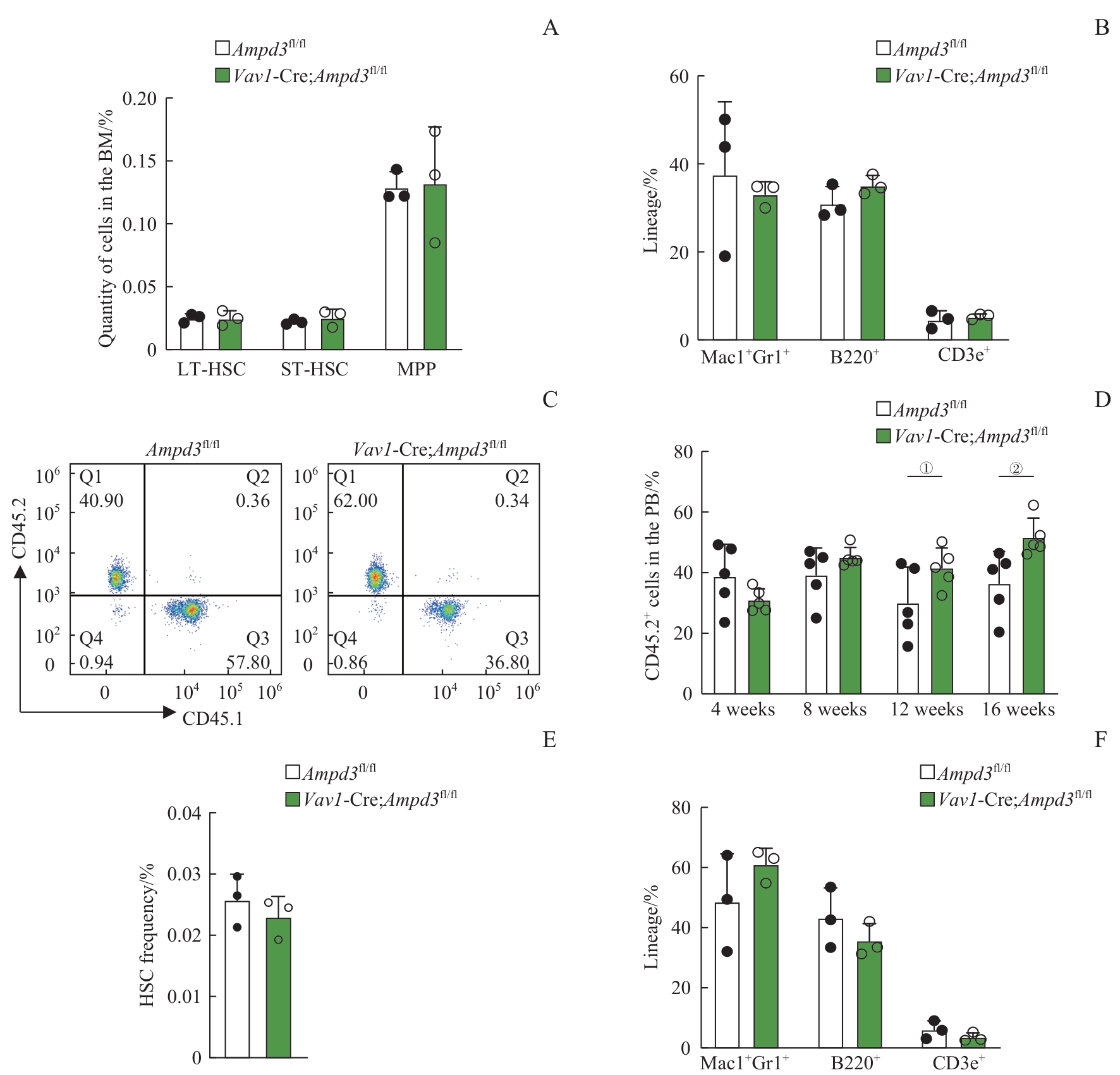
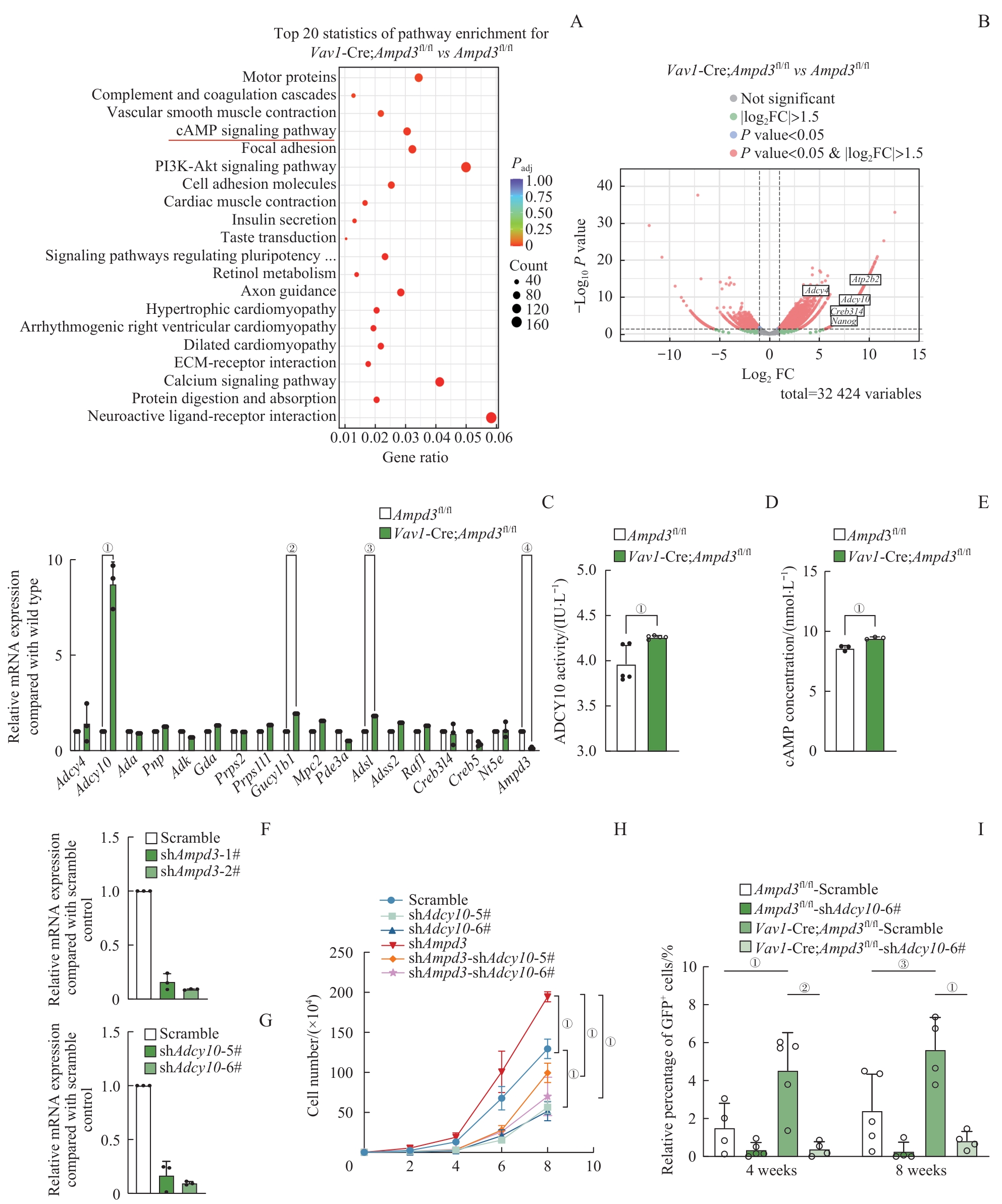
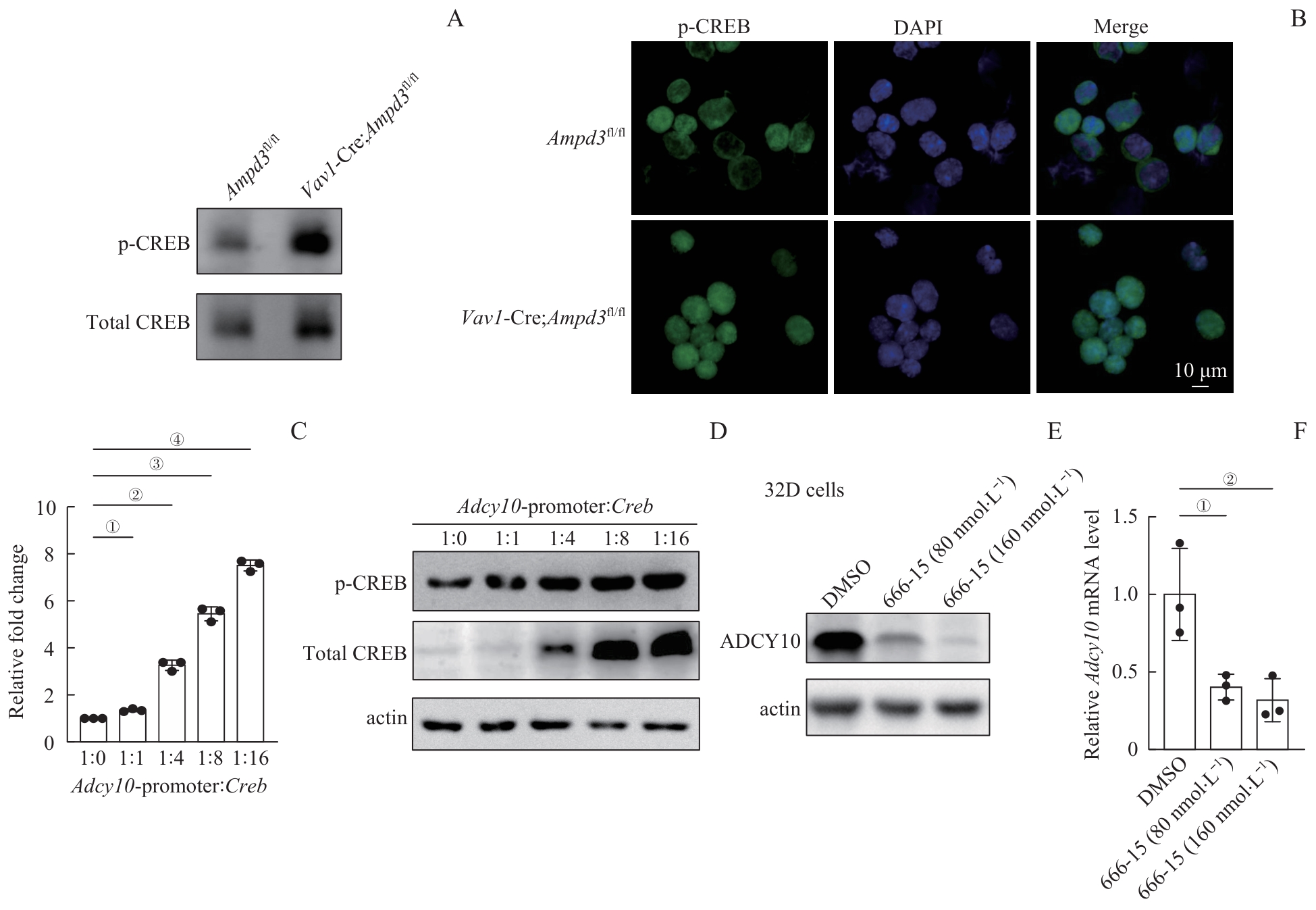
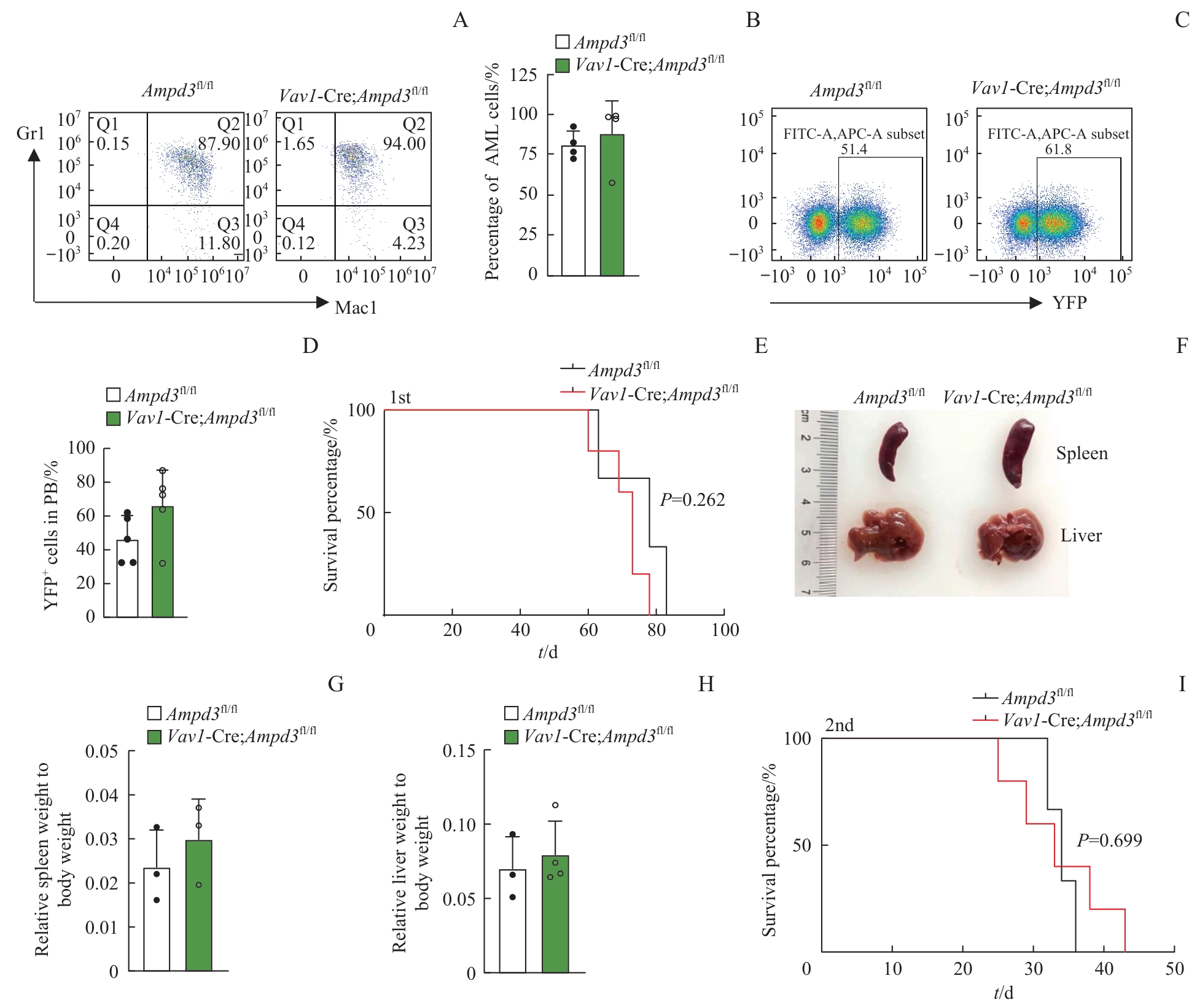
Objective ·To investigate the role of adenosine monophosphate deaminase 3 (AMPD3) in hematopoietic stem cells (HSCs) and acute myeloid leukemia (AML). Methods ·Hematopoietic system-specific Ampd3 knockout mice (Vav1-Cre;Ampd3fl/fl) and control mice (Ampd3fl/fl) were generated using the Cre/LoxP system. An in vivo competitive bone marrow transplantation assay was performed to examine the effects of Ampd3 on the bone marrow reconstitution and lineage differentiation capacities of HSCs. RNA sequencing (RNA-seq) was performed to compare differentially expressed genes and enriched pathways in HSCs from Vav1-Cre;Ampd3fl/fl and Ampd3fl/fl mice. Real-time reverse transcription quantitative PCR (RT-qPCR) was used to validate differentially expressed genes and identify potential targets. Short hairpin RNAs (shRNAs) targeting the identified geneswere constructed, and in vivo and in vitro rescue experiments were conducted to validate their functions. Western blotting, immunofluorescence staining, and dual-luciferase reporter assays were then employed to explore the upstream regulatory factors. An MLL-AF9-induced AML model was established, and serial in vivo transplantation experiments were performed to observe the impact of Ampd3 on disease progression. Results ·In the competitive bone marrow transplantation assay, Vav1-Cre;Ampd3fl/fl mice exhibited significantly higher bone marrow reconstitution ability than the Ampd3fl/fl mice, but no differences were observed in myeloid, T lymphocyte, or B lymphocyte lineage differentiation. RNA-seq analysis revealed significant enrichment of the cyclic adenosine monophosphate (cAMP) signaling pathway and other pathways in HSCs from Vav1-Cre;Ampd3fl/fl mice, and among the differentially expressed genes, adenylate cyclase 10 (Adcy10) was significantly upregulated. Knockdown of Ampd3 in 32D cells significantly accelerated cell proliferation, whereas simultaneous knockdown of Adcy10 markedly slowed the proliferation. In vivo rescue experiments showed that further knockdown of Adcy10 in Ampd3-deficient hematopoietic stem and progenitor cells significantly reduced their bone marrow reconstitution capacity, suggesting that Adcy10 was a downstream target of Ampd3. Furthermore, the expression level of phosphorylated cAMP response element-binding protein (p-CREB) in HSCs from Vav1-Cre;Ampd3fl/fl mice was significantly increased compared with that in Ampd3fl/fl mice. Immunofluorescence staining also revealed stronger nuclear localization of p-CREB in HSCs from Vav1-Cre;Ampd3fl/fl mice. Dual-luciferase reporter assays confirmed that CREB was able to activate the transcription of Adcy10, accompanied by increased expression of both p-CREB and total CREB. The CREB inhibitor 666-15 significantly downregulated the mRNA and protein expression levels of Adcy10. However, hematopoietic-specific knockout of Ampd3 did not affect AML progression. Conclusion ·Hematopoietic-specific deletion of Ampd3 in mice leads to elevated p-CREB expression, which activates Adcy10 transcription and thereby enhances the bone marrow reconstitution capacity of HSCs. Ampd3 does not affect AML progression, suggesting that Ampd3 is mainly involved in regulating HSC function under stress conditions.

Key words: hematopoietic stem cell (HSC), adenosine monophosphate deaminase 3 (AMPD3), bone marrow reconstitution, adenylate cyclase 10 (ADCY10), cAMP response element-binding protein (CREB), acute myeloid leukemia (AML)

CLC Number: