
Journal of Shanghai Jiao Tong University (Medical Science) ›› 2025, Vol. 45 ›› Issue (3): 357-364.doi: 10.3969/j.issn.1674-8115.2025.03.013
• Clinical research • Previous Articles Next Articles
ZHU Daoyu( ), FU Kai, HE Haiyan, CAI Qianying, PENG Hao, CHEN Shengbao(), YIN Jimin, LUO Pengbo, JIN Dongxu, ZHANG Changqing, GAO Youshui()
Received:2024-06-21
Accepted:2024-12-17
Online:2025-03-28
Published:2025-03-28
Contact:
CHEN Shengbao, GAO Youshui
E-mail:zhudaoyu1993@163.com;shengbaochen@163.com;gaoyoushui@sjtu.edu.cn
Supported by:CLC Number:
ZHU Daoyu, FU Kai, HE Haiyan, CAI Qianying, PENG Hao, CHEN Shengbao, YIN Jimin, LUO Pengbo, JIN Dongxu, ZHANG Changqing, GAO Youshui. Impact of hip synovitis on the long-term outcomes of free vascularized fibular grafting for osteonecrosis of femoral head[J]. Journal of Shanghai Jiao Tong University (Medical Science), 2025,(3): 357-364.
Add to citation manager EndNote|Ris|BibTeX
URL: https://xuebao.shsmu.edu.cn/EN/10.3969/j.issn.1674-8115.2025.03.013
| Item | Overall ( n=556) | No synovitis group ( n=254) | Moderate synovitis group ( n=249) | Severe synovitis group ( n=53) | P value |
|---|---|---|---|---|---|
| ONFH type/ n (%) | 0.003 | ||||
| Trauma | 53 (9.5) | 21 (8.3) | 27 (10.8) | 5 (9.4) | |
| Steroid | 243 (43.7) | 107 (42.1) | 119 (47.8) | 17 (32.1) | |
| Alcohol | 130 (23.4) | 52 (20.5) | 58 (23.3) | 20 (37.8) | |
| Idiopathic | 99 (17.8) | 61 (24.0) | 32 (12.9) | 6 (11.3) | |
| N/A | 31 (5.6) | 13 (5.1) | 13 (5.2) | 5 (9.4) | |
| Baseline HHS/point | 75.80±16.28 | 77.99±14.99 | 76.22±15.96 | 63.26±18.36 | <0.001 |
| Baseline HHS level/ n (%) | <0.001 | ||||
| HHS≥90 points | 138 (24.8) | 70 (27.5) | 62 (24.9) | 6 (11.3) | |
| HHS 80‒89 points | 112 (20.2) | 55 (21.7) | 54 (21.7) | 3 (5.7) | |
| HHS 70‒79 points | 132 (23.7) | 69 (27.2) | 54 (21.7) | 9 (17.0) | |
| HHS≤69 points | 174 (31.3) | 60 (23.6) | 79 (31.7) | 35 (66.0) | |
| MRI range/ n (%) | <0.001 | ||||
| <30% | 194 (34.9) | 101 (39.8) | 91 (36.5) | 2 (3.8) | |
| 30%‒66% | 278 (50.0) | 120 (47.2) | 124 (49.8) | 34 (64.1) | |
| >66% | 84 (15.1) | 33 (13.0) | 34 (13.7) | 17 (32.1) | |
| MRI crescent sign/ n (%) | <0.001 | ||||
| No | 199 (35.8) | 115 (45.3) | 82 (32.9) | 2 (3.8) | |
| <30% | 272 (48.9) | 107 (42.1) | 135 (54.2) | 30 (56.6) | |
| ≥30% | 85 (15.3) | 32 (12.6) | 32 (12.9) | 21 (39.6) | |
| MRI collapse/ n (%) | <0.001 | ||||
| No | 292 (52.5) | 143 (56.3) | 141 (56.6) | 8 (15.1) | |
| <2 mm | 194 (34.9) | 91 (35.8) | 84 (33.7) | 19 (35.9) | |
| 2‒4 mm | 57 (10.3) | 17 (6.7) | 19 (7.6) | 21 (39.6) | |
| >4 mm | 13 (2.3) | 3 (1.2) | 5 (2.1) | 5 (9.4) | |
| MRI bone marrow edema/ n (%) | 206 (37.1) | 92 (36.2) | 80 (32.1) | 34 (64.2) | <0.001 |
| No | 350 (63.0) | 162 (63.8) | 169 (67.9) | 19 (35.8) | <0.001 |
| Mild | 162 (29.1) | 80 (31.5) | 58 (23.3) | 24 (45.3) | |
| Severe | 44 (7.9) | 12 (4.7) | 22 (8.8) | 10 (18.9) | |
| MRI class/ n (%) | <0.001 | ||||
| Grade 1 | 508 (91.5) | 208 (82.2) | 247 (99.2) | 53 (100.0) | |
| Grade 2 | 286 (51.4) | 143 (56.3) | 137 (55.0) | 6 (11.3) | |
| Grade 3 | 252 (45.3) | 106 (41.7) | 105 (42.2) | 41 (77.4) | |
| Grade 4 | 18 (3.2) | 5 (2.0) | 7 (2.8) | 6 (11.3) | |
| MRI degeneration/ n (%) | 138 (24.8) | 62 (24.4) | 52 (20.9) | 24 (45.3) | 0.001 |
| Follow-up duration/month | 81.81±51.85 | 84.15±52.41 | 81.37±51.15 | 72.68±52.39 | 0.337 |
| Last HHS/point | 84.70±11.82 | 85.73±11.61 | 85.23±11.51 | 77.58±11.89 | <0.001 |
| Last HHS level/ n (%) | <0.001 | ||||
| HHS ≥90 points | 241 (43.3) | 120 (47.3) | 115 (46.2) | 6 (11.3) | |
| HHS 80‒89 points | 149 (26.8) | 65 (25.6) | 66 (26.5) | 18 (34.0) | |
| HHS 70‒79 points | 105 (18.9) | 44 (17.3) | 45 (18.1) | 16 (30.2) | |
| HHS ≤69 points | 61 (11.0) | 25 (9.8) | 23 (9.2) | 13 (24.5) | |
| HHS change from baseline/score | 9.23±17.02 | 8.01±16.22 | 9.30±17.47 | 14.58±17.86 | 0.041 |
| THA/ n (%) | 33 (5.9) | 10 (3.9) | 13 (5.2) | 10 (18.9) | <0.001 |
Tab 1 Baseline data of the participants′ hip joints
| Item | Overall ( n=556) | No synovitis group ( n=254) | Moderate synovitis group ( n=249) | Severe synovitis group ( n=53) | P value |
|---|---|---|---|---|---|
| ONFH type/ n (%) | 0.003 | ||||
| Trauma | 53 (9.5) | 21 (8.3) | 27 (10.8) | 5 (9.4) | |
| Steroid | 243 (43.7) | 107 (42.1) | 119 (47.8) | 17 (32.1) | |
| Alcohol | 130 (23.4) | 52 (20.5) | 58 (23.3) | 20 (37.8) | |
| Idiopathic | 99 (17.8) | 61 (24.0) | 32 (12.9) | 6 (11.3) | |
| N/A | 31 (5.6) | 13 (5.1) | 13 (5.2) | 5 (9.4) | |
| Baseline HHS/point | 75.80±16.28 | 77.99±14.99 | 76.22±15.96 | 63.26±18.36 | <0.001 |
| Baseline HHS level/ n (%) | <0.001 | ||||
| HHS≥90 points | 138 (24.8) | 70 (27.5) | 62 (24.9) | 6 (11.3) | |
| HHS 80‒89 points | 112 (20.2) | 55 (21.7) | 54 (21.7) | 3 (5.7) | |
| HHS 70‒79 points | 132 (23.7) | 69 (27.2) | 54 (21.7) | 9 (17.0) | |
| HHS≤69 points | 174 (31.3) | 60 (23.6) | 79 (31.7) | 35 (66.0) | |
| MRI range/ n (%) | <0.001 | ||||
| <30% | 194 (34.9) | 101 (39.8) | 91 (36.5) | 2 (3.8) | |
| 30%‒66% | 278 (50.0) | 120 (47.2) | 124 (49.8) | 34 (64.1) | |
| >66% | 84 (15.1) | 33 (13.0) | 34 (13.7) | 17 (32.1) | |
| MRI crescent sign/ n (%) | <0.001 | ||||
| No | 199 (35.8) | 115 (45.3) | 82 (32.9) | 2 (3.8) | |
| <30% | 272 (48.9) | 107 (42.1) | 135 (54.2) | 30 (56.6) | |
| ≥30% | 85 (15.3) | 32 (12.6) | 32 (12.9) | 21 (39.6) | |
| MRI collapse/ n (%) | <0.001 | ||||
| No | 292 (52.5) | 143 (56.3) | 141 (56.6) | 8 (15.1) | |
| <2 mm | 194 (34.9) | 91 (35.8) | 84 (33.7) | 19 (35.9) | |
| 2‒4 mm | 57 (10.3) | 17 (6.7) | 19 (7.6) | 21 (39.6) | |
| >4 mm | 13 (2.3) | 3 (1.2) | 5 (2.1) | 5 (9.4) | |
| MRI bone marrow edema/ n (%) | 206 (37.1) | 92 (36.2) | 80 (32.1) | 34 (64.2) | <0.001 |
| No | 350 (63.0) | 162 (63.8) | 169 (67.9) | 19 (35.8) | <0.001 |
| Mild | 162 (29.1) | 80 (31.5) | 58 (23.3) | 24 (45.3) | |
| Severe | 44 (7.9) | 12 (4.7) | 22 (8.8) | 10 (18.9) | |
| MRI class/ n (%) | <0.001 | ||||
| Grade 1 | 508 (91.5) | 208 (82.2) | 247 (99.2) | 53 (100.0) | |
| Grade 2 | 286 (51.4) | 143 (56.3) | 137 (55.0) | 6 (11.3) | |
| Grade 3 | 252 (45.3) | 106 (41.7) | 105 (42.2) | 41 (77.4) | |
| Grade 4 | 18 (3.2) | 5 (2.0) | 7 (2.8) | 6 (11.3) | |
| MRI degeneration/ n (%) | 138 (24.8) | 62 (24.4) | 52 (20.9) | 24 (45.3) | 0.001 |
| Follow-up duration/month | 81.81±51.85 | 84.15±52.41 | 81.37±51.15 | 72.68±52.39 | 0.337 |
| Last HHS/point | 84.70±11.82 | 85.73±11.61 | 85.23±11.51 | 77.58±11.89 | <0.001 |
| Last HHS level/ n (%) | <0.001 | ||||
| HHS ≥90 points | 241 (43.3) | 120 (47.3) | 115 (46.2) | 6 (11.3) | |
| HHS 80‒89 points | 149 (26.8) | 65 (25.6) | 66 (26.5) | 18 (34.0) | |
| HHS 70‒79 points | 105 (18.9) | 44 (17.3) | 45 (18.1) | 16 (30.2) | |
| HHS ≤69 points | 61 (11.0) | 25 (9.8) | 23 (9.2) | 13 (24.5) | |
| HHS change from baseline/score | 9.23±17.02 | 8.01±16.22 | 9.30±17.47 | 14.58±17.86 | 0.041 |
| THA/ n (%) | 33 (5.9) | 10 (3.9) | 13 (5.2) | 10 (18.9) | <0.001 |
| Item | Overall ( n=370) | No synovitis group ( n=168) | Mild synovitis group ( n=162) | Severe synovitis group ( n=40) | P value |
|---|---|---|---|---|---|
| Age/year | 33.40±10.01 | 33.64±9.82 | 33.12±10.26 | 33.50±10.02 | 0.893 |
| Age level/ n (%) | 0.151 | ||||
| <30 years | 142 (38.4) | 67 (39.9) | 64 (39.5) | 11 (27.5) | |
| 30‒39 years | 136 (36.8) | 56 (33.3) | 58 (35.8) | 22 (55.0) | |
| 40‒50 years | 69 (18.6) | 37 (22.0) | 28 (17.3) | 4 (10.0) | |
| >50 years | 23 (6.2) | 8 (4.8) | 12 (7.4) | 3 (7.5) | |
| Female/ n (%) | 74 (20.0) | 41 (24.4) | 29 (17.9) | 4 (10.0) | 0.083 |
| Operation side (right)/ n (%) | 82 (22.2) | 37 (22.0) | 36 (22.2) | 9 (22.5) | 0.998 |
| Bilateral ONFH/ n (%) | 228 (61.6) | 103 (61.3) | 96 (59.3) | 29 (72.5) | 0.303 |
| Education/ n (%) | 0.351 | ||||
| Literacy, primary school | 5 (1.4) | 0 (0) | 4 (2.6) | 1 (2.8) | |
| Middle or high school | 166 (47.7) | 74 (47.1) | 74 (47.7) | 18 (50.0) | |
| Collage or higher | 177 (50.9) | 83 (52.9) | 77 (49.7) | 17 (47.2) | |
| Ethnic minorities/ n (%) | 7 (1.9) | 2 (1.2) | 4 (2.5) | 1 (2.5) | 0.665 |
| Married/ n (%) | 282 (76.2) | 127 (75.6) | 121 (74.7) | 34 (85.0) | 0.378 |
| Household income per person/ n (%) | 0.476 | ||||
| <1 000 yuan | 28 (8.1) | 11 (7.1) | 16 (10.3) | 1 (2.8) | |
| 1 000‒1 999 yuan | 43 (12.4) | 18 (11.5) | 18 (11.6) | 7 (19.4) | |
| 2 000‒2 999 yuan | 69 (19.9) | 34 (21.8) | 28 (18.1) | 7 (19.4) | |
| 3 000‒3 999 yuan | 87 (25.1) | 34 (21.8) | 41 (26.5) | 12 (33.3) | |
| 4 000‒5 000 yuan | 58 (16.7) | 30 (19.2) | 22 (14.2) | 6 (16.7) | |
| >5 000 yuan | 62 (17.9) | 29 (18.6) | 30 (19.4) | 3 (8.3) | |
| Weight baseline/kg | 67.40±13.46 | 67.05±13.37 | 67.00±12.76 | 70.70±16.59 | 0.333 |
| Height baseline/cm | 168.97±8.84 | 168.03±10.63 | 169.68±7.14 | 169.79±7.07 | 0.251 |
| Smoking history/ n (%) | 185 (50.3) | 79 (47.6) | 82 (50.6) | 24 (60.0) | 0.368 |
| Comorbidities/ n (%) | 169 (45.9) | 81 (48.8) | 74 (45.7) | 14 (35.0) | 0.290 |
Tab 2 Baseline characteristics of the participants
| Item | Overall ( n=370) | No synovitis group ( n=168) | Mild synovitis group ( n=162) | Severe synovitis group ( n=40) | P value |
|---|---|---|---|---|---|
| Age/year | 33.40±10.01 | 33.64±9.82 | 33.12±10.26 | 33.50±10.02 | 0.893 |
| Age level/ n (%) | 0.151 | ||||
| <30 years | 142 (38.4) | 67 (39.9) | 64 (39.5) | 11 (27.5) | |
| 30‒39 years | 136 (36.8) | 56 (33.3) | 58 (35.8) | 22 (55.0) | |
| 40‒50 years | 69 (18.6) | 37 (22.0) | 28 (17.3) | 4 (10.0) | |
| >50 years | 23 (6.2) | 8 (4.8) | 12 (7.4) | 3 (7.5) | |
| Female/ n (%) | 74 (20.0) | 41 (24.4) | 29 (17.9) | 4 (10.0) | 0.083 |
| Operation side (right)/ n (%) | 82 (22.2) | 37 (22.0) | 36 (22.2) | 9 (22.5) | 0.998 |
| Bilateral ONFH/ n (%) | 228 (61.6) | 103 (61.3) | 96 (59.3) | 29 (72.5) | 0.303 |
| Education/ n (%) | 0.351 | ||||
| Literacy, primary school | 5 (1.4) | 0 (0) | 4 (2.6) | 1 (2.8) | |
| Middle or high school | 166 (47.7) | 74 (47.1) | 74 (47.7) | 18 (50.0) | |
| Collage or higher | 177 (50.9) | 83 (52.9) | 77 (49.7) | 17 (47.2) | |
| Ethnic minorities/ n (%) | 7 (1.9) | 2 (1.2) | 4 (2.5) | 1 (2.5) | 0.665 |
| Married/ n (%) | 282 (76.2) | 127 (75.6) | 121 (74.7) | 34 (85.0) | 0.378 |
| Household income per person/ n (%) | 0.476 | ||||
| <1 000 yuan | 28 (8.1) | 11 (7.1) | 16 (10.3) | 1 (2.8) | |
| 1 000‒1 999 yuan | 43 (12.4) | 18 (11.5) | 18 (11.6) | 7 (19.4) | |
| 2 000‒2 999 yuan | 69 (19.9) | 34 (21.8) | 28 (18.1) | 7 (19.4) | |
| 3 000‒3 999 yuan | 87 (25.1) | 34 (21.8) | 41 (26.5) | 12 (33.3) | |
| 4 000‒5 000 yuan | 58 (16.7) | 30 (19.2) | 22 (14.2) | 6 (16.7) | |
| >5 000 yuan | 62 (17.9) | 29 (18.6) | 30 (19.4) | 3 (8.3) | |
| Weight baseline/kg | 67.40±13.46 | 67.05±13.37 | 67.00±12.76 | 70.70±16.59 | 0.333 |
| Height baseline/cm | 168.97±8.84 | 168.03±10.63 | 169.68±7.14 | 169.79±7.07 | 0.251 |
| Smoking history/ n (%) | 185 (50.3) | 79 (47.6) | 82 (50.6) | 24 (60.0) | 0.368 |
| Comorbidities/ n (%) | 169 (45.9) | 81 (48.8) | 74 (45.7) | 14 (35.0) | 0.290 |
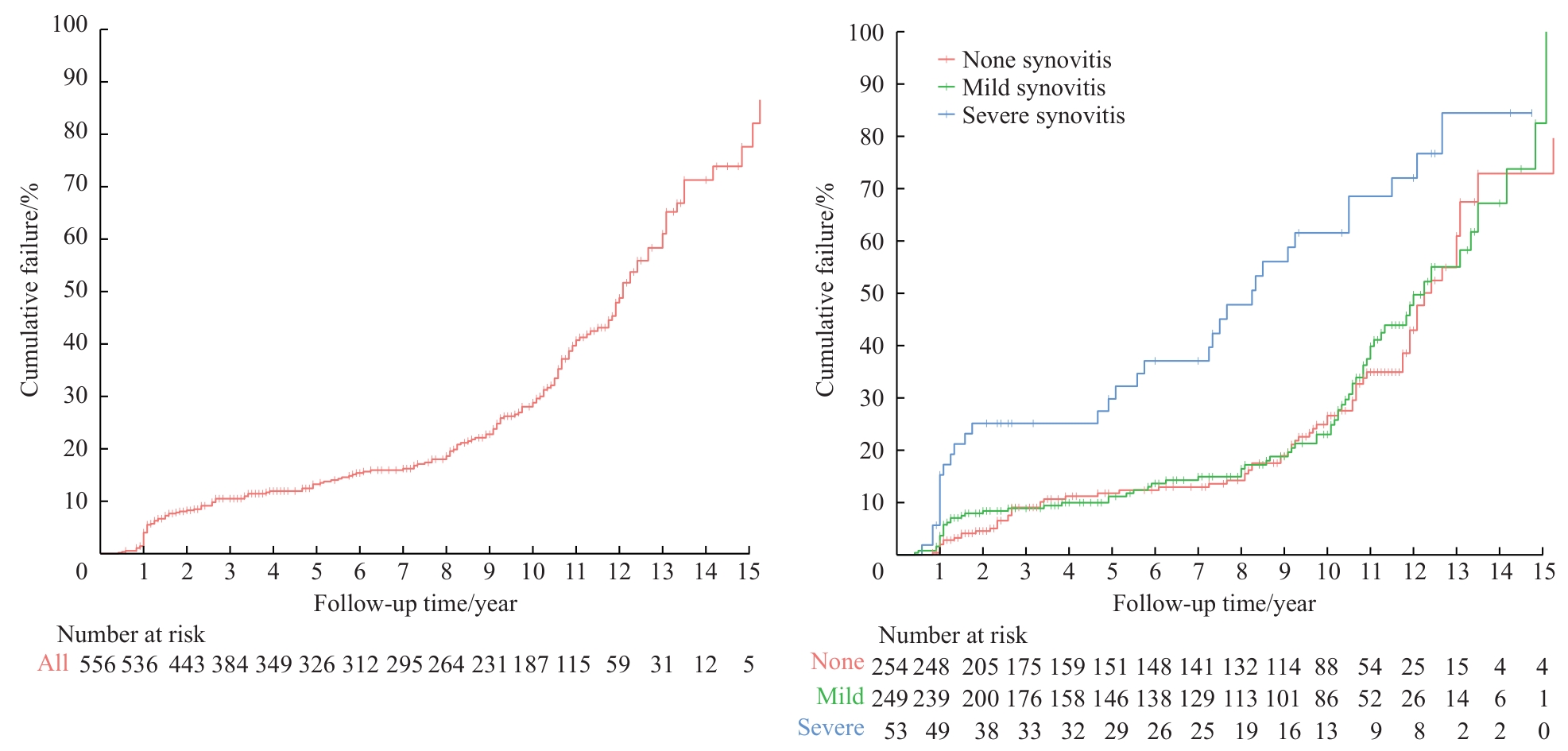
Fig 1 Cumulative failure of hip survival after FVFG
| Outcome | n (%) | Model 1 | Model 2 | Model 3 |
|---|---|---|---|---|
| THA or last HHS<80 points | ||||
| No synovitis group | 71 (28.0) | 1.00 | 1.00 | 1.00 |
| Mild synovitis group | 71 (28.5) | 1.11 (0.79‒1.57) | 1.06 (0.71‒1.59) | 1.06 (0.72‒1.56) |
| Severe synovitis group | 32 (60.4) | 2.70 (1.61‒4.53) | 2.45 (1.43‒4.21) | 2.06 (1.21‒3.53) |
| Last HHS<80 points | ||||
| No synovitis group | 69 (27.2) | 1.00 | 1.00 | 1.00 |
| Mild synovitis group | 68 (27.3) | 1.10 (0.77‒1.56) | 1.07 (0.71‒1.61) | 1.06 (0.71‒1.58) |
| Severe synovitis group | 29 (54.7) | 2.53 (1.50‒4.29) | 2.25 (1.29‒3.94) | 1.86 (1.06‒3.26) |
| THA | ||||
| No synovitis group | 10 (3.9) | 1.00 | 1.00 | 1.00 |
| Mild synovitis group | 13 (5.2) | 1.38 (0.56‒3.40) | 0.83 (0.31‒2.20) | 0.78 (0.29‒2.12) |
| Severe synovitis group | 10 (18.9) | 5.60 (2.09‒15.03) | 1.96 (0.63‒6.04) | 1.79 (0.61‒5.24) |
Tab 3 Multivariable Cox regression analysis on the association between hip synovitis and poor outcomes in FVFG
| Outcome | n (%) | Model 1 | Model 2 | Model 3 |
|---|---|---|---|---|
| THA or last HHS<80 points | ||||
| No synovitis group | 71 (28.0) | 1.00 | 1.00 | 1.00 |
| Mild synovitis group | 71 (28.5) | 1.11 (0.79‒1.57) | 1.06 (0.71‒1.59) | 1.06 (0.72‒1.56) |
| Severe synovitis group | 32 (60.4) | 2.70 (1.61‒4.53) | 2.45 (1.43‒4.21) | 2.06 (1.21‒3.53) |
| Last HHS<80 points | ||||
| No synovitis group | 69 (27.2) | 1.00 | 1.00 | 1.00 |
| Mild synovitis group | 68 (27.3) | 1.10 (0.77‒1.56) | 1.07 (0.71‒1.61) | 1.06 (0.71‒1.58) |
| Severe synovitis group | 29 (54.7) | 2.53 (1.50‒4.29) | 2.25 (1.29‒3.94) | 1.86 (1.06‒3.26) |
| THA | ||||
| No synovitis group | 10 (3.9) | 1.00 | 1.00 | 1.00 |
| Mild synovitis group | 13 (5.2) | 1.38 (0.56‒3.40) | 0.83 (0.31‒2.20) | 0.78 (0.29‒2.12) |
| Severe synovitis group | 10 (18.9) | 5.60 (2.09‒15.03) | 1.96 (0.63‒6.04) | 1.79 (0.61‒5.24) |
| 1 | MONT M A, ZYWIEL M G, MARKER D R, et al. The natural history of untreated asymptomatic osteonecrosis of the femoral head[J]. J Bone Joint Surg Am, 2010, 92(12): 2165-2170. |
| 2 | MONT M A, SALEM H S, PIUZZI N S, et al. Nontraumatic osteonecrosis of the femoral head: where do we stand today? A 5-year update[J]. J Bone Joint Surg Am, 2020, 102(12): 1084-1099. |
| 3 | YOON B H, MONT M A, KOO K H, et al. The 2019 revised version of association research circulation osseous staging system of osteonecrosis of the femoral head[J]. J Arthroplasty, 2020, 35(4): 933-940. |
| 4 | 张长青, 冯勇. 加强科普宣传与教育以提升股骨头坏死早期诊治水平[J]. 骨科临床与研究杂志, 2024, 9(2): 65-67. |
| ZHANG C Q, FENG Y. Strengthening science popularization and education to improve the early diagnosis and treatment level of femoral head necrosis[J]. Journal of Clinical Orthopedics and Research, 2024, 9(2): 65-67. | |
| 5 | EWARD W C, RINEER C A, URBANIAK J R, et al. The vascularized fibular graft in precollapse osteonecrosis: is long-term hip preservation possible?[J]. Clin Orthop Relat Res, 2012, 470(10): 2819-2826. |
| 6 | DING H, GAO Y S, CHEN S B, et al. Free vascularized fibular grafting benefits severely collapsed femoral head in concomitant with osteoarthritis in very young adults: a prospective study[J]. J Reconstr Microsurg, 2013, 29(6): 387-392. |
| 7 | CHEN S, FU K, CAI Q, et al. Development of a risk-predicting score for hip preservation with bone grafting therapy for osteonecrosis[J]. iScience, 2024, 27(4): 109332. |
| 8 | 中华老年骨科与康复电子杂志编辑委员会. 股骨头坏死保髋治疗指南(2016版)[J]. 中华老年骨科与康复电子杂志, 2016, 2(2): 65-70. |
| Editorial Committee of Chinese Journal of Geriatric Orthopedics and Rehabilitation. Guidelines for hip preservation treatment of necrosis of femoral head (2016 edition)[J]. Chinese Journal of Geriatric Orthopaedics and Rehabilitation (Electronic Edition), 2016, 2(2): 65-70. | |
| 9 | SANCHEZ-LOPEZ E, CORAS R, TORRES A, et al. Synovial inflammation in osteoarthritis progression[J]. Nat Rev Rheumatol, 2022, 18: 258-275. |
| 10 | 刘斌, 鲜艳思, 郭保生, 等. 骨关节炎中滑膜炎症致病因素的研究进展[J]. 国际骨科学杂志, 2023, 44(5): 274-278. |
| LIU B, XIAN Y S, GUO B S, et al. Research progress on the pathogenic factors of synovitis in osteoarthritis[J]. International Journal of Orthopaedics, 2023, 44(5): 274-278. | |
| 11 | RABQUER B J, TAN G J, SHAHEEN P J, et al. Synovial inflammation in patients with osteonecrosis of the femoral head[J]. Clin Transl Sci, 2009, 2(4): 273-278. |
| 12 | SHIRAI C, OHTORI S, KISHIDA S, et al. The pattern of distribution of PGP 9.5 and TNF-alpha immunoreactive sensory nerve fibers in the labrum and synovium of the human hip joint[J]. Neurosci Lett, 2009, 450(1): 18-22. |
| 13 | WANG C J, YANG Y J, HUANG C C. The effects of shockwave on systemic concentrations of nitric oxide level, angiogenesis and osteogenesis factors in hip necrosis[J]. Rheumatol Int, 2011, 31(7): 871-877. |
| 14 | SAIDI S, MAGNE D. Interleukin-33: a novel player in osteonecrosis of the femoral head?[J]. Joint Bone Spine, 2011, 78(6): 550-554. |
| 15 | LIM J C, MITCHELL C H. Inflammation, pain, and pressure: purinergic signaling in oral tissues[J]. J Dent Res, 2012, 91(12): 1103-1109. |
| 16 | HATANAKA H, MOTOMURA G, IKEMURA S, et al. Volume of hip synovitis detected on contrast-enhanced magnetic resonance imaging is associated with disease severity after collapse in osteonecrosis of the femoral head[J]. Skeletal Radiol, 2019, 48(8): 1193-1200. |
| 17 | GAO Y S, CHEN S B, JIN D X, et al. Modified surgical techniques of free vascularized fibular grafting for treatment of the osteonecrosis of femoral head: results from a series of 407 cases[J]. Microsurgery, 2013, 33(8): 646-651. |
| 18 | AHEDI H, AITKEN D, BLIZZARD L, et al. Quantification of hip effusion-synovitis and its cross-sectional and longitudinal associations with hip pain, MRI findings and early radiographic hip OA[J]. BMC Musculoskelet Disord, 2020, 21(1): 533. |
| 19 | ZALAVRAS C G, LIEBERMAN J R. Osteonecrosis of the femoral head: evaluation and treatment[J]. J Am Acad Orthop Surg, 2014, 22(7): 455-464. |
| 20 | BAYLISS L E, CULLIFORD D, MONK A P, et al. The effect of patient age at intervention on risk of implant revision after total replacement of the hip or knee: a population-based cohort study[J]. Lancet, 2017, 389(10077): 1424-1430. |
| 21 | RICHARD M J, DIPRINZIO E V, LORENZANA D J, et al. Outcomes of free vascularized fibular graft for post-traumatic osteonecrosis of the femoral head[J]. Injury, 2021, 52(12): 3653-3659. |
| 22 | FONTECHA C G, ROCA I, BARBER I, et al. Femoral head bone viability after free vascularized fibular grafting for osteonecrosis: spect/CT study[J]. Microsurgery, 2016, 36(7): 573-577. |
| 23 | SELLAM J, BERENBAUM F. The role of synovitis in pathophysiology and clinical symptoms of osteoarthritis[J]. Nat Rev Rheumatol, 2010, 6: 625-635. |
| [1] | Gong Jian, Han Jiyu, Wan Daqian. Research progress in role of T helper 17 cells and interleukin-17 in occurrence and development of osteoarthritis under regulation of gut microbiota [J]. Journal of Shanghai Jiao Tong University (Medical Science), 2026, 46(6): 815-823. |
| [2] | Gong Jian, Han Jiyu, Wan Daqian. Research progress in role of T helper 17 cells and interleukin-17 in occurrence and development of osteoarthritis under regulation of gut microbiota [J]. Journal of Shanghai Jiao Tong University (Medical Science), 2026, (): 1-9. |
| [3] | DENG Qingsong, ZHANG Changqing, TAO Shicong. Exploration of the relationship between nicotinamide metabolism-related genes and osteoarthritis [J]. Journal of Shanghai Jiao Tong University (Medical Science), 2024, 44(2): 145-160. |
| [4] | DONG Yushan, ZHANG Wenjie. Research progress of cytokines in treatment of osteoarthritis [J]. Journal of Shanghai Jiao Tong University (Medical Science), 2022, 42(11): 1627-1632. |
| [5] | Wen-cheng HU, Hong-yi ZHU, Jun-qing LIN, Xian-you ZHENG. Research progress in the development of osteoarthritis mediated by pericellular matrix [J]. JOURNAL OF SHANGHAI JIAOTONG UNIVERSITY (MEDICAL SCIENCE), 2021, 41(8): 1089-1093. |
| [6] | Run-ze YANG, Wen-ning XU, Huo-liang ZHENG, Sheng-dan JIANG. Effects of exosomes derived from human umbilical vein endothelial cells on apoptosis of pre-chondrogenic cells stimulated by inflammatory factors [J]. JOURNAL OF SHANGHAI JIAOTONG UNIVERSITY (MEDICAL SCIENCE), 2021, 41(2): 147-153. |
| [7] | HU Wen-cheng, ZHU Hong-yi, LIN Jun-qing, ZHENG Xian-you. Research progress in the development of osteoarthritis mediated by pericellular matr [J]. JOURNAL OF SHANGHAI JIAOTONG UNIVERSITY (MEDICAL SCIENCE), 0, (): 1-5. |
| Viewed | ||||||
|
Full text |
|
|||||
|
Abstract |
|
|||||
