
Journal of Shanghai Jiao Tong University (Medical Science) ›› 2025, Vol. 45 ›› Issue (8): 1017-1026.doi: 10.3969/j.issn.1674-8115.2025.08.009
• Clinical research • Previous Articles Next Articles
YU Zuyin, LIU Yiyun, XIE Jiahui, CAI Ming( ), SHEN Guofang()
Received:2025-02-26
Accepted:2025-05-22
Online:2025-08-28
Published:2025-08-14
Contact:
CAI Ming, SHEN Guofang
E-mail:zidanecm500@126.com;shengf1428@sjtu.edu.cn
Supported by:CLC Number:
YU Zuyin, LIU Yiyun, XIE Jiahui, CAI Ming, SHEN Guofang. Clinical study on osteogenic effect of sticky bone and autologous iliac cancellous bone graft in repairing unilateral alveolar cleft[J]. Journal of Shanghai Jiao Tong University (Medical Science), 2025,(8): 1017-1026.
Add to citation manager EndNote|Ris|BibTeX
URL: https://xuebao.shsmu.edu.cn/EN/10.3969/j.issn.1674-8115.2025.08.009
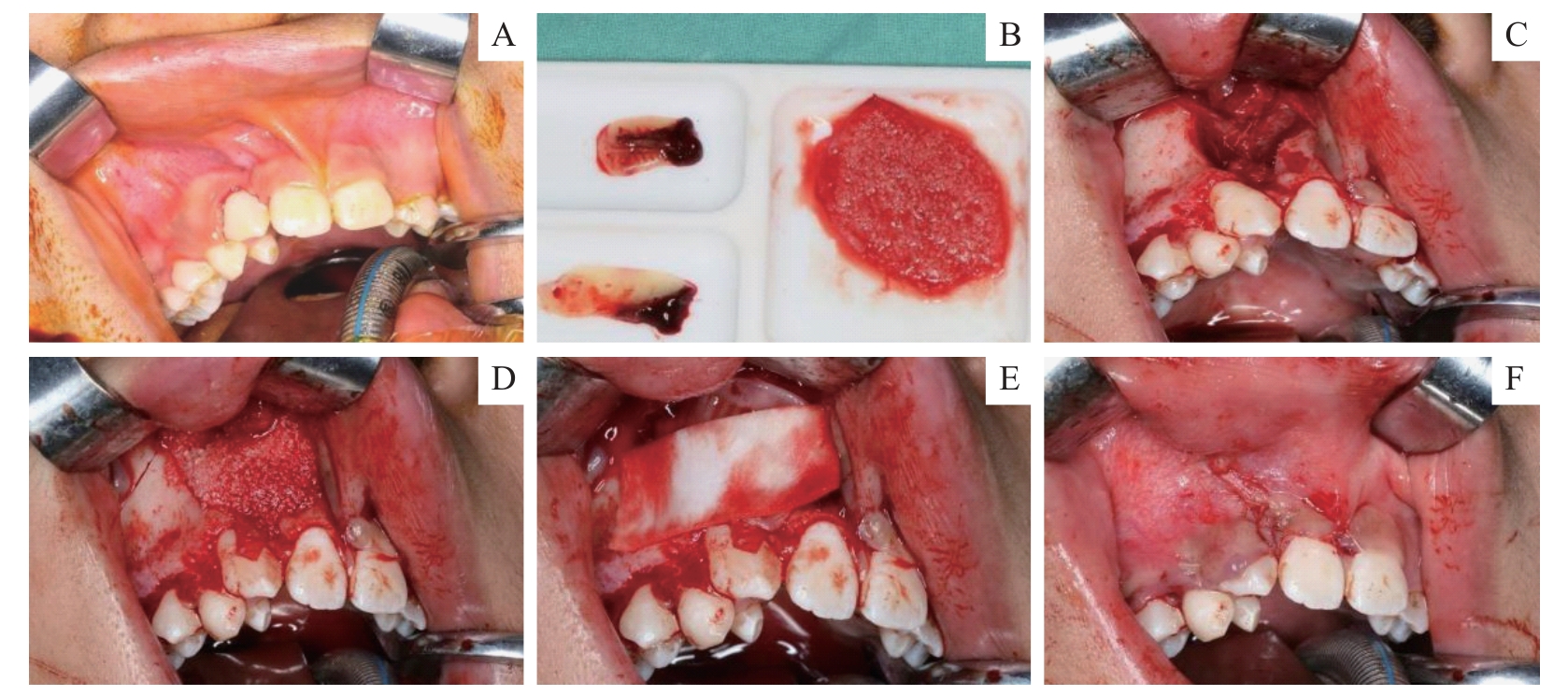
Fig 1 Surgery for repairing alveolar cleft with sticky bone
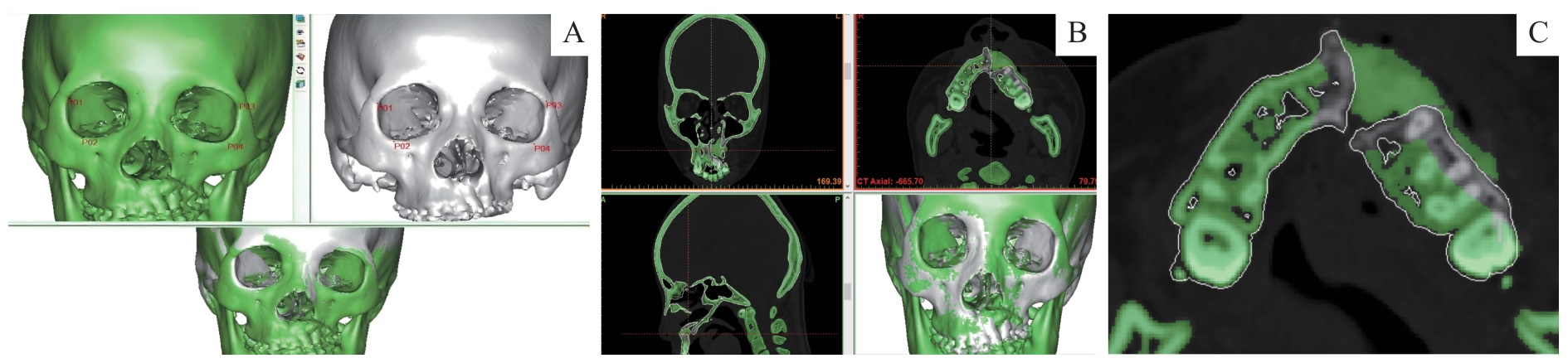
Fig 2 Method for measuring post operative grafted bone volume
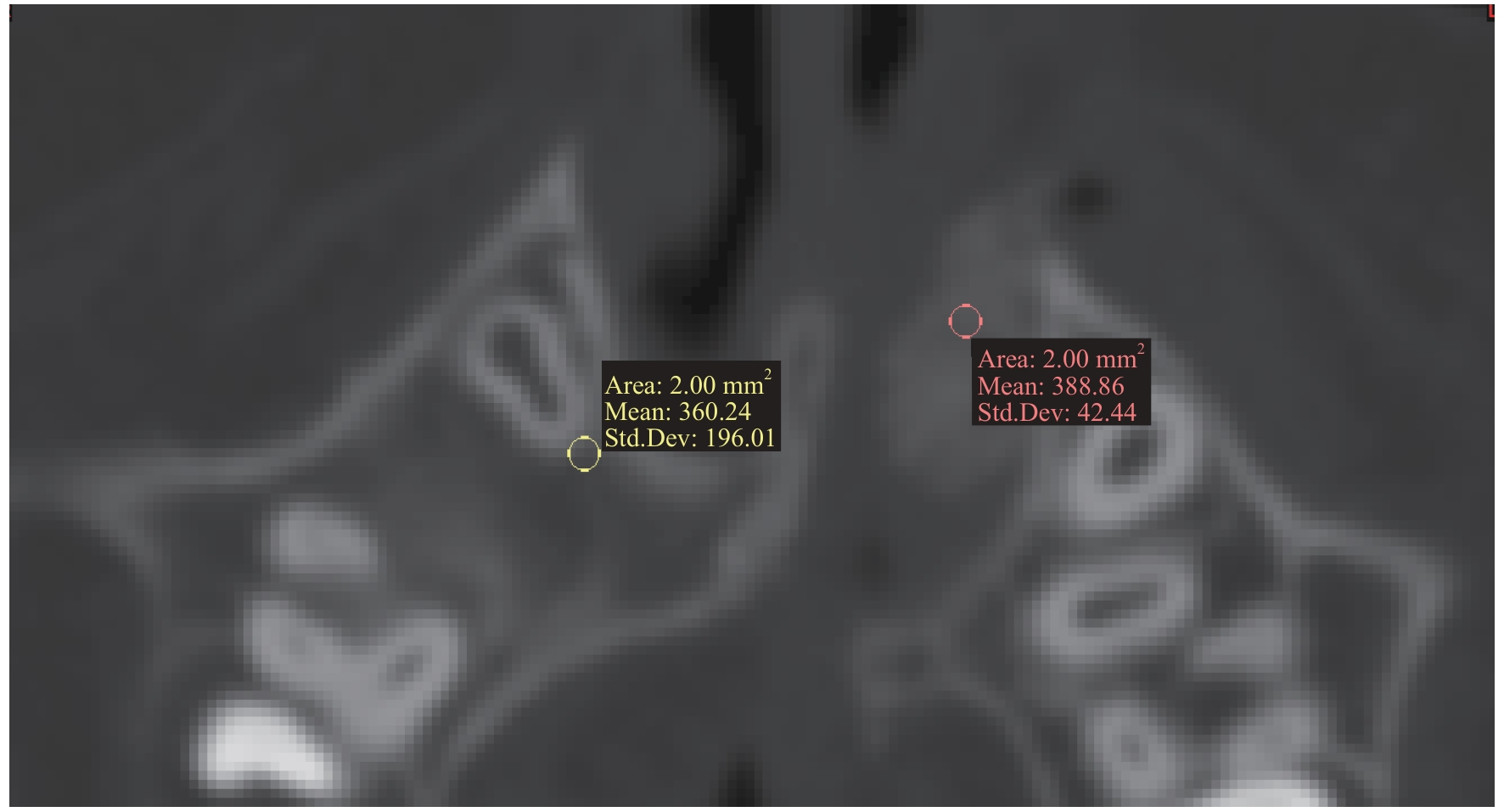
Fig 3 measurement of alveolar bone density
| Indicator | Test group | Control group | P value |
|---|---|---|---|
| Gender (male)/n(%) | 11 (64.7) | 8 (53.3) | 0.513 |
| Age/year | 15.47±6.00 | 13.93±4.85 | 0.518 |
| Side (left)/n(%) | 9 (52.9) | 9 (60.0) | 0.688 |
| Hospital day/d | 3.20±2.34 | 5.30±1.16 | 0.033 |
| Patients receiving orthodontic treatment/n(%) | 5 (29.41) | 4 (26.67) | 0.999 |
| Width of piriform aperture on cleft side/mm | 14.87±2.54 | 14.01±3.48 | 0.480 |
| Width of alveolar crest of cleft side/mm | 5.23±1.87 | 5.76±1.65 | 0.574 |
Tab 1 General information of patients in the two groups
| Indicator | Test group | Control group | P value |
|---|---|---|---|
| Gender (male)/n(%) | 11 (64.7) | 8 (53.3) | 0.513 |
| Age/year | 15.47±6.00 | 13.93±4.85 | 0.518 |
| Side (left)/n(%) | 9 (52.9) | 9 (60.0) | 0.688 |
| Hospital day/d | 3.20±2.34 | 5.30±1.16 | 0.033 |
| Patients receiving orthodontic treatment/n(%) | 5 (29.41) | 4 (26.67) | 0.999 |
| Width of piriform aperture on cleft side/mm | 14.87±2.54 | 14.01±3.48 | 0.480 |
| Width of alveolar crest of cleft side/mm | 5.23±1.87 | 5.76±1.65 | 0.574 |
| Influence factor | Test group | Control group | |||
|---|---|---|---|---|---|
| r | P | r | P | ||
| Width of apertura piriformis | 0.427 | 0.146 | 0.516 | 0.086 | |
| Width of alveolar crest | 0.493 | 0.087 | 0.825 | 0.001 | |
| Gender | 0.327 | 0.254 | 0.564 | 0.089 | |
| Age | 0.040 | 0.890 | 0.519 | 0.084 | |
| Cleft side | 0.354 | 0.195 | 0.003 | 0.992 | |
| Orthodontic treatment | -0.200 | 0.474 | 0.287 | 0.367 | |
Tab 2 Correlation analysis of the grafted bone volume immediately after surgery
| Influence factor | Test group | Control group | |||
|---|---|---|---|---|---|
| r | P | r | P | ||
| Width of apertura piriformis | 0.427 | 0.146 | 0.516 | 0.086 | |
| Width of alveolar crest | 0.493 | 0.087 | 0.825 | 0.001 | |
| Gender | 0.327 | 0.254 | 0.564 | 0.089 | |
| Age | 0.040 | 0.890 | 0.519 | 0.084 | |
| Cleft side | 0.354 | 0.195 | 0.003 | 0.992 | |
| Orthodontic treatment | -0.200 | 0.474 | 0.287 | 0.367 | |
| Influence factor | Test group | Control group | |||
|---|---|---|---|---|---|
| r | P | r | P | ||
| Width of apertura piriformis | 0.184 | 0.547 | 0.184 | 0.547 | |
| Width of alveolar crest | 0.256 | 0.398 | 0.256 | 0.547 | |
| Gender | 0.514 | 0.050 | 0.009 | 0.977 | |
| Age | 0.080 | 0.778 | -0.048 | 0.883 | |
| Cleft side | 0.259 | 0.352 | -0.369 | 0.238 | |
| Orthodontic treatment | -0.145 | 0.621 | 0.390 | 0.203 | |
Tab 3 Correlation analysis of the grafted bone volume at 6 months post-operation
| Influence factor | Test group | Control group | |||
|---|---|---|---|---|---|
| r | P | r | P | ||
| Width of apertura piriformis | 0.184 | 0.547 | 0.184 | 0.547 | |
| Width of alveolar crest | 0.256 | 0.398 | 0.256 | 0.547 | |
| Gender | 0.514 | 0.050 | 0.009 | 0.977 | |
| Age | 0.080 | 0.778 | -0.048 | 0.883 | |
| Cleft side | 0.259 | 0.352 | -0.369 | 0.238 | |
| Orthodontic treatment | -0.145 | 0.621 | 0.390 | 0.203 | |
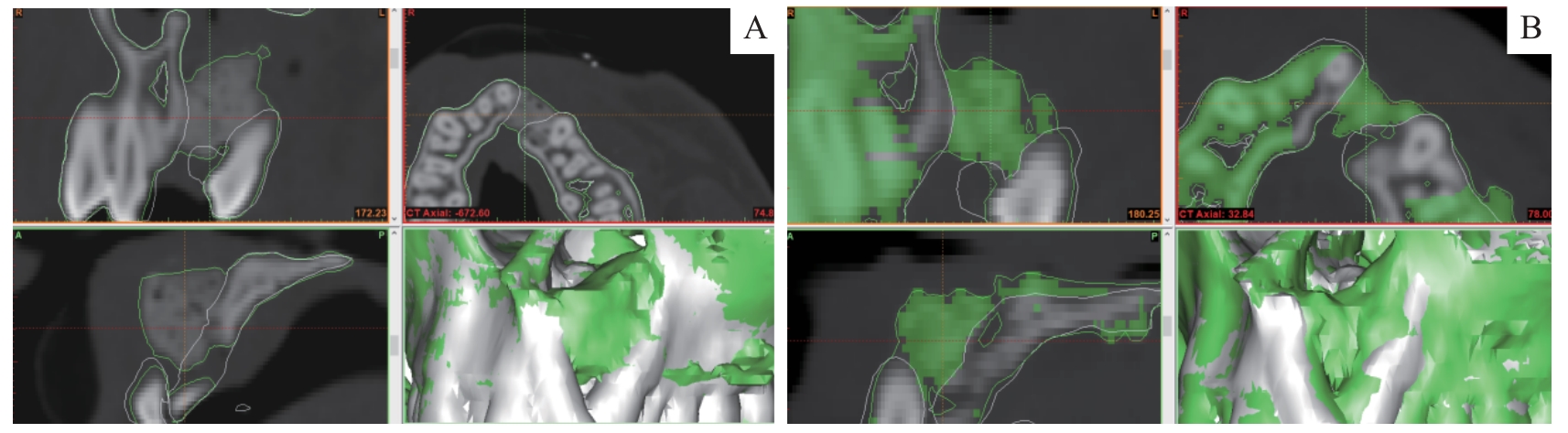
Fig 4 Postoperative bone grafting effect in the test group
| Influence factor | Test group | Control group | |||
|---|---|---|---|---|---|
| r | P | r | P | ||
| Width of apertura piriformis | 0.337 | 0.260 | 0.265 | 0.406 | |
| Width of alveolar crest | 0.283 | 0.348 | 0.207 | 0.519 | |
| Gender | -0.393 | 0.165 | 0.249 | 0.434 | |
| Age | 0.056 | 0.842 | 0.549 | 0.067 | |
| Cleft side | -0.002 | 0.993 | 0.379 | 0.224 | |
| Orthodontic treatment | 0.086 | 0.770 | -0.276 | 0.386 | |
Tab 4 Correlation analysis of bone resorption rate at 6 months post-operation
| Influence factor | Test group | Control group | |||
|---|---|---|---|---|---|
| r | P | r | P | ||
| Width of apertura piriformis | 0.337 | 0.260 | 0.265 | 0.406 | |
| Width of alveolar crest | 0.283 | 0.348 | 0.207 | 0.519 | |
| Gender | -0.393 | 0.165 | 0.249 | 0.434 | |
| Age | 0.056 | 0.842 | 0.549 | 0.067 | |
| Cleft side | -0.002 | 0.993 | 0.379 | 0.224 | |
| Orthodontic treatment | 0.086 | 0.770 | -0.276 | 0.386 | |
| Analytical dimension | Test group | Control group |
|---|---|---|
| Cleft side | ||
| Postoperative BMD at 6m of the cleft side/HU | 889.8±258.2 | 455.4±84.9 |
| Immediate postoperative BMD of the cleft side/HU | 692.9±123.6 | 420.8±57.5 |
| Correlation analysis | r=0.576, P=0.025 | r=0.348, P=0.269 |
| Normal side | ||
| Postoperative BMD at 6m of the normal side/ HU | 350.3±14.8 | 358.5±28.4 |
| Immediate postoperative BMD of the normal side/ HU | 355.2±19.5 | 368.4±27.4 |
| Correlation analysis | r=0.235, P=0.440 | r=0.272, P=0.390 |
Tab 5 Correlation analysis of BMD at 6 months post-operation
| Analytical dimension | Test group | Control group |
|---|---|---|
| Cleft side | ||
| Postoperative BMD at 6m of the cleft side/HU | 889.8±258.2 | 455.4±84.9 |
| Immediate postoperative BMD of the cleft side/HU | 692.9±123.6 | 420.8±57.5 |
| Correlation analysis | r=0.576, P=0.025 | r=0.348, P=0.269 |
| Normal side | ||
| Postoperative BMD at 6m of the normal side/ HU | 350.3±14.8 | 358.5±28.4 |
| Immediate postoperative BMD of the normal side/ HU | 355.2±19.5 | 368.4±27.4 |
| Correlation analysis | r=0.235, P=0.440 | r=0.272, P=0.390 |
| [1] | SLEMAN N. Alveolar cleft reconstruction using iliac bone graft: a clinical case report[J]. Ann Med Surg (Lond), 2023, 85(11): 5776-5781. |
| [2] | KAURA A S, SRINIVASA D R, KASTEN S J. Optimal timing of alveolar cleft bone grafting for maxillary clefts in the cleft palate population[J]. J Craniofac Surg, 2018, 29(6): 1551-1557. |
| [3] | SANTIAGO P E, SCHUSTER L A, LEVY-BERCOWSKI D. Management of the alveolar cleft[J]. Clin Plast Surg, 2014, 41(2): 219-232. |
| [4] | STREET M, GAO R, MARTIS W, et al. The efficacy of local autologous bone dust: a systematic review[J]. Spine Deform, 2017, 5(4): 231-237. |
| [5] | HORSWELL B B, HENDERSON J M. Secondary osteoplasty of the alveolar cleft defect[J]. J Oral Maxillofac Surg, 2003, 61(9): 1082-1090. |
| [6] | COHEN M, FIGUEROA A A, HAVIV Y, et al. Iliac versus cranial bone for secondary grafting of residual alveolar clefts[J]. Plast Reconstr Surg, 1991, 87(3): 423-427; discussion428. |
| [7] | EICHHORN W, BLESSMANN M, POHLENZ P, et al. Primary osteoplasty using calvarian bone in patients with cleft lip, alveolus and palate[J]. J Craniomaxillofac Surg, 2009, 37(8): 429-433. |
| [8] | KALAAJI A, LILJA J, ELANDER A, et al. Tibia as donor site for alveolar bone grafting in patients with cleft lip and palate: long-term experience[J]. Scand J Plast Reconstr Surg Hand Surg, 2001, 35(1): 35-42. |
| [9] | BESLY W, WARD BOOTH P. Technique for harvesting tibial cancellous bone modified for use in children[J]. Br J Oral Maxillofac Surg, 1999, 37(2): 129-133. |
| [10] | BAUMHAUER J, PINZUR M S, DONAHUE R, et al. Site selection and pain outcome after autologous bone graft harvest[J]. Foot Ankle Int, 2014, 35(2): 104-107. |
| [11] | ENEMARK H, JENSEN J, BOSCH C. Mandibular bone graft material for reconstruction of alveolar cleft defects: long-term results[J]. Cleft Palate Craniofac J, 2001, 38(2): 155-163. |
| [12] | SINDET-PEDERSEN S, ENEMARK H. Reconstruction of alveolar clefts with mandibular or iliac crest bone grafts: a comparative study[J]. J Oral Maxillofac Surg, 1990, 48(6): 554-558; discussion 559-560. |
| [13] | KOOLE R, BOSKER H, VAN DER DUSSEN F N. Late secondary autogenous bone grafting in cleft patients comparing mandibular (ectomesenchymal) and iliac crest (mesenchymal) grafts[J]. J Cranio Maxillofac Surg, 1989, 17: 28-30. |
| [14] | BÄHR W, COULON J P. Limits of the mandibular symphysis as a donor site for bone grafts in early secondary cleft palate osteoplasty[J]. Int J Oral Maxillofac Surg, 1996, 25(5): 389-393. |
| [15] | IŞıK G, YÜCE M Ö, KOÇAK-TOPBAŞ N, et al. Guided bone regeneration simultaneous with implant placement using bovine-derived xenograft with and without liquid platelet-rich fibrin: a randomized controlled clinical trial[J]. Clin Oral Investig, 2021, 25(9): 5563-5575. |
| [16] | MIRON R J, MORASCHINI V, FUJIOKA-KOBAYASHI M, et al. Use of platelet-rich fibrin for the treatment of periodontal intrabony defects: a systematic review and meta-analysis[J]. Clin Oral Investig, 2021, 25(5): 2461-2478. |
| [17] | UZUN B C, ERCAN E, TUNALı M. Effectiveness and predictability of titanium-prepared platelet-rich fibrin for the management of multiple gingival recessions[J]. Clin Oral Investig, 2018, 22(3): 1345-1354. |
| [18] | THUAKSUBAN N, NUNTANARANONT T, PRIPATNANONT P. A comparison of autogenous bone graft combined with deproteinized bovine bone and autogenous bone graft alone for treatment of alveolar cleft[J]. Int J Oral Maxillofac Surg, 2010, 39(12): 1175-1180. |
| [19] | DA SILVA H F, GOULART D R, SVERZUT A T, et al. Comparison of two anorganic bovine bone in maxillary sinus lift: a split-mouth study with clinical, radiographical, and histomorphometrical analysis[J]. Int J Implant Dent, 2020, 6(1): 17. |
| [20] | LU J J, WANG Z S, ZHANG H Y, et al. Bone graft materials for alveolar bone defects in orthodontic tooth movement[J]. Tissue Eng Part B Rev, 2022, 28(1): 35-51. |
| [21] | LEE J H, YI G S, LEE J W, et al. Physicochemical characterization of porcine bone-derived grafting material and comparison with bovine xenografts for dental applications[J]. J Periodontal Implant Sci, 2017, 47(6): 388-401. |
| [22] | KIM D M, KANG H C, CHA H J, et al. Process development of a virally-safe dental xenograft material from porcine bones[J]. Korean J Microbiol, 2016, 52(2): 140-147. |
| [23] | BRACEY D N, SEYLER T M, JINNAH A H, et al. A decellularized porcine xenograft-derived bone scaffold for clinical use as a bone graft substitute: a critical evaluation of processing and structure[J]. J Funct Biomater, 2018, 9(3): 45. |
| [24] | LEE J S, SHIN H K, YUN J H, et al. Randomized clinical trial of maxillary sinus grafting using deproteinized porcine and bovine bone mineral[J]. Clin Implant Dent Relat Res, 2017, 19(1): 140-150. |
| [25] | SOHN D S, HEO J U, KWAK D H, et al. Bone regeneration in the maxillary sinus using an autologous fibrin-rich block with concentrated growth factors alone[J]. Implant Dent, 2011, 20(5): 389-395. |
| [26] | MOURÃO C F, VALIENSE H, MELO E R, et al. Obtention of injectable platelets rich-fibrin (i-PRF) and its polymerization with bone graft: technical note[J]. Rev Col Bras Cir, 2015, 42(6): 421-423. |
| [27] | SOHN D S, HUANG B, KIM J, et al. Utilization of autologous concentrated growth factors (CGF) enriched bone graft matrix (Sticky bone) and CGF-enriched fibrin membrane in Implant Dentistry[J]. Implant Adv. Clin. Dent. 2015;7:11-18. |
| [28] | TONY J B, PARTHASARATHY H, TADEPALLI A, et al. CBCT evaluation of sticky bone in horizontal ridge augmentation with and without collagen membrane-a randomized parallel arm clinical trial[J]. J Funct Biomater, 2022, 13(4): 194. |
| [29] | DARWISH M E D, ASKAR N A E, ABDEL-RASOUL M A, et al. Alveolar ridge preservation in mandibular molars using mixture of anorganic bovine bone (ABB) and autogenous particulate vs mixture of injectable platelets rich fibrin, ABB and autogenous particulates (sticky bone) (a randomized clinical trial)[J]. Act Scie Ortho, 2021, 4(2): 31-50. |
| [30] | 唐璟, 宋庆高. 影响牙槽突裂植骨术效果的相关因素[J]. 中国临床研究, 2021, 34(4): 554-557. |
| TANG J, SONG Q G. Factors influencing the effect of alveolar ridge bone grafting[J]. Chinese Journal of Clinical Research, 2021, 34(4): 554-557. | |
| [31] | 唐世杰, 石伦刚. 牙槽突裂植骨吸收的原因与对策[J]. 中国实用口腔科杂志, 2012, 5(6): 332-336. |
| TANG S J,SHI L G. The causes and countermeasures of bone absorption after alveolar cleft bone grafting[J].Chinese Journal of Practical Stomatology, 2012, 5(6): 332-336. | |
| [32] | 张勇, 杨育生, 吴忆来, 等. 牙槽突裂植骨吸收率的测量分析[J]. 上海口腔医学, 2012, 21(3): 308-311. |
| ZHANG Y, YANG Y S, WU Y L, et al. Measurement of the volume absorption of alveolar bone grafting[J].Shanghai Journal of Stomatology, 2012, 21(3): 308-311. | |
| [33] | JABBARI F, REISER E, THOR A, et al. Correlations between initial cleft size and dental anomalies in unilateral cleft lip and palate patients after alveolar bone grafting[J]. Upsala J Med Sci, 2016, 121(1): 33-37. |
| [34] | NART J, BARALLAT L, JIMENEZ D, et al. Radiographic and histological evaluation of deproteinized bovine bone mineral vs. deproteinized bovine bone mineral with 10% collagen in ridge preservation. A randomized controlled clinical trial[J]. Clin Oral Implants Res, 2017, 28(7): 840-848. |
| [35] | 王李娜, 王恩群. 牙源性颌骨囊肿术后自发性骨再生与Bio-Oss移植骨再生效果比较[J]. 医学信息, 2022, 35(5): 91-93. |
| WANG L N, WANG E Q. Comparison of the effect of spontaneous bone regeneration and Bio-Oss graft bone regeneration after odontogenic jaw cyst surgery[J]. Journal of Medical Information, 2022, 35(5): 91-93. | |
| [36] | 陈传鸿, 高丽荣, 张建全. 富自体浓缩生长因子结合Bio-Oss骨粉在颌骨囊肿术后骨缺损区的修复效果[J]. 江苏医药, 2022, 48(9): 926-930. |
| CHEN C H, GAO L R, ZHANG J Q. Repairing effect of autologous concentrated growth factor combined with Bio-Oss bone powder on the bone defect after jaw cyst surgery[J]. Jiangsu Medical Journal, 2022, 48(9): 926-930. | |
| [37] | RIZK M, NIEDERAU C, FLOREA A, et al. Periodontal ligament and alveolar bone remodeling during long orthodontic tooth movement analyzed by a novel user-independent 3D-methodology[J]. Sci Rep, 2023, 13(1): 19919. |
| [38] | 袁乐. 基于骨密度分布的牙槽松质骨本构模型研究[D]. 南京: 南京林业大学, 2024. |
| YUAN L, Study on the constitutive model of alveolar cancellous bone based onbone mineral density distribution[D]. Nan Jing: Nan Jing Forestry University, 2024. | |
| [39] | CHUGH T, GANESHKAR S V, REVANKAR A V, et al. Quantitative assessment of interradicular bone density in the maxilla and mandible: implications in clinical orthodontics[J]. Prog Orthod, 2013, 14(1): 38. |
| [40] | 康惠尹, 李春宏, 苏凯, 等. Bio-oss/富血小板纤维蛋白复合物修复牙槽骨缺损区后牙移动的效果及可行性[J]. 临床和实验医学杂志, 2020, 19(4): 394-397. |
| KANG H Y, LI C H, SU K, et al. Effect of Bio-oss/platelet-rich fibrin (PRF) complex in repair of alveolar bone defect on orthodontic tooth movement and its and feasibility[J]. Journal of Clinical and Experimental Medicine, 2020, 19(4): 394-397. | |
| [41] | ALOORKER S, SHETTY M, HEGDE C. Effect of osseodensification on bone density and crestal bone levels: a split-mouth study[J]. J Contemp Dent Pract, 2022, 23(2): 162-168. |
| [42] | 陶桃, 蒋勇. 锥形束CT评价种植区牙槽骨骨密度的应用研究[J]. 中国医疗美容, 2019, 9(8): 118-123. |
| TAO T, JIANG Y. Evaluation of Bone Mineral Density in Implant Area by CBCT[J]. China Medical Cosmetology, 2019, 9(8): 118-123. |
| [1] | LIU Chenjun, YIN Bohao, SUN Hui, ZHANG Wei. Application of non-invasive methods of radiology to the osteoporosis [J]. Journal of Shanghai Jiao Tong University (Medical Science), 2023, 43(3): 385-390. |
| [2] | YU Xi, SUN Junnan, ZHANG Jiaojiao, GAO Yue, WANG Hu, YU Yang, WANG Hairong, HONG Wen. Efficacy of sternal cortical thickness ratio in adult chest CT in the diagnosis of osteopenia and osteoporosis [J]. Journal of Shanghai Jiao Tong University (Medical Science), 2023, 43(10): 1274-1281. |
| [3] | CHANG An-jin, QIAN Ying, CHEN Xiao-nong, et al. Prevalence of low bone mineral density in patients undergoing maintenance hemodialysis and relevant factors [J]. , 2016, 36(1): 59-. |
| [4] | WU Meng-meng, CHEN Zhi-guo, LU Jin-hua, et al. Relationship among individual lipid indicators, dyslipidemia risk stratification, and bone mineral density of old males [J]. , 2014, 34(6): 880-. |
| [5] | ZHU Jin-hong, YI Cheng-qing, MA Chun-hui, et al. Influence of trabecular metal acetabular component on bone mineral density around acetabular component after total hip arthroplasty [J]. , 2012, 32(12): 1540-. |
| Viewed | ||||||
|
Full text |
|
|||||
|
Abstract |
|
|||||
