
Journal of Shanghai Jiao Tong University (Medical Science) ›› 2026, Vol. 46 ›› Issue (2): 172-180.doi: 10.3969/j.issn.1674-8115.2026.02.005
• Clinical research • Previous Articles Next Articles
Xu Meihan, He Chenjia, Wu Xian, Xu Bufang( )
)
Received:2025-07-14
Accepted:2025-09-15
Online:2026-02-28
Published:2026-03-05
Contact:
Xu Bufang
E-mail:bufangxu@163.com
Supported by:CLC Number:
Xu Meihan, He Chenjia, Wu Xian, Xu Bufang. Effect of antibiotic therapy based on 16S rRNA sequencing on pregnancy outcomes in patients with recurrent implantation failure and chronic endometritis[J]. Journal of Shanghai Jiao Tong University (Medical Science), 2026,(2): 172-180.
Add to citation manager EndNote|Ris|BibTeX
URL: https://xuebao.shsmu.edu.cn/EN/10.3969/j.issn.1674-8115.2026.02.005

Fig 1 Flow chart of the study
| Index | Before PSM | After PSM | |||||
|---|---|---|---|---|---|---|---|
| Hysteroscopy group | 16S rRNA group | P value | Hysteroscopy group | 16S rRNA group | P value | ||
| Patient/n | 65 | 27 | ‒ | 47 | 22 | ‒ | |
| FET cycle/n | 127 | 33 | ‒ | 74 | 26 | ‒ | |
| Female age/year | 32.0 (30.0, 35.0) | 35.0 (32.0, 41.0) | 0.003 | 33.06±3.68 | 34.05±3.57 | 0.301 | |
| Infertility type/n(%) | |||||||
| Primary infertility | 31 (47.7) | 16 (59.3) | 0.312 | 26 (55.3) | 13 (59.1) | 0.768 | |
| Secondary infertility | 34 (52.3) | 11 (40.7) | 21 (44.7) | 9 (40.9) | |||
| Duration of infertility/year | 2.0 (1.0, 4.0) | 3.0 (1.0, 6.0) | 0.217 | 2.0 (1.0, 5.0) | 2.5 (1.0, 5.0) | 0.926 | |
| Previous spontaneous abortion/n | 0.53±0.64 | 0.61±1.06 | 0.590 | 0.43±0.66 | 0.58±1.03 | 0.414 | |
| BMI/(kg·m-2) | 21.76 (19.82, 25.36) | 22.03 (19.78, 23.03) | 0.656 | 21.63 (19.71, 23.44) | 22.04 (19.70, 22.66) | 0.852 | |
| AMH/(ng·mL-1) | 3.13 (1.75, 4.81) | 3.14 (1.78, 3.56) | 0.646 | 3.31 (1.76, 5.17) | 3.07 (2.08, 4.11) | 0.593 | |
| Embryo transferred/n | 1.46±0.50 | 1.55±0.51 | 0.411 | 1.54±0.50 | 1.58±0.50 | 0.751 | |
| Embryo quality/n(%) | |||||||
| Blastocyst | 84 (66.1) | 26 (78.8) | 0.163 | 54 (73.0) | 20 (76.9) | 0.693 | |
| Cleavage-stage embryo | 43 (33.9) | 7 (21.2) | 20 (27.0) | 6 (23.1) | |||
| High-quality embryo/n(%) | 37 (29.1) | 14 (42.4) | 0.144 | 26 (35.1) | 13 (50.0) | 0.181 | |
| LH/(mIU·mL-1)① | 11.70 (3.82, 14.68) | 10.54 (6.45, 20.62) | 0.803 | 12.74 (5.39, 14.68) | 11.52 (5.39, 21.83) | 0.711 | |
| E2/(pg·mL-1)① | 228.00 (135.00, 302.48) | 194.00 (121.00, 285.00) | 0.177 | 207.50 (123.50, 302.48) | 190.00 (108.75, 303.00) | 0.654 | |
| Progesterone/(ng·mL-1)① | 0.50 (0.32, 0.65) | 0.51 (0.35, 0.59) | 0.732 | 0.46 (0.33, 0.65) | 0.49 (0.35, 0.59) | 0.931 | |
| Endometrial thickness/cm① | 0.95 (0.85, 1.10) | 0.97 (0.90, 1.00) | 0.846 | 0.93 (0.85, 1.00) | 0.99 (0.90, 1.00) | 0.737 | |
Tab 1 Comparison of characteristics between the hysteroscopy group and the 16S rRNA group before and after PSM
| Index | Before PSM | After PSM | |||||
|---|---|---|---|---|---|---|---|
| Hysteroscopy group | 16S rRNA group | P value | Hysteroscopy group | 16S rRNA group | P value | ||
| Patient/n | 65 | 27 | ‒ | 47 | 22 | ‒ | |
| FET cycle/n | 127 | 33 | ‒ | 74 | 26 | ‒ | |
| Female age/year | 32.0 (30.0, 35.0) | 35.0 (32.0, 41.0) | 0.003 | 33.06±3.68 | 34.05±3.57 | 0.301 | |
| Infertility type/n(%) | |||||||
| Primary infertility | 31 (47.7) | 16 (59.3) | 0.312 | 26 (55.3) | 13 (59.1) | 0.768 | |
| Secondary infertility | 34 (52.3) | 11 (40.7) | 21 (44.7) | 9 (40.9) | |||
| Duration of infertility/year | 2.0 (1.0, 4.0) | 3.0 (1.0, 6.0) | 0.217 | 2.0 (1.0, 5.0) | 2.5 (1.0, 5.0) | 0.926 | |
| Previous spontaneous abortion/n | 0.53±0.64 | 0.61±1.06 | 0.590 | 0.43±0.66 | 0.58±1.03 | 0.414 | |
| BMI/(kg·m-2) | 21.76 (19.82, 25.36) | 22.03 (19.78, 23.03) | 0.656 | 21.63 (19.71, 23.44) | 22.04 (19.70, 22.66) | 0.852 | |
| AMH/(ng·mL-1) | 3.13 (1.75, 4.81) | 3.14 (1.78, 3.56) | 0.646 | 3.31 (1.76, 5.17) | 3.07 (2.08, 4.11) | 0.593 | |
| Embryo transferred/n | 1.46±0.50 | 1.55±0.51 | 0.411 | 1.54±0.50 | 1.58±0.50 | 0.751 | |
| Embryo quality/n(%) | |||||||
| Blastocyst | 84 (66.1) | 26 (78.8) | 0.163 | 54 (73.0) | 20 (76.9) | 0.693 | |
| Cleavage-stage embryo | 43 (33.9) | 7 (21.2) | 20 (27.0) | 6 (23.1) | |||
| High-quality embryo/n(%) | 37 (29.1) | 14 (42.4) | 0.144 | 26 (35.1) | 13 (50.0) | 0.181 | |
| LH/(mIU·mL-1)① | 11.70 (3.82, 14.68) | 10.54 (6.45, 20.62) | 0.803 | 12.74 (5.39, 14.68) | 11.52 (5.39, 21.83) | 0.711 | |
| E2/(pg·mL-1)① | 228.00 (135.00, 302.48) | 194.00 (121.00, 285.00) | 0.177 | 207.50 (123.50, 302.48) | 190.00 (108.75, 303.00) | 0.654 | |
| Progesterone/(ng·mL-1)① | 0.50 (0.32, 0.65) | 0.51 (0.35, 0.59) | 0.732 | 0.46 (0.33, 0.65) | 0.49 (0.35, 0.59) | 0.931 | |
| Endometrial thickness/cm① | 0.95 (0.85, 1.10) | 0.97 (0.90, 1.00) | 0.846 | 0.93 (0.85, 1.00) | 0.99 (0.90, 1.00) | 0.737 | |
| Outcome | Hysteroscopy group (n=74)① | 16S rRNA group (n=26)① | β | SE | Wald χ² | P value | OR (95%CI) |
|---|---|---|---|---|---|---|---|
| HCG positive/n(%) | 35 (46.7) | 19 (73.1) | 0.853 | 0.491 | 3.19 | 0.038 | 2.346 (1.104‒6.138) |
| Clinical pregnancy/n(%) | 25 (33.8) | 17 (65.4) | 1.341 | 0.521 | 7.19 | 0.011 | 3.822 (1.376‒10.617) |
| Live birth/n(%) | 17 (23.0) | 16 (61.5) | 1.592 | 0.512 | 10.55 | 0.001 | 4.913 (1.801‒13.397) |
| Miscarriage/[n/N(%)] | 8/25 (32.0) | 1/17 (5.9) | -0.597 | 1.308 | 0.22 | 0.998 | 0.550 (0.042‒7.143) |
| Ectopic pregnancy/n(%) | 0 (0) | 0 (0) | ‒ | ‒ | ‒ | ‒ | ‒ |
Tab 2 Comparison of pregnancy outcomes between the hysteroscopy group and the 16S rRNA group after PSM
| Outcome | Hysteroscopy group (n=74)① | 16S rRNA group (n=26)① | β | SE | Wald χ² | P value | OR (95%CI) |
|---|---|---|---|---|---|---|---|
| HCG positive/n(%) | 35 (46.7) | 19 (73.1) | 0.853 | 0.491 | 3.19 | 0.038 | 2.346 (1.104‒6.138) |
| Clinical pregnancy/n(%) | 25 (33.8) | 17 (65.4) | 1.341 | 0.521 | 7.19 | 0.011 | 3.822 (1.376‒10.617) |
| Live birth/n(%) | 17 (23.0) | 16 (61.5) | 1.592 | 0.512 | 10.55 | 0.001 | 4.913 (1.801‒13.397) |
| Miscarriage/[n/N(%)] | 8/25 (32.0) | 1/17 (5.9) | -0.597 | 1.308 | 0.22 | 0.998 | 0.550 (0.042‒7.143) |
| Ectopic pregnancy/n(%) | 0 (0) | 0 (0) | ‒ | ‒ | ‒ | ‒ | ‒ |
| Index | Hysteroscopy group (n=17)① | 16S rRNA group (n=16)① | P value |
|---|---|---|---|
| Gestational diabetes mellitus/n(%) | 3 (17.6) | 2 (12.5) | 1.000 |
| Gestational hypertension/n(%) | 1 (5.9) | 0 (0) | 1.000 |
| Preterm delivery/n(%) | 2 (11.8) | 2 (12.5) | 1.000 |
| Low birth weight (<2 500 g)/n(%) | 2 (11.8) | 3 (18.8) | 0.656 |
| Very low birth weight (<1 500 g)/n(%) | 1 (5.9) | 0 (0) | 1.000 |
| Congenital malformations/n(%) | 0 (0) | 1 (6.3) | 0.485 |
Tab 3 Comparison of maternal complications and neonatal adverse outcomes between the hysteroscopy group and the 16S rRNA group after PSM
| Index | Hysteroscopy group (n=17)① | 16S rRNA group (n=16)① | P value |
|---|---|---|---|
| Gestational diabetes mellitus/n(%) | 3 (17.6) | 2 (12.5) | 1.000 |
| Gestational hypertension/n(%) | 1 (5.9) | 0 (0) | 1.000 |
| Preterm delivery/n(%) | 2 (11.8) | 2 (12.5) | 1.000 |
| Low birth weight (<2 500 g)/n(%) | 2 (11.8) | 3 (18.8) | 0.656 |
| Very low birth weight (<1 500 g)/n(%) | 1 (5.9) | 0 (0) | 1.000 |
| Congenital malformations/n(%) | 0 (0) | 1 (6.3) | 0.485 |
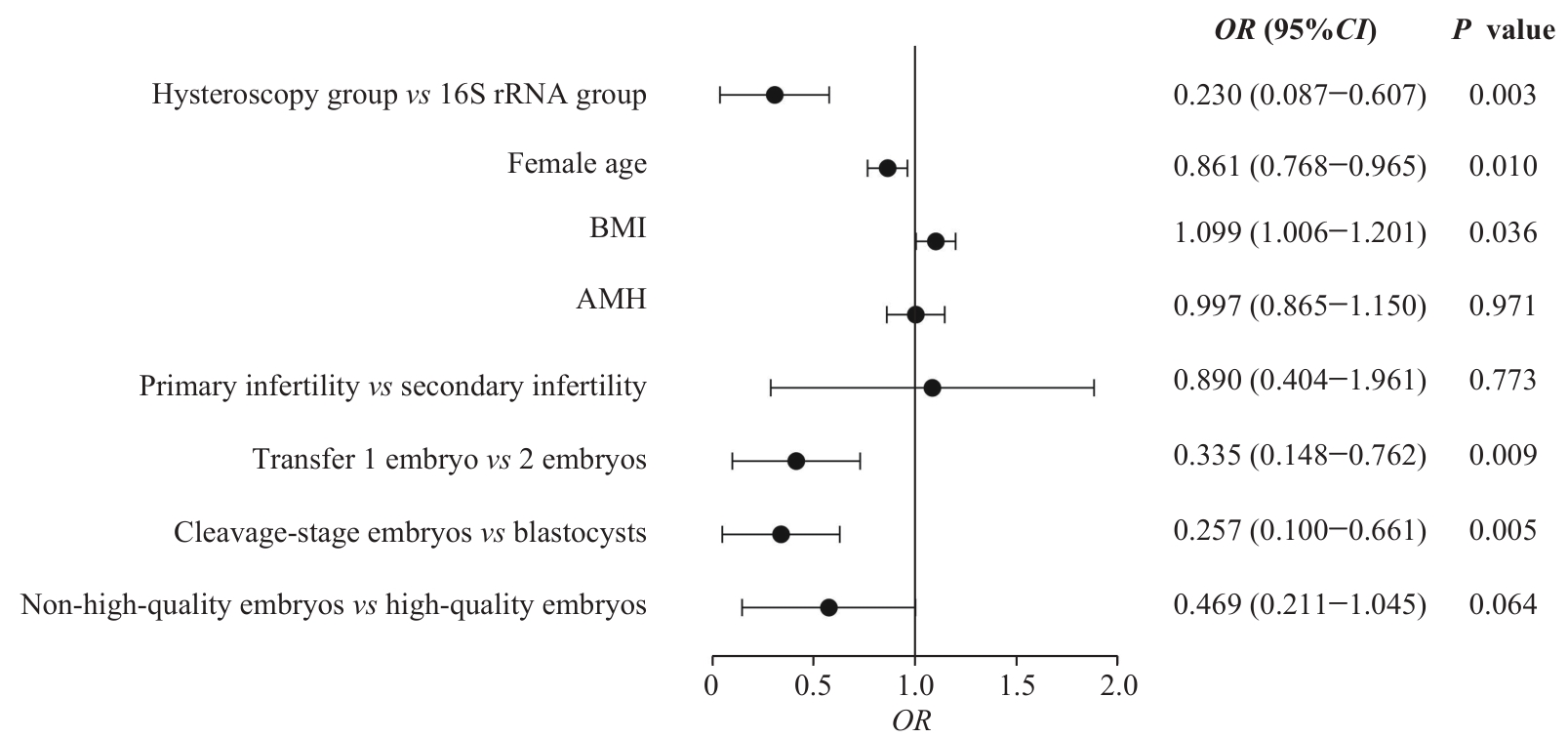
Fig 2 Multivariate Logistic regression analysis of factors related to live birth
| [1] | Yasuo T, Kitaya K. Challenges in clinical diagnosis and management of chronic endometritis[J]. Diagnostics (Basel), 2022, 12(11): 2711. |
| [2] | Crum C P, Egawa K, Fenoglio C M, et al. Chronic endometritis: the role of immunohistochemistry in the detection of plasma cells[J]. Am J Obstet Gynecol, 1983, 147(7): 812-815. |
| [3] | Kitaya K, Takeuchi T, Mizuta S, et al. Endometritis: new time, new concepts[J]. Fertil Steril, 2018, 110(3): 344-350. |
| [4] | Fuller R W, Morris P K, Richmond R, et al. Immunoglobulin E-dependent stimulation of human alveolar macrophages: significance in type 1 hypersensitivity[J]. Clin Exp Immunol, 1986, 65(2): 416-426. |
| [5] | Kitaya K, Matsubayashi H, Yamaguchi K, et al. Chronic endometritis: potential cause of infertility and obstetric and neonatal complications[J]. Am J Reprod Immunol, 2016, 75(1): 13-22. |
| [6] | Cicinelli E, Vitagliano A, Kumar A, et al. Unified diagnostic criteria for chronic endometritis at fluid hysteroscopy: proposal and reliability evaluation through an international randomized-controlled observer study[J]. Fertil Steril, 2019, 112(1): 162-173.e2. |
| [7] | 朱颖军, 杨依楠. 子宫腔炎症性疾病病理学诊断标准与治疗进展[J]. 中国实用妇科与产科杂志, 2025, 41(3): 273-277. |
| Zhu Y J, Yang Y N. Progress in the pathological diagnostic criteria and treatment of inflammatory diseases of uterine cavity[J]. Chinese Journal of Practical Gynecology and Obstetrics, 2025, 41(3): 273-277. | |
| [8] | Moreno I, Codoñer F M, Vilella F, et al. Evidence that the endometrial microbiota has an effect on implantation success or failure[J]. Am J Obstet Gynecol, 2016, 215(6): 684-703. |
| [9] | Toson B, Simon C, Moreno I. The endometrial microbiome and its impact on human conception[J]. Int J Mol Sci, 2022, 23(1): 485. |
| [10] | Liu L X, Yang H, Guo Y L, et al. The impact of chronic endometritis on endometrial fibrosis and reproductive prognosis in patients with moderate and severe intrauterine adhesions: a prospective cohort study[J]. Fertil Steril, 2019, 111(5): 1002-1010.e2. |
| [11] | Pinto V, Matteo M, Tinelli R, et al. Altered uterine contractility in women with chronic endometritis[J]. Fertil Steril, 2015, 103(4): 1049-1052. |
| [12] | Li Y Y, Yu S Y, Huang C Y, et al. Evaluation of peripheral and uterine immune status of chronic endometritis in patients with recurrent reproductive failure[J]. Fertil Steril, 2020, 113(1): 187-196.e1. |
| [13] | Haggerty C L, Ness R B, Amortegui A, et al. Endometritis does not predict reproductive morbidity after pelvic inflammatory disease[J]. Am J Obstet Gynecol, 2003, 188(1): 141-148. |
| [14] | McQueen D B, Bernardi L A, Stephenson M D. Chronic endometritis in women with recurrent early pregnancy loss and/or fetal demise[J]. Fertil Steril, 2014, 101(4): 1026-1030. |
| [15] | Li J, Li X Y, Ding J L, et al. Analysis of pregnancy outcomes in patients with recurrent implantation failure complicated with chronic endometritis[J]. Front Cell Dev Biol, 2023, 11: 1088586. |
| [16] | Liu W J, Huang J, Sun L, et al. New biopsy after antibiotic treatment: effect on outcomes of assisted reproduction in patients with infertility and chronic endometritis[J]. Reprod Biomed Online, 2022, 45(6): 1167-1175. |
| [17] | Cicinelli E, Matteo M, Tinelli R, et al. Prevalence of chronic endometritis in repeated unexplained implantation failure and the IVF success rate after antibiotic therapy[J]. Hum Reprod, 2015, 30(2): 323-330. |
| [18] | Coughlan C, Ledger W, Wang Q, et al. Recurrent implantation failure: definition and management[J]. Reprod Biomed Online, 2014, 28(1): 14-38. |
| [19] | Chen Y Q, Fang R L, Luo Y N, et al. Analysis of the diagnostic value of CD138 for chronic endometritis, the risk factors for the pathogenesis of chronic endometritis and the effect of chronic endometritis on pregnancy: a cohort study[J]. BMC Womens Health, 2016, 16(1): 60. |
| [20] | Lensen S, Lantsberg D, Gardner D K, et al. The role of timing in frozen embryo transfer[J]. Fertil Steril, 2022, 118(5): 832-838. |
| [21] | Bolyen E, Rideout J R, Dillon M R, et al. Reproducible, interactive, scalable and extensible microbiome data science using QIIME 2[J]. Nat Biotechnol, 2019, 37(8): 852-857. |
| [22] | Cicinelli E, Cicinelli R, Vitagliano A. Antibiotic therapy for chronic endometritis and its reproductive implications: a step forward, with some uncertainties[J]. Fertil Steril, 2021, 115(6): 1445-1446. |
| [23] | 中华医学会妇产科学分会感染性疾病协作组. 阴道用乳杆菌活菌胶囊临床应用中国专家共识(2023年版)[J]. 中国实用妇科与产科杂志, 2023, 39(5): 537-546. |
| Genital Infectious Disease Collaboration Group of Chinese Medical Association of Obstetrics and Gynecology. Chinese expert consensus on the clinical application of vaginal lactobacillus live bacteria capsule (2023 edition)[J]. Chinese Journal of Practical Gynecology and Obstetrics, 2023, 39(5): 537-546. | |
| [24] | Wu X, Zhou W J, Xu B F, et al. Association between transferred embryos and multiple pregnancy/live birth rate in frozen embryo transfer cycles: a retrospective study[J]. Front Endocrinol (Lausanne), 2022, 13: 1073164. |
| [25] | Li W Z, Liu M Y, Zhou M J, et al. Downregulation of SEPTIN11 inhibits endometrial epithelial cell adhesive function in patients with elevated peripheral blood natural killer cell counts[J]. Reprod Biomed Online, 2023, 47(2): 103203. |
| [26] | Pirtea P, Cedars M I, Devine K, et al. Recurrent implantation failure: reality or a statistical mirage? Consensus statement from the July 1, 2022 Lugano Workshop on recurrent implantation failure[J]. Fertil Steril, 2023, 120(1): 45-59. |
| [27] | Ma J Y, Gao W Y, Li D. Recurrent implantation failure: a comprehensive summary from etiology to treatment[J]. Front Endocrinol (Lausanne), 2023, 13: 1061766. |
| [28] | Witkin S S, Mendes-Soares H, Linhares I M, et al. Influence of vaginal bacteria and D- and L-lactic acid isomers on vaginal extracellular matrix metalloproteinase inducer: implications for protection against upper genital tract infections[J]. mBio, 2013, 4(4): e00460-e00413. |
| [29] | Mitchell C M, Haick A, Nkwopara E, et al. Colonization of the upper genital tract by vaginal bacterial species in nonpregnant women[J]. Am J Obstet Gynecol, 2015, 212(5): 611.e1-e9. |
| [30] | Delgado-Diaz D J, Jesaveluk B, Hayward J A, et al. Lactic acid from vaginal microbiota enhances cervicovaginal epithelial barrier integrity by promoting tight junction protein expression[J]. Microbiome, 2022, 10(1): 141. |
| [31] | Fu M, Zhang X W, Liang Y H, et al. Alterations in vaginal microbiota and associated metabolome in women with recurrent implantation failure[J]. mBio, 2020, 11(3): e03242-e03219. |
| [32] | Witkin S S, Alvi S, Bongiovanni A M, et al. Lactic acid stimulates interleukin-23 production by peripheral blood mononuclear cells exposed to bacterial lipopolysaccharide[J]. FEMS Immunol Med Microbiol, 2011, 61(2): 153-158. |
| [33] | Baryla M, Kaczynski P, Goryszewska E, et al. Prostaglandin F2α stimulates adhesion, migration, invasion and proliferation of the human trophoblast cell line HTR-8/SVneo[J]. Placenta, 2019, 77: 19-29. |
| [34] | Kaczynski P, Goryszewska E, Baryla M, et al. Prostaglandin F2α stimulates angiogenesis at the embryo-maternal interface during early pregnancy in the pig[J]. Theriogenology, 2020, 142: 169-176. |
| [35] | Esmaeili S A, Mahmoudi M, Rezaieyazdi Z, et al. Generation of tolerogenic dendritic cells using Lactobacillus rhamnosus and Lactobacillus delbrueckii as tolerogenic probiotics[J]. J Cell Biochem, 2018, 119(9): 7865-7872. |
| [36] | Inversetti A, Zambella E, Guarano A, et al. Endometrial microbiota and immune tolerance in pregnancy[J]. Int J Mol Sci, 2023, 24(3): 2995. |
| [37] | Odendaal J, Black N, Bennett P R, et al. The endometrial microbiota and early pregnancy loss[J]. Hum Reprod, 2024, 39(4): 638-646. |
| [38] | Lindsay C V, Potter J A, Grimshaw A A, et al. Endometrial responses to bacterial and viral infection: a scoping review[J]. Hum Reprod Update, 2023, 29(5): 675-693. |
| [39] | Vomstein K, Reider S, Böttcher B, et al. Uterine microbiota plasticity during the menstrual cycle: differences between healthy controls and patients with recurrent miscarriage or implantation failure[J]. J Reprod Immunol, 2022, 151: 103634. |
| [1] | SHEN Cai, TENG Yin-cheng. Research progress in progesterone resistance mechanism and novel treatment of endometrial cancer [J]. JOURNAL OF SHANGHAI JIAOTONG UNIVERSITY (MEDICAL SCIENCE), 2020, 40(12): 1677-1682. |
| [2] | CHEN Fu-qiang, ZHANG Ai-feng, WANG Xiao-bo . Prospective study of the treatment of adenomyosis by combining hysteroscopic transcervical resection of endometrium with levonorgestrel-releasing intrauterine system [J]. , 2017, 37(5): 641-. |
| [3] | CHEN Fu-qiang, WANG Ai-ping, ZHANG Ai-feng, et al. Clinical analysis of hysteroscopic transcervical resection of endometrium with levonorgestrel-releasing intrauterine system in treatment of adenomyosis [J]. , 2013, 33(8): 1098-. |
| [4] | CHEN Ping-ping, GAO Min-zhi, ZHAO Xiao-ming, et al. Clinical significance of hysteroscopy after repeated implantation failure in in vitro fertilization and embryo transfer [J]. , 2012, 32(8): 992-. |
| Viewed | ||||||
|
Full text |
|
|||||
|
Abstract |
|
|||||
