
Journal of Shanghai Jiao Tong University (Medical Science) ›› 2026, Vol. 46 ›› Issue (7): 938-945.doi: 10.3969/j.issn.1674-8115.2026.07.012
• Clinical research • Previous Articles Next Articles
Zhou Jinping1, He Xiaoyan2, Song Wen3, Liu Yumei3, Huang Lin4( ), Ma Xiumin1()
Received:2025-12-10
Accepted:2026-04-27
Online:2026-07-07
Published:2026-07-07
Contact:
Huang Lin, Ma Xiumin
E-mail:linhuang@shsmu.edu.cn;maxiumin1210@sohu.com
Supported by:CLC Number:
Zhou Jinping, He Xiaoyan, Song Wen, Liu Yumei, Huang Lin, Ma Xiumin. Screening of specific metabolic biomarkers for brucellosis and construction of a differential diagnostic model based on serum metabolomics[J]. Journal of Shanghai Jiao Tong University (Medical Science), 2026,(7): 938-945.
Add to citation manager EndNote|Ris|BibTeX
URL: https://xuebao.shsmu.edu.cn/EN/10.3969/j.issn.1674-8115.2026.07.012
| Variable | Brucellosis (n=70) | Rheumatoid arthritis (n=75) | P value |
|---|---|---|---|
| ESR/(mm·h-1) | 20.500 (11.750, 33.000) | 34.000 (17.000, 54.000) | 0.002 |
| CRP/(mg·L-1) | 11.500 (3.400, 28.000) | 10.270 (2.690, 25.640) | 0.789 |
| WBC/(×109·L-1) | 5.640 (4.325, 6.913) | 6.200 (5.240, 7.920) | 0.060 |
| NEUT/(×109·L-1) | 2.985 (2.168, 4.080) | 3.740 (2.700, 5.240) | 0.006 |
| LYM/(×109·L-1) | 1.925 (1.338, 2.508) | 1.740 (1.180, 2.290) | 0.227 |
| RBC/(×1012·L-1) | 4.682±0.059 | 4.294±0.056 | <0.001 |
| Hb/(g·L-1) | 130.600±1.760 | 125.133±2.000 | 0.043 |
| PLT/(×109·L-1) | 256.000 (213.000, 303.500) | 261.000 (223.000, 318.000) | 0.420 |
| AST/(U·L-1) | 21.950 (17.700, 32.600) | 19.100 (15.300, 23.200) | 0.004 |
| ALT/(U·L-1) | 26.500 (17.630, 47.450) | 16.800 (12.300, 24.400) | <0.001 |
| ALP/(U·L-1) | 109.350 (89.550, 140.950) | 78.200 (61.400, 101.100) | <0.001 |
| TP/(g·L-1) | 73.201±0.930 | 67.943±0.632 | <0.001 |
| SCr/(μmol·L-1) | 54.300 (46.975, 62.100) | 62.270 (55.540, 71.780) | <0.001 |
| BUN/(mmol·L-1) | 5.090±0.199 | 5.306±0.153 | 0.389 |
Tab 1 Analysis of differences in clinical indicators between the two groups of patients
| Variable | Brucellosis (n=70) | Rheumatoid arthritis (n=75) | P value |
|---|---|---|---|
| ESR/(mm·h-1) | 20.500 (11.750, 33.000) | 34.000 (17.000, 54.000) | 0.002 |
| CRP/(mg·L-1) | 11.500 (3.400, 28.000) | 10.270 (2.690, 25.640) | 0.789 |
| WBC/(×109·L-1) | 5.640 (4.325, 6.913) | 6.200 (5.240, 7.920) | 0.060 |
| NEUT/(×109·L-1) | 2.985 (2.168, 4.080) | 3.740 (2.700, 5.240) | 0.006 |
| LYM/(×109·L-1) | 1.925 (1.338, 2.508) | 1.740 (1.180, 2.290) | 0.227 |
| RBC/(×1012·L-1) | 4.682±0.059 | 4.294±0.056 | <0.001 |
| Hb/(g·L-1) | 130.600±1.760 | 125.133±2.000 | 0.043 |
| PLT/(×109·L-1) | 256.000 (213.000, 303.500) | 261.000 (223.000, 318.000) | 0.420 |
| AST/(U·L-1) | 21.950 (17.700, 32.600) | 19.100 (15.300, 23.200) | 0.004 |
| ALT/(U·L-1) | 26.500 (17.630, 47.450) | 16.800 (12.300, 24.400) | <0.001 |
| ALP/(U·L-1) | 109.350 (89.550, 140.950) | 78.200 (61.400, 101.100) | <0.001 |
| TP/(g·L-1) | 73.201±0.930 | 67.943±0.632 | <0.001 |
| SCr/(μmol·L-1) | 54.300 (46.975, 62.100) | 62.270 (55.540, 71.780) | <0.001 |
| BUN/(mmol·L-1) | 5.090±0.199 | 5.306±0.153 | 0.389 |
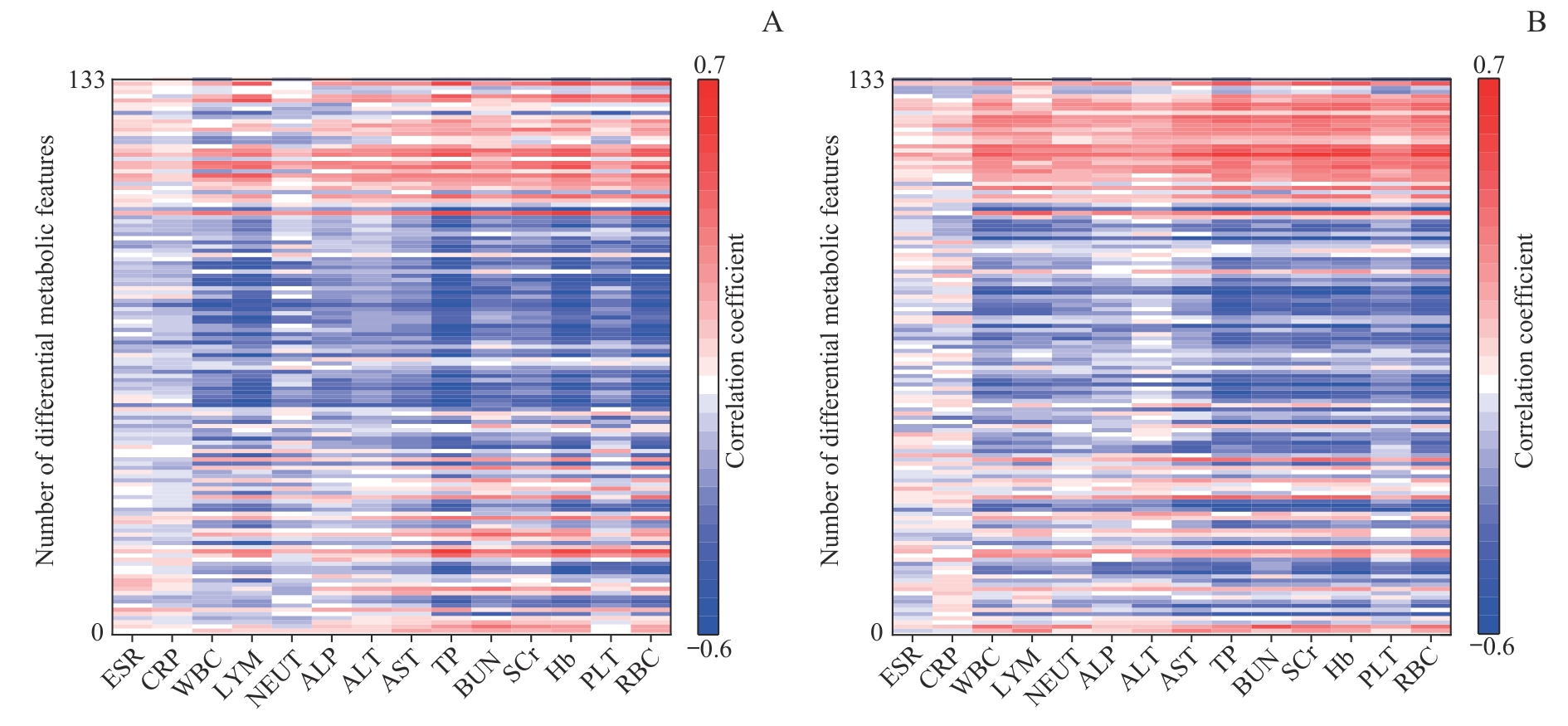
Fig 1 Correlation between differential metabolic features and clinical indicators in the brucellosis group and the rheumatoid arthritis group
| No. | Variable | Metabolite | Brucellosis | Rheumatoid arthritis | ||
|---|---|---|---|---|---|---|
| r | P value (FDR-adjusted) | r | P value (FDR-adjusted) | |||
| 1 | NEUT | PPi | -0.346 | 0.021 | -0.213 | 0.163 |
| 2 | NEUT | Gln | -0.380 | 0.010 | -0.078 | 0.664 |
| 3 | NEUT | UA | -0.467 | 0.001 | -0.191 | 0.221 |
| 4 | AST | L-Asp | -0.374 | 0.012 | -0.065 | 0.716 |
| 5 | AST | Tau | -0.394 | 0.007 | 0.193 | 0.218 |
| 6 | AST | pGlu | -0.403 | 0.006 | -0.106 | 0.526 |
| 7 | ALT | pGlu | -0.321 | 0.033 | -0.014 | 0.943 |
| 8 | ALT | DHAP | -0.322 | 0.033 | 0.043 | 0.822 |
| 9 | ALT | UA | -0.332 | 0.027 | -0.086 | 0.624 |
| 10 | ALT | Tau | -0.425 | 0.003 | 0.130 | 0.431 |
| 11 | ALP | UCA | -0.343 | 0.023 | -0.134 | 0.414 |
| 12 | ALP | Phe | -0.360 | 0.016 | -0.044 | 0.813 |
| 13 | ALP | pGlu | -0.362 | 0.015 | -0.112 | 0.504 |
| 14 | ALP | Tau | -0.384 | 0.009 | -0.004 | 0.982 |
Tab 2 Correlation between brucellosis-specific metabolites and clinical indicators
| No. | Variable | Metabolite | Brucellosis | Rheumatoid arthritis | ||
|---|---|---|---|---|---|---|
| r | P value (FDR-adjusted) | r | P value (FDR-adjusted) | |||
| 1 | NEUT | PPi | -0.346 | 0.021 | -0.213 | 0.163 |
| 2 | NEUT | Gln | -0.380 | 0.010 | -0.078 | 0.664 |
| 3 | NEUT | UA | -0.467 | 0.001 | -0.191 | 0.221 |
| 4 | AST | L-Asp | -0.374 | 0.012 | -0.065 | 0.716 |
| 5 | AST | Tau | -0.394 | 0.007 | 0.193 | 0.218 |
| 6 | AST | pGlu | -0.403 | 0.006 | -0.106 | 0.526 |
| 7 | ALT | pGlu | -0.321 | 0.033 | -0.014 | 0.943 |
| 8 | ALT | DHAP | -0.322 | 0.033 | 0.043 | 0.822 |
| 9 | ALT | UA | -0.332 | 0.027 | -0.086 | 0.624 |
| 10 | ALT | Tau | -0.425 | 0.003 | 0.130 | 0.431 |
| 11 | ALP | UCA | -0.343 | 0.023 | -0.134 | 0.414 |
| 12 | ALP | Phe | -0.360 | 0.016 | -0.044 | 0.813 |
| 13 | ALP | pGlu | -0.362 | 0.015 | -0.112 | 0.504 |
| 14 | ALP | Tau | -0.384 | 0.009 | -0.004 | 0.982 |
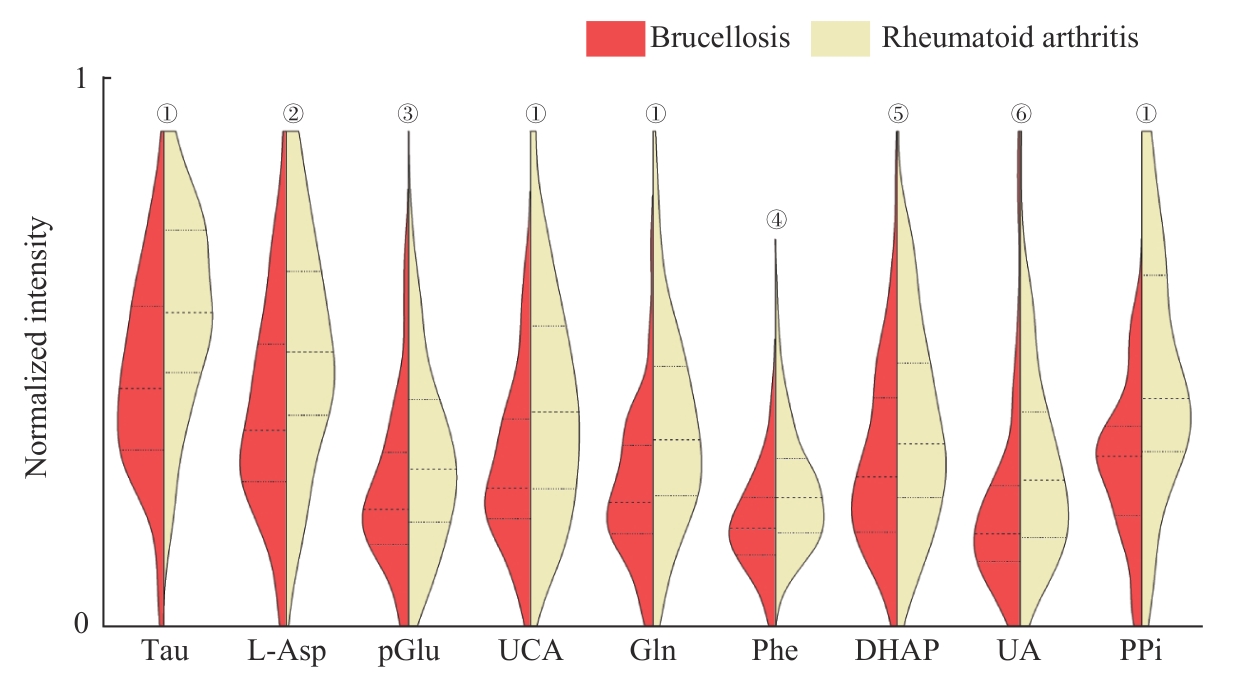
Fig 2 Differential expression of brucellosis-specific metabolites between the brucellosis group and the rheumatoid arthritis group
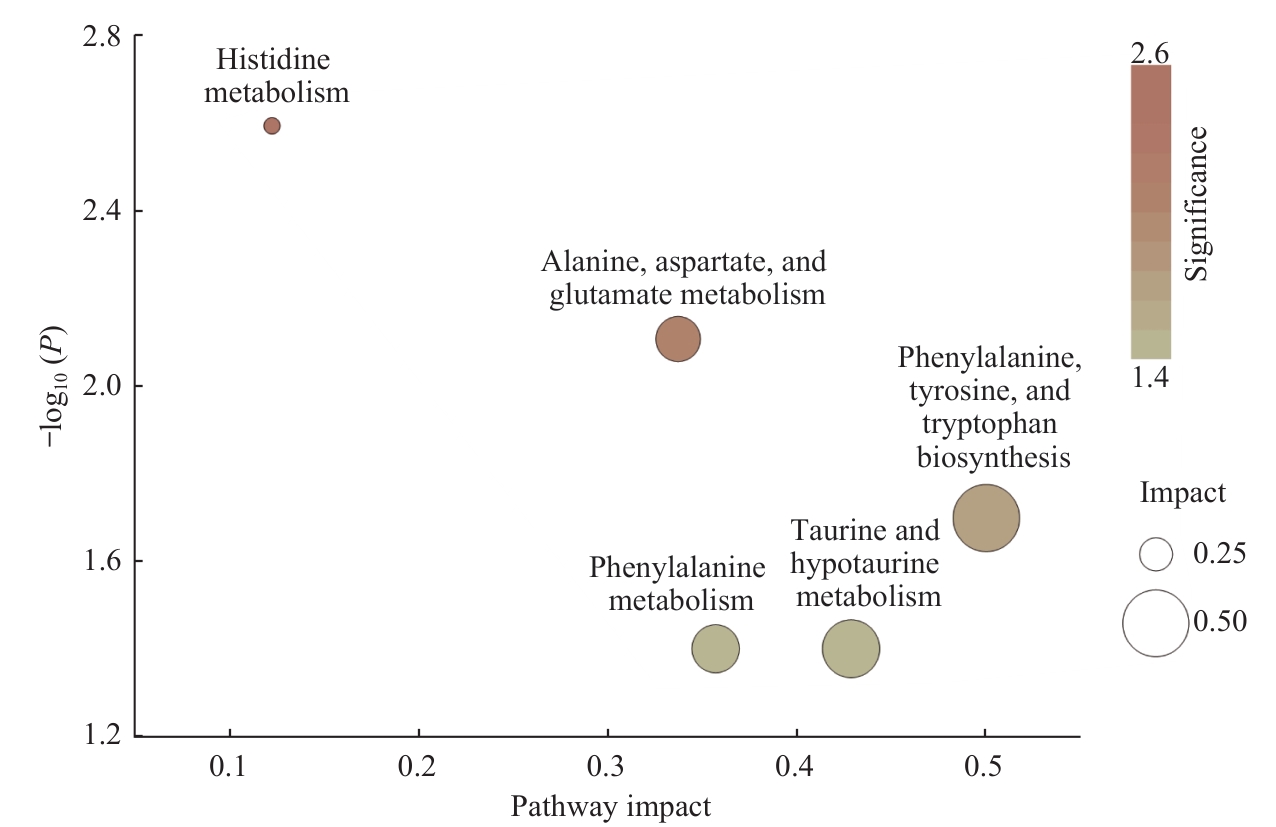
Fig 3 Pathway enrichment analysis of brucellosis-specific metabolites
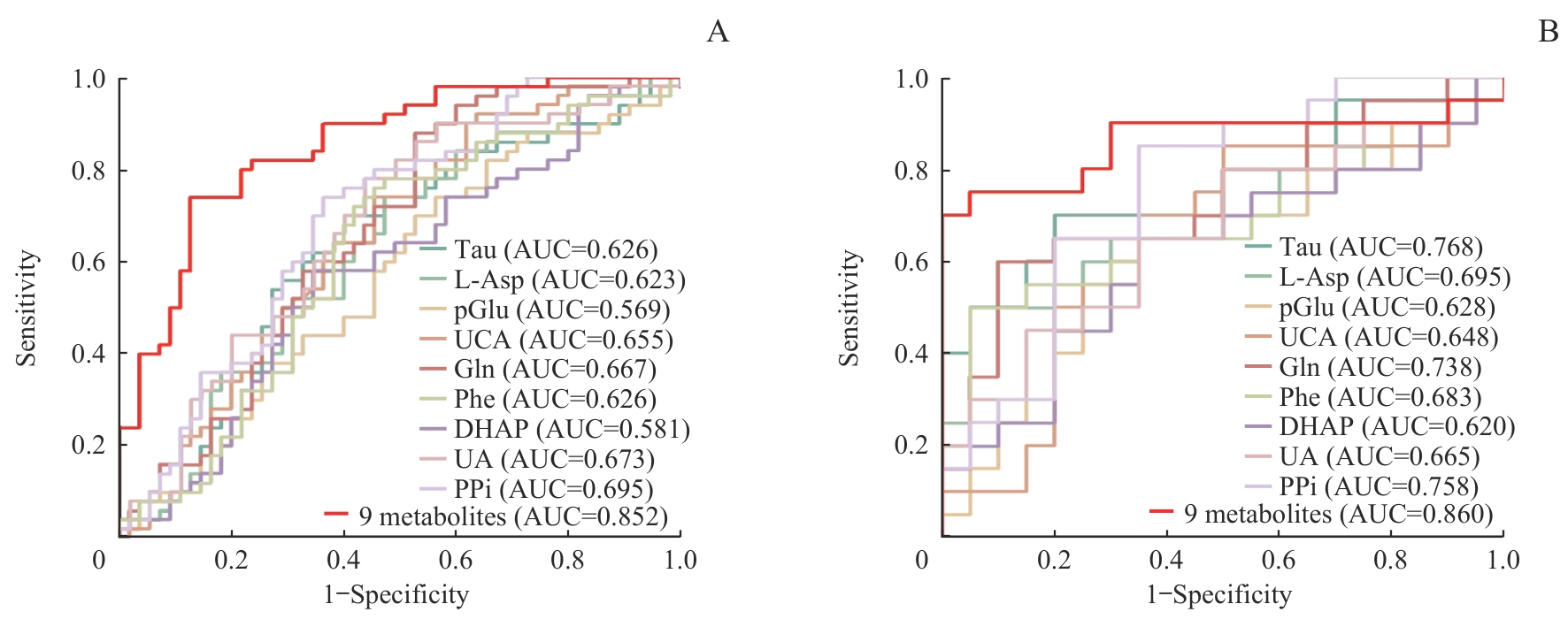
Fig 4 ROC curve for differentiating brucellosis from rheumatoid arthritis using a nine-metabolite panel
| [1] | Jin M, Fan Z X, Gao R F, et al. Research progress on complications of brucellosis [J]. Front Cell Infect Microbiol, 2023, 13: 1136674. |
| [2] | Laine C G, Johnson V E, Scott H M, et al. Global estimate of human brucellosis incidence [J]. Emerg Infect Dis, 2023, 29(9): 1789-1797. |
| [3] | Zheng R J, Xie S S, Lu X B, et al. A systematic review and meta-analysis of epidemiology and clinical manifestations of human brucellosis in China [J]. Biomed Res Int, 2018, 2018: 5712920. |
| [4] | Shi Q N, Qin H J, Lu Q S, et al. Incidence and warning signs for complications of human brucellosis: a multi-center observational study from China [J]. Infect Dis Poverty, 2024, 13(1): 18. |
| [5] | Zhang S W, Hu J, An S Q, et al. Prevalence and relevant factors of positive RF in brucellosis patients with arthralgia [J]. PLoS Negl Trop Dis, 2021, 15(9): e0009749. |
| [6] | Wu Q, Sun C, Guo L P, et al. Preparation and evaluation of Brucella T4SS recombinant proteins in serodiagnosis of human brucellosis based on TMT-based proteomics technology [J]. Front Cell Infect Microbiol, 2024, 14: 1514046. |
| [7] | 冯强生, 宋月娟, 哈小琴, 等. 187例布鲁菌病患者的临床特征和感染指标分析 [J]. 中华实验和临床感染病杂志(电子版), 2020, 14(1): 46-50. |
| Feng Q S, Song Y J, Ha X Q, et al. Clinical characteristics and infection biomarkers of 187 patients with brucellosis [J]. Chinese Journal of Experimental and Clinical Infectious Diseases (Electronic Edition), 2020, 14(1): 46-50. | |
| [8] | Qiu S, Cai Y, Yao H, et al. Small molecule metabolites: discovery of biomarkers and therapeutic targets [J]. Sig Transduct Target Ther, 2023, 8: 132. |
| [9] | Cai X L, Jin J Y, Ye H, et al. Altered serum metabolome is associated with disease activity and immune responses in rheumatoid arthritis [J]. Clin Rheumatol, 2024, 43(12): 3669-3678. |
| [10] | Thomas T, Stefanoni D, Reisz J A, et al. COVID-19 infection alters kynurenine and fatty acid metabolism, correlating with IL-6 levels and renal status [J]. JCI Insight, 2020, 5(14): e140327. |
| [11] | 中华人民共和国国家卫生健康委员会, 国家中医药管理局. 布鲁氏菌病诊疗方案(2023年版) [J]. 中国感染控制杂志, 2024, 23(5): 661-664. |
| National Health Commission of the People′s Republic of China, National Administration of Traditional Chinese Medicine. Diagnosis and treatment scheme for Brucellosis (2023 Edition) [J]. Chinese Journal of Infection Control, 2024, 23(5): 661-664. | |
| [12] | Aletaha D, Neogi T, Silman A J, et al. 2010 Rheumatoid arthritis classification criteria: an American College of Rheumatology/European League Against Rheumatism collaborative initiative[J]. Arthritis Rheum, 2010, 62(9): 2569-2581. |
| [13] | Luo B, Wang Q, Yang S T, et al. Epidemiological, clinical, and laboratory characteristics of 581 human brucellosis cases in Xinjiang, China [J]. Front Microbiol, 2025, 16: 1541277. |
| [14] | Sellami M, Saidane O, Mahmoud I, et al. Etiological features of liver involvement in rheumatoid arthritis [J]. Curr Rheumatol Rev, 2020, 16(4): 332-336. |
| [15] | Fu L, Zhang H, Dai Y Y, et al. Revealing metabolic alterations in brucellosis patients by targeted metabolomics [J]. J Pharm Biomed Anal, 2024, 249: 116370. |
| [16] | Guzelcicek A, Bayraktar N, Bayraktar M. Amino acids profile in children with acute brucellosis [J]. Curr Pediatr Rev, 2024, 20(2): 188-193. |
| [17] | Arocena G M, Zorreguieta A, Sieira R. Expression of VjbR under nutrient limitation conditions is regulated at the post-transcriptional level by specific acidic pH values and urocanic acid [J]. PLoS One, 2012, 7(4): e35394. |
| [18] | Luzader D H, Kendall M M. Commensal 'trail of bread crumbs' provide pathogens with a map to the intestinal landscape [J]. Curr Opin Microbiol, 2016, 29: 68-73. |
| [19] | Aydın H, Tekin Y K, Korkmaz İ, et al. Glutamine-driven metabolic adaptation to COVID-19 infection [J]. Indian J Clin Biochem, 2023, 38(1): 83-93. |
| [20] | Gamarra Y, Santiago F C, Molina-López J, et al. Pyroglutamic acidosis by glutathione regeneration blockage in critical patients with septic shock [J]. Crit Care, 2019, 23(1): 162. |
| [21] | van Eijk L E, Offringa A K, Bernal M E, et al. The disease-modifying role of taurine and its therapeutic potential in coronavirus disease 2019 (COVID-19) [J]. Adv Exp Med Biol, 2022, 1370: 3-21. |
| [22] | Zhang Y T, Guo S Y, Fu X D, et al. Emerging insights into the role of NLRP3 inflammasome and endoplasmic reticulum stress in renal diseases [J]. Int Immunopharmacol, 2024, 136: 112342. |
| [23] | McCormick N, Rai S, Yokose C, et al. op0306 anaerobicidal antibiotic use and risk of gout flares: target trial emulation for potential role of the microbiome in gout with chronic kidney disease (ckd) [J]. Ann. Rheum Dis, 2025, 84: 244-245. |
| [24] | Schenker R B, Ramirez C B, Jang C, et al. Dihydroxyacetone phosphate is a novel predictor of hepatic fibrosis in Latino adolescents with obesity [J]. J Pediatr Gastroenterol Nutr, 2025, 80(1): 174-181. |
| [25] | Rattazzi M, Bertacco E, Iop L, et al. Extracellular pyrophosphate is reduced in aortic interstitial valve cells acquiring a calcifying profile: implications for aortic valve calcification [J]. Atherosclerosis, 2014, 237(2): 568-576. |
| [1] | Shang Dihua, Chen Huiwen, Li Ruolin, Liu Yingli, Song Zhongchen. Analysis of salivary metabolite characteristics in periodontitis patients with chronic renal failure based on metabolomics [J]. Journal of Shanghai Jiao Tong University (Medical Science), 2026, 46(5): 576-584. |
| [2] | HUANG Xin, LIU Jiahui, YE Jingwen, QIAN Wenli, XU Wanxing, WANG Lin. Development and clinical application of a machine learning-driven model for metabolite-based diagnosis of small cell lung cancer [J]. Journal of Shanghai Jiao Tong University (Medical Science), 2025, 45(8): 1009-1016. |
| [3] | LIU Chuxuan, ZUO Jiaxin, XIONG Ping. A nomogram based on ultrasound scoring parameters and clinical indicators for differentiating primary Sjὅgren′s syndrome from IgG4-related sialadenitis [J]. Journal of Shanghai Jiao Tong University (Medical Science), 2025, 45(3): 373-380. |
| [4] | XU Wanxing, WANG Lin, GUO Qiaomei, WANG Xueqing, LOU Jiatao. Clinical validation and application value exploration of multi-modal pulmonary nodule diagnosis model [J]. Journal of Shanghai Jiao Tong University (Medical Science), 2024, 44(8): 1030-1036. |
| [5] | YANG Jingyu, CHEN Liubao, WANG Kangtai, YANG Xingzhi, YU Haitao. Establishment and evaluation of nomogram for differential diagnosis of systemic lupus erythematosus based on laboratory indications [J]. Journal of Shanghai Jiao Tong University (Medical Science), 2024, 44(2): 204-211. |
| [6] | WU Lirong, CHEN Ruihua, CHAO Xiaowen, GUO Yuhuai, SUN Tao, LI Mengci, CHEN Tianlu. Study of metabolic association between elevated fasting blood glucose and cognitive deterioration [J]. Journal of Shanghai Jiao Tong University (Medical Science), 2024, 44(2): 212-222. |
| [7] | LI Bo, HU Qiuxia, WU Ximei, SHE Ruonan, TAN Jinhui, LUO Junjia, YANG Haitao, ZHANG Haoru. Expression of miR-146a in CD4+ T lymphocytes of patients with rheumatoid arthritis and its correlation with inflammatory cytokines [J]. Journal of Shanghai Jiao Tong University (Medical Science), 2024, 44(10): 1249-1254. |
| [8] | YAN Wenyue, LI Qiang. Research progress in diagnosis and differential diagnosis of severe fever with thrombocytopenia syndrome and hemorrhagic fever with renal syndrome [J]. Journal of Shanghai Jiao Tong University (Medical Science), 2023, 43(11): 1457-1462. |
| [9] | LEI Haitao, TIAN Xuemei, JIN Fangquan. Advances in the correlation between cytokine signal transduction inhibitors and rheumatoid arthritis [J]. Journal of Shanghai Jiao Tong University (Medical Science), 2022, 42(7): 945-951. |
| [10] | ZHANG Mengji, HUANG Lin, LI Zheng, MA Zhuoran, WEI Lin, YUAN Ancai, HU Liuhua, ZHANG Wei, QIAN Kun, PU Jun. Plasma metabolic signature of cardiovascular and cerebrovascular diseases from a large cohort study [J]. Journal of Shanghai Jiao Tong University (Medical Science), 2022, 42(3): 259-266. |
| [11] | Yihua ZOU, Jie PENG, Peiquan ZHAO. Review of clinical features and treatment of congenital cavitary optic disc anomalies [J]. JOURNAL OF SHANGHAI JIAOTONG UNIVERSITY (MEDICAL SCIENCE), 2022, 42(2): 230-234. |
| [12] | Jie YU, Fan LI. Research progress of contrast-enhanced ultrasound in the diagnosis of benign and malignant bladder tumors [J]. JOURNAL OF SHANGHAI JIAOTONG UNIVERSITY (MEDICAL SCIENCE), 2021, 41(3): 396-399. |
| [13] | HUANG Run-qi, WANG An-ni, CHEN Guang-jie. Research progress of mechanism of IL-37 in rheumatoid arthritis [J]. , 2020, 40(3): 391-. |
| [14] | CHEN Fang-qian1, YAN Yu-xin1, MAO Meng-han1, PENG Hao1, JIN Shu-xin1, CAI Qiang2, YANG Yang2, YUE Tao2,ZHU Qi2,XI Ye-bin1, CHEN Guang-jie1. Analysis of B cell subsets in rhumatoid arthritis patients and the effect of epigallocatechingallate on B cell subsets [J]. , 2019, 39(8): 873-. |
| [15] | LIANG Dan-dan, LI Yi-tao, ZHENG Xiao-jiao, CHEN Tian-lu. Advance in full-functional software of metabolomics [J]. , 2018, 38(7): 805-. |
| Viewed | ||||||
|
Full text |
|
|||||
|
Abstract |
|
|||||
