
Journal of Shanghai Jiao Tong University (Medical Science) ›› 2025, Vol. 45 ›› Issue (5): 540-548.doi: 10.3969/j.issn.1674-8115.2025.05.002
• Frontier review • Previous Articles Next Articles
GAO Xinjie( ), LIU Yan(), WANG Dawei()
Received:2024-12-26
Accepted:2025-04-23
Online:2025-05-28
Published:2025-05-22
Contact:
LIU Yan, WANG Dawei
E-mail:gxj0701@sjtu.edu.cn;ly30689@rjh.com.cn;wangdawei@shsmu.edu.cn
Supported by:CLC Number:
GAO Xinjie, LIU Yan, WANG Dawei. Research progress and considerations for thalassemia gene therapy[J]. Journal of Shanghai Jiao Tong University (Medical Science), 2025, 45(5): 540-548.
Add to citation manager EndNote|Ris|BibTeX
URL: https://xuebao.shsmu.edu.cn/EN/10.3969/j.issn.1674-8115.2025.05.002
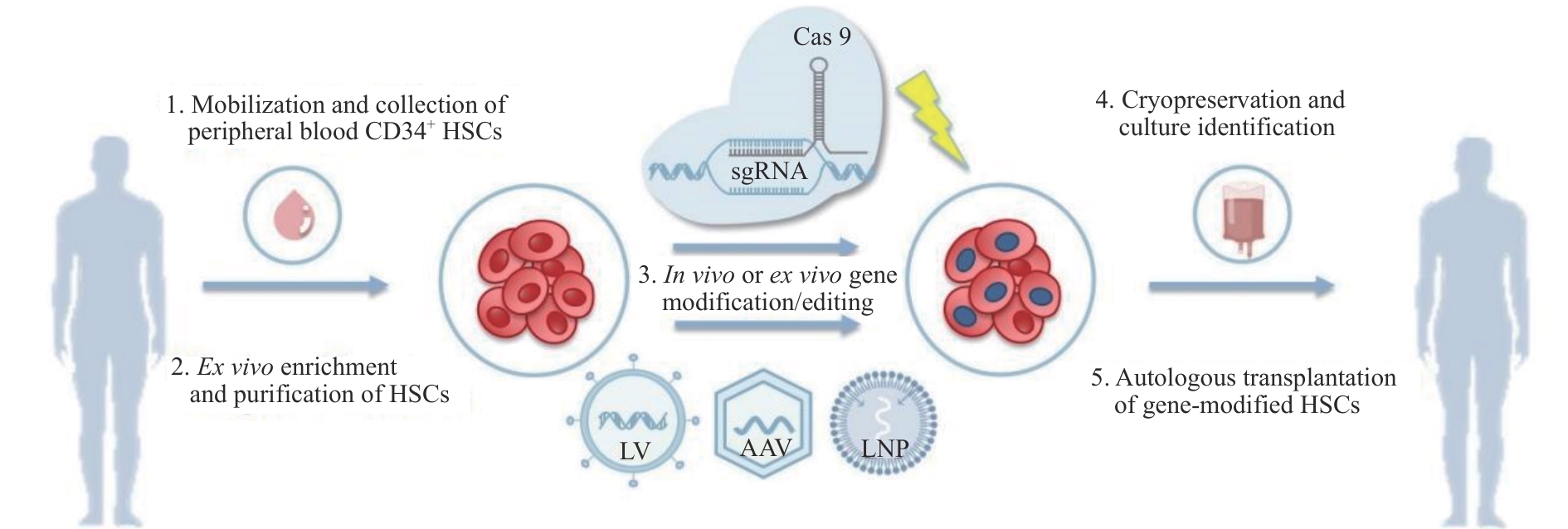
Fig 1 Schematic diagram of thalassemia gene therapy strategies
| The average neutrophil and platelet engraftment times were both 14 d. TI occurred in all patients, with the longest duration lasting 18 months[ | ||||
| The median duration of TI among | ||||
Tab 1 Clinical trials of β-thalassemia gene therapy
| The average neutrophil and platelet engraftment times were both 14 d. TI occurred in all patients, with the longest duration lasting 18 months[ | ||||
| The median duration of TI among | ||||
| 1 | KATTAMIS A, KWIATKOWSKI J L, AYDINOK Y. Thalassaemia[J]. Lancet, 2022, 399(10343): 2310-2324. |
| 2 | 中华医学会血液学分会红细胞疾病贫血学组. 中国输血依赖型β地中海贫血诊断与治疗指南(2022年版)[J]. 中华血液学杂志, 2022, 43(11): 889-896. |
| Red Blood Cell Diseases (Anemia) Group, Chinese Society of Hematology, Chinese Medical Association. Chinese guideline for diagnosis and treatment of transfusion dependent β-thalassemia (2022)[J]. Chinese Journal of Hematology, 2022, 43(11): 889-896. | |
| 3 | LAL A, LOCATELLI F, KWIATKOWSKI J L, et al. Northstar-3: interim results from a phase 3 study evaluating lentiglobin gene therapy in patients with transfusion-dependent β-thalassemia and either a β0 or IVS-I-110 mutation at both alleles of the HBB gene[J]. Blood, 2019, 134: 815. |
| 4 | LOCATELLI F, LANG P, WALL D, et al. Exagamglogene autotemcel for transfusion-dependent β- thalassemia[J]. N Engl J Med, 2024, 390(18): 1663-1676. |
| 5 | PIEL F B, WEATHERALL D J. The α-thalassemias[J]. N Engl J Med, 2014, 371(20): 1908-1916. |
| 6 | KATTAMIS A, FORNI G L, AYDINOK Y, et al. Changing patterns in the epidemiology of β-thalassemia[J]. Eur J Haematol, 2020, 105(6): 692-703. |
| 7 | WANG W D, HU F, ZHOU D H, et al. Thalassaemia in China[J]. Blood Rev, 2023, 60: 101074. |
| 8 | 中华医学会医学遗传学分会遗传病临床实践指南撰写组. β-地中海贫血的临床实践指南[J]. 中华医学遗传学杂志, 2020, 37(3): 243-251. |
| Writing Group for Practice Guidelines for Diagnosis and Treatment of Genetic Diseases, Medical Genetics Branch of Chinese Medical Associatio. Clinical practice guidelines for β-thalassemia [J]. Chinese Journal of Medical Genetics, 2020, 37(3): 243-251. | |
| 9 | ZHEN X M, MING J, ZHANG R Q, et al. Economic burden of adult patients with β-thalassaemia major in mainland China[J]. Orphanet J Rare Dis, 2023, 18(1): 252. |
| 10 | 陈辉, 贾玉艳, 黄粤, 等. 地中海贫血基因治疗进展和现状[J]. 广西医科大学学报, 2024, 41(1): 1-10. |
| CHEN H, JIA Y Y, HUANG Y, et al. Progress and current status of gene therapy for thalassemia[J]. Journal of Guangxi Medical University, 2024, 41(1): 1-10. | |
| 11 | MARKTEL S, SCARAMUZZA S, CICALESE M P, et al. Intrabone hematopoietic stem cell gene therapy for adult and pediatric patients affected by transfusion-dependent β-thalassemia[J]. Nat Med, 2019, 25(2): 234-241. |
| 12 | THOMPSON A A, WALTERS M C, KWIATKOWSKI J, et al. Gene therapy in patients with transfusion-dependent β-thalassemia[J]. N Engl J Med, 2018, 378(16): 1479-1493. |
| 13 | LOCATELLI F, THOMPSON A A, KWIATKOWSKI J L, et al. Betibeglogene autotemcel gene therapy for non-β0/β0 genotype β-thalassemia[J]. N Engl J Med, 2022, 386(5): 415-427. |
| 14 | HAN N. Interim results of gene therapy using optimized LentiHBBT87Q vector in five Chinese patients with transfusion dependent β-thalassemia[C]//EHA2024 Hybrid Congress. Madrid, Spain: EHA Library, 2024: 1517. |
| 15 | LI S Q, LING S K, WANG D W, et al. Modified lentiviral globin gene therapy for pediatric β0/β0 transfusion-dependent β-thalassemia: a single-center, single-arm pilot trial[J]. Cell Stem Cell, 2024, 31(7): 961-973.e8. |
| 16 | HUANG J Q, ZHANG Y M, LIANG L, et al. Gene therapy of transfusion-dependent β-thalassemia patients with quick engraftment of reinfused hematopoietic stem cells: an investigator-initiated trial of KL003[J]. Blood, 2023, 142: 4998. |
| 17 | WALTERS M C, SMITH A R, SCHILLER G J, et al. Updated results of a phase 1/2 clinical study of zinc finger nuclease-mediated editing of BCL11A in autologous hematopoietic stem cells for transfusion-dependent β thalassemia[J]. Blood, 2021, 138(Supplement 1): 3974. |
| 18 | FRANGOUL H, HANNA R, WALTERS M C, et al. Reni-cel, the first AsCas12a gene-edited cell therapy, shows promising preliminary results in key clinical outcomes in transfusion-dependent β- thalassemia patients treated in the EdiThaltrial[C]//EHA2024 Hybrid Congress. Madrid, Spain: EHA Library, 2024: 1476. |
| 19 | SHI J, FANG R G, GAO Z, et al. Preliminary safety and efficacy results of EDI001: an investigator initiated trial on CRISPR/Cas9-modified autologous CD34+ hematopoietic stem and progenitor cells for patients with transfusion dependent β-thalassemia[J]. Blood, 2022, 140(Supplement 1): 10652-10653. |
| 20 | ZHENG B, LIU R R, ZHANG X H, et al. Efficacy and safety of brl-101, CRISPR-Cas9-mediated gene editing of the BCL11A enhancer in transfusion-dependent β-thalassemia[J]. Blood, 2023, 142: 4995. |
| 21 | LIU R R, WANG L, XU H, et al. Safety and efficacy of RM-001 (autologous HBG1/2 promoter-modified CD34+ hematopoietic stem and progenitor cells) in patients with transfusion-dependent β-thalassemia[J]. Blood, 2023, 142: 4994. |
| 22 | KUSCU C, ARSLAN S, SINGH R, et al. Genome-wide analysis reveals characteristics of off-target sites bound by the Cas9 endonuclease[J]. Nat Biotechnol, 2014, 32(7): 677-683. |
| 23 | MORGAN R A, UNTI M J, ALESHE B, et al. Improved titer and gene transfer by lentiviral vectors using novel, small β-globin locus control region elements[J]. Mol Ther, 2020, 28(1): 328-340. |
| 24 | GIOMMETTI A, PAPANIKOLAOU E. Advancements in hematopoietic stem cell gene therapy: a journey of progress for viral transduction[J]. Cells, 2024, 13(12): 1039. |
| 25 | SEGURA E E R, AYOUB P G, HART K L, et al. Gene therapy for β-hemoglobinopathies: from discovery to clinical trials[J]. Viruses, 2023, 15(3): 713. |
| 26 | GAMBARI R. Alternative options for DNA-based experimental therapy of β-thalassemia[J]. Expert Opin Biol Ther, 2012, 12(4): 443-462. |
| 27 | BREDA L, PAPP T E, TRIEBWASSER M P, et al. In vivo hematopoietic stem cell modification by mRNA delivery[J]. Science, 2023, 381(6656): 436-443. |
| 28 | ESRICK E B, LEHMANN L E, BIFFI A, et al. Post-transcriptional genetic silencing of BCL11A to treat sickle cell disease[J]. N Engl J Med, 2021, 384(3): 205-215. |
| 29 | LIU B Y, BRENDEL C, VINJAMUR D S, et al. Development of a double shmiR lentivirus effectively targeting both BCL11A and ZNF410 for enhanced induction of fetal hemoglobin to treat β-hemoglobinopathies[J]. Mol Ther, 2022, 30(8): 2693-2708. |
| 30 | CAVAZZANA-CALVO M, PAYEN E, NEGRE O, et al. Transfusion independence and HMGA2 activation after gene therapy of human β-thalassaemia[J]. Nature, 2010, 467(7313): 318-322. |
| 31 | DUNCAN C N, BLEDSOE J R, GRZYWACZ B, et al. Hematologic cancer after gene therapy for cerebral adrenoleukodystrophy[J]. N Engl J Med, 2024, 391(14): 1287-1301. |
| 32 | POESCHLA E M. Integrase, LEDGF/p75 and HIV replication[J]. Cell Mol Life Sci, 2008, 65(9): 1403-1424. |
| 33 | DORMIANI K, MIR MOHAMMAD SADEGHI H, SADEGHI-ALIABADI H, et al. Long-term and efficient expression of human β-globin gene in a hematopoietic cell line using a new site-specific integrating non-viral system[J]. Gene Ther, 2015, 22(8): 663-674. |
| 34 | PFEIFER A, BRANDON E P, KOOTSTRA N, et al. Delivery of the Cre recombinase by a self-deleting lentiviral vector: efficient gene targeting in vivo[J]. Proc Natl Acad Sci USA, 2001, 98(20): 11450-11455. |
| 35 | BAHAL R, ALI MCNEER N, QUIJANO E, et al. In vivo correction of anaemia in β-thalassemic mice by γPNA-mediated gene editing with nanoparticle delivery[J]. Nat Commun, 2016, 7: 13304. |
| 36 | LAZARIS V M, SIMANTIRAKIS E, STAVROU E F, et al. Non-viral episomal vector mediates efficient gene transfer of the β-globin gene into K562 and human haematopoietic progenitor cells[J]. Genes (Basel), 2023, 14(9): 1774. |
| 37 | STAVROU E F, SIMANTIRAKIS E, VERRAS M, et al. Episomal vectors based on S/MAR and the β-globin replicator, encoding a synthetic transcriptional activator, mediate efficient γ-globin activation in haematopoietic cells[J]. Sci Rep, 2019, 9(1): 19765. |
| 38 | REES H A, MINELLA A C, BURNETT C A, et al. CRISPR-derived genome editing therapies: progress from bench to bedside[J]. Mol Ther, 2021, 29(11): 3125-3139. |
| 39 | ENACHE O M, RENDO V, ABDUSAMAD M, et al. Cas9 activates the p53 pathway and selects for p53-inactivating mutations[J]. Nat Genet, 2020, 52(7): 662-668. |
| 40 | ANTONIOU P, MICCIO A, BRUSSON M. Base and prime editing technologies for blood disorders[J]. Front Genome Ed, 2021, 3: 618406. |
| 41 | HRYHOROWICZ M, LIPIŃSKI D, ZEYLAND J. Evolution of CRISPR/cas systems for precise genome editing[J]. Int J Mol Sci, 2023, 24(18): 14233. |
| 42 | WU Z W, ZHANG Y F, YU H P, et al. Programmed genome editing by a miniature CRISPR-Cas12f nuclease[J]. Nat Chem Biol, 2021, 17(11): 1132-1138. |
| 43 | FERRARI S, JACOB A, CESANA D, et al. Choice of template delivery mitigates the genotoxic risk and adverse impact of editing in human hematopoietic stem cells[J]. Cell Stem Cell, 2022, 29(10): 1428-1444.e9. |
| 44 | LAMSFUS-CALLE A, DANIEL-MORENO A, UREÑA-BAILÉN G, et al. Universal gene correction approaches for β-hemoglobinopathies using CRISPR-Cas9 and adeno-associated virus serotype 6 donor templates[J]. CRISPR J, 2021, 4(2): 207-222. |
| 45 | NUALKAEW T, JEARAWIRIYAPAISARN N, HONGENG S, et al. Restoration of correct βIVS2-654-globin mRNA splicing and HbA production by engineered U7 snRNA in β-thalassaemia/HbE erythroid cells[J]. Sci Rep, 2019, 9(1): 7672. |
| 46 | KYLE CROMER M, CAMARENA J, MARTIN R M, et al. Gene replacement of α-globin with β-globin restores hemoglobin balance in β-thalassemia-derived hematopoietic stem and progenitor cells[J]. Nat Med, 2021, 27(4): 677-687. |
| 47 | PAVANI G, FABIANO A, LAURENT M, et al. Correction of β-thalassemia by CRISPR/Cas9 editing of the α-globin locus in human hematopoietic stem cells[J]. Blood Adv, 2021, 5(5): 1137-1153. |
| 48 | LU D, XU Z L, PENG Z Y, et al. Induction of fetal hemoglobin by introducing natural hereditary persistence of fetal hemoglobin mutations in the γ-globin gene promoters for genome editing therapies for β-thalassemia[J]. Front Genet, 2022, 13: 881937. |
| 49 | SHYR D C, LOWSKY R, MILLER W, et al. One year follow-up on the first patient treated with nula-cel: an autologous CRISPR/Cas9 gene corrected CD34+ cell product to treat sickle cell disease[J]. Blood, 2023, 142: 5000. |
| 50 | ZHANG H K, SUN R L, FEI J, et al. Correction of β-thalassemia IVS-II-654 mutation in a mouse model using prime editing[J]. Int J Mol Sci, 2022, 23(11): 5948. |
| 51 | UCHIDA N, TISDALE J F, DONAHUE R E, et al. A single dose of CD117 antibody drug conjugate enables hematopoietic stem cell based gene therapy in nonhuman Primates[J]. Biol Blood Marrow Transplant, 2020, 26(3): S6. |
| 52 | NGUYEN G N, EVERETT J K, KAFLE S, et al. A long-term study of AAV gene therapy in dogs with hemophilia A identifies clonal expansions of transduced liver cells[J]. Nat Biotechnol, 2021, 39(1): 47-55. |
| 53 | WANG H J, GEORGAKOPOULOU A, PSATHA N, et al. In vivo hematopoietic stem cell gene therapy ameliorates murine thalassemia intermedia[J]. J Clin Invest, 2019, 129(2): 598-615. |
| 54 | LI C, WANG H J, GEORGAKOPOULOU A, et al. In vivo HSC gene therapy using a bi-modular HDAd5/35++ vector cures sickle cell disease in a mouse model[J]. Mol Ther, 2021, 29(2): 822-837. |
| 55 | PASCHOUDI K, YANNAKI E, PSATHA N. Precision editing as a therapeutic approach for β-hemoglobinopathies[J]. Int J Mol Sci, 2023, 24(11): 9527. |
| 56 | LI C, GEORGAKOPOULOU A, MISHRA A, et al. In vivo HSPC gene therapy with base editors allows for efficient reactivation of fetal γ-globin in β-YAC mice[J]. Blood Adv, 2021, 5(4): 1122-1135. |
| 57 | MEAKER G A, WILKINSON A C. Ex vivo hematopoietic stem cell expansion technologies: recent progress, applications, and open questions[J]. Exp Hematol, 2024, 130: 104136. |
| 58 | LI Y H, HE M, ZHANG W S, et al. Expansion of human megakaryocyte-biased hematopoietic stem cells by biomimetic Microniche[J]. Nat Commun, 2023, 14(1): 2207. |
| 59 | WANG H J, GEORGAKOPOULOU A, NIZAMIS E, et al. Auto-expansion of in vivo HDAd-transduced hematopoietic stem cells by constitutive expression of tHMGA2[J]. Mol Ther Methods Clin Dev, 2024, 32(3): 101319. |
| 60 | CORBACIOGLU S, FRANGOUL H, LOCATELLI F, et al. Defining curative endpoints for transfusion-dependent β-thalassemia in the era of gene therapy and gene editing[J]. Am J Hematol, 2024, 99(3): 422-429. |
| [1] | HE Suhui, ZHAO Yinlong, CHANG Alex Chia Yu. Effects of telomerase gene therapy on pressure overload-induced heart failure in mice [J]. Journal of Shanghai Jiao Tong University (Medical Science), 2025, 45(8): 949-956. |
| [2] | JIANG Lingyong. Status and advances in the mechanism research on dento-maxillofacial skeletal abnormalities [J]. Journal of Shanghai Jiao Tong University (Medical Science), 2024, 44(6): 663-675. |
| [3] | CHEN Jin, FU Yao. Research progress in autologous regeneration of human corneal endothelial cells [J]. Journal of Shanghai Jiao Tong University (Medical Science), 2023, 43(6): 775-780. |
| [4] | ZHOU Yue, CHENG Chen, ZHENG Enlin, MENG Zhuo, WANG Jian, WANG Qingjie, HE Yongning, SUN Kun. Exploring potential new receptors for ELABELA in human embryonic stem cells by Crispr/Cas9-mediated gene editing system [J]. Journal of Shanghai Jiao Tong University (Medical Science), 2022, 42(9): 1258-1264. |
| [5] | CHENG Zhenzhe, JIN Chenxi, FENG Baoyi, ZHENG Xiaofei, LIU Yiqing, WU Hao, TAO Yong. Adeno-associated virus serotype 8-mediated gene therapy in Gjb2 mutant c.109G>A homozygous mice [J]. Journal of Shanghai Jiao Tong University (Medical Science), 2022, 42(6): 735-741. |
| [6] | HAN Xiaxia, GU Shuangshuang, DAI Dai, SHEN Nan. Application of CRISPR/Cas9-mediated gene editing system to studying the regulation of T-bet in B cells [J]. Journal of Shanghai Jiao Tong University (Medical Science), 2022, 42(4): 433-442. |
| [7] | Yan-na ZHAO, Rong QIU, Nan SHEN, Yuan-jia TANG. Construction of inducible CRISPR/Cas9 system for studying gene function in mouse [J]. JOURNAL OF SHANGHAI JIAOTONG UNIVERSITY (MEDICAL SCIENCE), 2021, 41(3): 297-301. |
| [8] | GU Yan-ying1, WU Bei-ying1, LIN Lin1, CAI Gang1#, GU Ming-min2#. Study on genotype of thalassemia with abnormal -α3.7 deletion band [J]. JOURNAL OF SHANGHAI JIAOTONG UNIVERSITY (MEDICAL SCIENCE), 2020, 40(8): 1081-1085. |
| [9] | LI Dong-liang, LAI Yu-chen, ZHANG Wei-wei, WANG Jian, LI Chun-hong, WANG Su-ping, SHI Qiong-yun, ZHANG Xing, TAO Ye-xuan. Preliminary study on the construction of national major science and technology infrastructure for translational medicine in China [J]. JOURNAL OF SHANGHAI JIAOTONG UNIVERSITY (MEDICAL SCIENCE), 2020, 40(6): 701-706. |
| [10] | ZHANG Zhi-yuan. Oral and Maxillofacial Phenome Project: a new starting point for the sustainable development of stomatology [J]. JOURNAL OF SHANGHAI JIAOTONG UNIVERSITY (MEDICAL SCIENCE), 2020, 40(10): 1321-1323. |
| [11] | LI Song1, ZHONG Chang-ming1, WANG Xiao-wen1, 2, ZHANG Cheng1, 3, FENG Bo2, XIE Xiao4, HUANG Chun1, XIANG Xiao-yong1. Improved efficiency of adeno-associated virus mediated gene transfer to vein graftsof pluronic F-127-trypsin gel [J]. , 2019, 39(7): 730-. |
| [12] | DING Wen-jing1, WU Hui1, FAN Rong1, XU Min2, QIU Xiao-chun1. New advances in translational medicine research in the field of tumor [J]. , 2018, 38(9): 1133-. |
| [13] | WU Hui1, FAN Rong1, DING Wen-jing1, ZHANG Xin-man2, QIU Xiao-chun1. Recent research progress in the field of translational medicine [J]. , 2018, 38(6): 712-. |
| [14] | WU Hui1, ZHANG Xin-man2, DING Wen-jing1, QIU Xiao-chun1. Recent research progress in the field of translational medicine [J]. , 2018, 38(4): 481-. |
| [15] | XIAO Mei-chun, WANG Xiao-han, WANG Feng-hua . Function and application of soluble vascular endothelial growth factor receptor-1 in age-related macular degeneration#br# [J]. , 2017, 37(9): 1297-. |
| Viewed | ||||||
|
Full text |
|
|||||
|
Abstract |
|
|||||
