
Journal of Shanghai Jiao Tong University (Medical Science) ›› 2026, Vol. 46 ›› Issue (3): 377-384.doi: 10.3969/j.issn.1674-8115.2026.03.012
• Review • Previous Articles
Xu Rui1,2,3,4, Guo Jiacheng2,3,4, Xie Shiyao2,3,4, Han Deheng2,3,4, Yue Xiuqin1( )
)
Received:2025-09-07
Accepted:2025-11-27
Online:2026-03-28
Published:2026-03-30
Contact:
Yue Xiuqin
E-mail:xiuqinyue@163.com
Supported by:CLC Number:
Xu Rui, Guo Jiacheng, Xie Shiyao, Han Deheng, Yue Xiuqin. Research advances in nanomaterials in cardiac fibrosis repair: from precision therapy to tissue remodeling[J]. Journal of Shanghai Jiao Tong University (Medical Science), 2026, 46(3): 377-384.
Add to citation manager EndNote|Ris|BibTeX
URL: https://xuebao.shsmu.edu.cn/EN/10.3969/j.issn.1674-8115.2026.03.012
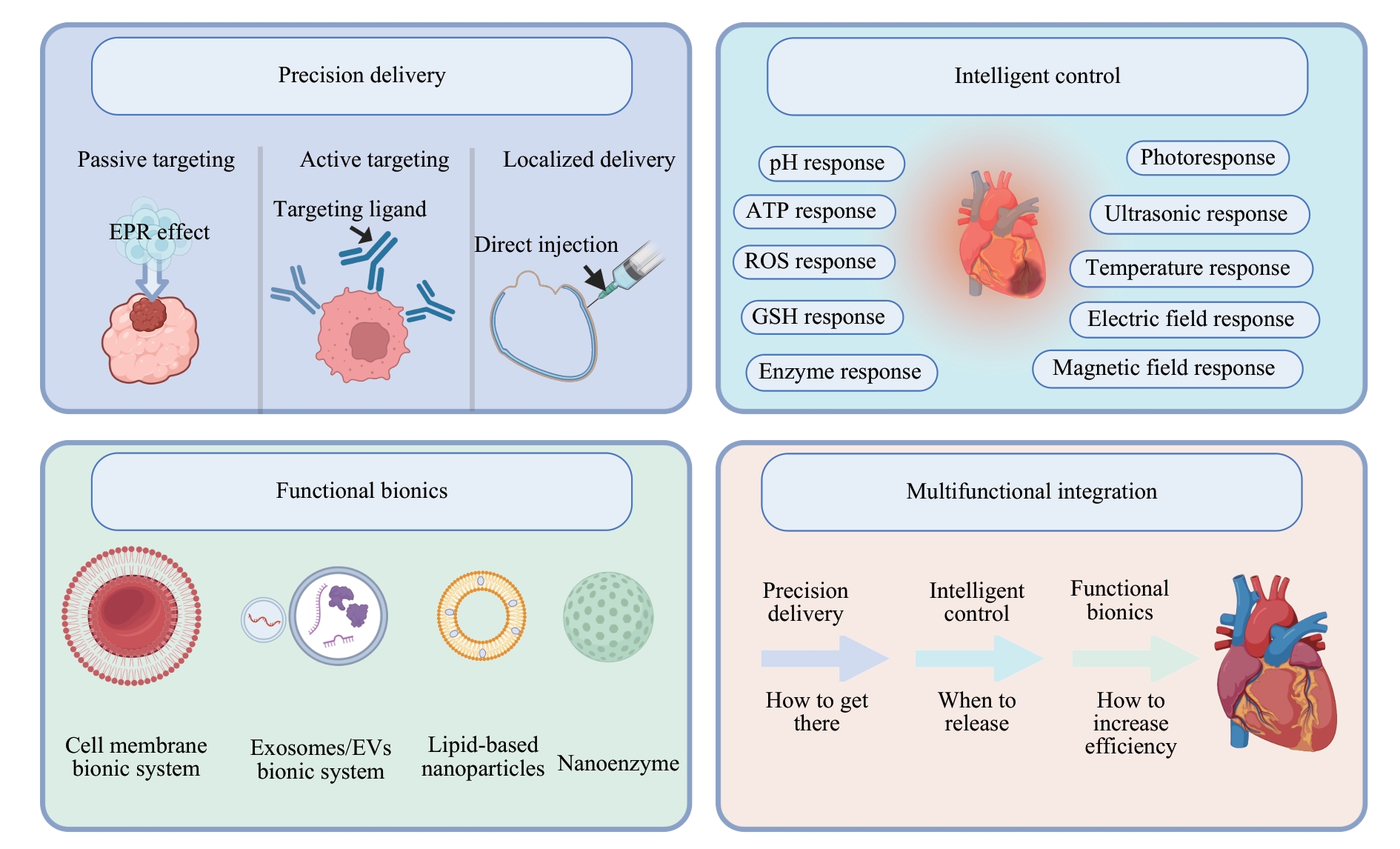
Fig 1 Schematic diagram of multidimensional strategies for nanotherapy for cardiac fibrosis (created with BioRender)
| Material type | Representative system/material | Research model | Phenotypic effect | Off-target degree | Clinical trial phase |
|---|---|---|---|---|---|
| Inorganic nanoparticle | Nano-SiO₂/TiO₂/Fe₂O₃, et al[ | In vitro, small animal | Imaging enhancement, photothermal therapy, drug carrier | High | Preclinical/limited clinical; Fe₂O₃ contrast agent has been withdrawn |
| Organic Nanoparticle | |||||
| Lipid nanoparticle | Lipid nanoparticle[ | In vitro, small animal, large animal, human trial | Nucleic acid delivery (mRNA/siRNA), gene editing | Low-medium | Phase Ⅰ/Ⅱ (primary) |
| Liposome | Functionalized liposome (e.g., pH/ROS-responsive)[ | In vitro, small animal, human trial | Gene delivery, small-molecule drug delivery, toxicity reduction | Low | Phase Ⅰ/Ⅱ (primary); multiple liposomal drugs are marketed (e.g., doxorubicin, amphotericin B liposomes) |
| Exosome/EVs | Stem cell-derived exosome, engineered exosome[ | In vitro, small animal, large animal, human trial | Natural targeting, anti-inflammatory, tissue repair | High | Phase Ⅰ/Ⅱ (primary) |
| PEG nanocarrier | |||||
| Polymeric micelle | PLA-PEG micelle[ | In vitro, small animal | RNA encapsulation and delivery | Low-medium | Preclinical; Genexol-PM® is marketed in several countries |
| Polymeric nanoparticle | PLGA-PEG nanoparticle[ | In vitro, small animal | Long-acting sustained release | Low | Preclinical |
| Other organic nanoparticle | Protein nanoparticle[ | In vitro, small animal | Sustained-release drug carrier | Low | Phase Ⅰ/Ⅱ (primary); albumin nanoparticles (Abraxane®) are marketed (for cancer) |
| Organic-inorganic hybrid nanoparticle | Protein-nanoparticle hybrid material[ | In vitro, small animal | Synergistic therapy | Medium | Preclinical |
Tab 1 Overview of representative nanomaterials for cardiac fibrosis therapy: preclinical studies and clinical translation
| Material type | Representative system/material | Research model | Phenotypic effect | Off-target degree | Clinical trial phase |
|---|---|---|---|---|---|
| Inorganic nanoparticle | Nano-SiO₂/TiO₂/Fe₂O₃, et al[ | In vitro, small animal | Imaging enhancement, photothermal therapy, drug carrier | High | Preclinical/limited clinical; Fe₂O₃ contrast agent has been withdrawn |
| Organic Nanoparticle | |||||
| Lipid nanoparticle | Lipid nanoparticle[ | In vitro, small animal, large animal, human trial | Nucleic acid delivery (mRNA/siRNA), gene editing | Low-medium | Phase Ⅰ/Ⅱ (primary) |
| Liposome | Functionalized liposome (e.g., pH/ROS-responsive)[ | In vitro, small animal, human trial | Gene delivery, small-molecule drug delivery, toxicity reduction | Low | Phase Ⅰ/Ⅱ (primary); multiple liposomal drugs are marketed (e.g., doxorubicin, amphotericin B liposomes) |
| Exosome/EVs | Stem cell-derived exosome, engineered exosome[ | In vitro, small animal, large animal, human trial | Natural targeting, anti-inflammatory, tissue repair | High | Phase Ⅰ/Ⅱ (primary) |
| PEG nanocarrier | |||||
| Polymeric micelle | PLA-PEG micelle[ | In vitro, small animal | RNA encapsulation and delivery | Low-medium | Preclinical; Genexol-PM® is marketed in several countries |
| Polymeric nanoparticle | PLGA-PEG nanoparticle[ | In vitro, small animal | Long-acting sustained release | Low | Preclinical |
| Other organic nanoparticle | Protein nanoparticle[ | In vitro, small animal | Sustained-release drug carrier | Low | Phase Ⅰ/Ⅱ (primary); albumin nanoparticles (Abraxane®) are marketed (for cancer) |
| Organic-inorganic hybrid nanoparticle | Protein-nanoparticle hybrid material[ | In vitro, small animal | Synergistic therapy | Medium | Preclinical |
| [1] | Zhang Y Z, Lin X Y, Chu Y, et al. Dapagliflozin: a sodium-glucose cotransporter 2 inhibitor, attenuates angiotensin Ⅱ-induced cardiac fibrotic remodeling by regulating TGFβ1/Smad signaling[J]. Cardiovasc Diabetol, 2021, 20(1): 121. |
| [2] | Chen X F, Yang Q, Bai W L, et al. Dapagliflozin attenuates myocardial fibrosis by inhibiting the TGF-β1/Smad signaling pathway in a normoglycemic rabbit model of chronic heart failure[J]. Front Pharmacol, 2022, 13: 873108. |
| [3] | Chinnappa S, Maqbool A, Viswambharan H, et al. Beta blockade prevents cardiac morphological and molecular remodelling in experimental uremia[J]. Int J Mol Sci, 2023, 25(1): 373. |
| [4] | Ibrahim W S, Ahmed H M S, Mahmoud A A A, et al. Propranolol and low-dose isoproterenol ameliorate insulin resistance, enhance β-arrestin2 signaling, and reduce cardiac remodeling in high-fructose, high-fat diet-fed mice: comparative study with metformin[J]. Life Sci, 2021, 286: 120055. |
| [5] | Cunningham J W, Claggett B L, O′Meara E, et al. Effect of sacubitril/valsartan on biomarkers of extracellular matrix regulation in patients with HFpEF[J]. J Am Coll Cardiol, 2020, 76(5): 503-514. |
| [6] | Frangogiannis N G. Cardiac fibrosis[J]. Cardiovasc Res, 2021, 117(6): 1450-1488. |
| [7] | Tie Y, Tang F, Peng D D, et al. TGF-β signal transduction: biology, function and therapy for diseases[J]. Mol Biomed, 2022, 3(1): 45. |
| [8] | Zhang T T, Lei Q Q, He J, et al. Bestrophin3 deficiency in vascular smooth muscle cells activates MEKK2/3-MAPK signaling to trigger spontaneous aortic dissection[J]. Circulation, 2023, 148(7): 589-606. |
| [9] | Cheng T H, Cheng P Y, Shih N L, et al. Involvement of reactive oxygen species in angiotensin Ⅱ-induced endothelin-1 gene expression in rat cardiac fibroblasts[J]. J Am Coll Cardiol, 2003, 42(10): 1845-1854. |
| [10] | Bretherton R, Bugg D, Olszewski E, et al. Regulators of cardiac fibroblast cell state[J]. Matrix Biol, 2020, 91/92: 117-135. |
| [11] | Nayakanti S R, Friedrich A, Sarode P, et al. Targeting Wnt-β-catenin-FOSL signaling ameliorates right ventricular remodeling[J]. Circ Res, 2023, 132(11): 1468-1485. |
| [12] | Blyszczuk P, Müller-Edenborn B, Valenta T, et al. Transforming growth factor-β-dependent Wnt secretion controls myofibroblast formation and myocardial fibrosis progression in experimental autoimmune myocarditis[J]. Eur Heart J, 2017, 38(18): 1413-1425. |
| [13] | Cho S, Rhee S, Madl C M, et al. Selective inhibition of stromal mechanosensing suppresses cardiac fibrosis[J]. Nature, 2025, 642(8068): 766-775. |
| [14] | Jiang H, Yang J J, Li T, et al. JAK/STAT3 signaling in cardiac fibrosis: a promising therapeutic target[J]. Front Pharmacol, 2024, 15: 1336102. |
| [15] | Shi J L, Xiao P L, Liu X L, et al. Notch3 modulates cardiac fibroblast proliferation, apoptosis, and fibroblast to myofibroblast transition via negative regulation of the RhoA/ROCK/HIF1α axis[J]. Front Physiol, 2020, 11: 669. |
| [16] | Senesi G, Lodrini A M, Mohammed S, et al. miR-24-3p secreted as extracellular vesicle cargo by cardiomyocytes inhibits fibrosis in human cardiac microtissues[J]. Cardiovasc Res, 2025, 121(1): 143-156. |
| [17] | Li G Q, Shao Y H, Guo H C, et al. MicroRNA-27b-3p down-regulates FGF1 and aggravates pathological cardiac remodelling[J]. Cardiovasc Res, 2022, 118(9): 2139-2151. |
| [18] | Zhou J T, Tian G E, Quan Y, et al. The long noncoding RNA THBS1-AS1 promotes cardiac fibroblast activation in cardiac fibrosis by regulating TGFBR1[J]. JCI Insight, 2023, 8(6): e160745. |
| [19] | Wang X H, Chen T, Chen S Z, et al. STING aggravates ferroptosis-dependent myocardial ischemia-reperfusion injury by targeting GPX4 for autophagic degradation[J]. Signal Transduct Target Ther, 2025, 10(1): 136. |
| [20] | Horwitz L D, Kaufman D, Keller M W, et al. Time course of coronary endothelial healing after injury due to ischemia and reperfusion[J]. Circulation, 1994, 90(5): 2439-2447. |
| [21] | Prajnamitra R P, Chen H C, Lin C J, et al. Nanotechnology approaches in tackling cardiovascular diseases[J]. Molecules, 2019, 24(10): 2017. |
| [22] | Wen J X, Guan Y, Niu H, et al. Targeting cardiac resident CCR2+ macrophage-secreted MCP-1 to attenuate inflammation after myocardial infarction[J]. Acta Biomater, 2024: S1742-S7061(24)00469-0. |
| [23] | Chen W S, Liu L J, Tang M, et al. Type Ⅰ collagen-targeted liposome delivery of Serca2a modulates myocardium calcium homeostasis and reduces cardiac fibrosis induced by myocardial infarction[J]. Mater Today Bio, 2024, 28: 101162. |
| [24] | Liu J, Zhuang T, Pi J J, et al. Endothelial forkhead box transcription factor P1 regulates pathological cardiac remodeling through transforming growth factor-β1-endothelin-1 signal pathway[J]. Circulation, 2019, 140(8): 665-680. |
| [25] | Zhu D S, Liu S, Huang K, et al. Intrapericardial long non-coding RNA—Tcf21 antisense RNA inducing demethylation administration promotes cardiac repair[J]. Eur Heart J, 2023, 44(19): 1748-1760. |
| [26] | Liang X Y, Zhang Y, Wang C D, et al. ROS-responsive death receptor 5 fusion protein nano-delivery system enhances myocardial ischemia-reperfusion injury protection[J]. Mater Today Bio, 2025, 32: 101899. |
| [27] | Sullivan H L, Liang Y F, Worthington K, et al. Enzyme-responsive nanoparticles for the targeted delivery of an MMP inhibitor to acute myocardial infarction[J]. Biomacromolecules, 2023, 24(11): 4695-4704. |
| [28] | Fatima M, Almalki W H, Khan T, et al. Harnessing the power of stimuli-responsive nanoparticles as an effective therapeutic drug delivery system[J]. Adv Mater, 2024, 36(24): e2312939. |
| [29] | Zhao X L, Qin Y Z, Li B W, et al. Genetically engineered biomimetic ATP-responsive nanozyme for the treatment of cardiac fibrosis[J]. J Nanobiotechnology, 2025, 23(1): 10. |
| [30] | Ji X Q, Meng Y B, Wang Q Y, et al. Cysteine-based redox-responsive nanoparticles for fibroblast-targeted drug delivery in the treatment of myocardial infarction[J]. ACS Nano, 2023, 17(6): 5421-5434. |
| [31] | Dong Y X, Wang H B, Zhang Y L, et al. NIR-Ⅱ light based combinatorial management of hypertrophic scar by inducing autophagy in fibroblasts[J]. J Nanobiotechnology, 2024, 22(1): 625. |
| [32] | Yang J L, He J, Yue T, et al. The clinical prospects and challenges of photothermal nanomaterials in myocardium recovery after myocardial infarction[J]. Front Bioeng Biotechnol, 2024, 12: 1491581. |
| [33] | Wang X Y, Bai R R. Advances in smart delivery of magnetic field-targeted drugs in cardiovascular diseases[J]. Drug Deliv, 2023, 30(1): 2256495. |
| [34] | Zhang L H, Bei Z W, Li T, et al. An injectable conductive hydrogel with dual responsive release of rosmarinic acid improves cardiac function and promotes repair after myocardial infarction[J]. Bioact Mater, 2023, 29: 132-150. |
| [35] | He M Q, Li Y, Zhu D S, et al. Stromal-platelet membrane-inspired nanoparticles (SPIN) for targeted heart repair[J]. Bioact Mater, 2025, 53: 45-57. |
| [36] | Chen Q, Yu Y, Tong L, et al. Targeted delivery of TAPI-1 via biomimetic nanoparticles ameliorates post-infarct left ventricle function and remodelling[J]. Cardiovasc Res, 2025, 121(5): 760-774. |
| [37] | Li Y Y, Yu J Q, Cheng C, et al. Platelet and erythrocyte membranes coassembled biomimetic nanoparticles for heart failure treatment[J]. ACS Nano, 2024, 18(39): 26614-26630. |
| [38] | Lu H, Jiang Y H, Luo R, et al. Engineered hybrid cell membrane nanosystems for treating cardiovascular diseases[J]. Mater Today Bio, 2025, 33: 101992. |
| [39] | Yu T T, Xu Q X, Chen X, et al. Biomimetic nanomaterials in myocardial infarction treatment: harnessing bionic strategies for advanced therapeutics[J]. Mater Today Bio, 2024, 25: 100957. |
| [40] | Wang X, Chen Y H, Zhao Z N, et al. Engineered exosomes with ischemic myocardium-targeting peptide for targeted therapy in myocardial infarction[J]. J Am Heart Assoc, 2018, 7(15): e008737. |
| [41] | Ihnatsyeu-Kachan A, Saichuk A, Sharko O, et al. Biomimetic high-density lipoprotein nanoparticles for the delivery of nucleic acid-based therapeutics[J]. Biotechnol Adv, 2025, 83: 108606. |
| [42] | Gong Y X, Xiao Y, Zhao C Y, et al. Ultrasmall PtIr bimetallic nanozyme treats myocardial infarction via ischemic/inflammatory cardiac microenvironment remodeling[J]. ACS Nano, 2025, 19(14): 13723-13739. |
| [43] | Gu Z Y, Liu X L, Qi Z, et al. An antioxidant nanozyme for targeted cardiac fibrosis therapy post myocardial infarction[J]. J Nanobiotechnology, 2024, 22(1): 760. |
| [44] | Li F Y, Liu D Z, Liu M, et al. Tregs biomimetic nanoparticle to reprogram inflammatory and redox microenvironment in infarct tissue to treat myocardial ischemia reperfusion injury in mice[J]. J Nanobiotechnology, 2022, 20(1): 251. |
| [45] | Zhu K, Wang K, Zhang R T, et al. Iron chelators loaded on myocardiocyte mitochondria-targeted nanozyme system for treating myocardial ischemia-reperfusion injury in mouse models[J]. J Nanobiotechnology, 2025, 23(1): 112. |
| [46] | Liu Z J, Chen C, Zhang Y L, et al. Legumain in situ engineering promotes efferocytosis of CAR macrophage to treat cardiac fibrosis[J]. Adv Mater, 2025, 37(27): e2417831. |
| [47] | Morsink M, Severino P, Luna-Ceron E, et al. Effects of electrically conductive nano-biomaterials on regulating cardiomyocyte behavior for cardiac repair and regeneration[J]. Acta Biomater, 2022, 139: 141-156. |
| [48] | Chen C X, Ma J J, Duan S J, et al. Mitigation of ischemia/reperfusion injury via selenium nanoparticles: suppression of STAT1 to inhibit cardiomyocyte oxidative stress and inflammation[J]. Biomaterials, 2025, 318: 123119. |
| [49] | Wang Y, Li C F, Zhao R Z, et al. CircUbe3a from M2 macrophage-derived small extracellular vesicles mediates myocardial fibrosis after acute myocardial infarction[J]. Theranostics, 2021, 11(13): 6315-6333. |
| [50] | Chen S Q, Wang K, Fan Z F, et al. Modulation of anti-cardiac fibrosis immune responses by changing M2 macrophages into M1 macrophages[J]. Mol Med, 2024, 30(1): 88. |
| [51] | Rurik J G, Tombácz I, Yadegari A, et al. CAR T cells produced in vivo to treat cardiac injury[J]. Science, 2022, 375(6576): 91-96. |
| [52] | Esmaeili H, Patino-Guerrero A, Nelson R A Jr, et al. Engineered gold and silica nanoparticle-incorporated hydrogel scaffolds for human stem cell-derived cardiac tissue engineering[J]. ACS Biomater Sci Eng, 2024, 10(4): 2351-2366. |
| [53] | Cheng N L, Luo Q, Yang Y Q, et al. Injectable pH responsive conductive hydrogel for intelligent delivery of metformin and exosomes to enhance cardiac repair after myocardial ischemia-reperfusion injury[J]. Adv Sci (Weinh), 2025, 12(24): e2410590. |
| [54] | Yajima S, Lee S H, Yang J K, et al. Stromal cell-derived factor-encapsulated nanoparticles target ischemic myocardium and attenuate myocardial injury via proangiogenic effects[J]. Biomaterials, 2025, 318: 123167. |
| [55] | Cui X L, Guo J C, Yuan P Y, et al. Bioderived nanoparticles for cardiac repair[J]. ACS Nano, 2024, 18(36): 24622-24649. |
| [56] | Femminò S, D′Ascenzo F, Ravera F, et al. Percutaneous coronary intervention (PCI) reprograms circulating extracellular vesicles from ACS patients impairing their cardio-protective properties[J]. Int J Mol Sci, 2021, 22(19): 10270. |
| [57] | Yang L, Mei J Q, Qiao F, et al. Randomized controlled trial assessing the efficacy and safety of a liposomal carrier for low-dose dual antiplatelet therapy (clopidogrel and aspirin) in coronary heart disease patients[J]. Clin Ther, 2025, 47(5): 339-346. |
| [58] | Sun B X, Liu S W, Hao R B, et al. RGD-PEG-PLA delivers miR-133 to infarct lesions of acute myocardial infarction model rats for cardiac protection[J]. Pharmaceutics, 2020, 12(6): 575. |
| [59] | Zhu K, Jiang D W, Wang K, et al. Conductive nanocomposite hydrogel and mesenchymal stem cells for the treatment of myocardial infarction and non-invasive monitoring via PET/CT[J]. J Nanobiotechnology, 2022, 20(1): 211. |
| [60] | Sharma V, Dash S K, Manhas A, et al. Injectable hydrogel for co-delivery of 5-azacytidine in zein protein nanoparticles with stem cells for cardiac function restoration[J]. Int J Pharm, 2021, 603: 120673. |
| Viewed | ||||||
|
Full text |
|
|||||
|
Abstract |
|
|||||
