
Journal of Shanghai Jiao Tong University (Medical Science) ›› 2025, Vol. 45 ›› Issue (12): 1589-1597.doi: 10.3969/j.issn.1674-8115.2025.12.004
• Clinical research • Previous Articles Next Articles
RUAN Qingqing1, SU Shuzhi2,3, LI Yanting3, REN Yuan4, DAI Yong1,5, QIAO Zengyong6( )
)
Received:2025-03-20
Accepted:2025-07-03
Online:2025-12-28
Published:2025-12-28
Contact:
QIAO Zengyong
E-mail:Qiaozy666@sina.com
Supported by:CLC Number:
RUAN Qingqing, SU Shuzhi, LI Yanting, REN Yuan, DAI Yong, QIAO Zengyong. Intraoperative complications in percutaneous coronary intervention for acute myocardial infarction: development of a risk prediction model[J]. Journal of Shanghai Jiao Tong University (Medical Science), 2025,(12): 1589-1597.
Add to citation manager EndNote|Ris|BibTeX
URL: https://xuebao.shsmu.edu.cn/EN/10.3969/j.issn.1674-8115.2025.12.004
| Variable | Total (n=811) | Non-complication group (n =606) | Complication group (n =205) | P value |
|---|---|---|---|---|
| Age/year | 58.60±12.93 | 58.08±12.80 | 60.14±13.19 | 0.049 |
| Systolic blood pressure on admission /mmHg | 147.13±29.48 | 149.55±30.23 | 138.11±29.13 | <0.001 |
| Diastolic blood pressure on admission/mmHg | 87.65±18.36 | 89.12±18.57 | 82.28±18.80 | <0.001 |
| Heart rate on admission/(beat·min-1) | 76.87±16.17 | 78.20±15.90 | 72.39±17.06 | <0.001 |
| Body temperature/°C | 36.58±0.37 | 36.61±0.36 | 36.51±0.41 | 0.001 |
| Troponin level on admission/(ng·L-1) | 2.30 (0.03, 38.00) | 4.08 (0.06, 48.00) | 0.34 (0.02, 30.00) | 0.022 |
| Serum creatinine level on admission/(μmol·L-1) | 74.00 (63.00, 89.00) | 73.00 (62.00, 88.00) | 78.00 (67.00, 93.00) | 0.023 |
| D-dimer level on admission/(μg·L-1) | 0.70 (0.60, 0.90) | 0.70 (0.60, 0.90) | 0.70 (0.60, 0.90) | 0.045 |
| B-type natriuretic peptide level on admission/(pg·mL-1) | 28.35 (10.50, 76.19) | 29.20 (11.50, 80.42) | 23.60 (9.20, 66.15) | 0.047 |
| Peak troponin I within 72 h/(ng·L-1) | 60.00 (22.37, 60.00) | 50.00 (17.63, 60.00) | 60.00 (46.79, 67.00) | <0.001 |
| Emergency lowest LVEF/% | 58.27±8.86 | 60.20±8.74 | 52.49±6.38 | <0.001 |
| Initial troponin test/n(%) | 0.008 | |||
| 0=negative | 196 (24.17) | 132 (21.78) | 64 (68.78) | |
| 1=positive | 615 (75.83) | 474 (78.22) | 141 (31.22) | |
| Presence of multiple culprit vessels/n(%) | 0.003 | |||
| 0=no | 657 (81.01) | 476 (78.55) | 181 (88.29) | |
| 1=yes | 154 (18.99) | 130 (21.45) | 24 (11.71) | |
| Culprit vessel in left main coronary artery/n(%) | 0.005 | |||
| 0=no | 805 (99.26) | 605 (99.83) | 200 (97.56) | |
| 1=yes | 6 (0.74) | 1 (0.17) | 5 (2.44) | |
| Culprit vessel in left anterior descending artery/n(%) | <0.001 | |||
| 0=no | 464 (57.21) | 317 (52.31) | 147 (71.71) | |
| 1=proximal segment | 170 (20.96) | 129 (21.29) | 41 (20.0) | |
| 2=mid segment | 153 (18.87) | 138 (22.77) | 15 (7.32) | |
| 3=distal segment | 5 (0.62) | 5 (0.83) | 0 (0) | |
| 4=diagonal branch | 19 (2.34) | 17 (2.81) | 2 (0.98) | |
| Culprit vessel in right coronary artery/n(%) | <0.001 | |||
| 0=no | 536 (66.09) | 457 (75.41) | 79 (38.54) | |
| 1=proximal segment | 98 (12.08) | 48 (7.92) | 50 (24.39) | |
| 2=mid segment | 96 (11.84) | 56 (9.24) | 40 (19.51) | |
| 3=distal segment | 81 (9.99) | 45 (7.43) | 36 (17.56) | |
| Stent implantation performed/n(%) | 0.001 | |||
| 0=no | 174 (21.45) | 147 (24.26) | 27 (13.17) | |
| 1=yes | 637(78.55) | 459 (75.74) | 178 (86.83) | |
| Percutaneous transluminal coronary angioplasty performed/n(%) | <0.001 | |||
| 0=no | 301 (37.11) | 107 (17.66) | 194 (94.63) | |
| 1=yes | 510 (62.89) | 499 (82.34) | 11 (5.37) | |
| Thrombus aspiration performed/n(%) | <0.001 | |||
| 0=no | 724 (89.27) | 557 (91.91) | 167 (81.46) | |
| 1=yes | 87 (10.73) | 49 (8.09) | 38 (18.54) | |
| Intracoronary thrombolysis performed/n(%) | <0.001 | |||
| 0=no | 567 (69.91) | 449 (74.09) | 118 (57.56) | |
| 1=yes | 244 (30.09) | 157 (25.91) | 87 (42.44) | |
| Diabetes mellitus/n(%) | 0.045 | |||
| 0=no | 604 (74.48) | 440 (72.61) | 164 (80.00) | |
| 1=yes | 207 (25.52) | 166 (27.39) | 41 (20.00) | |
| Presence of multiple comorbidities/n(%) | 0.044 | |||
| 0=no | 636 (78.42) | 486 (80.2) | 150 (73.17) | |
| 1=yes | 175 (21.58) | 120 (19.8) | 55 (26.83) | |
| Presence of comorbidities/n(%) | 0.028 | |||
| 0=no | 356 (43.90) | 280 (46.2) | 76 (37.07) | |
| 1=yes | 455 (56.10) | 326 (53.8) | 129 (62.93) |
Tab 1 Baseline characteristics with P<0.05 in the study population
| Variable | Total (n=811) | Non-complication group (n =606) | Complication group (n =205) | P value |
|---|---|---|---|---|
| Age/year | 58.60±12.93 | 58.08±12.80 | 60.14±13.19 | 0.049 |
| Systolic blood pressure on admission /mmHg | 147.13±29.48 | 149.55±30.23 | 138.11±29.13 | <0.001 |
| Diastolic blood pressure on admission/mmHg | 87.65±18.36 | 89.12±18.57 | 82.28±18.80 | <0.001 |
| Heart rate on admission/(beat·min-1) | 76.87±16.17 | 78.20±15.90 | 72.39±17.06 | <0.001 |
| Body temperature/°C | 36.58±0.37 | 36.61±0.36 | 36.51±0.41 | 0.001 |
| Troponin level on admission/(ng·L-1) | 2.30 (0.03, 38.00) | 4.08 (0.06, 48.00) | 0.34 (0.02, 30.00) | 0.022 |
| Serum creatinine level on admission/(μmol·L-1) | 74.00 (63.00, 89.00) | 73.00 (62.00, 88.00) | 78.00 (67.00, 93.00) | 0.023 |
| D-dimer level on admission/(μg·L-1) | 0.70 (0.60, 0.90) | 0.70 (0.60, 0.90) | 0.70 (0.60, 0.90) | 0.045 |
| B-type natriuretic peptide level on admission/(pg·mL-1) | 28.35 (10.50, 76.19) | 29.20 (11.50, 80.42) | 23.60 (9.20, 66.15) | 0.047 |
| Peak troponin I within 72 h/(ng·L-1) | 60.00 (22.37, 60.00) | 50.00 (17.63, 60.00) | 60.00 (46.79, 67.00) | <0.001 |
| Emergency lowest LVEF/% | 58.27±8.86 | 60.20±8.74 | 52.49±6.38 | <0.001 |
| Initial troponin test/n(%) | 0.008 | |||
| 0=negative | 196 (24.17) | 132 (21.78) | 64 (68.78) | |
| 1=positive | 615 (75.83) | 474 (78.22) | 141 (31.22) | |
| Presence of multiple culprit vessels/n(%) | 0.003 | |||
| 0=no | 657 (81.01) | 476 (78.55) | 181 (88.29) | |
| 1=yes | 154 (18.99) | 130 (21.45) | 24 (11.71) | |
| Culprit vessel in left main coronary artery/n(%) | 0.005 | |||
| 0=no | 805 (99.26) | 605 (99.83) | 200 (97.56) | |
| 1=yes | 6 (0.74) | 1 (0.17) | 5 (2.44) | |
| Culprit vessel in left anterior descending artery/n(%) | <0.001 | |||
| 0=no | 464 (57.21) | 317 (52.31) | 147 (71.71) | |
| 1=proximal segment | 170 (20.96) | 129 (21.29) | 41 (20.0) | |
| 2=mid segment | 153 (18.87) | 138 (22.77) | 15 (7.32) | |
| 3=distal segment | 5 (0.62) | 5 (0.83) | 0 (0) | |
| 4=diagonal branch | 19 (2.34) | 17 (2.81) | 2 (0.98) | |
| Culprit vessel in right coronary artery/n(%) | <0.001 | |||
| 0=no | 536 (66.09) | 457 (75.41) | 79 (38.54) | |
| 1=proximal segment | 98 (12.08) | 48 (7.92) | 50 (24.39) | |
| 2=mid segment | 96 (11.84) | 56 (9.24) | 40 (19.51) | |
| 3=distal segment | 81 (9.99) | 45 (7.43) | 36 (17.56) | |
| Stent implantation performed/n(%) | 0.001 | |||
| 0=no | 174 (21.45) | 147 (24.26) | 27 (13.17) | |
| 1=yes | 637(78.55) | 459 (75.74) | 178 (86.83) | |
| Percutaneous transluminal coronary angioplasty performed/n(%) | <0.001 | |||
| 0=no | 301 (37.11) | 107 (17.66) | 194 (94.63) | |
| 1=yes | 510 (62.89) | 499 (82.34) | 11 (5.37) | |
| Thrombus aspiration performed/n(%) | <0.001 | |||
| 0=no | 724 (89.27) | 557 (91.91) | 167 (81.46) | |
| 1=yes | 87 (10.73) | 49 (8.09) | 38 (18.54) | |
| Intracoronary thrombolysis performed/n(%) | <0.001 | |||
| 0=no | 567 (69.91) | 449 (74.09) | 118 (57.56) | |
| 1=yes | 244 (30.09) | 157 (25.91) | 87 (42.44) | |
| Diabetes mellitus/n(%) | 0.045 | |||
| 0=no | 604 (74.48) | 440 (72.61) | 164 (80.00) | |
| 1=yes | 207 (25.52) | 166 (27.39) | 41 (20.00) | |
| Presence of multiple comorbidities/n(%) | 0.044 | |||
| 0=no | 636 (78.42) | 486 (80.2) | 150 (73.17) | |
| 1=yes | 175 (21.58) | 120 (19.8) | 55 (26.83) | |
| Presence of comorbidities/n(%) | 0.028 | |||
| 0=no | 356 (43.90) | 280 (46.2) | 76 (37.07) | |
| 1=yes | 455 (56.10) | 326 (53.8) | 129 (62.93) |
| Hyperparameter | RF | SVC | AB | MLP | GB | KNN | XGBoot |
|---|---|---|---|---|---|---|---|
| Random_state | 42 | 42 | 42 | 42 | 42 | ‒ | 42 |
| Max_iter | ‒ | ‒ | ‒ | 1 000 | ‒ | ‒ | ‒ |
| Probability | ‒ | True | ‒ | ‒ | ‒ | ‒ | ‒ |
| N_estimators | ‒ | ‒ | 1 000 | ‒ | 1 000 | ‒ | ‒ |
| Learning_rate | ‒ | ‒ | ‒ | ‒ | 0.1 | ‒ | ‒ |
| Kernel | ‒ | Linear | ‒ | ‒ | ‒ | ‒ | ‒ |
| Solver | ‒ | ‒ | ‒ | ‒ | ‒ | ‒ | ‒ |
| N_neighbors | ‒ | ‒ | ‒ | ‒ | ‒ | 5 | ‒ |
Tab 2 Core hyperparameters of each model
| Hyperparameter | RF | SVC | AB | MLP | GB | KNN | XGBoot |
|---|---|---|---|---|---|---|---|
| Random_state | 42 | 42 | 42 | 42 | 42 | ‒ | 42 |
| Max_iter | ‒ | ‒ | ‒ | 1 000 | ‒ | ‒ | ‒ |
| Probability | ‒ | True | ‒ | ‒ | ‒ | ‒ | ‒ |
| N_estimators | ‒ | ‒ | 1 000 | ‒ | 1 000 | ‒ | ‒ |
| Learning_rate | ‒ | ‒ | ‒ | ‒ | 0.1 | ‒ | ‒ |
| Kernel | ‒ | Linear | ‒ | ‒ | ‒ | ‒ | ‒ |
| Solver | ‒ | ‒ | ‒ | ‒ | ‒ | ‒ | ‒ |
| N_neighbors | ‒ | ‒ | ‒ | ‒ | ‒ | 5 | ‒ |
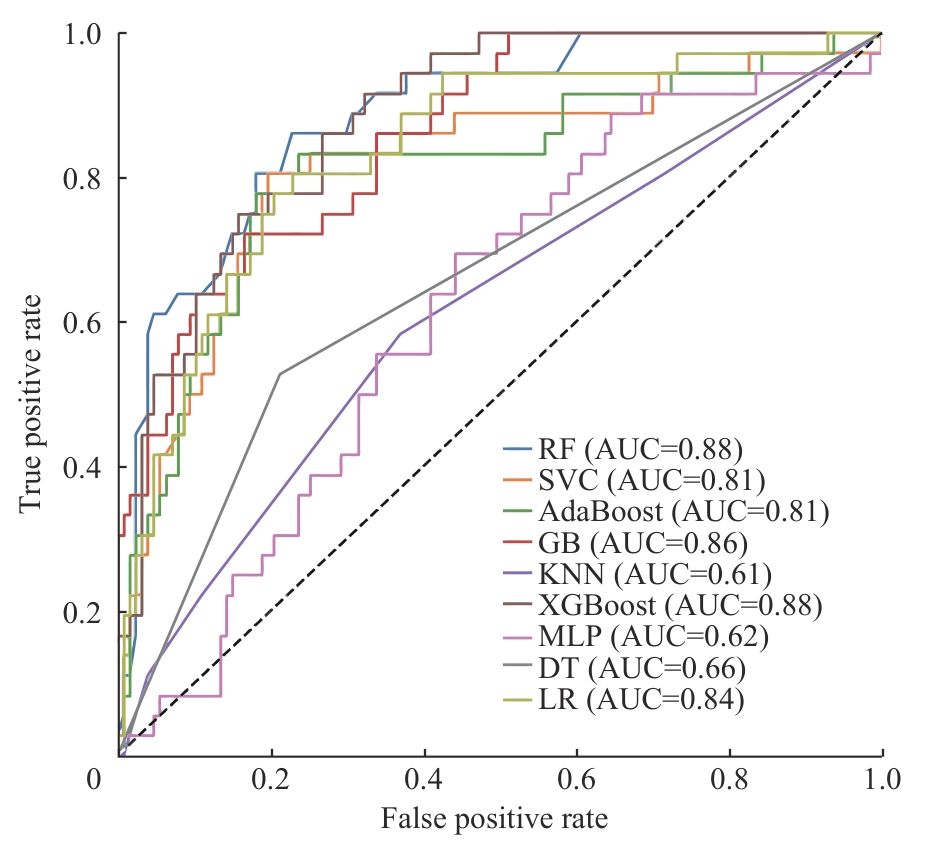
Fig 1 ROC curves of different models
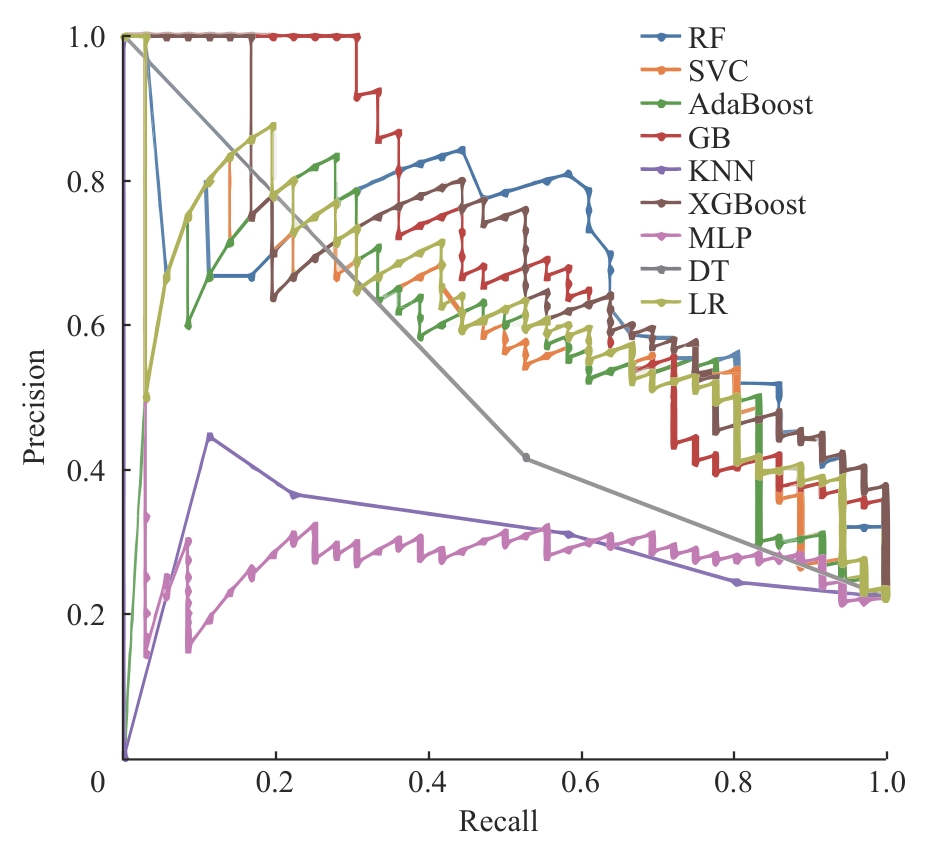
Fig 2 PR curves of different models
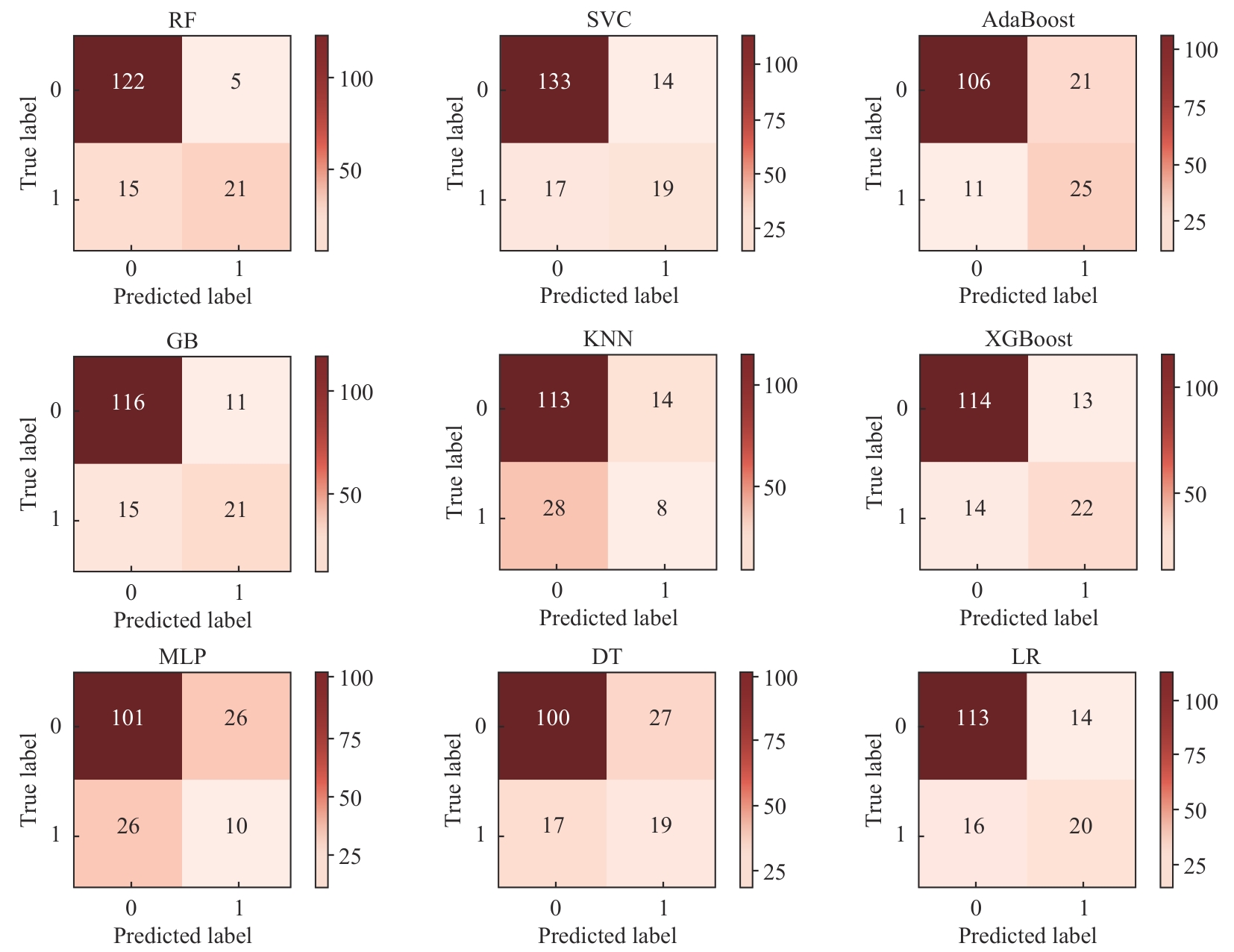
Fig 3 Confusion matrices of different models
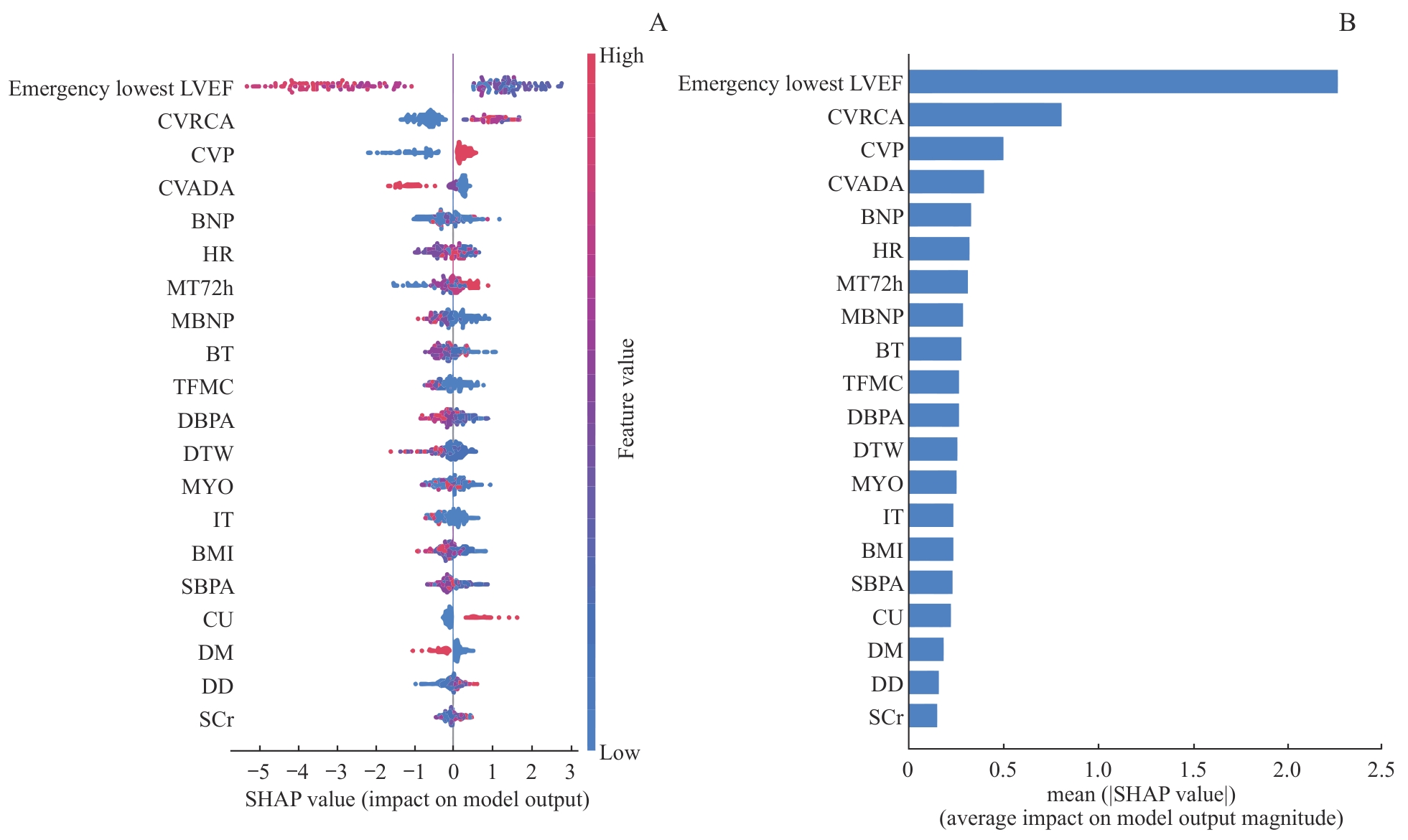
Fig 4 Importance analysis of the top 20 features
| [1] | WEIGHT N, MOLEDINA S, SANTOS VOLGMAN A, et al. Socioeconomic disparities in the management and outcomes of acute myocardial infarction[J]. Heart, 2024, 110(2): 122-131. |
| [2] | KIM C J, PARK M W, KIM M C, et al. Unguided de-escalation from ticagrelor to clopidogrel in stabilised patients with acute myocardial infarction undergoing percutaneous coronary intervention (TALOS-AMI): an investigator-initiated, open-label, multicentre, non-inferiority, randomised trial[J]. Lancet, 2021, 398(10308): 1305-1316. |
| [3] | OZAKI Y, TOBE A, ONUMA Y, et al. CVIT expert consensus document on primary percutaneous coronary intervention (PCI) for acute coronary syndromes (ACS) in 2024[J]. Cardiovasc Interv Ther, 2024, 39(4): 335-375. |
| [4] | MEIMOUN P, ABDANI S, STRACCHI V, et al. Usefulness of noninvasive myocardial work to predict left ventricular recovery and acute complications after acute anterior myocardial infarction treated by percutaneous coronary intervention[J]. J Am Soc Echocardiogr, 2020, 33(10): 1180-1190. |
| [5] | KANABAR K, SHARMA Y P, KRISHNAPPA D, et al. A study of the predictive role of multiple variables for the incidence of acute kidney injury and its outcomes in Indian patients with ST-elevation myocardial infarction and cardiogenic shock[J]. Egypt Heart J, 2024, 76(1): 123. |
| [6] | DOLL J A, HIRA R S, KEARNEY K E, et al. Management of percutaneous coronary intervention complications: algorithms from the 2018 and 2019 Seattle percutaneous coronary intervention complications conference[J]. Circ Cardiovasc Interv, 2020, 13(6): e008962. |
| [7] | VEREVKIN A, VON ASPERN K, LEONTYEV S, et al. Early and long-term outcomes in patients undergoing cardiac surgery following iatrogenic injuries during percutaneous coronary intervention[J]. J Am Heart Assoc, 2019, 8: e010940. |
| [8] | AHMAD Y, PETRIE M C, JOLICOEUR E M, et al. PCI in patients with heart failure: current evidence, impact of complete revascularization, and contemporary techniques to improve outcomes[J]. J Soc Cardiovasc Angiogr Interv, 2022, 1(2): 100020. |
| [9] | KIM S H, BEHNES M, MASHAYEKHI K, et al. Prognostic impact of percutaneous coronary intervention of chronic total occlusion in acute and periprocedural myocardial infarction[J]. J Clin Med, 2021, 10(2): 258. |
| [10] | JAVAID A, ZGHYER F, KIM C, et al. Medicine 2032: the future of cardiovascular disease prevention with machine learning and digital health technology[J]. Am J Prev Cardiol, 2022, 12: 100379. |
| [11] | STANOJKOVIC A, MRDOVIC I, TOSIC I, et al. Prognostic value of the RISK-PCI score in patients with non-ST-segment elevation acute myocardial infarction[J]. J Clin Med, 2025, 14(8): 2727. |
| [15] | ANGARAN P, DORIAN P, HA A, et al. P2618Association of left ventricular ejection fraction with mortality and hospitalizations[J]. Eur Heart J, 2019, 40(Supplement_1): ehz748.0941. |
| [16] | LERMAN B J, POPAT R A, ASSIMES T L, et al. Association of left ventricular ejection fraction and symptoms with mortality after elective noncardiac surgery among patients with heart failure[J]. Jama, 2019, 321(6): 572. |
| [17] | 张杰, 令狐克强, 柏小川. 老年急性非ST段抬高型心肌梗死患者PCI后心力衰竭发生的影响因素[J]. 中国老年学杂志, 2022, 42(2): 260-263. |
| ZHANG J, LINGHU K Q, BAI X C. Influencing factors of heart failure after PCI in elderly patients with acute non-ST-segment elevation myocardial infarction[J]. Chinese Journal of Gerontology, 2022, 42(2): 260-263. | |
| [18] | LIU Y P, SONG J J, WANG W Y, et al. Association of ejection fraction with mortality and cardiovascular events in patients with coronary artery disease[J]. ESC Heart Fail, 2022, 9(5): 3461-3468. |
| [19] | 张频, 熊金睿, 邹婷婷, 等. 急性心肌梗死经皮冠状动脉介入术后不良心血管事件影响因素分析[J]. 中国校医, 2022, 36(11): 833-837. |
| ZHANG P, XIONG J R, ZOU T T, et al. Analysis of influencing factors of adverse cardiovascular events after percutaneous coronary intervention in acute myocardial infarction[J]. Chinese Journal of School Doctor, 2022, 36(11): 833-837. | |
| [20] | HU M J, LU Y, WAN S P, et al. Long-term outcomes in inferior ST-segment elevation myocardial infarction patients with right ventricular myocardial infarction[J]. Int J Cardiol, 2022, 351: 1-7. |
| [21] | MONIZZI G, DI LENARDA F, GALLINORO E, et al. Myocardial ischemia: differentiating between epicardial coronary artery atherosclerosis, microvascular dysfunction and vasospasm in the catheterization laboratory[J]. J Clin Med, 2024, 13(14): 4172. |
| [22] | TOSHNIWAL S S, TOSHNIWAL S S, KUMAR S, et al. Aberrant right coronary artery from the left coronary sinus presenting with inferior wall myocardial infarction[J]. Int J Appl Basic Med Res, 2024, 14(3): 199-201. |
| [23] | XIONG X, YE Q, PENG Y Q. Risk factors for electrical storms following percutaneous coronary intervention in patients with acute myocardial infarction: a meta-analysis[J]. Biomol Biomed, 2024, 24(5): 1077-1091. |
| [24] | TARANTINI G, MIGLIORE F, CADEMARTIRI F, et al. Left anterior descending artery myocardial bridging[J]. J Am Coll Cardiol, 2016, 68(25): 2887-2899. |
| [25] | MA Z, NING B, WU D, et al. Correlation between culprit vessel/tirofiban and reperfusion bradyarrhythmia in patients with ST-segment elevation myocardial infarction after emergency PCI[J]. Eur Rev Med Pharmacol Sci, 2021, 25(16): 5137-5144. |
| [26] | BHAR-AMATO J, AUROJIT R, KASSOU S, et al. Sudden cardiac death in acute coronary occlusion: potential roles of sino atrial nodal artery and conus artery[J]. Eur Heart J, 2024, 45(Supplement_1): ehae666.1672. |
| [27] | COLLET J P, THIELE H. The 'Ten Commandments' for the 2020 ESC Guidelines for the management of acute coronary syndromes in patients presenting without persistent ST-segment elevation[J]. Eur Heart J, 2020, 41(37): 3495-3497. |
| [28] | WLEKLIK M, LEE C S, LEWANDOWSKI Ł, et al. Frailty determinants in heart failure: inflammatory markers, cognitive impairment and psychosocial interaction[J]. ESC Heart Fail, 2025, 12(3): 2010-2022. |
| [29] | SHEN S H, YE J H, WU X Z, et al. Association of N-terminal pro-brain natriuretic peptide level with adverse outcomes in patients with acute myocardial infarction: a meta-analysis[J]. Heart Lung, 2021, 50(6): 863-869. |
| [30] | RAFLA S, AYAD S W, SANHOURY M. Study of bradyarrhythmias in acute myocardial infarction[J]. Egypt J Crit Care Med, 2022, 9(2): 51-56. |
| [31] | BRINZA C, FLORIA M, SCRIPCARIU D V, et al. Heart rate variability in acute myocardial infarction: results of the HeaRt-V-AMI single-center cohort study[J]. J Cardiovasc Dev Dis, 2024, 11(8): 254. |
| [1] | Zhu Menglin, Liu Xiao, Xu Xiaodan, Wang Ganhong, Xia Kaijian, Chen Jian. Prediction of delayed post-polypectomy bleeding using a multimodal model [J]. Journal of Shanghai Jiao Tong University (Medical Science), 2026, 46(4): 509-520. |
| [2] | Deng Yuying, Huang Xiuxian, Wang Sheng. Application of VA-ECMO in high-risk percutaneous coronary interventions under different clinical conditions [J]. Journal of Shanghai Jiao Tong University (Medical Science), 2026, 46(1): 123-131. |
| [3] | HUANG Xin, LIU Jiahui, YE Jingwen, QIAN Wenli, XU Wanxing, WANG Lin. Development and clinical application of a machine learning-driven model for metabolite-based diagnosis of small cell lung cancer [J]. Journal of Shanghai Jiao Tong University (Medical Science), 2025, 45(8): 1009-1016. |
| [4] | YU Zhiyuan, DONG Haiping, GAO Nan, MA Ke. Identification and mechanistic analysis of core genes associated with morphine tolerance in dorsal root ganglion: an integrative transcriptomics approach using WGCNA and machine learning algorithms [J]. Journal of Shanghai Jiao Tong University (Medical Science), 2025, 45(10): 1308-1319. |
| [5] | WU Qizhen, LIU Qiming, CHAI Yezi, TAO Zhengyu, WANG Yinan, GUO Xinning, JIANG Meng, PU Jun. Evaluation of machine learning prediction of altered inflammatory metabolic state after neoadjuvant therapy for breast cancer [J]. Journal of Shanghai Jiao Tong University (Medical Science), 2024, 44(9): 1169-1181. |
| [6] | XU Wanxing, WANG Lin, GUO Qiaomei, WANG Xueqing, LOU Jiatao. Clinical validation and application value exploration of multi-modal pulmonary nodule diagnosis model [J]. Journal of Shanghai Jiao Tong University (Medical Science), 2024, 44(8): 1030-1036. |
| [7] | LIU Yuting, YU Wanqi, HONG Wen, KANG Sang, LI Xinni, DANZENG Quyang, XIAO Huoyuan, PAN Jingwei. Predictive value of Clinical Frailty Scale in long term prognosis of patients with acute myocardial infarction after in-hospital cardiac rehabilitation [J]. Journal of Shanghai Jiao Tong University (Medical Science), 2024, 44(5): 599-605. |
| [8] | ZHENG Mengyi, MAO Jialiang, ZOU Zhiguo, ZHANG Ruilei, ZHANG Hou, LI Shiguang. Predictive value of systemic immune inflammation index and somatic symptom scale-China in the occurrence of in-hospital major adverse cardiovascular events after first-episode of acute myocardial infarction undergoing PCI [J]. Journal of Shanghai Jiao Tong University (Medical Science), 2024, 44(3): 334-341. |
| [9] | MA Ben, ZHAO Cheng, SHU Yijun, DONG Ping. Application progress of CT radiomics in gastrointestinal stromal tumor [J]. Journal of Shanghai Jiao Tong University (Medical Science), 2023, 43(7): 923-930. |
| [10] | XU Li, YANG Yan, CHEN Hanfen, JIANG Meng, PU Jun. Study on influencing factors and effect evaluation of patients with acute myocardial infarction in the cardiac rehabilitation center [J]. Journal of Shanghai Jiao Tong University (Medical Science), 2022, 42(5): 646-652. |
| [11] | Xin LI, Qing FAN. Application progress of machine learning in the study of facial features of patients with depression [J]. JOURNAL OF SHANGHAI JIAOTONG UNIVERSITY (MEDICAL SCIENCE), 2022, 42(1): 124-129. |
| [12] | Jian-xun DONG, Lai WEI, Jie HE, Ling-cong KONG, Heng GE, Jun PU. Progress of cardiac magnetic resonance in assessment of left ventricular mechanical dyssynchrony [J]. JOURNAL OF SHANGHAI JIAOTONG UNIVERSITY (MEDICAL SCIENCE), 2021, 41(12): 1698-1702. |
| [13] | TANG Dong-juan, XUE Xiao-mei, HE Bin. Early diagnosis and prognostic evaluation value of miR-133a in patients with acute myocardial infarction [J]. , 2020, 40(3): 339-. |
| [14] | JIA Zhi-ying1, 2, DONG Min-ye1, 2, SHI Zhen-su2, 3, JIN Chun-lin4, LI Guo-hong1, 2. Study of a screening system for mild cognitive impairment based on machine learning model [J]. , 2019, 39(8): 908-. |
| [15] | XU Yu-peng1*, DU Yu-chen1, 2*, CHEN Feng-e1. Automatic layer segmentation of optical coherence tomography images in retinal vascular diseases [J]. , 2019, 39(6): 613-. |
| Viewed | ||||||
|
Full text |
|
|||||
|
Abstract |
|
|||||
