
Journal of Shanghai Jiao Tong University (Medical Science) ›› 2026, Vol. 46 ›› Issue (7): 946-953.doi: 10.3969/j.issn.1674-8115.2026.07.013
• Clinical research • Previous Articles Next Articles
Ziyawudong·Bawudong 1, Shahemu·Anaerbai 1, Asiya·Aierken 1, Yeerkenbieke·Shadeke 1, LI Guangjuan1, Jiang Meng2( )
)
Received:2025-12-01
Accepted:2026-01-27
Online:2026-07-07
Published:2026-07-07
Contact:
Jiang Meng
E-mail:jiangmeng0919@163.com
Supported by:CLC Number:
Ziyawudong·Bawudong , Shahemu·Anaerbai , Asiya·Aierken , Yeerkenbieke·Shadeke , LI Guangjuan, Jiang Meng. Novel inflammatory and metabolic biomarkers and their association with SYNTAX score in coronary heart disease[J]. Journal of Shanghai Jiao Tong University (Medical Science), 2026,(7): 946-953.
Add to citation manager EndNote|Ris|BibTeX
URL: https://xuebao.shsmu.edu.cn/EN/10.3969/j.issn.1674-8115.2026.07.013
| Characteristic | Low-risk group (n=122) | Medium-risk group (n=86) | High-risk group (n=81) | F/χ2/H value | P value |
|---|---|---|---|---|---|
| Gender/n(%) | 3.995 | 0.136 | |||
| Male | 80 (65.6) | 65 (75.6) | 50 (61.7) | ||
| Female | 42 (34.4) | 21 (24.4) | 31 (38.3) | ||
| Age/year | 61.73±8.97 | 60.84±10.63 | 63.93±9.32 | 2.305 | 0.102 |
| BMI/(kg·m-2) | 27.08±4.54 | 27.26±5.40 | 27.41±3.96 | 0.123 | 0.885 |
| Hypertension/n(%) | 1.291 | 0.524 | |||
| No | 43 (35.2) | 37 (43.0) | 31 (38.3) | ||
| Yes | 79 (64.8) | 49 (57.0) | 50 (61.7) | ||
| Diabetes mellitus/n(%) | 13.263 | 0.001 | |||
| No | 93 (76.2) | 63 (73.3) | 43 (53.1) | ||
| Yes | 29 (23.8) | 23 (26.7) | 38 (46.9) | ||
| Smoking/n(%) | 3.288 | 0.193 | |||
| No | 77 (63.1) | 44 (51.2) | 50 (61.7) | ||
| Yes | 45 (36.9) | 42 (48.8) | 31 (38.3) | ||
| Alcohol consumption/n(%) | 10.002 | 0.007 | |||
| No | 103 (84.4) | 69 (80.2) | 78 (96.3) | ||
| Yes | 19 (15.6) | 17 (19.8) | 3 (3.7) | ||
| TC/(mmol·L-1) | 4.46±1.12 | 4.49±1.39 | 4.50±1.32 | 0.038 | 0.963 |
| TG/(mmol·L-1) | 2.07±1.02 | 2.10±1.40 | 2.06±1.45 | 0.025 | 0.975 |
| HDL-C/(mmol·L-1) | 1.26±0.32 | 1.24±0.27 | 1.15±0.26 | 3.557 | 0.030 |
| LDL-C/(mmol·L-1) | 2.68±0.82 | 2.66±0.88 | 2.77±0.95 | 0.376 | 0.687 |
| LP(a)/(mg·dL-1) | 142.00 (85.00, 259.00) | 195.00 (105.77, 329.00) | 190.00 (120.00, 345.50) | 6.380 | 0.041 |
| Creatinine/(μmol·L-1) | 74.20±18.46 | 73.53±18.45 | 78.77±28.39 | 1.472 | 0.231 |
| UA/(μmol·L-1) | 297.72±99.46 | 315.94±110.88 | 294.50±92.15 | 1.149 | 0.318 |
| NPAR | 1.58 (1.45, 1.73) | 1.73 (1.55, 1.90) | 1.72 (1.45, 1.97) | 16.399 | <0.001 |
| MHR | 0.41 (0.30, 0.54) | 0.41 (0.29, 0.58) | 0.44 (0.32, 0.61) | 1.509 | 0.470 |
| FIB-4 | 34.82 (22.83, 47.30) | 35.73 (22.65, 59.41) | 33.88 (23.85, 55.25) | 0.357 | 0.748 |
Tab 1 Comparison of clinical characteristics and laboratory indices in patients with coronary heart disease according to SYNTAX score
| Characteristic | Low-risk group (n=122) | Medium-risk group (n=86) | High-risk group (n=81) | F/χ2/H value | P value |
|---|---|---|---|---|---|
| Gender/n(%) | 3.995 | 0.136 | |||
| Male | 80 (65.6) | 65 (75.6) | 50 (61.7) | ||
| Female | 42 (34.4) | 21 (24.4) | 31 (38.3) | ||
| Age/year | 61.73±8.97 | 60.84±10.63 | 63.93±9.32 | 2.305 | 0.102 |
| BMI/(kg·m-2) | 27.08±4.54 | 27.26±5.40 | 27.41±3.96 | 0.123 | 0.885 |
| Hypertension/n(%) | 1.291 | 0.524 | |||
| No | 43 (35.2) | 37 (43.0) | 31 (38.3) | ||
| Yes | 79 (64.8) | 49 (57.0) | 50 (61.7) | ||
| Diabetes mellitus/n(%) | 13.263 | 0.001 | |||
| No | 93 (76.2) | 63 (73.3) | 43 (53.1) | ||
| Yes | 29 (23.8) | 23 (26.7) | 38 (46.9) | ||
| Smoking/n(%) | 3.288 | 0.193 | |||
| No | 77 (63.1) | 44 (51.2) | 50 (61.7) | ||
| Yes | 45 (36.9) | 42 (48.8) | 31 (38.3) | ||
| Alcohol consumption/n(%) | 10.002 | 0.007 | |||
| No | 103 (84.4) | 69 (80.2) | 78 (96.3) | ||
| Yes | 19 (15.6) | 17 (19.8) | 3 (3.7) | ||
| TC/(mmol·L-1) | 4.46±1.12 | 4.49±1.39 | 4.50±1.32 | 0.038 | 0.963 |
| TG/(mmol·L-1) | 2.07±1.02 | 2.10±1.40 | 2.06±1.45 | 0.025 | 0.975 |
| HDL-C/(mmol·L-1) | 1.26±0.32 | 1.24±0.27 | 1.15±0.26 | 3.557 | 0.030 |
| LDL-C/(mmol·L-1) | 2.68±0.82 | 2.66±0.88 | 2.77±0.95 | 0.376 | 0.687 |
| LP(a)/(mg·dL-1) | 142.00 (85.00, 259.00) | 195.00 (105.77, 329.00) | 190.00 (120.00, 345.50) | 6.380 | 0.041 |
| Creatinine/(μmol·L-1) | 74.20±18.46 | 73.53±18.45 | 78.77±28.39 | 1.472 | 0.231 |
| UA/(μmol·L-1) | 297.72±99.46 | 315.94±110.88 | 294.50±92.15 | 1.149 | 0.318 |
| NPAR | 1.58 (1.45, 1.73) | 1.73 (1.55, 1.90) | 1.72 (1.45, 1.97) | 16.399 | <0.001 |
| MHR | 0.41 (0.30, 0.54) | 0.41 (0.29, 0.58) | 0.44 (0.32, 0.61) | 1.509 | 0.470 |
| FIB-4 | 34.82 (22.83, 47.30) | 35.73 (22.65, 59.41) | 33.88 (23.85, 55.25) | 0.357 | 0.748 |
| Characteristic | Low-risk group (n=122) | Intermediate-high-risk group (n=167) | t/χ2/Z value | P value |
|---|---|---|---|---|
| Gender/n(%) | 0.347 | 0.556 | ||
| Male | 80 (65.6) | 115 (68.9) | ||
| Female | 42 (34.4) | 52 (31.1) | ||
| Age/year | 61.73±8.97 | 62.34±10.11 | -0.527 | 0.598 |
| BMI/(kg·m-2) | 27.08±4.54 | 27.33±4.75 | -0.449 | 0.654 |
| Hypertension/n(%) | 0.893 | 0.345 | ||
| No | 43 (35.2) | 68 (40.7) | ||
| Yes | 79 (64.8) | 99 (59.3) | ||
| Diabetes mellitus/n(%) | 5.350 | 0.021 | ||
| No | 93 (76.2) | 106 (63.5) | ||
| Yes | 29 (23.8) | 61 (36.5) | ||
| Smoking/n(%) | 1.360 | 0.244 | ||
| No | 77 (63.1) | 94 (56.3) | ||
| Yes | 45 (36.9) | 73 (43.7) | ||
| Alcohol consumption/n(%) | 0.782 | 0.377 | ||
| No | 103 (84.4) | 147 (88.0) | ||
| Yes | 19 (15.6) | 20 (12.0) | ||
| TC/(mmol·L-1) | 4.46±1.12 | 4.50±1.35 | -0.272 | 0.786 |
| TG/(mmol·L-1) | 2.07±1.02 | 2.08±1.42 | -0.081 | 0.935 |
| HDL-C/(mmol·L-1) | 1.26±0.32 | 1.20±0.27 | 2.974 | 0.086 |
| LDL-C/(mmol·L-1) | 2.68±0.82 | 2.71±0.91 | -0.313 | 0.754 |
| LP(a)/(mg·dL-1) | 142.00 (85.00, 259.00) | 191.00 (108.00, 343.00) | -2.491 | 0.013 |
| Creatinine/(μmol·L-1) | 74.20±18.46 | 76.07±23.87 | -0.719 | 0.473 |
| UA/(μmol·L-1) | 297.72±99.46 | 305.54±102.48 | -0.648 | 0.518 |
| NPAR | 1.58 (1.45, 1.73) | 1.72 (1.52, 1.95) | -3.852 | <0.001 |
| MHR | 0.41 (0.30, 0.54) | 1.72 (1.52, 1.95) | -0.902 | 0.367 |
| FIB-4 | 34.82 (22.83, 47.30) | 34.66 (23.85, 56.65) | -0.721 | 0.471 |
Tab 2 Comparison of clinical characteristics and laboratory indices between the low-risk and intermediate-high-risk SYNTAX score groups in patients with coronary heart disease
| Characteristic | Low-risk group (n=122) | Intermediate-high-risk group (n=167) | t/χ2/Z value | P value |
|---|---|---|---|---|
| Gender/n(%) | 0.347 | 0.556 | ||
| Male | 80 (65.6) | 115 (68.9) | ||
| Female | 42 (34.4) | 52 (31.1) | ||
| Age/year | 61.73±8.97 | 62.34±10.11 | -0.527 | 0.598 |
| BMI/(kg·m-2) | 27.08±4.54 | 27.33±4.75 | -0.449 | 0.654 |
| Hypertension/n(%) | 0.893 | 0.345 | ||
| No | 43 (35.2) | 68 (40.7) | ||
| Yes | 79 (64.8) | 99 (59.3) | ||
| Diabetes mellitus/n(%) | 5.350 | 0.021 | ||
| No | 93 (76.2) | 106 (63.5) | ||
| Yes | 29 (23.8) | 61 (36.5) | ||
| Smoking/n(%) | 1.360 | 0.244 | ||
| No | 77 (63.1) | 94 (56.3) | ||
| Yes | 45 (36.9) | 73 (43.7) | ||
| Alcohol consumption/n(%) | 0.782 | 0.377 | ||
| No | 103 (84.4) | 147 (88.0) | ||
| Yes | 19 (15.6) | 20 (12.0) | ||
| TC/(mmol·L-1) | 4.46±1.12 | 4.50±1.35 | -0.272 | 0.786 |
| TG/(mmol·L-1) | 2.07±1.02 | 2.08±1.42 | -0.081 | 0.935 |
| HDL-C/(mmol·L-1) | 1.26±0.32 | 1.20±0.27 | 2.974 | 0.086 |
| LDL-C/(mmol·L-1) | 2.68±0.82 | 2.71±0.91 | -0.313 | 0.754 |
| LP(a)/(mg·dL-1) | 142.00 (85.00, 259.00) | 191.00 (108.00, 343.00) | -2.491 | 0.013 |
| Creatinine/(μmol·L-1) | 74.20±18.46 | 76.07±23.87 | -0.719 | 0.473 |
| UA/(μmol·L-1) | 297.72±99.46 | 305.54±102.48 | -0.648 | 0.518 |
| NPAR | 1.58 (1.45, 1.73) | 1.72 (1.52, 1.95) | -3.852 | <0.001 |
| MHR | 0.41 (0.30, 0.54) | 1.72 (1.52, 1.95) | -0.902 | 0.367 |
| FIB-4 | 34.82 (22.83, 47.30) | 34.66 (23.85, 56.65) | -0.721 | 0.471 |
| Variable | B | SE | Wald | df | P value | OR(95%CI) |
|---|---|---|---|---|---|---|
| Diabetes mellitus (yes) | 0.570 | 0.278 | 4.185 | 1 | 0.041 | 1.768 (1.024‒3.051) |
| NPAR | 1.684 | 0.453 | 13.810 | 1 | <0.001 | 5.386 (2.216‒13.089) |
| LP(a) | 0.002 | 0.001 | 4.084 | 1 | 0.043 | 1.002 (1.000‒1.003) |
| Constant | -3.019 | 0.792 | 14.512 | 1 | <0.001 | 0.049 |
Tab 3 Multivariate Logistic regression analysis of factors associated with a high SYNTAX score in patients with coronary heart disease
| Variable | B | SE | Wald | df | P value | OR(95%CI) |
|---|---|---|---|---|---|---|
| Diabetes mellitus (yes) | 0.570 | 0.278 | 4.185 | 1 | 0.041 | 1.768 (1.024‒3.051) |
| NPAR | 1.684 | 0.453 | 13.810 | 1 | <0.001 | 5.386 (2.216‒13.089) |
| LP(a) | 0.002 | 0.001 | 4.084 | 1 | 0.043 | 1.002 (1.000‒1.003) |
| Constant | -3.019 | 0.792 | 14.512 | 1 | <0.001 | 0.049 |
| Variable | AUC | SE① | P value② | 95%CI |
|---|---|---|---|---|
| NPAR | 0.641 | 0.033 | <0.001 | 0.576‒0.705 |
| MHR | 0.530 | 0.035 | 0.390 | 0.462‒0.598 |
| FIB-4 | 0.525 | 0.035 | 0.478 | 0.457‒0.593 |
| LP(a) | 0.572 | 0.034 | 0.038 | 0.505‒0.639 |
| Combination of NPAR and LP(a) | 0.665 | 0.032 | <0.001 | 0.602‒0.728 |
Tab 4 ROC curve analysis of the diagnostic performance of NPAR, LP(a), and other indicators for predicting the severity of coronary artery lesions
| Variable | AUC | SE① | P value② | 95%CI |
|---|---|---|---|---|
| NPAR | 0.641 | 0.033 | <0.001 | 0.576‒0.705 |
| MHR | 0.530 | 0.035 | 0.390 | 0.462‒0.598 |
| FIB-4 | 0.525 | 0.035 | 0.478 | 0.457‒0.593 |
| LP(a) | 0.572 | 0.034 | 0.038 | 0.505‒0.639 |
| Combination of NPAR and LP(a) | 0.665 | 0.032 | <0.001 | 0.602‒0.728 |
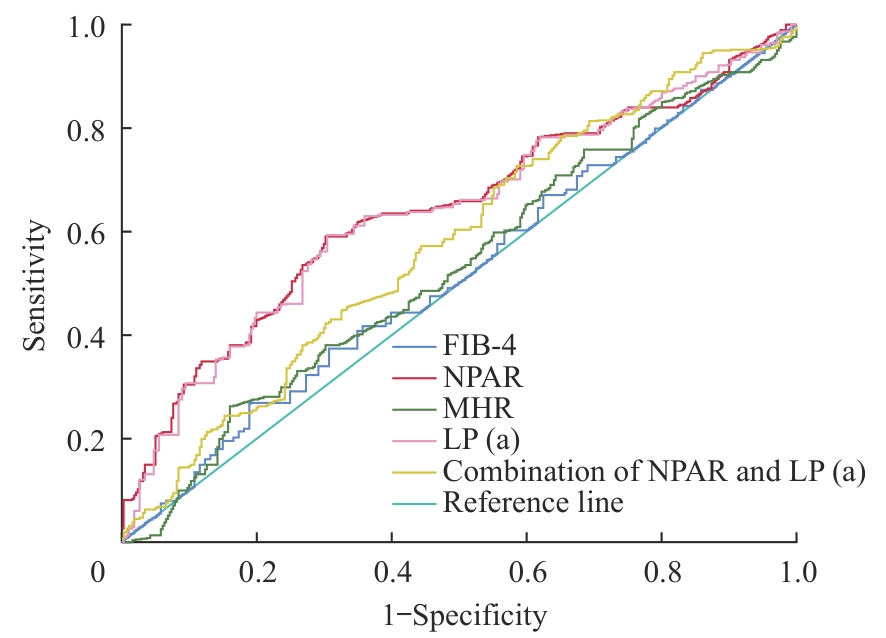
Fig 1 ROC curve analysis of NPAR, LP(a), and other indicators for predicting a high SYNTAX score risk in patients with coronary heart disease
| [1] | Xu M, Chen H, Li H W. The association between SYNTAX score and long-term outcomes in patients with unstable angina pectoris: a single-centre retrospective study[J]. BMC Cardiovasc Disord, 2022, 22(1): 155. |
| [2] | Berman A N, Biery D W, Besser S A, et al. Lipoprotein(a) and major adverse cardiovascular events in patients with or without baseline atherosclerotic cardiovascular disease[J]. J Am Coll Cardiol, 2024, 83(9): 873-886. |
| [3] | Al Hageh C, Chacar S, Ghassibe-Sabbagh M, et al. Elevated Lp(a) levels correlate with severe and multiple coronary artery stenotic lesions[J]. Vasc Health Risk Manag, 2023, 19: 31-41. |
| [4] | Karaca M, Gumusdag A. Prognostic role of neutrophil percentage-to-albumin ratio in patients with non-ST-elevation myocardial infarction[J]. Medicina (Kaunas), 2024, 60(12): 2101. |
| [5] | 张芹, 程毅松, 贾禹, 等. 中性粒细胞百分比与白蛋白比值对急性ST段抬高型心肌梗死患者预后的预测价值分析[J]. 临床急诊杂志, 2020, 21(5): 354-358. |
| Zhang Q, Cheng Y S, Jia Y, et al. Prognostic value of neutrophil percentage-albumin ratio in patients with acute ST-segment elevation myocardial infarction[J]. Journal of Clinical Emergency, 2020, 21(5): 354-358. | |
| [6] | 董磊, 樊泽元. 中性粒细胞百分比/白蛋白比值(NPAR)对冠状动脉支架内再狭窄的预测价值[J]. 吉林医学, 2020, 41(11): 2565-2567. |
| Dong L, Fan Z Y. Predictive value of the neutrophil percentage to albumin ratio (NPAP) for coronary in-stent restenosis[J]. Jilin Medical Journal, 2020, 41(11): 2565-2567. | |
| [7] | Kundi H, Kiziltunc E, Cetin M, et al. Association of monocyte/HDL-C ratio with SYNTAX scores in patients with stable coronary artery disease[J]. Herz, 2016, 41(6): 523-529. |
| [8] | 刘敬敬, 候慧娟, 徐冰. 基于四因素的肝纤维化指数、纤维蛋白原和谷氨酰转肽酶水平与急性心肌梗死患者冠状动脉病变程度的关系[J]. 山东医药, 2024, 64(31): 71-74. |
| Liu J J, Hou H J, Xu B. Relationship between hepatic fibrosis index, fibrinogen and glutamyltranspeptidase levels and severity of coronary artery disease in patients with acute myocardial infarction based on four factors[J]. Shandong Medical Journal, 2024, 64(31): 71-74. | |
| [9] | 中国高血压防治指南修订委员会, 高血压联盟(中国), 中国医疗保健国际交流促进会高血压病学分会, 等. 中国高血压防治指南(2024年修订版)[J]. 中华高血压杂志(中英文), 2024, 32(7): 603-700. |
| Revision Committee of the Chinese Guidelines for the Prevention and Treatment of Hypertension, Hypertension League of China, Hypertension Branch of China International Exchange and Promotive Association for Medical and Health Care, et al. Chinese guidelines for the prevention and treatment of hypertension (2024 revised edition)[J]. Chinese Journal of Hypertension, 2024, 32(7): 603-700. | |
| [10] | 中华医学会糖尿病学分会, 国家基层糖尿病防治管理办公室. 国家基层糖尿病防治管理指南 (2022)[J]. 中华内科杂志, 2022, 61(3): 249-262. |
| Chinese Diabetes Society, National Office for Primary Diabetes Care. National guidelines for the prevention and control of diabetes in primary care (2022)[J]. Chinese Journal of Internal Medicine, 2022, 61(3): 249-262. | |
| [11] | Garg S, Sarno G, Garcia-Garcia H M, et al. A new tool for the risk stratification of patients with complex coronary artery disease: the Clinical SYNTAX Score[J]. Circ Cardiovasc Interv, 2010, 3(4): 317-326. |
| [12] | Sianos G, Morel M A, Kappetein A P, et al. The SYNTAX Score: an angiographic tool grading the complexity of coronary artery disease[J]. EuroIntervention, 2005, 1(2): 219-227. |
| [13] | 杨坤, 邓勇志. 冠心病左主干和(或)三支病变介入治疗与冠脉旁路移植的比较研究进展[J]. 中国体外循环杂志, 2023, 21(6): 376-380. |
| Yang K, Deng Y Z. The advances of interventional therapy and coronary artery bypass grafting for left main and/or triple vessel disease of coronary artery disease[J]. Chinese Journal of Extracorporeal Circulation, 2023, 21(6): 376-380. | |
| [14] | Serruys P W, Morice M C, Kappetein A P, et al. Percutaneous coronary intervention versus coronary-artery bypass grafting for severe coronary artery disease[J]. N Engl J Med, 2009, 360(10): 961-972. |
| [15] | 徐明星, 刘文秀, 赵德超. 中性粒细胞及其相关因子与血管内皮功能障碍的研究进展[J]. 疑难病杂志, 2021, 20(8): 846-849. |
| Xu M X, Liu W X, Zhao D C. Research progress of neutrophils and related factors and vascular endothelial dysfunction[J]. Chinese Journal of Difficult and Complicated Cases, 2021, 20(8): 846-849. | |
| [16] | Wada H, Dohi T, Miyauchi K, et al. Impact of serum albumin levels on long-term outcomes in patients undergoing percutaneous coronary intervention[J]. Heart Vessels, 2017, 32(9): 1085-1092. |
| [17] | Kanbay M, Solak Y, Unal H U, et al. Monocyte count/HDL cholesterol ratio and cardiovascular events in patients with chronic kidney disease[J]. Int Urol Nephrol, 2014, 46(8): 1619-1625. |
| [18] | Cetin E H, Cetin M S, Canpolat U, et al. Monocyte/HDL-cholesterol ratio predicts the definite stent thrombosis after primary percutaneous coronary intervention for ST-segment elevation myocardial infarction[J]. Biomark Med, 2015, 9(10): 967-977. |
| [19] | Akboga M K, Balci K G, Maden O, et al. Usefulness of monocyte to HDL-cholesterol ratio to predict high SYNTAX score in patients with stable coronary artery disease[J]. Biomark Med, 2016, 10(4): 375-383. |
| [20] | Kaynak C, Ozmen E, Aslan M. The importance of monocyte-to-high density lipoprotein-cholesterol ratio in predicting severity of coronary artery disease in acute coronary syndrome[J]. Niger J Clin Pract, 2025, 28(3): 287-293. |
| [21] | Sterling R K, Lissen E, Clumeck N, et al. Development of a simple noninvasive index to predict significant fibrosis in patients with HIV/HCV coinfection[J]. Hepatology, 2006, 43(6): 1317-1325. |
| [22] | Athyros V G, Katsiki N, Mikhailidis D P. Letter: statins and cirrhosis[J]. Aliment Pharmacol Ther, 2017, 46(11/12): 1123-1124. |
| [23] | Ruscica M, Sirtori C R, Corsini A, et al. Lipoprotein(a): knowns, unknowns and uncertainties[J]. Pharmacol Res, 2021, 173: 105812. |
| [1] | LI Yang, MA Jun, DU Yihong, XU Li, CHEN Hanfen, QIU Xunhan, JIANG Meng, PU Jun. Correlation between body compositions and cardiopulmonary fitness in patients with coronary heart disease [J]. Journal of Shanghai Jiao Tong University (Medical Science), 2024, 44(1): 72-78. |
| [2] | LIU Xia, WEN Fule, ZHANG Yaqing. Path analysis of influencing factors of outpatient cardiac rehabilitation program participation of patients with coronary heart disease in Shanghai [J]. Journal of Shanghai Jiao Tong University (Medical Science), 2022, 42(8): 1110-1115. |
| [3] | JIANG Huiru, LI Zheng, MA Zhuoran, WEI Lin, YUAN Ancai, HU Liuhua, CHEN Xiaoyu, GUO Yunyue, ZHANG Wei, PU Jun. Baseline characteristics and lifestyle factors of single and co-morbidity of cardio-cerebrovascular diseases in Shanghai Community Elderly Cohort [J]. Journal of Shanghai Jiao Tong University (Medical Science), 2022, 42(3): 282-289. |
| [4] | LIANG Cunyu, ZHAO Qian, SONG Ning, MEN Li, CHEN Qingjie, CHU Junkun, PU Jun, LI Xiaomei, YANG Yining. Evaluation of the management effect of "Internet+"-based wearable ECG devices in coronary heart disease patients undergoing PCI [J]. Journal of Shanghai Jiao Tong University (Medical Science), 2022, 42(3): 275-281. |
| [5] | ZHANG Mengji, HUANG Lin, LI Zheng, MA Zhuoran, WEI Lin, YUAN Ancai, HU Liuhua, ZHANG Wei, QIAN Kun, PU Jun. Plasma metabolic signature of cardiovascular and cerebrovascular diseases from a large cohort study [J]. Journal of Shanghai Jiao Tong University (Medical Science), 2022, 42(3): 259-266. |
| [6] | LIU Xia, WEN Fule, ZHANG Yaqing. Investigation and related factor analysis of barriers to outpatient cardiac rehabilitation in patients with coronary heart disease [J]. Journal of Shanghai Jiao Tong University (Medical Science), 2022, 42(10): 1448-1457. |
| [7] | YANG Hui, ZHAO Ya-jie, YU Qiang, et al. Impact of glutathione system on coronary heart diseases [J]. , 2013, 33(9): 1259-. |
| [8] | WANG Tao, CAI Mei-qin. Meta-analysis of risk of trans fatty acids on coronary heart diseases [J]. , 2011, 31(8): 1164-. |
| [9] | GUAN Ze-hong, ZHOU Shan-hong, HONG Jie-xin. Optimization of evaluating indices of coronary heart diseases by treadmill exercise test [J]. , 2011, 31(2): 248-. |
| [10] | HU Wei, GU Jun, ZHANG Da-dong. Two cases report of psoriasis complicated with coronary heart disease [J]. , 2010, 30(2): 247-. |
| [11] | ZHANG Jun-feng, WANG Chang-qian, WANG Jin, et al. Relationship between extracellular matrix metalloproteinase inducer and clinical type of coronary heart disease [J]. , 2009, 29(12): 1431-. |
| Viewed | ||||||
|
Full text |
|
|||||
|
Abstract |
|
|||||
