
Journal of Shanghai Jiao Tong University (Medical Science) ›› 2022, Vol. 42 ›› Issue (5): 562-569.doi: 10.3969/j.issn.1674-8115.2022.05.002
• Basic research • Previous Articles Next Articles
DONG Jiaoyun( ), SONG Fei(), LU Shuliang, LIU Yan(), TIAN Ming()
Received:2022-01-24
Accepted:2022-05-06
Online:2022-05-28
Published:2022-05-28
Contact:
LIU Yan,TIAN Ming
E-mail:dongjiaoyun@hotmail.com;fayex3@126.com。;ly10515@rjh.com.cn;tianming198@163.com
Supported by:CLC Number:
DONG Jiaoyun, SONG Fei, LU Shuliang, LIU Yan, TIAN Ming. Effects of cryogen spray combined with polymeric hydrogel on acute burn wounds[J]. Journal of Shanghai Jiao Tong University (Medical Science), 2022,(5): 562-569.
Add to citation manager EndNote|Ris|BibTeX
URL: https://xuebao.shsmu.edu.cn/EN/10.3969/j.issn.1674-8115.2022.05.002
| Test | Skin response | Score |
|---|---|---|
| Erythema and eschar formation | No erythema | 0 |
| Very slight erythema (barely perceptible) | 1 | |
| Well-defined erythema | 2 | |
| Moderate to severe erythema | 3 | |
| Severe erythema (beet-redness) to slight eschar formation (injuries in depth) | 4 | |
| Edema formation | No edema | 0 |
| Very slight edema (barely perceptible) | 1 | |
| Slight edema (edges of area well-defined by definite raising) | 2 | |
| Moderate edema (raised approximately 1.0 mm) | 3 | |
| Severe edema (raised more than 1.0 mm and extending beyond exposure area) | 4 | |
| Total possible score for irritation | 8 | |
Tab 1 Grading values for the skin irritation test
| Test | Skin response | Score |
|---|---|---|
| Erythema and eschar formation | No erythema | 0 |
| Very slight erythema (barely perceptible) | 1 | |
| Well-defined erythema | 2 | |
| Moderate to severe erythema | 3 | |
| Severe erythema (beet-redness) to slight eschar formation (injuries in depth) | 4 | |
| Edema formation | No edema | 0 |
| Very slight edema (barely perceptible) | 1 | |
| Slight edema (edges of area well-defined by definite raising) | 2 | |
| Moderate edema (raised approximately 1.0 mm) | 3 | |
| Severe edema (raised more than 1.0 mm and extending beyond exposure area) | 4 | |
| Total possible score for irritation | 8 | |
Mean skin irritation intensity score | Intensity grading value |
|---|---|
| 0‒<0.5 | No irritation |
| 0.5‒<2.0 | Sight irritation |
| 2.0‒<6.0 | Moderate irritation |
| 6.0‒<8.0 | Severe irritation |
Tab 2 Grading values for the skin irritation intensity
Mean skin irritation intensity score | Intensity grading value |
|---|---|
| 0‒<0.5 | No irritation |
| 0.5‒<2.0 | Sight irritation |
| 2.0‒<6.0 | Moderate irritation |
| 6.0‒<8.0 | Severe irritation |
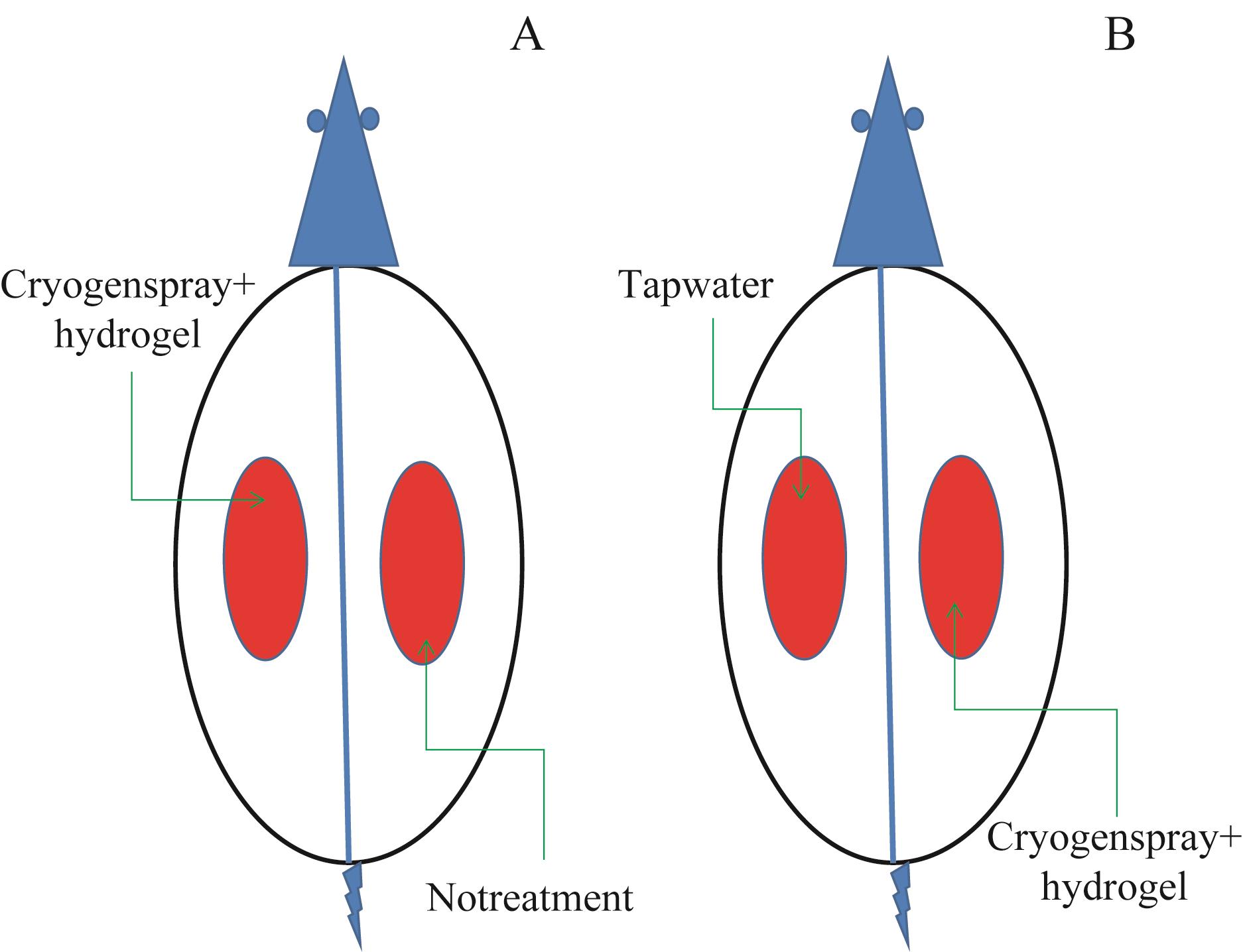
Fig 1 Schematic diagram of wound treatment of rats in each group after injury
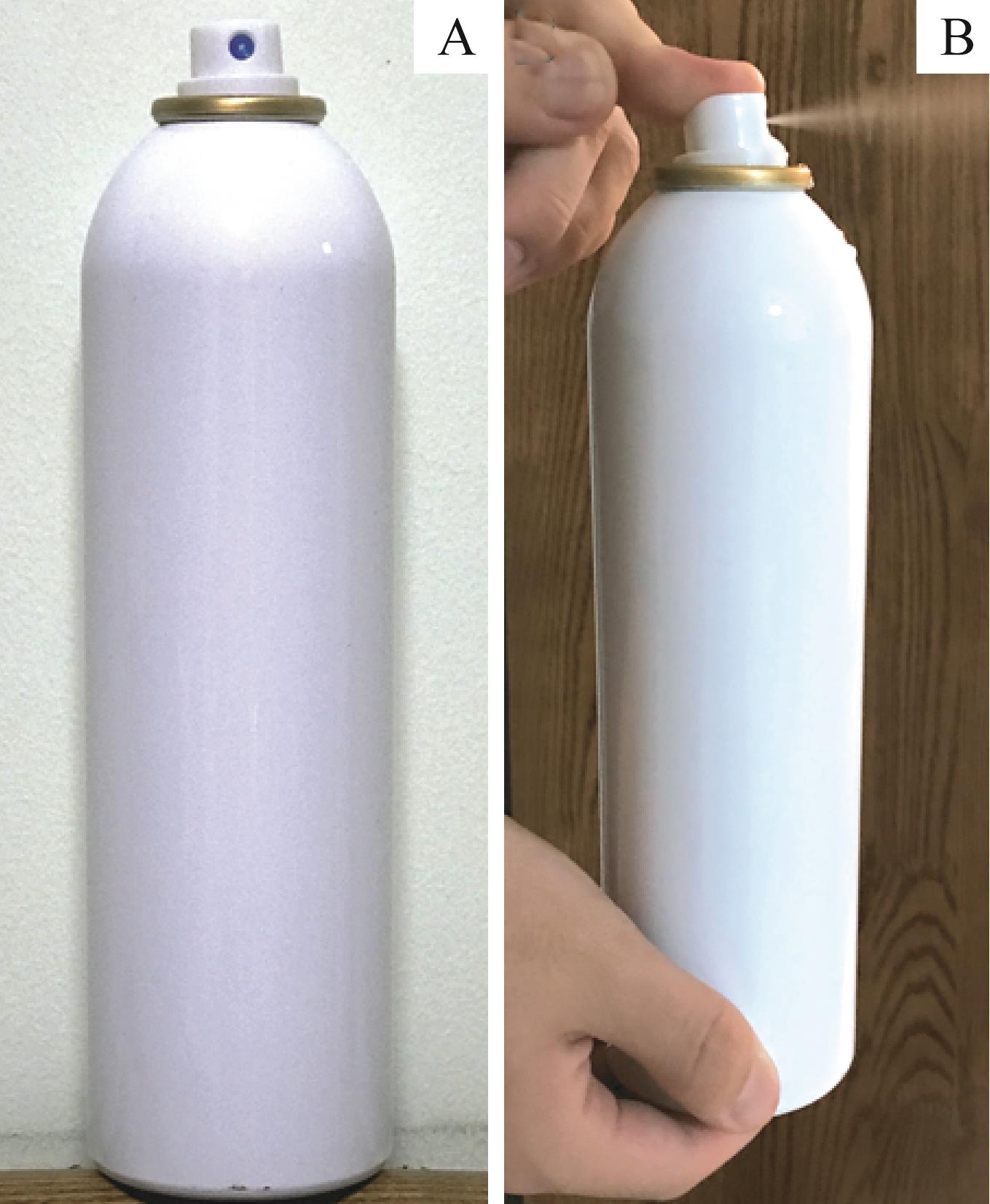
Fig 2 The high-pressure cryogen spray tank
| Formula | Cooling time/s | |||
|---|---|---|---|---|
| Repeat 1 | Repeat 2 | Repeat 3 | Average | |
| Ordinary tap water | 49.57 | 43.83 | 45.65 | 46.35 |
| 10% cryogen spray | 35.68 | 40.87 | 40.00 | 38.85 |
| 15% cryogen spray | 31.72 | 34.60 | 33.50 | 33.27 |
| 20% cryogen spray | 34.50 | 31.15 | 34.80 | 33.48 |
Tab 3 The cooling rate of cryogen spray with different concentrations and ordinary tap water
| Formula | Cooling time/s | |||
|---|---|---|---|---|
| Repeat 1 | Repeat 2 | Repeat 3 | Average | |
| Ordinary tap water | 49.57 | 43.83 | 45.65 | 46.35 |
| 10% cryogen spray | 35.68 | 40.87 | 40.00 | 38.85 |
| 15% cryogen spray | 31.72 | 34.60 | 33.50 | 33.27 |
| 20% cryogen spray | 34.50 | 31.15 | 34.80 | 33.48 |

Fig 3 The hydrogel attached to a non-woven fabric
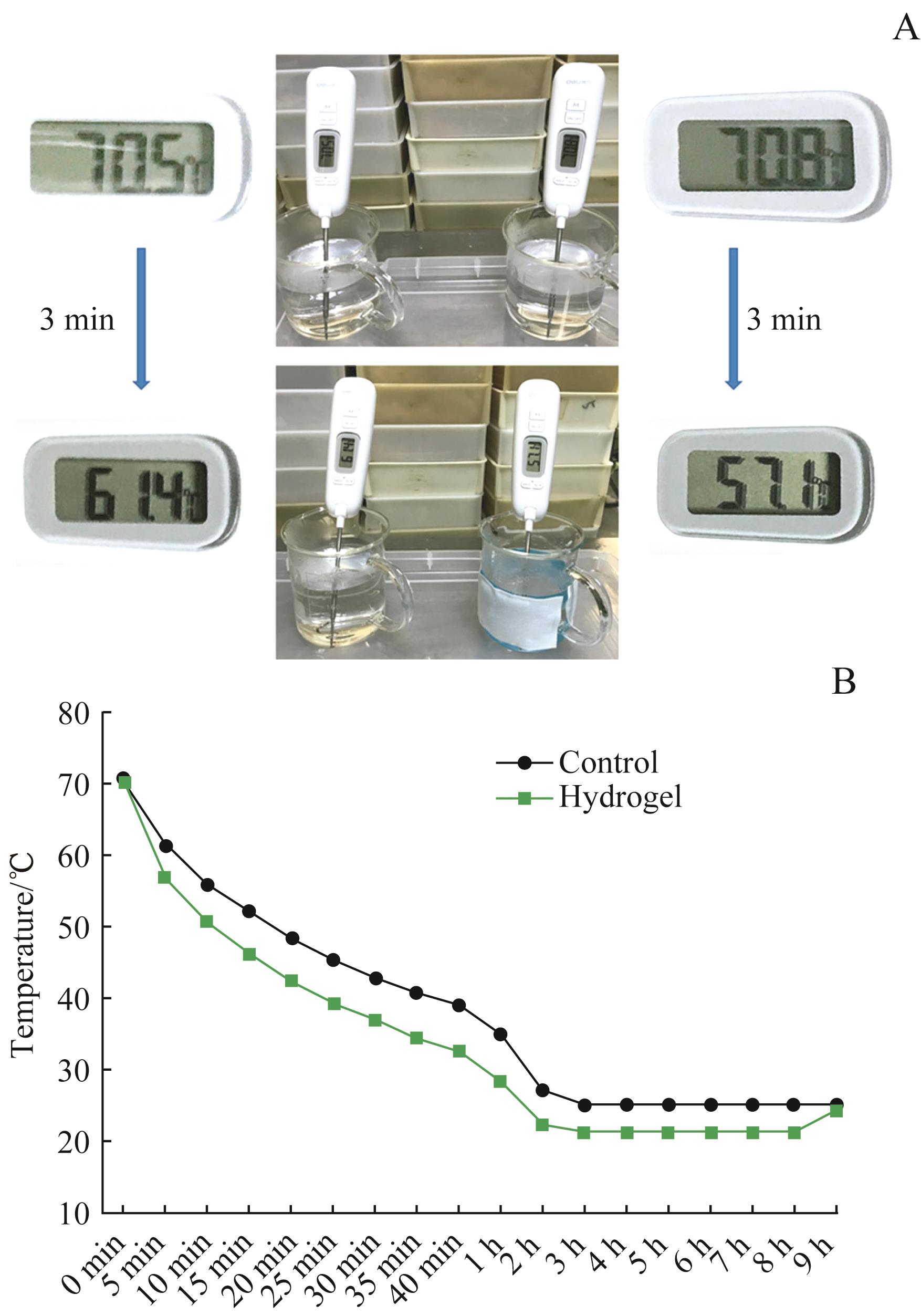
Fig 4 Cooling effect of hydrogel
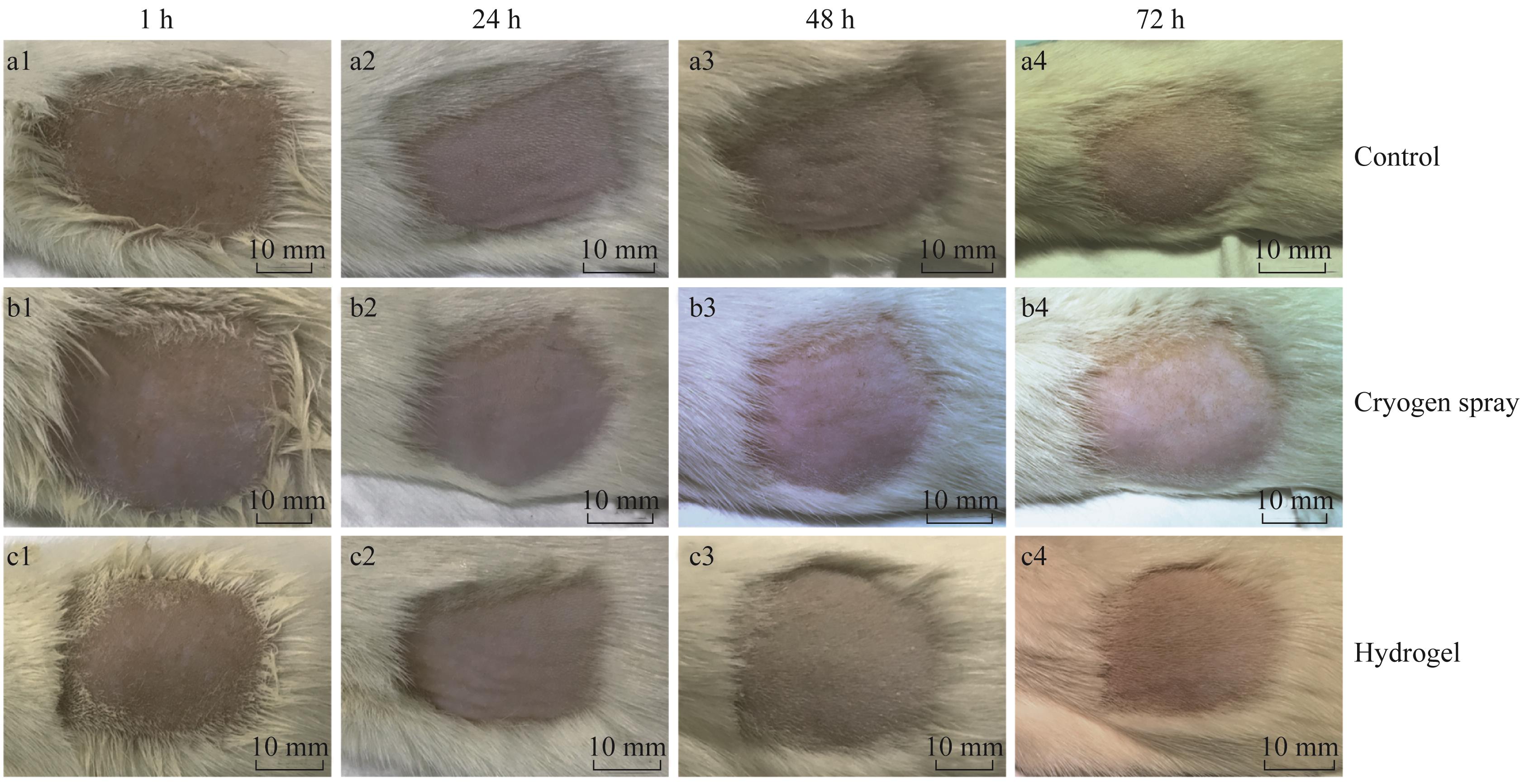
Fig 5 Effects of cryogen spray and hydrogel on skin irritation responses after different times of treatment
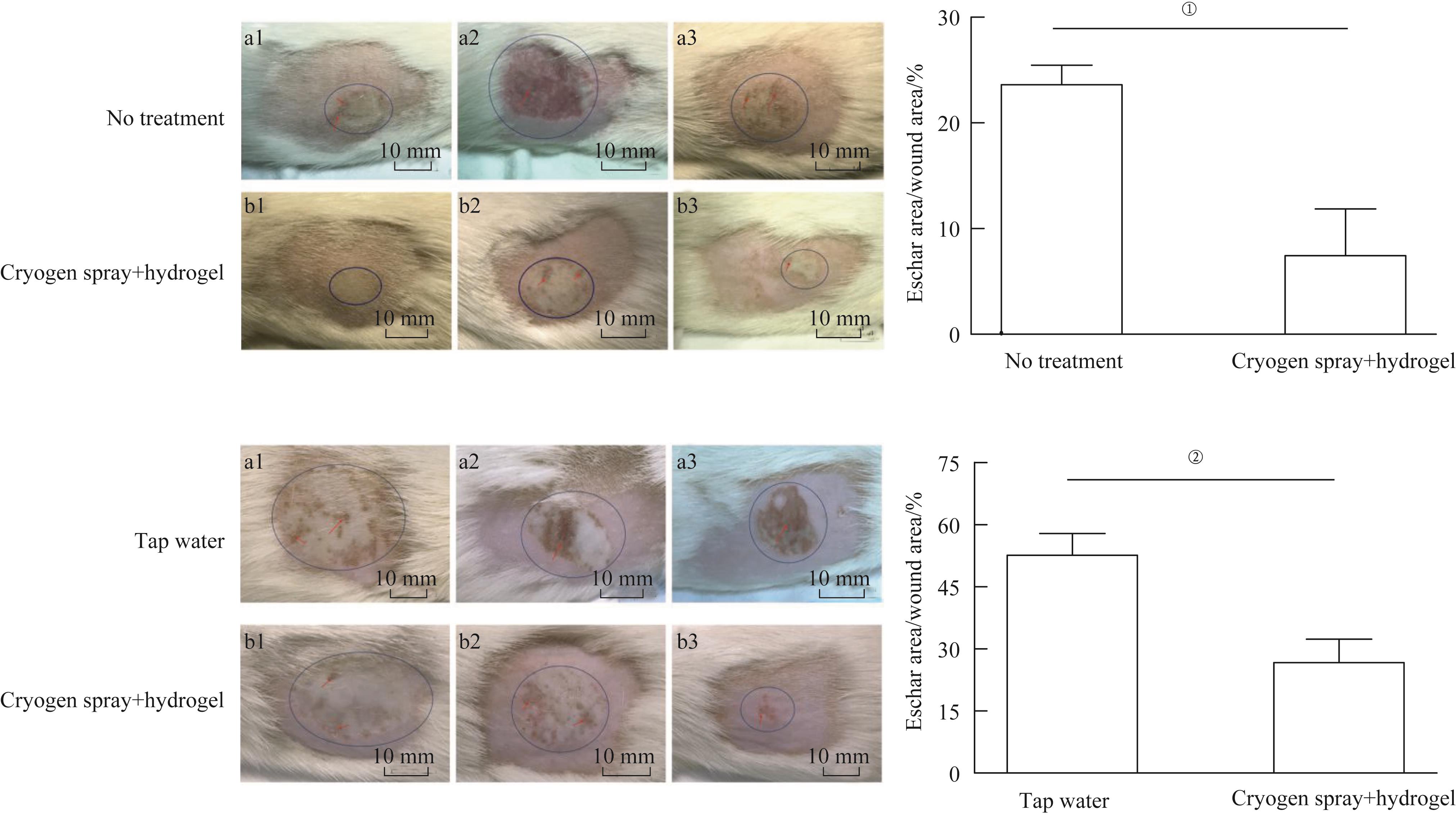
Fig 6 Effects of cryogen spray combined with hydrogel on the wound and eschar areas in the wounded skin

Fig 7 Histological observation of the wounded skin treated by cryogen spray combined with hydrogel (H-E staining, ×20)
| 1 | WORLD HEALTH ORGANIZATION. Fact sheet burns[EB/OL]. 2018[2019-04-23]. https://www.who.int/news-room/fact-sheets/detail/burns. |
| 2 | SPRONK I, EDGAR D W, VAN B M E, et al. Improved and standardized method for assessing years lived with disability after burns and its application to estimate the non-fatal burden of disease of burn injuries in Australia, New Zealand and the Netherlands[J]. BMC Public Health, 2020, 20(1):121. |
| 3 | ABDEL HAMID A A M,SOLIMAN M F M. Effect of topical aloe vera on the process of healing of full-thickness skin burn: a histological and immunohistochemical study[J]. J Histol Histopathol, 2015, 2(1): 3. |
| 4 | CHENG W,WANG S,SHEN C, et al. Epidemiology of hospitalized burn patients in china: a systematic review[J]. Burns Open, 2018, 2(1): 8-16. |
| 5 | FINNERTY C C, JESCHKE M G, BRANSKI L K, et al. Hypertrophic scarring: the greatest unmet challenge after burn injury[J]. Lancet, 2016, 388(10052):1427-1436. |
| 6 | MCCULLOH C, NORDIN A, TALBOT L J, et al. Accuracy of prehospital care providers in determining total body surface area burned in severe pediatric thermal injury[J]. J Burn Care Res, 2018, 39(4):491-496. |
| 7 | CHAN L C, LEE M S, OU Y N, et al. Energy requirements for ICU burn patients in whom the total body surface area affected exceeds 50 percent: a practical equation[J]. Asia Pac J Clin Nutr, 2018, 27(6):1182-1189. |
| 8 | SHECKTER C C, LI A, PRIDGEN B, et al. The impact of skin allograft on inpatient outcomes in the treatment of major burns 20-50% total body surface area: a propensity score matched analysis using the nationwide inpatient sample[J]. Burns, 2019, 45(1):146-156. |
| 9 | KADDOURA I, ABU-SITTAH G, IBRAHIM A, et al. Burn injury: review of pathophysiology and therapeutic modalities in major burns[J]. Ann Burns Fire Disasters, 2017, 30(2):95-102. |
| 10 | CUTTLE L, KIMBLE R M. First aid treatment of burn injuries[J]. Wound Practice & Research, 2010, 18(1): 6-13. |
| 11 | GRIFFIN B R, FREAR C C, BABL F, et al. Cool running water first aid decreases skin grafting requirements in pediatric burns: a cohort study of two thousand four hundred ninety-five children[J]. Ann Emerg Med, 2020, 75(1):75-85. |
| 12 | MOFAZZAL J M A, SAHANDI Z P, MOOSAVI B S M, et al. Nanomedicine and advanced technologies for burns: preventing infection and facilitating wound healing[J]. Adv Drug Deliv Rev, 2018, 123:33-64. |
| 13 | STOICA A E, CHIRCOV C, GRUMEZESCU A M. Hydrogel dressings for the treatment of burn wounds: an up-to-date overview[J]. Materials (Basel), 2020, 13(12). |
| 14 | YAO Y, ZHANG A, YUAN C, et al. Recent trends on burn wound care: hydrogel dressings and scaffolds[J]. Biomater Sci, 2021, 9(13):4523-4540. |
| 15 | JANDERA V, HUDSON D A, DE W P M, et al. Cooling the burn wound: evaluation of different modalites[J]. Burns, 2000, 26(3):265-270. |
| 16 | GOODWIN N S, SPINKS A, WASIAK J. The efficacy of hydrogel dressings as a first aid measure for burn wound management in the pre-hospital setting: a systematic review of the literature[J]. Int Wound J, 2016, 13(4):519-525. |
| 17 | CHO Y S, CHOI Y H. Comparison of three cooling methods for burn patients: a randomized clinical trial[J]. Burns, 2017, 43(3):502-508. |
| 18 | RAHMAN M S, ISLAM R, RANA M M, et al. Characterization of burn wound healing gel prepared from human amniotic membrane and Aloe vera extract[J]. BMC Complement Altern Med, 2019, 19(1):115. |
| 19 | KATTAN A E, ALSHOMER F, ALHUJAYRI A K, et al. Current knowledge of burn injury first aid practices and applied traditional remedies: a nationwide survey[J]. Burns Trauma, 2016, 4:37. |
| 20 | WALLACE H J, O'NEILL T B, WOOD F M, et al. Determinants of burn first aid knowledge: cross-sectional study[J]. Burns, 2013, 39(6):1162-1169. |
| 21 | CUTTLE L, PEARN J, MCMILLAN J R, et al. A review of first aid treatments for burn injuries[J]. Burns, 2009, 35(6):768-775. |
| 22 | FADEYIBI I O, IBRAHIM N A, MUSTAFA I A, et al. Practice of first aid in burn related injuries in a developing country[J]. Burns, 2015, 41(6):1322-1332. |
| 23 | HYLAND E J, HARVEY J G, HOLLAND A J. First aid for burns: too little, too late and often wrong[J]. Med J Aust, 2014, 200(2):85. |
| 24 | 王德怀, 谭子明, 康滔, 等. 冷疗应用于烧伤现场急救处理现状Meta分析[J]. 临床军医杂志, 2019, 47(6): 582-585. |
| WANG D H, TAN Z M, KANG T, et al. Meta analysis on the current situation of cold therapy applied in emergency treatment of burns[J]. Clin J Med Off, 2019, 47(6): 582-585. | |
| 25 | WANG X S,CHEN B,ZHOU Z F. Atomization and surface heat transfer characteristics of cryogen spray cooling with expansion-chambered nozzles[J]. Int J Heat Mass Transf, 2018, 121(6): 15-27. |
| 26 | CHENG W,XIE B,HAN F, et al. An experimental investigation of heat transfer enhancement by addition of high-alcohol surfactant (HAS) and dissolving salt additive (DSA) in spray cooling[J]. Exp Therm Fluid Sci, 2013, 45(2): 198-202. |
| 27 | LIU H,CAI C,JIA M, et al. Experimental investigation on spray cooling with low-alcohol additives[J]. Appl Therm Eng, 2019, 146(1): 921-930. |
| 28 | GUPTA A,KOWALCZUK M,HEASELGRAVE W, et al. The production and application of hydrogels for wound management: a review[J]. Eur Polym J, 2019, 111(2): 134-151. |
| 29 | DHALIWAL K, LOPEZ N. Hydrogel dressings and their application in burn wound care[J]. Br J Community Nurs, 2018, 23(Sup9):S24-SS27. |
| 30 | ZHANG L, YIN H, LEI X, et al. A systematic review and meta-analysis of clinical effectiveness and safety of hydrogel dressings in the management of skin wounds[J]. Front Bioeng Biotechnol, 2019, 7:342. |
| [1] | Wang Yuan, Wu Rongpu, Wang Fei, Liu Shen. Promotion of tendon healing by rosmarinic acid-based hydrogel [J]. Journal of Shanghai Jiao Tong University (Medical Science), 2026, 46(7): 868-874. |
| [2] | Lin Chao, Zou Qingsong, Qian Mingyang, Cheng Qian. Advances in oxygen microenvironment-modulating hydrogel systems for bone regeneration [J]. Journal of Shanghai Jiao Tong University (Medical Science), 2026, 46(2): 248-255. |
| [3] | XU Tongtong, RUAN Huitong. Effects of hydrogel microspheres loaded with interleukin-4 on neural functional recovery by modulating the immune microenvironment after stroke [J]. Journal of Shanghai Jiao Tong University (Medical Science), 2025, 45(9): 1161-1170. |
| [4] | ZHOU Xingdie, CHEN Zehao, LÜ Zhendong, ZHANG Yuhui, LIU Li. Effect of in situ hypoxia-inducing hydrogelon extracellular matrix secretion in the nucleus pulposus [J]. Journal of Shanghai Jiao Tong University (Medical Science), 2025, 45(8): 990-1000. |
| [5] | XU Wei, LI Meng, WANG Haoze, CUI Kai, XIAO Zeyu. Observation on the effect of hydrogel probiotics colonized in inflammatory sites in the treatment of inflammatory bowel disease [J]. Journal of Shanghai Jiao Tong University (Medical Science), 2024, 44(7): 883-890. |
| [6] | CHEN Zehao, LÜ Zhendong, ZHANG Zhen, CUI Wenguo, ZHANG Yuhui. Effect of hydrogel stiffness on nucleus pulposus cell phenotypes in vitro and its repairment of intervertebral disc in vivo [J]. Journal of Shanghai Jiao Tong University (Medical Science), 2023, 43(7): 804-813. |
| [7] | YANG Shu, CUI Wenguo, WEI Jie, CAI Zhengwei. Fabrication of self-healing injectable hyaluronic acid hydrogel for promoting angiogenesis [J]. Journal of Shanghai Jiao Tong University (Medical Science), 2023, 43(12): 1480-1492. |
| [8] | MA Fangfang, QIN Jiejie, REN Lingjie, TANG Xiaomei, LIU Jia, SHI Minmin, JIANG Lingxi. Establishment of a 3D culture model in vitro of pancreatic cancer primary cells using hydrogel microspheres [J]. Journal of Shanghai Jiao Tong University (Medical Science), 2023, 43(1): 79-87. |
| [9] | Tung-liang HSIA, Jia-chen DONG, Rong SHU. Application of hydrogel sustained-release system to periodontal tissue regeneration [J]. JOURNAL OF SHANGHAI JIAOTONG UNIVERSITY (MEDICAL SCIENCE), 2021, 41(7): 959-962. |
| [10] | Chuan-dong CAI, Fei WANG, Wen-guo CUI, Cun-yi FAN, Shen LIU. Fabrication and characterization of matrix metalloproteinase-responsive G4 PAMAM-IBU/GelMA hydrogel [J]. JOURNAL OF SHANGHAI JIAOTONG UNIVERSITY (MEDICAL SCIENCE), 2021, 41(2): 140-146. |
| [11] | LIU Li-li1, CUI Wen-guo1, 2. Injectable hydrogel loaded with bone morphogenetic protein-2 microspheres for bacteriostasis and osteogenesis [J]. JOURNAL OF SHANGHAI JIAOTONG UNIVERSITY (MEDICAL SCIENCE), 2020, 40(9): 1184-1192. |
| [12] | XIANG Yi1, 2, LIU Li-li1, 2, CUI Wen-guo1, 2. Fabrication of an antibacterial hydrogel laden with adhesive liposomes for bone repairment [J]. , 2019, 39(9): 947-. |
| [13] | NING Hang, XIA Yi-ru, DONG Jia-chen, SHU Rong. Effect of recombinant human amelogenin-loaded PCLA-PEG-PCLA hydrogels on biological properties of human periodontal ligament fibroblasts [J]. , 2019, 39(3): 244-. |
| [14] | WU Ruo-yu, CAO Yi-meng, WU Qing-kai, QIU Yu, HUANG Cheng-sheng, XUE Zhuo-wei. Preventive effect of thermosensitive hydroxybutyl chitosan hydrogel in intrauterine adhesion in New Zealand white rabbits [J]. , 2019, 39(2): 131-. |
| [15] | CHENG Ruo-yu, YAN Yu-fei, CHEN Hao, QI Jin, DENG Lian-fu, CUI Wen-guo. Fabrication of dual-functional organic/inorganic osteogenetic hydrogel for bone regeneration [J]. , 2018, 38(8): 900-. |
| Viewed | ||||||
|
Full text |
|
|||||
|
Abstract |
|
|||||
