
上海交通大学学报(医学版) ›› 2025, Vol. 45 ›› Issue (5): 597-604.doi: 10.3969/j.issn.1674-8115.2025.05.008
李文妙, 邢莉( ), 潘英瑜, 黄滢, 杨国访, 刘德达
收稿日期:2024-11-27
接受日期:2025-03-06
出版日期:2025-05-28
发布日期:2025-05-28
通讯作者:
邢 莉,主任医师,硕士;电子信箱:zhuangja@163.com。作者简介:李文妙(1991—),女,主治医师,硕士;电子信箱:soyyale@126.com。
基金资助:
LI Wenmiao, XING Li(), PAN Yingyu, HUANG Ying, YANG Guofang, LIU Deda
Received:2024-11-27
Accepted:2025-03-06
Online:2025-05-28
Published:2025-05-28
Contact:
XING Li, E-mail: zhuangja@163.com.Supported by:摘要:
目的·通过锥形束CT测量分析下颌第一磨牙的根管直径和锥度,探究根管直径和锥度随年龄变化的特征,并为临床根管预备方案提出优化建议。方法·选择2022年10月—2023年10月于中南大学湘雅医学院附属海口医院口腔医学中心就诊的20~59岁患者,采集240例健康的下颌第一磨牙锥形束CT影像,其中三根管型与四根管型各120例,再按年龄分为4组(20~29岁、30~39岁、40~49岁、50~59岁),每组30例。测量根管长度,在冠、中、尖、孔4个层面分别测量根管直径的颊舌径与近远中径,并计算出冠1/3段、中1/3段、尖1/3段颊舌向与近远中向的根管锥度,分别比较各年龄组间的差异。结果·下颌第一磨牙各根管直径均为颊舌径大于近远中径。在多数根管的部分层面,50岁以下年龄组的根管直径显著大于50~59岁组(均P<0.05)。下颌第一磨牙各根管锥度均为颊舌向大于近远中向,不同年龄组冠1/3段近远中向锥度均值范围为0.07~0.34,中1/3段均值范围为0.03~0.09,尖1/3段均值范围为0.05~0.11;在多数根管的部分区段,50岁以下年龄组的根管锥度显著大于50~59岁组(均P<0.05)。结论·下颌第一磨牙根管结构存在增龄性改变,50岁及以上人群根管直径缩窄、锥度变小。初尖锉的选择建议:三根管型远中根管用15号锉,其余根管及四根管型的所有根管用10号锉;对于50岁及以上患者,三根管型远中根管调整为10号锉,四根管型的近颊根管及远舌根管调整为8号锉。根管的预备锥度建议:冠部预备用锥度0.08的开口锉;中下段预备时三根管型近颊、近舌根管及四根管型近舌、远舌根管用锥度0.04的主尖锉,三根管型远中根管及四根管型近颊根管用锥度0.06的主尖锉,四根管型远颊根管用锥度0.08的主尖锉。根管充填推荐大锥度牙胶尖联合生物陶瓷类封闭剂进行垂直加压充填。
中图分类号:
李文妙, 邢莉, 潘英瑜, 黄滢, 杨国访, 刘德达. 下颌第一磨牙根管直径和锥度的锥形束CT测量分析[J]. 上海交通大学学报(医学版), 2025, 45(5): 597-604.
LI Wenmiao, XING Li, PAN Yingyu, HUANG Ying, YANG Guofang, LIU Deda. Cone-beam CT measurement of root canal diameter and taper for mandibular first molar[J]. Journal of Shanghai Jiao Tong University (Medical Science), 2025,(5): 597-604.
| Group | ||||||
|---|---|---|---|---|---|---|
| 20‒29 years | 30‒39 years | 40‒49 years | 50‒59 years | |||
| Three-canal type (n=120) | 16 (53.3) | 20 (66.7) | 12 (40.0) | 16 (53.3) | 64 (53.3) | |
| 14 (46.7) | 10 (33.3) | 18 (60.0) | 14 (46.7) | 56 (46.7) | ||
| Four-canal type (n=120) | 9 (30.0) | 14 (46.7) | 14 (46.7) | 20 (66.7) | 57 (47.5) | |
| 21 (70.0) | 16 (53.3) | 16 (53.3) | 10 (33.3) | 63 (52.5) | ||
表1 下颌第一磨牙不同根管类型的年龄组性别分布
Tab 1 Gender distribution of mandibular first molars with different root canal types across age groups
| Group | ||||||
|---|---|---|---|---|---|---|
| 20‒29 years | 30‒39 years | 40‒49 years | 50‒59 years | |||
| Three-canal type (n=120) | 16 (53.3) | 20 (66.7) | 12 (40.0) | 16 (53.3) | 64 (53.3) | |
| 14 (46.7) | 10 (33.3) | 18 (60.0) | 14 (46.7) | 56 (46.7) | ||
| Four-canal type (n=120) | 9 (30.0) | 14 (46.7) | 14 (46.7) | 20 (66.7) | 57 (47.5) | |
| 21 (70.0) | 16 (53.3) | 16 (53.3) | 10 (33.3) | 63 (52.5) | ||
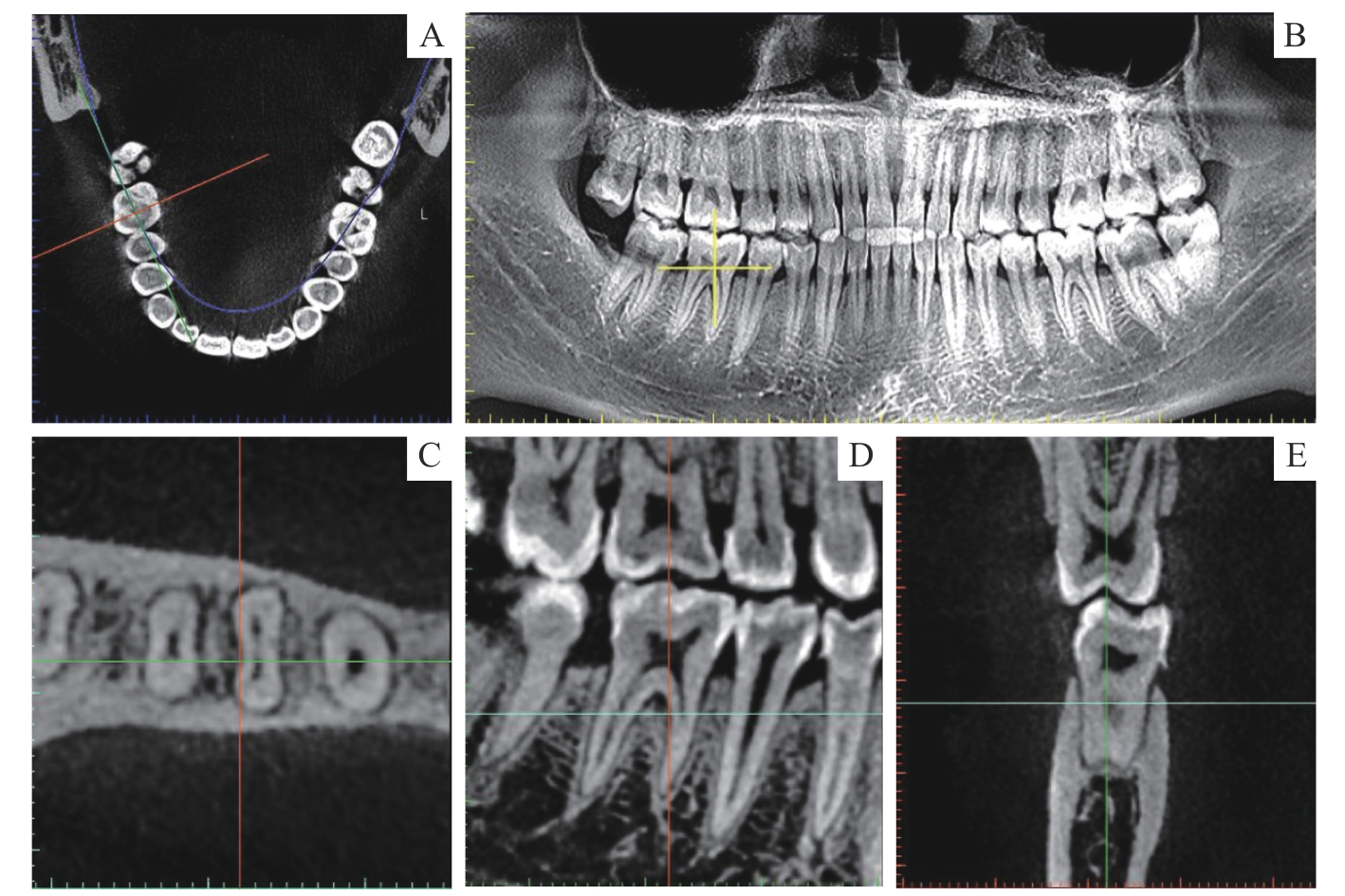
图1 SmartV图像分析软件观测界面Note: A. A panoramic view of the horizontal interface. B. Panoramic interface. C. Partial horizontal interface. D. Partial coronal interface. E. Partial sagittal interface.
Fig 1 Observation interface of SmartV image analysis software
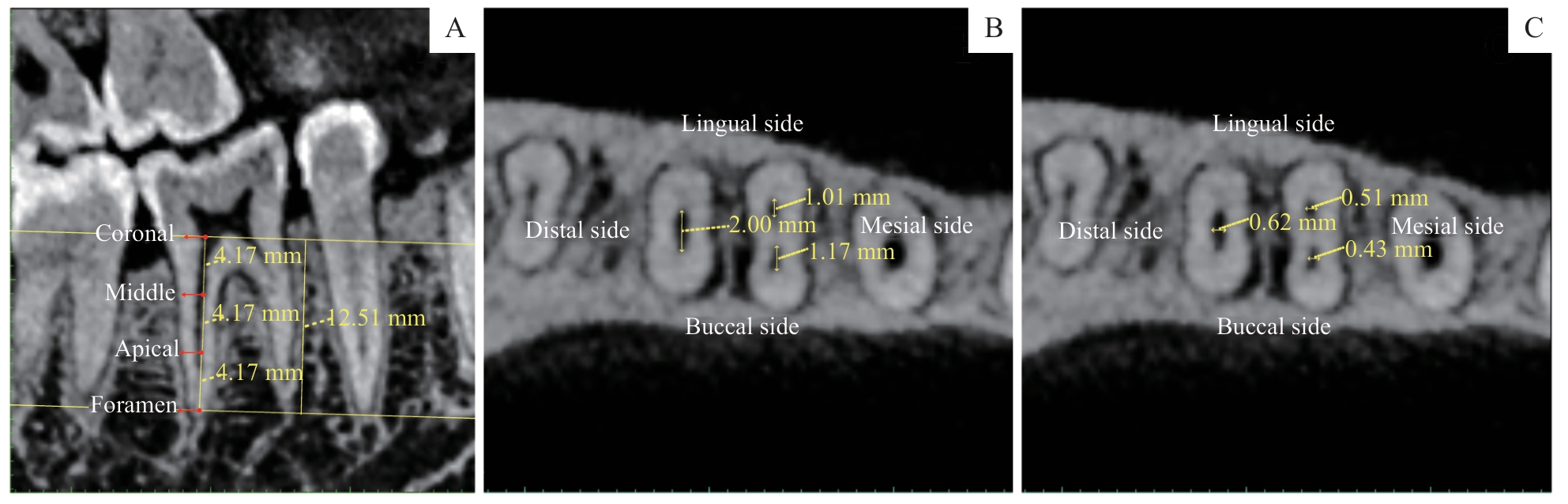
图2 测量方法Note: A. Method of measuring root canal length. The root canal was divided into three equal segments with four levels shown in the figure. B. Method of measuring root canal buccolingual diameters. The lines represent buccolingual diameters of the root canals. C. Method of measuring root canal mesiodistal diameters. The lines represent mesiodistal diameters of the root canals.
Fig 2 Methods of measurement
| Level | Diameter | Three-canal type (n=120) | Four-canal type (n=120) | |||||
|---|---|---|---|---|---|---|---|---|
| MB | ML | D | MB | ML | DB | DL | ||
| Coronal | Buccolingual/mm | 1.60±0.46 | 1.47±0.47① | 3.79±0.69② | 1.65±0.47 | 1.46±0.48③ | 1.95±0.80 | 1.49±0.64 |
| Mesiodistal/mm | 0.92±0.29 | 0.85±0.30 | 1.78±0.61④ | 0.95±0.35⑤ | 0.85±0.26③ | 0.93±0.35 | 0.85±0.37 | |
| Middle | Buccolingual/mm | 0.83±0.29 | 0.81±0.29 | 2.40±0.64 | 0.82±0.27⑥ | 0.80±0.26 | 1.09±0.45 | 0.77±0.30 |
| Mesiodistal/mm | 0.51±0.14 | 0.52±0.16 | 0.75±0.23 | 0.57±0.18 | 0.49±0.16 | 0.67±0.25 | 0.48±0.18⑦ | |
| Apical | Buccolingual/mm | 0.60±0.24 | 0.56±0.23 | 1.22±0.49 | 0.56±0.20 | 0.54±0.20 | 0.69±0.31 | 0.46±0.19 |
| Mesiodistal/mm | 0.37±0.12 | 0.35±0.13⑧ | 0.51±0.14 | 0.37±0.12 | 0.36±0.13 | 0.42±0.15 | 0.33±0.15④ | |
| Foramen | Buccolingual/mm | 0.17±0.08 | 0.17±0.09 | 0.27±0.13 | 0.16±0.08 | 0.17±0.08 | 0.19±0.09⑨ | 0.16±0.08 |
| Mesiodistal/mm | 0.11±0.06 | 0.10±0.06 | 0.16±0.07 | 0.10±0.05 | 0.11±0.06⑩ | 0.12±0.06 | 0.10±0.05 | |
表2 下颌第一磨牙根管直径
Tab 2 Root canal diameters of mandibular first molars
| Level | Diameter | Three-canal type (n=120) | Four-canal type (n=120) | |||||
|---|---|---|---|---|---|---|---|---|
| MB | ML | D | MB | ML | DB | DL | ||
| Coronal | Buccolingual/mm | 1.60±0.46 | 1.47±0.47① | 3.79±0.69② | 1.65±0.47 | 1.46±0.48③ | 1.95±0.80 | 1.49±0.64 |
| Mesiodistal/mm | 0.92±0.29 | 0.85±0.30 | 1.78±0.61④ | 0.95±0.35⑤ | 0.85±0.26③ | 0.93±0.35 | 0.85±0.37 | |
| Middle | Buccolingual/mm | 0.83±0.29 | 0.81±0.29 | 2.40±0.64 | 0.82±0.27⑥ | 0.80±0.26 | 1.09±0.45 | 0.77±0.30 |
| Mesiodistal/mm | 0.51±0.14 | 0.52±0.16 | 0.75±0.23 | 0.57±0.18 | 0.49±0.16 | 0.67±0.25 | 0.48±0.18⑦ | |
| Apical | Buccolingual/mm | 0.60±0.24 | 0.56±0.23 | 1.22±0.49 | 0.56±0.20 | 0.54±0.20 | 0.69±0.31 | 0.46±0.19 |
| Mesiodistal/mm | 0.37±0.12 | 0.35±0.13⑧ | 0.51±0.14 | 0.37±0.12 | 0.36±0.13 | 0.42±0.15 | 0.33±0.15④ | |
| Foramen | Buccolingual/mm | 0.17±0.08 | 0.17±0.09 | 0.27±0.13 | 0.16±0.08 | 0.17±0.08 | 0.19±0.09⑨ | 0.16±0.08 |
| Mesiodistal/mm | 0.11±0.06 | 0.10±0.06 | 0.16±0.07 | 0.10±0.05 | 0.11±0.06⑩ | 0.12±0.06 | 0.10±0.05 | |
| Root canal type | Root canal | Mesiodistal diameter/mm | ||||
|---|---|---|---|---|---|---|
| Mean value | 20‒29 years | 30‒39 years | 40‒49 years | 50‒59 years | ||
| Three-canal type | MB | 0.11±0.06 | 0.14±0.12 | 0.14±0.11 | 0.11±0.06 | 0.11±0.05 |
| ML | 0.10±0.06 | 0.11±0.07 | 0.10±0.07 | 0.10±0.05 | 0.10±0.06 | |
| D | 0.16±0.07 | 0.17±0.07 | 0.17±0.07 | 0.15±0.08 | 0.14±0.06 | |
| Four-canal type | MB | 0.10±0.05 | 0.11±0.05 | 0.11±0.05 | 0.10±0.05 | 0.09±0.06 |
| ML | 0.11±0.06 | 0.11±0.05 | 0.14±0.08 | 0.10±0.06 | 0.11±0.05 | |
| DB | 0.12±0.06 | 0.11±0.06 | 0.13±0.07 | 0.13±0.06 | 0.10±0.06 | |
| DL | 0.10±0.05 | 0.10±0.05 | 0.10±0.06 | 0.11±0.07 | 0.08±0.04 | |
表3 不同年龄组下颌第一磨牙根尖孔的近远中径
Tab 3 Mesiodistal diameters of apical foramina of mandibular first molars in different age groups
| Root canal type | Root canal | Mesiodistal diameter/mm | ||||
|---|---|---|---|---|---|---|
| Mean value | 20‒29 years | 30‒39 years | 40‒49 years | 50‒59 years | ||
| Three-canal type | MB | 0.11±0.06 | 0.14±0.12 | 0.14±0.11 | 0.11±0.06 | 0.11±0.05 |
| ML | 0.10±0.06 | 0.11±0.07 | 0.10±0.07 | 0.10±0.05 | 0.10±0.06 | |
| D | 0.16±0.07 | 0.17±0.07 | 0.17±0.07 | 0.15±0.08 | 0.14±0.06 | |
| Four-canal type | MB | 0.10±0.05 | 0.11±0.05 | 0.11±0.05 | 0.10±0.05 | 0.09±0.06 |
| ML | 0.11±0.06 | 0.11±0.05 | 0.14±0.08 | 0.10±0.06 | 0.11±0.05 | |
| DB | 0.12±0.06 | 0.11±0.06 | 0.13±0.07 | 0.13±0.06 | 0.10±0.06 | |
| DL | 0.10±0.05 | 0.10±0.05 | 0.10±0.06 | 0.11±0.07 | 0.08±0.04 | |
| Segment | Taper | Three-canal type (n=120) | Four-canal type (n=120) | ||||||
|---|---|---|---|---|---|---|---|---|---|
| MB | ML | D | MB | ML | DB | DL | |||
| Crown 1/3 | Buccolingual | 0.24±0.16 | 0.21±0.15① | 0.37±0.16② | 0.23±0.13 | 0.19±0.13 | 0.26±0.19③ | 0.25±0.22 | |
| Mesiodistal | 0.12±0.09 | 0.10±0.08 | 0.27±0.14④ | 0.11±0.10 | 0.11±0.07 | 0.08±0.09 | 0.13±0.12 | ||
| Middle 1/3 | Buccolingual | 0.07±0.10 | 0.08±0.10 | 0.31±0.15 | 0.08±0.08 | 0.08±0.08 | 0.12±0.12 | 0.10±0.10① | |
| Mesiodistal | 0.04±0.05 | 0.05±0.06⑤ | 0.06±0.06⑥ | 0.06±0.05 | 0.04±0.06 | 0.08±0.07 | 0.05±0.06 | ||
| Apical 1/3 | Buccolingual | 0.13±0.08 | 0.12±0.07 | 0.25±0.13 | 0.12±0.06 | 0.11±0.06 | 0.15±0.09 | 0.11±0.07 | |
| Mesiodistal | 0.08±0.04⑦ | 0.08±0.04 | 0.09±0.04 | 0.08±0.04 | 0.07±0.04 | 0.09±0.04 | 0.08±0.06⑥ | ||
表4 下颌第一磨牙的根管锥度
Tab 4 Root canal tapers of mandibular first molars
| Segment | Taper | Three-canal type (n=120) | Four-canal type (n=120) | ||||||
|---|---|---|---|---|---|---|---|---|---|
| MB | ML | D | MB | ML | DB | DL | |||
| Crown 1/3 | Buccolingual | 0.24±0.16 | 0.21±0.15① | 0.37±0.16② | 0.23±0.13 | 0.19±0.13 | 0.26±0.19③ | 0.25±0.22 | |
| Mesiodistal | 0.12±0.09 | 0.10±0.08 | 0.27±0.14④ | 0.11±0.10 | 0.11±0.07 | 0.08±0.09 | 0.13±0.12 | ||
| Middle 1/3 | Buccolingual | 0.07±0.10 | 0.08±0.10 | 0.31±0.15 | 0.08±0.08 | 0.08±0.08 | 0.12±0.12 | 0.10±0.10① | |
| Mesiodistal | 0.04±0.05 | 0.05±0.06⑤ | 0.06±0.06⑥ | 0.06±0.05 | 0.04±0.06 | 0.08±0.07 | 0.05±0.06 | ||
| Apical 1/3 | Buccolingual | 0.13±0.08 | 0.12±0.07 | 0.25±0.13 | 0.12±0.06 | 0.11±0.06 | 0.15±0.09 | 0.11±0.07 | |
| Mesiodistal | 0.08±0.04⑦ | 0.08±0.04 | 0.09±0.04 | 0.08±0.04 | 0.07±0.04 | 0.09±0.04 | 0.08±0.06⑥ | ||
| Root canal type | Root canal | Mesiodistal taper | ||||
|---|---|---|---|---|---|---|
| Mean value | 20‒29 years | 30‒39 years | 40‒49 years | 50‒59 years | ||
| Three-canal type | MB | 0.12±0.09 | 0.12±0.07 | 0.15±0.09 | 0.12±0.09 | 0.11±0.09 |
| ML | 0.10±0.08 | 0.10±0.09 | 0.09±0.08 | 0.11±0.08 | 0.11±0.09 | |
| D | 0.27±0.14 | 0.34±0.14 | 0.31±0.13 | 0.25±0.14 | 0.21±0.14 | |
| Four-canal type | MB | 0.11±0.10 | 0.09±0.07 | 0.13±0.11 | 0.13±0.12 | 0.08±0.06 |
| ML | 0.11±0.07 | 0.11±0.08 | 0.13±0.07 | 0.10±0.06 | 0.09±0.07 | |
| DB | 0.08±0.09 | 0.09±0.08 | 0.07±0.10 | 0.09±0.08 | 0.07±0.08 | |
| DL | 0.13±0.12 | 0.13±0.13 | 0.13±0.10 | 0.11±0.08 | 0.13±0.16 | |
表5 不同年龄组下颌第一磨牙冠1/3段近远中向根管锥度
Tab 5 Mesiodistal root canal taper of crown 1/3 segments of mandibular first molars in different age groups
| Root canal type | Root canal | Mesiodistal taper | ||||
|---|---|---|---|---|---|---|
| Mean value | 20‒29 years | 30‒39 years | 40‒49 years | 50‒59 years | ||
| Three-canal type | MB | 0.12±0.09 | 0.12±0.07 | 0.15±0.09 | 0.12±0.09 | 0.11±0.09 |
| ML | 0.10±0.08 | 0.10±0.09 | 0.09±0.08 | 0.11±0.08 | 0.11±0.09 | |
| D | 0.27±0.14 | 0.34±0.14 | 0.31±0.13 | 0.25±0.14 | 0.21±0.14 | |
| Four-canal type | MB | 0.11±0.10 | 0.09±0.07 | 0.13±0.11 | 0.13±0.12 | 0.08±0.06 |
| ML | 0.11±0.07 | 0.11±0.08 | 0.13±0.07 | 0.10±0.06 | 0.09±0.07 | |
| DB | 0.08±0.09 | 0.09±0.08 | 0.07±0.10 | 0.09±0.08 | 0.07±0.08 | |
| DL | 0.13±0.12 | 0.13±0.13 | 0.13±0.10 | 0.11±0.08 | 0.13±0.16 | |
| Root canal type | Root canal | Mesiodistal taper | ||||
|---|---|---|---|---|---|---|
| Mean value | 20‒29 years | 30‒39 years | 40‒49 years | 50‒59 years | ||
| Three-canal type | MB | 0.04±0.05 | 0.04±0.04 | 0.03±0.06 | 0.05±0.05 | 0.04±0.04 |
| ML | 0.05±0.06 | 0.07±0.07 | 0.06±0.05 | 0.06±0.06 | 0.03±0.05 | |
| D | 0.06±0.06 | 0.09±0.05 | 0.06±0.06 | 0.06±0.06 | 0.04±0.05 | |
| Four-canal type | MB | 0.06±0.05 | 0.06±0.06 | 0.07±0.06 | 0.06±0.04 | 0.05±0.04 |
| ML | 0.04±0.06 | 0.05±0.06 | 0.04±0.06 | 0.04±0.05 | 0.03±0.05 | |
| DB | 0.08±0.07 | 0.09±0.06 | 0.07±0.07 | 0.07±0.07 | 0.08±0.08 | |
| DL | 0.05±0.06 | 0.05±0.05 | 0.07±0.08 | 0.04±0.06 | 0.06±0.05 | |
表6 不同年龄组下颌第一磨牙中1/3段近远中向根管锥度
Tab 6 Mesiodistal root canal taper of middle 1/3 segments of mandibular first molars in different age groups
| Root canal type | Root canal | Mesiodistal taper | ||||
|---|---|---|---|---|---|---|
| Mean value | 20‒29 years | 30‒39 years | 40‒49 years | 50‒59 years | ||
| Three-canal type | MB | 0.04±0.05 | 0.04±0.04 | 0.03±0.06 | 0.05±0.05 | 0.04±0.04 |
| ML | 0.05±0.06 | 0.07±0.07 | 0.06±0.05 | 0.06±0.06 | 0.03±0.05 | |
| D | 0.06±0.06 | 0.09±0.05 | 0.06±0.06 | 0.06±0.06 | 0.04±0.05 | |
| Four-canal type | MB | 0.06±0.05 | 0.06±0.06 | 0.07±0.06 | 0.06±0.04 | 0.05±0.04 |
| ML | 0.04±0.06 | 0.05±0.06 | 0.04±0.06 | 0.04±0.05 | 0.03±0.05 | |
| DB | 0.08±0.07 | 0.09±0.06 | 0.07±0.07 | 0.07±0.07 | 0.08±0.08 | |
| DL | 0.05±0.06 | 0.05±0.05 | 0.07±0.08 | 0.04±0.06 | 0.06±0.05 | |
| Root canal type | Root canal | Mesiodistal taper | ||||
|---|---|---|---|---|---|---|
| Mean value | 20‒29 years | 30‒39 years | 40‒49 years | 50‒59 years | ||
| Three-canal type | MB | 0.08±0.04 | 0.09±0.05 | 0.09±0.04 | 0.07±0.03 | 0.08±0.03 |
| ML | 0.08±0.04 | 0.07±0.04 | 0.08±0.04 | 0.07±0.05 | 0.09±0.04 | |
| D | 0.09±0.04 | 0.09±0.03 | 0.09±0.03 | 0.09±0.04 | 0.11±0.04 | |
| Four-canal type | MB | 0.08±0.04 | 0.09±0.04 | 0.08±0.04 | 0.08±0.04 | 0.07±0.04 |
| ML | 0.07±0.04 | 0.08±0.04 | 0.07±0.04 | 0.07±0.04 | 0.07±0.04 | |
| DB | 0.09±0.04 | 0.09±0.05 | 0.10±0.04 | 0.10±0.04 | 0.08±0.04 | |
| DL | 0.08±0.06 | 0.09±0.07 | 0.09±0.05 | 0.09±0.05 | 0.05±0.04 | |
表7 不同年龄组下颌第一磨牙尖1/3段近远中向根管锥度
Tab 7 Mesiodistal root canal taper of apical 1/3 segments of mandibular first molars in different age groups
| Root canal type | Root canal | Mesiodistal taper | ||||
|---|---|---|---|---|---|---|
| Mean value | 20‒29 years | 30‒39 years | 40‒49 years | 50‒59 years | ||
| Three-canal type | MB | 0.08±0.04 | 0.09±0.05 | 0.09±0.04 | 0.07±0.03 | 0.08±0.03 |
| ML | 0.08±0.04 | 0.07±0.04 | 0.08±0.04 | 0.07±0.05 | 0.09±0.04 | |
| D | 0.09±0.04 | 0.09±0.03 | 0.09±0.03 | 0.09±0.04 | 0.11±0.04 | |
| Four-canal type | MB | 0.08±0.04 | 0.09±0.04 | 0.08±0.04 | 0.08±0.04 | 0.07±0.04 |
| ML | 0.07±0.04 | 0.08±0.04 | 0.07±0.04 | 0.07±0.04 | 0.07±0.04 | |
| DB | 0.09±0.04 | 0.09±0.05 | 0.10±0.04 | 0.10±0.04 | 0.08±0.04 | |
| DL | 0.08±0.06 | 0.09±0.07 | 0.09±0.05 | 0.09±0.05 | 0.05±0.04 | |
| 1 | JAKOVLJEVIC A, NIKOLIC N, JACIMOVIC J, et al. Prevalence of apical periodontitis and conventional nonsurgical root canal treatment in general adult population: an updated systematic review and meta-analysis of cross-sectional studies published between 2012 and 2020[J]. J Endod, 2020, 46(10): 1371-1386.e8. |
| 2 | 岳林, 韩怡. 第一恒磨牙根尖区根管自然锥度的研究[J]. 北京大学学报(医学版), 2010, 42(1): 20-23. |
| YUE L, HAN Y. Physical morphology of the root canal taper in the apical region of human permanent first molars[J]. Journal of Peking University (Health Sciences), 2010, 42(1): 20-23. | |
| 3 | 张迎. 山东地区人群第一恒磨牙根管原始锥度及横截面形态的研究[D]. 济南: 山东大学, 2016. |
| ZHANG Y. A study of root canal taper and cross-section morphology of the permanent first molar[D]. Jinan: Shandong University, 2016. | |
| 4 | KUCHER M, DANNEMANN M, MODLER N, et al. An automated measurement method for the endodontic working width of lower molars by means of parametric models using cone-beam computed tomography and micro-computed tomography[J]. J Endod, 2021, 47(11): 1790-1795. |
| 5 | 潘莉, 章润贞, 李颂. 13~23岁下颌第二前磨牙单根管锥度的初步研究[J]. 华西口腔医学杂志, 2010, 28(2): 162-165, 169. |
| PAN L, ZHANG R Z, LI S. An in vitro study on taper of single root canal of mandibular second premolars of 13‒23 year-old people[J]. West China Journal of Stomatology, 2010, 28(2): 162-165, 169. | |
| 6 | 周学东. 牙体牙髓病学[M]. 5版. 北京: 人民卫生出版社, 2020: 218. |
| ZHOU X D. Operative dentistry and endodontics[M]. 5th ed. Beijing: People′s Medical Publishing House, 2020: 218. | |
| 7 | 张麒麟, 李军, 李姝慧. 根管预备机用镍钛锉的研究进展[J]. 国际口腔医学杂志, 2022, 49(6): 663-669. |
| ZHANG Q L, LI J, LI S H. Research progress on nickel-titanium instruments for root canal preparation machine[J]. International Journal of Stomatology, 2022, 49(6): 663-669. | |
| 8 | 单姗, 张文欣, 葛久禹, 等. 应用锥形束CT对下颌第一磨牙近颊根管壁厚度相关影响因素的研究[J]. 口腔医学研究, 2022, 38(8): 779-783. |
| SHAN S, ZHANG W X, GE J Y, et al. Analysis of related factors affecting the thickness of mesiobuccal root canal wall of mandibular first molars using CBCT[J]. Journal of Oral Science Research, 2022, 38(8): 779-783. | |
| 9 | 陈滨, 李峰. 根管预备器械在根管壁微裂治疗中的应用进展[J]. 中国医疗器械信息, 2021, 27(5): 52-53. |
| CHEN B, LI F. The application of root canal preparation instrument in the treatment of root canal wall microfissure[J]. China Medical Device Information, 2021, 27(5): 52-53. | |
| 10 | DE-DEUS G, RODRIGUES E A, LEE J K, et al. Taper 0.06 versus taper 0.04: the impact on the danger zone[J]. J Endod, 2023, 49(5): 536-543. |
| 11 | MACEDO F P G, SOARES A J, MARCELIANO-ALVES M F V, et al. The effect of root canal preparation tapers on planktonic bacteria and biofilm reduction in the apical third: a correlative microtomography and microbiological laboratory study[J]. Int Endod J, 2024, 57(6): 700-712. |
| 12 | 苗静. 不同形态牙齿镍钛器械预备及充填后力学性能分析[D]. 呼和浩特: 内蒙古医科大学, 2019. |
| MIAO J. Mechanical properties of nickel-titanium dental instruments with different shapes after preparation and filling[D]. Hohhot: Inner Mongolia Medical University, 2019. | |
| 13 | DOĞANAY YILDIZ E, FIDAN M E, SAKARYA R E, et al. The effect of taper and apical preparation size on fracture resistance of roots[J]. Aust Endod J, 2021, 47(1): 67-72. |
| 14 | ALIMADADI H, ASNAASHARI M, NASERI M, et al. Effect of apical size and taper on the efficacy of root canal disinfection with LED photodynamic therapy as an adjunct to irrigation with sodium hypochlorite[J]. J Lasers Med Sci, 2021, 12: e58. |
| 15 | 颜愈佳, 邹玲. 生物陶瓷类根管封闭剂的研究进展[J]. 国际口腔医学杂志, 2022, 49(5): 578-585. |
| YAN Y J, ZOU L. Research progress on bioceramic root canal sealer[J]. International Journal of Stomatology, 2022, 49(5): 578-585. | |
| 16 | 孙莉青, 郭宜青, 杨爱华, 等. 3种根管充填方法对不同类型根管根尖封闭性的影响研究[J]. 国际口腔医学杂志, 2021, 48(6): 629-634. |
| SUN L Q, GUO Y Q, YANG A H, et al. Study on apical sealing ability of three root canal filling techniques for different types of root canals[J]. International Journal of Stomatology, 2021, 48(6): 629-634. |
| [1] | 张卓扬, 王易维, 陈希瑶, 王瑛, 孙顺涛, 唐子圣. 镍钛锉系统对长椭圆形根管清洁度与抗折性能关系的影响研究[J]. 上海交通大学学报(医学版), 2026, 46(4): 434-441. |
| [2] | 孙皓宇, 杨楠, 单晓阳, 王月月, 孙慧斌. 根管内残留氢氧化钙及根管充填方法对根尖封闭性的影响[J]. 上海交通大学学报(医学版), 2025, 45(2): 179-185. |
| [3] | 戴兆威, 胡子航, 陈琪晏, 彭伟伟, 杜嵘. 2种机用镍钛锉拆除根管充填物效果的比较研究[J]. 上海交通大学学报(医学版), 2025, 45(10): 1353-1360. |
| [4] | 李婷婷, 潘悦萍. 3种机用单支锉镍钛系统对弯曲根管中心定位能力的比较[J]. 上海交通大学学报(医学版), 2022, 42(5): 690-694. |
| [5] | 袁剑鸣, 魏斌, 许卫星, 张磊. 锥形束CT研究不同基台角度对上颌前牙区牙槽骨改变的影响[J]. 上海交通大学学报(医学版), 2021, 41(3): 339-343. |
| [6] | 李 元,史俊宇,张 枭,赖红昌. 上颌前牙区牙槽骨缺损形态学特征与引导骨再生手术效果的相关性研究[J]. 上海交通大学学报(医学版), 2020, 40(10): 1414-1419. |
| [7] | 董建辉,朱亚琴. 锥形束CT诊断罕见双生上颌第二前磨牙1例报道[J]. 上海交通大学学报(医学版), 2015, 35(4): 622-. |
| [8] | 董正杰,程 竑,王德芳,等. 术区锥形束CT颌骨密度与种植体植入扭矩的相关性研究[J]. 上海交通大学学报(医学版), 2014, 34(6): 894-. |
| [9] | 刘 爽,冷志勇. 感染根管一次性根管治疗的近期疗效观察[J]. 上海交通大学学报(医学版), 2013, 33(7): 1014-. |
| [10] | 黄轶锋, 杜 嵘, 洪 瑾. 活髓牙经镍钛机动与手用器械根管预备后疼痛发生比较[J]. , 2010, 30(3): 333-. |
| 阅读次数 | ||||||
|
全文 |
|
|||||
|
摘要 |
|
|||||
