
Journal of Shanghai Jiao Tong University (Medical Science) ›› 2026, Vol. 46 ›› Issue (7): 829-838.doi: 10.3969/j.issn.1674-8115.2026.07.001
• Frontier review • Next Articles
Shen Jingting, Liu Zhixu, Wang Xudong( )
)
Received:2026-02-28
Accepted:2026-04-29
Online:2026-07-28
Published:2026-07-28
Contact:
Wang Xudong
E-mail:xudongwang70@hotmail.com
Supported by:CLC Number:
Shen Jingting, Liu Zhixu, Wang Xudong. Applications and progress of AI in mechanistic research and clinical diagnosis of oral genetic and rare diseases[J]. Journal of Shanghai Jiao Tong University (Medical Science), 2026,(7): 829-838.
Add to citation manager EndNote|Ris|BibTeX
URL: https://xuebao.shsmu.edu.cn/EN/10.3969/j.issn.1674-8115.2026.07.001
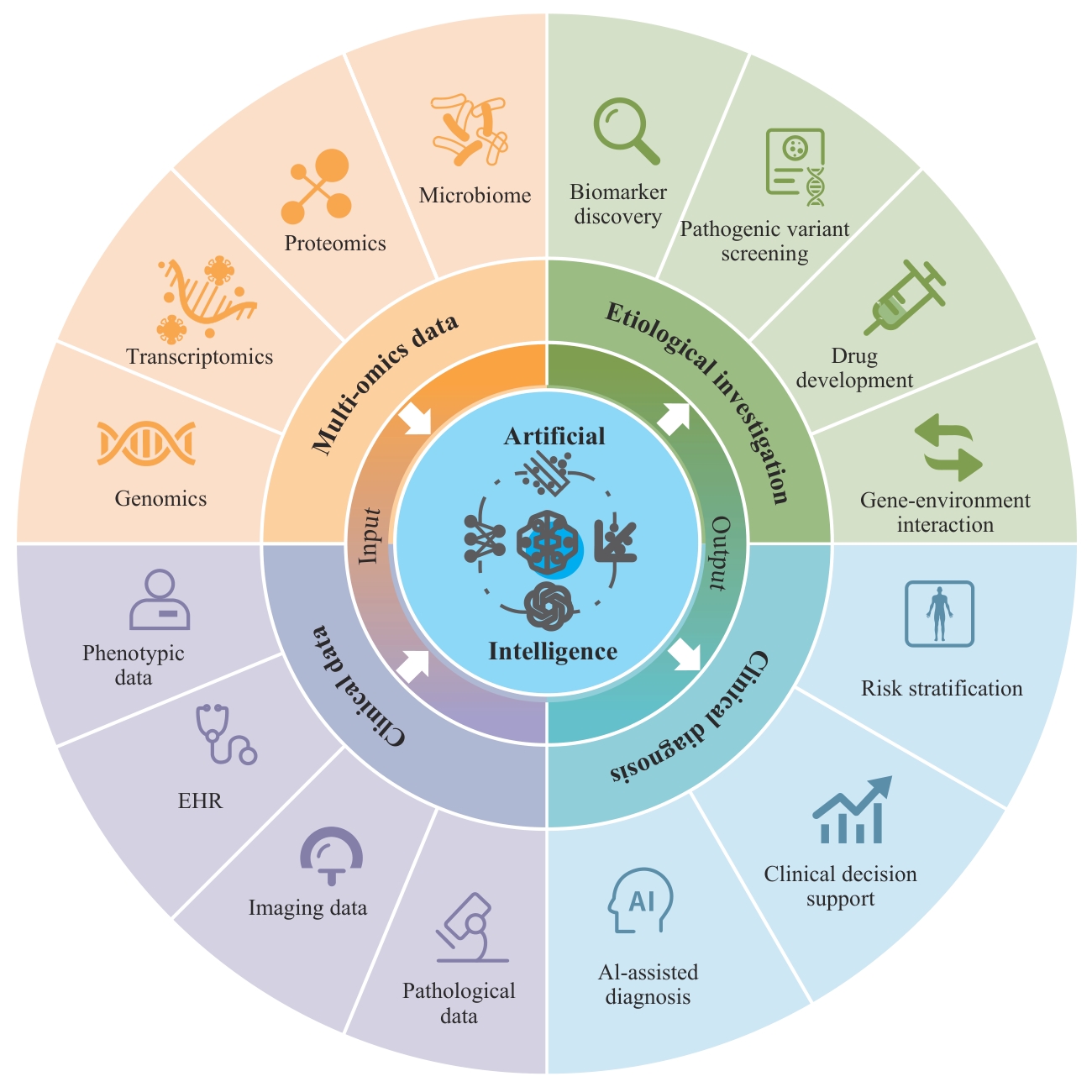
Fig 1 Applications of AI in oral genetic and rare diseasesNote: EHR—electronic health record.
| Reference | Year | Dataset | Objective | AI model |
|---|---|---|---|---|
| Zhang, et al[ | 2018 | 43 GWAS-significant SNPs associated with OFCs | Genetic risk assessment of OFCs | SVM, LR, NB, RF, KNN, DT, and DNN |
| Dai, et al[ | 2024 | Epigenetic sequencing data from PCW4-10 | Pathogenic variant prioritization for OFCs | CNN |
| Forrest, et al[ | 2025 | Training cohort of 1.3 million individuals with 10 genetic diseases | Genetic variant penetrance estimation | XGBoost |
| Kamitaki, et al[ | 2026 | Genomic and oral microbiome data from 12 519 individuals | Genetic variant-oral microbiome association analysis | PCA |
| Guo, et al[ | 2025 | scRNA-seq data of mouse molars from embryonic stages to postnatal days | Cell subtype identification | PCA, UMAP, etc. |
| Huang, et al[ | 2025 | scRNA-seq data of mouse palate during embryonic development | Cell subtype identification | PCA, UMAP, etc. |
| Yankee, et al[ | 2023 | scRNA-seq data of human embryonic craniofacial tissues | Cell subtype identification | PCA, UMAP, etc. |
| Liu, et al[ | 2025 | Paired bulk transcriptomic and single-cell transcriptomic data | Single-cell proteome prediction | Transformer |
Tab 1 AI applications in pathogenic mechanism study
| Reference | Year | Dataset | Objective | AI model |
|---|---|---|---|---|
| Zhang, et al[ | 2018 | 43 GWAS-significant SNPs associated with OFCs | Genetic risk assessment of OFCs | SVM, LR, NB, RF, KNN, DT, and DNN |
| Dai, et al[ | 2024 | Epigenetic sequencing data from PCW4-10 | Pathogenic variant prioritization for OFCs | CNN |
| Forrest, et al[ | 2025 | Training cohort of 1.3 million individuals with 10 genetic diseases | Genetic variant penetrance estimation | XGBoost |
| Kamitaki, et al[ | 2026 | Genomic and oral microbiome data from 12 519 individuals | Genetic variant-oral microbiome association analysis | PCA |
| Guo, et al[ | 2025 | scRNA-seq data of mouse molars from embryonic stages to postnatal days | Cell subtype identification | PCA, UMAP, etc. |
| Huang, et al[ | 2025 | scRNA-seq data of mouse palate during embryonic development | Cell subtype identification | PCA, UMAP, etc. |
| Yankee, et al[ | 2023 | scRNA-seq data of human embryonic craniofacial tissues | Cell subtype identification | PCA, UMAP, etc. |
| Liu, et al[ | 2025 | Paired bulk transcriptomic and single-cell transcriptomic data | Single-cell proteome prediction | Transformer |
| Reference | Year | Dataset | Objective | AI model |
|---|---|---|---|---|
| Lee, et al[ | 2018 | 3 000 periapical radiographs | Dental caries detection | CNN |
| Hiraiwa, et al[ | 2019 | CBCT images and panoramic radiographs of mandibular first molars from 400 patients | Root canal morphology classification | CNN |
| Ekert, et al[ | 2019 | 2 001 panoramic radiographs | Periapical lesion diagnosis | DNN |
| Duman, et al[ | 2023 | 220 panoramic radiographs of children aged 6‒9 years | Hyperdontia diagnosis | CNN |
| Incerti Parenti, et al[ | 2025 | A retrospective dataset of 250 panoramic radiographs from patients aged 6‒13 years | Primary and permanent tooth detection and segmentation | CNN |
| Sheng, et al[ | 2023 | 100 panoramic radiographs | Tooth segmentation | Transformer |
| Han, et al[ | 2023 | 203 salivary gland pathology slides | Segmentation of lymphocytic infiltration areas | DNN |
| Chiesa-Estomba, et al[ | 2021 | Multi-source clinical data from 345 patients undergoing salivary gland tumor surgery | Prediction of postoperative facial nerve palsy | KNN, RF, BC, and LDC |
| Jurek, et al[ | 2020 | Fetal ultrasound images | Fetal cleft palate diagnosis | NLP |
| Shafi, et al[ | 2020 | 1 000 prenatal survey records | Risk prediction of cleft lip and palate | DNN |
| Kuwada, et al[ | 2021 | Panoramic radiographs of 383 patients with cleft conditions (with or without alveolar cleft) and 210 healthy controls | Cleft palate classification | DNN |
| Zhang, et al[ | 2020 | CBCT images of 21 patients with unilateral or bilateral CLP | Alveolar bone defect volume estimation | CNN |
| Pactas, et al[ | 2019 | Pre- and post-treatment photographs of 146 orthognathic patients | Assessment of orthognathic surgical outcome | CNN |
| Huang, et al[ | 2025 | Pre- and post-treatment CBCT images of 100 orthognathic surgery patients | Prediction of postoperative facial appearance | CNN |
| Adel, et al[ | 2025 | 3D facial images of 130 patients | Facial symmetry assessment | DNN |
| Chen, et al[ | 2025 | CT images of 15 patients | Soft tissue defect assessment | CNN |
| Saranya, et al[ | 2022 | Bone CT images | FD lesion segmentation | R-CNN |
| Li, et al[ | 2025 | CT images of 148 FD patients | Prediction of FD lesion growth status | CNN |
| Zhang, et al[ | 2024 | CT images of 220 patients with FD or OF | Differential diagnosis between FD and OF | RF, SVM, LightGBM, and XGBoost |
Tab 2 AI applications in clinical diagnosis and evaluation
| Reference | Year | Dataset | Objective | AI model |
|---|---|---|---|---|
| Lee, et al[ | 2018 | 3 000 periapical radiographs | Dental caries detection | CNN |
| Hiraiwa, et al[ | 2019 | CBCT images and panoramic radiographs of mandibular first molars from 400 patients | Root canal morphology classification | CNN |
| Ekert, et al[ | 2019 | 2 001 panoramic radiographs | Periapical lesion diagnosis | DNN |
| Duman, et al[ | 2023 | 220 panoramic radiographs of children aged 6‒9 years | Hyperdontia diagnosis | CNN |
| Incerti Parenti, et al[ | 2025 | A retrospective dataset of 250 panoramic radiographs from patients aged 6‒13 years | Primary and permanent tooth detection and segmentation | CNN |
| Sheng, et al[ | 2023 | 100 panoramic radiographs | Tooth segmentation | Transformer |
| Han, et al[ | 2023 | 203 salivary gland pathology slides | Segmentation of lymphocytic infiltration areas | DNN |
| Chiesa-Estomba, et al[ | 2021 | Multi-source clinical data from 345 patients undergoing salivary gland tumor surgery | Prediction of postoperative facial nerve palsy | KNN, RF, BC, and LDC |
| Jurek, et al[ | 2020 | Fetal ultrasound images | Fetal cleft palate diagnosis | NLP |
| Shafi, et al[ | 2020 | 1 000 prenatal survey records | Risk prediction of cleft lip and palate | DNN |
| Kuwada, et al[ | 2021 | Panoramic radiographs of 383 patients with cleft conditions (with or without alveolar cleft) and 210 healthy controls | Cleft palate classification | DNN |
| Zhang, et al[ | 2020 | CBCT images of 21 patients with unilateral or bilateral CLP | Alveolar bone defect volume estimation | CNN |
| Pactas, et al[ | 2019 | Pre- and post-treatment photographs of 146 orthognathic patients | Assessment of orthognathic surgical outcome | CNN |
| Huang, et al[ | 2025 | Pre- and post-treatment CBCT images of 100 orthognathic surgery patients | Prediction of postoperative facial appearance | CNN |
| Adel, et al[ | 2025 | 3D facial images of 130 patients | Facial symmetry assessment | DNN |
| Chen, et al[ | 2025 | CT images of 15 patients | Soft tissue defect assessment | CNN |
| Saranya, et al[ | 2022 | Bone CT images | FD lesion segmentation | R-CNN |
| Li, et al[ | 2025 | CT images of 148 FD patients | Prediction of FD lesion growth status | CNN |
| Zhang, et al[ | 2024 | CT images of 220 patients with FD or OF | Differential diagnosis between FD and OF | RF, SVM, LightGBM, and XGBoost |
| [1] | Arno P S, Bonuck K, Davis M. Rare diseases, drug development, and AIDS: the impact of the Orphan Drug Act[J]. Milbank Q, 1995, 73(2): 231-252. |
| [2] | Franco P. Orphan drugs: the regulatory environment[J]. Drug Discov Today, 2013, 18(3/4): 163-172. |
| [3] | Nguengang Wakap S, Lambert D M, Olry A, et al. Estimating cumulative point prevalence of rare diseases: analysis of the Orphanet database[J]. Eur J Hum Genet, 2020, 28(2): 165-173. |
| [4] | Taneyhill L A, Hoover-Fong J, Lozanoff S, et al. The society for craniofacial genetics and developmental biology 38th annual meeting[J]. Am J Med Genet A, 2016, 170(7): 1732-1753. |
| [5] | 段小红. 口腔遗传病学[M]. 北京: 人民卫生出版社, 2012. |
| Duan X H. Genetic diseases of oral cavity[M]. Beijing: People's Medical Publishing House, 2012. | |
| [6] | 段小红. 口腔遗传性疾病系列讲座(四): 口腔单基因遗传病与罕见病的遗传研究策略[J]. 中华口腔医学杂志, 2015, 50(7): 442-444. |
| Duan X H. Lecture series on oral hereditary diseases (Ⅳ): genetic research strategies for monogenic oral diseases and rare diseases[J]. Chinese Journal of Stomatology, 2015, 50(7): 442-444. | |
| [7] | Beleza-Meireles A, Hart R, Clayton-Smith J, et al. Oculo-auriculo-vertebral spectrum: clinical and molecular analysis of 51 patients[J]. Eur J Med Genet, 2015, 58(9): 455-465. |
| [8] | Baião A R, Cai Z X, et al. A technical review of multi-omics data integration methods: from classical statistical to deep generative approaches[J]. Brief Bioinform, 2025, 26(4): bbaf355. |
| [9] | Banerjee J, Taroni J N, Allaway R J, et al. Machine learning in rare disease[J]. Nat Meth, 2023, 20(6): 803-814. |
| [10] | Chen X X, Wang X M, Zhang K, et al. Recent advances and clinical applications of deep learning in medical image analysis[J]. Med Image Anal, 2022, 79: 102444. |
| [11] | Zhang S J, Meng P Q, Zhang J N, et al. Machine learning models for genetic risk assessment of infants with non-syndromic orofacial cleft[J]. Genomics Proteomics Bioinformatics, 2018, 16(5): 354-364. |
| [12] | Maurano M T, Humbert R, Rynes E, et al. Systematic localization of common disease-associated variation in regulatory DNA[J]. Science, 2012, 337(6099): 1190-1195. |
| [13] | Edwards S L, Beesley J, French J D, et al. Beyond GWASs: illuminating the dark road from association to function[J]. Am J Hum Genet, 2013, 93(5): 779-797. |
| [14] | Trynka G, Sandor C, Han B, et al. Chromatin marks identify critical cell types for fine mapping complex trait variants[J]. Nat Genet, 2013, 45(2): 124-130. |
| [15] | Dai Y L, Itai T, Pei G S, et al. DeepFace: deep-learning-based framework to contextualize orofacial-cleft-related variants during human embryonic craniofacial development[J]. HGG Adv, 2024, 5(3): 100312. |
| [16] | Forrest I S, Vy H M T, Rocheleau G, et al. Machine learning-based penetrance of genetic variants[J]. Science, 2025, 389(6763): eadm7066. |
| [17] | Kamitaki N, Handsaker R E, Hujoel M L A, et al. Human and bacterial genetic variation shape oral microbiomes and health[J]. Nature, 2026, 651(8105): 429-439. |
| [18] | 郭威, 王祥璞, 苏桐宇, 等. 单细胞测序解析先天缺牙及牙体硬组织相关分子在小鼠磨牙的时序表达特征[J]. 中华口腔医学杂志, 2025, 60(9): 987-996. |
| Guo W, Wang X P, Su T Y, et al. Single-cell sequencing reveals the temporal expression characteristics of key molecules related to tooth agenesis and dental hard tissues in mouse molars[J]. Chinese Journal of Stomatology, 2025, 60(9): 987-996. | |
| [19] | Huang W B, Qian Z W, Zhang J N, et al. A single-cell atlas of developing mouse palates reveals cellular and molecular transitions in periderm cell fate[J]. Genomics Proteomics Bioinformatics, 2025, 23(1): qzaf013. |
| [20] | Yankee T N, Oh S, Winchester E W, et al. Integrative analysis of transcriptome dynamics during human craniofacial development identifies candidate disease genes[J]. Nat Commun, 2023, 14(1): 4623. |
| [21] | Liu L J, Li W, Wang F, et al. A pre-trained large generative model for translating single-cell transcriptomes to proteomes[J]. Nat Biomed Eng, 2025: 1-20. |
| [22] | Thurzo A, Kurilová V, Varga I. Artificial intelligence in orthodontic smart application for treatment coaching and its impact on clinical performance of patients monitored with AI-TeleHealth system[J]. Healthcare (Basel), 2021, 9(12): 1695. |
| [23] | Lee J H, Kim D H, Jeong S N, et al. Detection and diagnosis of dental caries using a deep learning-based convolutional neural network algorithm[J]. J Dent, 2018, 77: 106-111. |
| [24] | Hiraiwa T, Ariji Y, Fukuda M, et al. A deep-learning artificial intelligence system for assessment of root morphology of the mandibular first molar on panoramic radiography[J]. Dentomaxillofac Radiol, 2019, 48(3): 20180218. |
| [25] | Ekert T, Krois J, Meinhold L, et al. Deep learning for the radiographic detection of apical lesions[J]. J Endod, 2019, 45(7): 917-922.e5. |
| [26] | Duman S, Yılmaz E F, Eşer G, et al. Detecting the presence of taurodont teeth on panoramic radiographs using a deep learning-based convolutional neural network algorithm[J]. Oral Radiol, 2023, 39(1): 207-214. |
| [27] | Incerti Parenti S, Tsiotas G, Maglioni A, et al. Artificial intelligence-aided tooth detection and segmentation on pediatric panoramic radiographs in mixed dentition using a transfer learning approach[J]. Diagnostics (Basel), 2025, 15(20): 2615. |
| [28] | Sheng C, Wang L, Huang Z H, et al. Transformer-based deep learning network for tooth segmentation on panoramic radiographs[J]. J Syst Sci Complex, 2023, 36(1): 257-272. |
| [29] | Felek T, Tercanlı H, Gök R Ş. Evaluating vision transformers and convolutional neural networks in the context of dental image processing: a systematic review[J]. BMC Oral Health, 2025, 25(1): 1626. |
| [30] | Han H, Lu F, Deng Y H, et al. M2CF-net: a multi-resolution and multi-scale cross fusion network for segmenting pathology lesion of the focal lymphocytic sialadenitis[C]//2023 IEEE International Conference on Medical Artificial Intelligence (MedAI), 2023: 425-434. |
| [31] | Chiesa-Estomba C M, Echaniz O, Sistiaga Suarez J A, et al. Machine learning models for predicting facial nerve palsy in parotid gland surgery for benign tumors[J]. J Surg Res, 2021, 262: 57-64. |
| [32] | Jurek J, Wójtowicz W, Wójtowicz A. Syntactic pattern recognition-based diagnostics of fetal palates[J]. Pattern Recognit Lett, 2020, 133: 144-150. |
| [33] | Shafi N, Bukhari F, Iqbal W, et al. Cleft prediction before birth using deep neural network[J]. Health Informatics J, 2020, 26(4): 2568-2585. |
| [34] | Kuwada C, Ariji Y, Kise Y, et al. Detection and classification of unilateral cleft alveolus with and without cleft palate on panoramic radiographs using a deep learning system[J]. Sci Rep, 2021, 11(1): 16044. |
| [35] | Zhang Y G, Pei Y R, Chen S, et al. Volumetric registration-based cleft volume estimation of alveolar cleft grafting procedures[C]//2020 IEEE 17th International Symposium on Biomedical Imaging (ISBI), 2020: 99-103. |
| [36] | Patcas R, Bernini D A J, Volokitin A, et al. Applying artificial intelligence to assess the impact of orthognathic treatment on facial attractiveness and estimated age[J]. Int J Oral Maxillofac Surg, 2019, 48(1): 77-83. |
| [37] | Patcas R, Timofte R, Volokitin A, et al. Facial attractiveness of cleft patients: a direct comparison between artificial-intelligence-based scoring and conventional rater groups[J]. Eur J Orthod, 2019, 41(4): 428-433. |
| [38] | Huang X R, He D M, Li Z M, et al. Maxillofacial bone movements-aware dual graph convolution approach for postoperative facial appearance prediction[J]. Med Image Anal, 2025, 99: 103350. |
| [39] | Adel M, Hunt K J, Lau D, et al. Precision assessment of facial asymmetry using 3D imaging and artificial intelligence[J]. J Clin Med, 2025, 14(20): 7172. |
| [40] | Chen G J, Fu Q, Xu X, et al. Digitally guided precision fat grafting for progressive hemifacial atrophy[J]. Aesthetic Plast Surg, 2025, 49(12): 3443-3453. |
| [41] | Saranya A, Kottursamy K, AlZubi A A, et al. Analyzing fibrous tissue pattern in fibrous dysplasia bone images using deep R-CNN networks for segmentation[J]. Soft comput, 2022, 26(16): 7519-7533. |
| [42] | Li G Z, Liu H, Pan Z Y, et al. Predicting craniofacial fibrous dysplasia growth status: an exploratory study of a hybrid radiomics and deep learning model based on computed tomography images[J]. Oral Surg Oral Med Oral Pathol Oral Radiol, 2025, 139(3): 364-376. |
| [43] | Zhang A B, Zhao J R, Wang S, et al. CT-based radiomics analysis of different machine learning models for differentiating gnathic fibrous dysplasia and ossifying fibroma[J]. Oral Dis, 2024, 30(8): 5243-5254. |
| [44] | Tolkachjov S N, Patel N G, Tollefson M M. Progressive hemifacial atrophy: a review[J]. Orphanet J Rare Dis, 2015, 10: 39. |
| [45] | Chapurlat R D, Orcel P. Fibrous dysplasia of bone and McCune-Albright syndrome[J]. Best Pract Res Clin Rheumatol, 2008, 22(1): 55-69. |
| [46] | Hart E S, Kelly M H, Brillante B, et al. Onset, progression, and plateau of skeletal lesions in fibrous dysplasia and the relationship to functional outcome[J]. J Bone Miner Res, 2007, 22(9): 1468-1474. |
| [47] | Abdullah Al Eid R. Molecular pathogenetic options for differentiating fibrous dysplasia and ossifying fibroma: a systematically conducted literature review[J]. J Oral Maxillofac Surg Med Pathol, 2025, 37(6): 1283-1293. |
| [48] | Liang L G, Chen Y L, Wang T F, et al. Genetic transformer: an innovative large language model driven approach for rapid and accurate identification of causative variants in rare genetic diseases[J]. medRxiv, 2024: 2024.07.18.24310666v1. DOI: 10.1101/2024.07.18.24310666. |
| [49] | Song J, Xu Z C, He M Q, et al. Graph retrieval augmented large language models for facial phenotype associated rare genetic disease[J]. NPJ Digit Med, 2025, 8(1): 543. |
| [50] | Hao J, Fan Y X, Sun Y P, et al. Towards better dental AI: A multimodal benchmark and instruction dataset for panoramic X-ray analysis [J]. arXiv, 2025: 2509.09254v1. |
| [51] | Topol E J. High-performance medicine: the convergence of human and artificial intelligence[J]. Nat Med, 2019, 25(1): 44-56. |
| [52] | Alsentzer E, Li M M, Kobren S N, et al. Few shot learning for phenotype-driven diagnosis of patients with rare genetic diseases[J]. NPJ Digit Med, 2025, 8(1): 380. |
| [53] | Rieke N, Hancox J, Li W Q, et al. The future of digital health with federated learning[J]. NPJ Digit Med, 2020, 3: 119. |
| [1] | LIANG Shuyuan, YE Baoying, CHENG Weiwei. Research status of ultrasound parameters and blood indicators in predicting fetal growth restriction [J]. Journal of Shanghai Jiao Tong University (Medical Science), 2025, 45(8): 1059-1065. |
| [2] | YU Kai, SHUAI Zhewei, HUANG Hongjun, LUO Yan. Research progress on the role and mechanisms of microglia in inflammatory diseases of central nervous system [J]. Journal of Shanghai Jiao Tong University (Medical Science), 2025, 45(5): 630-638. |
| [3] | LI Xinxin, BIAN Yize, ZHAO Hang, JIANG Meng. Research progress in the artificial intelligence-assisted measurement of myocardial strain [J]. Journal of Shanghai Jiao Tong University (Medical Science), 2024, 44(6): 773-778. |
| [4] | ZHOU Tianfan, SHAO Feixue, WAN Sheng, ZHOU Chenchen, ZHOU Sijin, HUA Xiaolin. Feasibility study on quantifying retinal vascular features for predicting preeclampsia based on artificial intelligence models [J]. Journal of Shanghai Jiao Tong University (Medical Science), 2024, 44(5): 552-559. |
| [5] | MA Ben, ZHAO Cheng, SHU Yijun, DONG Ping. Application progress of CT radiomics in gastrointestinal stromal tumor [J]. Journal of Shanghai Jiao Tong University (Medical Science), 2023, 43(7): 923-930. |
| [6] | Xiaofeng WANG, Lu ZHOU, Leyu YAO, Fan HE, Haixia PENG, Daming YANG, Xiaolin HUANG. Effect of DCNN model-assisted colorectal polyp detection system on the detection of colorectal polyps by junior physicians [J]. JOURNAL OF SHANGHAI JIAOTONG UNIVERSITY (MEDICAL SCIENCE), 2022, 42(2): 205-210. |
| [7] | RONG Wen-wen1, WANG Gang1, ZHU Qi-li2. Discussion on value of medical records-structured specialized disease database based on artificial intelligence in clinical research [J]. JOURNAL OF SHANGHAI JIAOTONG UNIVERSITY (MEDICAL SCIENCE), 2020, 40(7): 995-1000. |
| [8] | LU Yan-qiao, SHEN Lan, HE Ben. Application of artificial intelligence in assisted diagnosis and treatment of cardiovascular disease [J]. , 2020, 40(2): 259-. |
| [9] | MA Xiao-jun1, LIN Yan-ping2, HUANG Ya-lei3, SUN Wei1, SHEN Jia-kang1, SUN Meng-xiong1, ZUO Dong-qing1, FU Ze-ze1, WANG Lei1, FU Qiang1, CAI Zheng-dong1. Application and exploration of mixed reality technology in accurate operation of percutaneous vertebroplasty of spine [J]. , 2019, 39(6): 636-. |
| [10] | LIU Jie, WU Hui, QIU Xiao-chun. Research hotspots of precision medicine [J]. , 2018, 38(12): 1504-. |
| Viewed | ||||||
|
Full text |
|
|||||
|
Abstract |
|
|||||
