
Journal of Shanghai Jiao Tong University (Medical Science) ›› 2026, Vol. 46 ›› Issue (8): 1124-1133.doi: 10.3969/j.issn.1674-8115.2026.08.013
• Public health • Previous Articles
Chen Dawei1,2,3, Sun Mingming1,2,3( )
)
Received:2026-02-24
Accepted:2026-04-14
Online:2026-08-28
Published:2026-08-28
Contact:
Sun Mingming
E-mail:sunmm@jyrmyy.com
About author:First author contact:Chen Dawei and Sun Mingming participated in the research design, data extraction, data analysis, and manuscript writing. Sun Mingming was responsible for project guidance, and for reviewing and revising the manuscript. Both authors have read the final version of the paper and consented to its submission.
Supported by:CLC Number:
Chen Dawei, Sun Mingming. Analysis of disease burden and trend prediction of pediatric appendicitis in China based on GBD data[J]. Journal of Shanghai Jiao Tong University (Medical Science), 2026,(8): 1124-1133.
Add to citation manager EndNote|Ris|BibTeX
URL: https://xuebao.shsmu.edu.cn/EN/10.3969/j.issn.1674-8115.2026.08.013
| Gender | 1990 | 2023 | EAPC (95% CI)/% | ||
|---|---|---|---|---|---|
| Case (95% UI)/n | ASIR (95% UI)/×10-5 | Case (95% UI)/n | ASIR (95% UI)/×10-5 | ||
| Total | 260 374 (166 444‒396 374) | 82.86 (47.95‒133.51) | 187 216 (118 429‒289 624) | 69.46 (40.06‒112.20) | -0.72 (-0.83‒ -0.61) |
| Male | 149 510 (95 813‒226 402) | 91.74 (53.81‒147.16) | 109 080 (69 530‒167 909) | 76.11 (43.89‒122.95) | -0.70 (-0.87‒ -0.54) |
| Female | 110 864 (70 221‒170 143) | 73.28 (41.56‒119.91) | 78 136 (48 907‒121 714) | 61.91 (35.83‒101.23) | -0.77 (-0.86‒ -0.69) |
Tab 1 Incidence and trends of pediatric appendicitis in China between 1990 and 2023
| Gender | 1990 | 2023 | EAPC (95% CI)/% | ||
|---|---|---|---|---|---|
| Case (95% UI)/n | ASIR (95% UI)/×10-5 | Case (95% UI)/n | ASIR (95% UI)/×10-5 | ||
| Total | 260 374 (166 444‒396 374) | 82.86 (47.95‒133.51) | 187 216 (118 429‒289 624) | 69.46 (40.06‒112.20) | -0.72 (-0.83‒ -0.61) |
| Male | 149 510 (95 813‒226 402) | 91.74 (53.81‒147.16) | 109 080 (69 530‒167 909) | 76.11 (43.89‒122.95) | -0.70 (-0.87‒ -0.54) |
| Female | 110 864 (70 221‒170 143) | 73.28 (41.56‒119.91) | 78 136 (48 907‒121 714) | 61.91 (35.83‒101.23) | -0.77 (-0.86‒ -0.69) |
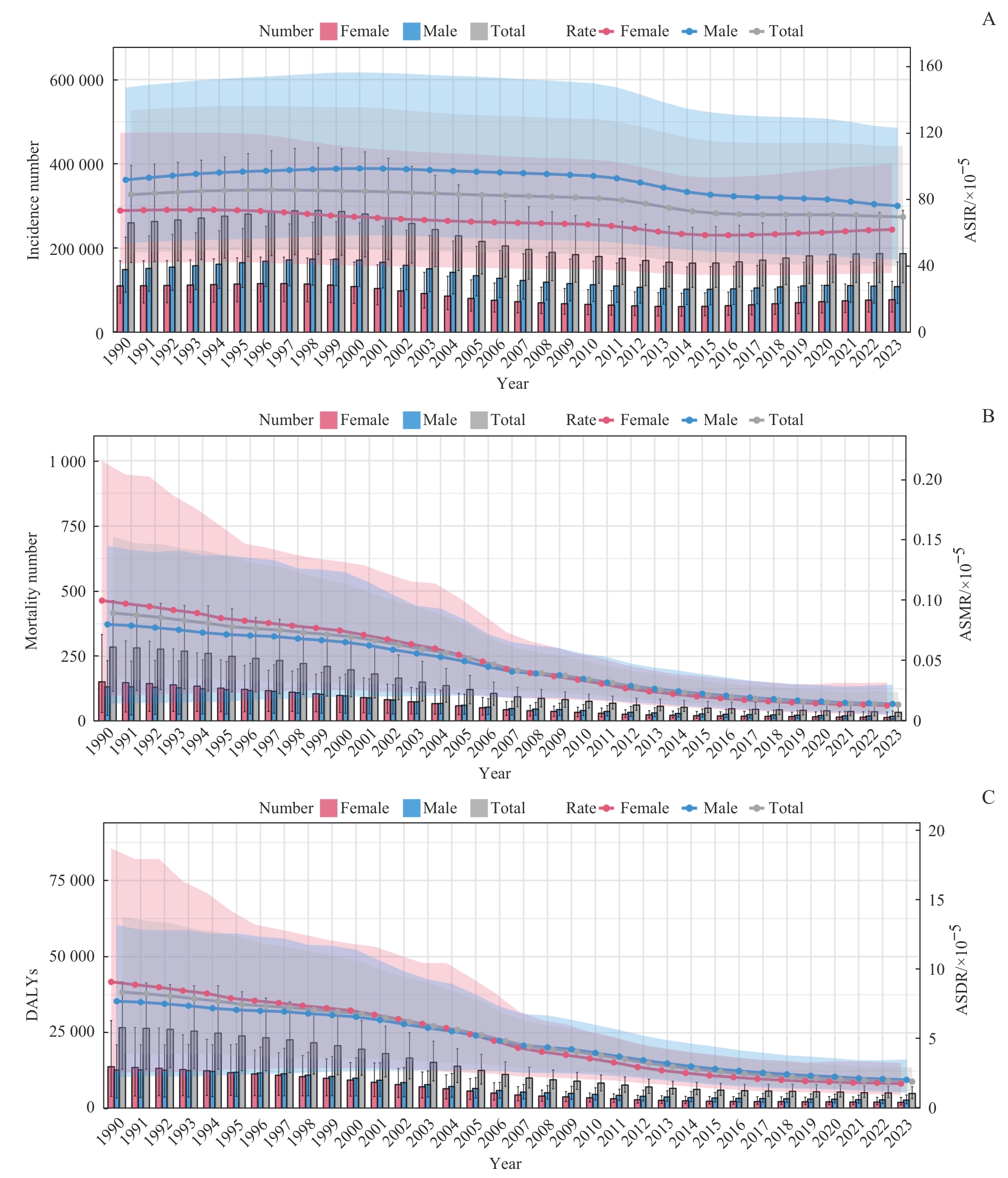
Fig 1 Incidence (A), mortality (B), and DALYs (C) of pediatric appendicitis among Chinese children from 1990 to 2023
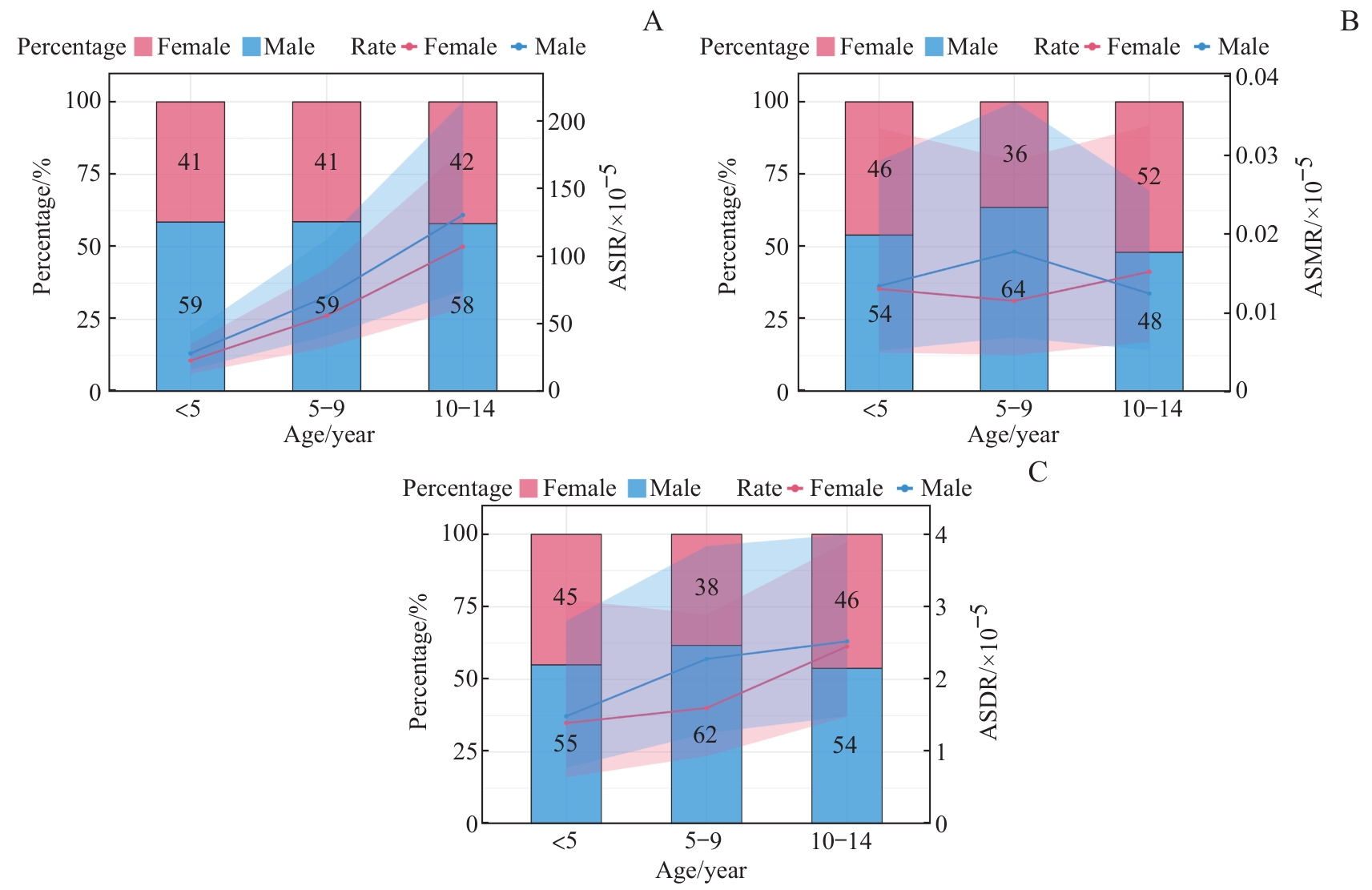
Fig 2 Incidence (A), mortality (B), and DALYs (C) of pediatric appendicitis among Chinese children in 2023, by age and gender group
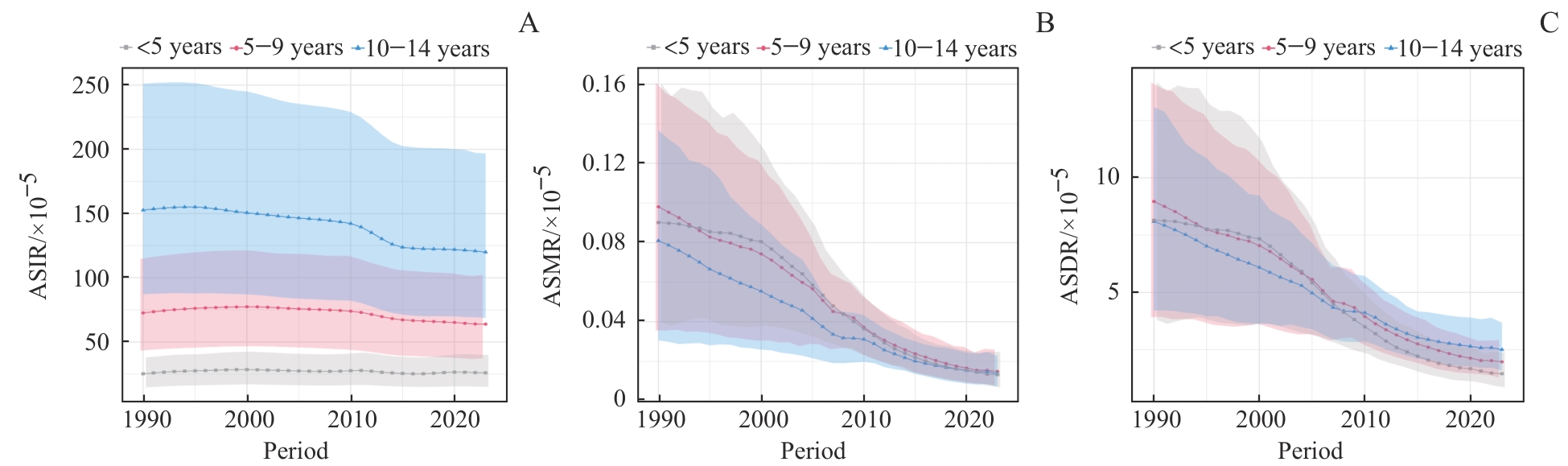
Fig 3 ASIR (A), ASMR (B), and ASDR (C) of pediatric appendicitis among Chinese children from 1990 to 2023, by age group
| Gender | 1990 | 2023 | EAPC (95% CI)/% | ||
|---|---|---|---|---|---|
| Case (95% UI)/n | ASMR (95% UI)/×10-5 | Case (95% UI)/n | ASMR (95% UI)/×10-5 | ||
| Total | 285 (116‒464) | 0.09 (0.04‒0.15) | 36 (20‒60) | 0.01 (0.01‒0.02) | -6.48 (-7.04‒ -5.91) |
| Male | 133 (24‒234) | 0.08 (0.01‒0.15) | 20 (9‒41) | 0.01 (0.01‒0.03) | -5.49 (-6.01‒ -4.96) |
| Female | 152 (35‒334) | 0.10 (0.02‒0.22) | 16 (7‒37) | 0.01 (0.01‒0.03) | -6.93 (-7.50‒ -6.36) |
Tab 2 Mortality and trends of pediatric appendicitis in China in 1990 and 2023
| Gender | 1990 | 2023 | EAPC (95% CI)/% | ||
|---|---|---|---|---|---|
| Case (95% UI)/n | ASMR (95% UI)/×10-5 | Case (95% UI)/n | ASMR (95% UI)/×10-5 | ||
| Total | 285 (116‒464) | 0.09 (0.04‒0.15) | 36 (20‒60) | 0.01 (0.01‒0.02) | -6.48 (-7.04‒ -5.91) |
| Male | 133 (24‒234) | 0.08 (0.01‒0.15) | 20 (9‒41) | 0.01 (0.01‒0.03) | -5.49 (-6.01‒ -4.96) |
| Female | 152 (35‒334) | 0.10 (0.02‒0.22) | 16 (7‒37) | 0.01 (0.01‒0.03) | -6.93 (-7.50‒ -6.36) |
| Gender | 1990 | 2023 | EAPC (95% CI)/% | ||
|---|---|---|---|---|---|
| DALYs (95% UI) | ASDR (95% UI)/×10-5 | DALYs (95% UI) | ASDR (95% UI)/×10-5 | ||
| Total | 26 708 (13 092‒41 742) | 8.40 (3.97‒13.81) | 5 124 (3 417‒7 345) | 1.97 (1.24‒2.99) | -4.88 (-5.16‒ -4.60) |
| Male | 12 808 (3 671‒21 085) | 7.74 (2.26‒13.21) | 2 927 (1 744‒4 617) | 2.10 (1.18‒3.56) | -4.35 (-4.62‒ -4.08) |
| Female | 13 900 (4 174‒29 004) | 9.13 (2.62‒18.7) | 2 198 (1 346‒3 828) | 1.82 (1.03‒3.31) | -5.49 (-5.80‒ -5.18) |
Tab 3 DALYs and trends of pediatric appendicitis in China in 1990 and 2023
| Gender | 1990 | 2023 | EAPC (95% CI)/% | ||
|---|---|---|---|---|---|
| DALYs (95% UI) | ASDR (95% UI)/×10-5 | DALYs (95% UI) | ASDR (95% UI)/×10-5 | ||
| Total | 26 708 (13 092‒41 742) | 8.40 (3.97‒13.81) | 5 124 (3 417‒7 345) | 1.97 (1.24‒2.99) | -4.88 (-5.16‒ -4.60) |
| Male | 12 808 (3 671‒21 085) | 7.74 (2.26‒13.21) | 2 927 (1 744‒4 617) | 2.10 (1.18‒3.56) | -4.35 (-4.62‒ -4.08) |
| Female | 13 900 (4 174‒29 004) | 9.13 (2.62‒18.7) | 2 198 (1 346‒3 828) | 1.82 (1.03‒3.31) | -5.49 (-5.80‒ -5.18) |
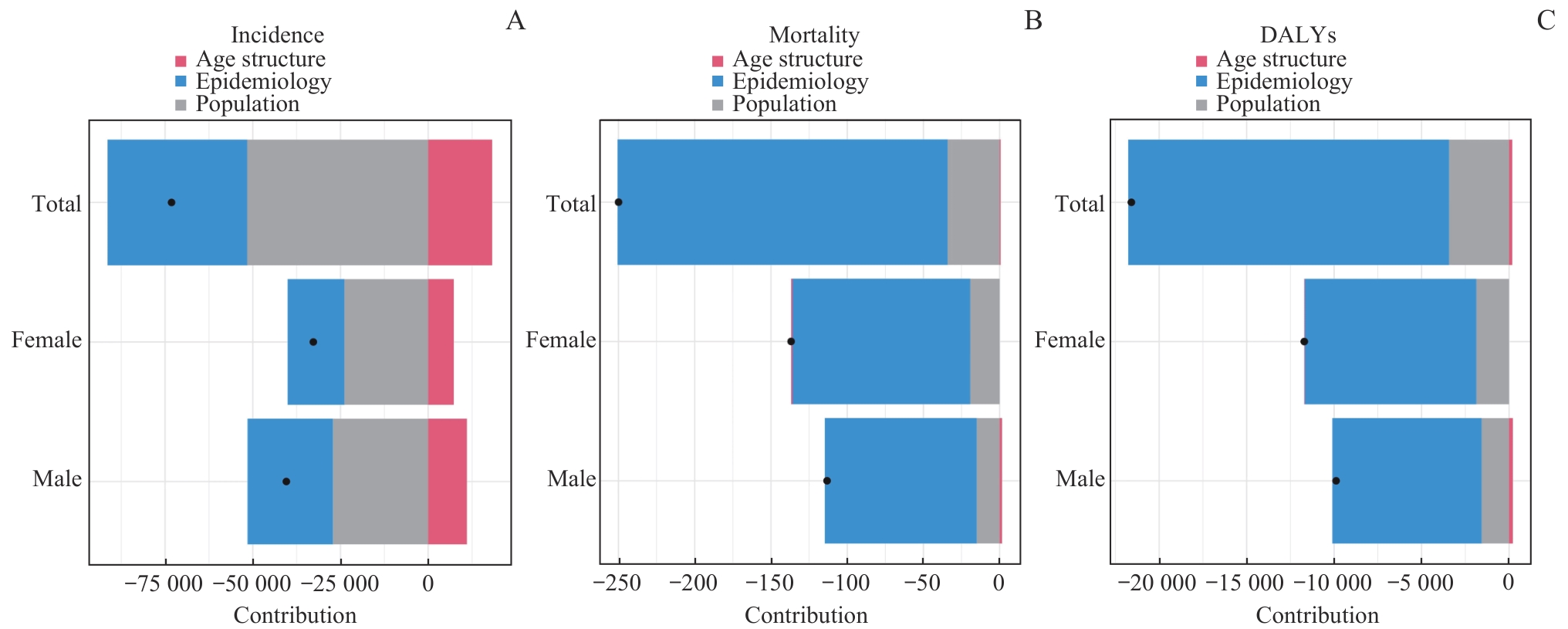
Fig 4 Decomposition analysis of changes in incidence (A), mortality (B), and DALYs (C) of pediatric appendicitis among Chinese children from 1990 to 2023
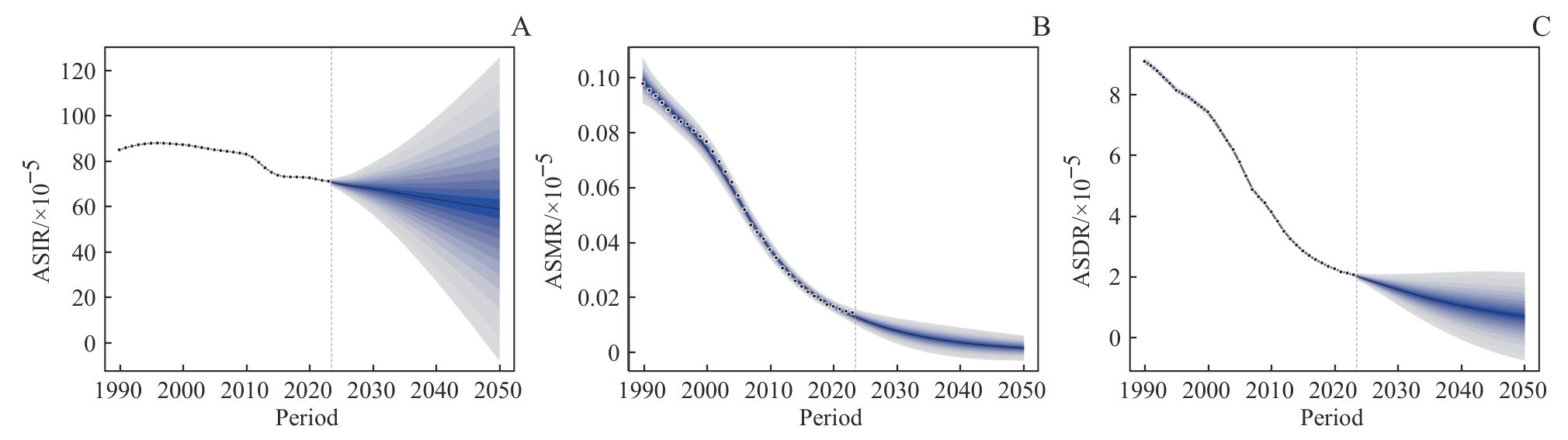
Fig 5 Trends in ASIR (A), ASMR (B), and ASDR (C) of pediatric appendicitis among Chinese children from 1990 to 2050
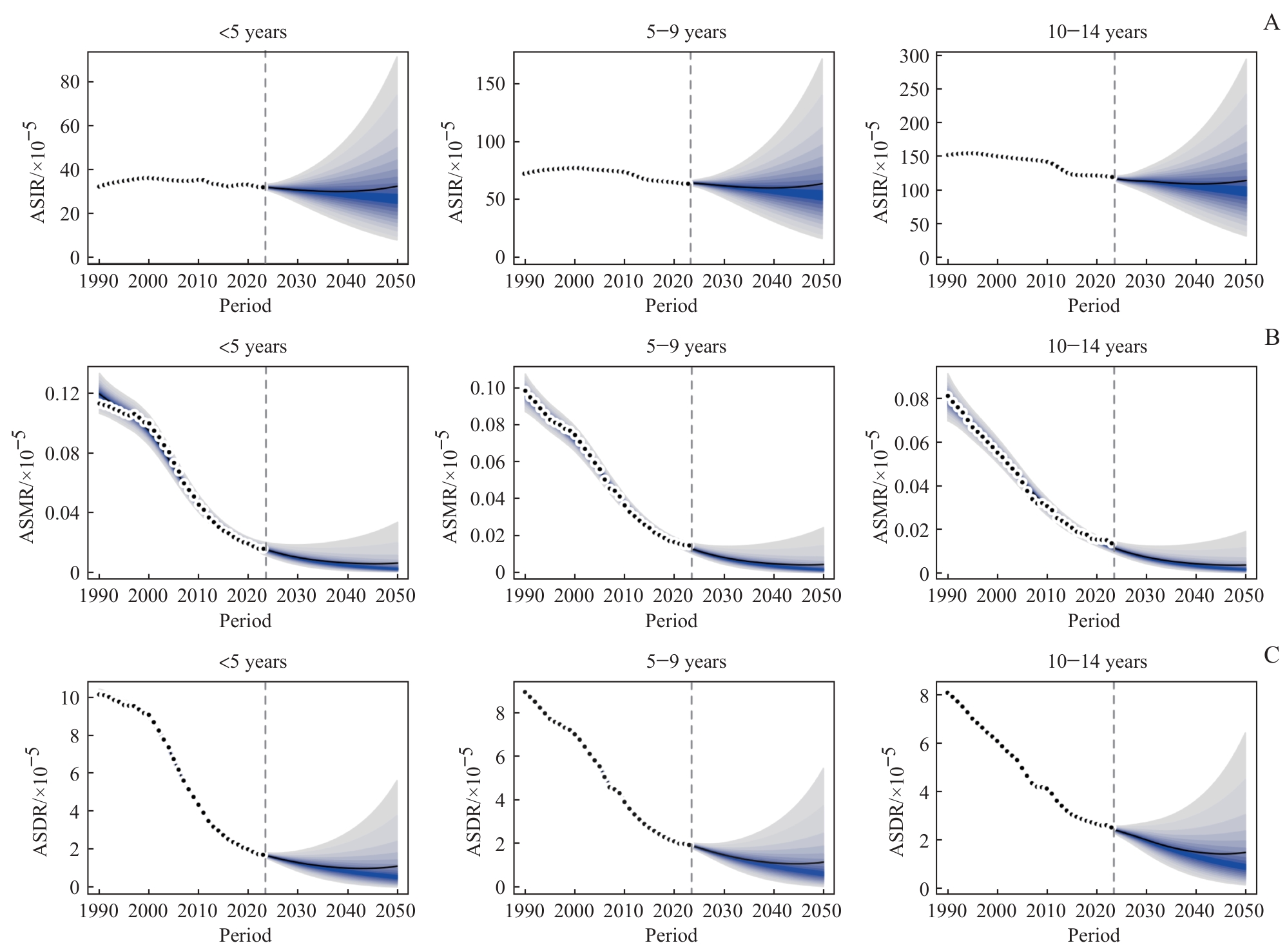
Fig 6 Trends in ASIR (A), ASMR (B), and ASDR (C) of pediatric appendicitis among Chinese children from 1990 to 2050 by age group
| [1] | Michelson K A, Reeves S D, Grubenhoff J A, et al. Clinical features and preventability of delayed diagnosis of pediatric appendicitis[J]. JAMA Netw Open, 2021, 4(8): e2122248. |
| [2] | D′Souza N, Nugent K. Appendicitis[J]. Am Fam Physician, 2016, 93(2): 142-143. |
| [3] | He R, Lai J X, Jiang O, et al. The incidence and temporal trend of appendicitis in children: an analysis from the Global Burden of Disease Study 2021[J]. J Gastrointest Surg, 2025, 29(2): 101935. |
| [4] | Yang Y P, Guo C J, Gu Z X, et al. The global burden of appendicitis in 204 countries and territories from 1990 to 2019[J]. Clin Epidemiol, 2022, 14: 1487-1499. |
| [5] | Ha S C, Tsai Y H, Koh C C, et al. Blood biomarkers to distinguish complicated and uncomplicated appendicitis in pediatric patients[J]. J Formos Med Assoc, 2024, 123(10): 1093-1098. |
| [6] | Duan C S, Li Y, Ma J S, et al. The impact of laparoscopic appendectomy and open appendectomy on B7-H3-mediated intrinsic immune response in children with acute suppurative appendicitis[J]. J Inflamm Res, 2024, 17: 1577-1587. |
| [7] | GBD 2023 Disease and Injury and Risk Factor Collaborators. Burden of 375 diseases and injuries, risk-attributable burden of 88 risk factors, and healthy life expectancy in 204 countries and territories, including 660 subnational locations, 1990‒2023: a systematic analysis for the Global Burden of Disease Study 2023[J]. Lancet, 2025, 406(10513): 1873-1922. |
| [8] | 罗淳. 关于人口年龄组的重新划分及其蕴意[J]. 人口研究, 2017, 41(5): 16-25. |
| Luo C. Re-partitioning population age group and its implications[J]. Population Research, 2017, 41(5): 16-25. | |
| [9] | Jani C T, Kareff S A, Morgenstern-Kaplan D, et al. Evolving trends in lung cancer risk factors in the ten most populous countries: an analysis of data from the 2019 Global Burden of Disease Study[J]. EClinicalMedicine, 2025, 79: 103033. |
| [10] | Das Gupta P. Standardization and decomposition of rates from cross-classified data[J]. Genus, 1994, 50(3/4): 171-196. |
| [11] | Du Z B, Chen W, Xia Q E, et al. Trends and projections of kidney cancer incidence at the global and national levels, 1990‒2030: a Bayesian age-period-cohort modeling study[J]. Biomark Res, 2020, 8: 16. |
| [12] | Barrett M L, Hines A L, Andrews R M. Statistical Brief #159: trends in rates of perforated appendix, 2001‒2010[R]//Healthcare Cost and Utilization Project (HCUP) statistical briefs. Rockville: Agency for Healthcare Research and Quality (US), 2013. |
| [13] | Sippola S, Grönroos J, Sallinen V, et al. A randomised placebo-controlled double-blind multicentre trial comparing antibiotic therapy with placebo in the treatment of uncomplicated acute appendicitis: APPAC Ⅲ trial study protocol[J]. BMJ Open, 2018, 8(11): e023623. |
| [14] | 刘宁, 张红岩, 杨绍萱, 等. 基于年龄-时期-队列模型的中国阑尾炎疾病负担分析[J]. 国际流行病学传染病学杂志, 2024, 51(5): 294-299. |
| Liu N, Zhang H Y, Yang S X, et al. Analysis of national burden of appendicitis in China based on the age-period-cohort model[J]. International Journal of Epidemiology and Infectious Disease, 2024, 51(5): 294-299. | |
| [15] | Li J, Xu R, Hu D M, et al. Prehospital delay and its associated psychosocial factors in patients presenting with acute appendicitis in a southwestern city in China: a single-centre prospective observational study[J]. BMJ Open, 2019, 9(6): e023491. |
| [16] | GBD 2021 Appendicitis Collaborator Group. Trends and levels of the global, regional, and national burden of appendicitis between 1990 and 2021: findings from the Global Burden of Disease Study 2021[J]. Lancet Gastroenterol Hepatol, 2024, 9(9): 825-858. |
| [17] | Kart Y, Bilaloglu E, Karaibrahimoglu A. Comparative evaluation of the diagnostic value of HALP score and systemic inflammatory immune index biomarkers in childhood appendicitis[J]. Pak J Med Sci, 2025, 41(9): 2486-2490. |
| [18] | Meklin J, Eskelinen M, Syrjänen K, et al. Gender-specific performance of a diagnostic score in acute appendicitis[J]. In Vivo, 2020, 34(6): 3687-3703. |
| [19] | Guan L J, Liu Z, Pan G D, et al. The global, regional, and national burden of appendicitis in 204 countries and territories, 1990‒2019: a systematic analysis from the Global Burden of Disease Study 2019[J]. BMC Gastroenterol, 2023, 23(1): 44. |
| [20] | Echevarria S, Rauf F, Hussain N, et al. Typical and atypical presentations of appendicitis and their implications for diagnosis and treatment: a literature review[J]. Cureus, 2023, 15(4): e37024. |
| [21] | Dai M, Zhang F W, Jiang W. Application value of abdominal ultrasonography in the diagnosis of pediatric patients aged 3‒12 years with acute appendicitis[J]. World J Gastrointest Surg, 2025, 17(9): 105779. |
| [1] | Wei Jiaqi, Ren Hong, Shen Nan, Zhou Yuanjie, Pan Yi, Sun Xiangxin, Mo Xi, Tao Yue. Diagnostic performance of a domestic microfluidic system in pediatric gastrointestinal infections: a comparative study with leading imported platforms [J]. Journal of Shanghai Jiao Tong University (Medical Science), 2026, 46(8): 1082-1090. |
| [2] | Chen Yi, Cai Duote, Xuan Xiaoxiao, Chen Sai, Chen Qingjiang, Gao Zhigang. Mesenteric cyst resection in children: a comparative analysis of the short-term effect of Da Vinci robotic system and laparoscopy [J]. Journal of Shanghai Jiao Tong University (Medical Science), 2026, 46(8): 1117-1123. |
| [3] | Chen Yunsheng, Deng Dan, Yuan Bo, Liu Yan. Interpretation of the Clinical Practice Guideline for the Prevention and Treatment of Scars in Children (2025 Edition) [J]. Journal of Shanghai Jiao Tong University (Medical Science), 2026, 46(5): 561-567. |
| [4] | Wang Shaoyan, Li Chao, Huang Shuo, Wu Shuqi, Chen Suyun. Physiological distribution characteristics and influencing factors of hepatic background and mediastinal blood pool on 18F-FDG PET/CT in children and adolescents of different ages [J]. Journal of Shanghai Jiao Tong University (Medical Science), 2026, 46(4): 496-501. |
| [5] | Xue Yue, Xu Jian, Jiang Yining, Yu Ting, Lin Yanfen, Zhang Yijing, Luo Zhongcheng. Role of gestational weight gain in the association between breastfeeding duration and toddler neurodevelopment [J]. Journal of Shanghai Jiao Tong University (Medical Science), 2026, 46(2): 188-199. |
| [6] | Liu Wenxia, Zhang Chen. Research advances in the impact of childhood trauma on anhedonia in schizophrenia via immune-inflammatory pathways [J]. Journal of Shanghai Jiao Tong University (Medical Science), 2026, 46(2): 235-240. |
| [7] | Wan Pengjie, Yang Shaofang, Qi Jun. Efficacy of topical narrow-band ultraviolet B combined with desonide cream in children with moderate-to-severe atopic dermatitis [J]. Journal of Shanghai Jiao Tong University (Medical Science), 2026, 46(1): 132-136. |
| [8] | Wu Qingqing, Cao Yi, Lu Lina, Tao Yijing, Feng Haixia, Yan Weihui, Wang Ying. High-dose vitamin D for pediatric short bowel syndrome with vitamin D insufficiency/deficiency [J]. Journal of Shanghai Jiao Tong University (Medical Science), 2026, 46(1): 54-59. |
| [9] | Liu Meiling, Bao Lei, Min Lingzhao, Wei Jia, Hua Li, Wang Xiaoqiang. Clinical characteristics and surgical outcome analysis of quadrigeminal cistern arachnoid cysts in children: a quantitative retrospective cohort study [J]. Journal of Shanghai Jiao Tong University (Medical Science), 2026, 46(1): 66-74. |
| [10] | Writing Group of Chinese Expert Consensus on Ultrasound-Guided Pediatric Nerve Blocks in Children (2025 edition) . Chinese expert consensus on ultrasound-guided nerve blocks in children (2025 edition) [J]. Journal of Shanghai Jiao Tong University (Medical Science), 2025, 45(9): 1079-1098. |
| [11] | WANG Zhiqi, WANG Ying. Advances in the diagnosis and treatment of inflammatory bowel disease-associated anemia in children [J]. Journal of Shanghai Jiao Tong University (Medical Science), 2025, 45(9): 1232-1238. |
| [12] | JIANG Jie, ZHANG Hong, LUN Heyuan, PAN Fen, YU Fangyuan, HE Ping. Molecular epidemiology of Klebsiella pneumoniae isolated from children [J]. Journal of Shanghai Jiao Tong University (Medical Science), 2025, 45(8): 1027-1034. |
| [13] | HE Chen, YAN Silei, ZHOU Weitao, LING yong, YU Ningning, JIANG Kun, QIAN Liling. Clinical analysis and literature integration study of cystic fibrosis complicated by allergic bronchopulmonary aspergillosis [J]. Journal of Shanghai Jiao Tong University (Medical Science), 2025, 45(8): 1066-1073. |
| [14] | LIU Meiling, ZHOU Yabing, WANG Xiaoqiang. Advances in the treatment of intracranial neoplastic lesions in children with neurofibromatosis 1 [J]. Journal of Shanghai Jiao Tong University (Medical Science), 2024, 44(3): 399-406. |
| [15] | JIANG Yunli, LI Aiqiu, XIAO Yanshang, LI Tiantian, HU Yachen, ZHANG Xiaoxiao, WU Beirong. Application of continuous nursing based on EMS management mode in preschool children with wheezing diseases [J]. Journal of Shanghai Jiao Tong University (Medical Science), 2024, 44(2): 228-236. |
| Viewed | ||||||
|
Full text |
|
|||||
|
Abstract |
|
|||||
