
上海交通大学学报(医学版) ›› 2025, Vol. 45 ›› Issue (6): 774-783.doi: 10.3969/j.issn.1674-8115.2025.06.013
潘抒凡1,2, 杨栋磊1,2( ), 王鹏飞1,2()
收稿日期:2024-10-24
接受日期:2025-02-28
出版日期:2025-06-28
发布日期:2025-06-28
通讯作者:
杨栋磊,副研究员,博士;电子信箱:dongleiyang@shsmu.edu.cn作者简介:潘抒凡(2001—),女,博士生;电子信箱:shufan_alicepan@163.com。
基金资助:
PAN Shufan1,2, YANG Donglei1,2(), WANG Pengfei1,2()
Received:2024-10-24
Accepted:2025-02-28
Online:2025-06-28
Published:2025-06-28
Contact:
YANG Donglei, E-mail: dongleiyang@shsmu.edu.cnSupported by:摘要:
目的·利用纳米孔Cas9靶向测序(nanopore Cas9-targeted sequencing,nCATS)技术实现金黄色葡萄球菌的快速检测,并同时进行葡萄球菌蛋白A(staphylococcal protein A,spa)分型和葡萄球菌盒式染色体mec(staphylococcal cassette chromosome mec,SCCmec)分型。方法·以spa基因和SCCmec基因元件作为靶向测序的2个目标区域(region of interest,ROI),设计4种CRISPR RNA(crRNA),使其构成的Cas9核糖核蛋白(ribonucleoprotein,RNP)能够靶向切割2个ROI两侧的序列;针对每种crRNA设计42 bp的模拟靶标DNA。通过Cas9 RNP切割效率测试,筛选合适的crRNA,优化切割体系,选择切割反应时间和Cas9 RNP合成温度。提取耐甲氧西林金黄色葡萄球菌(methicillin-resistant Staphylococcus aureus,MRSA)菌株基因组DNA,末端去磷酸化,在切割后的ROI两侧末端加上dA尾,与测序接头连接后利用纳米孔机器进行测序。对测序结果数据的质量值进行分析,并将测得的核酸序列分别与mecA、spa和SCCmec数据库进行比对,根据比对结果判断样本中是否含有金黄色葡萄球菌,是否为MRSA,并同时获得其spa分型和SCCmec分型。结果·共设计出2组crRNA,经电泳图灰度分析,筛选出切割效率更高的一组用于后续实验。切割效率优化结果显示,Cas9 RNP与靶标DNA比例为1∶1,切割反应时间为15 min,Cas9 RNP合成温度为25 ℃时,Cas9 RNP切割效率可达87.41%。nCATS测序质量值集中在15(Q15)和20(Q20)之间,表明测序准确度约为99%。测序结果与mecA、spa和SCCmec数据库比对后得出菌株样本的spa分型为t2,并且是SCCmec Ⅱ型。相同菌株样本经PCR扩增后测序和多重PCR验证,结果均与nCATS结果一致。结论·利用nCATS技术能够实现金黄色葡萄球菌的快速检测,并能同时获得spa分型和SCCmec分型。
中图分类号:
潘抒凡, 杨栋磊, 王鹏飞. 基于纳米孔Cas9靶向测序的金黄色葡萄球菌快速检测与分型[J]. 上海交通大学学报(医学版), 2025, 45(6): 774-783.
PAN Shufan, YANG Donglei, WANG Pengfei. Rapid detection and typing of Staphylococcus aureus based on nanopore Cas9-targeted sequencing[J]. Journal of Shanghai Jiao Tong University (Medical Science), 2025,(6): 774-783.
| crRNA | Strand | Corresponding simulated target DNA (5'→3') |
|---|---|---|
| spa-fw1-crRNA | + | ACCAAATACAGTTGTACCGATGAATGGATTTTCTTCACCAGT |
| - | ACTGGTGAAGAAAATCCATTCATCGGTACAACTGTATTTGGT | |
| spa-fw2-crRNA | + | TGCAATGTCATTTACTGTATCACCAGGTTTAACGACATGTAC |
| - | GTACATGTCGTTAAACCTGGTGATACAGTAAATGACATTGCA | |
| spa-rev1-crRNA | + | GTTACAGATGCAATACCTACACCTAGTTTACGAATTGAATAA |
| - | TTATTCAATTCGTAAACTAGGTGTAGGTATTGCATCTGTAAC | |
| spa-rev2-crRNA | + | GCAGCAGGTGTTACGCCACCAGATATAAGTAATGTACCTAAA |
| - | TTTAGGTACATTACTTATATCTGGTGGCGTAACACCTGCTGC | |
| SCC2-fw1-crRNA | + | ATTAATCGTATTAATAGAATACAAGGGCAACTAAATGGAATT |
| - | AATTCCATTTAGTTGCCCTTGTATTCTATTAATACGATTAAT | |
| SCC2-fw2-crRNA | + | TAATAGAATGTGTAAAAGTAGCTGCGGATGATGAAGAAAGCT |
| - | AGCTTTCTTCATCATCCGCAGCTACTTTTACACATTCTATTA | |
| SCC2-rev1-crRNA | + | AATTCTTGGGCCAATCCTTCGGAAGATAGCATCTTTCCTTGT |
| - | ACAAGGAAAGATGCTATCTTCCGAAGGATTGGCCCAAGAATT | |
| SCC2-rev2-crRNA | + | TACAAAGTCGCTTTGCCCTTGGGTCATGCGTTGGTTCAATTC |
| - | GAATTGAACCAACGCATGACCCAAGGGCAAAGCGACTTTGTA |
表1 模拟靶标双链DNA序列
Tab 1 Simulated double-stranded target DNA sequences
| crRNA | Strand | Corresponding simulated target DNA (5'→3') |
|---|---|---|
| spa-fw1-crRNA | + | ACCAAATACAGTTGTACCGATGAATGGATTTTCTTCACCAGT |
| - | ACTGGTGAAGAAAATCCATTCATCGGTACAACTGTATTTGGT | |
| spa-fw2-crRNA | + | TGCAATGTCATTTACTGTATCACCAGGTTTAACGACATGTAC |
| - | GTACATGTCGTTAAACCTGGTGATACAGTAAATGACATTGCA | |
| spa-rev1-crRNA | + | GTTACAGATGCAATACCTACACCTAGTTTACGAATTGAATAA |
| - | TTATTCAATTCGTAAACTAGGTGTAGGTATTGCATCTGTAAC | |
| spa-rev2-crRNA | + | GCAGCAGGTGTTACGCCACCAGATATAAGTAATGTACCTAAA |
| - | TTTAGGTACATTACTTATATCTGGTGGCGTAACACCTGCTGC | |
| SCC2-fw1-crRNA | + | ATTAATCGTATTAATAGAATACAAGGGCAACTAAATGGAATT |
| - | AATTCCATTTAGTTGCCCTTGTATTCTATTAATACGATTAAT | |
| SCC2-fw2-crRNA | + | TAATAGAATGTGTAAAAGTAGCTGCGGATGATGAAGAAAGCT |
| - | AGCTTTCTTCATCATCCGCAGCTACTTTTACACATTCTATTA | |
| SCC2-rev1-crRNA | + | AATTCTTGGGCCAATCCTTCGGAAGATAGCATCTTTCCTTGT |
| - | ACAAGGAAAGATGCTATCTTCCGAAGGATTGGCCCAAGAATT | |
| SCC2-rev2-crRNA | + | TACAAAGTCGCTTTGCCCTTGGGTCATGCGTTGGTTCAATTC |
| - | GAATTGAACCAACGCATGACCCAAGGGCAAAGCGACTTTGTA |
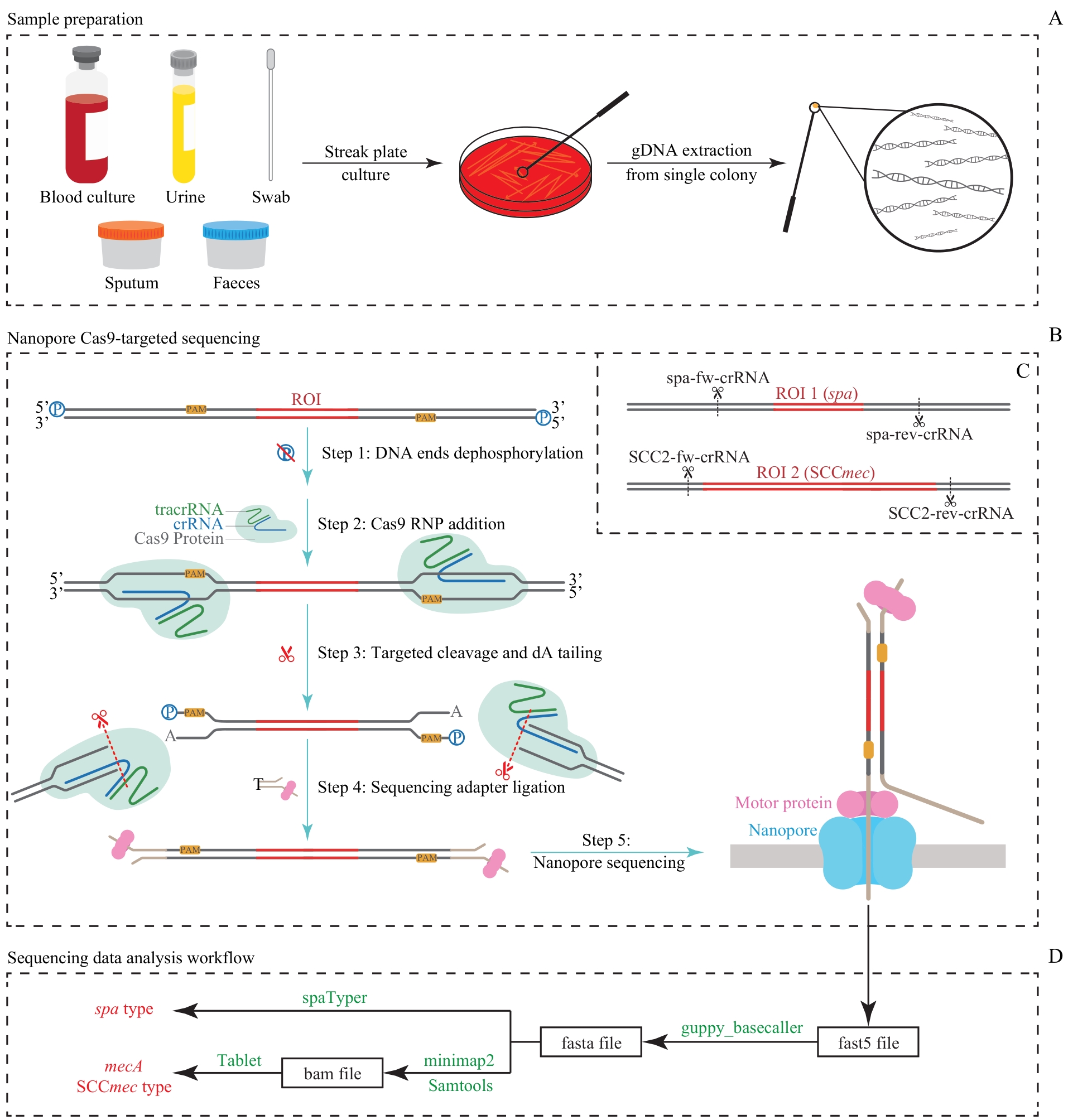
图1 nCATS技术流程图Note: A. Schematic of the sample preparation process. B. Schematic of the nCATS mechanism. C. Schematic of the two ROIs and four crRNA cleavage sites. D. Sequencing data analysis workflow.
Fig 1 Schematic diagram of nCATS workflow
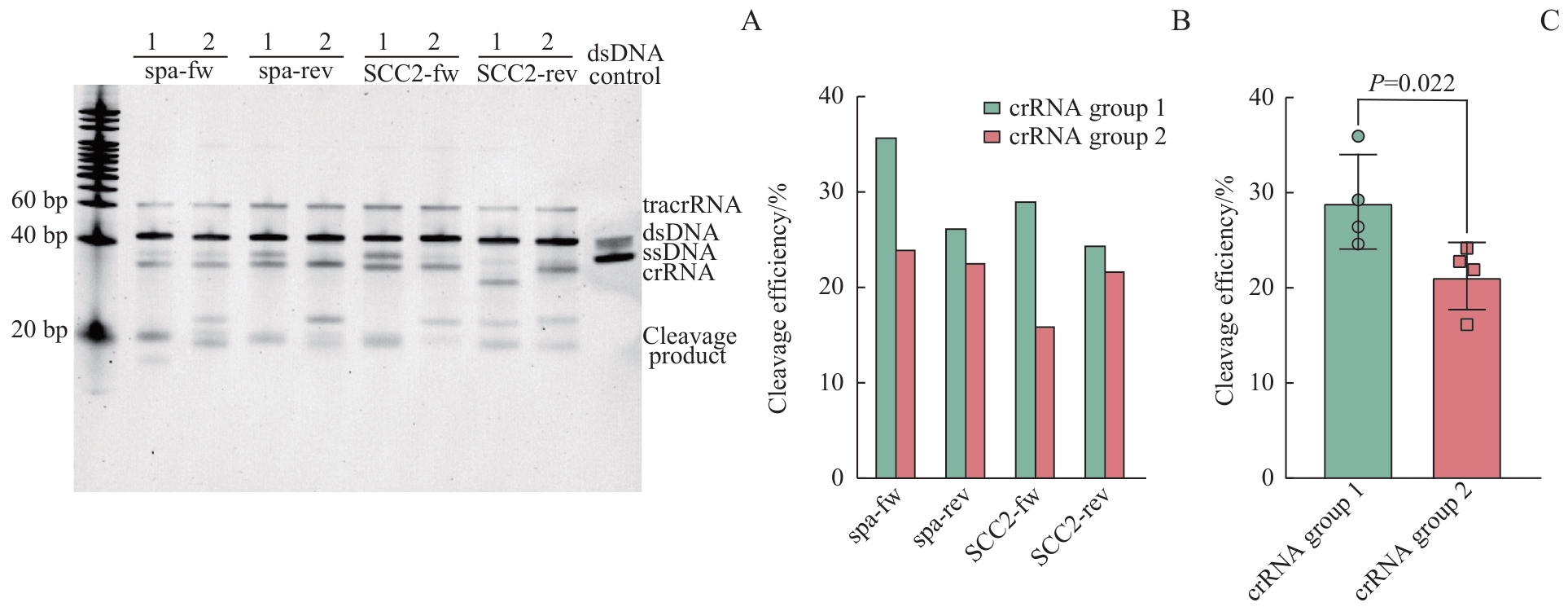
图2 根据切割效率筛选crRNANote: A. Cleavage products of eight crRNAs from two groups. B. Cleavage efficiencies of eight crRNAs from two groups. C. Comparison of cleavage efficiencies between the two groups of crRNAs. dsDNA—double-stranded DNA; ssDNA—single-stranded DNA.
Fig 2 Screening of crRNAs based on cleavage efficiency
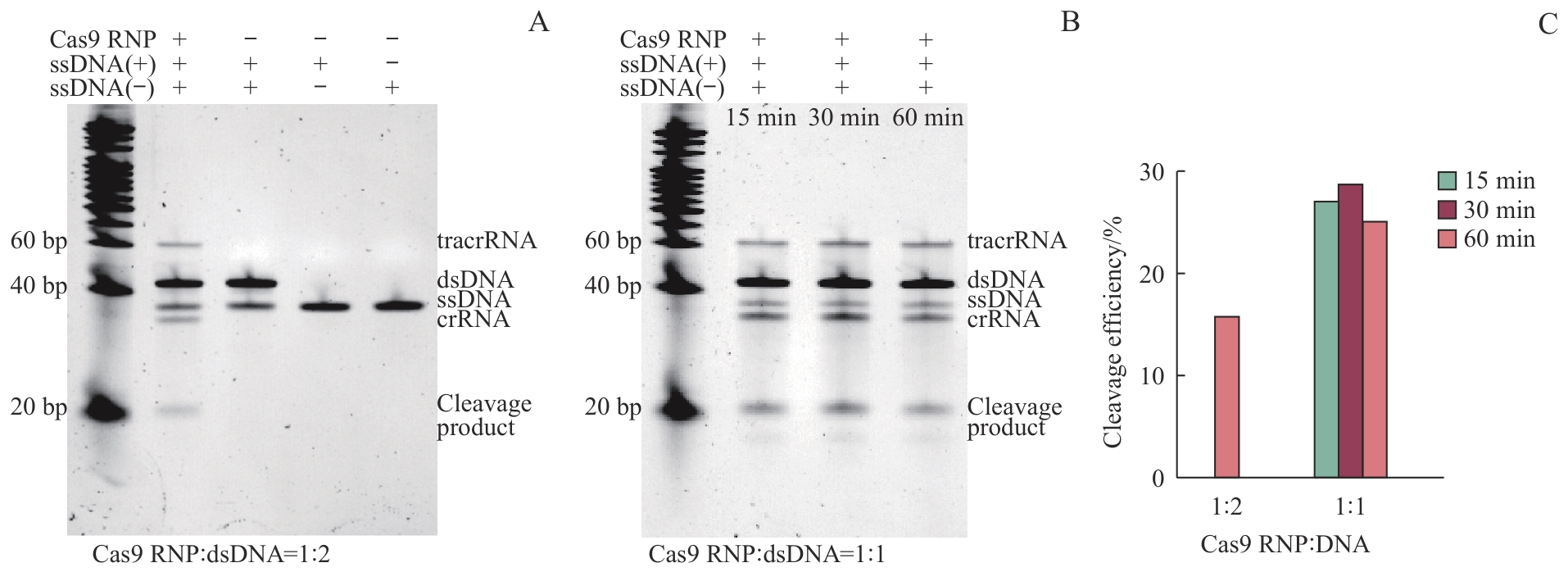
图3 Cas9 RNP切割体系优化Note: A. Verification of cleavage products using the Cas9 RNP cleavage system (Cas9 RNP:dsDNA=1:2) at 20 ℃ for 60 min. B. Cleavage products verification of Cas9 RNP cleavage system (Cas9 RNP:dsDNA=1:1) with different cleavage time at 20 ℃. C. Cleavage efficiencies of Cas9 RNP under different ratios and different cleavage time.
Fig 3 Optimization of Cas9 RNP cleavage system
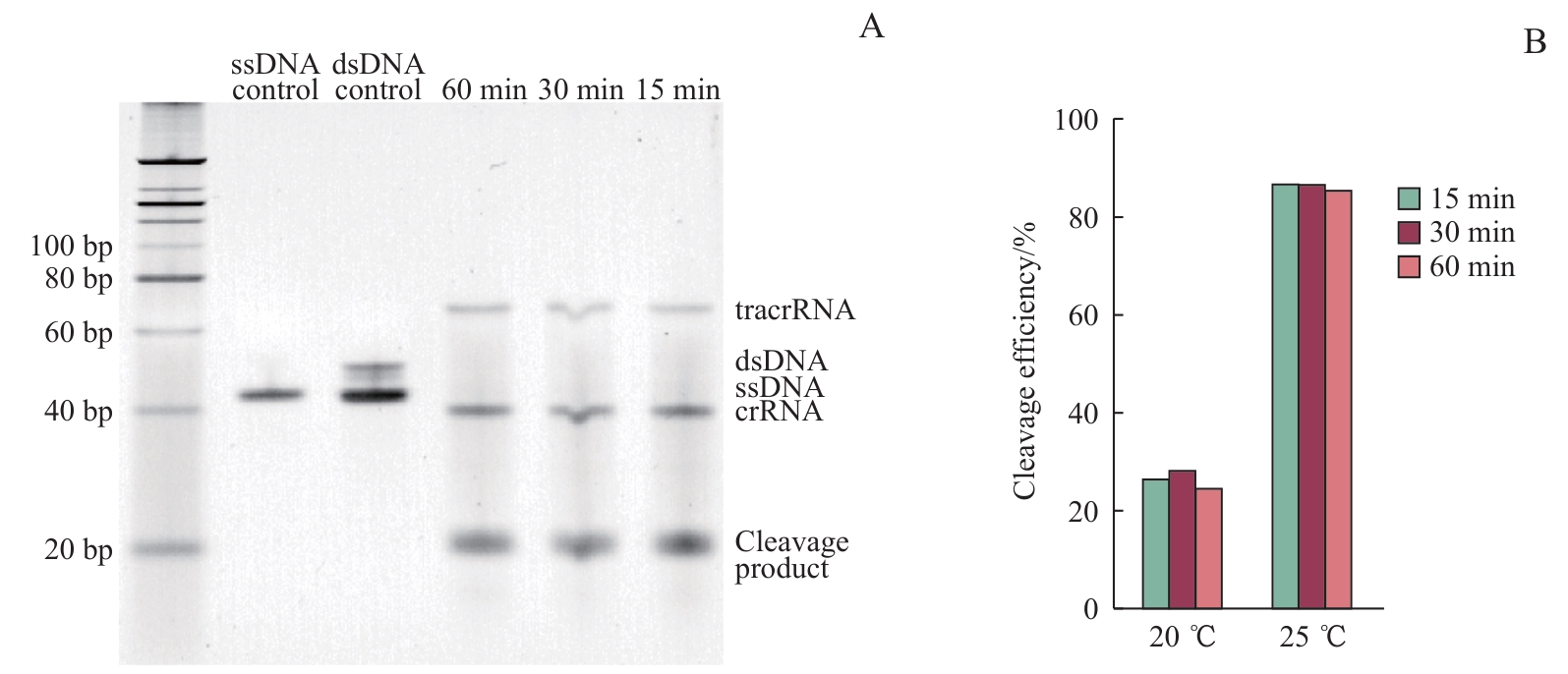
图4 Cas9 RNP合成温度筛选Note: A. Cleavage products of Cas9 RNP synthesized at 25 ℃, with different cleavage incubation times. B. Cleavage efficiencies of Cas9 RNP synthesized at 20 ℃ or 25 ℃, under different cleavage incubation times.
Fig 4 Screening of Cas9 RNP synthesis temperatures
| SCCmec type | GenBank No. |
|---|---|
| SCCmec Ⅱ | AB127982.1 |
| AB261975.1 | |
| AB433542.1 | |
| AB435013.1 | |
| AB435014.1 | |
| AB665981.1 | |
| AJ810120.1 | |
| D86934.2 | |
| SCCmec Ⅲ | AB038513.1 |
| AB037671.1 | |
| AB047088.2 | |
| AB047089.2 | |
| AB425427.1 |
表2 SCCmec 分型比对数据库所含序列GenBank登录号
Tab 2 GenBank accession numbers of sequences in SCCmec typing reference database
| SCCmec type | GenBank No. |
|---|---|
| SCCmec Ⅱ | AB127982.1 |
| AB261975.1 | |
| AB433542.1 | |
| AB435013.1 | |
| AB435014.1 | |
| AB665981.1 | |
| AJ810120.1 | |
| D86934.2 | |
| SCCmec Ⅲ | AB038513.1 |
| AB037671.1 | |
| AB047088.2 | |
| AB047089.2 | |
| AB425427.1 |
| Primer | Sequence (5'→3') |
|---|---|
| spa-1113f | TAAAGACGATCCTTCGGTGAGC |
| spa-1514r | CAGTAGTGCCGTTTGCTT |
表3 PCR法鉴定 spa 分型使用的引物序列
Tab 3 Primer sequences used for spa typing by PCR
| Primer | Sequence (5'→3') |
|---|---|
| spa-1113f | TAAAGACGATCCTTCGGTGAGC |
| spa-1514r | CAGTAGTGCCGTTTGCTT |
| mPCR | Primer | Sequence (5'→3') |
|---|---|---|
| mPCR1 | mecA1 | TGCTATCCACCCTCAAACAGG |
| mecA2 | AACGTTGTAACCACCCCAAGA | |
| ccrA1 | AACCTATATCATCAATCAGTACGT | |
| ccrB123 | ATTGCCTTGATAATAGCCTTCT | |
| ccrA2 | TAAAGGCATCAATGCACAAACACT | |
| ccrA3 | AGCTCAAAAGCAAGCAATAGAAT | |
| ccrA4 | GTATCAATGCACCAGAACTT | |
| ccrB4 | TTGCGACTCTCTTGGCGTTT | |
| mPCR2 | mecI | CATAACTTCCCATTCTGCAGATG |
| mecA | ATATACCAAACCCGACAACTACA | |
| IS1272 | ATGCTTAATGATAGCATCCGAATG | |
| IS431 | TGAGGTTATTCAGATATTTCGATGT |
表4 多重PCR法鉴定SCCmec 分型使用的引物序列
Tab 4 Primer sequences used for SCCmec typing by multiplex PCR
| mPCR | Primer | Sequence (5'→3') |
|---|---|---|
| mPCR1 | mecA1 | TGCTATCCACCCTCAAACAGG |
| mecA2 | AACGTTGTAACCACCCCAAGA | |
| ccrA1 | AACCTATATCATCAATCAGTACGT | |
| ccrB123 | ATTGCCTTGATAATAGCCTTCT | |
| ccrA2 | TAAAGGCATCAATGCACAAACACT | |
| ccrA3 | AGCTCAAAAGCAAGCAATAGAAT | |
| ccrA4 | GTATCAATGCACCAGAACTT | |
| ccrB4 | TTGCGACTCTCTTGGCGTTT | |
| mPCR2 | mecI | CATAACTTCCCATTCTGCAGATG |
| mecA | ATATACCAAACCCGACAACTACA | |
| IS1272 | ATGCTTAATGATAGCATCCGAATG | |
| IS431 | TGAGGTTATTCAGATATTTCGATGT |
| Name | Sequence (5'→3') |
|---|---|
| tracrRNA | AGCAUAGCAAGUUAAAAUAAGGCUAGUCCGUUAUCAACUUGAAAAAGUGGCACCGAGUCGGUGCUUU |
| spa-fw1-crRNA | AAUACAGUUGUACCGAUGAAGUUUUAGAGCUAUGCU |
| spa-rev1-crRNA | UCAAUUCGUAAACUAGGUGUGUUUUAGAGCUAUGCU |
| SCC2-fw1-crRNA | AUCGUAUUAAUAGAAUACAAGUUUUAGAGCUAUGCU |
| SCC2-rev1-crRNA | GGAAAGAUGCUAUCUUCCGAGUUUUAGAGCUAUGCU |
| spa-fw2-crRNA | AUGUCAUUUACUGUAUCACCGUUUUAGAGCUAUGCU |
| spa-rev2-crRNA | GGUACAUUACUUAUAUCUGGGUUUUAGAGCUAUGCU |
| SCC2-fw2-crRNA | AGAAUGUGUAAAAGUAGCUGGUUUUAGAGCUAUGCU |
| SCC2-rev2-crRNA | UGAACCAACGCAUGACCCAAGUUUUAGAGCUAUGCU |
表5 Cas9 RNP中的RNA序列
Tab 5 RNA sequences in Cas9 RNP
| Name | Sequence (5'→3') |
|---|---|
| tracrRNA | AGCAUAGCAAGUUAAAAUAAGGCUAGUCCGUUAUCAACUUGAAAAAGUGGCACCGAGUCGGUGCUUU |
| spa-fw1-crRNA | AAUACAGUUGUACCGAUGAAGUUUUAGAGCUAUGCU |
| spa-rev1-crRNA | UCAAUUCGUAAACUAGGUGUGUUUUAGAGCUAUGCU |
| SCC2-fw1-crRNA | AUCGUAUUAAUAGAAUACAAGUUUUAGAGCUAUGCU |
| SCC2-rev1-crRNA | GGAAAGAUGCUAUCUUCCGAGUUUUAGAGCUAUGCU |
| spa-fw2-crRNA | AUGUCAUUUACUGUAUCACCGUUUUAGAGCUAUGCU |
| spa-rev2-crRNA | GGUACAUUACUUAUAUCUGGGUUUUAGAGCUAUGCU |
| SCC2-fw2-crRNA | AGAAUGUGUAAAAGUAGCUGGUUUUAGAGCUAUGCU |
| SCC2-rev2-crRNA | UGAACCAACGCAUGACCCAAGUUUUAGAGCUAUGCU |
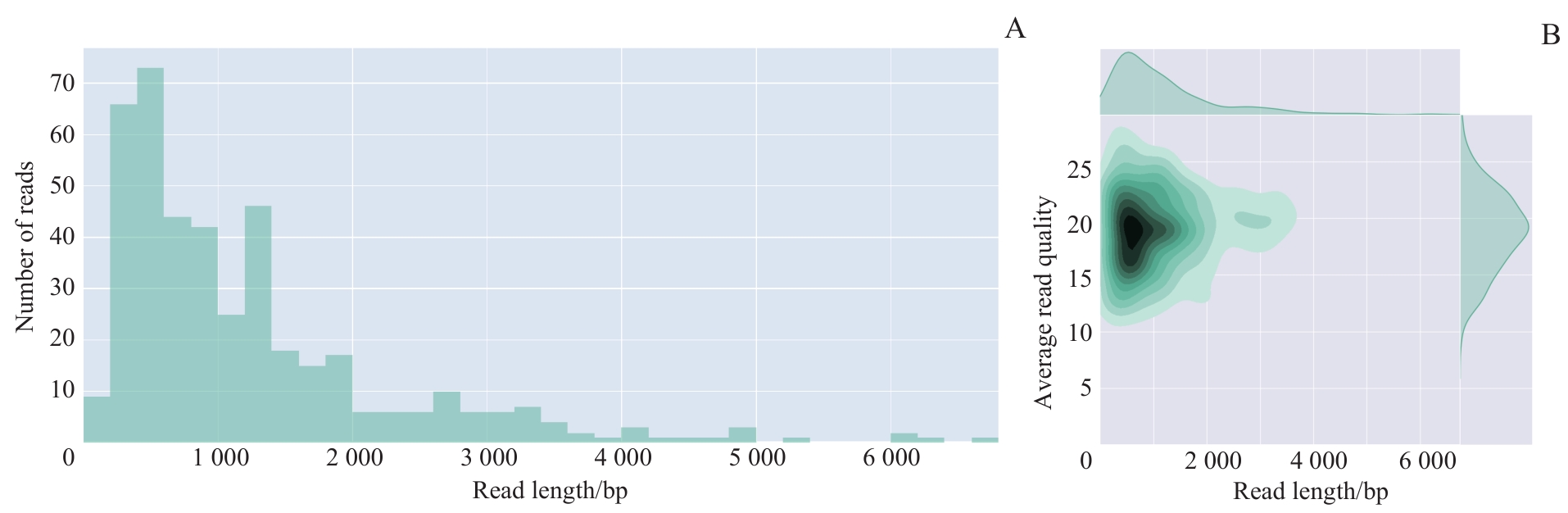
图5 nCATS测序数据质控结果Note: A. Histogram of sequencing read length. B. Plot of sequencing read length and average read quality.
Fig 5 Quality control results of nCATS sequencing data
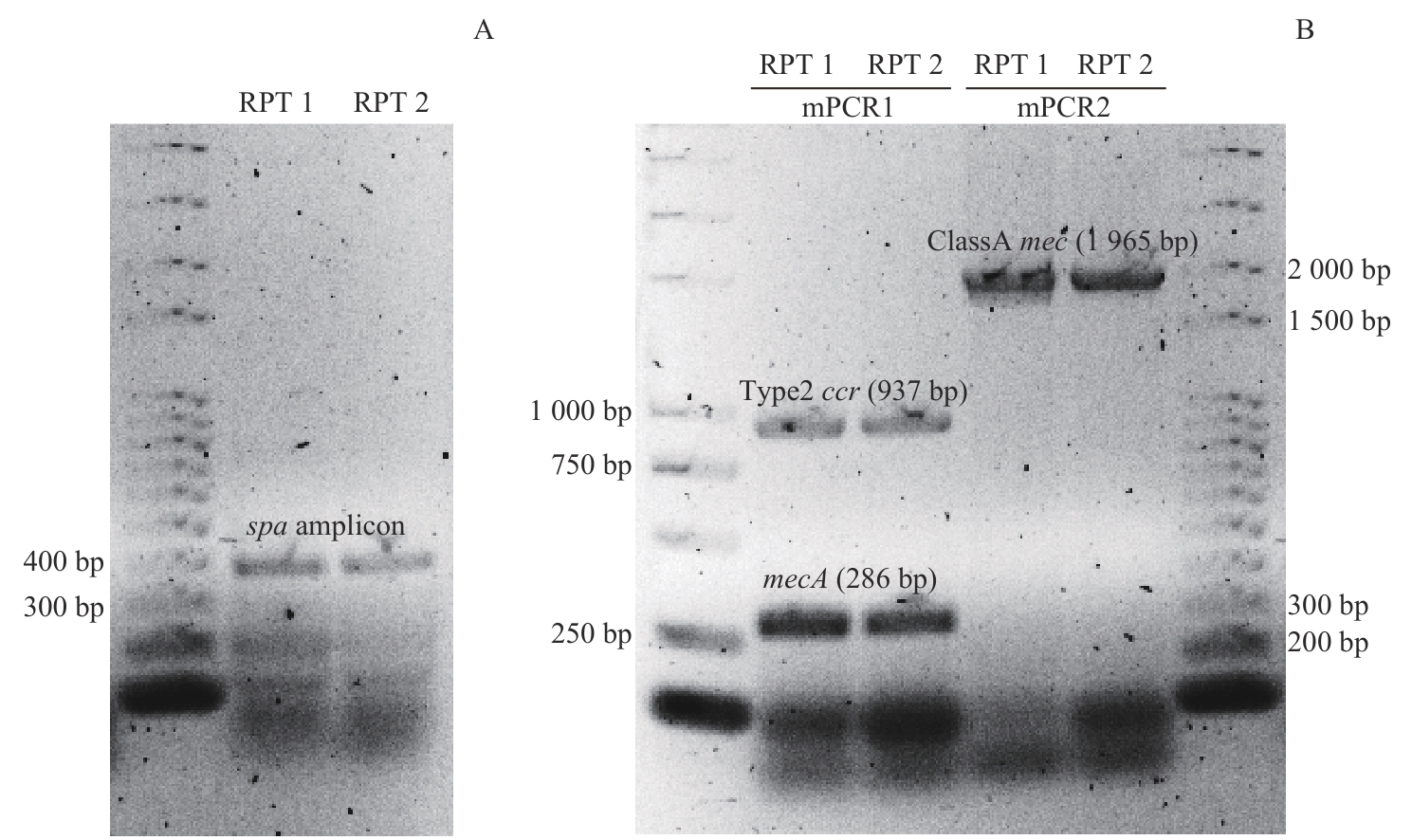
图6 PCR和多重PCR法分型结果Note: A. Verification of spa amplicons. B. SCCmec typing results from multiplex PCR. RPT—repeat.
Fig 6 Typing results obtained using PCR and multiplex PCR methods
| [1] | PALAVECINO E L. Clinical, epidemiologic, and laboratory aspects of methicillin-resistant Staphylococcus aureus infections[J]. Methods Mol Biol, 2020, 2069: 1-28. |
| [2] | 郭燕, 胡付品, 朱德妹, 等. 2022年CHINET三级医院细菌耐药监测[J]. 中国感染与化疗杂志, 2024, 24(3): 277-286. |
| GUO Y, HU F P, ZHU D M, et al. Surveillance of bacterial resistance in tertiary hospitals across China: results of CHINET Antimicrobial Resistance Surveillance Program in 2022[J]. Chinese Journal of Infection and Chemotherapy, 2024, 24(3): 277-286. | |
| [3] | 邱杰, 苏明宽, 吴海英. 葡萄球菌A蛋白快速检测金黄色葡萄球菌的临床监测与研究[J]. 临床合理用药杂志, 2018, 11(11): 100-101. |
| QIU J, SU M K, WU H Y. Clinical monitoring and research on the rapid detection of Staphylococcus aureus by staphylococcal protein A[J]. Chinese Journal of Clinical Rational Drug Use, 2018, 11(11): 100-101. | |
| [4] | RIGI G, GHAEDMOHAMMADI S, AHMADIAN G. A comprehensive review on staphylococcal protein A (SpA): its production and applications[J]. Biotechnol Appl Biochem, 2019, 66(3): 454-464. |
| [5] | 邹自英, 韩黎, 熊杰, 等. 金黄色葡萄球菌临床分离株spa分型和耐药特征研究[J]. 中国感染与化疗杂志, 2014, 14(2): 142-145. |
| ZOU Z Y, HAN L, XIONG J, et al. spa Typing and resistance profile of Staphylococcus aureus isolated from clinical specimens[J]. Chinese Journal of Infection and Chemotherapy, 2014, 14(2): 142-145. | |
| [6] | HALLIN M, FRIEDRICH A W, STRUELENS M J. spa Typing for epidemiological surveillance of Staphylococcus aureus[J]. Methods Mol Biol, 2009, 551: 189-202. |
| [7] | GUO Y L, SONG G H, SUN M L, et al. Prevalence and therapies of antibiotic-resistance in Staphylococcus aureus[J]. Front Cell Infect Microbiol, 2020, 10: 107. |
| [8] | GIULIERI S G, TONG S Y C, WILLIAMSON D A. Using genomics to understand meticillin- and vancomycin-resistant Staphylococcus aureus infections[J]. Microb Genom, 2020, 6(1): e000324. |
| [9] | LAM J C, STOKES W. The golden grapes of wrath-Staphylococcus aureus bacteremia: a clinical review[J]. Am J Med, 2023, 136(1): 19-26. |
| [10] | LAKHUNDI S, ZHANG K Y. Methicillin-resistant Staphylococcus aureus: molecular characterization, evolution, and epidemiology[J]. Clin Microbiol Rev, 2018, 31(4): e00020-18. |
| [11] | 武杰, 赵建平. 耐甲氧西林金黄色葡萄球菌分型方法研究进展[J]. 中国感染与化疗杂志, 2021, 21(2): 235-240. |
| WU J, ZHAO J P. Advances in typing methods of methicillin-resistant Staphylococcus aureus[J]. Chinese Journal of Infection and Chemotherapy, 2021, 21(2): 235-240. | |
| [12] | CHARALAMPOUS T, KAY G L, RICHARDSON H, et al. Nanopore metagenomics enables rapid clinical diagnosis of bacterial lower respiratory infection[J]. Nat Biotechnol, 2019, 37(7): 783-792. |
| [13] | WANG M, FU A S, HU B, et al. Nanopore targeted sequencing for the accurate and comprehensive detection of SARS-CoV-2 and other respiratory viruses[J]. Small, 2020, 16(32): e2002169. |
| [14] | SLIZOVSKIY I B, OLIVA M, SETTLE J K, et al. Target-enriched long-read sequencing (TELSeq) contextualizes antimicrobial resistance genes in metagenomes[J]. Microbiome, 2022, 10(1): 185. |
| [15] | QUAN J, LANGELIER C, KUCHTA A, et al. FLASH: a next-generation CRISPR diagnostic for multiplexed detection of antimicrobial resistance sequences[J]. Nucleic Acids Res, 2019, 47(14): e83. |
| [16] | SERPA P H, DENG X D, ABDELGHANY M, et al. Metagenomic prediction of antimicrobial resistance in critically ill patients with lower respiratory tract infections[J]. Genome Med, 2022, 14(1): 74. |
| [17] | WANG S W, GAO C, ZHENG Y M, et al. Current applications and future perspective of CRISPR/Cas9 gene editing in cancer[J]. Mol Cancer, 2022, 21(1): 57. |
| [18] | WANG Y H, ZHAO Y, BOLLAS A, et al. Nanopore sequencing technology, bioinformatics and applications[J]. Nat Biotechnol, 2021, 39(11): 1348-1365. |
| [19] | 杨影, 谢水莲, 万绍贵, 等. 基于Cas9靶向富集的纳米孔高通量基因测序技术的应用进展[J]. 赣南医学院学报, 2022, 42(4): 342-347. |
| YANG Y, XIE S L, WAN S G, et al. The applications of high-throughput nanopore based Cas9-targeted sequencing [J]. Journal of Gannan Medical University, 2022, 42(4): 342-347. | |
| [20] | GILPATRICK T, LEE I, GRAHAM J E, et al. Targeted nanopore sequencing with Cas9-guided adapter ligation[J]. Nat Biotechnol, 2020, 38(4): 433-438. |
| [21] | BARTELS M D, PETERSEN A, WORNING P, et al. Comparing whole-genome sequencing with Sanger sequencing for spa typing of methicillin-resistant Staphylococcus aureus[J]. J Clin Microbiol, 2014, 52(12): 4305-4308. |
| [22] | YAMAGUCHI T, ONO D, SATO A. Staphylococcal cassette chromosome mec (SCCmec) analysis of MRSA[J]. Methods Mol Biol, 2020, 2069: 59-78. |
| [23] | 窦宇红, 梁鸿, 何玥, 等. qPCR快速检测金黄色葡萄球菌及MRSA方法的建立及评价[J]. 中国感染控制杂志, 2018, 17(9): 764-769. |
| DOU Y H, LIANG H, HE Y, et al. Establishment and evaluation of a quantitative real-time PCR assay for rapid detection of Staphylococcus aureus and methicillin-resistant Staphylococcus aureus[J]. Chinese Journal of Infection Control, 2018, 17(9): 764-769. | |
| [24] | CHIBA M, AOYAGI T, YOSHIDA M, et al. Evaluation of the performance of GeneSoC®, a novel rapid real-time PCR system, to detect Staphylococcus aureus and methicillin resistance in blood cultures[J]. J Infect Chemother, 2023, 29(7): 718-721. |
| [25] | BILGRAU A E, FALGREEN S, PETERSEN A, et al. Unaccounted uncertainty from qPCR efficiency estimates entails uncontrolled false positive rates[J]. BMC Bioinformatics, 2016, 17: 159. |
| [1] | 谢忻妮, 吕言, 李敏, 王亚楠. 金黄色葡萄球菌毒素-抗毒素系统的生存适应与致病机制研究进展[J]. 上海交通大学学报(医学版), 2026, 46(7): 839-846. |
| [2] | 娜迪拉·努尔夏提, 李敏, 刘倩. 特应性皮炎与葡萄球菌属细菌定植相关性的研究进展[J]. 上海交通大学学报(医学版), 2022, 42(11): 1605-1611. |
| [3] | 蔡骁垚, 林堃银, 孙涛, 张立, 闫佩毅, 金姝. 痰标本mecA和Sa442基因的定量PCR检测结果与MRSA培养结果的关联[J]. 上海交通大学学报(医学版), 2021, 41(3): 350-354. |
| [4] | 王亚楠 李敏. 金黄色葡萄球菌ESAT-6分泌系统研究进展[J]. 上海交通大学学报(医学版), 2016, 36(8): 1210-. |
| [5] | 顾飞飞,蒋 婕,项 瑾,等. 利多卡因联合丙胺卡因对金黄色葡萄球菌抑菌效果的评价[J]. 上海交通大学学报(医学版), 2014, 34(10): 1485-. |
| [6] | 陈 旭, 王文奎, 孟志民, 等. 重组溶葡萄球菌素对烧伤创面分离的金黄色葡萄球菌的体外抗菌活性评估[J]. , 2012, 32(11): 1411-. |
| [7] | 俞 静, 刘 瑛, 陈 峰. 甲氧西林耐药的CO2依赖型金黄色葡萄球菌小菌落突变株的分离和鉴定[J]. , 2012, 32(10): 1338-. |
| [8] | 虞 敏, 毛建强, 孙菊芳, 等. 鼻腔金黄色葡萄球菌定植与心脏手术后院内感染的关系[J]. , 2011, 31(4): 473-. |
| [9] | 吴 晶, 应春妹, 汪雅萍, 等. 金黄色葡萄球菌耐药性监测分析[J]. , 2011, 31(12): 1754-. |
| 阅读次数 | ||||||
|
全文 |
|
|||||
|
摘要 |
|
|||||
