
Journal of Shanghai Jiao Tong University (Medical Science) ›› 2026, Vol. 46 ›› Issue (4): 486-495.doi: 10.3969/j.issn.1674-8115.2026.04.008
• Clinical research • Previous Articles
Lu Bohan1,2, Hu Cuirong2, Wang Jinkun2, Lu Jifang2, Jin Haijiao1, Wang Ling1, Jiang Na1( ), Mou Shan1()
Received:2025-09-28
Accepted:2025-11-11
Online:2026-04-28
Published:2026-04-28
Contact:
Jiang Na, Mou Shan
E-mail:jiangjiang198311@163.com;shan_mou@126.com
Supported by:CLC Number:
Lu Bohan, Hu Cuirong, Wang Jinkun, Lu Jifang, Jin Haijiao, Wang Ling, Jiang Na, Mou Shan. Association between hyperuricemia and metabolic syndrome in adults[J]. Journal of Shanghai Jiao Tong University (Medical Science), 2026, 46(4): 486-495.
Add to citation manager EndNote|Ris|BibTeX
URL: https://xuebao.shsmu.edu.cn/EN/10.3969/j.issn.1674-8115.2026.04.008
| Variable | Total (n=9 196) | HUA | ||
|---|---|---|---|---|
| With (n=2 878) | Without (n=6 318) | P value | ||
| SUA/(μmol·L-1) | 371.8±95.6 | 479.5±63.4 | 322.8±61.5 | <0.001 |
| Male/n(%) | 6 918 (75.2) | 2 650 (92.1) | 4 268 (67.6) | <0.001 |
| Local resident/n(%) | 5 334 (58.0) | 1 653 (57.4) | 3 681 (58.3) | 0.460 |
| Age/year | 34.3±11.8 | 32.6±11.4 | 35.1±12.0 | <0.001 |
| BMI/(kg·m-2)① | 23.9±3.7 | 25.6±3.7 | 23.1±3.4 | <0.001 |
| SBP/mmHg② | 124.9±14.6 | 127.8±14.1 | 123.6±14.7 | <0.001 |
| DBP/mmHg② | 76.4±10.7 | 78.4±10.9 | 75.5±10.5 | <0.001 |
| FBG/(mmol·L-1)③ | 5.2±0.9 | 5.2±0.7 | 5.2±1.0 | 0.871 |
| SCR/(μmol·L-1) | 82.1±13.0 | 88.3±11.3 | 79.3±12.8 | <0.001 |
| e-GFR/[mL·(min·1.73 m2)-1] | 100.9±13.6 | 98.1±14.1 | 102.1±13.1 | <0.001 |
| TC/(mmol·L-1)④ | 4.9±1.0 | 5.1±1.0 | 4.8±1.0 | <0.001 |
| TG/(mmol·L-1)④ | 1.5±1.1 | 1.8±1.3 | 1.3±0.9 | <0.001 |
| HDL-C/(mmol·L-1)④ | 1.4±0.4 | 1.2±0.3 | 1.4±0.4 | <0.001 |
| LDL-C/(mmol·L-1)④ | 2.7±0.7 | 2.9±0.7 | 2.6±0.7 | <0.001 |
| MS/n(%)⑤ | 2 519 (29.5) | 1 195 (46.6) | 1 324 (22.1) | <0.001 |
Tab 1 Comparison of clinical characteristics between patients with and without HUA
| Variable | Total (n=9 196) | HUA | ||
|---|---|---|---|---|
| With (n=2 878) | Without (n=6 318) | P value | ||
| SUA/(μmol·L-1) | 371.8±95.6 | 479.5±63.4 | 322.8±61.5 | <0.001 |
| Male/n(%) | 6 918 (75.2) | 2 650 (92.1) | 4 268 (67.6) | <0.001 |
| Local resident/n(%) | 5 334 (58.0) | 1 653 (57.4) | 3 681 (58.3) | 0.460 |
| Age/year | 34.3±11.8 | 32.6±11.4 | 35.1±12.0 | <0.001 |
| BMI/(kg·m-2)① | 23.9±3.7 | 25.6±3.7 | 23.1±3.4 | <0.001 |
| SBP/mmHg② | 124.9±14.6 | 127.8±14.1 | 123.6±14.7 | <0.001 |
| DBP/mmHg② | 76.4±10.7 | 78.4±10.9 | 75.5±10.5 | <0.001 |
| FBG/(mmol·L-1)③ | 5.2±0.9 | 5.2±0.7 | 5.2±1.0 | 0.871 |
| SCR/(μmol·L-1) | 82.1±13.0 | 88.3±11.3 | 79.3±12.8 | <0.001 |
| e-GFR/[mL·(min·1.73 m2)-1] | 100.9±13.6 | 98.1±14.1 | 102.1±13.1 | <0.001 |
| TC/(mmol·L-1)④ | 4.9±1.0 | 5.1±1.0 | 4.8±1.0 | <0.001 |
| TG/(mmol·L-1)④ | 1.5±1.1 | 1.8±1.3 | 1.3±0.9 | <0.001 |
| HDL-C/(mmol·L-1)④ | 1.4±0.4 | 1.2±0.3 | 1.4±0.4 | <0.001 |
| LDL-C/(mmol·L-1)④ | 2.7±0.7 | 2.9±0.7 | 2.6±0.7 | <0.001 |
| MS/n(%)⑤ | 2 519 (29.5) | 1 195 (46.6) | 1 324 (22.1) | <0.001 |
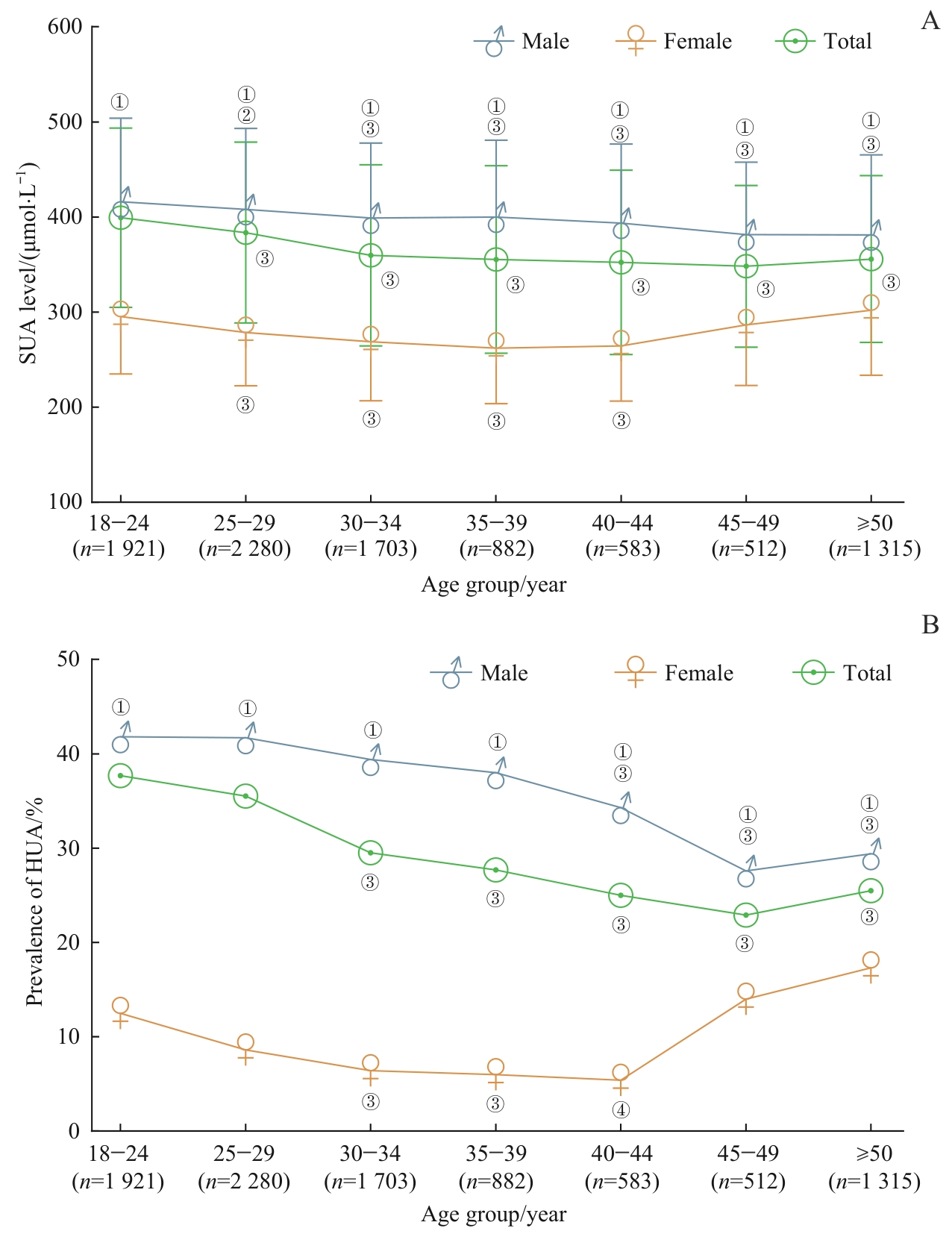
Fig 1 SUA levels and prevalence of HUA stratified by age and sex
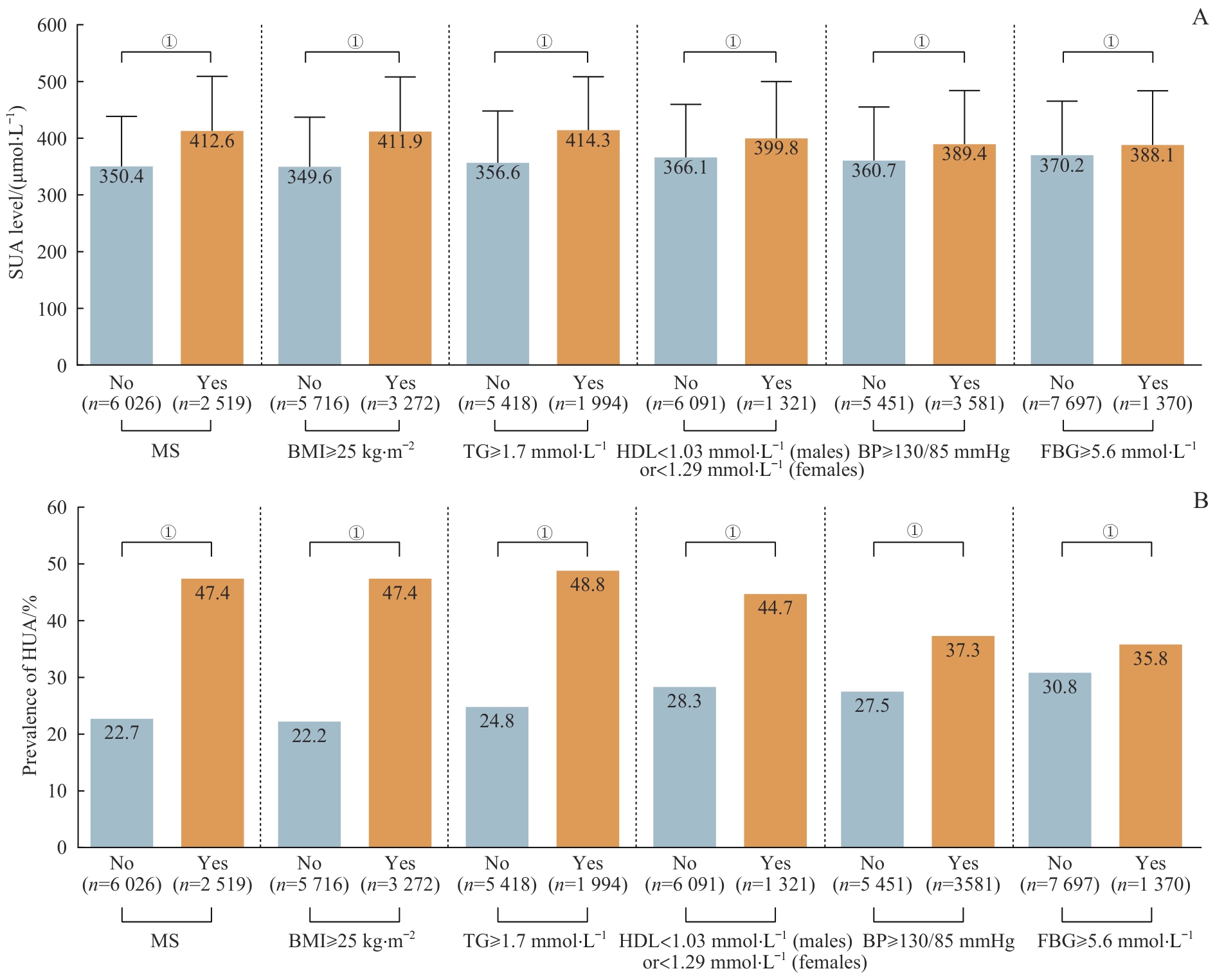
Fig 2 SUA levels and prevalence of HUA in subjects with and without MS and its components
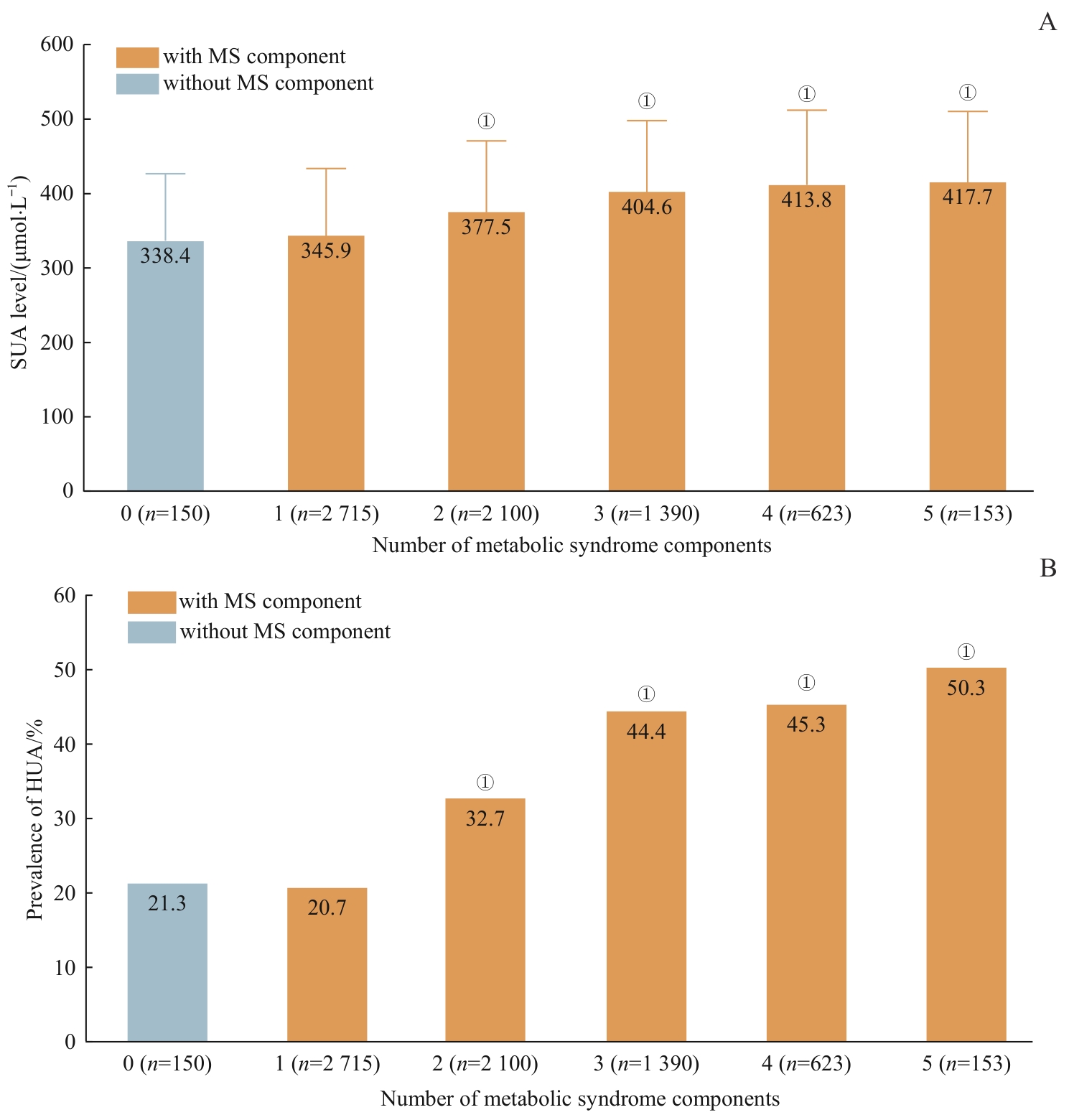
Fig 3 SUA levels and prevalence of HUA in the subjects with different numbers of MS component
| Variable | Univariable analysis | Multivariable analysis | |||
|---|---|---|---|---|---|
| OR (95%CI) | P value | OR (95%CI) | P value | ||
| Sex | |||||
| Male | 5.58 (4.83-6.45) | <0.001 | 3.74 (3.12-4.48) | <0.001 | |
| Female | Ref. | Ref. | |||
| Age (per 5-year decrease) | 1.10 (1.08-1.12) | <0.001 | 1.22(1.19-1.26) | <0.001 | |
| Region | |||||
| Local | 0.97 (0.89-1.06) | 0.457 | - | - | |
| Nonlocal | Ref. | ||||
| e-GFR | |||||
| <90 mL·(min·1.73 m2)-1 | 1.69 (1.52-1.88) | <0.001 | 2.45 (2.11-2.84) | <0.001 | |
| ≥90 mL·(min·1.73 m2)-1 | Ref. | Ref. | |||
| MS① | |||||
| Yes | 3.07(2.78-3.39) | <0.001 | - | - | |
| No | Ref. | ||||
| BMI② | |||||
| ≥25 kg·m-2 | 3.17 (2.88-3.47) | <0.001 | 2.31 (2.06-2.60) | <0.001 | |
| <25 kg·m-2 | Ref. | Ref. | |||
| Blood pressure③ | |||||
| SBP≥130 mmHg or DBP≥85 mmHg | 1.57 (1.43-1.72) | <0.001 | 1.18 (1.04-1.32) | 0.008 | |
| SBP<130 mmHg and DBP<85 mmHg | Ref. | Ref. | |||
| FBG④ | |||||
| ≥5.6 mmol·L-1 | 1.26 (1.11-1.42) | <0.001 | - | 0.909 | |
| <5.6 mmol·L-1 | Ref. | ||||
| TG⑤ | |||||
| ≥1.7 mmol·L-1 | 2.90 (2.61-3.23) | <0.001 | 2.08 (1.81-2.37) | <0.001 | |
| <1.7 mmol·L-1 | Ref. | Ref. | |||
| HDL-C⑤ | |||||
| <1.03 mmol·L-1 (male) or <1.29 mmol·L-1 (female) | 2.04 (1.81-2.31) | <0.001 | 1.33 (1.15-1.55) | <0.001 | |
| ≥1.03 mmol·L-1 (male) or ≥1.29 mmol·L-1 (female) | Ref. | Ref. | |||
Tab 2 Logistic regression analysis of risk factors for HUA
| Variable | Univariable analysis | Multivariable analysis | |||
|---|---|---|---|---|---|
| OR (95%CI) | P value | OR (95%CI) | P value | ||
| Sex | |||||
| Male | 5.58 (4.83-6.45) | <0.001 | 3.74 (3.12-4.48) | <0.001 | |
| Female | Ref. | Ref. | |||
| Age (per 5-year decrease) | 1.10 (1.08-1.12) | <0.001 | 1.22(1.19-1.26) | <0.001 | |
| Region | |||||
| Local | 0.97 (0.89-1.06) | 0.457 | - | - | |
| Nonlocal | Ref. | ||||
| e-GFR | |||||
| <90 mL·(min·1.73 m2)-1 | 1.69 (1.52-1.88) | <0.001 | 2.45 (2.11-2.84) | <0.001 | |
| ≥90 mL·(min·1.73 m2)-1 | Ref. | Ref. | |||
| MS① | |||||
| Yes | 3.07(2.78-3.39) | <0.001 | - | - | |
| No | Ref. | ||||
| BMI② | |||||
| ≥25 kg·m-2 | 3.17 (2.88-3.47) | <0.001 | 2.31 (2.06-2.60) | <0.001 | |
| <25 kg·m-2 | Ref. | Ref. | |||
| Blood pressure③ | |||||
| SBP≥130 mmHg or DBP≥85 mmHg | 1.57 (1.43-1.72) | <0.001 | 1.18 (1.04-1.32) | 0.008 | |
| SBP<130 mmHg and DBP<85 mmHg | Ref. | Ref. | |||
| FBG④ | |||||
| ≥5.6 mmol·L-1 | 1.26 (1.11-1.42) | <0.001 | - | 0.909 | |
| <5.6 mmol·L-1 | Ref. | ||||
| TG⑤ | |||||
| ≥1.7 mmol·L-1 | 2.90 (2.61-3.23) | <0.001 | 2.08 (1.81-2.37) | <0.001 | |
| <1.7 mmol·L-1 | Ref. | Ref. | |||
| HDL-C⑤ | |||||
| <1.03 mmol·L-1 (male) or <1.29 mmol·L-1 (female) | 2.04 (1.81-2.31) | <0.001 | 1.33 (1.15-1.55) | <0.001 | |
| ≥1.03 mmol·L-1 (male) or ≥1.29 mmol·L-1 (female) | Ref. | Ref. | |||
| [1] | Major T J, Dalbeth N, Stahl E A, et al. An update on the genetics of hyperuricaemia and gout[J]. Nat Rev Rheumatol, 2018, 14(6): 341-353. |
| [2] | Kuwabara M, Kuwabara R, Niwa K, et al. Different risk for hypertension, diabetes, dyslipidemia, and hyperuricemia according to level of body mass index in Japanese and American subjects[J]. Nutrients, 2018, 10(8): 1011. |
| [3] | Johnson R J, Bakris G L, Borghi C, et al. Hyperuricemia, acute and chronic kidney disease, hypertension, and cardiovascular disease: report of a scientific workshop organized by the National Kidney Foundation[J]. Am J Kidney Dis, 2018, 71(6): 851-865. |
| [4] | Yanai H, Adachi H, Hakoshima M, et al. Molecular biological and clinical understanding of the pathophysiology and treatments of hyperuricemia and its association with metabolic syndrome, cardiovascular diseases and chronic kidney disease[J]. Int J Mol Sci, 2021, 22(17): 9221. |
| [5] | Dehlin M, Jacobsson L, Roddy E. Global epidemiology of gout: prevalence, incidence, treatment patterns and risk factors[J]. Nat Rev Rheumatol, 2020, 16(7): 380-390. |
| [6] | Borghi C, Agabiti-Rosei E, Johnson R J, et al. Hyperuricaemia and gout in cardiovascular, metabolic and kidney disease[J]. Eur J Intern Med, 2020, 80: 1-11. |
| [7] | Chen-Xu M, Yokose C, Rai S K, et al. Contemporary prevalence of gout and hyperuricemia in the United States and decadal trends: the National Health and Nutrition Examination Survey, 2007‒2016[J]. Arthritis Rheumatol, 2019, 71(6): 991-999. |
| [8] | Koto R, Nakajima A, Horiuchi H, et al. Real-world treatment of gout and asymptomatic hyperuricemia: a cross-sectional study of Japanese health insurance claims data[J]. Mod Rheumatol, 2021, 31(1): 261-269. |
| [9] | Kim Y, Kang J H, Kim G T. Prevalence of hyperuricemia and its associated factors in the general Korean population: an analysis of a population-based nationally representative sample[J]. Clin Rheumatol, 2018, 37(9): 2529-2538. |
| [10] | Lohsoonthorn V, Dhanamun B, Williams M A. Prevalence of hyperuricemia and its relationship with metabolic syndrome in Thai adults receiving annual health exams[J]. Arch Med Res, 2006, 37(7): 883-889. |
| [11] | Singh S K, Singh R, Singh S K, et al. Prevalence of hyperuricemia and the relationship between serum uric acid and hypertension in new onset diabetic patients: a cross-sectional Indian study[J]. Diabetes Metab Syndr Obes, 2022, 15: 1809-1817. |
| [12] | Zhang M, Zhu X X, Wu J, et al. Prevalence of hyperuricemia among Chinese adults: findings from two nationally representative cross-sectional surveys in 2015‒16 and 2018‒19[J]. Front Immunol, 2021, 12: 791983. |
| [13] | Valsaraj R, Singh A K, Gangopadhyay K K, et al. Management of asymptomatic hyperuricemia: Integrated Diabetes & Endocrine Academy (IDEA) consensus statement[J]. Diabetes Metab Syndr, 2020, 14(2): 93-100. |
| [14] | Alberti K G M M, Zimmet P, Shaw J. Metabolic syndrome: a new world-wide definition. A consensus statement from the International Diabetes Federation[J]. Diabet Med, 2006, 23(5): 469-480. |
| [15] | Fu Y Q, Yang H, Zheng J S, et al. Positive association between metabolic syndrome and serum uric acid in Wuhan[J]. Asia Pac J Clin Nutr, 2017, 26(2): 343-350. |
| [16] | Bowden R G, Richardson K A, Richardson L T. Uric acid and metabolic syndrome: findings from national health and nutrition examination survey[J]. Front Med, 2022, 9: 1039230. |
| [17] | Villegas R, Xiang Y B, Elasy T, et al. Purine-rich foods, protein intake, and the prevalence of hyperuricemia: the Shanghai Men's Health Study[J]. Nutr Metab Cardiovasc Dis, 2012, 22(5): 409-416. |
| [18] | Song P G, Wang H, Xia W, et al. Prevalence and correlates of hyperuricemia in the middle-aged and older adults in China[J]. Sci Rep, 2018, 8(1): 4314. |
| [19] | Bray G A. Energy and fructose from beverages sweetened with sugar or high-fructose corn syrup pose a health risk for some people[J]. Adv Nutr, 2013, 4(2): 220-225. |
| [20] | Liu D M, Jiang L D, Gan L, et al. Association between serum uric acid level and body mass index in sex- and age-specific groups in southwestern China[J]. Endocr Pract, 2019, 25(5): 438-445. |
| [21] | He H J, Guo P, He J S, et al. Prevalence of hyperuricemia and the population attributable fraction of modifiable risk factors: evidence from a general population cohort in China[J]. Front Public Health, 2022, 10: 936717. |
| [22] | Li G Y, Qian X D, Ma C M, et al. The dose-response relationship between sex hormones and hyperuricemia in different gender: NHANES 2013‒2016[J]. Front Endocrinol, 2022, 13: 1035114. |
| [23] | Ioannou G N, Boyko E J. Effects of menopause and hormone replacement therapy on the associations of hyperuricemia with mortality[J]. Atherosclerosis, 2013, 226(1): 220-227. |
| [24] | Kielstein J T, Pontremoli R, Burnier M. Management of hyperuricemia in patients with chronic kidney disease: a focus on renal protection[J]. Curr Hypertens Rep, 2020, 22(12): 102. |
| [25] | Su H Y, Yang C, Liang D, et al. Research advances in the mechanisms of hyperuricemia-induced renal injury[J]. Biomed Res Int, 2020, 2020: 5817348. |
| [26] | Li C H, Lee C L, Hsieh Y C, et al. Hyperuricemia and diabetes mellitus when occurred together have higher risks than alone on all-cause mortality and end-stage renal disease in patients with chronic kidney disease[J]. BMC Nephrol, 2022, 23(1): 157. |
| [27] | Chen W Y, Fu Y P, Zhou M. The bidirectional relationship between metabolic syndrome and hyperuricemia in China: a longitudinal study from CHARLS[J]. Endocrine, 2022, 76(1): 62-69. |
| [28] | 刘静红. 农村老年人群高尿酸血症与代谢综合征相互影响的双向关联队列研究[D]. 苏州: 苏州大学, 2021. |
| Liu J H. A cohort study on the bidirectional associations between hyperuricemia and metabolic syndrome among rural older adults[D]. Suzhou: Soochow University, 2021. | |
| [29] | Li C G, Hsieh M C, Chang S J. Metabolic syndrome, diabetes, and hyperuricemia[J]. Curr Opin Rheumatol, 2013, 25(2): 210-216. |
| [30] | You L L, Liu A P, Wuyun G W, et al. Prevalence of hyperuricemia and the relationship between serum uric acid and metabolic syndrome in the Asian Mongolian area[J]. J Atheroscler Thromb, 2014, 21(4): 355-365. |
| [31] | Yuan H P, Yu C L, Li X H, et al. Serum uric acid levels and risk of metabolic syndrome: a dose-response meta-analysis of prospective studies[J]. J Clin Endocrinol Metab, 2015, 100(11): 4198-4207. |
| [32] | Kanbay M, Jensen T, Solak Y, et al. Uric acid in metabolic syndrome: from an innocent bystander to a central player[J]. Eur J Intern Med, 2016, 29: 3-8. |
| [33] | Zhang Y, Tan M, Liu B Y, et al. Relationship between bone mineral density and hyperuricemia in obesity: a cross-sectional study[J]. Front Endocrinol, 2023, 14: 1108475. |
| [34] | Zhang Y, Zhang M M, Yu X W, et al. Association of hypertension and hypertriglyceridemia on incident hyperuricemia: an 8-year prospective cohort study[J]. J Transl Med, 2020, 18(1): 409. |
| [35] | Liu X Y, Wu Q Y, Chen Z H, et al. Elevated triglyceride to high-density lipoprotein cholesterol (TG/HDL-C) ratio increased risk of hyperuricemia: a 4-year cohort study in China[J]. Endocrine, 2020, 68(1): 71-80. |
| [36] | Lee T S, Lu T M, Chen C H, et al. Hyperuricemia induces endothelial dysfunction and accelerates atherosclerosis by disturbing the asymmetric dimethylarginine/dimethylarginine dimethylaminotransferase 2 pathway[J]. Redox Biol, 2021, 46: 102108. |
| [1] | Chen Jiayu, Zhang Huili. Role and mechanism of fibroblast mitochondrial dysfunction in pulmonary arterial hypertension [J]. Journal of Shanghai Jiao Tong University (Medical Science), 2026, 46(3): 291-300. |
| [2] | Huang Xi, Hou Qinwu, Zhang Zhaowei, Wang Yanan, Yang Qinghui, Cheng Ling. Causal relationship between liposome and essential hypertension based on two-sample Mendelian randomization analysis [J]. Journal of Shanghai Jiao Tong University (Medical Science), 2026, 46(3): 340-347. |
| [3] | ZHAI Wenhui, HUANG Qifang, CHEN Yilin, LI Xiaodong, WANG Jiguang. Serum osteoglycin level in relation to renal function and blood pressure in non-diabetic patients with hypertension [J]. Journal of Shanghai Jiao Tong University (Medical Science), 2025, 45(5): 578-584. |
| [4] | FAN Bingbin, HE Yuhu. Research progress on the role of mitophagy in pulmonary arterial hypertension [J]. Journal of Shanghai Jiao Tong University (Medical Science), 2025, 45(12): 1654-1661. |
| [5] | CHANG Guili, LIU Changyuan, LI Mingchun, HU Zhe, CHEN Jing, CAO Qun'an, CHU Shaoli, CHEN Xin. Relationship between non-renin-dependent aldosterone and left ventricular hypertrophy in essential hypertension [J]. Journal of Shanghai Jiao Tong University (Medical Science), 2025, 45(10): 1372-1377. |
| [6] | KANG Piao, ZHANG Ying, LI Huating. Research progress in food preferences mechanisms and their impact on obesity [J]. Journal of Shanghai Jiao Tong University (Medical Science), 2024, 44(9): 1190-1196. |
| [7] | ZHANG Yiyi, NI Changyu, JIN Ying, HE Yaping, FENG Nannan. Effect of hypertension and dyslipidemia on cognition of urban elderly residents [J]. Journal of Shanghai Jiao Tong University (Medical Science), 2024, 44(7): 907-914. |
| [8] | FAN Qiang, WU Guangbo, ZHAO Jinbo, ZHENG Lei, LUO Meng. Research progress in pathophysiological and molecular mechanism changes during decompensated phase of portal hypertension in liver cirrhosis [J]. Journal of Shanghai Jiao Tong University (Medical Science), 2024, 44(3): 379-384. |
| [9] | JIANG Shuang, YU Jiwei. Progress of research on m6A demethylases in gastric cancer [J]. Journal of Shanghai Jiao Tong University (Medical Science), 2024, 44(2): 271-277. |
| [10] | WU Qian, LI Huating. Progress of olfactory changes in metabolic diseases and the mechanisms [J]. Journal of Shanghai Jiao Tong University (Medical Science), 2024, 44(1): 131-136. |
| [11] | WU Kaimin, MA Jing, ZHAO Xuyun. Combined effects of intermittent fasting and thermogenic fat activation on the treatment and prevention of obesity in mice [J]. Journal of Shanghai Jiao Tong University (Medical Science), 2023, 43(9): 1131-1144. |
| [12] | LU Xiaobing, YUE Jiang, HE Shengyun, DONG Ying, LU Qing, MA Jing. Effect of intramuscular adipose tissue in the skeletal muscle of thigh on glucose metabolism in male patients with obesity [J]. Journal of Shanghai Jiao Tong University (Medical Science), 2023, 43(9): 1169-1174. |
| [13] | WANG Jinghui, ZHANG Hong, ZHANG Rong, PENG Danfeng, YU Hairong, CHEN Xianghui, XUAN Ye, HU Cheng, GU Yunjuan. Screening for pathogenic variants in obese cohort using whole-exome sequencing [J]. Journal of Shanghai Jiao Tong University (Medical Science), 2023, 43(7): 882-889. |
| [14] | MA Zhuoran, YUAN Ancai, JIANG Huiru, CHEN Xiaoyu, ZHANG Wei, PU Jun. Meta analysis of correlation between lipid accumulation product and hypertension in Chinese adults [J]. Journal of Shanghai Jiao Tong University (Medical Science), 2023, 43(4): 466-473. |
| [15] | WU Ruifang, FENG Ming, MENG Jian. Review of role of fatty acid binding protein-4 in obesity-associated tumors [J]. Journal of Shanghai Jiao Tong University (Medical Science), 2023, 43(10): 1311-1316. |
| Viewed | ||||||
|
Full text |
|
|||||
|
Abstract |
|
|||||
