
Journal of Shanghai Jiao Tong University (Medical Science) ›› 2026, Vol. 46 ›› Issue (6): 815-823.doi: 10.3969/j.issn.1674-8115.2026.06.015
• Review • Previous Articles
Gong Jian, Han Jiyu, Wan Daqian( )
)
Received:2026-01-20
Accepted:2026-02-06
Online:2026-06-28
Published:2026-06-29
Contact:
Wan Daqian
E-mail:wdqwdq1986@126.com
CLC Number:
Gong Jian, Han Jiyu, Wan Daqian. Research progress in role of T helper 17 cells and interleukin-17 in occurrence and development of osteoarthritis under regulation of gut microbiota[J]. Journal of Shanghai Jiao Tong University (Medical Science), 2026, 46(6): 815-823.
Add to citation manager EndNote|Ris|BibTeX
URL: https://xuebao.shsmu.edu.cn/EN/10.3969/j.issn.1674-8115.2026.06.015
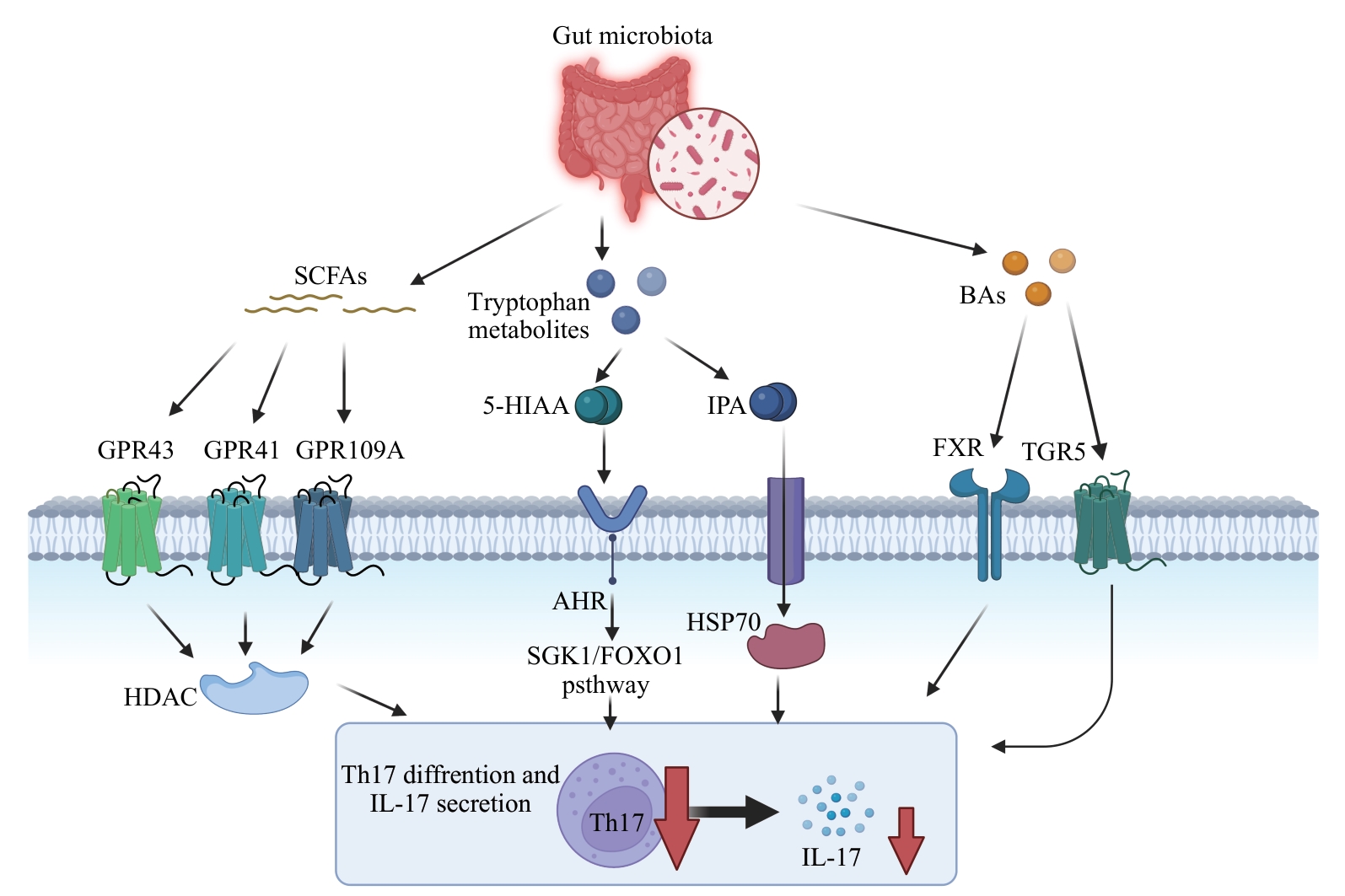
Fig 1 Regulation of Th17 cell/IL-17 by major gut microbiota-derived metabolites
Pathogenic process | Biological effect | Target cell/tissue | Key molecule/pathway/specific mechanism | Reference |
|---|---|---|---|---|
| Inflammatory amplification | Production of IL-1β, TNF, and IL-6 | Chondrocytes | IL-1β, TNF, and IL-6 | Kapoor et al, 2011[ |
| IL-18 production and inflammation aggravation | Synovial fibroblasts | IL-18/MEK/ERK/miR-4492 | Lee et al, 2024[ | |
| NET formation and fibroblast activation | Neutrophils, synovial fibroblasts | NETs | Khandpur et al, 2013[ | |
| Cartilage matrix degradation | Pro-inflammatory and catabolic gene alteration | Chondrocytes | ‒ | Pemmari et al, 2021[ |
| MMP-13 upregulation and cartilage/meniscus damage | Chondrocytes, meniscal cells | MMP-13 | Wang et al, 2020[ | |
| MMP and IL-6 hyperproduction | Th17 cells, chondrocytes | MMP-1/3/9/13, IL-6 | Platzer et al, 2025[ | |
| MDSC-driven Th17 differentiation and cartilage degradation | MDSCs, Th17 cells | MMPs | Guo et al, 2025[ | |
| NO/PGE2 production and catabolic shift | Chondrocytes | NO, PGE2 | Denoble et al, 2011[ | |
| SASP induction and chronic inflammation | Chondrocytes | Senescence-associated secretory phenotype (SASP) | Faust et al, 2020[ | |
| GPX4 suppression and ferroptosis | Chondrocytes | IL-17/GPX4 axis, ferroptosis | Zhao et al, 2025[ | |
| Subchondral bone remodeling | IL-17F/IL-23-associated bone marrow lesions | Subchondral bone | IL-17F, IL-23 | Zhu et al, 2017[ |
| RANKL/Beclin-1-driven osteoclastogenesis | Osteoblasts, osteoclasts | Beclin-1, RANKL | Chen et al, 2024[ | |
| Synovitis and angiogenesis | ER stress-mediated synovial inflammation | Synovial fibroblasts | ER stress | Sun et al, 2025[ |
| Autophagosome accumulation and mtSTAT3 suppression | Synovial fibroblasts | mtSTAT3 | Lee et al, 2025[ | |
| VEGF-driven angiogenesis and synovial hyperplasia | Chondrocytes, synovial fibroblasts | VEGF | Mukherjee et al, 2024[ | |
| CD13-mediated T cell chemoattraction | Synovium, T cells | CD13 | Morgan et al, 2015[ |
Tab 1 Summary of Th17 cell/IL-17-mediated downstream mechanisms in OA
Pathogenic process | Biological effect | Target cell/tissue | Key molecule/pathway/specific mechanism | Reference |
|---|---|---|---|---|
| Inflammatory amplification | Production of IL-1β, TNF, and IL-6 | Chondrocytes | IL-1β, TNF, and IL-6 | Kapoor et al, 2011[ |
| IL-18 production and inflammation aggravation | Synovial fibroblasts | IL-18/MEK/ERK/miR-4492 | Lee et al, 2024[ | |
| NET formation and fibroblast activation | Neutrophils, synovial fibroblasts | NETs | Khandpur et al, 2013[ | |
| Cartilage matrix degradation | Pro-inflammatory and catabolic gene alteration | Chondrocytes | ‒ | Pemmari et al, 2021[ |
| MMP-13 upregulation and cartilage/meniscus damage | Chondrocytes, meniscal cells | MMP-13 | Wang et al, 2020[ | |
| MMP and IL-6 hyperproduction | Th17 cells, chondrocytes | MMP-1/3/9/13, IL-6 | Platzer et al, 2025[ | |
| MDSC-driven Th17 differentiation and cartilage degradation | MDSCs, Th17 cells | MMPs | Guo et al, 2025[ | |
| NO/PGE2 production and catabolic shift | Chondrocytes | NO, PGE2 | Denoble et al, 2011[ | |
| SASP induction and chronic inflammation | Chondrocytes | Senescence-associated secretory phenotype (SASP) | Faust et al, 2020[ | |
| GPX4 suppression and ferroptosis | Chondrocytes | IL-17/GPX4 axis, ferroptosis | Zhao et al, 2025[ | |
| Subchondral bone remodeling | IL-17F/IL-23-associated bone marrow lesions | Subchondral bone | IL-17F, IL-23 | Zhu et al, 2017[ |
| RANKL/Beclin-1-driven osteoclastogenesis | Osteoblasts, osteoclasts | Beclin-1, RANKL | Chen et al, 2024[ | |
| Synovitis and angiogenesis | ER stress-mediated synovial inflammation | Synovial fibroblasts | ER stress | Sun et al, 2025[ |
| Autophagosome accumulation and mtSTAT3 suppression | Synovial fibroblasts | mtSTAT3 | Lee et al, 2025[ | |
| VEGF-driven angiogenesis and synovial hyperplasia | Chondrocytes, synovial fibroblasts | VEGF | Mukherjee et al, 2024[ | |
| CD13-mediated T cell chemoattraction | Synovium, T cells | CD13 | Morgan et al, 2015[ |
| [1] | Tang S A, Zhang C Q, Oo W M, et al. Osteoarthritis[J]. Nat Rev Dis Primers, 2025, 11: 10. |
| [2] | Steinmetz J D, Culbreth G T, Haile L M, et al. GBD 2021 Osteoarthritis Collaborators. Global, regional, and national burden of osteoarthritis, 1990—2020 and projections to 2050: a systematic analysis for the Global Burden of Disease Study 2021[J]. Lancet Rheumatol, 2023, 5 (10): e723-e735. |
| [3] | Moulin D, Sellam J, Berenbaum F, et al. The role of the immune system in osteoarthritis: mechanisms, challenges and future directions[J]. Nat Rev Rheumatol, 2025, 21(4): 221-236. |
| [4] | Sun W, Li X Y, Zhang L Y, et al. IL-17A exacerbates synovial inflammation in osteoarthritis via activation of endoplasmic reticulum stress[J]. Int Immunopharmacol, 2025, 145: 113733. |
| [5] | Mimpen J Y, Baldwin M J, Cribbs A P, et al. Interleukin-17A causes osteoarthritis-like transcriptional changes in human osteoarthritis-derived chondrocytes and synovial fibroblasts in vitro[J]. Front Immunol, 2021, 12: 676173. |
| [6] | Ohara D, Takeuchi Y, Hirota K. Type 17 immunity: novel insights into intestinal homeostasis and autoimmune pathogenesis driven by gut-primed T cells[J]. Cell Mol Immunol, 2024, 21(11): 1183-1200. |
| [7] | Siebert K, Faro T, Köhler N, et al. Endoscopic healing in pediatric IBD perpetuates a persistent signature defined by Th17 cells with molecular and microbial drivers of disease[J]. Cell Rep Med, 2025, 6(7): 102236. |
| [8] | Chen J, Feng R, Gong B B, et al. High-salt-driven gut microbiota dysfunction aggravates prostatitis by promoting AHR/SGK1/FOXO1 axis-mediated Th17 cell differentiation[J]. Mil Med Res, 2025, 12(1): 21. |
| [9] | White Z, Cabrera I, Mei L H, et al. Gut inflammation promotes microbiota-specific CD4 T cell-mediated neuroinflammation[J]. Nature, 2025, 643(8071): 509-518. |
| [10] | Wang Y, Chen X D, Huws S A, et al. Ileal microbial microbiome and its secondary bile acids modulate susceptibility to nonalcoholic steatohepatitis in dairy goats[J]. Microbiome, 2024, 12(1): 247. |
| [11] | Wu H J, Ivanov I I, Darce J, et al. Gut-residing segmented filamentous bacteria drive autoimmune arthritis via T helper 17 cells[J]. Immunity, 2010, 32(6): 815-827. |
| [12] | Liu S, Xu H H, Liu L J, et al. Gut microbiome dysbiosis accelerates osteoarthritis progression by inducing IFP-SM inflammation in "double-hit" mice[J]. Arthritis Res Ther, 2025, 27(1): 137. |
| [13] | Sala-Climent M, Bu K, Coras R, et al. Targeted microbial shifts and metabolite profiles were associated with clinical response to an anti-inflammatory diet in osteoarthritis[J]. Nutrients, 2025, 17(17): 2729. |
| [14] | Moleón J, González-Correa C, Miñano S, et al. Protective effect of microbiota-derived short chain fatty acids on vascular dysfunction in mice with systemic lupus erythematosus induced by toll like receptor 7 activation[J]. Pharmacol Res, 2023, 198: 106997. |
| [15] | Ma Z Y, Wang Z X, Cao J, et al. Regulatory roles of intestinal CD4+T cells in inflammation and their modulation by the intestinal microbiota[J]. Gut Microbes, 2025, 17: 2560019. |
| [16] | Han B, Shi L, Bao M Y, et al. Dietary ellagic acid therapy for CNS autoimmunity: targeting on Alloprevotella rava and propionate metabolism[J]. Microbiome, 2024, 12(1): 114. |
| [17] | Chandra S, Popovic J, Singhal N K, et al. The gut microbiome controls reactive astrocytosis during Aβ amyloidosis via propionate-mediated regulation of IL-17[J]. J Clin Investig, 2025, 135(13): e180826. |
| [18] | Hu C P, Xu B Q, Wang X D, et al. Gut microbiota-derived short-chain fatty acids regulate group 3 innate lymphoid cells in HCC[J]. Hepatology, 2023, 77(1): 48-64. |
| [19] | Gao H, Sun M M, Li A, et al. Microbiota-derived IPA alleviates intestinal mucosal inflammation through upregulating Th1/Th17 cell apoptosis in inflammatory bowel disease[J]. Gut Microbes, 2025, 17(1): 2467235. |
| [20] | Krause F F, Mangold K I, Ruppert A L, et al. Clostridium sporogenes-derived metabolites protect mice against colonic inflammation[J]. Gut Microbes, 2024, 16: 2412669. |
| [21] | Wang C L, Dai S Z, Zhang S S, et al. Gut microbe-derived metabolites drive psoriatic inflammation via modulation of skin Th17 cells[J]. Immunity, 2025, 58(9): 2241-2255.e7. |
| [22] | Montgomery T L, Eckstrom K, Lile K H, et al. Lactobacillus reuteri tryptophan metabolism promotes host susceptibility to CNS autoimmunity[J]. Microbiome, 2022, 10(1): 198. |
| [23] | Fleishman J S, Kumar S. Bile acid metabolism and signaling in health and disease: molecular mechanisms and therapeutic targets[J]. Signal Transduct Target Ther, 2024, 9: 97. |
| [24] | Antonini Cencicchio M, Montini F, Palmieri V, et al. Microbiota-produced immune regulatory bile acid metabolites control central nervous system autoimmunity[J]. Cell Rep Med, 2025, 6(4): 102028. |
| [25] | Xiao R P, Lei K W, Kuok H, et al. Synthesis and identification of lithocholic acid 3-sulfate as RORγt ligand to inhibit Th17 cell differentiation[J]. J Leukoc Biol, 2022, 112(4): 835-843. |
| [26] | Hang S Y, Paik D, Yao L N, et al. Bile acid metabolites control TH17 and Treg cell differentiation[J]. Nature, 2019, 576(7785): 143-148. |
| [27] | Sun H J, Guo Y K, Wang H D, et al. Gut commensal Parabacteroides distasonis alleviates inflammatory arthritis[J]. Gut, 2023, 72(9): 1664-1677. |
| [28] | Wang Z Y, Tian L, Jiang Y, et al. Synergistic role of gut-microbial L-ornithine in enhancing ustekinumab efficacy for Crohn's disease[J]. Cell Metab, 2025, 37(5): 1089-1102.e7. |
| [29] | Zhao H L, Yue N N, Mai Z L, et al. Lactobacillus johnsonii-derived extracellular vesicles restore mucosal immunity via taurine-linked Th17/Treg and IgA/IgG regulation in colitis[J]. J Nanobiotechnology, 2025, 23(1): 612. |
| [30] | Li G Q, Liu L W, Lu T Q, et al. Gut microbiota aggravates neutrophil extracellular traps-induced pancreatic injury in hypertriglyceridemic pancreatitis[J]. Nat Commun, 2023, 14(1): 6179. |
| [31] | Doan H T, Cheng L C, Chiu Y L, et al. Candida tropicalis-derived vitamin B3 exerts protective effects against intestinal inflammation by promoting IL-17A/IL-22-dependent epithelial barrier function[J]. Gut Microbes, 2024, 16(1): 2416922. |
| [32] | Shen Y Y, Ma Z Y, Wang H L, et al. Alcaligenes faecalis induces intestinal T helper-17 cells by enhancing Rorc transcription through E3 ligase Trim21-mediated Fbxw7 degradation[J]. Immunity, 2025, 58(6): 1469-1483.e8. |
| [33] | Niu L Y, Chen W Z, Yin Z F, et al. Bacterial extracellular vesicles in osteoarthritis: a new bridge of the gut-joint axis[J]. Gut Microbes, 2025, 17(1): 2489069. |
| [34] | Ciccia F, Guggino G, Rizzo A, et al. Type 3 innate lymphoid cells producing IL-17 and IL-22 are expanded in the gut, in the peripheral blood, synovial fluid and bone marrow of patients with ankylosing spondylitis[J]. Ann Rheum Dis, 2015, 74(9): 1739-1747. |
| [35] | Maeda Y, Kurakawa T, Umemoto E, et al. Dysbiosis contributes to arthritis development via activation of autoreactive T cells in the intestine[J]. Arthritis Rheumatol, 2016, 68(11): 2646-2661. |
| [36] | Jung S M, Kim Y, Kim J, et al. Sodium chloride aggravates arthritis via Th17 polarization[J]. Yonsei Med J, 2019, 60(1): 88-97. |
| [37] | Kapoor M, Martel-Pelletier J, Lajeunesse D, et al. Role of proinflammatory cytokines in the pathophysiology of osteoarthritis[J]. Nat Rev Rheumatol, 2011, 7(1): 33-42. |
| [38] | Ayral X, Pickering E H, Woodworth T G, et al. Synovitis: a potential predictive factor of structural progression of medial tibiofemoral knee osteoarthritis: results of a 1 year longitudinal arthroscopic study in 422 patients[J]. Osteoarthritis Cartilage, 2005, 13(5): 361-367. |
| [39] | Felson D T, Niu J, Neogi T, et al. Synovitis and the risk of knee osteoarthritis: the MOST Study[J]. Osteoarthritis Cartilage, 2016, 24(3): 458-464. |
| [40] | Lee K T, Lin C Y, Liu S C, et al. IL-17 promotes IL-18 production via the MEK/ERK/miR-4492 axis in osteoarthritis synovial fibroblasts[J]. Aging, 2024, 16(2): 1829-1844. |
| [41] | Khandpur R, Carmona-Rivera C, Vivekanandan-Giri A, et al. NETs are a source of citrullinated autoantigens and stimulate inflammatory responses in rheumatoid arthritis[J]. Sci Transl Med, 2013, 5(178): 178ra40. |
| [42] | Pemmari A, Leppänen T, Hämäläinen M, et al. Chondrocytes from osteoarthritis patients adopt distinct phenotypes in response to central TH1/TH2/TH17 cytokines[J]. Int J Mol Sci, 2021, 22(17): 9463. |
| [43] | Wang D L, Wang Z, Li M C, et al. The underlying mechanism of partial anterior cruciate ligament injuries to the Meniscus degeneration of knee joint in rabbit models[J]. J Orthop Surg Res, 2020, 15(1): 428. |
| [44] | Ahrens G, Gellhaus F, Weitkamp J T, et al. The effect of IL-17A and combined mechanical injury on meniscal tissue integrity in vitro[J]. J Clin Med, 2025, 14(21): 7573. |
| [45] | Platzer H, Wellbrock M, Pourbozorg G, et al. In knee osteoarthritis, the production of cytokines and metalloproteinases in presence of chondrocytes and CD4+ T cells depends on T cell subset: an in vitro analysis[J]. Osteoarthr Cartil Open, 2025, 7(3): 100642. |
| [46] | Guo Z L, Chen T, Wen X H, et al. Harnessing the dual immunomodulatory function of myeloid-derived suppressor cells to reshape the inflammatory microenvironment for osteoarthritis therapy[J]. Mater Today Bio, 2025, 35: 102332. |
| [47] | Denoble A E, Huffman K M, Stabler T V, et al. Uric acid is a danger signal of increasing risk for osteoarthritis through inflammasome activation[J]. Proc Natl Acad Sci U S A, 2011, 108(5): 2088-2093. |
| [48] | Faust H J, Zhang H, Han J, et al. IL-17 and immunologically induced senescence regulate response to injury in osteoarthritis[J]. J Clin Invest, 2020, 130(10): 5493-5507. |
| [49] | Zhao X F, Xia H T, Yang Y W, et al. Amygdalin and magnesium ions exert synergistic effects on cartilage regeneration by inhibiting chondrocyte ferroptosis via the IL-17/GPX4 axis[J]. J Orthop Translat, 2025, 53: 246-259. |
| [50] | Chen W L, Wang Q F, Tao H Q, et al. Subchondral osteoclasts and osteoarthritis: new insights and potential therapeutic avenues[J]. Acta Biochim Biophys Sin, 2024, 56(4): 499-512. |
| [51] | Zhu Z, Otahal P, Wang B, et al. Cross-sectional and longitudinal associations between serum inflammatory cytokines and knee bone marrow lesions in patients with knee osteoarthritis[J]. Osteoarthritis Cartilage, 2017, 25(4): 499-505. |
| [52] | Lee S Y, Moon J, Lee A R, et al. mtSTAT3 suppresses rheumatoid arthritis by regulating Th17 and synovial fibroblast inflammatory cell death with IL-17-mediated autophagy dysfunction[J]. Exp Mol Med, 2025, 57(1): 221-234. |
| [53] | Mukherjee A, Das B. The role of inflammatory mediators and matrix metalloproteinases (MMPs) in the progression of osteoarthritis[J]. Biomater Biosyst, 2024, 13: 100090. |
| [54] | Morgan R, Endres J, Behbahani-Nejad N, et al. Expression and function of aminopeptidase N/CD13 produced by fibroblast-like synoviocytes in rheumatoid arthritis: role of CD13 in chemotaxis of cytokine-activated T cells independent of enzymatic activity[J]. Arthritis Rheumatol, 2015, 67(1): 74-85. |
| [55] | Yang Y H, Hao C, Jiao T Y, et al. Osteoarthritis treatment via the GLP-1-mediated gut-joint axis targets intestinal FXR signaling[J]. Science, 2025, 388(6742): eadt0548. |
| [56] | Bardi E, D'Arrigo D, Pozzi C, et al. Current methods in synovial fluid microbiota characterization: a systematic review[J]. Int J Mol Sci, 2025, 26(10): 4690. |
| [1] | Li Ziyu, Zhu Zeyu, Qian Jiakang, Chen Yulu, Lu Jiayu. Construction of a rat model of temporomandibular joint osteoarthritis induced by monosodium iodoacetate [J]. Journal of Shanghai Jiao Tong University (Medical Science), 2026, 46(1): 82-89. |
| [2] | WEI Xiang, WEI Lingfei, XU Chunfeng, GAO Yujie, NIE Ping, YU Dedong. Efficacy of photo-crosslinked gelatin hydrogel scaffolds loaded with tauroursodeoxycholic acid on knee cartilage defect repair in a rabbit model [J]. Journal of Shanghai Jiao Tong University (Medical Science), 2025, 45(7): 829-837. |
| [3] | MA Huihua, YAN Kuipo, LIU Gang, XU Yazhou, ZHANG Lei, SUN Yanqin. Causal relationship between gut microbiota and cardiovascular diseases: a bidirectional Mendelian randomization analysis [J]. Journal of Shanghai Jiao Tong University (Medical Science), 2025, 45(12): 1606-1619. |
| [4] | DU Yage, LU Yanhui, AN Yu, SONG Ying, ZHENG Jie. Research progress in mechanisms of gut microbiota in diabetic cognitive impairment and its targeted intervention [J]. Journal of Shanghai Jiao Tong University (Medical Science), 2024, 44(4): 494-500. |
| [5] | HONG Yang, WANG Jie, ZHANG Xiafen, ZHAO Dan, CHENG Min. Efficacy of smart wearable device BPMpathway in home rehabilitation of patients after total knee arthroplasty [J]. Journal of Shanghai Jiao Tong University (Medical Science), 2024, 44(3): 342-349. |
| [6] | DENG Qingsong, ZHANG Changqing, TAO Shicong. Exploration of the relationship between nicotinamide metabolism-related genes and osteoarthritis [J]. Journal of Shanghai Jiao Tong University (Medical Science), 2024, 44(2): 145-160. |
| [7] | MA Jinqian, FAN Pianpian, ZHENG Tao, ZHANG Lin, CHEN Yuanzhi, SHEN Jian, OUYANG Fengxiu. Relationship among maternal gut, vaginal microbiota and microbiota in meconium and vernix caseosa in newborns [J]. Journal of Shanghai Jiao Tong University (Medical Science), 2024, 44(1): 50-63. |
| [8] | GAO Yu, YIN Shan, PANG Yue, LIANG Wenyi, LIU Yumin. Effect of rhubarb on gut microbiota-host co-metabolism in rats [J]. Journal of Shanghai Jiao Tong University (Medical Science), 2023, 43(8): 997-1007. |
| [9] | WEN Yajin, HE Wen, HAN Xiao, ZHANG Xiaobo. Exploratory analysis of gut microbiota differences in childhood asthma with different severity [J]. Journal of Shanghai Jiao Tong University (Medical Science), 2023, 43(6): 655-664. |
| [10] | WANG Jie, WU Hui, LU Lingpeng, YANG Kefeng, ZHU Jie, ZHOU Hengyi, YAO Die, GAO Ya, FENG Yuting, LIU Yuhong, JIA Jie. Dynamic changes in gut microbiota of women with gestational diabetes mellitus and the correlation with blood glucose, blood lipid and diet [J]. Journal of Shanghai Jiao Tong University (Medical Science), 2022, 42(9): 1336-1346. |
| [11] | LIU Hongqiang, LU Yanqing, GAO Yuxuan, WANG Yiyun, WANG Chuandong, ZHANG Xiaoling. Construction of OPEI vector for silencing TRAF6 to promote cartilage regeneration in inflammatory environment [J]. Journal of Shanghai Jiao Tong University (Medical Science), 2022, 42(7): 846-857. |
| [12] | LU Yu, WANG Hao, BA Qian. Role of gut microbiota in hepatocellular carcinoma: cancer occurrence, progresses and treatments [J]. Journal of Shanghai Jiao Tong University (Medical Science), 2022, 42(7): 939-944. |
| [13] | ZHANG Shanyong, YANG Chi. Protocols for diagnosis and treatment of temporomandibular joint osteoarthritis: experience from the TMJ Center of Shanghai Ninth People's Hospital, Shanghai Jiao Tong University School of Medicine [J]. Journal of Shanghai Jiao Tong University (Medical Science), 2022, 42(6): 709-716. |
| [14] | DONG Yushan, ZHANG Wenjie. Research progress of cytokines in treatment of osteoarthritis [J]. Journal of Shanghai Jiao Tong University (Medical Science), 2022, 42(11): 1627-1632. |
| [15] | JIANG Yi, JIANG Ping, ZHANG Mingming, FANG Jingyuan. Research progress in the role of Akkermansia muciniphila in gut-related diseases [J]. Journal of Shanghai Jiao Tong University (Medical Science), 2022, 42(10): 1490-1497. |
| Viewed | ||||||
|
Full text |
|
|||||
|
Abstract |
|
|||||
