上海交通大学学报(医学版) ›› 2025, Vol. 45 ›› Issue (8): 981-989.doi: 10.3969/j.issn.1674-8115.2025.08.005

• 论著 · 基础研究 • 上一篇    下一篇

胱天蛋白酶募集域蛋白9在重症急性胰腺炎巨噬细胞M1极化中的作用

王琳1, 徐萍1,2, 张乔婷2, 田军1, 娄晓丽2, 王静1()   

  1. 1.上海交通大学医学院附属松江医院消化内科,上海 201600
    2.南京医科大学上海松江临床医学院,上海 201600
  • 收稿日期:2024-12-06 接受日期:2025-04-25 出版日期:2025-08-28 发布日期:2025-08-18
  • 通讯作者: 王 静,主任医师,博士,电子信箱: wangj0081@126.com
  • 基金资助:
    上海市自然科学基金(20ZR1450900)

Role of CARD9 in macrophage M1 polarization in severe acute pancreatitis rats

WANG Lin1, XU Ping1,2, ZHANG Qiaoting2, TIAN Jun1, LOU Xiaoli2, WANG Jing1()   

  1. 1.Department of Gastroenterology, Songjiang Hospital, Shanghai Jiao Tong University School of Medicine, Shanghai 201600, China
    2.Shanghai Songjiang Clinical Medical College of Nanjing Medical University, Shanghai 201600, China
  • Received:2024-12-06 Accepted:2025-04-25 Online:2025-08-28 Published:2025-08-18
  • Contact: Wang Jing, E-mail: wangj0081@126.com.
  • Supported by:
    Shanghai Natural Science Foundation(20ZR1450900)

摘要:

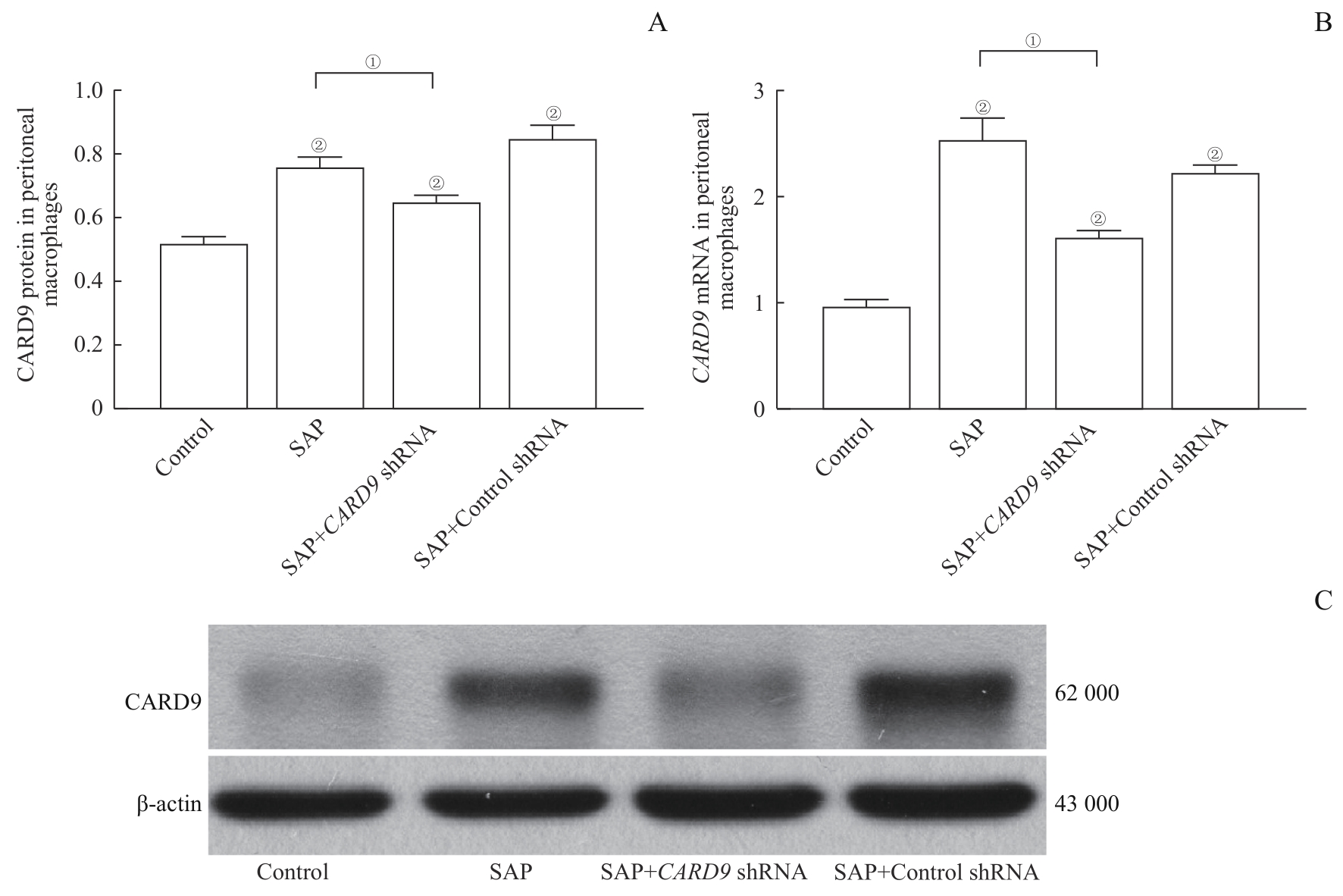
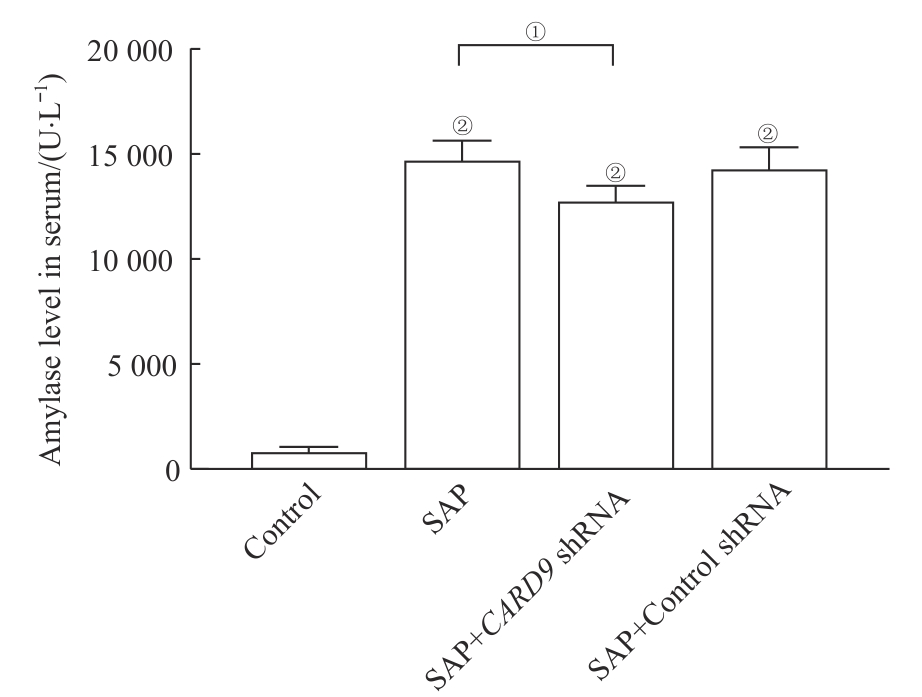
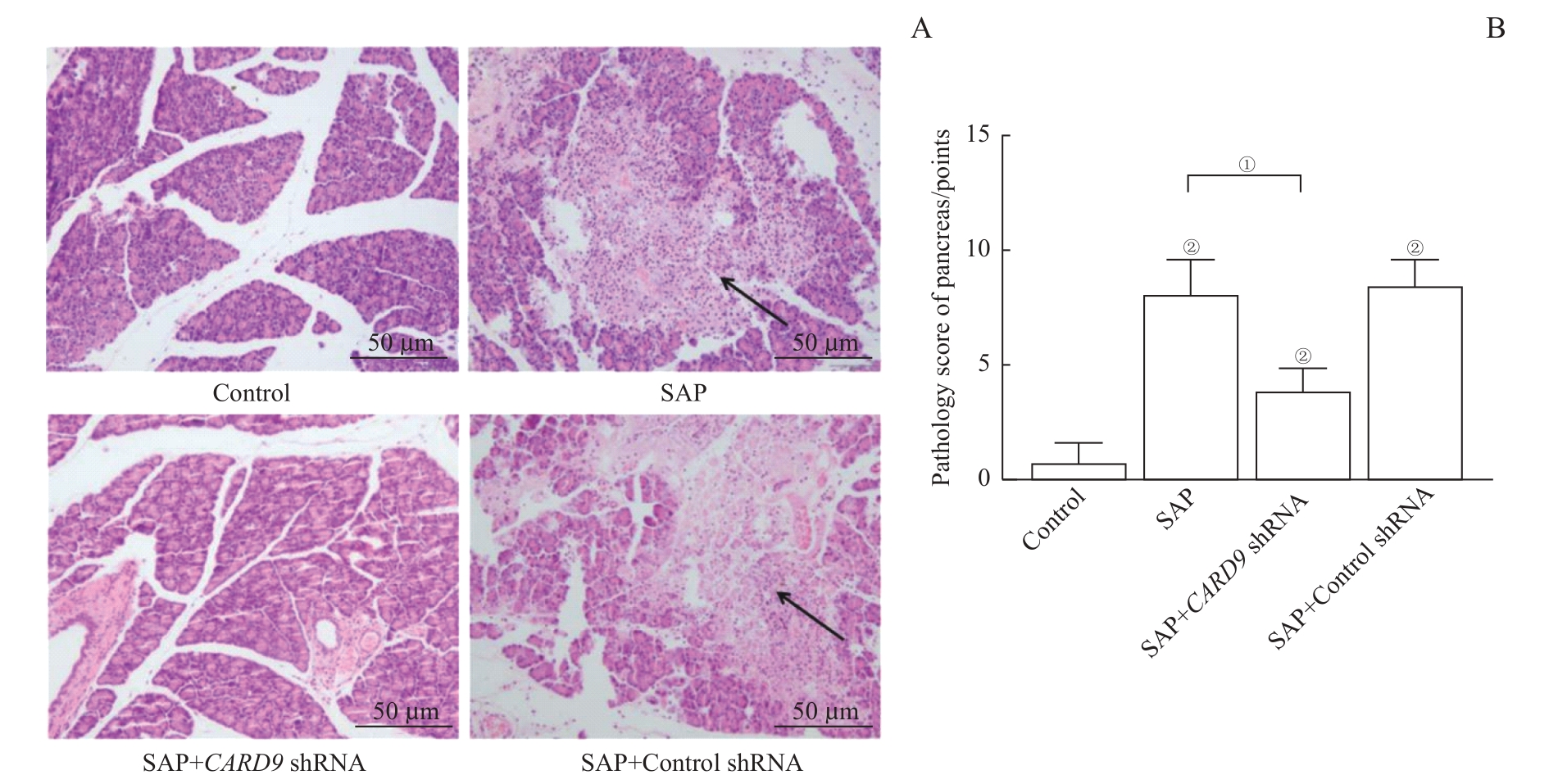
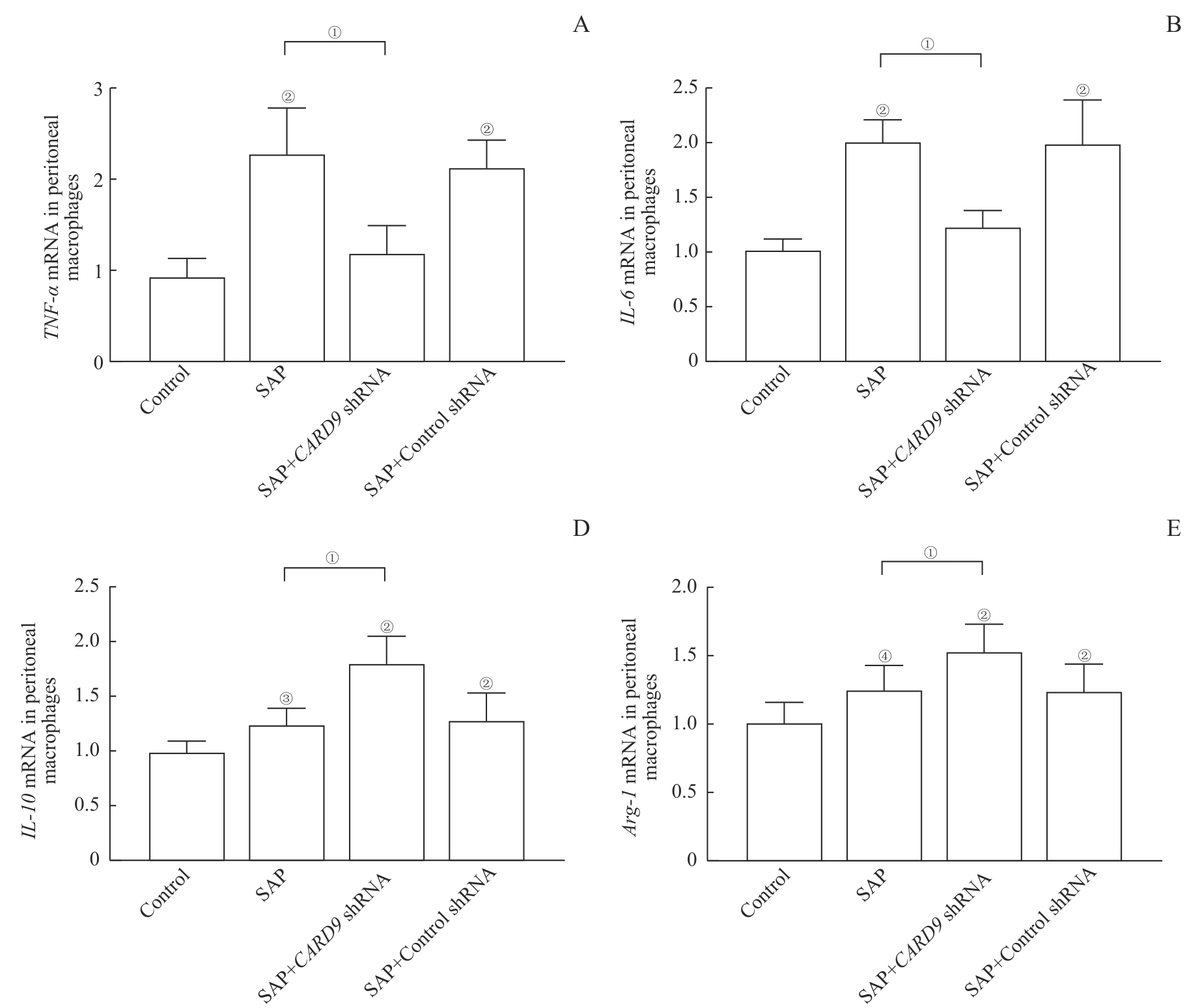
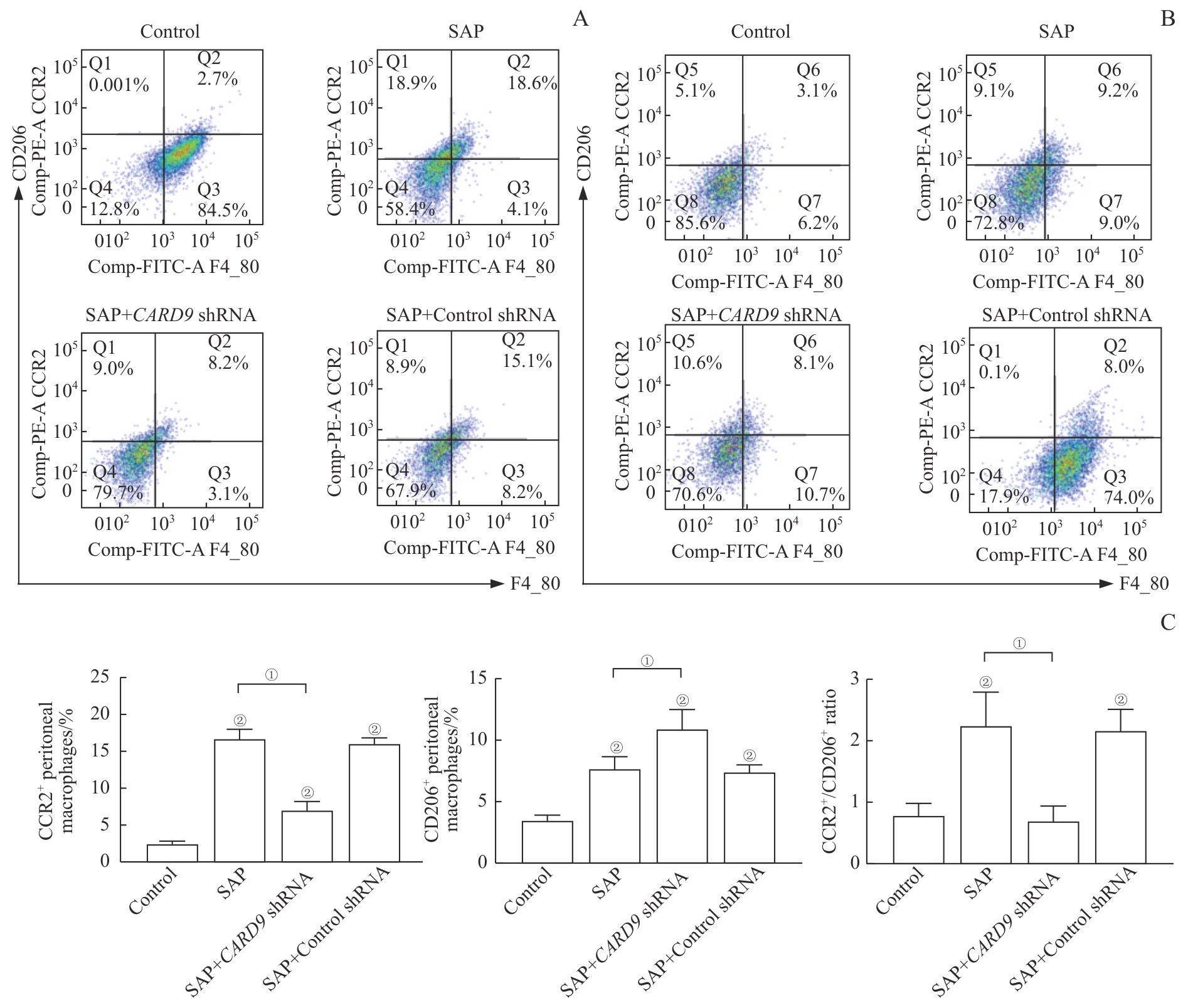
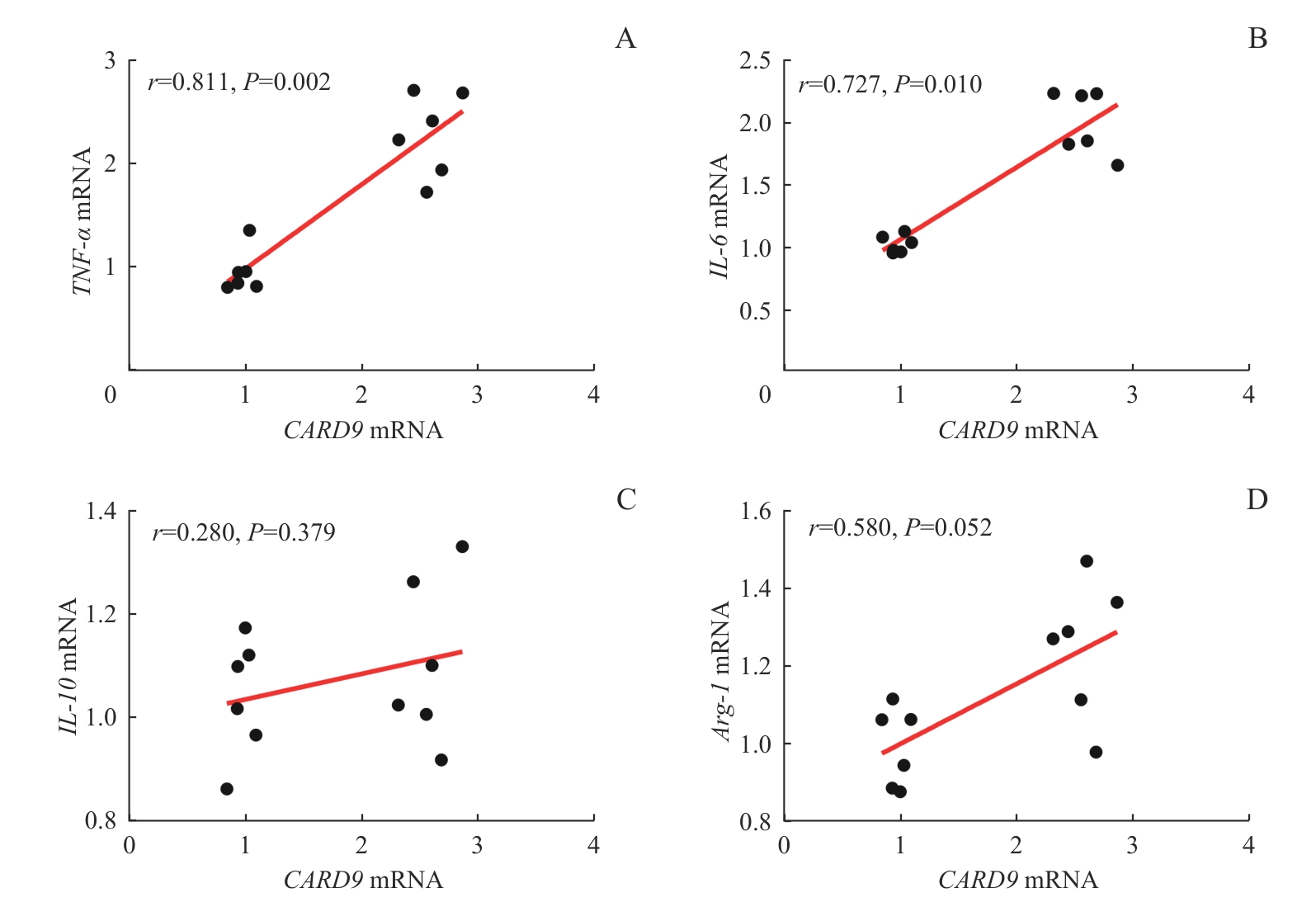
目的·探讨胱天蛋白酶募集域蛋白9(caspase recruitment domain-containing protein 9,CARD9)是否参与调控重症急性胰腺炎(severe acute pancreatitis,SAP)巨噬细胞极化。方法·将SD大鼠随机分为4组,分别为对照组、SAP组、SAP+CARD9 shRNA组和SAP+Control shRNA组,每组6只。在SAP大鼠造模前48 h,经尾静脉注射CARD9 shRNA干扰腺病毒。造模后12 h收集标本,采用H-E染色评估胰腺组织病理变化,运用real-time PCR法检测大鼠腹腔巨噬细胞CARD9及肿瘤坏死因子α(tumor necrosis factor-α,TNF-α)、白细胞介素-6(interleukin-6,IL-6)、IL-10、精氨酸酶-1(arginase 1,Arg-1)的基因表达水平,通过Western blotting法检测腹腔巨噬细胞CARD9蛋白表达水平,利用流式细胞技术检测大鼠腹腔巨噬细胞极化类型。结果·SAP组、SAP+CARD9 shRNA组、SAP+Control shRNA组中CARD9基因及CARD9蛋白表达水平均明显高于对照组,显示CARD9干扰成功(P<0.001)。SAP+CARD9 shRNA组与SAP组相比:血清淀粉酶水平、胰腺组织病理评分明显降低;腹腔巨噬细胞促炎细胞因子TNF-αIL-6水平明显降低,抗炎细胞因子IL-10Arg-1水平升高;M1型巨噬细胞明显减少、M1/M2比值降低。腹腔巨噬细胞CARD9 mRNA水平与TNF-α mRNA、IL-6 mRNA水平及M1型巨噬细胞数量呈正相关。结论·CARD9促进SAP大鼠巨噬细胞M1型极化;下调CARD9表达可通过抑制巨噬细胞M1极化,减轻SAP大鼠炎症反应。

关键词: 巨噬细胞极化, 重症急性胰腺炎, 胱天蛋白酶募集域蛋白9, SD大鼠, 腹腔巨噬细胞

Abstract:

Objective ·To investigate the role of caspase recruitment domain-containing protein 9 (CARD9) in regulating macrophage polarization in a rat model of severe acute pancreatitis (SAP). Methods ·SD rats were divided into 4 groups: Control group, SAP group, SAP+CARD9 shRNA group, and SAP+Control shRNA group with six rats in each group. The SAP rats transfected with CARD9 shRNA were established by injecting CARD9 shRNA adenovirus 48 hours before the SAP model was induced. The pancreatic tissues, peripheral blood, and peritoneal macrophages were collected 12 hours after the model was established. The expressions of CARD9 gene and CARD9 protein in peritoneal macrophages and pancreatic tissues were measured by real-time PCR and Western blotting. The expressions of TNF-α, IL-6, IL-10 and Arg-1 mRNA were detected by real-time PCR and the polarization types of peritoneal macrophages were detected by flow cytometry. Results ·The expressions of CARD9 gene and CARD9 protein in peritoneal macrophages in CARD9 shRNA rats were significantly lower than those in SAP rats and interference control rats, which confirmed the success of CARD9 interference model. Compared with SAP rats, CARD9 shRNA rats had significantly reduced degree of inflammation and pathological scores; the mRNA levels of TNF-α, and IL-6 in peritoneal macrophages were significantly decreased; meanwhile, the mRNA levels of IL-10 and Arg-1 were increased, and the changes in TNF-α and IL-6 were significantly higher than those of IL-10 and Arg-1. The proportion of M1 macrophages was significantly reduced, and the ratio of M1/M2 was significantly decreased. The expression level of CARD9 mRNA in peritoneal macrophages was positively correlated with the proportion of M1 macrophages and the mRNA levels of TNF-α and IL-6. Conclusion ·CARD9 is involved in regulating macrophage polarization in SAP rats, and it mainly regulates M1 polarization. Inhibition of CARD9 expression can reduce M1 macrophage polarization and reduce the inflammatory response in SAP rats.

Key words: macrophage polarization, severe acute pancreatitis, caspase recruitment domain-containing protein 9, SD rat, peritoneal macrophage

中图分类号: