
上海交通大学学报(医学版) ›› 2026, Vol. 46 ›› Issue (6): 801-809.doi: 10.3969/j.issn.1674-8115.2026.06.013
李梦如1, 王海强2( )
)
收稿日期:2025-07-16
接受日期:2026-04-21
出版日期:2026-06-28
发布日期:2026-06-29
通讯作者:
王海强,主任医师,硕士;电子信箱:haiqiang915@163.com。基金资助:
Li Mengru1, Wang Haiqiang2()
Received:2025-07-16
Accepted:2026-04-21
Online:2026-06-28
Published:2026-06-29
Contact:
Wang Haiqiang, E-mail: haiqiang915@163.com.Supported by:摘要:
炎症性肠病(inflammatory bowel disease,IBD)包括溃疡性结肠炎(ulcerative colitis,UC)和克罗恩病(Crohn's disease,CD),是一类可引发慢性、复发性胃肠道炎症的异质性疾病。IBD的病理生理机制较为复杂,涉及诸多因素,包括遗传学、环境暴露、肠道菌群失调和免疫应答异常等,其中免疫稳态失衡是其核心病理环节。有研究表明,细胞因子网络的异常调控在IBD发生发展中起到关键作用,其中白细胞介素(interleukin,IL)作为一类重要的信号分子在IBD的发病机制研究和临床治疗中受到了广泛关注;同时,研究还发现针对IL的靶向治疗已展现出显著疗效。该文系统阐述了IL与IBD的关联性,深入解析IL在IBD发病过程中的作用机制,讨论了促炎IL(如IL-6、IL-17、IL-23)与抗炎IL-10的失衡以及其对应信号通路的调控,并总结了基于IL靶点的治疗策略,包括生物制剂和新型疗法的临床验证,旨在为IBD的临床治疗提供新的策略。
中图分类号:
李梦如, 王海强. 白细胞介素调控网络在炎症性肠病中的作用机制综述[J]. 上海交通大学学报(医学版), 2026, 46(6): 801-809.
Li Mengru, Wang Haiqiang. Review of mechanism of interleukin regulatory network in inflammatory bowel disease[J]. Journal of Shanghai Jiao Tong University (Medical Science), 2026,(6): 801-809.
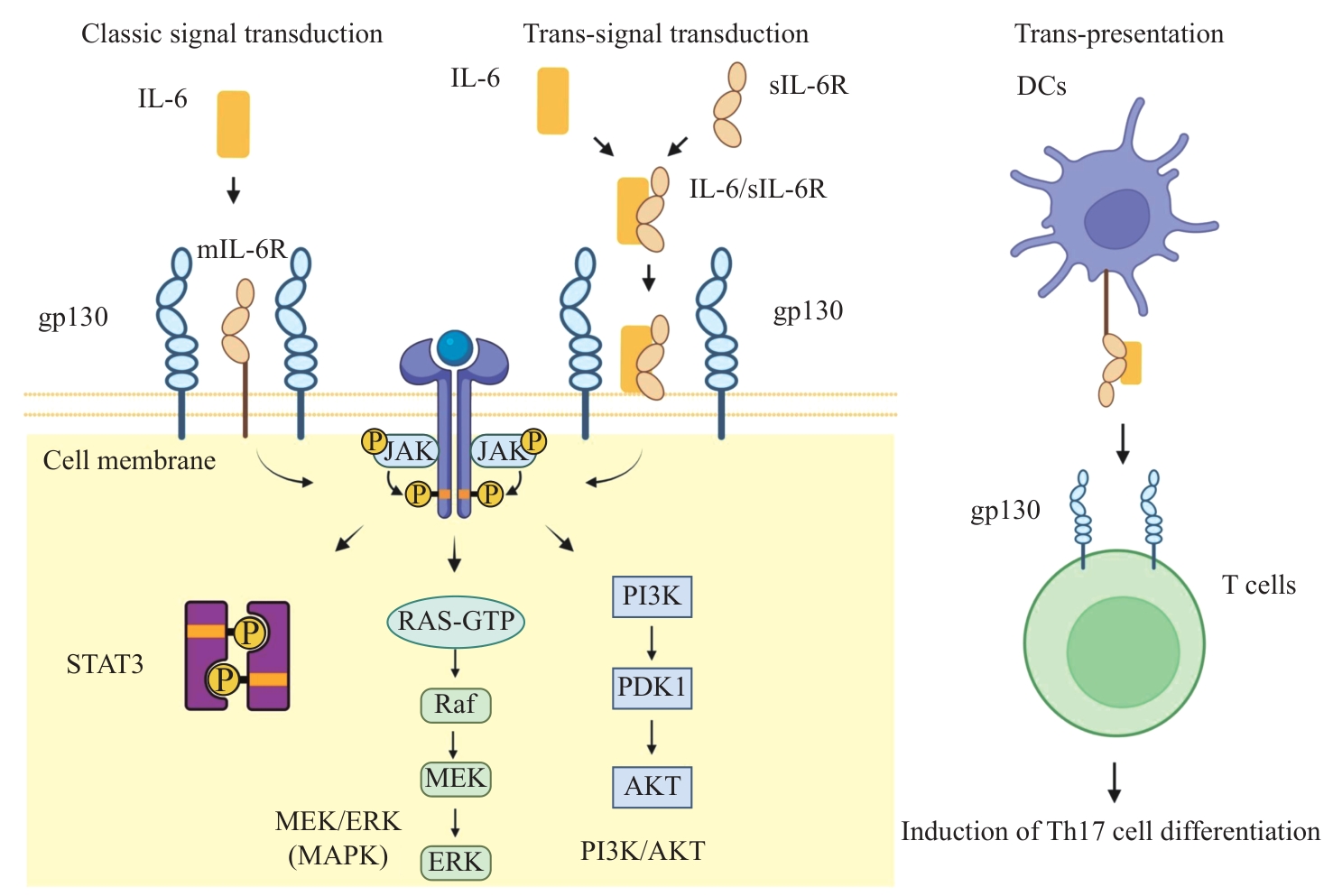
图1 IL-6信号转导的3类通路Note: RAS-GTP—Rat sarcoma guanosine triphosphate; Raf—rapidly accelerated fibrosarcoma; MEK—mitogen-activated protein kinase kinase; ERK—extracellular signal-regulated kinase; PDK1—3-phosphoinositide-dependent protein kinase 1.
Fig 1 Three pathways of IL-6 signal transduction
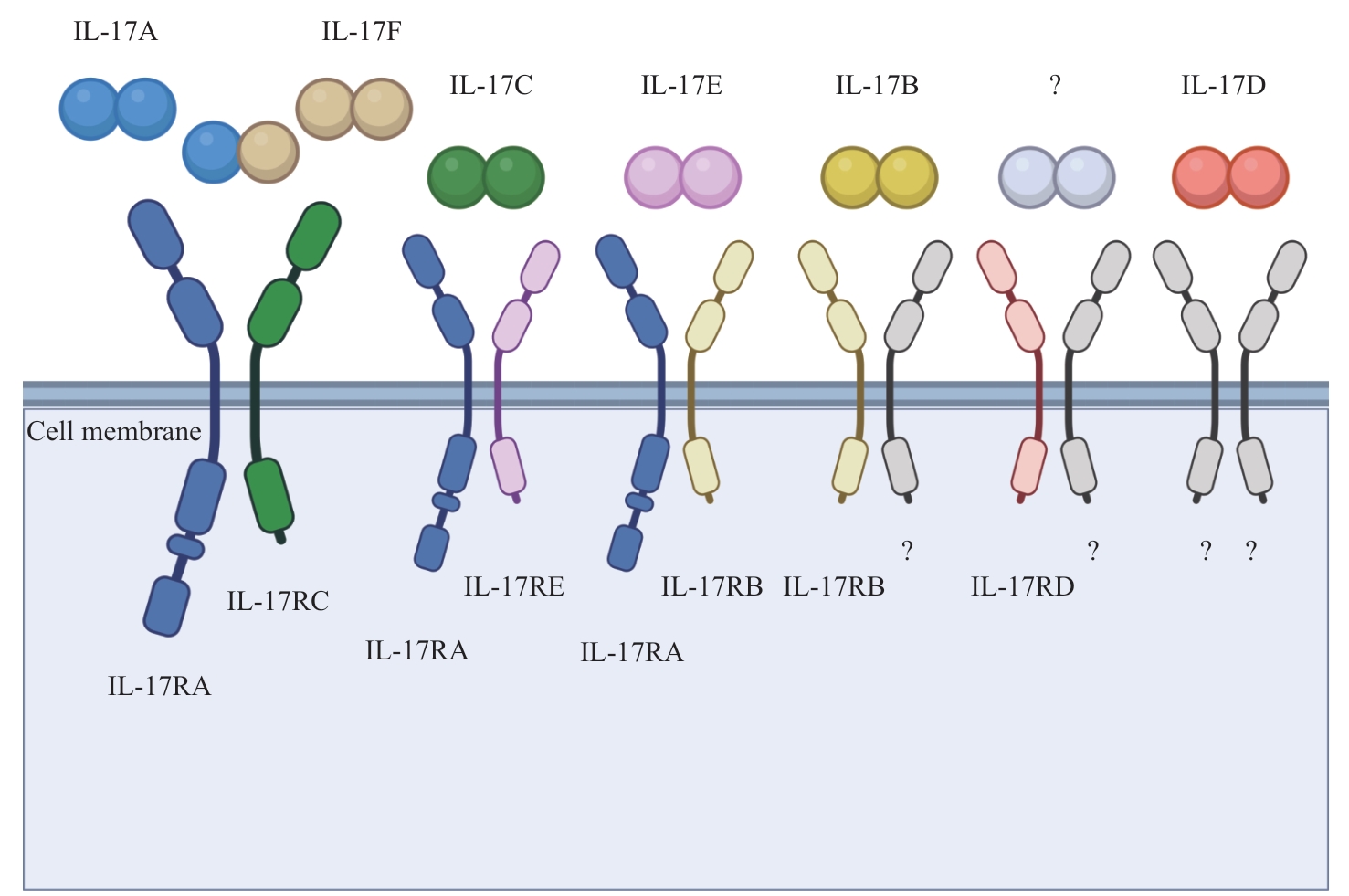
图2 IL-17家族及其受体家族的结构示意图Note: Different IL-17 receptor subunits assemble into distinct receptor complexes. However, a small degree of indeterminacy, indicated by question marks in the diagram, represents uncertainty.
Fig 2 Schematic diagram of IL-17 family and its receptor family
| [1] | Saez A, Herrero-Fernandez B, Gomez-Bris R, et al. Pathophysiology of inflammatory bowel disease: innate immune system[J]. Int J Mol Sci, 2023, 24(2): 1526. |
| [2] | Hracs L, Windsor J W, Gorospe J, et al. Global evolution of inflammatory bowel disease across epidemiologic stages[J]. Nature, 2025, 642(8067): 458-466. |
| [3] | Prioritizing inflammatory bowel disease[J]. Nat Rev Gastroenterol Hepatol, 2025, 22(6): 361. |
| [4] | Nakajima M, Iwao Y, Okabayashi K, et al. Pathological characteristics of inflammatory bowel diseases[J]. J Med Ultrason, 2025, 52(2): 187-196. |
| [5] | Lu Q, Yang M F, Liang Y J, et al. Immunology of inflammatory bowel disease: molecular mechanisms and therapeutics[J]. J Inflamm Res, 2022, 15: 1825-1844. |
| [6] | Padoan A, Musso G, Contran N, et al. Inflammation, autoinflammation and autoimmunity in inflammatory bowel diseases[J]. Curr Issues Mol Biol, 2023, 45(7): 5534-5557. |
| [7] | Vebr M, Pomahačová R, Sýkora J, et al. A narrative review of cytokine networks: pathophysiological and therapeutic implications for inflammatory bowel disease pathogenesis[J]. Biomedicines, 2023, 11(12): 3229. |
| [8] | Uchiyama K, Takagi T, Mizushima K, et al. Mucosal interleukin-8 expression as a predictor of subsequent relapse in ulcerative colitis patients with Mayo endoscopic subscore 0[J]. J Gastroenterol Hepatol, 2022, 37(6): 1034-1042. |
| [9] | Wang C Y, Lv G Q, Chen E B, et al. Cross-trait cross-genome cross-organ analysis of gastrointestinal disorders and depression[J]. Dig Dis Sci, 2025, 70(9): 3021-3033. |
| [10] | Li X C, Zhao C B. Interleukin-6 in neuroimmunological disorders: pathophysiology and therapeutic advances with satralizumab[J]. Autoimmun Rev, 2025, 24(7): 103826. |
| [11] | Song M, Wang Y L, Annex B H, et al. Experiment-based computational model predicts that IL-6 trans-signaling plays a dominant role in IL-6 mediated signaling in endothelial cells[J]. bioRxiv, 2023: 2023.02.03.526721. |
| [12] | Rose-John S, Jenkins B J, Garbers C, et al. Targeting IL-6 trans-signalling: past, present and future prospects[J]. Nat Rev Immunol, 2023, 23(10): 666-681. |
| [13] | Li X T, Wu X Y, Chen X Q, et al. Selective blockade of interleukin 6 trans-signaling depresses atrial fibrillation[J]. Heart Rhythm, 2023, 20(12): 1759-1770. |
| [14] | Forcina L, Franceschi C, Musarò A. The hormetic and hermetic role of IL-6[J]. Ageing Res Rev, 2022, 80: 101697. |
| [15] | Agca S, Kir S. The role of interleukin-6 family cytokines in cancer cachexia[J]. FEBS J, 2024, 291(18): 4009-4023. |
| [16] | Ji T, Huang G H, Cao Y D, et al. Advances in interleukin-6 family cytokines and the role in respiratory diseases[J]. J Inflamm Res, 2025, 18: 3125-3141. |
| [17] | Naganuma M, Takeno M, Çelik A F, et al. Assessment of IL-6 pathway inhibition in gastrointestinal behçet's disease from immunological and clinical perspectives[J]. Biomedicines, 2025, 13(1): 247. |
| [18] | Alhendi A, Naser S A. The dual role of interleukin-6 in Crohn's disease pathophysiology[J]. Front Immunol, 2023, 14: 1295230. |
| [19] | Tie Y Z, Chen M H, Zhang S H. Insights into the molecular mechanisms and therapeutic implications of interleukin-6 for inflammatory bowel disease[J]. Chin Med J, 2023, 136(18): 2143-2146. |
| [20] | Zhang S H, Chen B L, Wang B M, et al. Effect of induction therapy with olamkicept vs placebo on clinical response in patients with active ulcerative colitis: a randomized clinical trial[J]. JAMA, 2023, 329(9): 725-734. |
| [21] | Koureta E, Karatzas P, Kanellopoulos P N, et al. The importance of growth differentiation factor 15 and interleukin 6 serum levels in inflammatory bowel diseases[J]. J Physiol Biochem, 2025, 81(1): 111-122. |
| [22] | Knyazev O, Kagramanova A V. P0578 The relationship between the concentration of D-dimer and interleukin-6 in patients with ulcerative colitis[J]. J Crohn's Colitis, 2025, 19(Supplement_1): i1155. |
| [23] | Samarani S, Dupont-Lucas C, Marcil V, et al. CpG methylation in TGFβ1 and IL-6 genes as surrogate biomarkers for diagnosis of IBD in children[J]. Inflamm Bowel Dis, 2020, 26(10): 1572-1578. |
| [24] | Narazaki M, Kishimoto T. Current status and prospects of IL-6-targeting therapy[J]. Expert Rev Clin Pharmacol, 2022, 15(5): 575-592. |
| [25] | Schreiber S, Aden K, Bernardes J P, et al. Therapeutic interleukin-6 trans-signaling inhibition by olamkicept (sgp130Fc) in patients with active inflammatory bowel disease[J]. Gastroenterology, 2021, 160(7): 2354-2366.e11. |
| [26] | Avci A B, Feist E, Burmester G R. Targeting IL-6 or IL-6 receptor in rheumatoid arthritis: what have we learned [J]. BioDrugs, 2024, 38(1): 61-71. |
| [27] | Aletaha D, Kerschbaumer A, Kastrati K, et al. Consensus statement on blocking interleukin-6 receptor and interleukin-6 in inflammatory conditions: an update[J]. Ann Rheum Dis, 2023, 82(6): 773-787. |
| [28] | Yu Z, Li X L, Huang J Y, et al. The RNA-binding E3 ligase MKRN2 selectively disrupts Il6 translation to restrain inflammation[J]. Nat Immunol, 2025, 26(7): 1036-1047. |
| [29] | Guo S S, Geng W Y, Chen S, et al. Ginger alleviates DSS-induced ulcerative colitis severity by improving the diversity and function of gut microbiota[J]. Front Pharmacol, 2021, 12: 632569. |
| [30] | Huangfu L J, Li R Y, Huang Y M, et al. The IL-17 family in diseases: from bench to bedside[J]. Signal Transduct Target Ther, 2023, 8(1): 402. |
| [31] | Liu Y C, Ouyang Y, You W C, et al. Physiological roles of human interleukin-17 family[J]. Exp Dermatol, 2024, 33(1): e14964. |
| [32] | Deng G Z, Guo M D, Fan J H, et al. Interleukin-17 family in health and immune diseases: from origin to clinical implications[J]. Neural Regen Res, 2026, 21(5): 1809-1833. |
| [33] | Koh C H, Kim B S, Kang C Y, et al. IL-17 and IL-21: their immunobiology and therapeutic potentials[J]. Immune Netw, 2024, 24: e2. |
| [34] | Li J, Liu L, Zhao Q, et al. Role of interleukin-17 in pathogenesis of intestinal fibrosis in mice[J]. Dig Dis Sci, 2020, 65(7): 1971-1979. |
| [35] | Brabec T, Vobořil M, Schierová D, et al. IL-17-driven induction of Paneth cell antimicrobial functions protects the host from microbiota dysbiosis and inflammation in the ileum[J]. Mucosal Immunol, 2023, 16(4): 373-385. |
| [36] | Chong W P, Mattapallil M J, Raychaudhuri K, et al. The cytokine IL-17A limits Th17 pathogenicity via a negative feedback loop driven by autocrine induction of IL-24[J]. Immunity, 2020, 53(2): 384-397.e5. |
| [37] | Goepfert A, Lehmann S, Blank J, et al. Structural analysis reveals that the cytokine IL-17F forms a homodimeric complex with receptor IL-17RC to drive IL-17RA-independent signaling[J]. Immunity, 2020, 52(3): 499-512.e5. |
| [38] | Vangilbergen M, Stockman A, van de Velde A, et al. The role of interleukin-17 and interleukin-23 inhibitors in the development, progression, and recurrence of cancer: a systematic review[J]. JAAD Int, 2024, 17: 71-79. |
| [39] | Deng Z Z, Wang S F, Wu C F, et al. IL-17 inhibitor-associated inflammatory bowel disease: a study based on literature and database analysis[J]. Front Pharmacol, 2023, 14: 1124628. |
| [40] | Munshi A R, Wang T, Takamori Y, et al. SELEX-discovered aptamer that inhibits cellular interleukin-17/interleukin-17 receptor interaction and antagonizes interleukin-17 signaling[J]. Biosci Biotechnol Biochem, 2024, 88(2): 147-153. |
| [41] | Mills K H G. IL-17 and IL-17-producing cells in protection versus pathology[J]. Nat Rev Immunol, 2023, 23(1): 38-54. |
| [42] | Gandhi G R, Mohana T, Athesh K, et al. Anti-inflammatory natural products modulate interleukins and their related signaling markers in inflammatory bowel disease: a systematic review[J]. J Pharm Anal, 2023, 13(12): 1408-1428. |
| [43] | Liang J, Dai W G, Liu C H, et al. Gingerenone a attenuates ulcerative colitis via targeting IL-17RA to inhibit inflammation and restore intestinal barrier function[J]. Adv Sci (Weinh), 2024, 11(28): e2400206. |
| [44] | Biskup L, Semeradt J, Rogowska J, et al. New interleukin-23 antagonists' use in Crohn's disease[J]. Pharmaceuticals (Basel), 2025, 18(4): 447. |
| [45] | Vuyyuru S K, Shackelton L M, Hanzel J, et al. Targeting IL-23 for IBD: rationale and progress to date[J]. Drugs, 2023, 83(10): 873-891. |
| [46] | Tian Z Z, Zhao Q R, Teng X. Anti-IL23/12 agents and JAK inhibitors for inflammatory bowel disease[J]. Front Immunol, 2024, 15: 1393463. |
| [47] | Korta A, Kula J, Gomułka K. The role of IL-23 in the pathogenesis and therapy of inflammatory bowel disease[J]. Int J Mol Sci, 2023, 24(12): 10172. |
| [48] | Sewell G W, Kaser A. Interleukin-23 in the pathogenesis of inflammatory bowel disease and implications for therapeutic intervention[J]. J Crohns Colitis, 2022, 16(Supplement_2): ii3-ii19. |
| [49] | Louis E. Use of interleukin-23 inhibitors for the treatment of inflammatory bowel disease[J]. Gastroenterol Hepatol (N Y), 2025, 21(3): 180-182. |
| [50] | Krueger J G, Eyerich K, Kuchroo V K, et al. IL-23 past, present, and future: a roadmap to advancing IL-23 science and therapy[J]. Front Immunol, 2024, 15: 1331217. |
| [51] | Jacobse J, Brown R E, Li J, et al. Interleukin-23 receptor signaling impairs the stability and function of colonic regulatory T cells[J]. Cell Rep, 2023, 42(2): 112128. |
| [52] | D'Haens G, Panaccione R, Baert F, et al. Risankizumab as induction therapy for Crohn's disease: results from the phase 3 ADVANCE and MOTIVATE induction trials[J]. Lancet, 2022, 399(10340): 2015-2030. |
| [53] | Ferrante M, Panaccione R, Baert F, et al. Risankizumab as maintenance therapy for moderately to severely active Crohn's disease: results from the multicentre, randomised, double-blind, placebo-controlled, withdrawal phase 3 FORTIFY maintenance trial[J]. Lancet, 2022, 399(10340): 2031-2046. |
| [54] | Ferrante M, D'Haens G, Jairath V, et al. Efficacy and safety of mirikizumab in patients with moderately-to-severely active Crohn's disease: a phase 3, multicentre, randomised, double-blind, placebo-controlled and active-controlled, treat-through study[J]. Lancet, 2024, 404(10470): 2423-2436. |
| [55] | Sands B E, Panaccione R, Danese S, et al. P0608 Safety of guselkumab in inflammatory bowel disease up to 1 year: integrated safety analysis of phase 2 and 3 studies in Crohn's disease and ulcerative colitis[J]. J Crohns Colitis, 2025, 19(Supplement_1): i1205-i1207. |
| [56] | Chang C C, Yang C H, Chuang C H, et al. A peptide derived from interleukin-10 exhibits potential anticancer activity and can facilitate cell targeting of gold nanoparticles loaded with anticancer therapeutics[J]. Commun Chem, 2023, 6(1): 278. |
| [57] | York A G, Skadow M H, Qu R H, et al. IL-10 constrains sphingolipid metabolism via fatty acid desaturation to limit inflammation[J]. bioRxiv, 2023: 2023.05.07.539780. |
| [58] | Carlini V, Noonan D M, Abdalalem E, et al. The multifaceted nature of IL-10: regulation, role in immunological homeostasis and its relevance to cancer, COVID-19 and post-COVID conditions[J]. Front Immunol, 2023, 14: 1161067. |
| [59] | Saxton R A, Tsutsumi N, Su L L, et al. Structure-based decoupling of the pro- and anti-inflammatory functions of interleukin-10[J]. Science, 2021, 371(6535): eabc8433. |
| [60] | DiDonato M, Simpson C T, Vo T, et al. A novel interleukin-10 antibody graft to treat inflammatory bowel disease[J]. Structure, 2025, 33(3): 475-488.e7. |
| [61] | Chen X T, Zhang M M, Zhou F, et al. SIRT3 activator honokiol inhibits Th17 cell differentiation and alleviates colitis[J]. Inflamm Bowel Dis, 2023, 29(12): 1929-1940. |
| [62] | Pavel C, Diculescu M M, Ilie M, et al. Immunohistochemistry analysis in inflammatory bowel disease-should we bring to light interleukin-10 [J]. Biomedicines, 2025, 13(2): 406. |
| [63] | York A G, Skadow M H, Oh J, et al. IL-10 constrains sphingolipid metabolism to limit inflammation[J]. Nature, 2024, 627(8004): 628-635. |
| [64] | Eddie Ip W K E, Hoshi N, Shouval D S, et al. Anti-inflammatory effect of IL-10 mediated by metabolic reprogramming of macrophages[J]. Science, 2017, 356(6337): 513-519. |
| [65] | Steen E H, Wang X Y, Balaji S, et al. The role of the anti-inflammatory cytokine interleukin-10 in tissue fibrosis[J]. Adv Wound Care, 2020, 9(4): 184-198. |
| [66] | Carrasco A, Tristán E, Fernández-Bañares F, et al. Mucosal interleukin-10 depletion in steroid-refractory Crohn's disease patients[J]. Immun Inflamm Dis, 2022, 10(10): e710. |
| [67] | Li L L, Ma C X, Chen K X, et al. Integrated transcriptomic and proteomic profiling of colonic tissue in interleukin-10-deficient mice[J]. Sci Data, 2025, 12(1): 1109. |
| [68] | Wang Y F, Liu D D, Gao H L, et al. Treatment of IL-10RA deficiency of pediatric patients with very early onset inflammatory bowel disease by allogeneic haematopoietic stem cell transplantation[J]. Sci Rep, 2025, 15(1): 9606. |
| [1] | 龚继安, 韩稷钰, 万大千. 肠道菌群调控下17型辅助性T细胞及IL-17在骨关节炎发生发展中的作用研究进展[J]. 上海交通大学学报(医学版), 2026, 46(6): 815-823. |
| [2] | 刘亚东, 董金伟, 王子慧, 吕泽坤, 丁宝志, 马辉. 硫氧还蛋白相互作用蛋白:椎间盘退变的潜在新治疗靶点[J]. 上海交通大学学报(医学版), 2026, 46(5): 568-575. |
| [3] | 钱亦乐, 姚赛, 陈思锋, 李全富, 赵猛. 巨噬细胞介导心肌纤维化的分子机制及靶向干预研究进展[J]. 上海交通大学学报(医学版), 2026, 46(3): 348-357. |
| [4] | 赵旻炅, 陈铃芳, 胡苗清, 冯杰, 聂宇. 免疫细胞调控心肌缺血损伤后再生的研究进展[J]. 上海交通大学学报(医学版), 2026, 46(3): 368-376. |
| [5] | 王治琪, 王莹. 儿童炎症性肠病相关贫血的诊治研究进展[J]. 上海交通大学学报(医学版), 2025, 45(9): 1232-1238. |
| [6] | 杨全军, 柏丁源, 周雨萱, 白露, 郭澄. 异柠檬酸脱氢酶1突变介导D-2-羟基戊二酸代谢重编程在肿瘤免疫调控中的作用及相关药物研发进展[J]. 上海交通大学学报(医学版), 2025, 45(9): 1239-1248. |
| [7] | 禹恺, 帅哲玮, 黄洪军, 罗艳. 小胶质细胞在中枢神经系统炎症性疾病中的作用和机制研究进展[J]. 上海交通大学学报(医学版), 2025, 45(5): 630-638. |
| [8] | 罗文, 吕明君, 张珍, 张雪, 姚志荣. 自噬在皮肤黑色素瘤中的双重效应及耐药中的作用研究进展[J]. 上海交通大学学报(医学版), 2025, 45(2): 233-240. |
| [9] | 唐珺倩, 李本尚. 儿童高危细胞遗传学B系急性淋巴细胞白血病治疗新进展[J]. 上海交通大学学报(医学版), 2025, 45(10): 1390-1399. |
| [10] | 夏西茜, 丁珂珂, 张慧恒, 彭旭飞, 孙昳旻, 唐雅珺, 汤晓芳. 肠道菌群介导胆汁酸影响炎症性肠病的研究进展[J]. 上海交通大学学报(医学版), 2024, 44(7): 839-846. |
| [11] | 张勇, 李伟宏, 程志鹏, 王斌, 王思珩, 王毓斌. 受体相互作用蛋白激酶1调节癌症进展和免疫反应的研究现状[J]. 上海交通大学学报(医学版), 2024, 44(6): 788-794. |
| [12] | 徐文晖, 杨畅, 李瑞卿, 卞京, 李夏伊, 郑磊贞. 干扰素调节因子3促结直肠癌细胞增殖与侵袭相关探索[J]. 上海交通大学学报(医学版), 2024, 44(3): 301-311. |
| [13] | 丁艳玲, 李杰, 袁军, 李燕. 慢性淋巴细胞白血病靶向治疗的研究进展[J]. 上海交通大学学报(医学版), 2024, 44(2): 264-270. |
| [14] | 唐思洁, 糜坚青. 抗体药物偶联物在血液肿瘤中的临床应用研究进展[J]. 上海交通大学学报(医学版), 2024, 44(12): 1607-1614. |
| [15] | 方馨悦, 石岚, 夏思易, 王佳璇, 吴英理, 何珂骏. Menin-MLL蛋白相互作用及相关抑制剂在MLL基因重排白血病中应用的研究进展[J]. 上海交通大学学报(医学版), 2024, 44(10): 1287-1298. |
| 阅读次数 | ||||||
|
全文 |
|
|||||
|
摘要 |
|
|||||
