
Journal of Shanghai Jiao Tong University (Medical Science) ›› 2025, Vol. 45 ›› Issue (11): 1552-1558.doi: 10.3969/j.issn.1674-8115.2025.11.015
• Case report • Previous Articles
ZHOU Jianhua, ZHANG Hongli, LI Xiaohua( )
)
Received:2025-08-19
Accepted:2025-10-11
Online:2025-11-28
Published:2025-12-03
Contact:
LI Xiaohua
E-mail:z18702172007@163.com
Supported by:CLC Number:
ZHOU Jianhua, ZHANG Hongli, LI Xiaohua. A case of primary pigmented nodular adrenocortical disease associated with germline PRKACA duplication variation[J]. Journal of Shanghai Jiao Tong University (Medical Science), 2025, 45(11): 1552-1558.
Add to citation manager EndNote|Ris|BibTeX
URL: https://xuebao.shsmu.edu.cn/EN/10.3969/j.issn.1674-8115.2025.11.015
| Time | 8:00ACTH/ (pg·mL-1) | 8:00Cortisol/ (μg·dL-1) | 16:00ACTH/(pg·mL-1) | 16:00Cortisol/(μg·dL-1) | 24:00ACTH/(pg·mL-1) | 24:00Cortisol/(μg·dL-1) | 24hUFC/ (μg·dL-1) |
|---|---|---|---|---|---|---|---|
| preoperative | <1 | 23.53 | <1 | 25.34 | <1 | 22.40 | 403.60 |
| LDDST | ‒ | 15.88 | ‒ | ‒ | ‒ | ‒ | ‒ |
| HDDST | ‒ | 16.24 | ‒ | ‒ | ‒ | ‒ | 701.80 |
| postoperative | <1 | 10.51 | <1 | 8.08 | <1 | 8.09 | 90.00 |
| 1-year postoperative | <1 | 6.95 | <1 | 5.92 | <1 | 5.19 | ‒ |
Tab 1 Patients′ preoperative and postoperative cortisol rhythm and 24-hour urinary free cortisol levels
| Time | 8:00ACTH/ (pg·mL-1) | 8:00Cortisol/ (μg·dL-1) | 16:00ACTH/(pg·mL-1) | 16:00Cortisol/(μg·dL-1) | 24:00ACTH/(pg·mL-1) | 24:00Cortisol/(μg·dL-1) | 24hUFC/ (μg·dL-1) |
|---|---|---|---|---|---|---|---|
| preoperative | <1 | 23.53 | <1 | 25.34 | <1 | 22.40 | 403.60 |
| LDDST | ‒ | 15.88 | ‒ | ‒ | ‒ | ‒ | ‒ |
| HDDST | ‒ | 16.24 | ‒ | ‒ | ‒ | ‒ | 701.80 |
| postoperative | <1 | 10.51 | <1 | 8.08 | <1 | 8.09 | 90.00 |
| 1-year postoperative | <1 | 6.95 | <1 | 5.92 | <1 | 5.19 | ‒ |
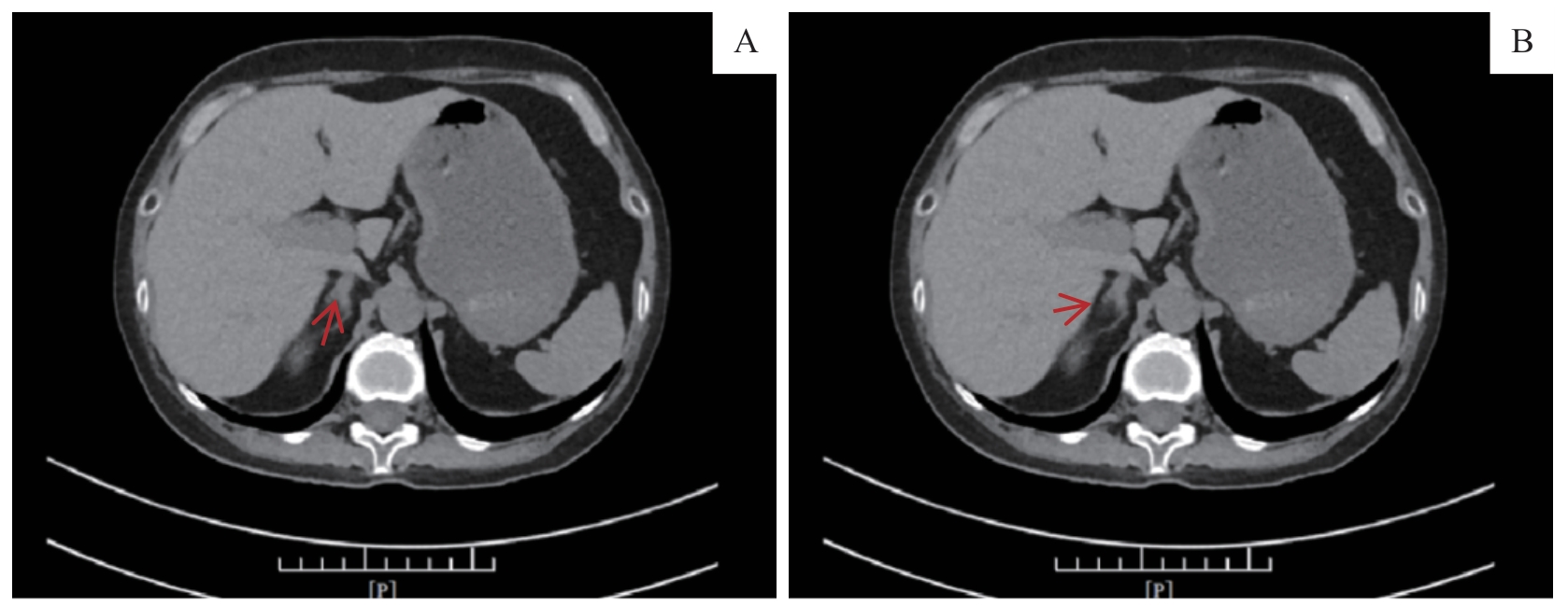
Fig 1 Contrast-enhanced CT of the adrenal glands
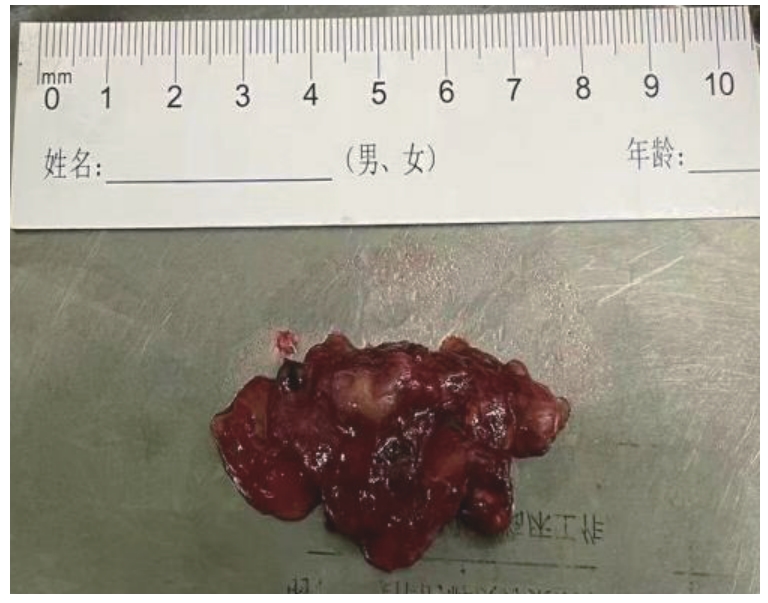
Fig 2 Pathological tissue of the patient's right adrenal gland
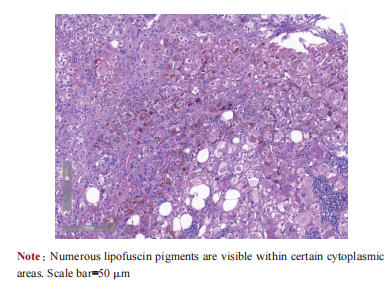
Fig 3 Adrenal pathological tissue section of the patient (H-E staining, ×100)
| [1] | 詹维伟, 周建桥, 尹立雪等. 2020甲状腺结节超声恶性危险分层中国指南: C-TIRADS[J]. 中华超声影像学杂志, 2021, 30(3): 185-200. |
| ZHAN W W, ZHOU J Q, YIN L X, et al. Chinese guidelines for ultrasound malignant risk stratification of thyroid nodules (C-TIRADS), 2020[J]. Chinese Journal of Ultrasonography, 2021, 30(3):185-200. | |
| [2] | MEMON S S, THAKKAR K, PATIL V, et al. Primary pigmented nodular adrenocortical disease (PPNAD): single centre experience[J]. J Pediatr Endocrinol Metab, 2019, 32(4): 391-397. |
| [3] | BAVADIYA G, ROY A, SARKAR K K, et al. Primary pigmented nodular adrenocortical disease (ppnad) presenting as cushing syndrome in a child and review of literature[J]. Acta Endocrinol (Buchar), 2020, 16(3): 362-365. |
| [4] | LOUISET E, STRATAKIS C A, PERRAUDIN V, et al. The paradoxical increase in cortisol secretion induced by dexamethasone in primary pigmented nodular adrenocortical disease involves a glucocorticoid receptor-mediated effect of dexamethasone on protein kinase A catalytic subunits[J]. J Clin Endocrinol Metab, 2009, 94(7): 2406-2413. |
| [5] | COURCOUTSAKIS N A, TATSI C, PATRONAS N J, et al. The complex of myxomas, spotty skin pigmentation and endocrine overactivity (Carney complex): imaging findings with clinical and pathological correlation[J]. Insights Imaging, 2013, 4(1): 119-133. |
| [6] | SUN J L, DING L, HE L P, et al. The clinical characteristics and pathogenic variants of primary pigmented nodular adrenocortical disease in 210 patients: a systematic review[J]. Front Endocrinol (Lausanne), 2024, 15: 1356870. |
| [7] | BEUSCHLEIN F, FASSNACHT M, ASSIÉ G, et al. Constitutive activation of PKA catalytic subunit in adrenal Cushing′s syndrome[J]. N Engl J Med, 2014, 370(11): 1019-1028. |
| [8] | MCGLACKEN-BYRNE S M, ABDELMAKSOUD A, HAINI M, et al. Mosaic PRKACA duplication causing a novel and distinct phenotype of early-onset Cushing′s syndrome and acral cutaneous mucinosis[J]. Eur J Endocrinol, 2022, 187(6): K55-K61. |
| [9] | 许钰英, 李燕虹, 陈秋莉等. 体细胞PRKACA基因变异致原发性色素结节性肾上腺皮质病1例[J]. 中华儿科杂志, 2023, 61(1): 76-78. |
| XU Y Y, LI Y H, CHEN Q L, et al. A case of primary pigmented nodular adrenocortical disease caused by somatic variation of the PRKACA gene [J]. Chinese Journal of Pediatrics, 2023, 61(1): 76-78. | |
| [10] | LODISH M B, YUAN B, LEVY I, et al. Germline PRKACA amplification causes variable phenotypes that may depend on the extent of the genomic defect: molecular mechanisms and clinical presentations[J]. Eur J Endocrinol, 2015, 172(6): 803-811. |
| [11] | YANG W R, LIANG X H, QIN Y F, et al. Germline PRKACA amplification-associated primary pigmented nodular adrenocortical disease: a case report and literature review[J]. Arch Endocrinol Metab, 2023, 68: e220491. |
| [12] | LODISH M B, YUAN B, LEVY I, et al. Germline PRKACA amplification causes variable phenotypes that may depend on the extent of the genomic defect: molecular mechanisms and clinical presentations[J]. Eur J Endocrinol, 2015, 172(6): 803-811. |
| [13] | STRATAKIS C A, KIRSCHNER L S, CARNEY J A. Clinical and molecular features of the Carney complex: diagnostic criteria and recommendations for patient evaluation [J]. J Clin Endocrinol Metab, 2001, 86(9): 4041-4046. |
| [14] | BOSCO SCHAMUN M B, CORREA R, GRAFFIGNA P, et al. Carney complex review: genetic features[J]. Endocrinol Diabetes Nutr (Engl Ed), 2018, 65(1): 52-59. |
| [15] | LIBÉ R, FRATTICCI A, COSTE J, et al. Phosphodiesterase 11A (PDE11A) and genetic predisposition to adrenocortical tumors[J]. Clin Cancer Res, 2008, 14(12): 4016-4024. |
| [16] | CORREA R, SALPEA P, STRATAKIS C A. Carney complex: an update[J]. Eur J Endocrinol, 2015, 173(4): M85-M97. |
| [17] | POWELL A C, STRATAKIS C A, PATRONAS N J, et al. Operative management of Cushing syndrome secondary to micronodular adrenal hyperplasia[J]. Surgery, 2008, 143(6): 750-758. |
| [18] | XU Y Z, RUI W B, QI Y C, et al. The role of unilateral adrenalectomy in corticotropin-independent bilateral adrenocortical hyperplasias[J]. World J Surg, 2013, 37(7): 1626-1632. |
| [19] | KYRILLI A, LYTRIVI M, BOUQUEGNEAU M S, et al. Unilateral adrenalectomy could be a valid option for primary nodular adrenal disease: evidence from twins[J]. J Endocr Soc, 2018, 3(1): 129-134. |
| [20] | SARLIS N J, CHROUSOS G P, DOPPMAN J L, et al. Primary pigmented nodular adrenocortical disease: reevaluation of a patient with carney complex 27 years after unilateral adrenalectomy[J]. J Clin Endocrinol Metab, 1997, 82(4): 1274-1278. |
| [21] | CAMPO M R, LAMACCHIA O, FARESE A, et al. Mitotane and Carney Complex: ten years follow-up of a low-dose mitotane regimen inducing a sustained correction of hypercortisolism[J]. Hormones (Athens), 2015, 14(2): 300-304. |
| [1] | LIAO Chenlong, LI Shuo, XU Xin, ZHANG Yue, ZHANG Wenchuan. N-glycosylation of Cav3.2 channel in DRG neurons of myelinated A-fiber contributes to diabetic mechanical allodynia [J]. Journal of Shanghai Jiao Tong University (Medical Science), 2025, 45(11): 1458-1465. |
| [2] | HUANG Yinghe, ZHAO Guanyu, SUN Yang, HOU Jianji, ZUO Yong. Research progress on macrophage metabolic regulation in wound healing of diabetes mellitus type 2 [J]. Journal of Shanghai Jiao Tong University (Medical Science), 2025, 45(6): 792-799. |
| [3] | HUANG Yinghe, ZHAO Guanyu, SUN Yang, HOU Jianji, ZUO Yong. Research progress on macrophage metabolic regulation in wound healing of diabetes mellitus type 2 [J]. Journal of Shanghai Jiao Tong University (Medical Science), 2025, (): 1-8. |
| [4] | LIAN Mingzhu, ZHANG Changxiao, SHENG Kai, GUO Meng, FANG Shuyu. Predictive value of geriatric nutritional risk index for pulmonary infections in hospitalized elderly patients with type 2 diabetes mellitus [J]. Journal of Shanghai Jiao Tong University (Medical Science), 2025, 45(4): 452-458. |
| [5] | LIN Yijia, CHENG Lizhen, HU Tingjun, MIAO Ya. Causal relationship between type 2 diabetes mellitus and cognitive impairment based on Mendelian randomization [J]. Journal of Shanghai Jiao Tong University (Medical Science), 2025, 45(2): 204-210. |
| [6] | LU Jiaping, LIU Xing, ZHANG Linshan, ZHAO Lin, ZHANG Min, LI Xiaoying, LIU Yuejun. Relationship between abdominal fat area and first-phase insulin secretion function of pancreatic β-cells in patients with type 2 diabetes [J]. Journal of Shanghai Jiao Tong University (Medical Science), 2025, 45(1): 42-50. |
| [7] | ZHANG Xinyan, LI Han, RAN Hui, SU Qing, ZHANG Hongmei. Correlation between serum SUMO1 level and hypertriglyceridemia in type 2 diabetes mellitus patients [J]. Journal of Shanghai Jiao Tong University (Medical Science), 2024, 44(10): 1266-1272. |
| [8] | LIU Meizhi, WANG Ziyang, JIANG Yaning, MI Meng, SUN Yongning. Effects of sennoside A on atherosclerotic plaque formation and expression of 5-hydroxytryptamine signal moleculars in mice with diabetes mellitus type 2 [J]. Journal of Shanghai Jiao Tong University (Medical Science), 2024, 44(8): 991-998. |
| [9] | WANG Ying, PING Lifeng, LIU Tongtong, LIU Shanshan, LIU Lei. Effect of neferine on diabetic nephropathy by regulating SDF-1/CXCR4 signal pathway [J]. Journal of Shanghai Jiao Tong University (Medical Science), 2024, 44(2): 183-195. |
| [10] | ZHANG Juan, GE Xiaoxu, ZHANG Rong, JIANG Fusong, JIANG Yanyan, LI Ming, LI Tiantian, LIU Chanwei, CHEN Yating, LIU Limei. Screening and functional analysis of mutations in NEUROD1 gene in pedigrees of maturity-onset diabetes of the young [J]. Journal of Shanghai Jiao Tong University (Medical Science), 2023, 43(10): 1255-1261. |
| [11] | JIA Junjie, XING Haifan, ZHANG Qunzi, LIU Qiye, WANG Niansong, FAN Ying. Renal protective effect and mechanism research of hypoxia inducible factor-1α inhibitor YC-1 in diabetic nephropathy mice [J]. Journal of Shanghai Jiao Tong University (Medical Science), 2023, 43(9): 1089-1098. |
| [12] | XUE Yanbin, QI Jiying, ZHANG Zizheng, JING Renjie, SUN Wen, YAO Huayan, HE Ping, CUI Bin, NING Guang. Construction of Shanghai Diabetes Clinical Database and real-world study [J]. Journal of Shanghai Jiao Tong University (Medical Science), 2023, 43(9): 1145-1152. |
| [13] | CHEN Yixin, CHENG Lizhen, LIN Yijia, MIAO Ya. Change of transcription factor EB activity and autophagy in hippocampus of type 2 diabetic encephalopathy mice [J]. Journal of Shanghai Jiao Tong University (Medical Science), 2023, 43(2): 162-170. |
| [14] | WU Jiajin, ZHONG Chen, LI Dawei, CHEN Ruoyang, QU Junwen, ZHANG Ming. Role of methyltransferase like 3 regulating pri-miR-21 methylation in renal fibrosis of diabetes nephropathy [J]. Journal of Shanghai Jiao Tong University (Medical Science), 2023, 43(1): 1-7. |
| [15] | JIA Weiping. New progress and prospects of blood glucose monitoring technology [J]. Journal of Shanghai Jiao Tong University (Medical Science), 2022, 42(9): 1171-1175. |
| Viewed | ||||||
|
Full text |
|
|||||
|
Abstract |
|
|||||
