
Journal of Shanghai Jiao Tong University (Medical Science) ›› 2026, Vol. 46 ›› Issue (2): 188-199.doi: 10.3969/j.issn.1674-8115.2026.02.007
• Clinical research • Previous Articles Next Articles
Xue Yue1,2, Xu Jian1,2,3,4,5( ), Jiang Yining1,2,6, Yu Ting1,2, Lin Yanfen3,4,6, Zhang Yijing3,4,6, Luo Zhongcheng3,4,7
Received:2025-05-05
Accepted:2025-10-30
Online:2026-02-28
Published:2026-03-05
Contact:
Xu Jian
E-mail:sonia0616@sjtu.edu.cn
Supported by:CLC Number:
Xue Yue, Xu Jian, Jiang Yining, Yu Ting, Lin Yanfen, Zhang Yijing, Luo Zhongcheng. Role of gestational weight gain in the association between breastfeeding duration and toddler neurodevelopment[J]. Journal of Shanghai Jiao Tong University (Medical Science), 2026,(2): 188-199.
Add to citation manager EndNote|Ris|BibTeX
URL: https://xuebao.shsmu.edu.cn/EN/10.3969/j.issn.1674-8115.2026.02.007
| Variable | Demographic characteristic | Breastfeeding duration/month | Unadjusted association with breastfeeding duration [β(95%CI)] |
|---|---|---|---|
| Per capita family income level/n(%) | |||
| <2 000 yuan/month | 12 (5.3) | 7.2±5.0 | Reference |
| 2 000‒4 999 yuan/month | 64 (28.4) | 7.2±5.2 | 0 (-2.9, 2.9) |
| 5 000‒10 000 yuan/month | 91 (40.4) | 7.4±4.8 | 0.2 (-2.7, 3.0) |
| >10 000 yuan/month | 58 (25.8) | 7.7±4.0 | 0.5 (-2.4, 3.4) |
| Maternal factor | |||
| Maternal age at enrollment/n(%) | |||
| <25 years | 19 (8.4) | 5.1±3.5 | Reference |
| ≥25 years and <30 years | 127 (56.4) | 7.2±4.5 | 2.1 (-0.1, 4.4) |
| ≥30 years | 79 (35.1) | 8.3±5.1 | 3.2 (0.9, 5.6)① |
| Maternal educational degree/n(%) | |||
| Junior middle school or lower | 15 (6.7) | 8.5±4.7 | Reference |
| Senior middle school | 20 (8.9) | 6.4±5.6 | -2.1 (-5.2, 1.0) |
| University or college level | 162 (72.0) | 7.2±4.6 | -1.4 (-3.8, 1.1) |
| Postgraduate level | 28 (12.4) | 8.7±4.1 | 0.1 (-2.8, 3.1) |
| Pre-pregnancy BMI/kg·m-2 | 22.1±2.9 | ‒ | 0 (-0.2, 0.2) |
| Pre-pregnancy BMI group/n(%) | |||
| Underweight | 17 (7.6) | 7.4±3.0 | Reference |
| Normal weight | 157 (69.8) | 7.6±4.8 | 0.9 (-1.5, 3.2) |
| Overweight | 40 (17.8) | 7.3±4.3 | 0.6 (-2.0, 3.3) |
| Obesity | 11 (4.9) | 5.7±6.9 | -1.0 (-4.5, 2.6) |
| GSI during pregnancy/score | 1.2±0.2 | ‒ | -1.1 (-4.0, 1.8) |
| GSI at around 30 months postpartum/score | 1.3±0.3 | ‒ | -1.2 (-3.2, 0.9) |
| Gestational weeks/week | 39.4±1.2 | ‒ | 0 (-0.5, 0.5) |
| Mode of delivery/n(%) | |||
| Vaginal | 76 (33.8) | 7.8±5.0 | Reference |
| Caesarean section with indications | 72 (32.0) | 7.7±4.1 | -0.1 (-1.6, 1.5) |
| Caesarean section without indications | 77 (34.2) | 6.7±4.9 | -1.1 (-2.6, 0.4) |
| Parity/n(%) | |||
| Primiparous | 214 (95.1) | 7.3±4.6 | Reference |
| Multiparous | 11 (4.9) | 8.3±7.0 | 1.0 (-2.0, 3.9) |
| GWG/kg | 15.0±4.7 | ‒ | -0.1 (-0.2, 0.1) |
| GWG group/n(%) | |||
| Appropriate/inadequate GWG | 92 (42.8) | 7.3±4.3 | Reference |
| Excessive GWG | 123 (57.2) | 7.5±5.0 | 0.3 (-1.0, 1.6) |
| Maternal daily working hours after maternity leave/n(%) | |||
| >8 h | 109 (48.7) | 6.9±4.2 | Reference |
| 5‒8 h | 90 (40.2) | 7.2±4.5 | 0.3 (-1.0, 1.6) |
| <5 h | 25 (11.2) | 10.0±6.5 | 3.1 (1.1, 5.2)② |
| Living with children per week/n(%) | |||
| 7 d | 166 (74.4) | 8.0±4.8 | Reference |
| ≤6 d | 57 (25.6) | 5.6±3.9 | -2.4 (-3.8, -1.0)③ |
| Offspring′s characteristic | |||
| Infant sex/n(%) | |||
| Boy | 99 (44.0) | 7.6±5.1 | Reference |
| Girl | 126 (56.0) | 7.2±4.4 | -0.4 (-1.6, 0.9) |
| Birth weight/kg | 3.5±0.4 | ‒ | 0 (0, 0) |
Tab 1 Demographic characteristics of the subjects and unadjusted associations with breastfeeding duration
| Variable | Demographic characteristic | Breastfeeding duration/month | Unadjusted association with breastfeeding duration [β(95%CI)] |
|---|---|---|---|
| Per capita family income level/n(%) | |||
| <2 000 yuan/month | 12 (5.3) | 7.2±5.0 | Reference |
| 2 000‒4 999 yuan/month | 64 (28.4) | 7.2±5.2 | 0 (-2.9, 2.9) |
| 5 000‒10 000 yuan/month | 91 (40.4) | 7.4±4.8 | 0.2 (-2.7, 3.0) |
| >10 000 yuan/month | 58 (25.8) | 7.7±4.0 | 0.5 (-2.4, 3.4) |
| Maternal factor | |||
| Maternal age at enrollment/n(%) | |||
| <25 years | 19 (8.4) | 5.1±3.5 | Reference |
| ≥25 years and <30 years | 127 (56.4) | 7.2±4.5 | 2.1 (-0.1, 4.4) |
| ≥30 years | 79 (35.1) | 8.3±5.1 | 3.2 (0.9, 5.6)① |
| Maternal educational degree/n(%) | |||
| Junior middle school or lower | 15 (6.7) | 8.5±4.7 | Reference |
| Senior middle school | 20 (8.9) | 6.4±5.6 | -2.1 (-5.2, 1.0) |
| University or college level | 162 (72.0) | 7.2±4.6 | -1.4 (-3.8, 1.1) |
| Postgraduate level | 28 (12.4) | 8.7±4.1 | 0.1 (-2.8, 3.1) |
| Pre-pregnancy BMI/kg·m-2 | 22.1±2.9 | ‒ | 0 (-0.2, 0.2) |
| Pre-pregnancy BMI group/n(%) | |||
| Underweight | 17 (7.6) | 7.4±3.0 | Reference |
| Normal weight | 157 (69.8) | 7.6±4.8 | 0.9 (-1.5, 3.2) |
| Overweight | 40 (17.8) | 7.3±4.3 | 0.6 (-2.0, 3.3) |
| Obesity | 11 (4.9) | 5.7±6.9 | -1.0 (-4.5, 2.6) |
| GSI during pregnancy/score | 1.2±0.2 | ‒ | -1.1 (-4.0, 1.8) |
| GSI at around 30 months postpartum/score | 1.3±0.3 | ‒ | -1.2 (-3.2, 0.9) |
| Gestational weeks/week | 39.4±1.2 | ‒ | 0 (-0.5, 0.5) |
| Mode of delivery/n(%) | |||
| Vaginal | 76 (33.8) | 7.8±5.0 | Reference |
| Caesarean section with indications | 72 (32.0) | 7.7±4.1 | -0.1 (-1.6, 1.5) |
| Caesarean section without indications | 77 (34.2) | 6.7±4.9 | -1.1 (-2.6, 0.4) |
| Parity/n(%) | |||
| Primiparous | 214 (95.1) | 7.3±4.6 | Reference |
| Multiparous | 11 (4.9) | 8.3±7.0 | 1.0 (-2.0, 3.9) |
| GWG/kg | 15.0±4.7 | ‒ | -0.1 (-0.2, 0.1) |
| GWG group/n(%) | |||
| Appropriate/inadequate GWG | 92 (42.8) | 7.3±4.3 | Reference |
| Excessive GWG | 123 (57.2) | 7.5±5.0 | 0.3 (-1.0, 1.6) |
| Maternal daily working hours after maternity leave/n(%) | |||
| >8 h | 109 (48.7) | 6.9±4.2 | Reference |
| 5‒8 h | 90 (40.2) | 7.2±4.5 | 0.3 (-1.0, 1.6) |
| <5 h | 25 (11.2) | 10.0±6.5 | 3.1 (1.1, 5.2)② |
| Living with children per week/n(%) | |||
| 7 d | 166 (74.4) | 8.0±4.8 | Reference |
| ≤6 d | 57 (25.6) | 5.6±3.9 | -2.4 (-3.8, -1.0)③ |
| Offspring′s characteristic | |||
| Infant sex/n(%) | |||
| Boy | 99 (44.0) | 7.6±5.1 | Reference |
| Girl | 126 (56.0) | 7.2±4.4 | -0.4 (-1.6, 0.9) |
| Birth weight/kg | 3.5±0.4 | ‒ | 0 (0, 0) |
| Schedule | x±s | Single linear regression | Piece-wise linear regression | Likelihood ratio test | |||||||
|---|---|---|---|---|---|---|---|---|---|---|---|
| Breastfeeding<6 month | Breastfeeding≥6 month | ||||||||||
| β (95%CI) | P value | β (95%CI) | P value | β (95%CI) | P value | P value | |||||
| DQ of GDS | |||||||||||
| Gross motor | 106.8±12.0 | 0 (-0.4, 0.4) | 0.950 | 0.2 (-0.8, 1.1) | 0.733 | 0 (-0.6, 0.5) | 0.854 | 0.719 | |||
| Fine motor | 97.0±12.8 | 0 (-0.4, 0.5) | 0.872 | 0.4 (-0.7, 1.4) | 0.504 | -0.1 (-0.7, 0.5) | 0.748 | 0.492 | |||
| Adaptive | 113.4±9.9 | 0.1 (-0.2, 0.4) | 0.668 | 0.4 (-0.3, 1.2) | 0.273 | -0.1 (-0.5, 0.4) | 0.721 | 0.293 | |||
| Language | 112.8±14.8 | 0.3 (-0.2, 0.7) | 0.304 | 1.0 (-0.1, 2.2) | 0.082 | -0.1 (-0.7, 0.6) | 0.837 | 0.131 | |||
| Interpersonal | 104.4±12.5 | 0.2 (-0.1, 0.6) | 0.210 | 1.0 (0.1, 2.0) | 0.030 | -0.1 (-0.6, 0.4) | 0.779 | 0.059 | |||
| Temperament scores of CTTS | |||||||||||
| Activity level | 3.2±0.6 | 0 (0, 0) | 0.941 | 0 (-0.1, 0) | 0.186 | 0 (0, 0) | 0.372 | 0.140 | |||
| Biological rhythms | 2.6±0.6 | 0 (0, 0) | 0.799 | 0 (-0.1, 0) | 0.126 | 0 (0, 0) | 0.391 | 0.104 | |||
| Approach-withdrawal | 3.0±0.8 | 0 (-0.1, 0) | 0.026 | -0.1 (-0.1, 0) | 0.015 | 0 (0, 0) | 0.586 | 0.080 | |||
| Adaptability | 2.9±0.7 | 0 (-0.1, 0) | 0.009 | -0.1 (-0.1, 0) | 0.002 | 0 (0, 0) | 0.623 | 0.023 | |||
| Intensity of reaction | 3.9±0.6 | 0 (0, 0) | 0.281 | 0 (-0.1, 0) | 0.084 | 0 (0, 0) | 0.885 | 0.141 | |||
| Mood | 2.6±0.6 | 0 (0, 0) | 0.298 | 0 (-0.1, 0) | 0.636 | 0 (0, 0) | 0.462 | 0.955 | |||
| Persistence | 2.8±0.6 | 0 (0, 0) | 0.355 | 0 (-0.1, 0) | 0.267 | 0 (0, 0) | 0.882 | 0.402 | |||
| Attention | 3.8±0.6 | 0 (0, 0) | 0.478 | 0 (0, 0.1) | 0.779 | 0 (0, 0) | 0.594 | 0.992 | |||
| Sensitivity | 3.9±0.7 | 0 (0, 0) | 0.854 | 0 (-0.1, 0.1) | 0.833 | 0 (0, 0) | 0.970 | 0.877 | |||
Tab 2 Adjusted associations between breastfeeding duration and toddlers' neurobehavioral development
| Schedule | x±s | Single linear regression | Piece-wise linear regression | Likelihood ratio test | |||||||
|---|---|---|---|---|---|---|---|---|---|---|---|
| Breastfeeding<6 month | Breastfeeding≥6 month | ||||||||||
| β (95%CI) | P value | β (95%CI) | P value | β (95%CI) | P value | P value | |||||
| DQ of GDS | |||||||||||
| Gross motor | 106.8±12.0 | 0 (-0.4, 0.4) | 0.950 | 0.2 (-0.8, 1.1) | 0.733 | 0 (-0.6, 0.5) | 0.854 | 0.719 | |||
| Fine motor | 97.0±12.8 | 0 (-0.4, 0.5) | 0.872 | 0.4 (-0.7, 1.4) | 0.504 | -0.1 (-0.7, 0.5) | 0.748 | 0.492 | |||
| Adaptive | 113.4±9.9 | 0.1 (-0.2, 0.4) | 0.668 | 0.4 (-0.3, 1.2) | 0.273 | -0.1 (-0.5, 0.4) | 0.721 | 0.293 | |||
| Language | 112.8±14.8 | 0.3 (-0.2, 0.7) | 0.304 | 1.0 (-0.1, 2.2) | 0.082 | -0.1 (-0.7, 0.6) | 0.837 | 0.131 | |||
| Interpersonal | 104.4±12.5 | 0.2 (-0.1, 0.6) | 0.210 | 1.0 (0.1, 2.0) | 0.030 | -0.1 (-0.6, 0.4) | 0.779 | 0.059 | |||
| Temperament scores of CTTS | |||||||||||
| Activity level | 3.2±0.6 | 0 (0, 0) | 0.941 | 0 (-0.1, 0) | 0.186 | 0 (0, 0) | 0.372 | 0.140 | |||
| Biological rhythms | 2.6±0.6 | 0 (0, 0) | 0.799 | 0 (-0.1, 0) | 0.126 | 0 (0, 0) | 0.391 | 0.104 | |||
| Approach-withdrawal | 3.0±0.8 | 0 (-0.1, 0) | 0.026 | -0.1 (-0.1, 0) | 0.015 | 0 (0, 0) | 0.586 | 0.080 | |||
| Adaptability | 2.9±0.7 | 0 (-0.1, 0) | 0.009 | -0.1 (-0.1, 0) | 0.002 | 0 (0, 0) | 0.623 | 0.023 | |||
| Intensity of reaction | 3.9±0.6 | 0 (0, 0) | 0.281 | 0 (-0.1, 0) | 0.084 | 0 (0, 0) | 0.885 | 0.141 | |||
| Mood | 2.6±0.6 | 0 (0, 0) | 0.298 | 0 (-0.1, 0) | 0.636 | 0 (0, 0) | 0.462 | 0.955 | |||
| Persistence | 2.8±0.6 | 0 (0, 0) | 0.355 | 0 (-0.1, 0) | 0.267 | 0 (0, 0) | 0.882 | 0.402 | |||
| Attention | 3.8±0.6 | 0 (0, 0) | 0.478 | 0 (0, 0.1) | 0.779 | 0 (0, 0) | 0.594 | 0.992 | |||
| Sensitivity | 3.9±0.7 | 0 (0, 0) | 0.854 | 0 (-0.1, 0.1) | 0.833 | 0 (0, 0) | 0.970 | 0.877 | |||
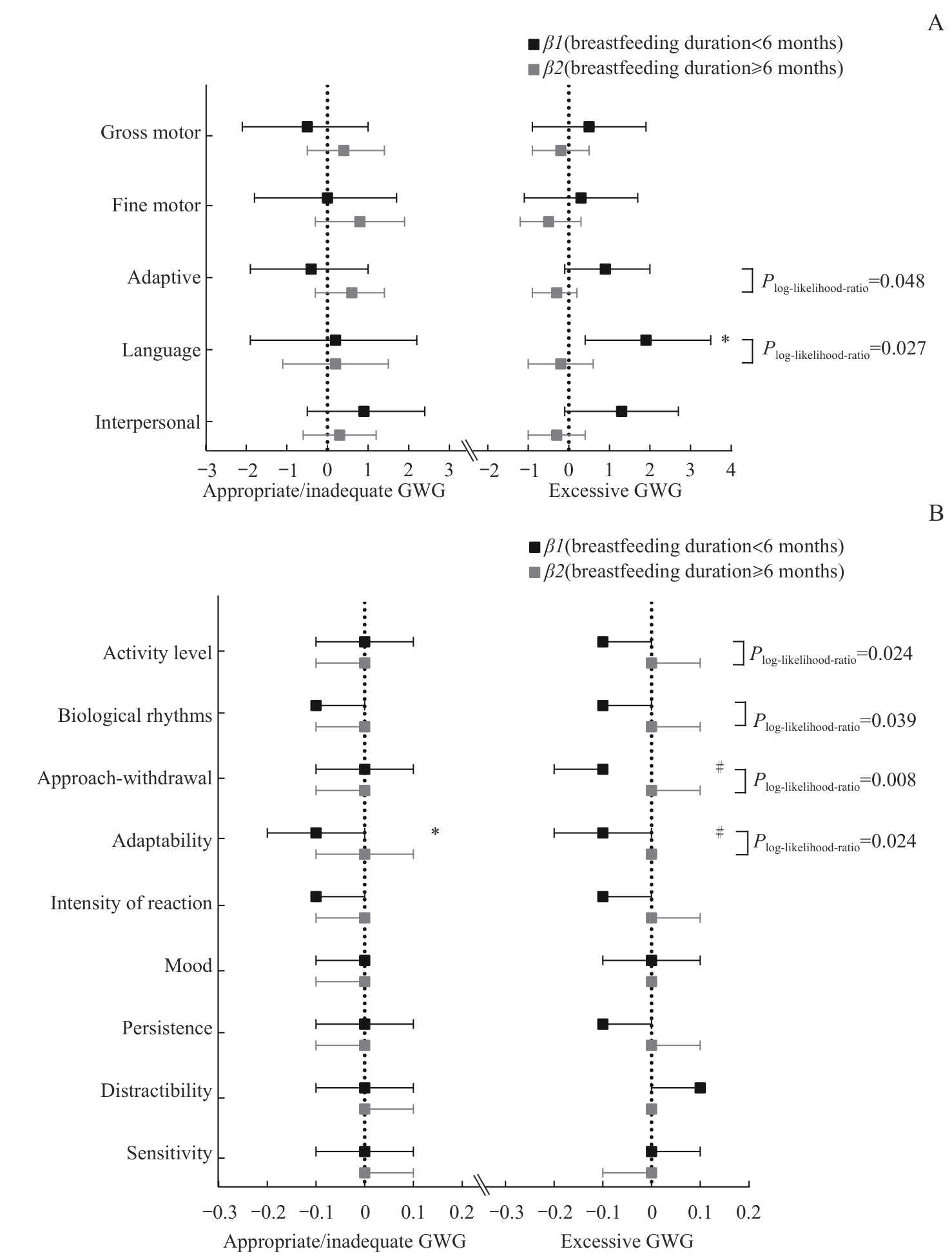
Fig 1 Adjusted associations of breastfeeding duration with toddlers' neurobehavioral development under different GWG stratifications based on CNS guideline [β(95%CI)]
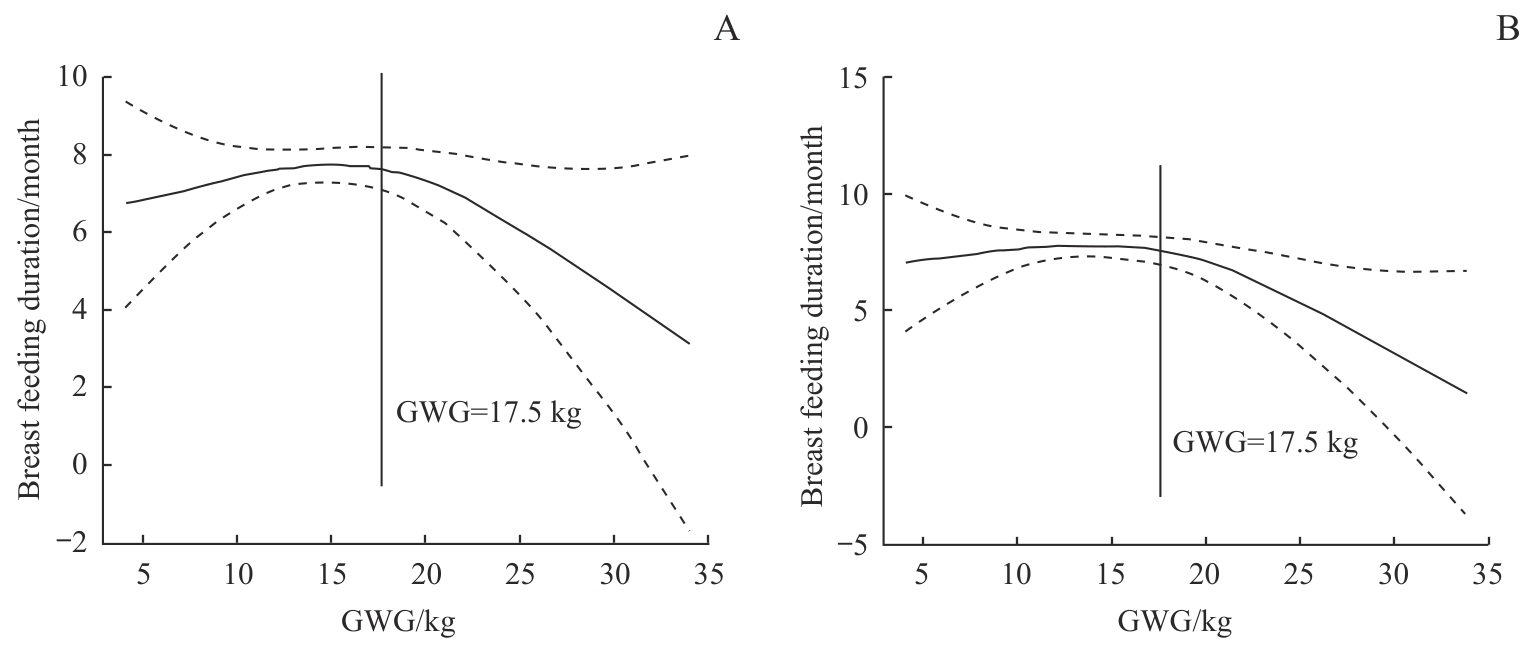
Fig 2 Trend of breastfeeding duration in relation to maternal GWG
| Regression | Unadjusted effect of GWG | Adjusted effect of GWG | |||
|---|---|---|---|---|---|
| β (95%CI) | P value | β (95%CI) | P value | ||
| Single linear regression | -0.1 (-0.2, 0.1) | 0.423 | -0.1 (-0.2, 0.1) | 0.397 | |
| Piece-wise linear regression | |||||
| β1 (GWG<17.5 kg) | 0.1 (-0.1, 0.4) | 0.222 | 0.1 (-0.1, 0.3) | 0.311 | |
| β2 (GWG≥17.5 kg) | -0.4 (-0.7, -0.1) | 0.019 | -0.4 (-0.7, -0.1) | 0.024 | |
| Likelihood ratio test P value | 0.026 | 0.026 | |||
Tab 3 Associations of maternal GWG with breastfeeding duration
| Regression | Unadjusted effect of GWG | Adjusted effect of GWG | |||
|---|---|---|---|---|---|
| β (95%CI) | P value | β (95%CI) | P value | ||
| Single linear regression | -0.1 (-0.2, 0.1) | 0.423 | -0.1 (-0.2, 0.1) | 0.397 | |
| Piece-wise linear regression | |||||
| β1 (GWG<17.5 kg) | 0.1 (-0.1, 0.4) | 0.222 | 0.1 (-0.1, 0.3) | 0.311 | |
| β2 (GWG≥17.5 kg) | -0.4 (-0.7, -0.1) | 0.019 | -0.4 (-0.7, -0.1) | 0.024 | |
| Likelihood ratio test P value | 0.026 | 0.026 | |||
| [1] | Hauff L E, Leonard S A, Rasmussen K M. Associations of maternal obesity and psychosocial factors with breastfeeding intention, initiation, and duration[J]. Am J Clin Nutr, 2014, 99(3): 524-534. |
| [2] | Froń A, Orczyk-Pawiłowicz M. Breastfeeding beyond six months: evidence of child health benefits[J]. Nutrients, 2024, 16(22): 3891. |
| [3] | Rajagopalan V, Hsu E, Luo S. Breastfeeding duration and brain-body development in 9‒10-year-olds: modulating effect of socioeconomic levels[J]. Pediatr Res, 2025, 97(1): 378-386. |
| [4] | Lee H, Park H, Ha E, et al. Effect of breastfeeding duration on cognitive development in infants: 3-year follow-up study[J]. J Korean Med Sci, 2016, 31(4): 579-584. |
| [5] | Martinat M, Rossitto M, di Miceli M, et al. Perinatal dietary polyunsaturated fatty acids in brain development, role in neurodevelopmental disorders[J]. Nutrients, 2021, 13(4): 1185. |
| [6] | Fang X, Lee S, Rayalam S, et al. Docosahexaenoic acid supplementation and infant brain development: role of gut microbiome[J]. Nutr Res, 2024, 131: 1-13. |
| [7] | Chade E S, Júnior O R, Souza N M P, et al. The influence of nutritional status on brain development: benefits of exclusive breastfeeding[J]. Pediatr Rep, 2024, 16(3): 724-735. |
| [8] | 马佳妮, 崔巍, 张莺, 等. 产后6个月母乳喂养现况及影响因素的调查研究[J]. 中国计划生育学杂志, 2025, 33(2): 257-262. |
| Ma J N, Cui W, Zhang Y, et al. Investigation of the current status and the influencing factors of the breastfeeding of women within postpartum 6 months[J]. Chinese Journal of Family Planning, 2025, 33(2): 257-262. | |
| [9] | 张敏, 李晓乾, 幸玉华, 等. 渭南地区6月龄婴儿母乳喂养现状及影响因素调查[J]. 华南预防医学, 2023, 49(9): 1168-1170, 1175. |
| Zhang M, Li X Q, Xing Y H, et al. Status and influencing factors of breastfeeding for 6-month-old infants in Weinan region[J]. South China Journal of Preventive Medicine, 2023, 49(9): 1168-1170, 1175. | |
| [10] | 艾中华, 黄友, 朱翔龙, 等. 云南省0~5岁儿童母乳喂养持续时间及影响因素分析[J]. 昆明医科大学学报, 2024, 45(2): 112-116. |
| Ai Z H, Huang Y, Zhu X L, et al. Analysis of breastfeeding duration and influencing factors of children aged 0‒5 years in Yunnan Province[J]. Journal of Kunming Medical University, 2024, 45(2): 112-116. | |
| [11] | Derikonjic M, Vekic J, Stefanovic A, et al. Associations of excessive gestational weight gain with changes in components of maternal reverse cholesterol transport and neonatal outcomes[J]. Sci Rep, 2025, 15(1): 5716. |
| [12] | Zhang K D, Jia X M, Yu W J, et al. The associations of gestational weight gain and midpregnancy lipid levels with placental size and placental-to-birth weight ratio: findings from a Chinese birth cohort study[J]. BMC Pregnancy Childbirth, 2023, 23(1): 725. |
| [13] | Huang Y, Ouyang Y Q, Redding S R. Maternal prepregnancy body mass index, gestational weight gain, and cessation of breastfeeding: a systematic review and meta-analysis[J]. Breastfeed Med, 2019, 14(6): 366-374. |
| [14] | Dashti M, Scott J A, Edwards C A, et al. Predictors of breastfeeding duration among women in Kuwait: results of a prospective cohort study[J]. Nutrients, 2014, 6(2): 711-728. |
| [15] | Xiang M Y, Harbige L S, Zetterström R. Long-chain polyunsaturated fatty acids in Chinese and Swedish mothers: diet, breast milk and infant growth[J]. Acta Paediatr, 2005, 94(11): 1543-1549. |
| [16] | Ongprasert K, Ruangsuriya J, Malasao R, et al. Macronutrient, immunoglobulin A and total antioxidant capacity profiles of human milk from 1 to 24 months: a cross-sectional study in Thailand[J]. Int Breastfeed J, 2020, 15(1): 90. |
| [17] | Neves P A R, Gatica-Domínguez G, Santos I S, et al. Poor maternal nutritional status before and during pregnancy is associated with suspected child developmental delay in 2-year old Brazilian children[J]. Sci Rep, 2020, 10(1): 1851. |
| [18] | Fuemmeler B F, Zucker N, Sheng Y O, et al. Pre-pregnancy weight and symptoms of attention deficit hyperactivity disorder and executive functioning behaviors in preschool children[J]. Int J Environ Res Public Health, 2019, 16(4): 667. |
| [19] | Motoki N, Inaba Y, Shibazaki T, et al. Insufficient maternal gestational weight gain and infant neurodevelopment at 12 months of age: the Japan Environment and Children's Study[J]. Eur J Pediatr, 2022, 181(3): 921-931. |
| [20] | Jiang H L, Jia Y, Wang X Y, et al. Evaluating the application of the 2009 Institute of Medicine gestational weight gain guidelines on pregnant Chinese women[J]. Glob Health Action, 2023, 16(1): 2213494. |
| [21] | Gong X L, Wu T C, Zhang L Z, et al. Comparison of the 2009 Institute of Medicine and 2021 Chinese guidelines for gestational weight gain: a retrospective population-based cohort study[J]. Int J Gynecol Obstet, 2023, 162(3): 1033-1041. |
| [22] | Shan L, Feng J Y, Wang T T, et al. Prevalence and developmental profiles of autism spectrum disorders in children with global developmental delay[J]. Front Psychiatry, 2021, 12: 794238. |
| [23] | Gesell A,Amatruda C S. Developmental diagnosis: the evaluation and management of normal and abnormal neuropsychologic development in infancy and early childhood [M]. 3rd ed. Hagerstown, MD: Harper & Row, 1975. |
| [24] | Lin Y, Xu J, Huang J, et al. Effects of prenatal and postnatal maternal emotional stress on toddlers' cognitive and temperamental development [J]. J Affect Disord, 2017, 207: 9-17. |
| [25] | Zhu P, Sun M S, Hao J H, et al. Does prenatal maternal stress impair cognitive development and alter temperament characteristics in toddlers with healthy birth outcomes [J]. Dev Med Child Neurol, 2014, 56(3): 283-289. |
| [26] | Schauenburg H, Strack M. Measuring psychotherapeutic change with the symptom checklist SCL 90 R[J]. Psychother Psychosom, 1999, 68(4): 199-206. |
| [27] | Organization W H. Infant and young child feeding: model chapter for textbooks for medical students and allied health professionals[M]. Geneva: World Health Organization, 2008. |
| [28] | Institute of Medicine and National Research Council. Weight gain during pregnancy: reexamining the guidelines[M]. Washington DC:The National Academies Press, 2009. |
| [29] | Cai X D, Wardlaw T, Brown D W. Global trends in exclusive breastfeeding[J]. Int Breastfeed J, 2012, 7(1): 12. |
| [30] | de Lauzon-Guillain B, Thierry X, Bois C, et al. Maternity or parental leave and breastfeeding duration: results from the ELFE cohort[J]. Matern Child Nutr, 2019, 15(4): e12872. |
| [31] | Hamner H C, Chiang K V, Li R W. Returning to work and breastfeeding duration at 12 months, WIC infant and toddler feeding practices study-2[J]. Breastfeed Med, 2021, 16(12): 956-964. |
| [32] | Wu H H, Zhang Y Q, Zong X N, et al. Changes of feeding patterns in Chinese city children under 2 years from 1985 to 2015: results from a series of national cross-sectional surveys[J]. World J Pediatr, 2019, 15(2): 176-181. |
| [33] | Shao S S, Yan S Q, Zhu P, et al. Persistent pregnancy-related anxiety reduces breastfeeding exclusiveness and duration: a prospective cohort study[J]. Breastfeed Med, 2022, 17(7): 577-583. |
| [34] | Nurjanah S, Wirjatmadi B, Devy S R, et al. Predictors of breastfeeding duration on mothers who return to work: a systematic review[J]. J Public Health Afr, 2023, 14(2): 5. |
| [35] | Liu X X, Zhang J, Liu Y H, et al. The association between cesarean delivery on maternal request and method of newborn feeding in China[J]. PLoS One, 2012, 7(5): e37336. |
| [36] | Ulfa Y, Maruyama N, Igarashi Y, et al. Early initiation of breastfeeding up to six months among mothers after cesarean section or vaginal birth: a scoping review[J]. Heliyon, 2023, 9(6): e16235. |
| [37] | Cortés-Macías E, Selma-Royo M, Martínez-Costa C, et al. Breastfeeding practices influence the breast milk microbiota depending on pre-gestational maternal BMI and weight gain over pregnancy[J]. Nutrients, 2021, 13(5): 1518. |
| [38] | Jiang S J, Qin J L, Shi L, et al. Association among gestational weight gain, fucosylated human milk oligosaccharides, and breast milk microbiota: an evidence in healthy mothers from northwest China[J]. J Agric Food Chem, 2024, 72(45): 25135-25145. |
| [39] | Muhammad F, Fan B F, Wang R X, et al. The molecular gut-brain axis in early brain development[J]. Int J Mol Sci, 2022, 23(23): 15389. |
| [40] | Loh J S, Mak W Q, Tan L K S, et al. Microbiota-gut-brain axis and its therapeutic applications in neurodegenerative diseases[J]. Signal Transduct Target Ther, 2024, 9(1): 37. |
| [41] | Chen Y J, Xu J Y, Chen Y. Regulation of neurotransmitters by the gut microbiota and effects on cognition in neurological disorders[J]. Nutrients, 2021, 13(6): 2099. |
| [42] | Fan X X, Zang T Z, Liu J, et al. Changes in the gut microbiome in the first two years of life predicted the temperament in toddlers[J]. J Affect Disord, 2023, 333: 342-352. |
| [43] | Daiy K, Harries V, Nyhan K, et al. Maternal weight status and the composition of the human milk microbiome: a scoping review[J]. PLoS One, 2022, 17(10): e0274950. |
| [44] | Cohen Kadosh K, Muhardi L, Parikh P, et al. Nutritional support of neurodevelopment and cognitive function in infants and young children: an update and novel insights[J]. Nutrients, 2021, 13(1): 199. |
| [45] | Álvarez D, Muñoz Y, Ortiz M, et al. Impact of maternal obesity on the metabolism and bioavailability of polyunsaturated fatty acids during pregnancy and breastfeeding[J]. Nutrients, 2020, 13(1): 19. |
| [46] | de la Garza Puentes A, Martí Alemany A, Chisaguano A M, et al. The effect of maternal obesity on breast milk fatty acids and its association with infant growth and cognition: the PREOBE follow-up[J]. Nutrients, 2019, 11(9): 2154. |
| [47] | Khambadkone S G, Cordner Z A, Tamashiro K L K. Maternal stressors and the developmental origins of neuropsychiatric risk[J]. Front Neuroendocrinol, 2020, 57: 100834. |
| [48] | Cordner Z A, Khambadkone S G, Boersma G J, et al. Maternal high-fat diet results in cognitive impairment and hippocampal gene expression changes in rat offspring[J]. Exp Neurol, 2019, 318: 92-100. |
| [49] | Duthie L, Reynolds R M. Changes in the maternal hypothalamic-pituitary-adrenal axis in pregnancy and postpartum: influences on maternal and fetal outcomes[J]. Neuroendocrinology, 2013, 98(2): 106-115. |
| [50] | Feizabad M, Pourhabibi-Zarandi F, Barati-Boldaji R, et al. Association of maternal psychological distress and milk cortisol with infant temperament and growth[J]. Sci Rep, 2025, 15(1): 12885. |
| [51] | Natland S T, Andersen L F, Nilsen T I, et al. Maternal recall of breastfeeding duration twenty years after delivery[J]. BMC Med Res Methodol, 2012, 12: 179. |
| [52] | Scattolin M A A, Resegue R M, Rosário M C D. The impact of the environment on neurodevelopmental disorders in early childhood[J]. J Pediatr, 2022, 98(Suppl 1): S66-S72. |
| [53] | Zielinska-Pukos M A, Bryś J, Wesolowska A, et al. Breastmilk PUFA strongly associated with maternal dietary intake but not anthropometric parameters and breastmilk carotenoids[J]. Prostaglandins Leukot Essent Fatty Acids, 2022, 186: 102505. |
| [54] | Duan Y F, Yang Z Y, Lai J Q, et al. Exclusive breastfeeding rate and complementary feeding indicators in China: a national representative survey in 2013[J]. Nutrients, 2018, 10(2): 249. |
| [1] | Chen Yunsheng, Deng Dan, Yuan Bo, Liu Yan. Interpretation of the Clinical Practice Guideline for the Prevention and Treatment of Scars in Children (2025 Edition) [J]. Journal of Shanghai Jiao Tong University (Medical Science), 2026, 46(5): 561-567. |
| [2] | Wang Shaoyan, Li Chao, Huang Shuo, Wu Shuqi, Chen Suyun. Physiological distribution characteristics and influencing factors of hepatic background and mediastinal blood pool on 18F-FDG PET/CT in children and adolescents of different ages [J]. Journal of Shanghai Jiao Tong University (Medical Science), 2026, 46(4): 496-501. |
| [3] | Liu Wenxia, Zhang Chen. Research advances in the impact of childhood trauma on anhedonia in schizophrenia via immune-inflammatory pathways [J]. Journal of Shanghai Jiao Tong University (Medical Science), 2026, 46(2): 235-240. |
| [4] | Wan Pengjie, Yang Shaofang, Qi Jun. Efficacy of topical narrow-band ultraviolet B combined with desonide cream in children with moderate-to-severe atopic dermatitis [J]. Journal of Shanghai Jiao Tong University (Medical Science), 2026, 46(1): 132-136. |
| [5] | Wu Qingqing, Cao Yi, Lu Lina, Tao Yijing, Feng Haixia, Yan Weihui, Wang Ying. High-dose vitamin D for pediatric short bowel syndrome with vitamin D insufficiency/deficiency [J]. Journal of Shanghai Jiao Tong University (Medical Science), 2026, 46(1): 54-59. |
| [6] | Liu Meiling, Bao Lei, Min Lingzhao, Wei Jia, Hua Li, Wang Xiaoqiang. Clinical characteristics and surgical outcome analysis of quadrigeminal cistern arachnoid cysts in children: a quantitative retrospective cohort study [J]. Journal of Shanghai Jiao Tong University (Medical Science), 2026, 46(1): 66-74. |
| [7] | Writing Group of Chinese Expert Consensus on Ultrasound-Guided Pediatric Nerve Blocks in Children (2025 edition) . Chinese expert consensus on ultrasound-guided nerve blocks in children (2025 edition) [J]. Journal of Shanghai Jiao Tong University (Medical Science), 2025, 45(9): 1079-1098. |
| [8] | WANG Zhiqi, WANG Ying. Advances in the diagnosis and treatment of inflammatory bowel disease-associated anemia in children [J]. Journal of Shanghai Jiao Tong University (Medical Science), 2025, 45(9): 1232-1238. |
| [9] | JIANG Jie, ZHANG Hong, LUN Heyuan, PAN Fen, YU Fangyuan, HE Ping. Molecular epidemiology of Klebsiella pneumoniae isolated from children [J]. Journal of Shanghai Jiao Tong University (Medical Science), 2025, 45(8): 1027-1034. |
| [10] | HE Chen, YAN Silei, ZHOU Weitao, LING yong, YU Ningning, JIANG Kun, QIAN Liling. Clinical analysis and literature integration study of cystic fibrosis complicated by allergic bronchopulmonary aspergillosis [J]. Journal of Shanghai Jiao Tong University (Medical Science), 2025, 45(8): 1066-1073. |
| [11] | LIU Meiling, ZHOU Yabing, WANG Xiaoqiang. Advances in the treatment of intracranial neoplastic lesions in children with neurofibromatosis 1 [J]. Journal of Shanghai Jiao Tong University (Medical Science), 2024, 44(3): 399-406. |
| [12] | JIANG Yunli, LI Aiqiu, XIAO Yanshang, LI Tiantian, HU Yachen, ZHANG Xiaoxiao, WU Beirong. Application of continuous nursing based on EMS management mode in preschool children with wheezing diseases [J]. Journal of Shanghai Jiao Tong University (Medical Science), 2024, 44(2): 228-236. |
| [13] | XU Zujing, JIANG Yining, XU Jian. Relationship between prenatal mixed heavy metal/metalloid exposure and offspring cognitive and temperament development [J]. Journal of Shanghai Jiao Tong University (Medical Science), 2024, 44(12): 1570-1578. |
| [14] | WANG Xiaoyu, PENG Yinhui, MA Wenlin, YAO Boshuang, LI Yifan, ZHAO Li, YANG Chunxia. A longitudinal study on new onset anxiety among children and adolescents during the COVID-19 epidemic [J]. Journal of Shanghai Jiao Tong University (Medical Science), 2023, 43(8): 963-970. |
| [15] | WEN Yajin, HE Wen, HAN Xiao, ZHANG Xiaobo. Exploratory analysis of gut microbiota differences in childhood asthma with different severity [J]. Journal of Shanghai Jiao Tong University (Medical Science), 2023, 43(6): 655-664. |
| Viewed | ||||||
|
Full text |
|
|||||
|
Abstract |
|
|||||
