
上海交通大学学报(医学版) ›› 2025, Vol. 45 ›› Issue (12): 1671-1678.doi: 10.3969/j.issn.1674-8115.2025.12.013
• 综述 • 上一篇
黄铭望, 贾康妮, 闫小响( )
)
收稿日期:2025-06-26
接受日期:2025-09-03
出版日期:2025-12-22
发布日期:2025-12-22
通讯作者:
闫小响,教授,研究员,博士;电子信箱:cardexyanxx@hotmail.com。基金资助:
HUANG Mingwang, JIA Kangni, YAN Xiaoxiang()
Received:2025-06-26
Accepted:2025-09-03
Online:2025-12-22
Published:2025-12-22
Contact:
YAN Xiaoxiang, E-mail: cardexyanxx@hotmail.com.Supported by:摘要:
哺乳动物的昼夜节律周期约为24 h,其内在节律主要由核心昼夜节律分子介导的转录-翻译反馈回路(transcription-translation feedback loops,TTFLs)调控,在维持生命活动和多种疾病的发生和发展中具有重要意义。昼夜节律基因通过调控代谢、氧化应激及炎症反应,参与心血管疾病的进程,尤其在心肌梗死的发生和发展中发挥关键作用。近年来,随着对昼夜节律基因的深入研究,其在心肌梗死中所涉及的分子机制逐渐明晰。该文综述核心昼夜节律分子(包括BMAL1、CLOCK、PER、CRY等)在心肌梗死发生和发展中的具体作用机制及其临床研究证据,探讨昼夜节律基因作为治疗靶点的潜力,并提出当前研究中存在的挑战及对未来的展望。研究进展表明,昼夜节律基因作为心肌梗死的治疗靶点具有广阔的应用前景,有望为制定临床治疗策略提供新的思路。
中图分类号:
黄铭望, 贾康妮, 闫小响. 基于昼夜节律基因的心肌梗死机制及治疗策略[J]. 上海交通大学学报(医学版), 2025, 45(12): 1671-1678.
HUANG Mingwang, JIA Kangni, YAN Xiaoxiang. Mechanism and therapeutic strategies of myocardial infarction based on circadian rhythm genes[J]. Journal of Shanghai Jiao Tong University (Medical Science), 2025, 45(12): 1671-1678.
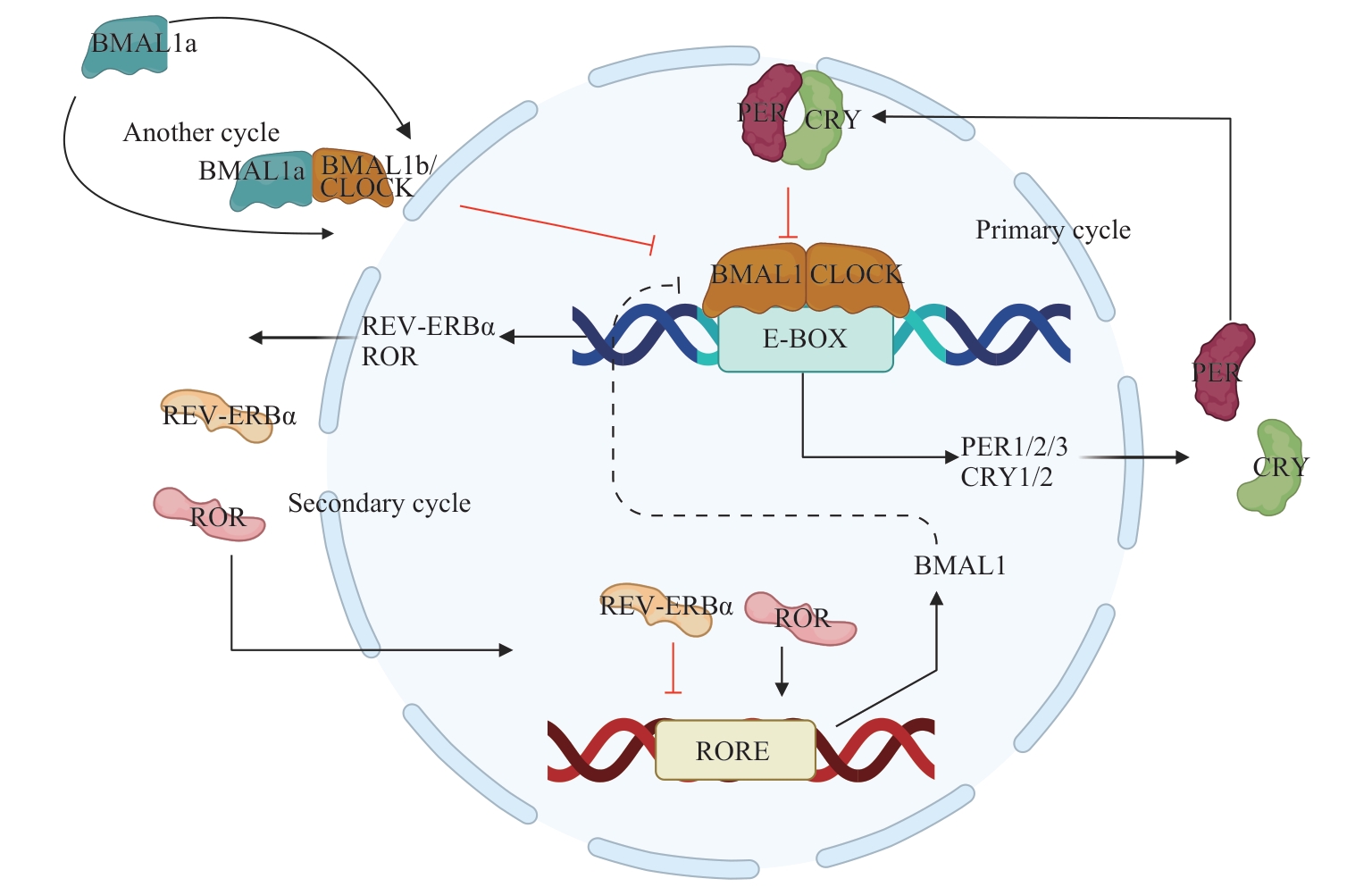
图1 核心分子时钟通路调控环路
Fig 1 Regulatory loop of the core molecular clock pathway
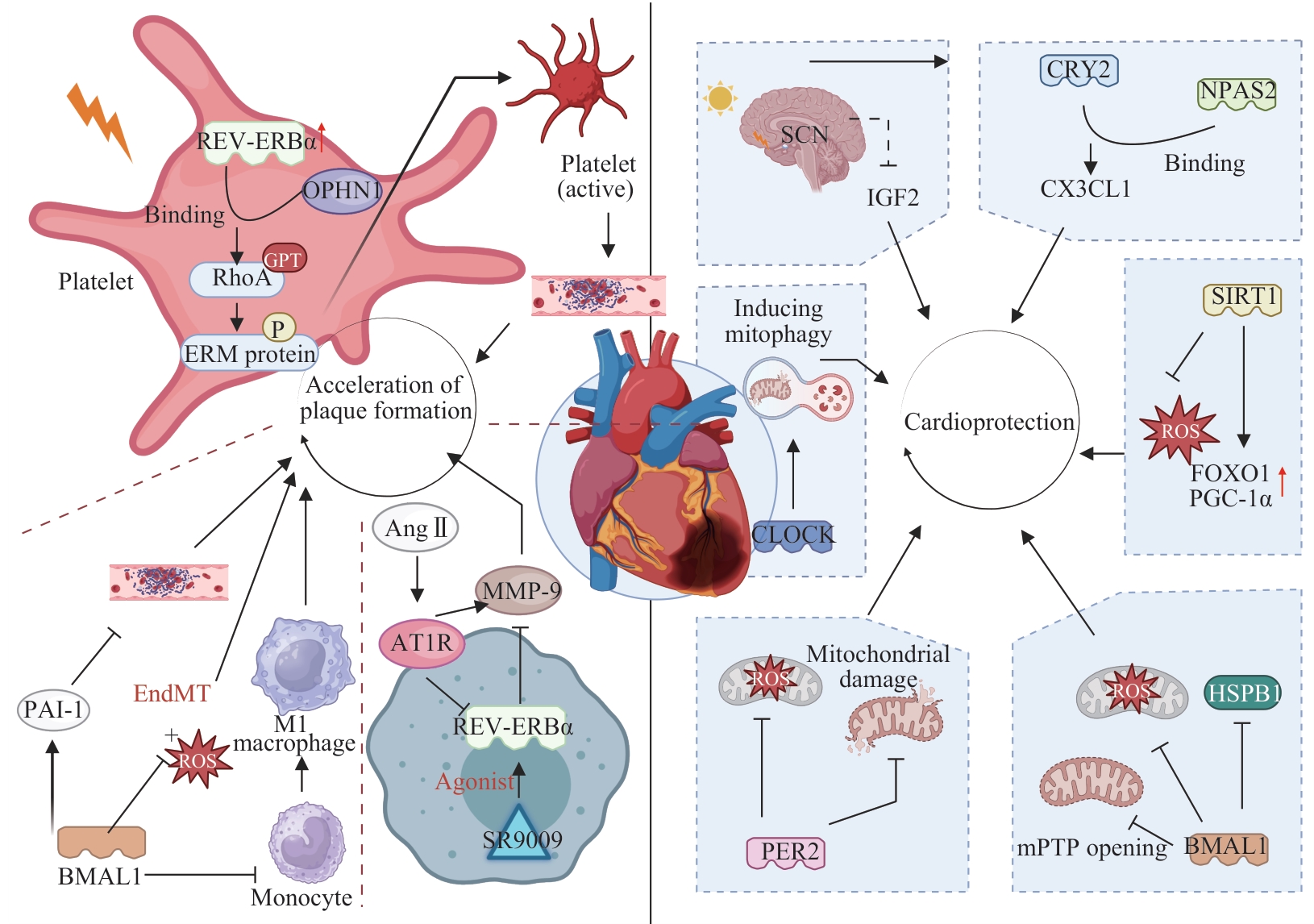
图2 心肌梗死中昼夜节律基因的机制通路
Fig 2 Mechanistic pathways of circadian rhythm genes in myocardial infarction
| [1] | BARGIELLO T A, JACKSON F R, YOUNG M W. Restoration of circadian behavioural rhythms by gene transfer in Drosophila[J]. Nature, 1984, 312(5996): 752-754. |
| [2] | KOIKE N, YOO S H, HUANG H C, et al. Transcriptional architecture and chromatin landscape of the core circadian clock in mammals[J]. Science, 2012, 338(6105): 349-354. |
| [3] | DE LOS REYES P, SERRANO-BUENO G, ROMERO-CAMPERO F J, et al. CONSTANS alters the circadian clock in Arabidopsis thaliana[J]. Mol Plant, 2024, 17(8): 1204-1220. |
| [4] | LIU Z, SELBY C P, YANG Y, et al. Circadian regulation of c-MYC in mice[J]. Proc Natl Acad Sci USA, 2020, 117(35): 21609-21617. |
| [5] | PARTCH C L, GREEN C B, TAKAHASHI J S. Molecular architecture of the mammalian circadian clock[J]. Trends Cell Biol, 2014, 24(2): 90-99. |
| [6] | RANA S, PRABHU S D, YOUNG M E. Chronobiological influence over cardiovascular function: the good, the bad, and the ugly[J]. Circ Res, 2020, 126(2): 258-279. |
| [7] | SHAH P K, LECIS D. Inflammation in atherosclerotic cardiovascular disease[J]. F1000Res, 2019, 8: . |
| [8] | KOLOGRIVOVA I, SHTATOLKINA M, SUSLOVA T, et al. Cells of the immune system in cardiac remodeling: main players in resolution of inflammation and repair after myocardial infarction[J]. Front Immunol, 2021, 12: 664457. |
| [9] | ZHAO D, LIU J, WANG M, et al. Epidemiology of cardiovascular disease in China: current features and implications[J]. Nat Rev Cardiol, 2019, 16(4): 203-212. |
| [10] | LINDSEY M L, IYER R P, JUNG M, et al. Matrix metalloproteinases as input and output signals for post-myocardial infarction remodeling[J]. J Mol Cell Cardiol, 2016, 91: 134-140. |
| [11] | JOHANSSON S, ROSENGREN A, YOUNG K, et al. Mortality and morbidity trends after the first year in survivors of acute myocardial infarction: a systematic review[J]. BMC Cardiovasc Disord, 2017, 17(1): 53. |
| [12] | VIRAG J A, LUST R M. Circadian influences on myocardial infarction[J]. Front Physiol, 2014, 5: 422. |
| [13] | GEIGER S S, CURTIS A M, O'NEILL L A J, et al. Daily variation in macrophage phagocytosis is clock-independent and dispensable for cytokine production[J]. Immunology, 2019, 157(2): 122-136. |
| [14] | DOMÍNGUEZ F, FUSTER V, FERNÁNDEZ-ALVIRA J M, et al. Association of sleep duration and quality with subclinical atherosclerosis[J]. J Am Coll Cardiol, 2019, 73(2): 134-144. |
| [15] | LI H, KILGALLEN A B, MÜNZEL T, et al. Influence of mental stress and environmental toxins on circadian clocks: implications for redox regulation of the heart and cardioprotection[J]. Br J Pharmacol, 2020, 177(23): 5393-5412. |
| [16] | THOSAR S S, BERMAN A M, HERZIG M X, et al. Circadian rhythm of vascular function in midlife adults[J]. Arterioscler Thromb Vasc Biol, 2019, 39(6): 1203-1211. |
| [17] | MAN A W C, LI H, XIA N. Circadian rhythm: potential therapeutic target for atherosclerosis and thrombosis[J]. Int J Mol Sci, 2021, 22(2): E676. |
| [18] | ZHANG Z Q, DING J W, WANG X A, et al. Abnormal circadian rhythms are associated with plaque instability in acute coronary syndrome patients[J]. Int J Clin Exp Pathol, 2019, 12(10): 3761-3771. |
| [19] | CHALLET E. Minireview: entrainment of the suprachiasmatic clockwork in diurnal and nocturnal mammals[J]. Endocrinology, 2007, 148(12): 5648-5655. |
| [20] | DOMINGUEZ-RODRIGUEZ A. Melatonin in cardiovascular disease[J]. Expert Opin Investig Drugs, 2012, 21(11): 1593-1596. |
| [21] | OTA S M, KONG X P, HUT R, et al. The impact of stress and stress hormones on endogenous clocks and circadian rhythms[J]. Front Neuroendocrinol, 2021, 63: 100931. |
| [22] | RABINOVICH-NIKITIN I, KIRSHENBAUM E, KIRSHENBAUM L A. Autophagy, clock genes, and cardiovascular disease[J]. Can J Cardiol, 2023, 39(12): 1772-1780. |
| [23] | SHEARMAN L P, SRIRAM S, WEAVER D R, et al. Interacting molecular loops in the mammalian circadian clock[J]. Science, 2000, 288(5468): 1013-1019. |
| [24] | SOLT L A, KOJETIN D J, BURRIS T P. The REV-ERBs and RORs: molecular links between circadian rhythms and lipid homeostasis[J]. Future Med Chem, 2011, 3(5): 623-638. |
| [25] | LEE J, PARK E, KIM G H, et al. A splice variant of human Bmal1 acts as a negative regulator of the molecular circadian clock[J]. Exp Mol Med, 2018, 50(12): 1-10. |
| [26] | YAN J, WANG H, LIU Y, et al. Analysis of gene regulatory networks in the mammalian circadian rhythm[J]. PLoS Comput Biol, 2008, 4(10): e1000193. |
| [27] | YOUNG M E, BREWER R A, PELICIARI-GARCIA R A, et al. Cardiomyocyte-specific BMAL1 plays critical roles in metabolism, signaling, and maintenance of contractile function of the heart[J]. J Biol Rhythms, 2014, 29(4): 257-276. |
| [28] | SATO F, KOHSAKA A, TAKAHASHI K, et al. Smad3 and Bmal1 regulate p21 and S100A4 expression in myocardial stromal fibroblasts via TNF-α[J]. Histochem Cell Biol, 2017, 148(6): 617-624. |
| [29] | ASTONE M, OBERKERSCH R E, TOSI G, et al. The circadian protein BMAL1 supports endothelial cell cycle during angiogenesis[J]. Cardiovasc Res, 2023, 119(10): 1952-1968. |
| [30] | TAKAGURI A, SASANO J, AKIHIRO O, et al. The role of circadian clock gene BMAL1 in vascular proliferation[J]. Eur J Pharmacol, 2020, 872: 172924. |
| [31] | ABDEL-RAHMAN E A, HOSSEINY S, AALIYA A, et al. Sleep/wake calcium dynamics, respiratory function, and ROS production in cardiac mitochondria[J]. J Adv Res, 2021, 31: 35-47. |
| [32] | SCHRODER E A, BURGESS D E, ZHANG X P, et al. The cardiomyocyte molecular clock regulates the circadian expression of Kcnh2 and contributes to ventricular repolarization[J]. Heart Rhythm, 2015, 12(6): 1306-1314. |
| [33] | MIA S, KANE M S, LATIMER M N, et al. Differential effects of REV-ERBα/β agonism on cardiac gene expression, metabolism, and contractile function in a mouse model of circadian disruption[J]. Am J Physiol Heart Circ Physiol, 2020, 318(6): H1487-H1508. |
| [34] | SHI J, TONG R, ZHOU M, et al. Circadian nuclear receptor Rev-erbα is expressed by platelets and potentiates platelet activation and thrombus formation[J]. Eur Heart J, 2022, 43(24): 2317-2334. |
| [35] | SATO S, SAKURAI T, OGASAWARA J, et al. A circadian clock gene, Rev-erbα, modulates the inflammatory function of macrophages through the negative regulation of Ccl2 expression[J]. J Immunol, 2014, 192(1): 407-417. |
| [36] | MARTINO T A, YOUNG M E. Influence of the cardiomyocyte circadian clock on cardiac physiology and pathophysiology[J]. J Biol Rhythms, 2015, 30(3): 183-205. |
| [37] | ERIKSSON H P, SÖDERBERG M, NEITZEL R L, et al. Cardiovascular mortality in a Swedish cohort of female industrial workers exposed to noise and shift work[J]. Int Arch Occup Environ Health, 2021, 94(2): 285-293. |
| [38] | ARORA N, RICHMOND R C, BRUMPTON B M, et al. Self-reported insomnia symptoms, sleep duration, chronotype and the risk of acute myocardial infarction (AMI): a prospective study in the UK Biobank and the HUNT Study[J]. Eur J Epidemiol, 2023, 38(6): 643-656. |
| [39] | YANG Z, BLACK K, OHMAN-STRICKLAND P, et al. Disruption of central and peripheral circadian clocks and circadian controlled estrogen receptor rhythms in night shift nurses in working environments[J]. FASEB J, 2024, 38(11): e23719. |
| [40] | ŠKRLEC I, MILIĆ J, STEINER R. The impact of the circadian genes CLOCK and ARNTL on myocardial infarction[J]. J Clin Med, 2020, 9(2): E484. |
| [41] | ŠKRLEC I, MILIC J, HEFFER M, et al. Genetic variations in circadian rhythm genes and susceptibility for myocardial infarction[J]. Genet Mol Biol, 2018, 41(2): 403-409. |
| [42] | YAN X, HUANG Y, WU J. Identify cross talk between circadian rhythm and coronary heart disease by multiple correlation analysis[J]. J Comput Biol, 2018, 25(12): 1312-1327. |
| [43] | ZHAO Y C, LU X Y, WAN F, et al. Disruption of circadian rhythms by shift work exacerbates reperfusion injury in myocardial infarction[J]. J Am Coll Cardiol, 2022, 79(21): 2097-2115. |
| [44] | ZHANG L, ZHANG R, TIEN C L, et al. REV-ERBα ameliorates heart failure through transcription repression[J]. JCI Insight, 2017, 2(17): 95177. |
| [45] | WANG S, GU X, ZHANG Q, et al. Angiotensin Ⅱ suppresses rev-erbα expression in THP-1 macrophages via the Ang Ⅱ type 1 receptor/liver X receptor α pathway[J]. Cell Physiol Biochem, 2018, 46(1): 303-313. |
| [46] | HEMMERYCKX B, FREDERIX L, LIJNEN H R. Deficiency of Bmal1 disrupts the diurnal rhythm of haemostasis[J]. Exp Gerontol, 2019, 118: 1-8. |
| [47] | ZHU M, TANG H, TANG X, et al. BMAL1 suppresses ROS-induced endothelial-to-mesenchymal transition and atherosclerosis plaque progression via BMP signaling[J]. Am J Transl Res, 2018, 10(10): 3150-3161. |
| [48] | HUO M, HUANG Y, QU D, et al. Myeloid Bmal1 deletion increases monocyte recruitment and worsens atherosclerosis[J]. FASEB J, 2017, 31(3): 1097-1106. |
| [49] | HAO K L, ZHAI Q C, GU Y, et al. Disturbance of suprachiasmatic nucleus function improves cardiac repair after myocardial infarction by IGF2-mediated macrophage transition[J]. Acta Pharmacol Sin, 2023, 44(8): 1612-1624. |
| [50] | HUANG J, QING W, PAN Y. NPAS2 ameliorates myocardial ischaemia/reperfusion injury in rats via CX3CL1 pathways and regulating autophagy[J]. Aging (Albany NY), 2021, 13(16): 20569-20584. |
| [51] | KILGALLEN A B, VAN DEN AKKER F, FEYEN D A M, et al. Circadian dependence of the acute immune response to myocardial infarction[J]. Front Pharmacol, 2022, 13: 869512. |
| [52] | LIU X, XIAO W, JIANG Y, et al. Bmal1 regulates the redox rhythm of HSPB1, and homooxidized HSPB1 attenuates the oxidative stress injury of cardiomyocytes[J]. Oxid Med Cell Longev, 2021, 2021: 5542815. |
| [53] | ZHANG X Y, WANG L, YAN W J, et al. Period 2-induced activation of autophagy improves cardiac remodeling after myocardial infarction[J]. Hum Gene Ther, 2020, 31(1/2): 119-128. |
| [54] | BEESLEY S, NOGUCHI T, WELSH D K. Cardiomyocyte circadian oscillations are cell-autonomous, amplified by β-adrenergic signaling, and synchronized in cardiac ventricle tissue[J]. PLoS One, 2016, 11(7): e0159618. |
| [55] | WENG Y, LI H, GAO L, et al. PER2 regulates reactive oxygen species production in the circadian susceptibility to ischemia/reperfusion injury in the heart[J]. Oxid Med Cell Longev, 2021, 2021: 6256399. |
| [56] | RABINOVICH-NIKITIN I, RASOULI M, REITZ C J, et al. Mitochondrial autophagy and cell survival is regulated by the circadian Clock gene in cardiac myocytes during ischemic stress[J]. Autophagy, 2021, 17(11): 3794-3812. |
| [57] | WANG X D, KANG S. Ferroptosis in myocardial infarction: not a marker but a maker[J]. Open Biol, 2021, 11(4): 200367. |
| [58] | MONTAIGNE D, MARECHAL X, MODINE T, et al. Daytime variation of perioperative myocardial injury in cardiac surgery and its prevention by Rev-Erbα antagonism: a single-centre propensity-matched cohort study and a randomised study[J]. Lancet, 2018, 391(10115): 59-69. |
| [59] | OYAMA Y, BARTMAN C M, BONNEY S, et al. Intense light-mediated circadian cardioprotection via transcriptional reprogramming of the endothelium[J]. Cell Rep, 2019, 28(6): 1471-1484.e11. |
| [60] | BARTMAN C M, OYAMA Y, BRODSKY K, et al. Intense light-elicited upregulation of miR-21 facilitates glycolysis and cardioprotection through Per2-dependent mechanisms[J]. PLoS One, 2017, 12(4): e0176243. |
| [61] | HERMIDA R C, AYALA D E. Chronotherapy with the angiotensin-converting enzyme inhibitor ramipril in essential hypertension: improved blood pressure control with bedtime dosing[J]. Hypertension, 2009, 54(1): 40-46. |
| [62] | WINTER C, SILVESTRE-ROIG C, ORTEGA-GOMEZ A, et al. Chrono-pharmacological targeting of the CCL2-CCR2 axis ameliorates atherosclerosis[J]. Cell Metab, 2018, 28(1): 175-182.e5. |
| [63] | ZHANG B, WANG C, GUO M, et al. Circadian rhythm-dependent therapy by composite targeted polyphenol nanoparticles for myocardial ischemia-reperfusion injury[J]. ACS Nano, 2024, 18(41): 28154-28169. |
| [64] | ŠKRLEC I, TALAPKO J, JUZBAŠIĆ M, et al. Sex differences in circadian clock genes and myocardial infarction susceptibility[J]. J Cardiovasc Dev Dis, 2021, 8(5): 53. |
| [65] | ALIBHAI F J, REITZ C J, PEPPLER W T, et al. Female ClockΔ19/Δ19 mice are protected from the development of age-dependent cardiomyopathy[J]. Cardiovasc Res, 2018, 114(2): 259-271. |
| [66] | KROETSCH J T, LIDINGTON D, ALIBHAI F J, et al. Disrupting circadian control of peripheral myogenic reactivity mitigates cardiac injury following myocardial infarction[J]. Cardiovasc Res, 2023, 119(6): 1403-1415. |
| [67] | HALADE G V, MAT Y, GOWDA S G B, et al. Sleep deprivation in obesogenic setting alters lipidome and microbiome toward suboptimal inflammation in acute heart failure[J]. FASEB J, 2023, 37(5): e22899. |
| [1] | 杨晨蝶, 胡长青, 袁贺, TAY Guan Poh, 阿布力克木·阿木提, 张瑞岩, 王晓群. 无糖尿病病史患者胰岛素抵抗水平与急性ST段抬高型心肌梗死后左室重构的相关性[J]. 上海交通大学学报(医学版), 2025, 45(3): 292-300. |
| [2] | 李文丽, 金力行, 赵怡超, 钟方元, 石瑶, 雷杰, 卜军, 葛恒. 基于心脏磁共振评估左心室心肌应变损伤对STEMI急性期继发性三尖瓣反流的影响[J]. 上海交通大学学报(医学版), 2025, 45(12): 1578-1588. |
| [3] | 阮青青, 苏树智, 李延婷, 任渊, 戴勇, 乔增勇. 急性心肌梗死介入治疗并发症风险预测模型构建[J]. 上海交通大学学报(医学版), 2025, 45(12): 1589-1597. |
| [4] | 姜凯, 徐越, 杨兴博, 王丹丹, 项耀祖. 心肌梗死后造血失衡介导的心室重构:免疫细胞亚群的作用与干预新策略[J]. 上海交通大学学报(医学版), 2025, 45(12): 1644-1653. |
| [5] | 刘雨婷, 俞莞琦, 洪雯, 康桑, 李歆旎, 旦增曲央, 肖活源, 潘静薇. 临床衰弱指数对急性心肌梗死患者在院心脏康复后远期预后的预测价值[J]. 上海交通大学学报(医学版), 2024, 44(5): 599-605. |
| [6] | 郑梦奕, 毛家亮, 邹治国, 张瑞雷, 张厚, 李世光. 全身免疫炎症指数及躯体化症状评分对首发心梗PCI术后发生院内主要不良心血管事件的预测价值[J]. 上海交通大学学报(医学版), 2024, 44(3): 334-341. |
| [7] | 胡晓, 张鑫, 谷阳. 体质量与C1q肿瘤坏死因子相关蛋白1在心肌梗死患者中的交互作用[J]. 上海交通大学学报(医学版), 2022, 42(6): 786-791. |
| [8] | 许莉, 杨艳, 陈菡芬, 姜萌, 卜军. 急性心肌梗死患者于心脏康复中心就诊的影响因素及效果评价[J]. 上海交通大学学报(医学版), 2022, 42(5): 646-652. |
| [9] | 胡培堃, 何杰, 吴连明, 葛恒, 许建荣, 卜军. ST段抬高型心肌梗死患者微血管阻塞对左室功能及预后的影响[J]. 上海交通大学学报(医学版), 2021, 41(2): 173-179. |
| [10] | 董建勋, 魏莱, 何杰, 孔令璁, 葛恒, 卜军. 心脏磁共振评估左心室机械不同步的研究进展[J]. 上海交通大学学报(医学版), 2021, 41(12): 1698-1702. |
| [11] | 高亚洁, 马文坤, 高程洁, 周翌, 潘静薇. 心肌应变对急性ST段抬高型心肌梗死后心室重构的预测价值探讨[J]. 上海交通大学学报(医学版), 2021, 41(11): 1478-1484. |
| [12] | 冯泽豪1*,张 清1*,柴烨子1,苏 璇1,孙宝航行1,刘启明1,严福华2,姜 萌1#,卜 军1#. 吸烟对急性ST段抬高型心肌梗死急性期心肌损伤及预后的影响[J]. 上海交通大学学报(医学版), 2020, 40(5): 573-582. |
| [13] | 唐冬娟,薛晓梅,何 斌. miR-133a对急性心肌梗死的早期诊断及预后评估价值[J]. 上海交通大学学报(医学版), 2020, 40(3): 339-. |
| [14] | 苗雨桐 1,沈兰 1, 2,何奔 1. 心肌梗死后心脏损伤的影像学评估[J]. 上海交通大学学报(医学版), 2019, 39(4): 436-. |
| [15] | 夏智丽 1,高程洁 2,高亚洁 1,陶逸菁 1,万青 1,吴昊 1,魏钧伯 1,周翌 1,潘静薇 1. 应激性血糖升高比值对急性心肌梗死患者预后的评估价值[J]. 上海交通大学学报(医学版), 2019, 39(3): 309-. |
| 阅读次数 | ||||||
|
全文 |
|
|||||
|
摘要 |
|
|||||
