
上海交通大学学报(医学版) ›› 2026, Vol. 46 ›› Issue (11): 1477-1485.doi: 10.3969/j.issn.1674-8115.2026.11.003
赵珈琪1,2, 杜淮昊1,2, 肖晓1( )
收稿日期:2026-04-01
接受日期:2026-05-26
出版日期:2026-11-28
发布日期:2026-11-16
通讯作者:
肖 晓,研究员,博士;电子信箱:xiaoxiao@fudan.edu.cn。基金资助:
Kakei Chio1,2, Du Huaihao1,2, Xiao Xiao1()
Received:2026-04-01
Accepted:2026-05-26
Online:2026-11-28
Published:2026-11-16
Contact:
Xiao Xiao, E-mail: xiaoxiao@fudan.edu.cn.Supported by:摘要:
慢性疼痛常伴随抑郁和焦虑等情绪障碍,但其神经转化机制尚不明确。海马是连接慢性疼痛与情绪障碍的关键枢纽,而位于齿状回(dentate gyrus,DG)颗粒下层(subgranular zone,SGZ)的成体海马神经发生(adult hippocampal neurogenesis,AHN)在其中扮演核心角色。AHN在慢性疼痛中呈现出“双刃剑”的矛盾特征:抑制AHN可缩短疼痛持续时间,而恢复AHN又有助于改善疼痛相关的认知障碍和抑郁样行为。这一矛盾的根源在于AHN的作用具有阶段依赖性:在疼痛早期,AHN上调是海马应对持续伤害性输入的适应性行为;随疼痛迁延,小胶质细胞持续激活打破DG兴奋-抑制平衡,新生神经元过度整合使疼痛相关的记忆被异常强化;至疼痛晚期,AHN减少,DG萎缩,认知与情绪保护功能丧失。在此框架下,慢性疼痛主要通过2类机制调控AHN。① 直接抑制AHN:包括腹侧被盖区(ventral tegmental area,VTA)- DG轴受损减少脑源性神经营养因子(brain-derived neurotrophic factor,BDNF)释放、下丘脑-垂体-肾上腺轴(hypothalamic-pituitary-adrenal axis,HPA轴)亢进产生过量糖皮质激素(glucocorticoid,GC)、P物质(substance P,SP)/神经激肽1受体(neurokinin 1 receptor,NK1受体)介导N-甲基-D-天冬氨酸受体(N-methyl-D-aspartate receptor,NMDA受体)激活、细胞外基质破坏等。② 间接抑制AHN:过量GC和趋化因子网络的异常促使小胶质细胞向促炎型转化,进而导致突触过度修剪、促炎因子释放和星形胶质细胞向A1型转化等。该综述还解析了背侧与腹侧海马AHN对疼痛相关认知障碍和情绪共病的差异性作用,并提出以小胶质细胞为核心干预节点的阶段特异性治疗策略,为慢性疼痛的精准干预提供理论依据。
中图分类号:
赵珈琪, 杜淮昊, 肖晓. 慢性疼痛与成体海马神经发生的双向调控机制[J]. 上海交通大学学报(医学版), 2026, 46(11): 1477-1485.
Kakei Chio, Du Huaihao, Xiao Xiao. Bidirectional regulatory mechanisms between chronic pain and adult hippocampal neurogenesis[J]. Journal of Shanghai Jiao Tong University (Medical Science), 2026,(11): 1477-1485.
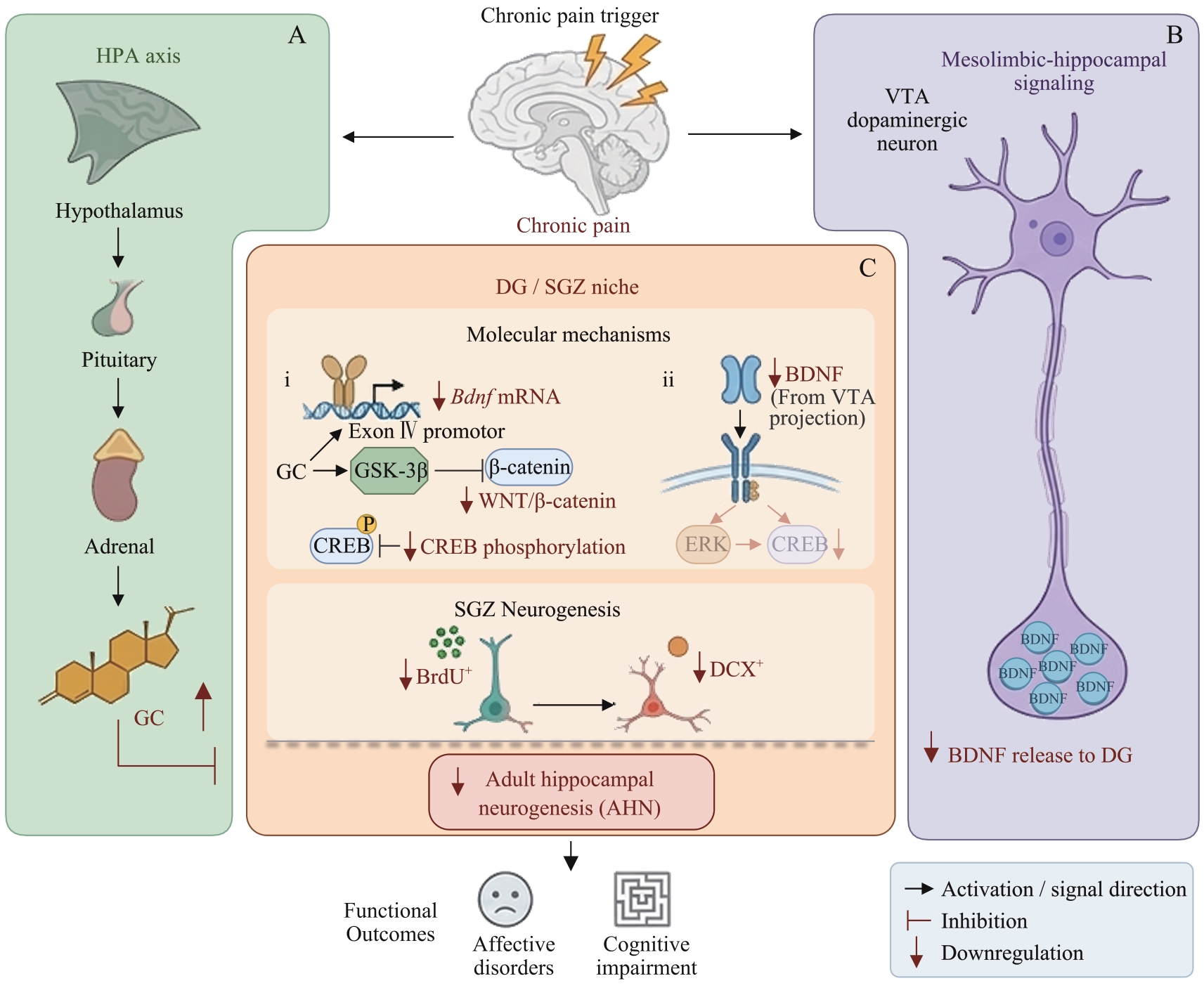
图1 慢性疼痛在全脑系统层面对AHN的调控机制示意图Note: Chronic pain suppresses AHN via two pathways. ① HPA axis (A) hyperactivation elevates GC, inhibiting Bdnf transcription, WNT/β-catenin signaling, and CREB phosphorylation in the DG/SGZ niche (C/i). ② Reduced dopaminergic activity in the VTA (B) decreases BDNF supply, impairing TrkB-ERK-CREB signaling (C/ii). Together, these mechanisms reduce BrdU⁺ proliferating cells and DCX⁺ immature neurons, suppressing AHN and contributing to affective disorders and cognitive impairment. CREB—cAMP response element-binding protein; TrkB—tropomyosin receptor kinase B; ERK—extracellular signal-regulated kinase; BrdU—5-bromo-2′-deoxyuridine; DCX—doublecortin.
Fig 1 Schematic illustration of the mechanisms underlying the regulation of AHN by chronic pain at the whole-brain systems level
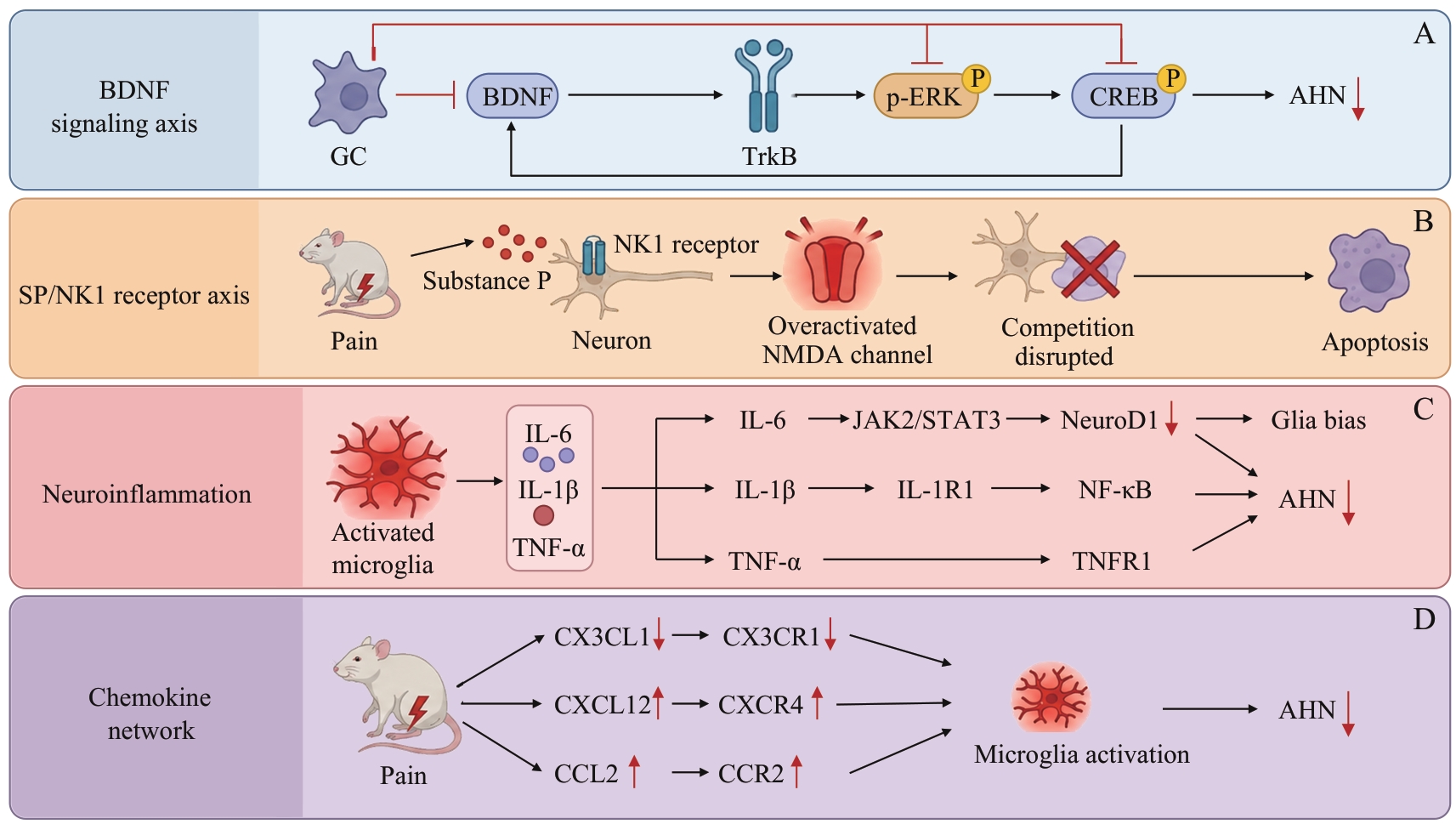
图2 慢性疼痛在分泌信号层面对AHN的调控机制示意图Note: Chronic pain suppresses AHN through four secretory signaling mechanisms: the BDNF signaling axis (A), the SP/NK1 receptor axis (B), neuroinflammatory cytokines (C), and chemokines (D).
Fig 2 Schematic illustration of the mechanisms underlying the regulation of AHN by chronic pain at the level of secretory signaling
| [1] | Treede R D, Rief W, Barke A, et al. Chronic pain as a symptom or a disease: the IASP Classification of Chronic Pain for the International Classification of Diseases (ICD-11)[J]. Pain, 2019, 160(1): 19-27. |
| [2] | Aaron R V, Ravyts S G, Carnahan N D, et al. Prevalence of depression and anxiety among adults with chronic pain: a systematic review and meta-analysis[J]. JAMA Netw Open, 2025, 8(3): e250268. |
| [3] | Zhao S S, Holmes M V, Alam U. Disentangling the relationship between depression and chronic widespread pain: a Mendelian randomisation study[J]. Semin Arthritis Rheum, 2023, 60: 152188. |
| [4] | Henn A T, Larsen B, Frahm L, et al. Structural imaging studies of patients with chronic pain: an anatomical likelihood estimate meta-analysis[J]. Pain, 2023, 164(1): e10-e24. |
| [5] | Zhou W J, Jin Y, Meng Q, et al. A neural circuit for comorbid depressive symptoms in chronic pain[J]. Nat Neurosci, 2019, 22(10): 1649-1658. |
| [6] | Li M H, She K P, Zhu P F, et al. Chronic pain and comorbid emotional disorders: neural circuitry and neuroimmunity pathways[J]. Int J Mol Sci, 2025, 26(2): 436. |
| [7] | Mutso A A, Radzicki D, Baliki M N, et al. Abnormalities in hippocampal functioning with persistent pain[J]. J Neurosci, 2012, 32(17): 5747-5756. |
| [8] | Pronier É, Morici J F, Girardeau G. The role of the hippocampus in the consolidation of emotional memories during sleep[J]. Trends Neurosci, 2023, 46(11): 912-925. |
| [9] | Chen L Y, Li Z X, Wang W Q, et al. Adult hippocampal neurogenesis: new avenues for treatment of brain disorders[J]. Stem Cell Rep, 2025, 20(9): 102600. |
| [10] | Gonçalves J T, Schafer S T, Gage F H. Adult neurogenesis in the hippocampus: from stem cells to behavior[J]. Cell, 2016, 167(4): 897-914. |
| [11] | Somelar K, Jürgenson M, Jaako K, et al. Development of depression-like behavior and altered hippocampal neurogenesis in a mouse model of chronic neuropathic pain[J]. Brain Res, 2021, 1758: 147329. |
| [12] | Chen L L, Qin Q, Huang P C, et al. Chronic pain accelerates cognitive impairment by reducing hippocampal neurogenesis may via CCL2/CCR2 signaling in APP/PS1 mice[J]. Brain Res Bull, 2023, 205: 110801. |
| [13] | Apkarian A V, Mutso A A, Centeno M V, et al. Role of adult hippocampal neurogenesis in persistent pain[J]. Pain, 2016, 157(2): 418-428. |
| [14] | Ding M, Xiang S T, Zhang Y Q, et al. From chronic pain to depression: neurogenesis-driven microglial remodeling in the hippocampal dentate gyrus[J]. Science, 2026, 391(6791): eaee6177. |
| [15] | Grilli M. Chronic pain and adult hippocampal neurogenesis: translational implications from preclinical studies[J]. J Pain Res, 2017, 10: 2281-2286. |
| [16] | Lei A A, Phang V W X, Lee Y Z, et al. Chronic stress-associated depressive disorders: the impact of HPA axis dysregulation and neuroinflammation on the hippocampus: a mini review[J]. Int J Mol Sci, 2025, 26(7): 2940. |
| [17] | Ji Y Y, Xiao Y F, Bai X Y, et al. Modulation of comorbid depression of neuropathic pain by dopamine input from VTA to the ventral hippocampus[J]. Theranostics, 2025, 15(9): 4101-4123. |
| [18] | Tyrtyshnaia A, Manzhulo I, Egoraeva A, et al. Cognitive and affective dysregulation in neuropathic pain: associated hippocampal remodeling and microglial activation[J]. Int J Mol Sci, 2025, 26(13): 6460. |
| [19] | Antonijevic M, Dallemagne P, Rochais C. Inducing neuronal regeneration and differentiation via the BDNF/TrkB signaling pathway: a key target against neurodegenerative diseases?[J]. Neural Regen Res, 2024, 19(3): 495-496. |
| [20] | Araki T, Ikegaya Y, Koyama R. The effects of microglia- and astrocyte-derived factors on neurogenesis in health and disease[J]. Eur J Neurosci, 2021, 54(5): 5880-5901. |
| [21] | Xia S H, Hu S W, Ge D G, et al. Chronic pain impairs memory formation via disruption of neurogenesis mediated by mesohippocampal brain-derived neurotrophic factor signaling[J]. Biol Psychiatry, 2020, 88(8): 597-610. |
| [22] | Kim S, Yang S, Kim J, et al. Glucocorticoid receptor down-regulation affects neural stem cell proliferation and hippocampal neurogenesis[J]. Mol Neurobiol, 2024, 61(6): 3198-3211. |
| [23] | Hui J J, Zhang J P, Pu M J, et al. Modulation of GSK-3β/β-catenin signaling contributes to learning and memory impairment in a rat model of depression[J]. Int J Neuropsychopharmacol, 2018, 21(9): 858-870. |
| [24] | Su C L, Huang T Q, Zhang M Y, et al. Glucocorticoid receptor signaling in the brain and its involvement in cognitive function[J]. Neural Regen Res, 2025, 20(9): 2520-2537. |
| [25] | Chen X H, Chen A D, Wei J J, et al. Dexmedetomidine alleviates cognitive impairment by promoting hippocampal neurogenesis via BDNF/TrkB/CREB signaling pathway in hypoxic-ischemic neonatal rats[J]. CNS Neurosci Ther, 2024, 30(1): e14486. |
| [26] | Chen H, Lombès M, Le Menuet D. Glucocorticoid receptor represses brain-derived neurotrophic factor expression in neuron-like cells[J]. Mol Brain, 2017, 10(1): 12. |
| [27] | Kumamaru E, Numakawa T, Adachi N, et al. Glucocorticoid suppresses BDNF-stimulated MAPK/ERK pathway via inhibiting interaction of Shp2 with TrkB[J]. FEBS Lett, 2011, 585(20): 3224-3228. |
| [28] | Fang S Y, Wu Z B, Guo Y L, et al. Roles of microglia in adult hippocampal neurogenesis in depression and their therapeutics[J]. Front Immunol, 2023, 14: 1193053. |
| [29] | Chen J, Lai Y M, Li W. Involvement of substance P/NK1 receptor system in central sensitization in chronic pain[J]. Neurosci Lett, 2026, 871: 138464. |
| [30] | Tashiro A, Sandler V M, Toni N, et al. NMDA-receptor-mediated, cell-specific integration of new neurons in adult dentate gyrus[J]. Nature, 2006, 442(7105): 929-933. |
| [31] | Lieberman D N, Mody I. Substance P enhances NMDA channel function in hippocampal dentate gyrus granule cells[J]. J Neurophysiol, 1998, 80(1): 113-119. |
| [32] | Martinez A N, Philipp M T. Substance P and antagonists of the neurokinin-1 receptor in neuroinflammation associated with infectious and neurodegenerative diseases of the central nervous system[J]. J Neurol Neuromedicine, 2016, 1(2): 29-36. |
| [33] | Vergne-Salle P, Bertin P. Chronic pain and neuroinflammation[J]. Joint Bone Spine, 2021, 88(6): 105222. |
| [34] | Kong X J, Gong Z, Zhang L, et al. JAK2/STAT3 signaling mediates IL-6-inhibited neurogenesis of neural stem cells through DNA demethylation/methylation[J]. Brain Behav Immun, 2019, 79: 159-173. |
| [35] | Monje M L, Toda H, Palmer T D. Inflammatory blockade restores adult hippocampal neurogenesis[J]. Science, 2003, 302(5651): 1760-1765. |
| [36] | Dellarole A, Morton P, Brambilla R, et al. Neuropathic pain-induced depressive-like behavior and hippocampal neurogenesis and plasticity are dependent on TNFR1 signaling[J]. Brain Behav Immun, 2014, 41: 65-81. |
| [37] | Iosif R E, Ekdahl C T, Ahlenius H, et al. Tumor necrosis factor receptor 1 is a negative regulator of progenitor proliferation in adult hippocampal neurogenesis[J]. J Neurosci, 2006, 26(38): 9703-9712. |
| [38] | Athnaiel O, Ong C, Knezevic N N. The role of kynurenine and its metabolites in comorbid chronic pain and depression[J]. Metabolites, 2022, 12(10): 950. |
| [39] | Bachstetter A D, Morganti J M, Jernberg J, et al. Fractalkine and CX3CR1 regulate hippocampal neurogenesis in adult and aged rats[J]. Neurobiol Aging, 2011, 32(11): 2030-2044. |
| [40] | Camacho-Hernández N P, Peña-Ortega F. Fractalkine/CX3CR1-dependent modulation of synaptic and network plasticity in health and disease[J]. Neural Plast, 2023, 2023: 4637073. |
| [41] | Silva R, Malcangio M. Fractalkine/CX3CR1 pathway in neuropathic pain: an update[J]. Front Pain Res, 2021, 2: 684684. |
| [42] | Mai C L, Tan Z, Xu Y N, et al. CXCL12-mediated monocyte transmigration into brain perivascular space leads to neuroinflammation and memory deficit in neuropathic pain[J]. Theranostics, 2021, 11(3): 1059-1078. |
| [43] | Sellner S, Paricio-Montesinos R, Spieß A, et al. Microglial CX3CR1 promotes adult neurogenesis by inhibiting Sirt 1/p65 signaling independent of CX3CL1[J]. Acta Neuropathol Commun, 2016, 4(1): 102. |
| [44] | Bolós M, Perea J R, Terreros-Roncal J, et al. Absence of microglial CX3CR1 impairs the synaptic integration of adult-born hippocampal granule neurons[J]. Brain Behav Immun, 2018, 68: 76-89. |
| [45] | Diaz-Aparicio I, Paris I, Sierra-Torre V, et al. Microglia actively remodel adult hippocampal neurogenesis through the phagocytosis secretome[J]. J Neurosci, 2020, 40(7): 1453-1482. |
| [46] | Ware K, Peter J, Yazell J, et al. Inhibition of TGF-β signaling in microglia stimulates hippocampal adult neurogenesis and reduces anxiety-like behavior in adult mice[J]. Nat Commun, 2026, 17(1): 1440. |
| [47] | Chen L, Zeng L, Li W, et al. The activation of hippocampal microglial cells and their role in the regulation of pain[J]. J Integr Neurosci, 2025, 24(6): 27730. |
| [48] | Lie D C, Colamarino S A, Song H J, et al. Wnt signalling regulates adult hippocampal neurogenesis[J]. Nature, 2005, 437(7063): 1370-1375. |
| [49] | Escartin C, Galea E, Lakatos A, et al. Reactive astrocyte nomenclature, definitions, and future directions[J]. Nat Neurosci, 2021, 24(3): 312-325. |
| [50] | Lawrence J M, Schardien K, Wigdahl B, et al. Roles of neuropathology-associated reactive astrocytes: a systematic review[J]. Acta Neuropathol Commun, 2023, 11(1): 42. |
| [51] | Larsson Å, Wilhelmsson U, Pekna M, et al. Increased cell proliferation and neurogenesis in the hippocampal dentate gyrus of old GFAP -/- Vim -/- mice[J]. Neurochem Res, 2004, 29(11): 2069-2073. |
| [52] | Tajerian M, Hung V, Nguyen H, et al. The hippocampal extracellular matrix regulates pain and memory after injury[J]. Mol Psychiatry, 2018, 23(12): 2302-2313. |
| [53] | Kazanis I, ffrench-Constant C. Extracellular matrix and the neural stem cell niche[J]. Dev Neurobiol, 2011, 71(11): 1006-1017. |
| [54] | Tan L L, Alfonso J, Monyer H, et al. Neurogenesis in the adult brain functionally contributes to the maintenance of chronic neuropathic pain[J]. Sci Rep, 2021, 11: 18549. |
| [55] | Erginousakis I, Papatheodoropoulos C. Modifying factors of adult hippocampal neurogenesis: a dorsoventral perspective in health and disease[J]. Cells, 2025, 15(1): 59. |
| [56] | Sahay A, Wilson D A, Hen R. Pattern separation: a common function for new neurons in hippocampus and olfactory bulb[J]. Neuron, 2011, 70(4): 582-588. |
| [57] | Sun Y T, Zhang Y, Chen Y X, et al. MeCP2 modulates depression-like behaviors comorbid to chronic pain by regulating adult hippocampal neurogenesis[J]. CNS Neurosci Ther, 2025, 31(3): e70311. |
| [58] | Li X J, Wu S, Liu Z H, et al. CXCR2 modulates chronic pain comorbid depression in mice by regulating adult neurogenesis in the ventral dentate gyrus[J]. Acta Pharmacol Sin, 2025, 46(6): 1567-1579. |
| [59] | Li Y Y, Liu X D, Fu Q Q, et al. Electroacupuncture ameliorates depression-like behaviors comorbid to chronic neuropathic pain via Tet1-mediated restoration of adult neurogenesis[J]. Stem Cells, 2023, 41(4): 384-399. |
| [60] | Xu S, Zhao X F, Zhu Z Q, et al. A new potential antidepressant: dexmedetomidine alleviates neuropathic pain-induced depression by increasing neurogenesis in the hippocampus[J]. Pharmacology, 2022, 107(5/6): 317-329. |
| [61] | Frechou M A, Martin S S, McDermott K D, et al. Adult neurogenesis improves spatial information encoding in the mouse hippocampus[J]. Nat Commun, 2024, 15: 6410. |
| [62] | An Y J, Wu Y, Li X Y, et al. Impaired WNT3/IGF-1 signaling in dorsal dentate gyrus contributes to chronic pain-related cognitive impairment[J]. CNS Neurosci Ther, 2025, 31(12): e70714. |
| [63] | Yao R, Man Y Y, Lu Y, et al. Infliximab alleviates memory impairment in rats with chronic pain by suppressing neuroinflammation and restoring hippocampal neurogenesis[J]. Neuropharmacology, 2024, 245: 109813. |
| [64] | Aimone J B, Li Y, Lee S W, et al. Regulation and function of adult neurogenesis: from genes to cognition[J]. Physiol Rev, 2014, 94(4): 991-1026. |
| [65] | Danielson N B, Kaifosh P, Zaremba J D, et al. Distinct contribution of adult-born hippocampal granule cells to context encoding[J]. Neuron, 2016, 90(1): 101-112. |
| [66] | Suri D, Vaidya V A. The adaptive and maladaptive continuum of stress responses: a hippocampal perspective[J]. Rev Neurosci, 2015, 26(4): 415-442. |
| [67] | Yuen E Y, Liu W, Karatsoreos I N, et al. Mechanisms for acute stress-induced enhancement of glutamatergic transmission and working memory[J]. Mol Psychiatry, 2011, 16(2): 156-170. |
| [1] | 范芳菲, 陈伟滔, 韩苹果, 王芊芊, 王科伟, 颜语, 廖礼彬. 母代孕期应激诱导子代海马星形胶质细胞表型转化损伤认知功能[J]. 上海交通大学学报(医学版), 2026, 46(11): 1513-1525. |
| [2] | 汤皓云, 陈剑华. 慢性疼痛与抑郁障碍共病的神经振荡机制及非侵入性神经调控研究进展[J]. 上海交通大学学报(医学版), 2026, 46(11): 1582-1589. |
| [3] | 曹明明, 王辉, 尹雅芙. 帕金森病认知功能障碍影像标志物的研究现状[J]. 上海交通大学学报(医学版), 2025, 45(5): 646-652. |
| [4] | 林祎嘉, 程丽珍, 胡廷军, 苗雅. 基于孟德尔随机化法的2型糖尿病与认知障碍因果关系研究[J]. 上海交通大学学报(医学版), 2025, 45(2): 204-210. |
| [5] | 杜亚格, 卢言慧, 安宇, 宋颖, 郑婕. 肠道菌群在糖尿病认知功能障碍中的作用机制及靶向干预的研究进展[J]. 上海交通大学学报(医学版), 2024, 44(4): 494-500. |
| [6] | 高雄, 张秋霞, 杨苗苗, 罗玮, 王月刚, 修建成. 房颤与认知障碍的因果关系:一项孟德尔随机化研究[J]. 上海交通大学学报(医学版), 2023, 43(11): 1359-1365. |
| [7] | 吴侠霏, 方婕, 漆洪波, 余昕烊. 妊娠期糖尿病对C57BL/6J子代成年鼠神经精神功能的影响[J]. 上海交通大学学报(医学版), 2022, 42(4): 422-432. |
| [8] | 张蓉, 陆丽, 王亚昕, 董文倩, 张宇, 周健. 糖尿病患者血糖波动异常与认知功能障碍关系的研究进展[J]. 上海交通大学学报(医学版), 2022, 42(2): 235-240. |
| [9] | 罗 钢,崔永晨,曹 越,张俊峰. 手术创伤对2型糖尿病小鼠术后认知功能和脑葡萄糖代谢的影响[J]. 上海交通大学学报(医学版), 2020, 40(11): 1468-1472. |
| [10] | 贾芷莹 1, 2,董旻晔 1, 2,施贞夙 2, 3,金春林 4,李国红 1, 2. 基于机器学习的轻度认知功能障碍筛查研究[J]. 上海交通大学学报(医学版), 2019, 39(8): 908-. |
| [11] | 姜彩霞 1,邹敏 2,姜丽萍 2. 基于聚类分析的上海市 590位老人老年综合征的特征分析[J]. 上海交通大学学报(医学版), 2018, 38(9): 1072-. |
| [12] | 赵嫣红,闻大翔. 非体外循环冠脉搭桥患者术后认知功能障碍的相关因素分析[J]. 上海交通大学学报(医学版), 2016, 36(1): 100-. |
| [13] | 钱晓岚,王庆端,张 卫,等. 右美托咪定对术后老龄小鼠海马组织白介素1β和肿瘤坏死因子α表达的影响[J]. 上海交通大学学报(医学版), 2015, 35(2): 184-. |
| [14] | 毛金丽,李文玲,娄 燕. 精神分裂症断裂基因1的生物学特性及相关信号通路[J]. 上海交通大学学报(医学版), 2014, 34(7): 1078-. |
| [15] | 陈翔春,吴 彦,班春霞,等. 上海市嘉定区初中学生焦虑状况调查及影响因素[J]. 上海交通大学学报(医学版), 2014, 34(4): 442-. |
| 阅读次数 | ||||||
|
全文 |
|
|||||
|
摘要 |
|
|||||
