
上海交通大学学报(医学版) ›› 2026, Vol. 46 ›› Issue (6): 815-823.doi: 10.3969/j.issn.1674-8115.2026.06.015
龚继安, 韩稷钰, 万大千( )
)
收稿日期:2026-01-20
接受日期:2026-02-06
出版日期:2026-06-28
发布日期:2026-06-29
通讯作者:
万大千,副主任医师,博士;电子信箱:wdqwdq1986@126.com。
Gong Jian, Han Jiyu, Wan Daqian()
Received:2026-01-20
Accepted:2026-02-06
Online:2026-06-28
Published:2026-06-29
Contact:
Wan Daqian, E-mail: wdqwdq1986@126.com.摘要:
骨关节炎(osteoarthritis,OA)是目前全球范围内重要的致残原因,其病理认知正逐步从单纯“磨损性疾病”向“代谢与低度炎症性疾病”发生范式转变。肠道菌群作为宿主17型辅助性T细胞(T helper 17 cell,Th17细胞)的关键调控者,具有复杂的双向调节特性:一方面,菌群代谢产物(如短链脂肪酸、色氨酸代谢产物、次级胆汁酸)可通过表观遗传修饰[如抑制组蛋白脱乙酰酶(histone deacetylase,HDAC)]及激活特定受体[如G蛋白偶联受体43(G-protein-coupled receptor 43,GPR43)、芳香烃受体(aryl hydrocarbon receptor,AHR)、G蛋白偶联胆汁酸受体1(G protein-coupled bile acid receptor 1,GPBAR1,又称TGR5)],维持Th17细胞/调节性T细胞(regulatory T cell,Treg细胞)平衡,发挥抗炎保护效应;另一方面,菌群结构组分(如脂多糖、细菌外囊泡)则通过模式识别受体激活致炎通路,进而诱导Th17细胞分化。进一步研究表明,肠道来源的Th17细胞及其效应因子白细胞介素-17(interleukin-17,IL-17)是连接肠道微生态失调与关节病变的核心纽带,Th17细胞及IL-17迁移至关节局部后充当炎症“放大器”,不仅能诱导滑膜成纤维细胞活化和炎症级联反应,还可直接驱动软骨细胞基质降解、衰老及铁死亡,并促进软骨下骨异常重塑,最终导致全关节结构破坏。该文旨在综述“肠道菌群-Th17细胞/IL-17免疫”轴在OA发生发展中的作用及相关分子机制。深入阐明该轴系的分子调控机制,有望为靶向肠道微生态治疗OA提供新的策略。
中图分类号:
龚继安, 韩稷钰, 万大千. 肠道菌群调控下17型辅助性T细胞及IL-17在骨关节炎发生发展中的作用研究进展[J]. 上海交通大学学报(医学版), 2026, 46(6): 815-823.
Gong Jian, Han Jiyu, Wan Daqian. Research progress in role of T helper 17 cells and interleukin-17 in occurrence and development of osteoarthritis under regulation of gut microbiota[J]. Journal of Shanghai Jiao Tong University (Medical Science), 2026,(6): 815-823.
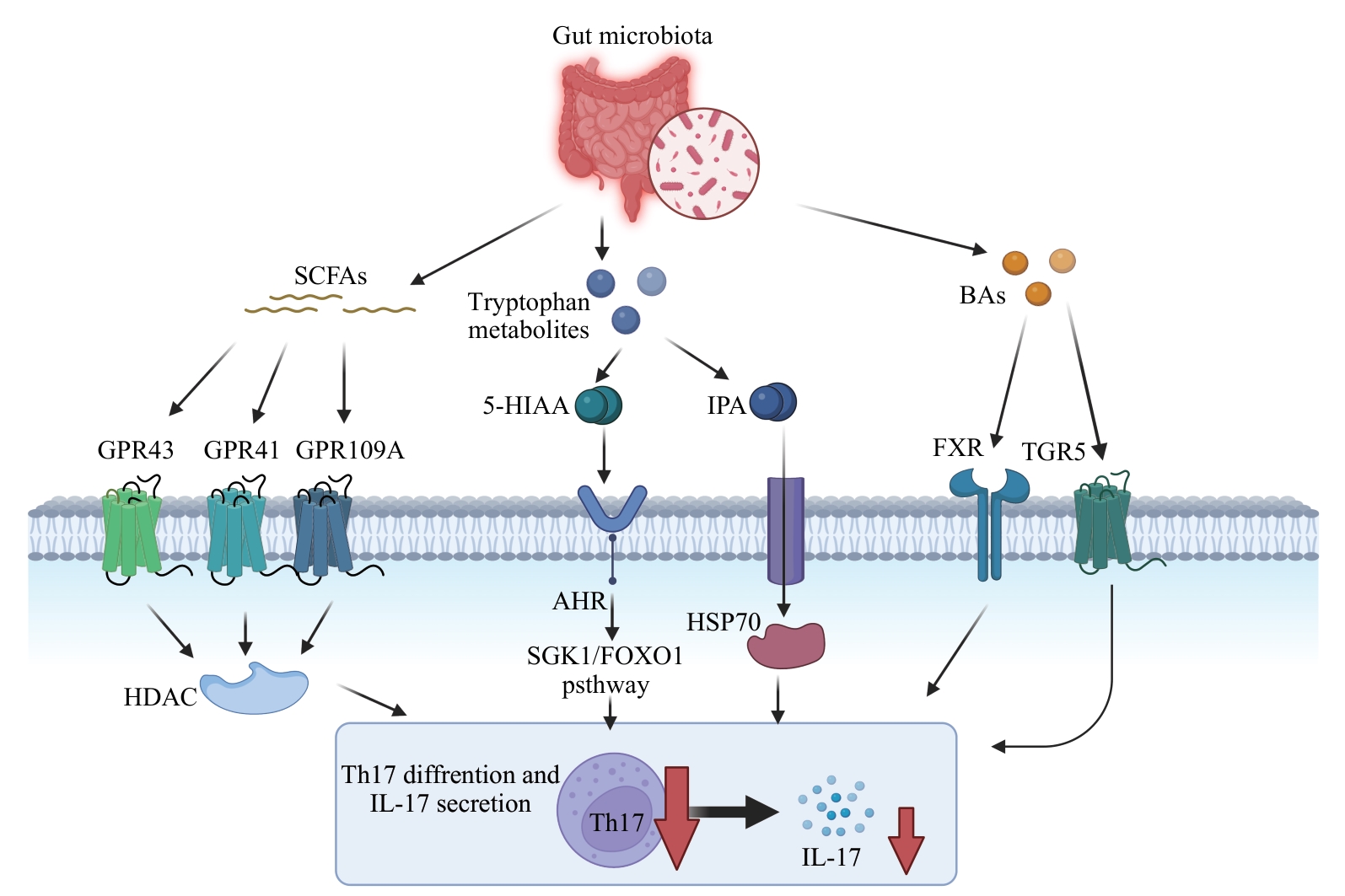
图 1 肠道菌群主要代谢产物对Th17细胞/IL17的调节Note: SCFAs—short-chain fatty acids; GPR—G-protein-coupled receptor; HDAC—histone deacetylase; 5-HIAA—5-hydroxyindole-3-acetic acid; IPA—3-indolepropionic acid; AHR—aryl hydrocarbon receptor; HSP-70—heat shock protein 70; BAs—bile acids; FXR—nuclear farnesoid X receptor; TGR5—G protein-coupled bile acid receptor 1 (GPBAR1); Th17—T helper 17 cell; IL-17—interleukin-17.
Fig 1 Regulation of Th17 cell/IL-17 by major gut microbiota-derived metabolites
Pathogenic process | Biological effect | Target cell/tissue | Key molecule/pathway/specific mechanism | Reference |
|---|---|---|---|---|
| Inflammatory amplification | Production of IL-1β, TNF, and IL-6 | Chondrocytes | IL-1β, TNF, and IL-6 | Kapoor et al, 2011[ |
| IL-18 production and inflammation aggravation | Synovial fibroblasts | IL-18/MEK/ERK/miR-4492 | Lee et al, 2024[ | |
| NET formation and fibroblast activation | Neutrophils, synovial fibroblasts | NETs | Khandpur et al, 2013[ | |
| Cartilage matrix degradation | Pro-inflammatory and catabolic gene alteration | Chondrocytes | ‒ | Pemmari et al, 2021[ |
| MMP-13 upregulation and cartilage/meniscus damage | Chondrocytes, meniscal cells | MMP-13 | Wang et al, 2020[ | |
| MMP and IL-6 hyperproduction | Th17 cells, chondrocytes | MMP-1/3/9/13, IL-6 | Platzer et al, 2025[ | |
| MDSC-driven Th17 differentiation and cartilage degradation | MDSCs, Th17 cells | MMPs | Guo et al, 2025[ | |
| NO/PGE2 production and catabolic shift | Chondrocytes | NO, PGE2 | Denoble et al, 2011[ | |
| SASP induction and chronic inflammation | Chondrocytes | Senescence-associated secretory phenotype (SASP) | Faust et al, 2020[ | |
| GPX4 suppression and ferroptosis | Chondrocytes | IL-17/GPX4 axis, ferroptosis | Zhao et al, 2025[ | |
| Subchondral bone remodeling | IL-17F/IL-23-associated bone marrow lesions | Subchondral bone | IL-17F, IL-23 | Zhu et al, 2017[ |
| RANKL/Beclin-1-driven osteoclastogenesis | Osteoblasts, osteoclasts | Beclin-1, RANKL | Chen et al, 2024[ | |
| Synovitis and angiogenesis | ER stress-mediated synovial inflammation | Synovial fibroblasts | ER stress | Sun et al, 2025[ |
| Autophagosome accumulation and mtSTAT3 suppression | Synovial fibroblasts | mtSTAT3 | Lee et al, 2025[ | |
| VEGF-driven angiogenesis and synovial hyperplasia | Chondrocytes, synovial fibroblasts | VEGF | Mukherjee et al, 2024[ | |
| CD13-mediated T cell chemoattraction | Synovium, T cells | CD13 | Morgan et al, 2015[ |
表1 Th17细胞与IL-17介导的OA下游作用机制总结
Tab 1 Summary of Th17 cell/IL-17-mediated downstream mechanisms in OA
Pathogenic process | Biological effect | Target cell/tissue | Key molecule/pathway/specific mechanism | Reference |
|---|---|---|---|---|
| Inflammatory amplification | Production of IL-1β, TNF, and IL-6 | Chondrocytes | IL-1β, TNF, and IL-6 | Kapoor et al, 2011[ |
| IL-18 production and inflammation aggravation | Synovial fibroblasts | IL-18/MEK/ERK/miR-4492 | Lee et al, 2024[ | |
| NET formation and fibroblast activation | Neutrophils, synovial fibroblasts | NETs | Khandpur et al, 2013[ | |
| Cartilage matrix degradation | Pro-inflammatory and catabolic gene alteration | Chondrocytes | ‒ | Pemmari et al, 2021[ |
| MMP-13 upregulation and cartilage/meniscus damage | Chondrocytes, meniscal cells | MMP-13 | Wang et al, 2020[ | |
| MMP and IL-6 hyperproduction | Th17 cells, chondrocytes | MMP-1/3/9/13, IL-6 | Platzer et al, 2025[ | |
| MDSC-driven Th17 differentiation and cartilage degradation | MDSCs, Th17 cells | MMPs | Guo et al, 2025[ | |
| NO/PGE2 production and catabolic shift | Chondrocytes | NO, PGE2 | Denoble et al, 2011[ | |
| SASP induction and chronic inflammation | Chondrocytes | Senescence-associated secretory phenotype (SASP) | Faust et al, 2020[ | |
| GPX4 suppression and ferroptosis | Chondrocytes | IL-17/GPX4 axis, ferroptosis | Zhao et al, 2025[ | |
| Subchondral bone remodeling | IL-17F/IL-23-associated bone marrow lesions | Subchondral bone | IL-17F, IL-23 | Zhu et al, 2017[ |
| RANKL/Beclin-1-driven osteoclastogenesis | Osteoblasts, osteoclasts | Beclin-1, RANKL | Chen et al, 2024[ | |
| Synovitis and angiogenesis | ER stress-mediated synovial inflammation | Synovial fibroblasts | ER stress | Sun et al, 2025[ |
| Autophagosome accumulation and mtSTAT3 suppression | Synovial fibroblasts | mtSTAT3 | Lee et al, 2025[ | |
| VEGF-driven angiogenesis and synovial hyperplasia | Chondrocytes, synovial fibroblasts | VEGF | Mukherjee et al, 2024[ | |
| CD13-mediated T cell chemoattraction | Synovium, T cells | CD13 | Morgan et al, 2015[ |
| [1] | Tang S A, Zhang C Q, Oo W M, et al. Osteoarthritis[J]. Nat Rev Dis Primers, 2025, 11: 10. |
| [2] | Steinmetz J D, Culbreth G T, Haile L M, et al. GBD 2021 Osteoarthritis Collaborators. Global, regional, and national burden of osteoarthritis, 1990—2020 and projections to 2050: a systematic analysis for the Global Burden of Disease Study 2021[J]. Lancet Rheumatol, 2023, 5 (10): e723-e735. |
| [3] | Moulin D, Sellam J, Berenbaum F, et al. The role of the immune system in osteoarthritis: mechanisms, challenges and future directions[J]. Nat Rev Rheumatol, 2025, 21(4): 221-236. |
| [4] | Sun W, Li X Y, Zhang L Y, et al. IL-17A exacerbates synovial inflammation in osteoarthritis via activation of endoplasmic reticulum stress[J]. Int Immunopharmacol, 2025, 145: 113733. |
| [5] | Mimpen J Y, Baldwin M J, Cribbs A P, et al. Interleukin-17A causes osteoarthritis-like transcriptional changes in human osteoarthritis-derived chondrocytes and synovial fibroblasts in vitro[J]. Front Immunol, 2021, 12: 676173. |
| [6] | Ohara D, Takeuchi Y, Hirota K. Type 17 immunity: novel insights into intestinal homeostasis and autoimmune pathogenesis driven by gut-primed T cells[J]. Cell Mol Immunol, 2024, 21(11): 1183-1200. |
| [7] | Siebert K, Faro T, Köhler N, et al. Endoscopic healing in pediatric IBD perpetuates a persistent signature defined by Th17 cells with molecular and microbial drivers of disease[J]. Cell Rep Med, 2025, 6(7): 102236. |
| [8] | Chen J, Feng R, Gong B B, et al. High-salt-driven gut microbiota dysfunction aggravates prostatitis by promoting AHR/SGK1/FOXO1 axis-mediated Th17 cell differentiation[J]. Mil Med Res, 2025, 12(1): 21. |
| [9] | White Z, Cabrera I, Mei L H, et al. Gut inflammation promotes microbiota-specific CD4 T cell-mediated neuroinflammation[J]. Nature, 2025, 643(8071): 509-518. |
| [10] | Wang Y, Chen X D, Huws S A, et al. Ileal microbial microbiome and its secondary bile acids modulate susceptibility to nonalcoholic steatohepatitis in dairy goats[J]. Microbiome, 2024, 12(1): 247. |
| [11] | Wu H J, Ivanov I I, Darce J, et al. Gut-residing segmented filamentous bacteria drive autoimmune arthritis via T helper 17 cells[J]. Immunity, 2010, 32(6): 815-827. |
| [12] | Liu S, Xu H H, Liu L J, et al. Gut microbiome dysbiosis accelerates osteoarthritis progression by inducing IFP-SM inflammation in "double-hit" mice[J]. Arthritis Res Ther, 2025, 27(1): 137. |
| [13] | Sala-Climent M, Bu K, Coras R, et al. Targeted microbial shifts and metabolite profiles were associated with clinical response to an anti-inflammatory diet in osteoarthritis[J]. Nutrients, 2025, 17(17): 2729. |
| [14] | Moleón J, González-Correa C, Miñano S, et al. Protective effect of microbiota-derived short chain fatty acids on vascular dysfunction in mice with systemic lupus erythematosus induced by toll like receptor 7 activation[J]. Pharmacol Res, 2023, 198: 106997. |
| [15] | Ma Z Y, Wang Z X, Cao J, et al. Regulatory roles of intestinal CD4+T cells in inflammation and their modulation by the intestinal microbiota[J]. Gut Microbes, 2025, 17: 2560019. |
| [16] | Han B, Shi L, Bao M Y, et al. Dietary ellagic acid therapy for CNS autoimmunity: targeting on Alloprevotella rava and propionate metabolism[J]. Microbiome, 2024, 12(1): 114. |
| [17] | Chandra S, Popovic J, Singhal N K, et al. The gut microbiome controls reactive astrocytosis during Aβ amyloidosis via propionate-mediated regulation of IL-17[J]. J Clin Investig, 2025, 135(13): e180826. |
| [18] | Hu C P, Xu B Q, Wang X D, et al. Gut microbiota-derived short-chain fatty acids regulate group 3 innate lymphoid cells in HCC[J]. Hepatology, 2023, 77(1): 48-64. |
| [19] | Gao H, Sun M M, Li A, et al. Microbiota-derived IPA alleviates intestinal mucosal inflammation through upregulating Th1/Th17 cell apoptosis in inflammatory bowel disease[J]. Gut Microbes, 2025, 17(1): 2467235. |
| [20] | Krause F F, Mangold K I, Ruppert A L, et al. Clostridium sporogenes-derived metabolites protect mice against colonic inflammation[J]. Gut Microbes, 2024, 16: 2412669. |
| [21] | Wang C L, Dai S Z, Zhang S S, et al. Gut microbe-derived metabolites drive psoriatic inflammation via modulation of skin Th17 cells[J]. Immunity, 2025, 58(9): 2241-2255.e7. |
| [22] | Montgomery T L, Eckstrom K, Lile K H, et al. Lactobacillus reuteri tryptophan metabolism promotes host susceptibility to CNS autoimmunity[J]. Microbiome, 2022, 10(1): 198. |
| [23] | Fleishman J S, Kumar S. Bile acid metabolism and signaling in health and disease: molecular mechanisms and therapeutic targets[J]. Signal Transduct Target Ther, 2024, 9: 97. |
| [24] | Antonini Cencicchio M, Montini F, Palmieri V, et al. Microbiota-produced immune regulatory bile acid metabolites control central nervous system autoimmunity[J]. Cell Rep Med, 2025, 6(4): 102028. |
| [25] | Xiao R P, Lei K W, Kuok H, et al. Synthesis and identification of lithocholic acid 3-sulfate as RORγt ligand to inhibit Th17 cell differentiation[J]. J Leukoc Biol, 2022, 112(4): 835-843. |
| [26] | Hang S Y, Paik D, Yao L N, et al. Bile acid metabolites control TH17 and Treg cell differentiation[J]. Nature, 2019, 576(7785): 143-148. |
| [27] | Sun H J, Guo Y K, Wang H D, et al. Gut commensal Parabacteroides distasonis alleviates inflammatory arthritis[J]. Gut, 2023, 72(9): 1664-1677. |
| [28] | Wang Z Y, Tian L, Jiang Y, et al. Synergistic role of gut-microbial L-ornithine in enhancing ustekinumab efficacy for Crohn's disease[J]. Cell Metab, 2025, 37(5): 1089-1102.e7. |
| [29] | Zhao H L, Yue N N, Mai Z L, et al. Lactobacillus johnsonii-derived extracellular vesicles restore mucosal immunity via taurine-linked Th17/Treg and IgA/IgG regulation in colitis[J]. J Nanobiotechnology, 2025, 23(1): 612. |
| [30] | Li G Q, Liu L W, Lu T Q, et al. Gut microbiota aggravates neutrophil extracellular traps-induced pancreatic injury in hypertriglyceridemic pancreatitis[J]. Nat Commun, 2023, 14(1): 6179. |
| [31] | Doan H T, Cheng L C, Chiu Y L, et al. Candida tropicalis-derived vitamin B3 exerts protective effects against intestinal inflammation by promoting IL-17A/IL-22-dependent epithelial barrier function[J]. Gut Microbes, 2024, 16(1): 2416922. |
| [32] | Shen Y Y, Ma Z Y, Wang H L, et al. Alcaligenes faecalis induces intestinal T helper-17 cells by enhancing Rorc transcription through E3 ligase Trim21-mediated Fbxw7 degradation[J]. Immunity, 2025, 58(6): 1469-1483.e8. |
| [33] | Niu L Y, Chen W Z, Yin Z F, et al. Bacterial extracellular vesicles in osteoarthritis: a new bridge of the gut-joint axis[J]. Gut Microbes, 2025, 17(1): 2489069. |
| [34] | Ciccia F, Guggino G, Rizzo A, et al. Type 3 innate lymphoid cells producing IL-17 and IL-22 are expanded in the gut, in the peripheral blood, synovial fluid and bone marrow of patients with ankylosing spondylitis[J]. Ann Rheum Dis, 2015, 74(9): 1739-1747. |
| [35] | Maeda Y, Kurakawa T, Umemoto E, et al. Dysbiosis contributes to arthritis development via activation of autoreactive T cells in the intestine[J]. Arthritis Rheumatol, 2016, 68(11): 2646-2661. |
| [36] | Jung S M, Kim Y, Kim J, et al. Sodium chloride aggravates arthritis via Th17 polarization[J]. Yonsei Med J, 2019, 60(1): 88-97. |
| [37] | Kapoor M, Martel-Pelletier J, Lajeunesse D, et al. Role of proinflammatory cytokines in the pathophysiology of osteoarthritis[J]. Nat Rev Rheumatol, 2011, 7(1): 33-42. |
| [38] | Ayral X, Pickering E H, Woodworth T G, et al. Synovitis: a potential predictive factor of structural progression of medial tibiofemoral knee osteoarthritis: results of a 1 year longitudinal arthroscopic study in 422 patients[J]. Osteoarthritis Cartilage, 2005, 13(5): 361-367. |
| [39] | Felson D T, Niu J, Neogi T, et al. Synovitis and the risk of knee osteoarthritis: the MOST Study[J]. Osteoarthritis Cartilage, 2016, 24(3): 458-464. |
| [40] | Lee K T, Lin C Y, Liu S C, et al. IL-17 promotes IL-18 production via the MEK/ERK/miR-4492 axis in osteoarthritis synovial fibroblasts[J]. Aging, 2024, 16(2): 1829-1844. |
| [41] | Khandpur R, Carmona-Rivera C, Vivekanandan-Giri A, et al. NETs are a source of citrullinated autoantigens and stimulate inflammatory responses in rheumatoid arthritis[J]. Sci Transl Med, 2013, 5(178): 178ra40. |
| [42] | Pemmari A, Leppänen T, Hämäläinen M, et al. Chondrocytes from osteoarthritis patients adopt distinct phenotypes in response to central TH1/TH2/TH17 cytokines[J]. Int J Mol Sci, 2021, 22(17): 9463. |
| [43] | Wang D L, Wang Z, Li M C, et al. The underlying mechanism of partial anterior cruciate ligament injuries to the Meniscus degeneration of knee joint in rabbit models[J]. J Orthop Surg Res, 2020, 15(1): 428. |
| [44] | Ahrens G, Gellhaus F, Weitkamp J T, et al. The effect of IL-17A and combined mechanical injury on meniscal tissue integrity in vitro[J]. J Clin Med, 2025, 14(21): 7573. |
| [45] | Platzer H, Wellbrock M, Pourbozorg G, et al. In knee osteoarthritis, the production of cytokines and metalloproteinases in presence of chondrocytes and CD4+ T cells depends on T cell subset: an in vitro analysis[J]. Osteoarthr Cartil Open, 2025, 7(3): 100642. |
| [46] | Guo Z L, Chen T, Wen X H, et al. Harnessing the dual immunomodulatory function of myeloid-derived suppressor cells to reshape the inflammatory microenvironment for osteoarthritis therapy[J]. Mater Today Bio, 2025, 35: 102332. |
| [47] | Denoble A E, Huffman K M, Stabler T V, et al. Uric acid is a danger signal of increasing risk for osteoarthritis through inflammasome activation[J]. Proc Natl Acad Sci U S A, 2011, 108(5): 2088-2093. |
| [48] | Faust H J, Zhang H, Han J, et al. IL-17 and immunologically induced senescence regulate response to injury in osteoarthritis[J]. J Clin Invest, 2020, 130(10): 5493-5507. |
| [49] | Zhao X F, Xia H T, Yang Y W, et al. Amygdalin and magnesium ions exert synergistic effects on cartilage regeneration by inhibiting chondrocyte ferroptosis via the IL-17/GPX4 axis[J]. J Orthop Translat, 2025, 53: 246-259. |
| [50] | Chen W L, Wang Q F, Tao H Q, et al. Subchondral osteoclasts and osteoarthritis: new insights and potential therapeutic avenues[J]. Acta Biochim Biophys Sin, 2024, 56(4): 499-512. |
| [51] | Zhu Z, Otahal P, Wang B, et al. Cross-sectional and longitudinal associations between serum inflammatory cytokines and knee bone marrow lesions in patients with knee osteoarthritis[J]. Osteoarthritis Cartilage, 2017, 25(4): 499-505. |
| [52] | Lee S Y, Moon J, Lee A R, et al. mtSTAT3 suppresses rheumatoid arthritis by regulating Th17 and synovial fibroblast inflammatory cell death with IL-17-mediated autophagy dysfunction[J]. Exp Mol Med, 2025, 57(1): 221-234. |
| [53] | Mukherjee A, Das B. The role of inflammatory mediators and matrix metalloproteinases (MMPs) in the progression of osteoarthritis[J]. Biomater Biosyst, 2024, 13: 100090. |
| [54] | Morgan R, Endres J, Behbahani-Nejad N, et al. Expression and function of aminopeptidase N/CD13 produced by fibroblast-like synoviocytes in rheumatoid arthritis: role of CD13 in chemotaxis of cytokine-activated T cells independent of enzymatic activity[J]. Arthritis Rheumatol, 2015, 67(1): 74-85. |
| [55] | Yang Y H, Hao C, Jiao T Y, et al. Osteoarthritis treatment via the GLP-1-mediated gut-joint axis targets intestinal FXR signaling[J]. Science, 2025, 388(6742): eadt0548. |
| [56] | Bardi E, D'Arrigo D, Pozzi C, et al. Current methods in synovial fluid microbiota characterization: a systematic review[J]. Int J Mol Sci, 2025, 26(10): 4690. |
| [1] | 李梓瑜, 朱泽宇, 钱家康, 陈昱璐, 陆家瑜. 碘乙酸钠诱导大鼠颞下颌关节骨关节炎模型的构建[J]. 上海交通大学学报(医学版), 2026, 46(1): 82-89. |
| [2] | 魏祥, 魏凌飞, 徐纯峰, 高玉洁, 聂萍, 于德栋. 负载牛磺熊去氧胆酸的光交联明胶水凝胶支架在兔膝关节软骨缺损修复中的效能[J]. 上海交通大学学报(医学版), 2025, 45(7): 829-837. |
| [3] | 陈深册, 陈依明, 王凡, 张梦珂, 杨惟杰, 吕洞宾, 洪武. 饮食干预治疗抑郁相关症状的研究进展[J]. 上海交通大学学报(医学版), 2024, 44(8): 1050-1055. |
| [4] | 夏西茜, 丁珂珂, 张慧恒, 彭旭飞, 孙昳旻, 唐雅珺, 汤晓芳. 肠道菌群介导胆汁酸影响炎症性肠病的研究进展[J]. 上海交通大学学报(医学版), 2024, 44(7): 839-846. |
| [5] | 杜亚格, 卢言慧, 安宇, 宋颖, 郑婕. 肠道菌群在糖尿病认知功能障碍中的作用机制及靶向干预的研究进展[J]. 上海交通大学学报(医学版), 2024, 44(4): 494-500. |
| [6] | 洪洋, 王洁, 张霞芬, 赵丹, 程敏. 智能可穿戴设备BPMpathway在全膝关节置换术后患者居家康复中的应用效果[J]. 上海交通大学学报(医学版), 2024, 44(3): 342-349. |
| [7] | 邓青松, 张长青, 陶诗聪. 烟酰胺代谢相关基因与骨关节炎的关系探索[J]. 上海交通大学学报(医学版), 2024, 44(2): 145-160. |
| [8] | 马锦倩, 范翩翩, 郑涛, 张琳, 陈远志, 申剑, 欧阳凤秀. 孕妇肠道、阴道菌群和新生儿胎粪、胎皮脂菌群的相关性研究[J]. 上海交通大学学报(医学版), 2024, 44(1): 50-63. |
| [9] | 李郡如, 欧阳彦, 谢静远. 肠道菌群在IgA肾病发病与治疗中的作用研究进展[J]. 上海交通大学学报(医学版), 2023, 43(8): 1044-1048. |
| [10] | 高羽, 殷姗, 庞玥, 梁文懿, 刘玉敏. 大黄对大鼠体内肠道菌群-宿主共代谢作用的影响[J]. 上海交通大学学报(医学版), 2023, 43(8): 997-1007. |
| [11] | 温亚锦, 何雯, 韩晓, 张晓波. 不同严重程度支气管哮喘儿童肠道菌群差异的探索性分析[J]. 上海交通大学学报(医学版), 2023, 43(6): 655-664. |
| [12] | 王洁仪, 郑丹, 郑晓皎, 贾伟, 赵爱华. 茶褐素生物学活性及其作用机制的研究进展[J]. 上海交通大学学报(医学版), 2023, 43(6): 768-774. |
| [13] | 刘芊若, 方子晨, 吴宇涵, 钟羡欣, 国沐禾, 贾洁. 肠道菌群及其代谢产物与妊娠期糖尿病相关性的研究进展[J]. 上海交通大学学报(医学版), 2023, 43(5): 641-647. |
| [14] | 王婕, 吴慧, 卢凌鹏, 杨科峰, 祝捷, 周恒益, 姚蝶, 高雅, 冯宇婷, 刘玉红, 贾洁. 妊娠期糖尿病女性肠道菌群的变化特征及其与血糖、血脂和膳食的相关性[J]. 上海交通大学学报(医学版), 2022, 42(9): 1336-1346. |
| [15] | 刘宏强, 陆艳青, 高宇轩, 王一云, 王传东, 张晓玲. 构建高效载体OPEI沉默TRAF6促进骨关节炎软骨再生的研究[J]. 上海交通大学学报(医学版), 2022, 42(7): 846-857. |
| 阅读次数 | ||||||
|
全文 |
|
|||||
|
摘要 |
|
|||||
